Another year has flown by, and it has been a big one in the world of biblical archaeology. From ancient shipwrecks to an Egyptian fortress and New Kingdom Period tomb, as well as new research relating to two of Judah’s notably righteous kings—Hezekiah and Josiah—2025 brought us many new and exciting discoveries illustrating the biblical account.
As is tradition, here are our top 10 picks from 2025.
10. Exodus-Period Fortress in Sinai
The most direct route out of Egypt and into the Promised Land the Israelites could have taken would have been to travel northeast along the coast of the Mediterranean Sea—an ancient trade route known as the “Ways of Horus” or “Way of the Land of the Philistines.” God, however, instructed the Israelites to take a southern route “by the way of the wilderness by the Red Sea” (Exodus 13:18). Why? “God led them not by the way of the land of the Philistines, although that was near; for God said: ‘Lest peradventure the people repent when they see war, and they return to Egypt’” (verse 17). A recent archaeological discovery supports this.
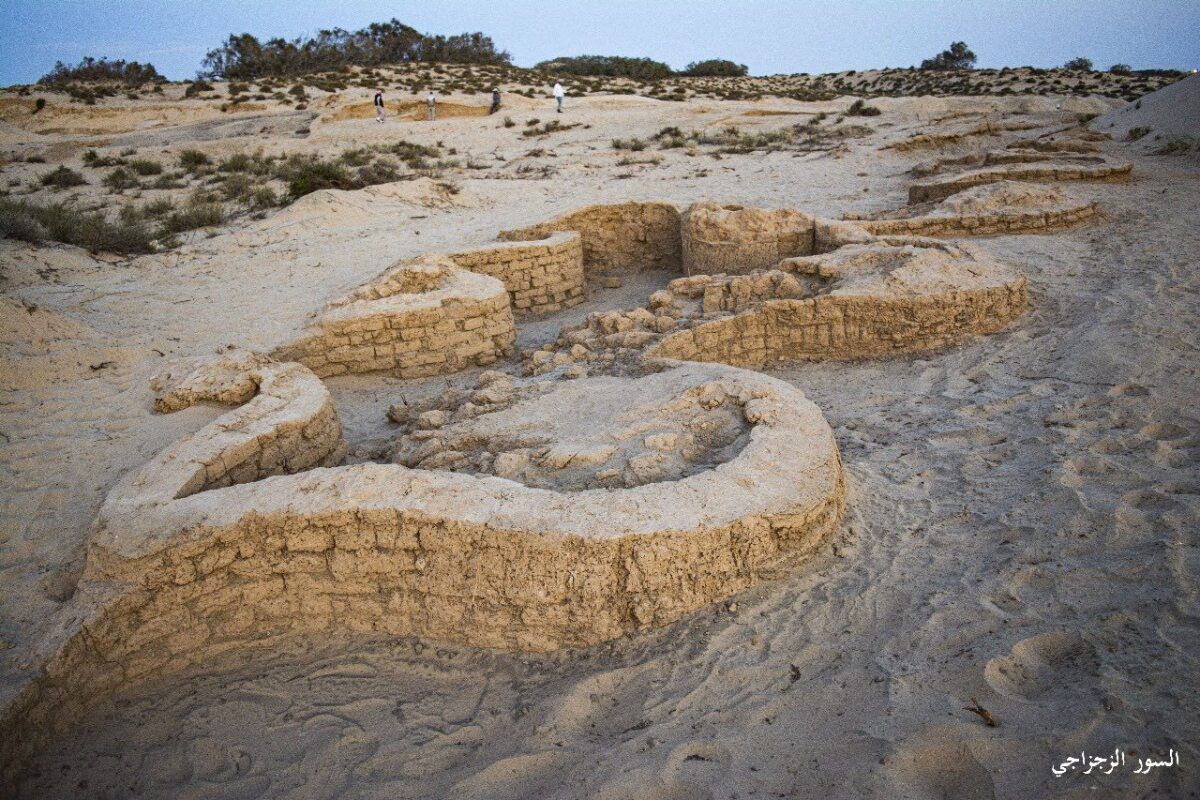
In November, the Egyptian Ministry of Tourism and Antiquities announced the discovery of a 3,500-year-old Egyptian military fortress at Tell el-Kharouba (northern Sinai), most likely built by Thutmose i (late 16th century b.c.e.). This military base, which covers an area of about 8,000 square meters (86,000 square feet), represents one of the largest fortification structures on Egypt’s eastern border. The line of just its southern wall has been revealed to a length of over 100 meters (300 feet), supporting 11 towers. Tell el-Kharouba represents one of 11 known fortresses built along this route, reemphasizing the reason for Israel’s detour on the way out of Egypt—“lest peradventure the people repent when they see war.”
To learn more, read our article “3,500-Year-Old Egyptian Fortress Uncovered.”
9. Pharaoh Necho at Megiddo
One of the most shocking events in the history of the biblical nation of Judah was the untimely death of one of its most righteous leaders, King Josiah (circa 609 b.c.e.), in what seemed to be the most unnecessary of circumstances: battling Egyptian Pharaoh Necho (Neco ii) at Megiddo, a location far outside the territory of Judah (2 Chronicles 35:20-25).
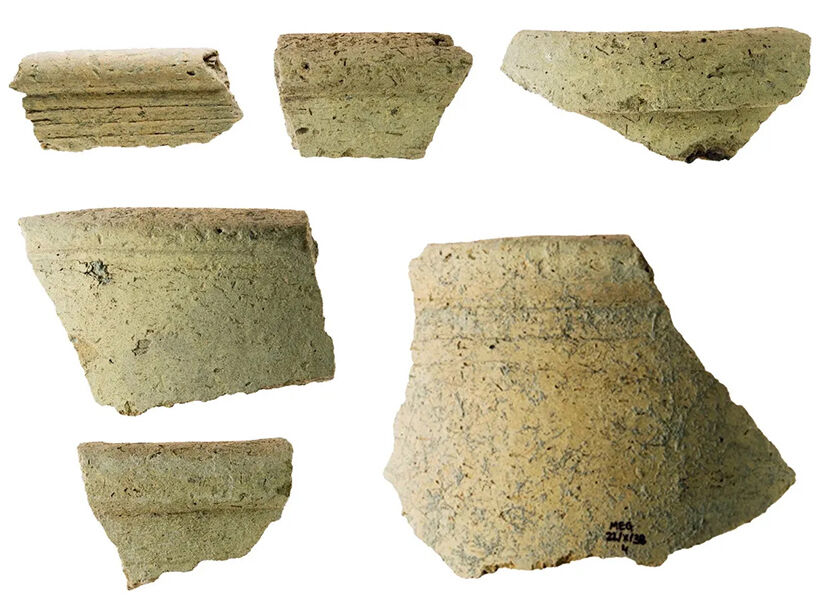
In January, a report published in the Scandinavian Journal of the Old Testament revealed the first evidence from Tel Megiddo substantiating this biblical account. Within Building 16 of Area X, excavators uncovered a late seventh-century b.c.e. structure full of pottery vessels imported from Egypt—the highest quantity ever discovered in the region. According to one of the lead researchers, Prof. Israel Finkelstein, the crudely-made wares point to a “steady stream of supplies from Egypt, most likely for Necho’s army” stationed at the site, thus giving credence to the biblical account of a battle taking place at this location with these forces.
To learn more, read our article “King Josiah’s Last Stand.”
8. Dor Shipwreck Cargoes
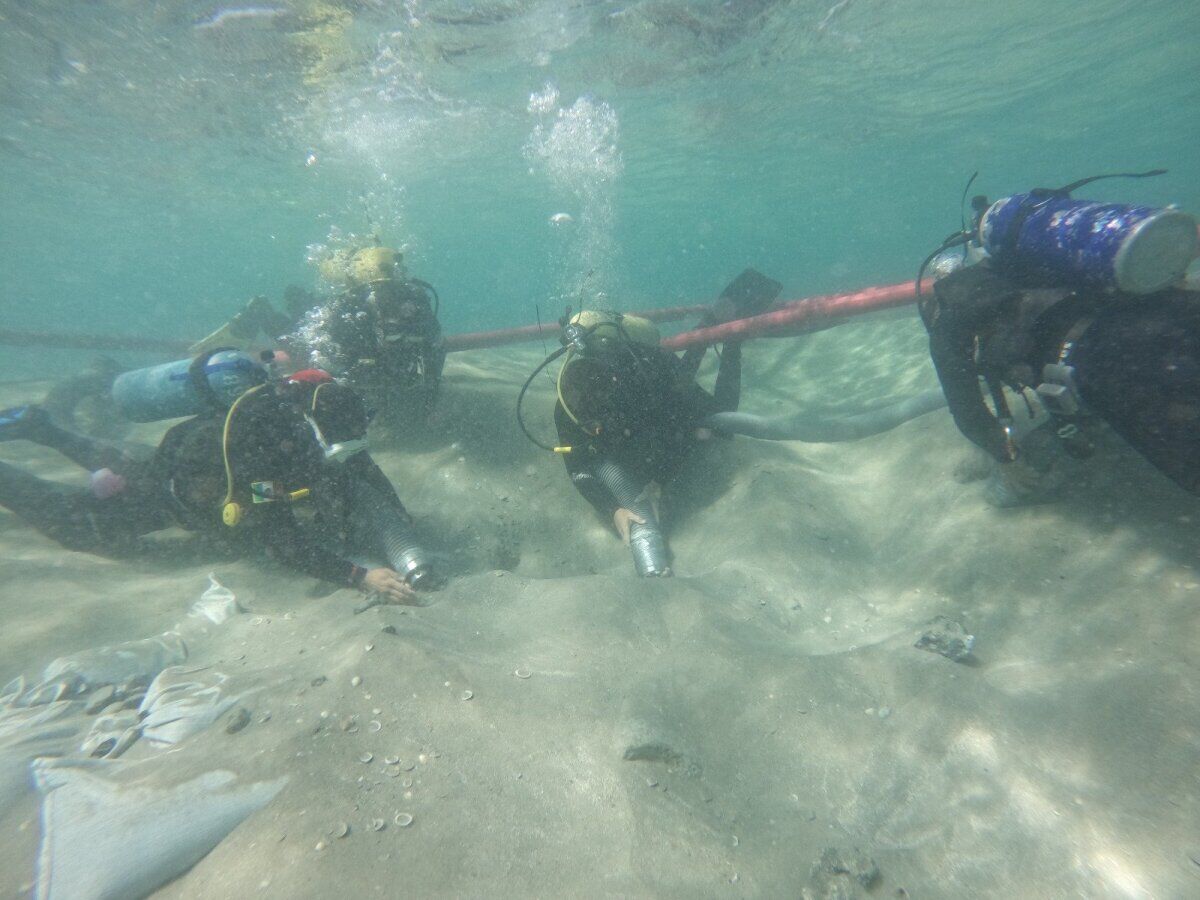
The ancient port city of Dor, mentioned half a dozen times in the biblical account, was once a wealthy city due to extensive Mediterranean trade. More than 20 ancient ships and cargoes lie off its coast. In August, a new report in Antiquity described the results of the 2023–2024 excavation of three Iron Age ship cargoes.
Cargo M, which dated to the Iron Age i period (11th century b.c.e.) bore evidence of extensive trade with other locations, including Egypt, Cyprus and Phoenicia, including an anchor incised with Cypro-Minoan script. The other two cargoes were surprisingly dated to Iron Age ii and iii—both were originally thought to date to the later Persian Period. Cargo L1, which dated to circa 800 b.c.e., was interpreted as reflecting a “decline in imports” and “weaker maritime connections”—this conclusion was based on its insular and substantially less-exotic cargo. The Bible describes this as a time of reversals and “affliction” for the northern kingdom of Israel, just prior to the reign of Jeroboam (2 Kings 14:26). Cargo L2, which dated to around 600 b.c.e. during a period of Assyrian dominance of the region, reflected international trade picking up once more.
To learn more, read our article “Three Ancient Wrecks Analyzed Off Israelite Coast.”
7. Davidic Bronze Production
In August, researchers from the University of Haifa published their analysis of the earliest evidence of bronze production in Israel at el-Ahwat, a site in the Central Hill Country of Israel. The metal artifacts the study was based on were uncovered decades ago by the late Adam Zertal but had been left in a box in his office. They were eventually discovered by one of the researchers. Analysis of the bronze slag showed copper was alloyed with tin on-site, revealing a high level of expertise within an evidently centralized system capable of securing and providing the raw materials needed for production.
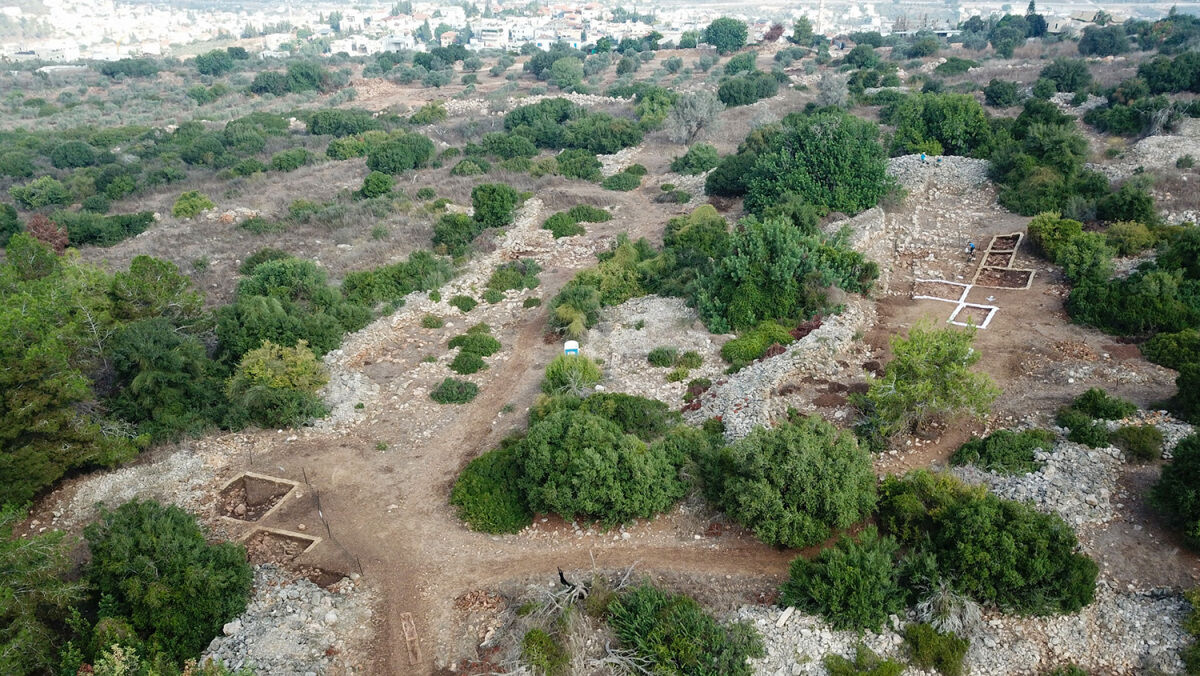
Based on the date of the artifacts—the turn of the first millennium b.c.e.—the researchers revealed that bronzemaking at the site specifically linked el-Ahwat to the Timna and Faynan copper mines, with ores coming from each. Comparative studies between these Edomite mines have shown that around 1000 b.c.e. both locations experienced identical changes in copper production. The Bible describes this period as a time when the united monarchy exerted control over Edom during the reign of David: “[A]ll the Edomites became servants of David” (2 Samuel 8:14). The presence of such copper far to the north, within the heartland of Israel, as well as expertise for on-site alloying, are representative of the control and development ascribed in the biblical account to the united monarchy.
To learn more, read our article “Bronze Production in Central Israel—Evidence of David’s Kingdom?”
6. Thutmose II Tomb
The discovery of the tomb of a pharaoh is a holy grail moment—and none more so than for a tomb of Egypt’s golden age, the New Kingdom Period (circa 1550–1070 b.c.e.). The discovery of Tutankhamun’s tomb in 1922 stands out as a case in point. A little more than a century on, in a February 2025 Egyptian Ministry of Tourism and Antiquities announcement, it was confirmed: The royal tomb of Pharaoh Thutmose ii had been discovered.
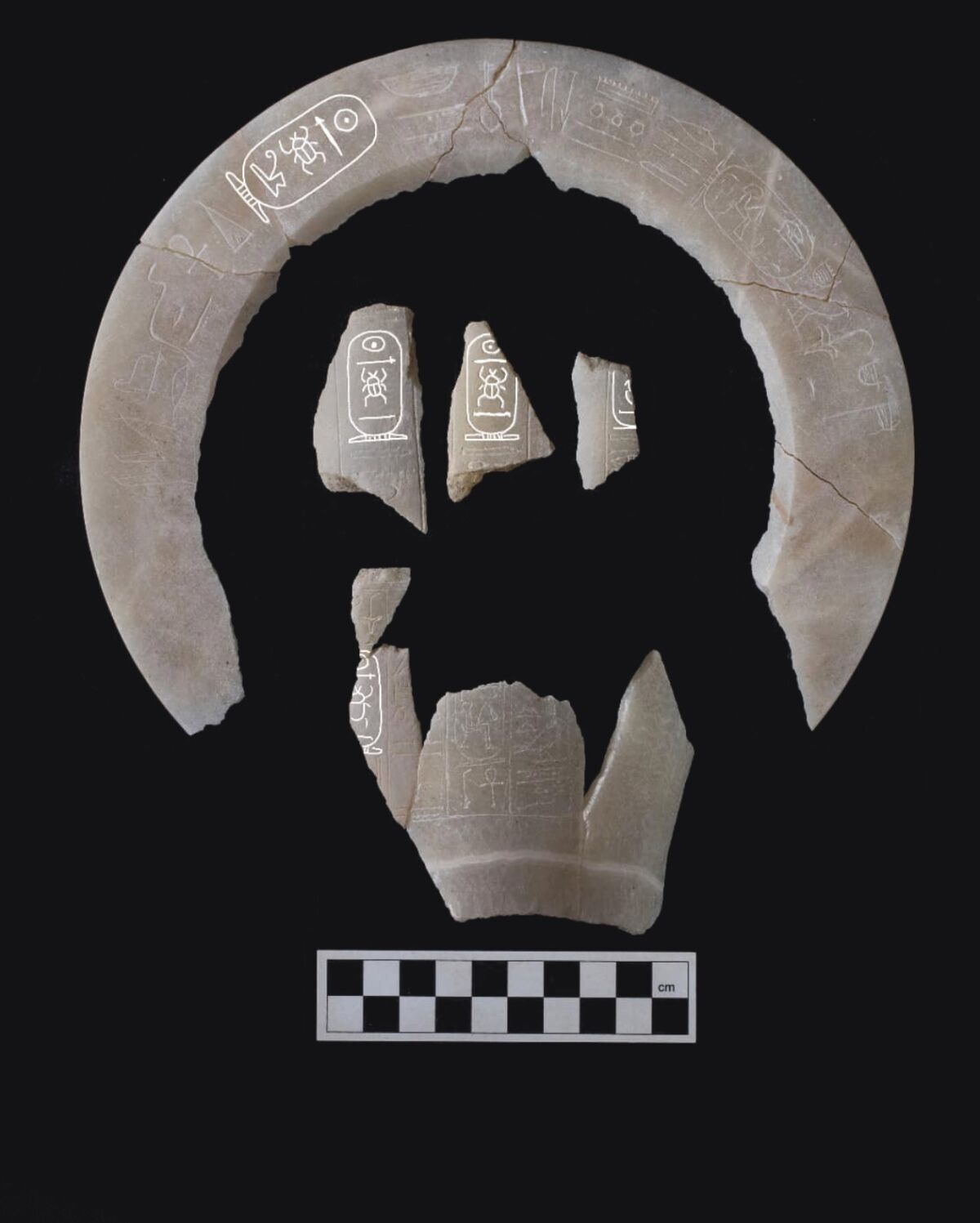
Thutmose ii (1512–1504 b.c.e., high chronology) was the son of Thutmose i; husband of Egypt’s greatest female pharaoh, Hatshepsut; and father of arguably the greatest pharaoh of all time, Thutmose iii. Ironically, Thutmose ii was relatively unimpressive—and so was his tomb. His mummy and its later reburial location at Deir el-Bahari had already been discovered in 1881. The whereabouts of his original tomb, however, was missing. This was finally discovered at Wadi C, cut into the base of a cliff. It bore the giveaway ceiling map and friezes of a royal pharaonic burial, but it was almost empty.
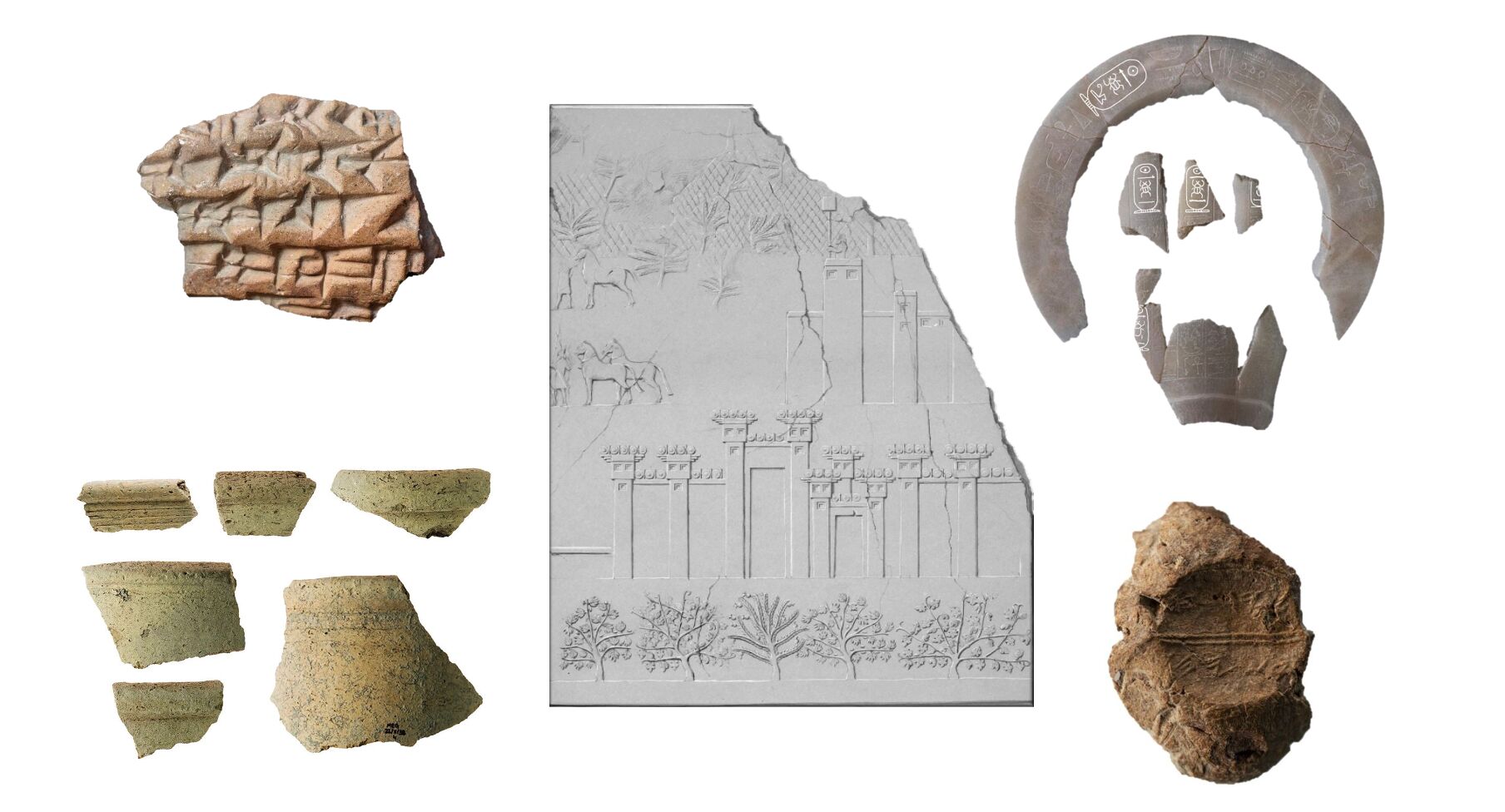
Evidence showed that at some point soon after construction, it was damaged by flooding due to a nearby waterfall, and the goods had been subsequently relocated. Only a few alabaster fragments found in the tomb, bearing the name of Thutmose ii, ultimately led to its secure identification. Still, the discovery of any tomb in any state relating to Egypt’s fabled New Kingdom Period is huge, leading the director of the search to “burst into tears” following its discovery. (For Thutmose ii’s possible connection to the Exodus, read our article here.)
To learn more, read our article “A Once-in-a-Century Find.”
5. Servant of Josiah Bulla
Another discovery relating to King Josiah makes our Top 10 list this year: a bulla (clay seal impression) that likely belonged to one of his servants mentioned in the Bible. In July, the Temple Mount Sifting Project—an initiative that painstakingly sifts through tons of earth illegally bulldozed from Jerusalem’s Temple Mount by the Islamic Waqf in the late 1990s—announced the new discovery.
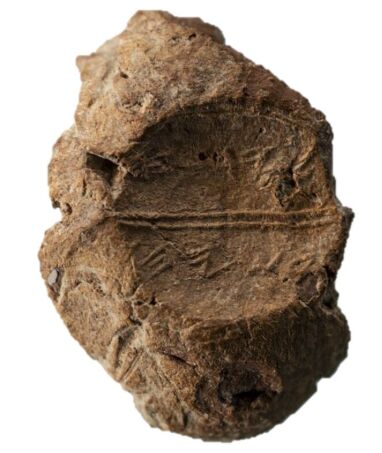
Meant to seal a bag or storage container, the late seventh- to early-sixth century b.c.e. seal impression reads, “Belonging to Yed[a‛]yah (son of) Asayahu.” Asayahu represents a slightly longer theophoric version of the biblical name Asaiah (with the longer ending -yahu, rather than -iah or -yah—note that both forms can be used interchangeably). The Bible mentions Asaiah as a servant of King Josiah dispatched to visit “Huldah the prophetess” to learn of the fate of Judah and Jerusalem’s prophesied destruction (2 Kings 22; 2 Chronicles 34). If this bulla does indeed refer to one and the same Asaiah, then Yedaiah would represent his son. Though it is impossible to be 100 percent certain about the identification, the researchers call it “highly plausible” due to the parallel name, dating, Jerusalem location and the fact that such administrative seals were only held by those in high positions of authority.
To learn more, read our article “First Temple Period Bulla Discovered—Could It Reference King Josiah’s Servant?”
4. Assyrian Tribute Demand
In October, the Israel Antiquities Authority announced the discovery of the first-ever First Temple Period Assyrian inscription in Jerusalem. The miniature 2.5-centimeter cuneiform inscription was found while wet-sifting earth from the ongoing excavations adjacent the southwest corner of the Temple Mount.

While the inscription was found within a later period fill, its Akkadian script dates paleographically to somewhere within the eighth to seventh centuries b.c.e., and petrographic analysis of its clay reveals it to have been made somewhere within Mesopotamia’s Tigris Basin, where Assyria’s power centers were located. The text on the inscription, while extremely fragmentary, contains a demand for a late payment of tribute “by the first of Av”—or else. Given the dating window, the reigns of Judean kings Hezekiah and Manasseh span most of this period in question and are both described in the Bible as being under the yoke of Assyria (e.g. 2 Kings 18:7; 2 Chronicles 33:11)—with Hezekiah notably refusing to pay tribute, leading to Sennacherib’s famously fateful invasion of Judah.
To learn more, read our article “A 2,700-Year-Old Assyrian Inscription Demanding Tribute Found in Jerusalem.”
3. Redating the Dead Sea Scrolls
The discovery of the Dead Sea Scrolls trove in the late 1940s and early ’50s set off an earthquake in the archaeological and biblical studies communities. It remains arguably the greatest discovery in biblical archaeology. In the years and decades since, various paleographic and limited carbon-dating approaches have been used to date the trove, placing the bulk of the material between the second century b.c.e. and second century c.e. Now, AI technology is joining the fray—and revealing that many of the scrolls actually should be dated much earlier.
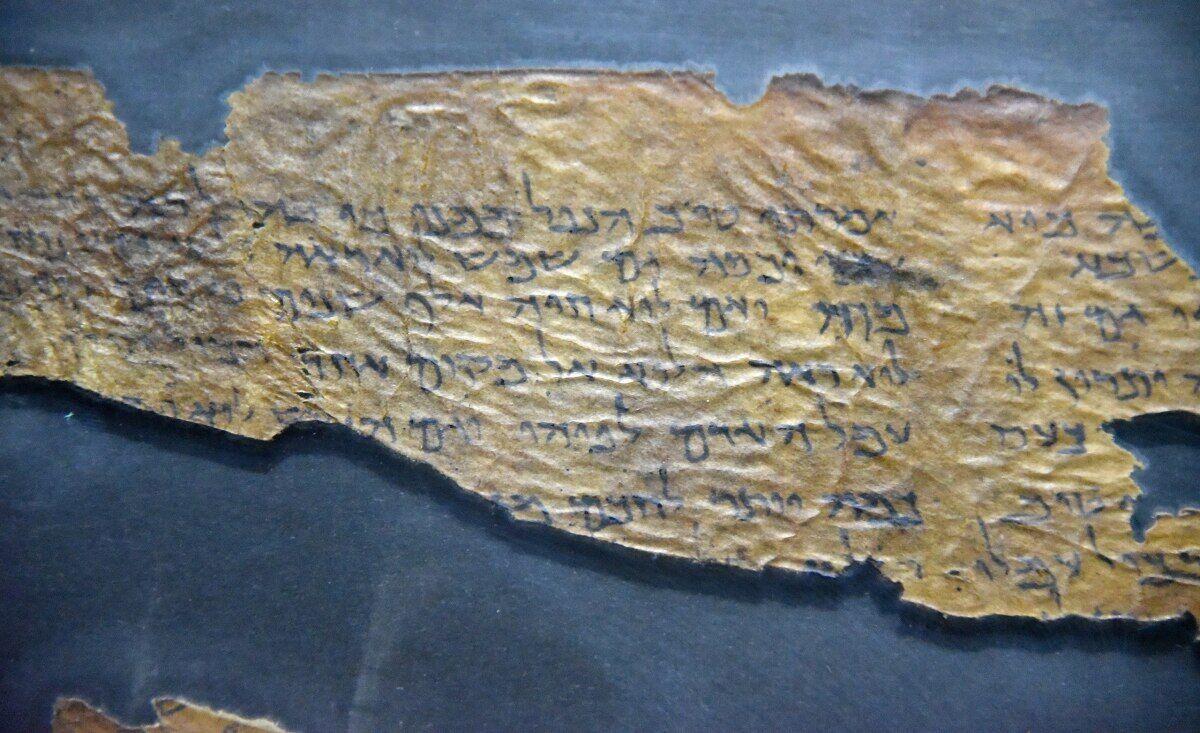
Carbon-dating the many thousands of fragments—a destructive, laborious, time-consuming and incredibly expensive process—is a virtually impossible task. And manual paleographic dating of the scrolls is an equally cumbersome, much less-than-precise task, prone to biases. As an alternative, researchers developed an AI program named Enoch, trained on two dozen securely carbon-dated scroll samples, and then let loose on 135 other samples in the trove—the computer technology more readily able to detect minute differences and flourishes in script. The results were that “Enoch’s style-based predictions are often older than traditionally assumed paleographic estimates, leading to a new chronology of the scrolls and the redating of ancient Jewish key texts that contribute to current debates on Jewish and Christian origins,” wrote Mladen Popović et al. in their June publication in PLOS One. Examples include fragments of the books of Samuel and Jeremiah redated to the fourth century b.c.e.; Ecclesiastes to earlier within the third century b.c.e. (and thus challenging minimalist theories about the very late authorship of this book); and a section of the book of Daniel pertaining to prophecy of Antiochus iv Epiphanes, long believed to have been written after the events at hand (the 160s b.c.e.), returning a date range of 230–160 b.c.e. Such an early date range has drawn criticism as “proof” that Enoch is dating fragments too early; either that, or perhaps the text really is prophetic.
To learn more, read our article “Redating the Dead Sea Scrolls.”
2. Jerusalem Dam and Reservoir
At the conclusion of our 2023 Top 10 list, in looking forward to future discoveries, we noted the ongoing Birkat el-Hamra/Siloam Pool excavations “some sorely flawed ‘reporting’ about the site, including that the team has found ‘almost nothing.’ What they have found is actually extremely interesting and will reshape our understanding of this lower part of the City of David.” The team, led by Dr. Nahshon Szanton, has kept a tight lid on their discoveries—and finally, two years later, we can share one of several major new discoveries, making it all the way to No. 2 in our list for 2025: an early dam and reservoir, dating much earlier than expected—circa 800 b.c.e.
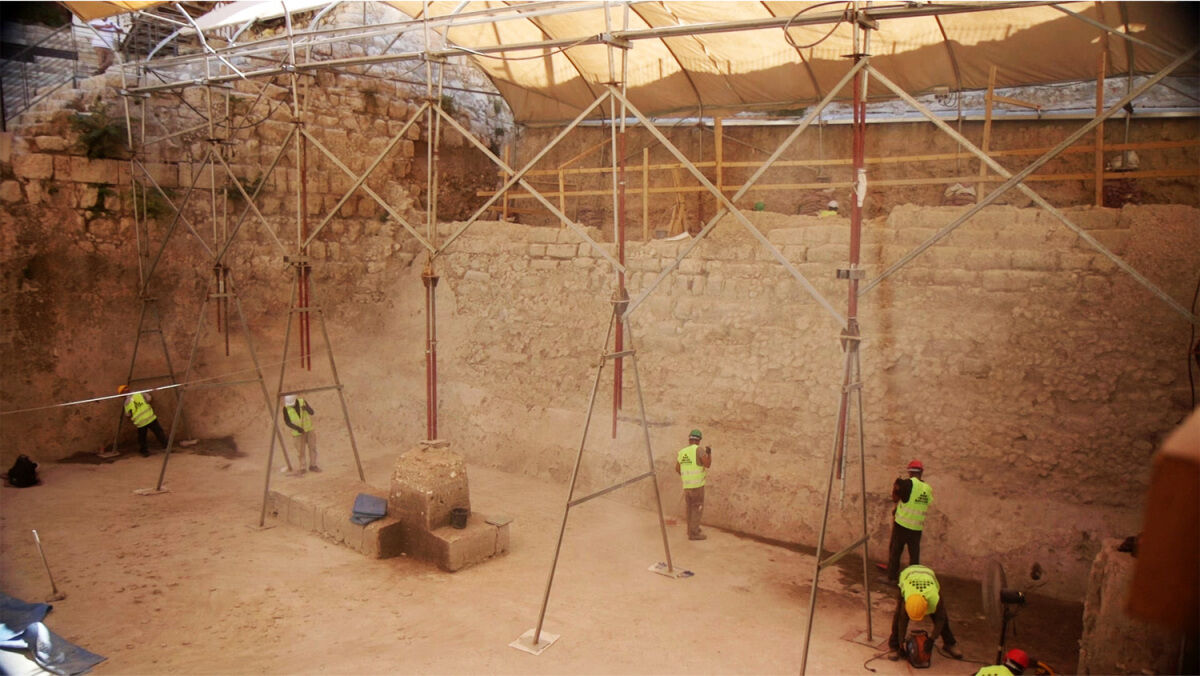
Along the southeast edge of the pool, a monumental reservoir and dam wall was discovered measuring 12 meters high, 8 meters wide and 21 meters long (note that the wall continues further, but has only been exposed to this length)—part of a much earlier Iron Age phase of the famous later Herodian structure. Carbon-dating of several organic remains found throughout the structure revealed surprisingly consistent dates, all pointing to the end of the Iron iia period—much earlier than expected, with the general assumption being that this pool was first built at the time of Hezekiah (around a century later), together with the construction of the Siloam Tunnel. The radiocarbon research, conducted by Dr. Johanna Regev and Prof. Elisabetta Boaretto of the Weizmann Institute, was published in September in the journal pnas. The discovery is forcing a rethink of the development of ancient Jerusalem, including calling into question the very identification of this as the “Siloam Pool”—with the excavators proposing it instead as “Solomon’s Pool” of classical literature, and the Siloam Pool as another one further northwest, directly connected to the end of the Siloam Tunnel. If this interpretation is correct, we would actually only be returning to the original theories for the location and identities of these pools.
To learn more, read our article “Massive Ancient Water Reservoir Discovered in the City of David,” which makes the case for the site’s original construction perhaps going back to the time of the pool’s namesake.
1. Assyrian Depiction of Jerusalem and Hezekiah
Stephen Compton, independent researcher of the University of South Africa, was featured in last year’s No. 3 spot for his novel research identifying the location of Sennacherib’s camps at Lachish and Jerusalem. At the time, we told our readers, “While the Lachish identification is the most likely, Compton has had his detractors. But stay tuned because there is something along these lines coming down the pipeline that is quite remarkable.” With the publication of his latest research finally coming out in the October issue of the Journal of Near Eastern Studies—“Sennacherib’s Throne-Room Reliefs: On Jerusalem and the Misplaced City of Ushu”—we have our No. 1 entry for 2025: The identification of Jerusalem and Hezekiah on Slab 28 of Sennacherib’s Nineveh wall reliefs.
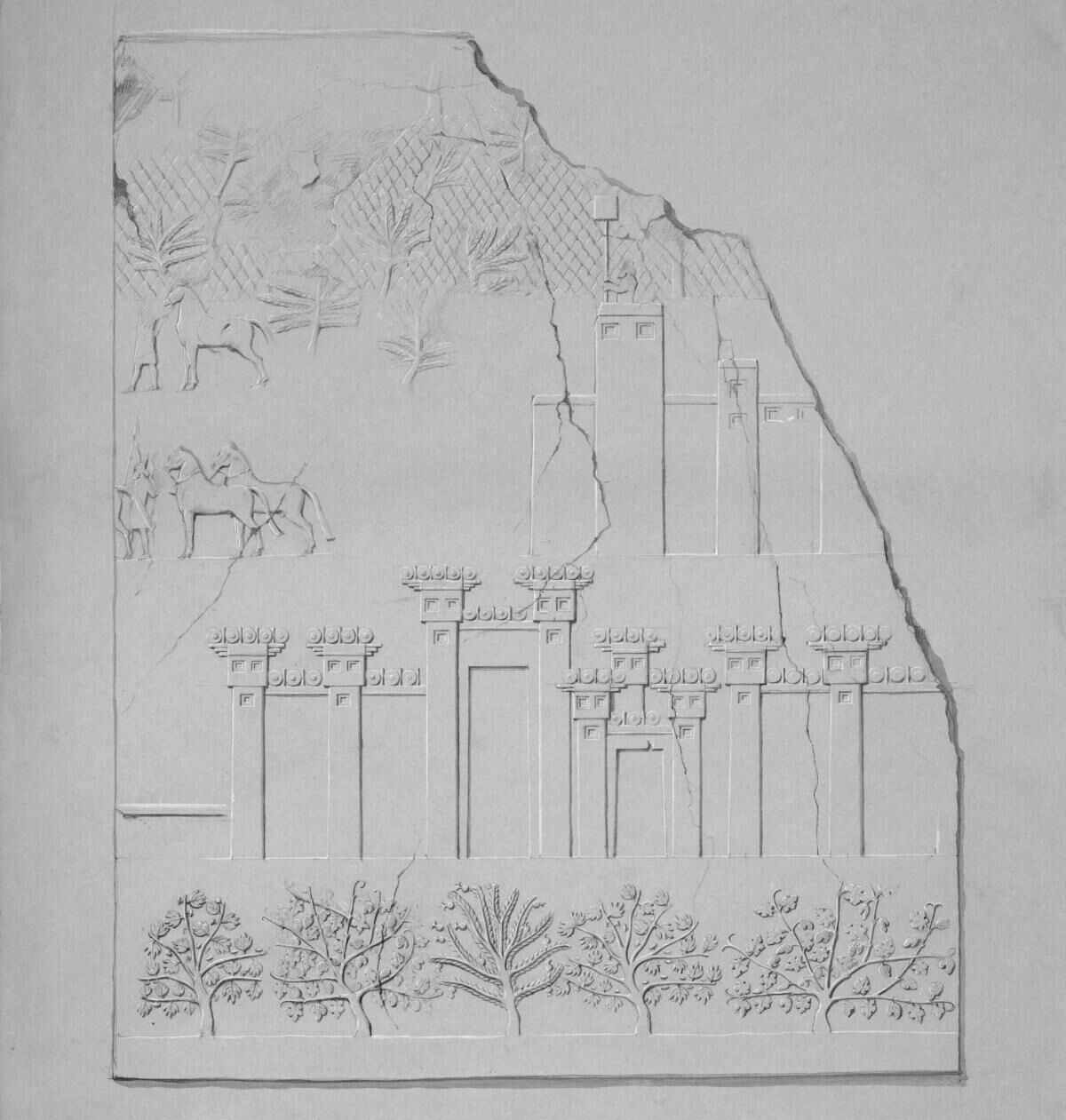
This identification had already been tentatively proposed by Christoph Uehlinger in 2003, concluding at the time that the “identification of Jerusalem on slab I-28 cannot as yet be positively proven.” Compton’s new research builds on Uehlinger’s research from an entirely novel approach, rendering the identification of Jerusalem and Hezekiah virtually certain—thus making Slab 28 our earliest depiction of Jerusalem, preceding the Madaba Map by more than 1,200 years. Interestingly, unlike Uehlinger, Compton was not trying to find Jerusalem on the wall reliefs, but rather another city entirely—the Phoenician city Ushu. This quest drew his focus to other prominent cities depicted on the wall reliefs of Sennacherib’s palace, including the biblical city of Gath/Tell es-Safi and the city depicted on Slab 28. He noted several lines of evidence backing the identity of the latter as a Judahite city, including its twice-corbeled battlements, it being upon two hills, and the form of banner held by the lone representative figure contained within the city—for whom, on the basis of this as Jerusalem, there can be little doubt as representing “Hezekiah … shut up in Jerusalem like a caged bird,” in the words of Sennacherib’s prism inscriptions.
This new research was featured as the cover story of our November-December 2025 issue of Let the Stones Speak. To learn more, read our article “Revealed: A 2,700-Year-Old Depiction of Jerusalem and Hezekiah?” and check out Let the Stones Speak podcast host Brent Nagtegaal’s interview with Compton below.
We look forward to what 2026 will bring!
Read Our Previous Lists
Top 10 Biblical Archaeology Discoveries of 2024
Top 10 Biblical Archaeology Discoveries of 2023
Top 10 Biblical Archaeology Discoveries of 2022
Top 10 Biblical Archaeology Discoveries of 2021
Top 10 Biblical Archaeology Discoveries of 2020
Top 10 Biblical Archaeology Discoveries of 2019
Top Biblical Archaeology Discoveries of 2018