
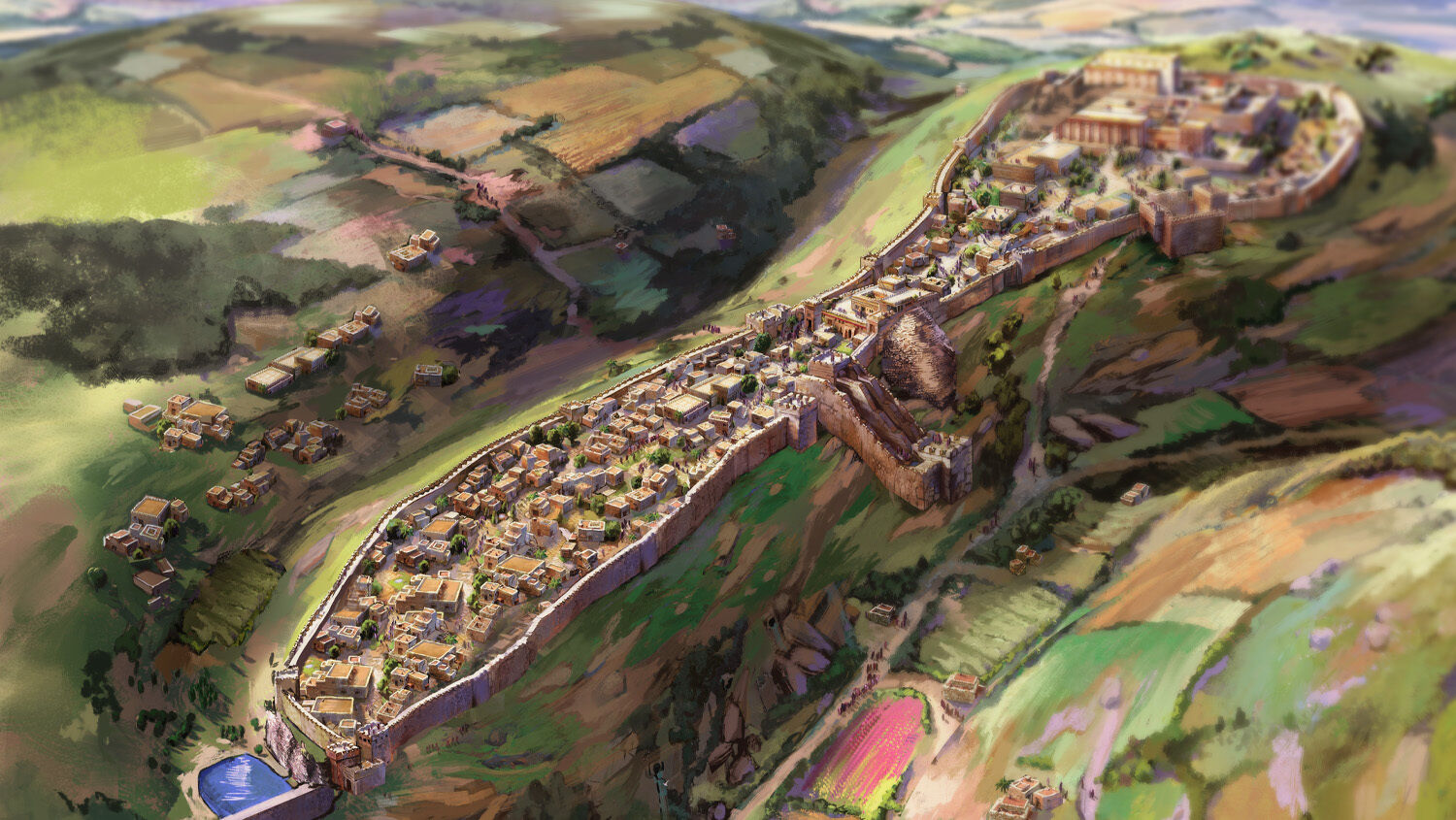
When the City of David Foundation announced in December 2022 that it was going to excavate the entire Siloam Pool, the news was received by many archaeologists, including myself, with some indifference and a ho-hum attitude. We already understood the archaeology of this pool at the southern tip of the City of David and didn’t think there was much more to be learned, even if the entire pool was excavated.
Or so we thought.
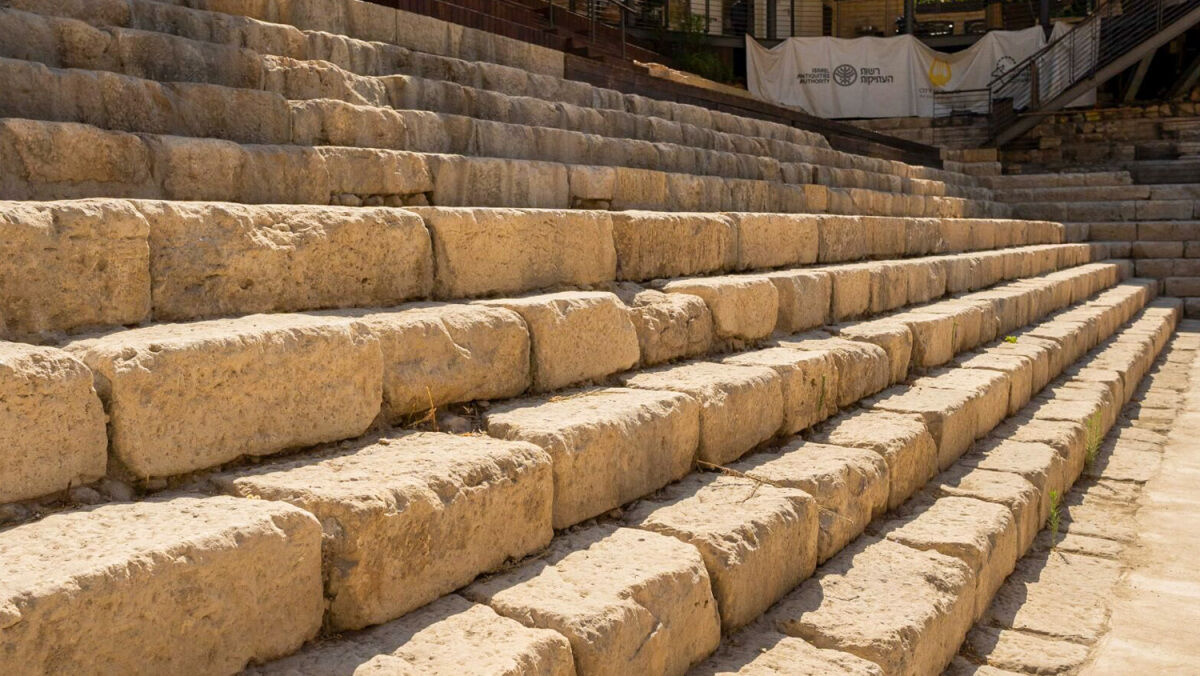
Much of our understanding had come two decades earlier, when archaeologists Ronny Reich and Eli Shukron discovered the northern portion of the pool with its beautiful ashlar stone steps descending toward the south. Shortly thereafter, Reich and Shukron published a report identifying their discovery as the Siloam Pool mentioned in the book of John.
Before this grand claim, the name “Siloam Pool” was attached to a smaller pool further north, at the exit point of the water tunnel known today as “Hezekiah’s Tunnel.” The discovery by Reich and Shukron challenged this identification. The colossal nature of the finely cut stones and the dating of the steps to the late Second Temple Period made it reasonable to accept that this new pool was the handiwork of Herodian Period Jerusalem and the pool where the blind man was healed, recorded in John 9:1-11.
So when the City of David announced that it intended to excavate the rest of the pool, it didn’t seem too important an endeavor—at least in terms of furthering our understanding of ancient Jerusalem. It would be a huge task; roughly two Olympic-sized swimming pools of material would be removed. But it wasn’t especially exciting, since all of the potential occupation layers uncovered inside the pool would no doubt date to the Herodian Period and later. For this reason, several scientists considered the excavation more an earthmoving enterprise than an actual archaeological excavation.
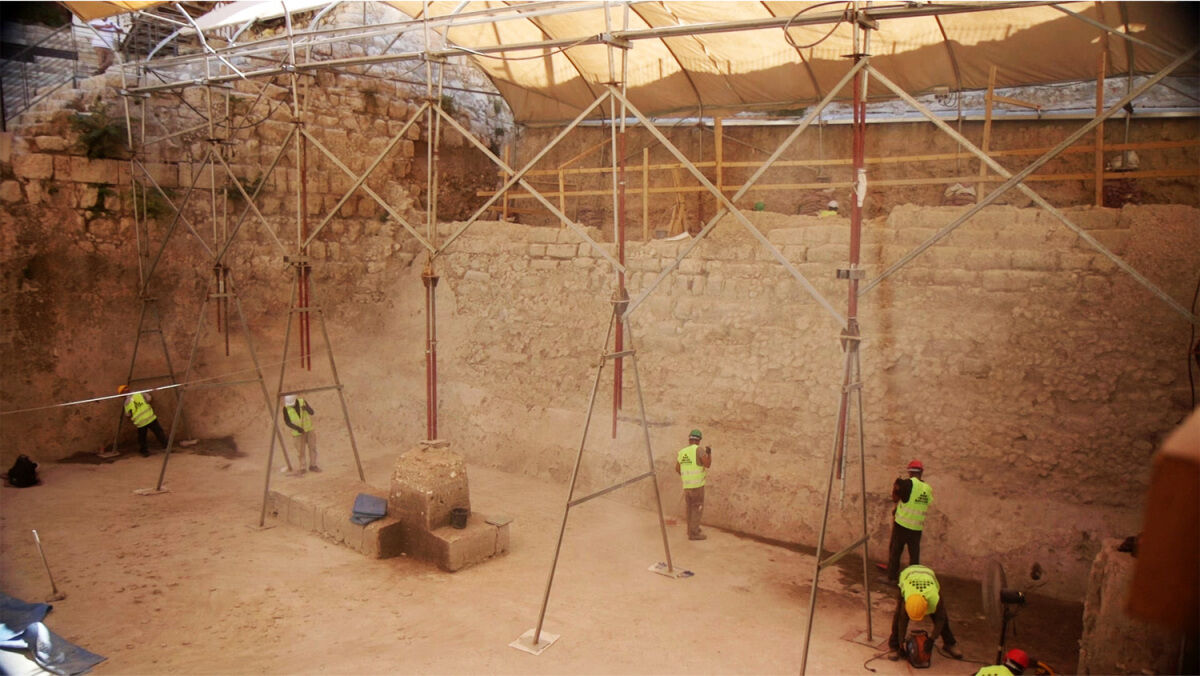
In early 2023, and with very little fanfare, the Israel Antiquities Authority (iaa), the City of David Foundation and head archaeologist Dr. Nahshon Szanton launched into the Herculean effort to fully excavate the Siloam Pool.
Fast-forward two years, and I’m glad the excavators had more vision than me to push forward with the dig!
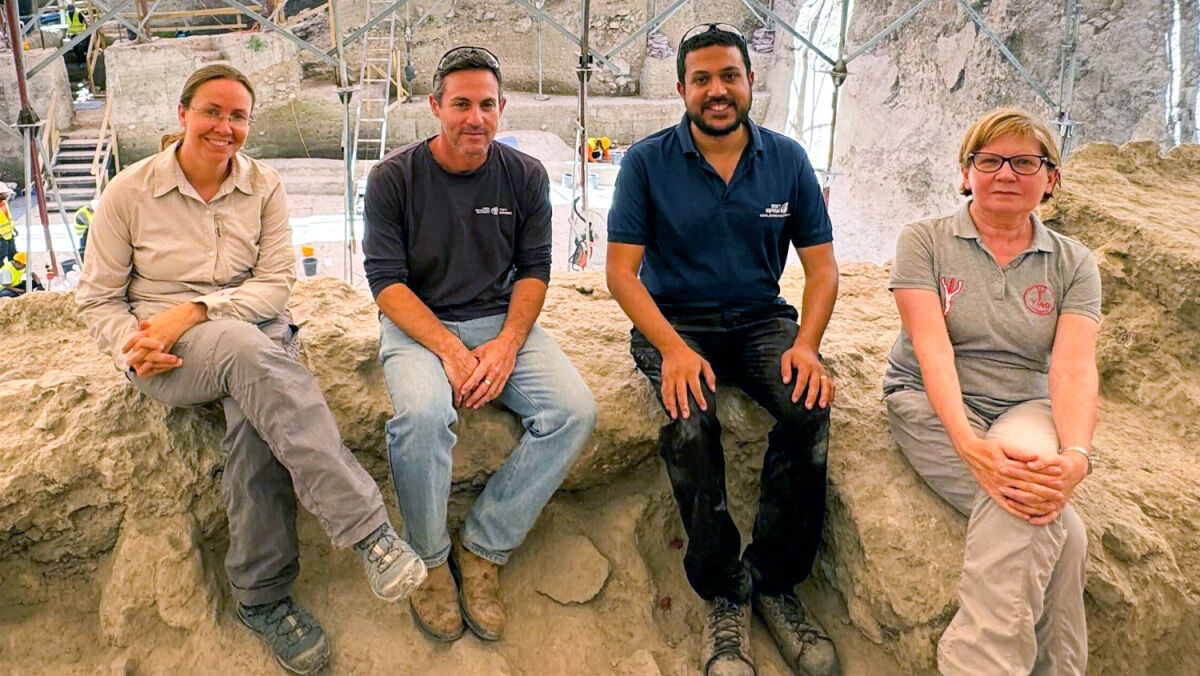
On July 15, after wrapping up work on our dig on the Ophel, I trekked a few hundred yards to the bottom of the City of David along with the Ophel excavation team to meet Dr. Szanton and fellow archaeologist, Itamar Berko. This was one of our weekly organized tours to learn about the digs taking place in the area. Standing with Dr. Szanton on the plastered floor at the bottom of the pool, I was dumbfounded.
A colossal dam wall towered above us!
But it wasn’t merely the height and size of the wall that was astonishing. There was also the revelation, as Dr. Szanton explained, that the wall wasn’t from King Herod’s time, nor even from the time of King Hezekiah, but was even older—from 2,800 years ago!
Dr. Szanton and his team had uncovered the largest water reservoir in Israel, dated to the time of Jerusalem’s early biblical kings.
Here’s how the excavators reported their discovery, as revealed in an August 30 press release: “This is the largest dam ever discovered in Israel and the earliest one ever found in Jerusalem. Its dimensions are remarkable: about 12 meters high, over 8 meters wide, and the uncovered length reaches 21 meters.” (Note, this is not the total length of the wall, as it extends farther south out of the excavation area.)
It is true that the presence of this wall and the pool (known as Birkat el-Hamra in Arabic) were identified before these excavations, and even before Reich and Shukron discovered the beautiful stepped northern side. In fact, drawings of this area from the mid-19th century reveal the presence of a dam wall. But until this recent excavation, the entire inside of the dam area was filled with earth and had fruit trees growing in it. We had no idea about the actual size and dating of this water reservoir.
This new information was arresting, not least because it questioned my prior thinking of the entire interpretation that this was the Siloam Pool.
When the Herodian Period steps were discovered 20 years ago, it seemed logical that they were further evidence that the Birkat el-Hamra was the Pool of Siloam mentioned in the Gospels. Without deeply investigating the question, many archaeologists and tour guides alike, including myself, agreed with the conclusion that this was the Siloam Pool.

But this new dating challenges this conclusion. And after studying it further, so too does much of the prior research.
Dating the Colossal Dam
Prior to this summer’s visit, I was somewhat aware of Dr. Szanton’s theory that the Birkat el-Hamra pool was not the Siloam Pool, as Reich and Shukron suggested. Not having studied the subject in-depth myself, I was skeptical. It’s not unusual for new excavators to have new interpretations of an area previously excavated and to seek to reinterpret or overturn the conclusions of previous archaeologists. I wondered if Dr. Szanton might be seeking to overturn the conclusions of Reich and Shukron.
As it turns out, and as I later discovered researching this myself, Dr. Szanton was actually restoring the initial line of research—one I believe fits much better with the science, the historical record and the biblical text.
For me, the catalyst for reconsidering the pool’s identification was the dating of the dam wall. I assumed, like most, that the wall dated to the time period of King Hezekiah (late eighth century b.c.e.). It was logical to believe the pool was originally built by King Hezekiah when he built a conduit to carry water from the Gihon Spring to a pool in the southwest part of the city (2 Kings 20:20)—close to where this pool is located.
And although the end of Hezekiah’s Tunnel is some distance away, it was still likely in my mind that his conduit fed this large pool.
However, during the summer tour, the archaeologists were emphatic: This massive dam predated Hezekiah by a century. If it wasn’t Hezekiah’s, then whose was it?
The new dating was published in late August in the journal Proceedings of the National Academy of Sciences of the United States of America (pnas), in an article titled “Radiocarbon Dating of Jerusalem’s Siloam Dam Links Climate Data and Major Waterworks.” The lead author was Johanna Regev of the Dangoor Research Accelerator Mass Spectrometer Radiocarbon Laboratory of the Weizmann Institute of Science.
The paper documents how the team from the Weizmann Institute visited the site and extracted four organic samples from the mortar of the dam wall for carbon-14 radiometric dating. Three samples (uncharred straw and twigs) were taken from between the stones of the upper vertical portion of the wall and another sample of uncharred straw was taken
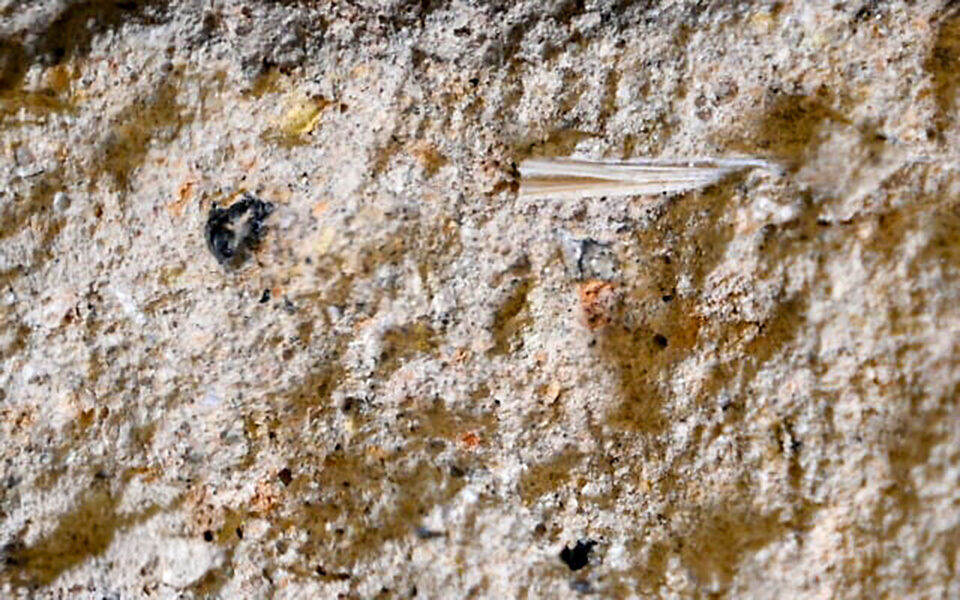
from the core of the upper portion of the slanting reinforcement. The samples were taken to the lab in Rehovot for testing. What did testing reveal? “All four dates were very similar and could be averaged, giving a calibrated R_combined date of 805–795 b.c.e. (68.3 percent) and 809–792 b.c.e. (95.4 percent),” wrote Regev, et al.
Put simply, all four samples dated to around 800 b.c.e.!
In their press release, Regev and laboratory head Elisabetta Boaretto noted how unique it is to have four distinct carbon samples fall within such a narrow time frame: “Short-lived twigs and branches embedded in the dam’s construction mortar provided a clear date at the end of the ninth century b.c.e., with extraordinary resolution of only about 10 years, a rare achievement when dating ancient finds.”
The confirmed early dating for the massive dam wall, and therefore the earliest phase of the entire pool, was shocking to many scientists and scholars. Many scholars believe that Jerusalem’s population didn’t expand across the Tyropoeon Valley until the late eighth century b.c.e. at the time of Hezekiah. But this massive construction, bridging the Tyropoeon Valley, was built at least 100 years earlier.
In comments to Haaretz, renowned biblical minimalist Prof. Israel Finkelstein conceded that this discovery likely speaks to a larger Jerusalem than previously thought: “I see no logic in investing in this project had it not been for the need to bring water to the new quarter. The question remains open, but it is possible that the city’s expansion toward the Western Hill … was already starting by 800 b.c.e. … and the pool and dam were meant to serve this new neighborhood.”
Redating the dam wall a century earlier suggests a stronger royal authority in Jerusalem earlier than many had assumed. “The exposure of the largest dam ever found in Israel, in the heart of ancient Jerusalem, is tangible evidence of the strength of the kingdom of Judah and the creativity of its kings in dealing with natural and environmental challenges,” explained Heritage Minister Rabbi Amichai Eliyahu.
In the world of archaeology, nothing speaks more visibly to the power of a king than massive building projects. To stand at the bottom of this dam and marvel at the colossal wall and then conclude that Jerusalem’s kings were unsophisticated is to betray the eyes. The administration in charge of Jerusalem in the ninth century b.c.e. obviously had the brains and brawn to construct this massive pool!
The iaa and the City of David Foundation deserve credit and praise for this discovery, especially considering most of us never anticipated such a momentous and important find from so early a time.
For historians and archaeologists, the dating of the pool before Hezekiah’s time raises some major questions.
Earlier Than 800 b.c.e.?
On the face of it, the question of who built the massive pool seems obvious. Four carbon samples conclusively date its construction to around 800 b.c.e. Which biblical king ruled at this time? The general consensus is King Jehoash of Judah, who reigned from 835–796 b.c.e.
But this might be too simple.
Given that the carbon samples were taken from the very top of the 12-meter-high dam wall, it’s possible that the top portion was renovated by Jehoash in the late ninth century and the main construction of the wall took place earlier. This is routine in long-lived sites across Israel, especially in Jerusalem. For example, according to the Bible, the oft-debated location in Jerusalem called the Millo (still identified by most as the Stepped Stone Structure) was originally built by King David, reinforced by Solomon, and later renovated by King Hezekiah (2 Samuel 5:9; 1 Kings 9:15; 2 Chronicles 32:5). By excavating through the top portion of the Stepped Stone Structure, an archaeologist could arrive at a date from Hezekiah’s time, but it would be unwise to conclude that the entire structure dates entirely to Hezekiah’s time.
What does this mean for the dam dating? It means that the date furnished by carbon testing (circa 800 b.c.e.) is the latest possible date for the construction of the massive water reservoir and dam wall. Sure, King Jehoash’s men likely built the latest phase of the Iron Age dam, but it could have initially been built even earlier.
As we reconsider our understanding of this dam in light of this new dating, it’s important to place this new information alongside prior research. Let’s now consider the dam wall and reservoir in the context of the larger water system of ancient Jerusalem.
Jerusalem’s Ancient Water Systems
The water system of ancient Jerusalem is a fascinating labyrinth of underground tunnels, pools and shafts. The origin of this watery maze is the Gihon Spring, Jerusalem’s perennial water source, situated inside the Kidron Valley, halfway up the eastern slope of the ancient City of David. From the spring chamber, where water shoots out between a crack in the bedrock, several tunnels branch off in different directions.
One tunnel (known as the Siloam tunnel, or “Hezekiah’s Tunnel”) still flows with water, as it has for the last 2,700 years. This tunnel takes water on a 530-meter journey from the Gihon Spring, southwest under the City of David ridge, all the way to the bottom of the Tyropoeon Valley on the city’s southwest. Here the water pools in what was universally recognized as the location of the Siloam Pool (until Reich and Shukron’s theory). Sloshing through this ankle-deep watery tunnel is still one of my favorite things to do every summer in Jerusalem. Although there have been attempts to redate this Siloam tunnel to an earlier or later king of Judah, the weight of evidence still points to Hezekiah.
But what about Jerusalem’s water system before Hezekiah? Standing beside the Gihon Spring, one can see several rock-cut channels, some of which are big enough for tourists to enter. One of these tunnels, known as Channel ii, takes a more direct route along the eastern ridge of the City of David to the southern tip of the ancient city. Unlike Hezekiah’s Tunnel, Channel ii is not completely enclosed by bedrock; instead, the water would have been mostly unhidden as it makes a relatively direct journey from the spring to the massive reservoir recently uncovered, the Birkat el-Hamra pool.
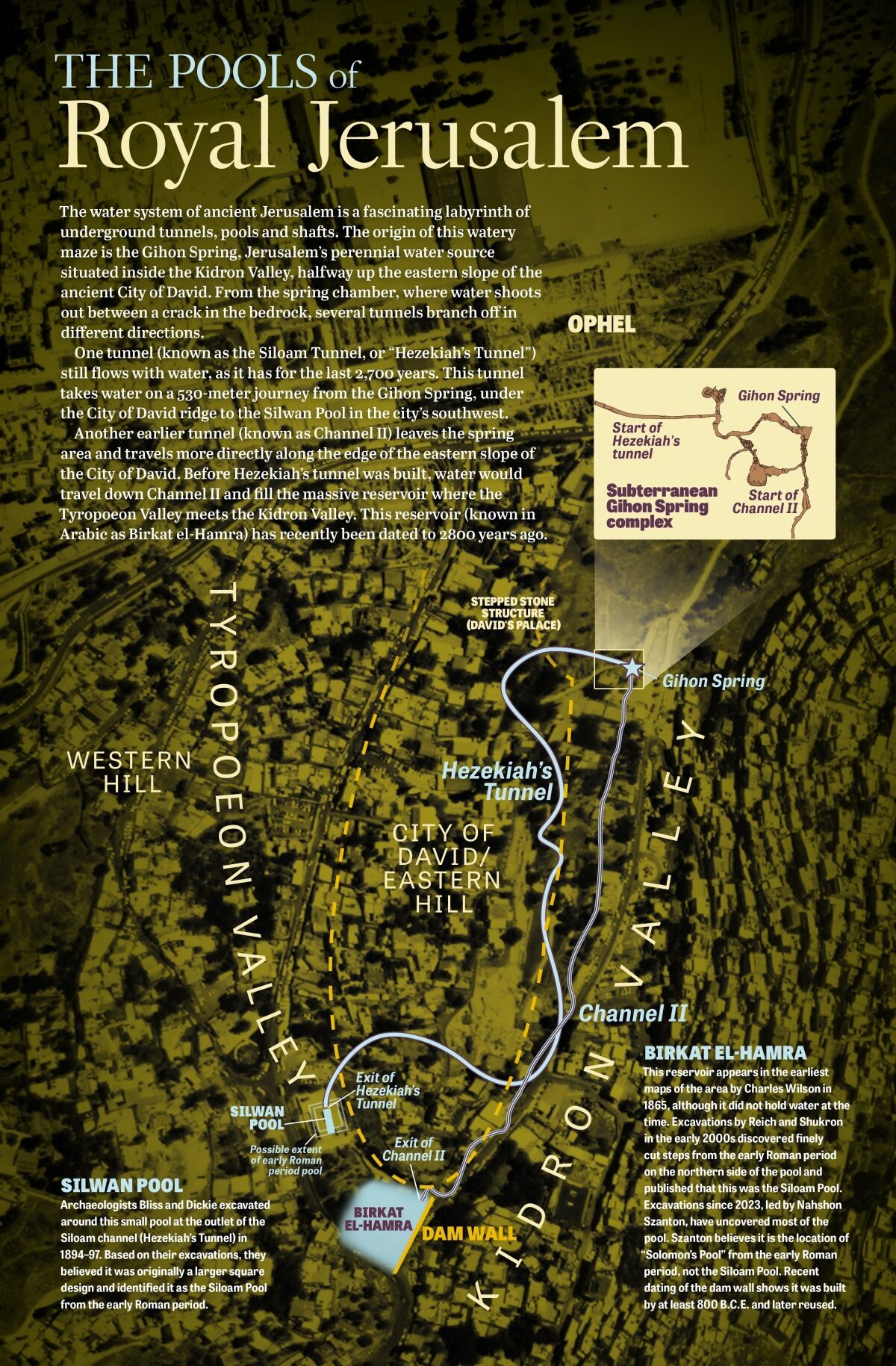
The location of this reservoir is logical for a few reasons. First, damming the Tyropoeon Valley would make sense in the larger vision to eventually incorporate the Western Hill into Jerusalem. And functionally, this valley is narrower than the Kidron, which would make the construction of a wall easier (though still a major project).
In short, we have two tunnels and two pools, with one tunnel (Channel ii) and pool (Birkat el-Hamra) predating the other. The construction of Hezekiah’s Tunnel made Channel ii inoperative. Instead of the water moving along the eastern ridge outside the city, Hezekiah’s Tunnel took water beneath the city, emptying it into a pool further up the Tyropoeon Valley—to what had been originally identified as the Siloam Pool.
This change in Jerusalem’s water tunnel system is also described in the Bible.
As the Bible relates, Hezekiah built his tunnel during a time of impending siege from Sennacherib’s Assyrian army. It describes Hezekiah building a new water conduit to bring the water into the western side of the city (2 Kings 20:20; 2 Chronicles 32:2-4). It also talks of him blocking “the upper watercourse of Gihon” (2 Chronicles 32:30; King James Version). Most likely, this is a reference to Channel ii being retired when the new channel began operating.
The Prophet Isaiah, a contemporary of Hezekiah, confirms this change in Jerusalem’s water systems in a number of passages. Prior to Hezekiah, Isaiah mentions that the people were rejecting “[t]he waters of Shiloah that go softly” (Isaiah 8:6), a passage that has been linked by many scholars to the flow of water through Channel ii (see Jerusalem and the Old Testament, by Dr. J. Simons). In chapter 22, Isaiah records that during Hezekiah’s time a new pool was constructed (verse 11).
So who built Channel ii and the massive Birkat el-Hamra reservoir?
Whichever administration it was, it had to rule Jerusalem at least 100 years before Hezekiah.
Was It Solomon?
In 2023, not long after he began excavating the dam, Dr. Szanton published a summary paper in ‘Atiqot about the pools at the bottom of the City of David. In “Ritual Purification and Bathing in the Second Temple Period,” Dr. Szanton provided “archaeological data that supports the identification of Birkat el-Hamra with Solomon’s Pool.” The paper also identified the smaller pool by the exit of Hezekiah’s Tunnel as the location of the Siloam Pool.
The term “Solomon’s Pool” is a reference to a pool identified by first-century c.e. Jewish historian Josephus. Josephus was referring to a pool in use during the early Roman period, not necessarily a pool that was actually built by King Solomon.
Dr. Szanton’s paper presents the archaeological and historical arguments for rejecting the claim by Reich and Shukron that the Birkat el-Hamra pool is the Pool of Siloam.
His paper isn’t the first to do this, as Dr. Szanton acknowledged. In 2008, historian Dr. Yoel Elitzur wrote “The Siloam Pool—‘Solomon’s Pool’—Was a Swimming Pool” for Palestine Exploration Quarterly. Elitzer’s position drew insight from the first English translation of Josephus by Whiston in 1737, which describes the location of the First Wall of Jerusalem in this very area of the large dam: “Where (above the fountain Siloam) it also bends again toward the east at Solomon’s Pool and reaches as far as a certain place which they called ‘Ophlas,’ where it was joined to the eastern cloister of the temple,” Josephus wrote (Wars of the Jews; 5.145).
Using different translations of this passage of Josephus, other scholars put this “pool of Solomon” further toward the north. Elitzer disagreed, stating, “According to this interpretation, ‘Solomon’s Pool’ was not in the middle of the eastern flank, but rather at a low place on the edge of the southern flank, near the southeastern corner of the wall.”
Later in the article, Elitzer further clarified his position. He wrote, “Reich and Shukron’s pool is the most outstanding feature in the area of Jerusalem’s southeastern corner, and it was to this pool [of Solomon] that Josephus was probably referring” (emphasis added throughout).
Back to the Beginning
Here we have both Elitzer and Szanton (among others) making the case that this gigantic pool was “Solomon’s Pool” from the time of Jesus, and not the Pool of Siloam of the same period. However, neither researcher spends much time considering why the pool mentioned by Josephus was named after the 10th-century king and Jerusalem’s greatest builder.
This is somewhat understandable, given there was no hard archaeological data dating the pool to a much earlier period. There is also the frequent use of biblical names being appropriated at later times without any true relation to the individual. (Absalom’s Tomb in the Kidron Valley, which likely dates to the Hellenistic Period, comes to mind.)
But science has now confirmed that this pool was built in 800 b.c.e. or earlier, removing King Hezekiah as a potential candidate for its construction. Logically, doesn’t this suggest King Solomon should at least be considered as a candidate for its original construction?
There was a time when this was not only a logical possibility but the view of respected scholars. Armed with less science than we have today, these scholars believed that the channel that led to the Birkat el-Hamra, and likely the pool itself, was built by King Solomon.
Notice what historian Dr. J. Simons wrote in 1952, summarizing some of the conclusions of archaeologists Raymond Weill and Louis-Hugues Vincent, who excavated the City of David in 1913–1914 and 1923–1924: “The date of the tunnel of Siloam [Hezekiah’s Tunnel] and the fact that it … was the latest of the great waterworks from the spring of Gihon, also provides a terminus ante quem for all other [tunnels]. Vincent’s analysis of the artificial alterations in the spring-cave and also some plausible historical considerations have resulted in attributing canals i and ii [that lead to the Birkat el-Hamra] to the initial phase of the united monarchy …. The character of canal ii as a visible, unprotected water conduit, several hundred meters long, outside the circumvallation may be taken as indicative of a peace-time enterprise, to be thought of only in a period of great political tranquility. This fact, coupled with its general date in the early monarchy, makes it practically certain, as Weill observes, that it was constructed during the reign of Solomon. An allusion to the installation of an abundantly irrigated pleasure-garden by this king at Jerusalem may perhaps be seen in Ecclesiastes 2:5-6” (Jerusalem in the Old Testament).
Ecclesiastes is a book traditionally associated with King Solomon: “I made me great works; I builded me houses; I planted me vineyards; I made me gardens and parks, and I planted trees in them of all kinds of fruit; I made me pools of water, to water therefrom the wood springing up with trees; I acquired men-servants and maid-servants, and had servants born in my house; also I had great possessions of herds and flocks, above all that were before me in Jerusalem” (Ecclesiastes 2:4-7). If we take the traditional attribution of Ecclesiastes to Solomon’s time at face value, this is the earliest reference to pools relating to Jerusalem and specifically connects them to gardens with trees.
Another book attributed to King Solomon is the Song of Songs. Last year, Prof. Gabriel Barkay published a Hebrew-language book providing evidence that the Song of Songs could only have been written in the 10th century b.c.e., the time of King Solomon (see “Putting Solomon Back Into the Song of Songs,”).
The Song of Songs does not explicitly mention a pool, but it does make repeated references to King Solomon’s personal garden. For example, “My beloved is gone down into his garden …” (Song of Songs 6:2). It makes sense that this well-irrigated garden was the product of water channels and large pools and was situated in a lower elevation. Verse 11 explicitly states that the garden was in the valley: “I went down into the garden of nuts, To look at the green plants of the valley, To see whether the vine budded, And the pomegranates were in flower.” Whether this valley is the Tyropoeon Valley or the Kidron Valley, it is somewhere close to where the massive pool is located, as this is where the water is delivered from Channel ii. Even later biblical authors reference the “king’s garden” which is located in the southern part of the City of David (see 2 Kings 25:4; Nehemiah 3:15).
These biblical passages were not lost on the early archaeologists of Jerusalem. Indeed, they are also not lost on the archaeologists working in Jerusalem today. However, today there is a great reticence to relate discoveries to the biblical text if it is not 100 percent conclusive, which is extremely hard to achieve in any archaeological endeavor. And indeed, if archaeologists even speculate a logical connection to the biblical text before it is 100 percent confirmed, they could face ridicule by some of their colleagues.
And yet shouldn’t we consider the weight of evidence, both archaeologically and textually?
Archaeologically, we have a truly massive reservoir in the southern part of the City of David. We know, too, that it was built at least by 800 b.c.e. or earlier. And we also know that this same pool was fed by a water channel that predates Hezekiah’s Tunnel (700 b.c.e.).
Textually, we have several biblical allusions to King Solomon building pools and gardens in Jerusalem in the general vicinity of this reservoir. We also have Josephus referring to a large pool in this exact area as the “Pool of Solomon.”
Isn’t that enough evidence to at least consider the possibility that this dam was built by King Solomon?
This wouldn’t be unprecedented. After all, only a century ago, excavators in the City of David claimed that it was “practically certain” that King Solomon built the water system leading to the Birkat el-Hamra.
It’s true that the dating of Channel ii is still up for debate. Some archaeologists say it dates as early as Middle Bronze Age ii (circa 1800 b.c.e.). Others date it as late as the ninth century b.c.e. Others argue the northern section closest to the spring dates to the Middle Bronze and the southern half to the eighth century b.c.e. The reason for the wide window is tunnels through bedrock are very hard to date given there is little datable material available. This means we are left to date it by its relationship to the other features it relates to—features where the dating is disagreed upon. Yet with all the debate, most scholars would agree that during the 10th century b.c.e. (the time of Solomon), water flowed through Channel ii.
Today, it is an unfortunate and tragic fact that King Solomon has fallen into the realm of myth and fiction. Even in the city in which he dwelt and built, King Solomon has become an anathema to some. He is rejected, even when science and logic demand we at least consider the possibility Solomon might be responsible for some of Jerusalem’s ancient ruins.
There is still a lot of investigation left to do in this gigantic dam. Perhaps, in the future, archaeologists will cut a temporary trench through the dam wall to allow samples to be taken from the base of the structure. And perhaps these samples too will date to 800 b.c.e., dismissing the possibility that it was built by King Solomon.
Until then, the possibility remains very much open that Jerusalem’s greatest dam was originally built by Israel’s greatest builder—King Solomon.
