
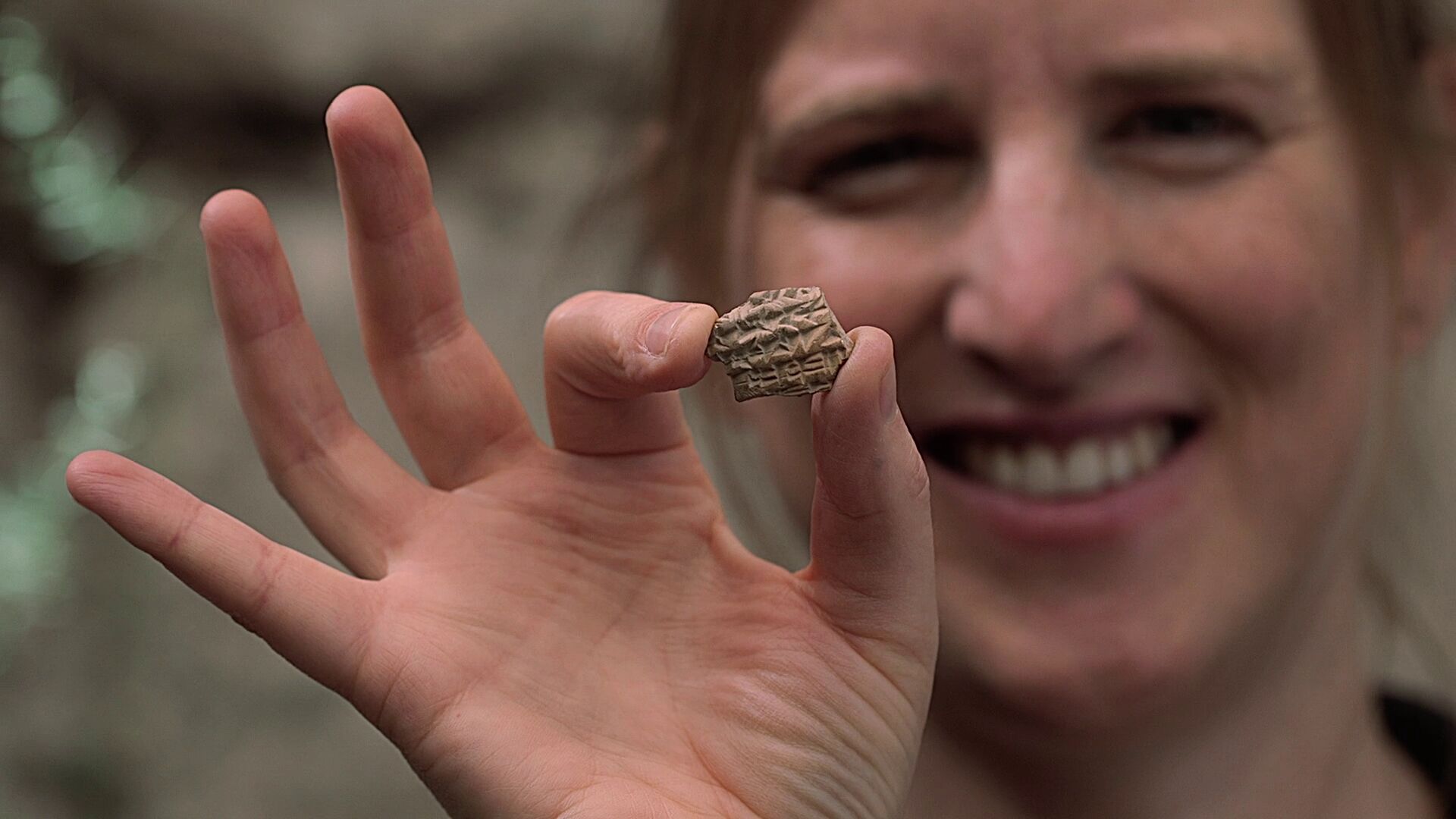
This morning the Israel Antiquities Authority (iaa) announced the discovery of the first-ever First Temple Period Assyrian inscription found in Jerusalem.

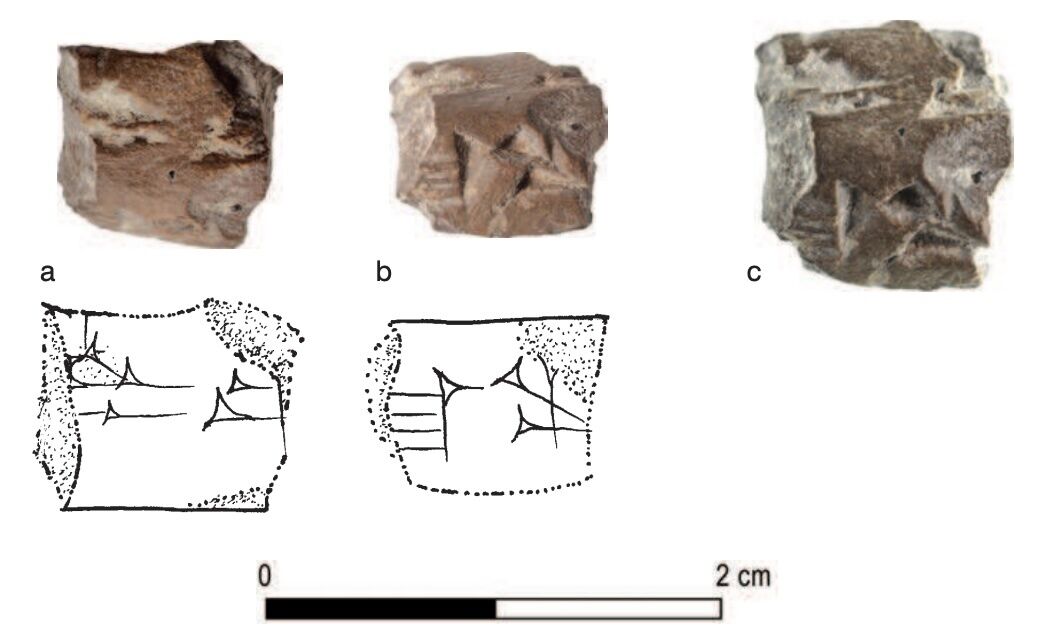
The miniature 2.5-centimeter inscription, which dates to somewhere within the eighth to seventh centuries b.c.e., bears the iconic cuneiform (wedge-impressed) script in the Akkadian language of the Assyrian Empire. The fragment was discovered by Moriah Cohen while wet-sifting earth from the ongoing iaa excavations along the western edge of Jerusalem’s Ophel, under the direction of Dr. Ayala Zilberstein. The text was analyzed and deciphered by Dr. Filip Vukosavović and Dr. Anat Cohen-Weinberger of the Israel Antiquities Authority, along with with Dr. Peter Zilberg of Bar-Ilan University. The royal Assyrian inscription bears a demand to an unnamed king of Judah for payment of tribute “by the first of [the month of] Av”—or else.
Contextually, this late eighth-to-seventh-century b.c.e. period was one of Assyrian dominance in the region. The empire had just conquered the northern kingdom of Israel; the southern kingdom of Judah and neighboring entities had become tributary states. Judean kings Hezekiah and Manasseh, whose reigns span most of this period in question, are both described in the Bible as being under the yoke of Assyria (e.g. 2 Kings 18:7; 2 Chronicles 33:11). In the case of Hezekiah, the Bible describes his famous refusal to pay tribute to the king of Assyria: “[A]nd he rebelled against the king of Assyria, and served him not” (2 Kings 18:7). This led to what has become known as one of the most widely represented biblical events in archaeology: Sennacherib’s fateful invasion of Judah.
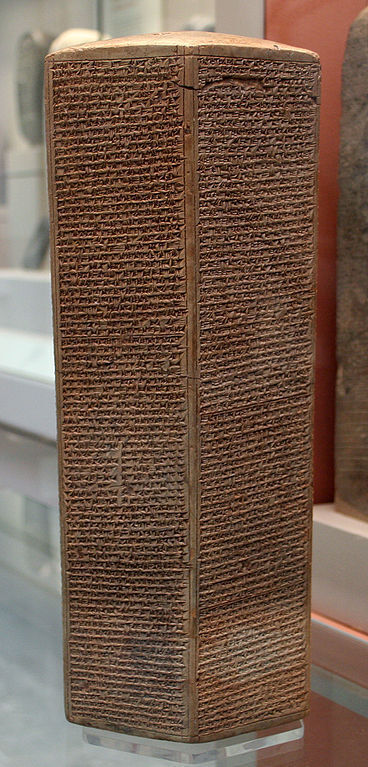
The account of Hezekiah’s rebellion is especially interesting in relation to this latest discovery, which, according to the press release, “addresses a delay in payment from the kingdom of Judah to the Assyrian Empire,” perhaps indicating a “deliberate tax revolt, such as the Bible describes regarding King Hezekiah rebelling against Sennacherib.”
A video release of the artifact by the City of David states: “Here we actually have a direct letter, signed with the seal of the king of Assyria, addressed to the king of Judah, saying to him, ‘Dear king of Judah, send the tribute quickly by the first of Av—and if not, the consequences will be severe.’”
Assyriologists Vukosavović and Zilberg believe this inscription to have been part of a type of Assyrian royal seal—one bearing an abbreviated text summarizing the contents of a longer official document bound by it. “Bullae or sealings of this type bore an impression that was sometimes accompanied by a short inscription in Assyrian cuneiform script noting the dispatch’s contents or its destination,” they wrote. The inscription also “explicitly mentions a chariot officer, the ‘one who holds the reins,’ in Assyrian terms”—a title “indicat[ing] a high-ranking personality, responsible for conveying official messages on behalf of the royal house. Such a figure is indeed well-known from Assyrian administration archives.”
Of further interest is the petrographic analysis of the item—analysis of its material composition. “[T]he fragment’s composition revealed that the material from which it was made is entirely different from the local raw materials typically used to produce pottery, bullae and clay documents in Jerusalem and the southern Levant,” notes Dr. Cohen-Weinberger. Instead, the “mineral composition generally corresponds to the geology of the Tigris Basin region, where the central cities of the Assyrian kingdom were located, such as Nineveh, Ashur, or Nimrud/Kalhu.” Research is ongoing in order to determine exactly which area the inscription derives from.
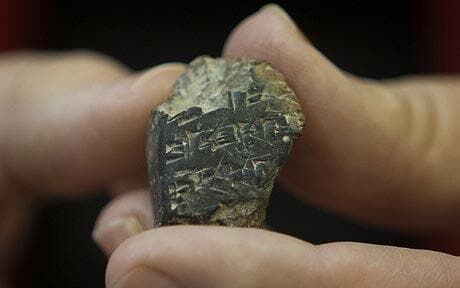
While this is not the first, nor earliest, Akkadian cuneiform inscription found in Jerusalem—two other such Canaanite inscriptions were found in our own excavations on the eastern side of the Ophel, under the direction of the late Dr. Eilat Mazar—this is the first such Assyrian inscription of the First Temple Period. And suffice it to say, this remarkable discovery is causing quite a stir.
Dr. Vukosavović described the discovery as “excitement on a level I can’t remember ever experiencing in my life, really.” Cohen, who found the fragment, stated: “Even though so many fascinating finds have been discovered here [at the Emek Tzurim wet-sifting facility] over the years, we’ve never, ever found anything like this. … This is a once-in-a-lifetime find.” In a statement from Israel’s Minister of Heritage, Rabbi Amichai Eliyahu: “The discovery of the Assyrian inscription from the First Temple Period in the very heart of Jerusalem is impressive evidence of the city’s status as the capital of the kingdom of Judah some 2,700 years ago, and of the depth of its ties with the Assyrian Empire just as described in the Bible.”
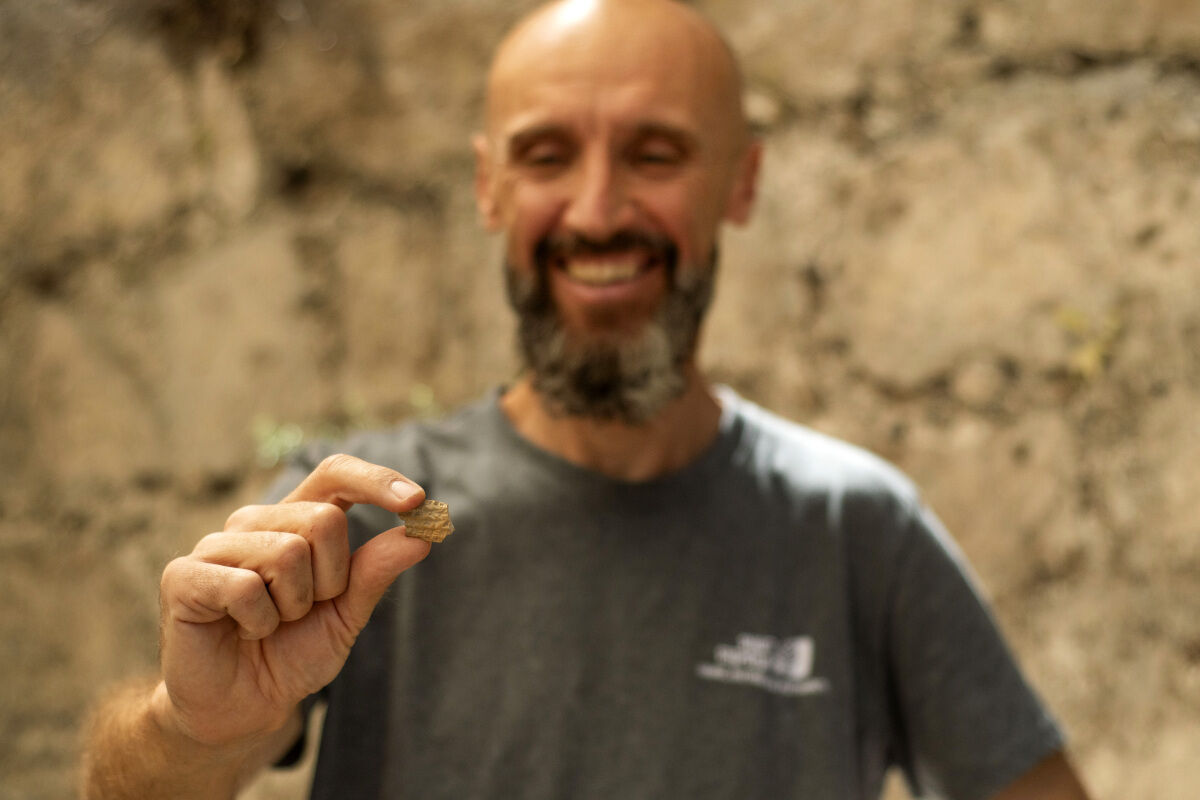
“This is a small fragment of great significance,” concluded Vukosavović, Cohen-Weinberger and Zilberg. “The find opens a window into understanding the political and administrative ties between Judah and Assyria. It is the very first evidence of its kind of the official, and perhaps even tense, communication that took place between Jerusalem and the world’s most powerful superpower during the period we are discussing.”
The inscription will be presented to the public for the first time this Thursday, October 23, at the Jay and Jeanie Schottenstein National Campus for the Archaeology of the Land of Israel.