Articles
Excavations
Overview
Ophel Excavation 2026 (Upper Area)
Ophel Excavation 2026 (Middle Area)
Ophel Excavation 2025 (Middle Area)
Ophel Excavation 2025 (Lower Area)
Ophel Excavation 2024
Ophel Excavation 2023
Ophel Excavation 2022
Ophel Excavation 2018
Ophel Excavation 2013
Ophel Excavation 2012
Ophel Excavation 2009–2010
City of David Excavation 2007–2008
City of David Excavation 2006–2007
Exhibits
Kingdom of David and Solomon Discovered
Seals of Isaiah and King Hezekiah Discovered
Seals of Jeremiah’s Captors Discovered
Publications & Reports
Publications
Magazine
E-mail Newsletter
Videos
Visuals
Historic
Archaeology
Illustrations
Infographics
Tours
עברית
Articles
Latest
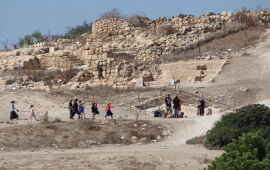
Ancient Tunnels in Judean Lowlands Open for Tourists
One of the largest sites in the Shephelah reopens for business.
By
Beatrice Iglesias
• November 20
Celebrating Milestones
Marking 20 years of renewed excavations and 10 years of biblical archaeology content
By
Armstrong Institute Staff
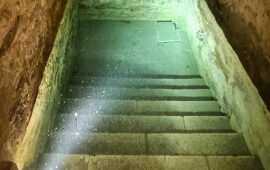
What Is a Mikveh?
An overview of these iconic and ancient Jewish installations
By
Micah van Halteren
Categories
Categories
All
Antediluvian
Biblical Figures
Books of the Bible
Bronze Age
Cities
Civilizations
Conquest
Diaspora
Iron Age
Israel
Israel in Egypt
Jerusalem
Judges
Later Periods
Middle East
Monarchy
Patriarchs
Post-Flood
Prehistory
World
World
Exodus Outside of the Bible: The Classical Accounts
Evidence of the core historicity of the Exodus—as related by non-Jewish authors of classical antiquity
By
Armstrong Institute Staff
• March 11, 2023
The Man Who Brought Hebrew to America
By
Andrew Miiller
• January 14, 2023
Subscribe to Our Biblical Archaeology Magazine!
A bimonthly, biblical archaeology magazine—free of charge
By
Armstrong Institute Staff
• January 1, 2023
Was Hercules Samson?
Is there a man behind the myth?
By
Christopher Eames
• November 14, 2022
A Japanese Prince, Herbert Armstrong, and an Unlikely Partnership in Biblical Archaeology
Recognizing the “holy bridge between East and West”
By
Mihailo S. Zekic
• September 24, 2022
Touring the Bible at the Louvre Museum
By
Mihailo S. Zekic
• May 24, 2022
Hidden Biblical Clues Reveal Some of History’s Greatest Conflicts
By
Armstrong Institute Staff
• May 8, 2022
Famous Ancient Battles NOT Mentioned in the Bible—Or Are They?
Kadesh? Qarqar? Thermopylae? The Bible’s account is largely descriptive of events relating to ancient Israel. But certain verses also hint at these famous events happening throughout the surrounding ancient world.
By
Christopher Eames
• May 7, 2022
Valentine’s Day—in the Hebrew Bible?
It’s a peculiar ‘love fest’ numbered among the ‘Christian’ holidays. But its real origin is much earlier than the third-century ‘St. Valentine.’
By
Christopher Eames
• February 10, 2022
Amos’s Earthquake: A Mountain of Evidence
Nearly 2,800 years ago, a megaquake shook ancient Israel. So says the Bible—and so says a mountain of archaeological evidence.
By
Christopher Eames
• February 25, 2021
Christmas Trees—in the Hebrew Bible?
The book of Jeremiah contains a remarkable description of what appears to be Christmas trees. How could this be possible—centuries before the birth of Christianity?
By
Christopher Eames
• December 24, 2020
Archaeology Under Fire
The European Union is taking aim at archaeological excavations in the City of David.
By
Brent Nagtegaal
• February 17, 2018
Inside the British Museum
This treasure of archaeological finds proves the biblical record.
By
Stephen Flurry
• September 27, 2016