
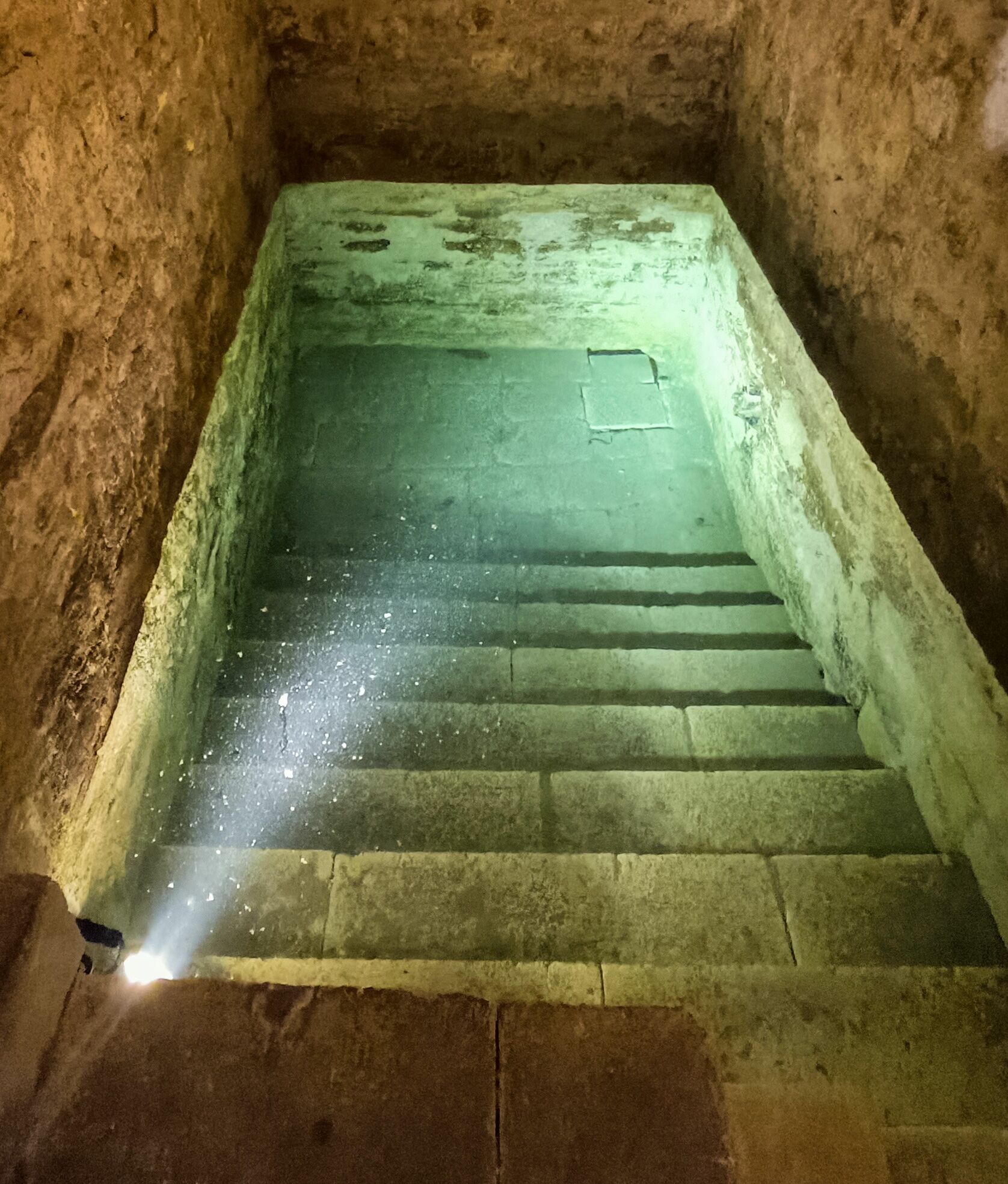
A mikveh (plural, mikvaot) is a Jewish ritual immersion bath used from ancient to modern times. Mikvehs have been built in many different shapes and sizes but share certain common elements, with prerequisites that gradually developed over time.
Anciently, Jews in Israel began constructing typical plastered, stepped mikvehs around the late second or early first century b.c.e., at the end of the Hasmonean Period. However, most of these ritual baths are known from the Herodian Period (circa 40 b.c.e.–70 c.e.). Because mikvehs are used for Jewish ritual purification purposes, the discovery of such a bath at a site constitutes key evidence of Jewish settlement (besides certain particular examples from the Samaritan community). In contrast, the absence of a mikveh from these periods onwards is also often evidence of the absence of a Jewish population.
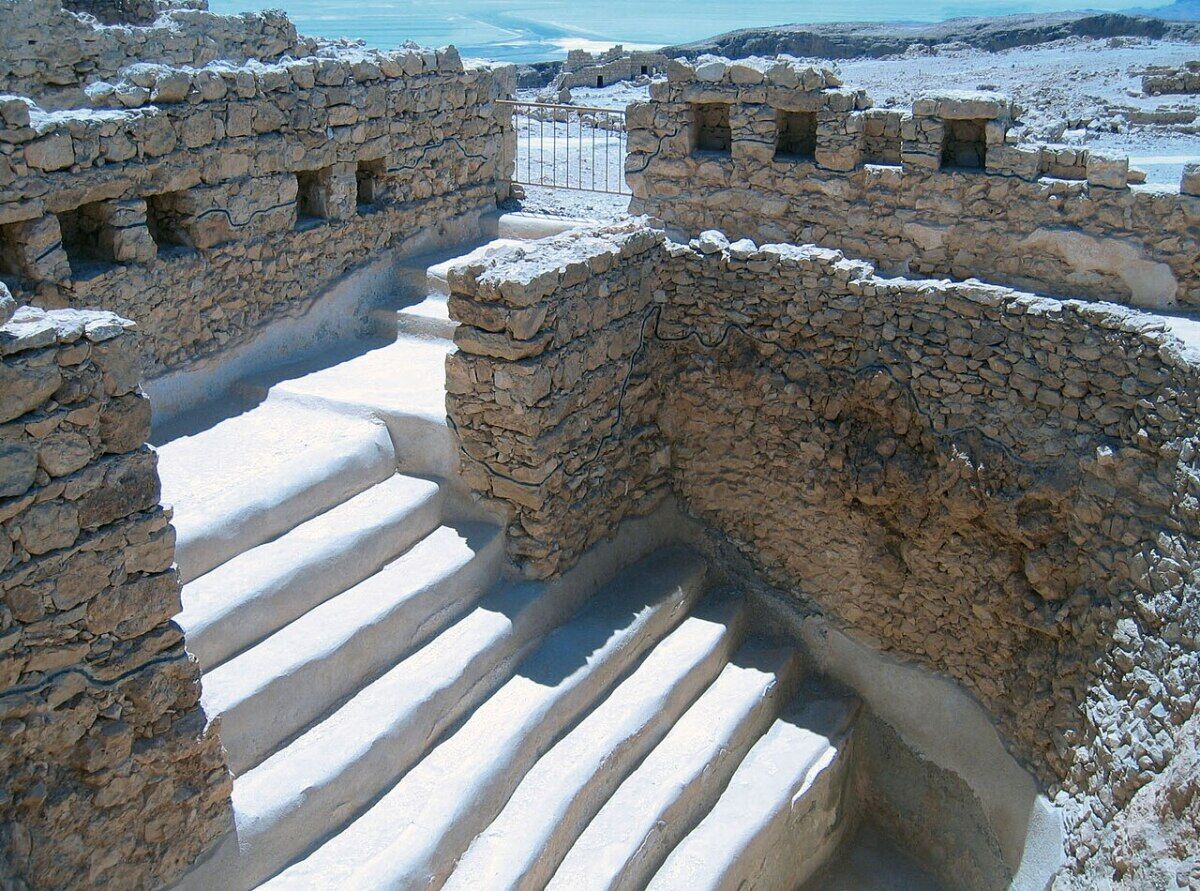
The first of these ancient pools to be identified as mikvehs were discovered in the 1960s, during Prof. Yigael Yadin’s excavations at Masada. The discovery received much media attention and resulted in a lasting debate about the nature of the term mikveh and whether it should be applied to every similar stepped water installation.
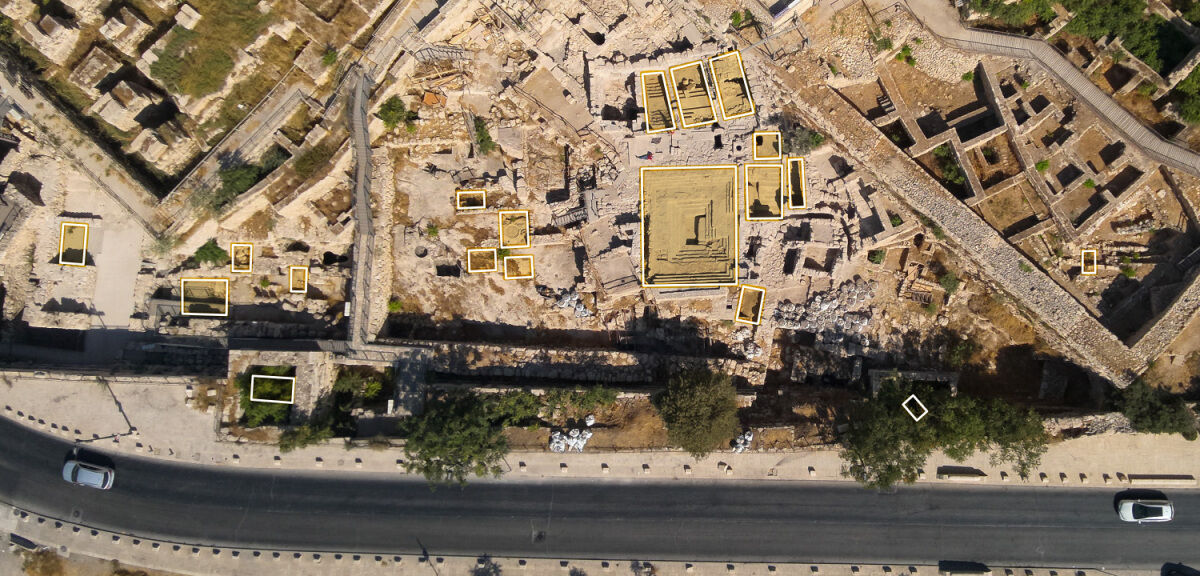
Since then, hundreds of mikvehs have been found all over Israel, with more continuing to be found every year (including a multi-mikveh complex uncovered during our recent Ophel excavations). In Jerusalem alone, nearly 200 of these ritual baths have been found so far.
With more mikvehs being discovered all the time, we are constantly gaining a better picture of both why and how they were used.

Biblical Beginnings
The emergence of these iconic stepped pools is often associated with an increased focus on ritual purity from the Hasmonean Period onward. One of the reasons so many mikvehs are found in Jerusalem and close to the temple at this time of sharply increasing pilgrimage is that a person needed to be ritually pure to enter the temple complex. The only way for a ritually impure person (tum’ah) to become pure (taharah) was to immerse himself. Likewise, certain types of vessels that had become impure could also be made pure in a mikveh.
Jewish ritual baths were not necessarily always known as mikvaot. Some scholars suggest other terms in use at the time, including me’ara (“cave”) and beit hatvila (“house of immersion”). However, from at least the second century c.e. mikveh became the common term for these pools.
The practice of purification, however, goes back earlier—much earlier.
The practice of ritual purification in a “mikveh” has its roots in the Torah, although there is no mention of specific installations required for this purpose. Regulations regarding valid mikveh installations as we know them from the late second to first century b.c.e. onward developed during later periods.
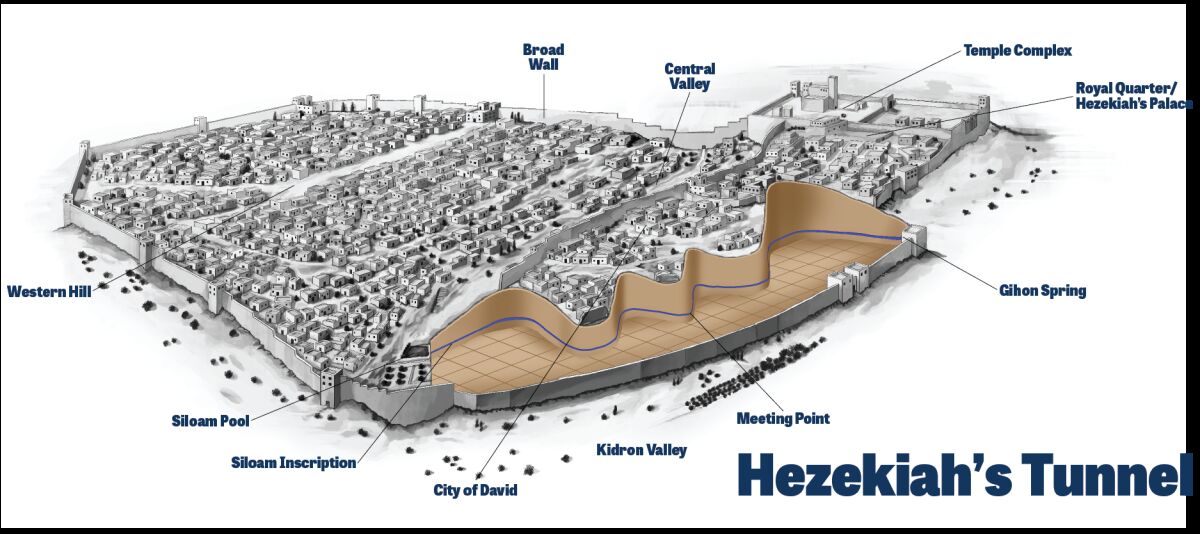
The term mikveh is used several times in the Hebrew Bible and generally refers to a natural reservoir or “gathering” of water. In the creation account, it says God gave the name “seas” to “the gathering together [mikveh] of the waters” (Genesis 1:10). The same term is used in Isaiah 22:11 to refer to the “basin” to which King Hezekiah redirected the waters of the Gihon Spring—thus a collection point of naturally sourced water.
Numerous scriptures in the Torah mandate ritual purity through washings, including prescribing “clean” sources of water. An exemplar passage is Leviticus 11:36: “Nevertheless a fountain or a cistern wherein is a gathering [mikveh] of water shall be clean ….” Various washings are prescribed for tabernacle (and subsequent temple) services, following certain illnesses and emissions, etc.
The much later writings of the talmudic sages expound upon biblical purity laws and their connection to the use of mikvehs. The Mishnaic tractate Mikvaot states that the highest degree of mikveh required living waters, “for in them there is immersion for zavim and sprinkling for metzoraim, and they are valid for the preparation of the hatat waters.” Zavim were those that had an abnormal genital discharge (Leviticus 15:13), metzoraim refers to people with a certain skin disease (Leviticus 14), and the hatat waters were waters that the ashes of the red heifer offering were to be poured into (Numbers 19:9).
This concept of “living waters”—mayim haim, naturally sourced flowing water—is also mentioned in other places in the Hebrew Bible, such as Jeremiah 2:13, where God is represented as the fountain (or spring) of living waters.
There are also several references to living waters in the first-century c.e. setting of the New Testament—the key point in time in which the use of stepped purification baths explodes onto the scene. The Gospel of John contains several references to the importance of living water and ritual cleansing. John 7:37-38, for example, read: “In the last day, that great day of the feast, Jesus stood and cried, saying, If any man thirst, let him come unto me, and drink. He that believeth on me, as the scripture hath said, out of his belly shall flow rivers of living water” (King James Version). Additionally, after Jesus heals the blind man in John 9, he tells him, “Go, wash in the pool of Siloam” (verse 7; kjv), as according to Jewish law anyone infirm was also considered impure.
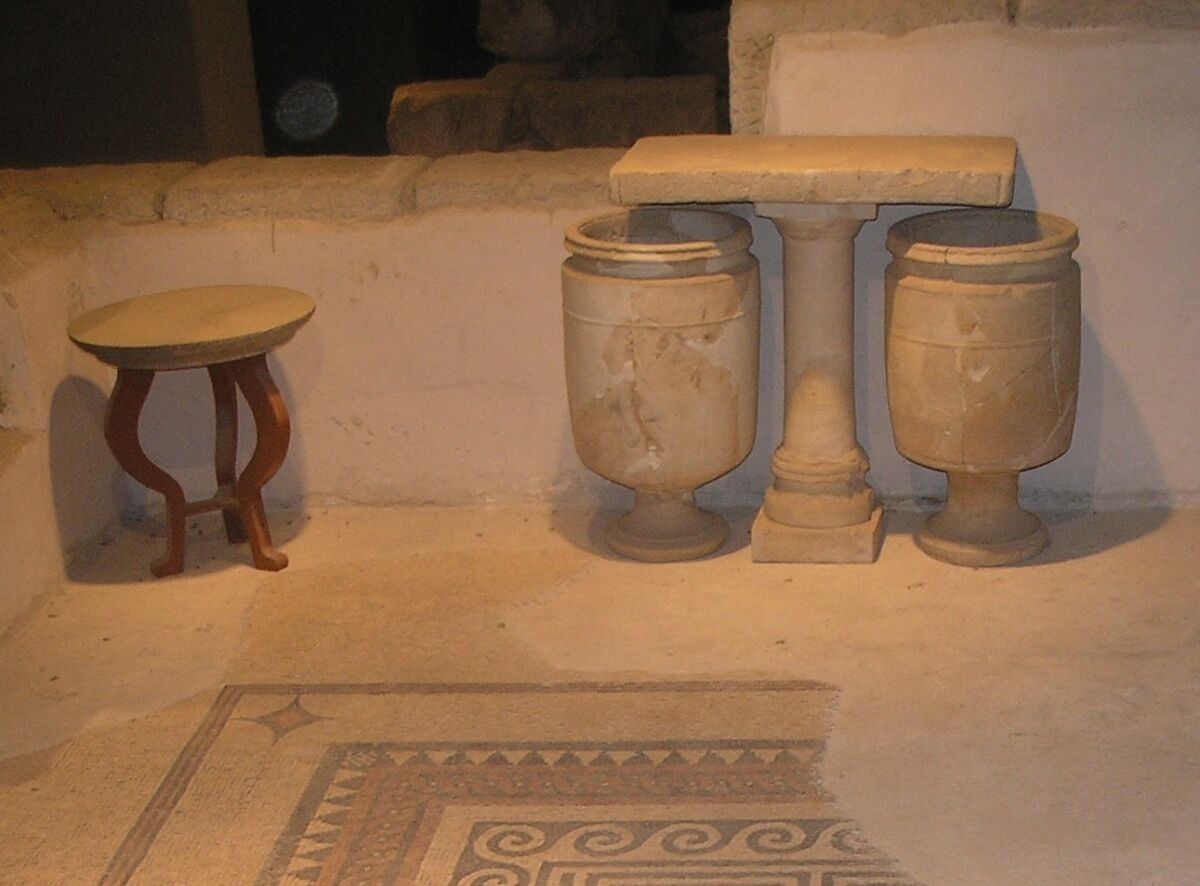
In addition to purifying people, the Torah contains several laws about purifying vessels. Unlike pottery, vessels made of wood, skin, leather or metal could be purified with water (e.g. Leviticus 11:32-33; 15:12; Numbers 31:19-23). Later injunctions ruled that vessels made of stone could not become impure, which is why we find a prevalence of stone vessels during the first centuries b.c.e.–c.e. (at the same time, the practice of building stepped mikvehs began to flourish). This is also reflected in the New Testament: “And there were set there six waterpots of stone, after the manner of the purifying of the Jews, containing two or three firkins apiece” (John 2:6; kjv).
Laws of the Mikveh
During these later periods, the laws surrounding mikvehs began to compound, with varying interpretations from Jewish religious leaders developing around what makes a mikveh valid for purification. Our main sources for the laws of the mikveh are the writings of the talmudic sages of the second century c.e. The tractate Mikvaot describes six degrees of ritual immersion pools with their specifications, each one “superior” to the next. The highest (sixth) degree mikveh was able to purify in all circumstances.
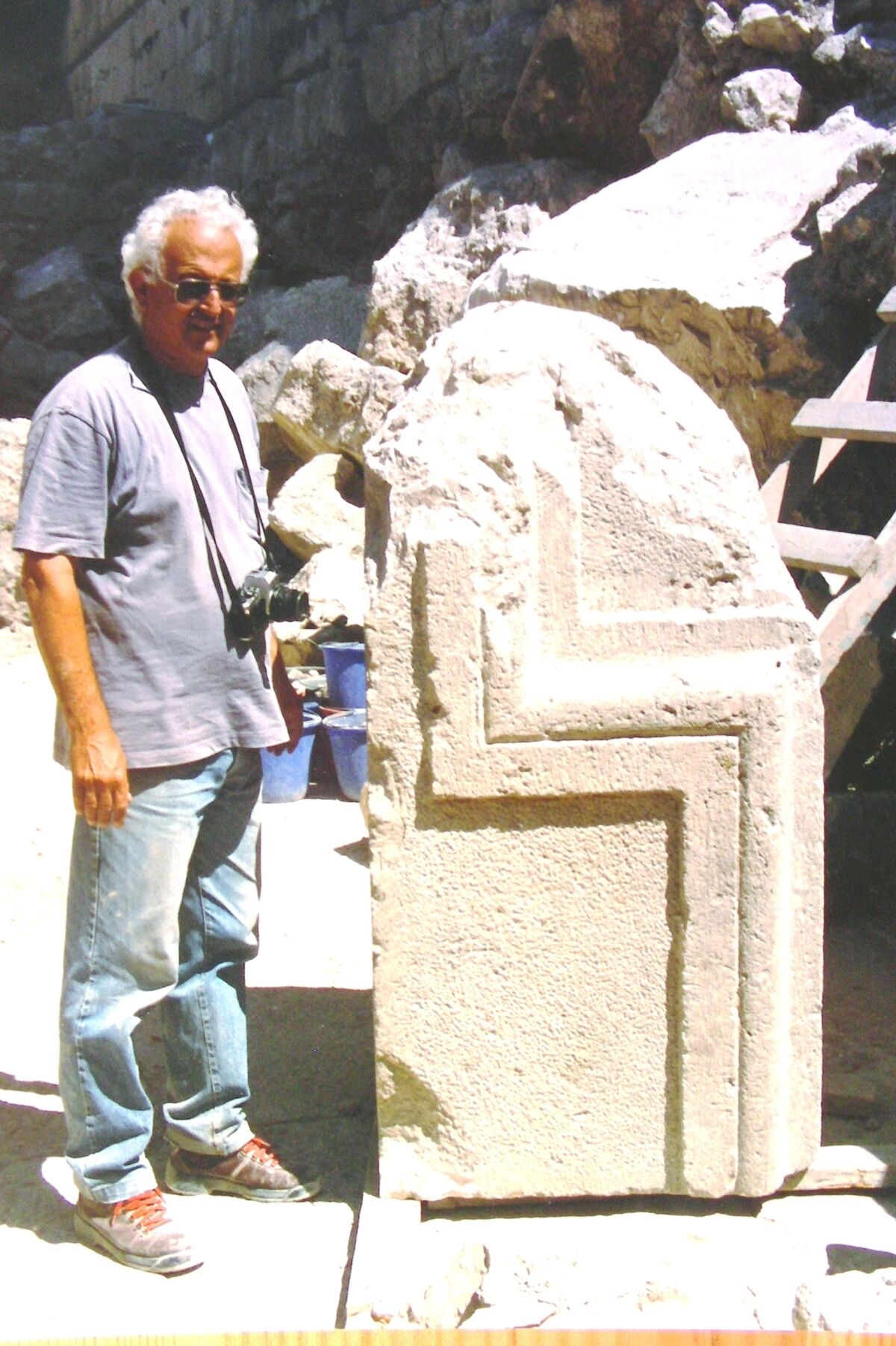
In a 2006 Jerusalem Perspective lecture, Prof. Ronny Reich—responsible for excavating dozens of mikvehs—summarized these laws into five requirements for a mikveh to be valid for all manners of ritual purification. The first requirement is that a mikveh must be filled with “living water” (mayim haim) as from a spring. This meant that the water could not be drawn by hand or moved in a vessel. It had to be “in the hand of heaven” and naturally flow into the pool without active human intervention.
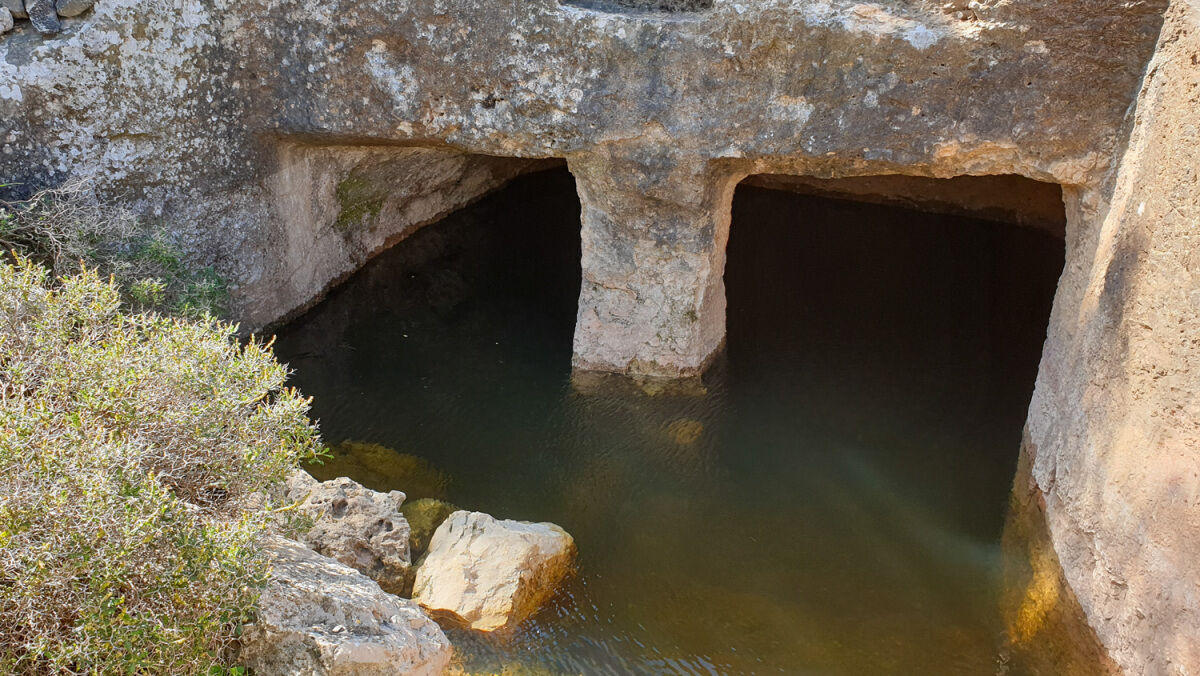
Secondly, the mikveh had to be connected to the ground. That means it could not be a removable structure, like a standing bathtub. As such, many mikvehs are carved from bedrock, either in their entirety, or at least with the lowest step/basin carved into bedrock. The commonality of this practice has led some to assume that it was required for a mikveh to be carved into bedrock—however, several mikvehs have also now been discovered constructed on top of earthen fills, indicating this was also accepted in some cases.
Next, an important requirement for a mikveh was its volume. The minimum volume for a valid mikveh was 40 seah. The Mishnah, rather humorously, equates this volume with a certain number of eggs, stating: “The measure of the water of a mikveh (ritual bath) is 40 seah of well water, written in the Torah. And how many eggs is the measure of the mikveh? Five thousand seven hundred and sixty. Each seah is a hundred and forty-four eggs.” Estimates of this volume have varied wildly among scholars, ranging from between 250 to 1,000 liters. Whatever the case, this mandate for a mikveh’s minimum volume certainly had to do with allowing for the full body immersion (tvilah) required for purification.
Once a mikveh was filled with the required 40 seah of “living water,” any amount of “impure” water (drawn with the hand) that touched it was ruled as automatically becoming purified and valid for use. For this reason, some mikvehs are found with an adjacent secondary pool, which became known as an otzar (“treasury”) in medieval times. This secondary pool was always filled with living water, qualifying it as a valid mikveh and giving it the ability to purify impure water. If the water from the primary mikveh needed to be replaced, the bath could be filled with “impure” water drawn by the hand and then brought into contact with this otzar to make it pure.
The fourth requirement was that the pool had to have a minimum depth of 3 cubits (135–150 centimeters).
Lastly, the mikveh had to be tightly plastered so that no water could seep from the pool. Although this requirement led some scholars to assume that a mikveh could not have a drain, the discovery of several mikvehs with a drainage system have upended this assumption (including those discovered in our excavations on the Ophel).
Variations
Not all mikveh installations were created equal. While the minimum requirement of the water in a ritual bath was specifically regulated, there was much variation in both the size and shape of the installation itself.
Some mikvehs were just large enough to fulfill the 40 seah requirement and were used by one person at a time, while others were enormous baths that could fit multiple people. One example of a large pool that was likely used as a ritual bath in the first century c.e. is the pool of Siloam mentioned in John 9.
One problem with large public baths is that Jewish law required a person to immerse himself or herself nude. Perhaps tent-like structures provided required privacy in such cases. Some scholars have even suggested that some mikvehs could have served a dual purpose, being used for recreational purposes as well.
Some ritual baths had a secondary pool (otzar), while others were filled directly with living water by other means. Most common are the pools that have steps descending in a single direction, while other ritual baths had steps descending from two or all four sides.
Another variant feature is a low plastered wall separating the descent into the pool from the ascent out of it—the reason apparently being to enter from one side impure and to exit from the other side pure. On this, relating to pure/impure vessels, the Mishnaic tractate Shekalim says: “All vessels found in Jerusalem on the way going down to the place of immersion are unclean, [but those found] on the way going up [from the place of immersion] are clean; for the way down is not the same as the way up ….” In similar form, certain mikvehs have been found with two entrances—one to enter and one to exit.
Mikvehs have been discovered in a variety of settings, including next to tombs, wine and olive presses, public spaces and private homes. This makes sense in light of Jewish halakhic law, which required ritual purification after touching a dead body or before working with certain agricultural produce.
Ronny Reich’s foundational 2013 work Miqva’ot (Jewish Ritual Baths) in the Second Temple, Mishnaic and Talmudic Periods established a corpus of all mikvehs that had been found at the time. In an article for Biblical Archaeology Review, “The Great Mikveh Debate,” Reich suggested that all such aforementioned differences could “reflect the diversity of Jewish society in those days”—with certain religious factions establishing different requirements. (Such religious divides during the first century c.e. are famous from the New Testament account, especially between the Pharisees and Sadducees.)
Modern Mikvehs
After the destruction of the temple in 70 c.e. and the suppression of the Bar Kokhba Revolt in 135 c.e., many previously Jewish settlements (like Jerusalem, Masada and Jericho) lost their majority Jewish population. Practically all mikvehs at these settlements fell out of use.
However, more recent evidence shows that mikvehs at other settlements that retained a Jewish population, such as Sepphoris and Susiya, remained in use throughout the Roman and Byzantine periods. Furthermore, “[r]itual baths dating to the late Roman and Byzantine periods have been unearthed at Meiron, Khirbet Shema, Sasa, Horvat Kor, Horvat Hoquq, Meroth, Chorazin, Arbel, Horvat Parod, Khirbet Qana, Tiberias, Tel Yinʿam, and En Rani,” Yonatan Adler wrote in “The Observance of Ritual Purity After 70 C.E.”
The following centuries feature a particular prevalence of mikvehs in Europe. The 12th-century c.e. Jewish scholar Maimonides wrote a compilation of the laws for his time concerning ritual baths. At times, the mikveh was considered so important that one was required in a community before a synagogue was constructed.
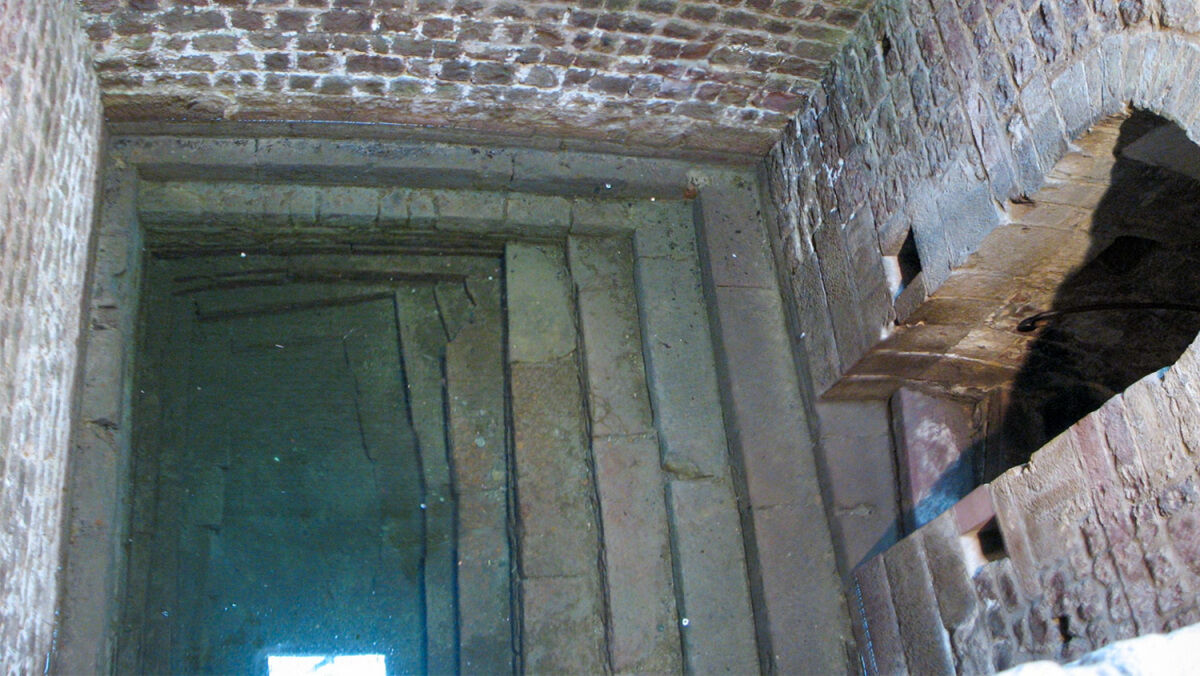
Today, the mikveh continues to be used in Judaism, such as by women prior to marriage, following menstruation or childbirth, and ritual immersion in a mikveh is still one of the requirements to become a Jewish convert in Orthodox and Conservative Judaism. This continuing practice, typically involving stepped pools, is one that would be immediately familiar to a Jew from Israel over 2,000 years ago—continuing a tradition of purification laws from over 3,000 years ago.
