Believers in a historical Exodus typically fall into one of two camps: early-daters, who place the Exodus within the late 15th century b.c.e., typically during the reign of Amenhotep ii; and late-daters, who place the Exodus within the mid-13th century b.c.e., during the reign of Ramesses ii. There are variations, such as an ultra-early Exodus in the 16th century b.c.e. or ultra-late Exodus in the 12th century b.c.e.—nonetheless, the 15th- and 13th-century b.c.e. schemes are the most common.
As articulated to some length on this website, I am an early Exodus advocate—seeing this as the best fit with a literal reading of the biblical account—i.e. the 480/440 years of 1 Kings 6:1, the 300 years of Judges 11:26 and the 19 generations of 1 Chronicles 6; aligning best with the sequence of events and individuals of Egypt’s late 18th Dynasty, as well as later Egyptian historians’ descriptions of the same; aligning with the geopolitical situation in Canaan, as described in the Amarna letters (see here, here and here); aligning with early Ramesside inscriptions, pointing to an Israelite presence already in Canaan before the late date time frame; and better aligning with evidence on the ground—including the weaker Egyptian influence on Canaan at this earlier time, compared to later centuries.
Nevertheless, based on certain evidence promoted by both early- and late-date camps—the latter especially emphasizing Exodus 1:11 and Ruth 4:18-22, as well as the increasingly recognizable footprint of a new populace within Canaan—some have gone so far as to conclude two Exodus events, such as an earlier Hyksos Exodus and a second, later “Levite” Exodus; two separate journeys that eventually became conflated as one.
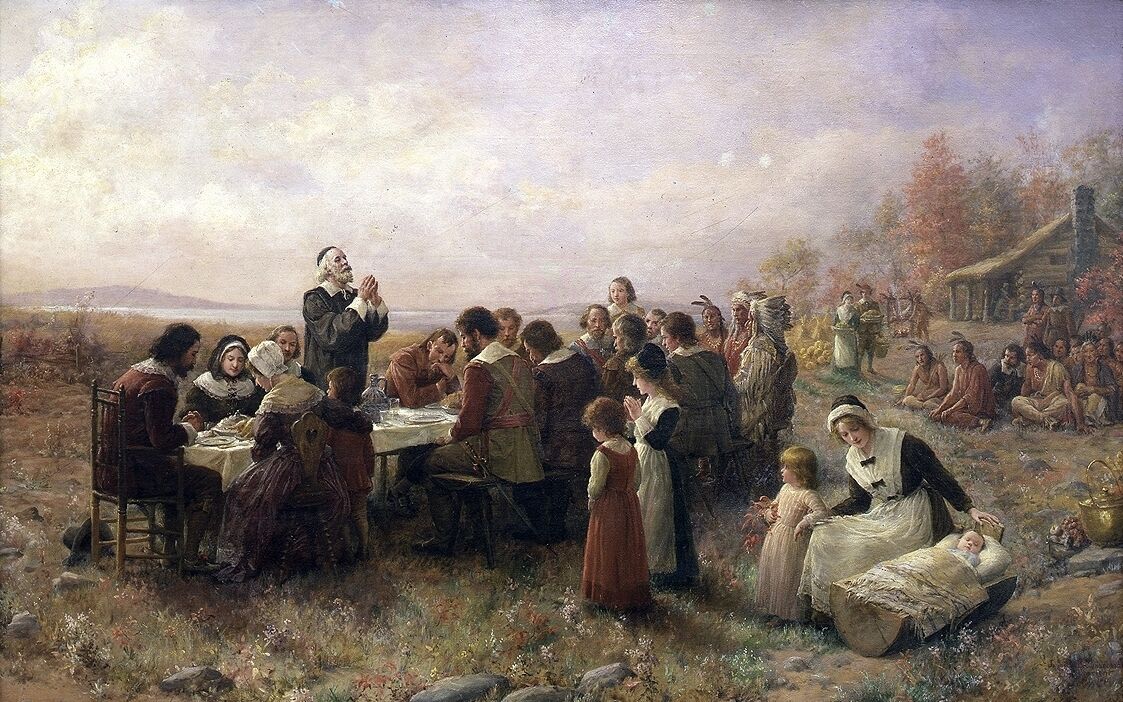
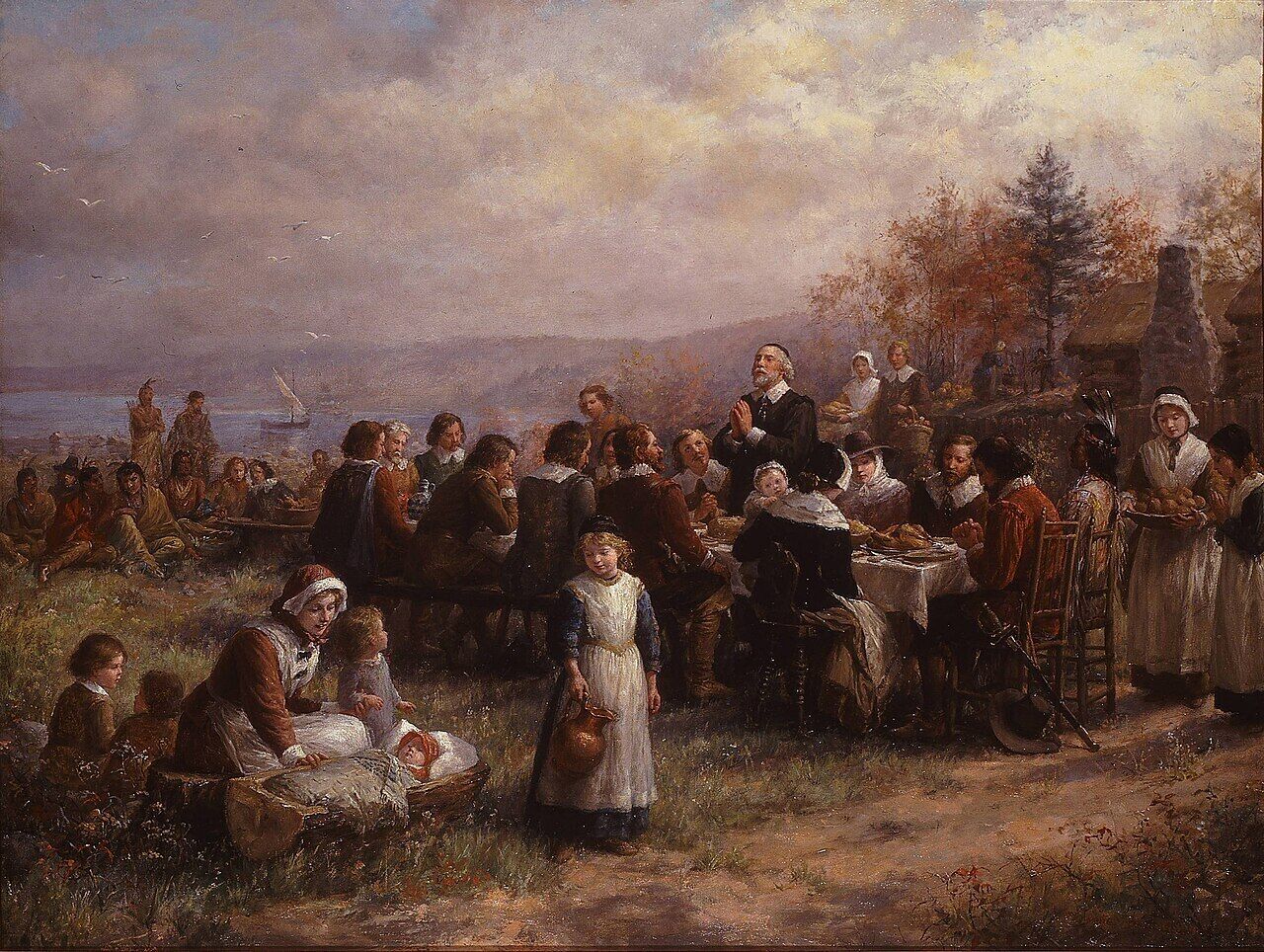
This debate calls to mind two particular lynchpin moments in American history—both of which were popularly seen as “Exodus” moments and described as such with much of the same terminology. At this time of year—Thanksgiving—I can’t help but think about certain parallels between this debate on ancient Israel’s Exodus and the formative years of the United States of America itself. There is more historical parallelism than you might think. But which is the true Exodus?
Between Independence and Pilgrimage
This year marked 250 years of U.S. independence. The year 1776 is, of course, a lynchpin date in United States history, with the signing of the Declaration of Independence and the progress of the American Revolutionary War—the King of England himself even being framed as a “pharaoh.” This, understandably, is seen as an Exodus-like event, described with much of the same terminology—with the 13 colonies shaking off the rule of “mad” Pharaoh George iii.
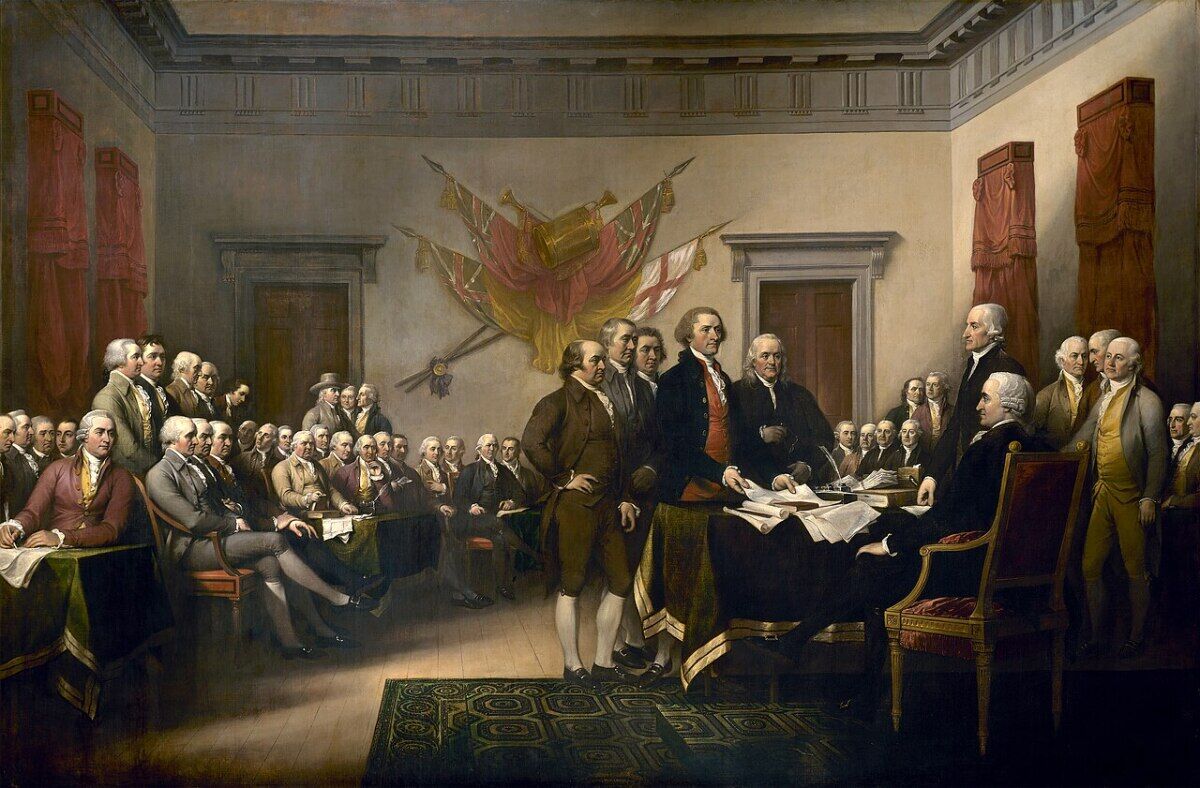
Yet in a sense, I would see this event as effectively occupying the position of the “late date” Exodus—an episode much too late in an overall sequence of events fairly well paralleling that of ancient Israel. With the events of 1776 and onward, we have an already established populace within their land, shaking off a later “pharaonic” rule, from which a newly invigorated nation bursts forth. A sequence of events that might be construed as an “Exodus” retold—but only in a sense.
This later moment in time could be seen as better paralleling a particular moment during the time of the biblical judges—a time “when the pharaohs ruled” in Canaan (Judges 5:2—see here for an explanation of this intriguing passage)—a time in which “the highways were unoccupied, and the travellers walked through byways. The inhabitants of the villages ceased” (verses 6-7; King James Version)—a time following which the population, already long-established within their land, broke free from their oppressors in a mighty victory and burst forth on the scene as a newly independent, recognizable and reinvigorated entity. A time actually fitting well with the touted late-date evidence of more recognizably Israelite material culture emerging within the land.
What 1776 is not remembered for is a moment of migration—of actual exodus—of leaving a foreign land, crossing the seas, and settling a so-called promised land. That particular element is recalled every Thanksgiving, commemorating a moment in time over a century and a half earlier—almost exactly equivalent to the difference in date of the early Exodus position!—remembering the journey, arrival and establishment of the Pilgrims and their first Thanksgiving following the voyage of the Mayflower, in a journey that began the Great Migration of 1620–1640, bringing some 20,000 Puritans and separatists to the New World.
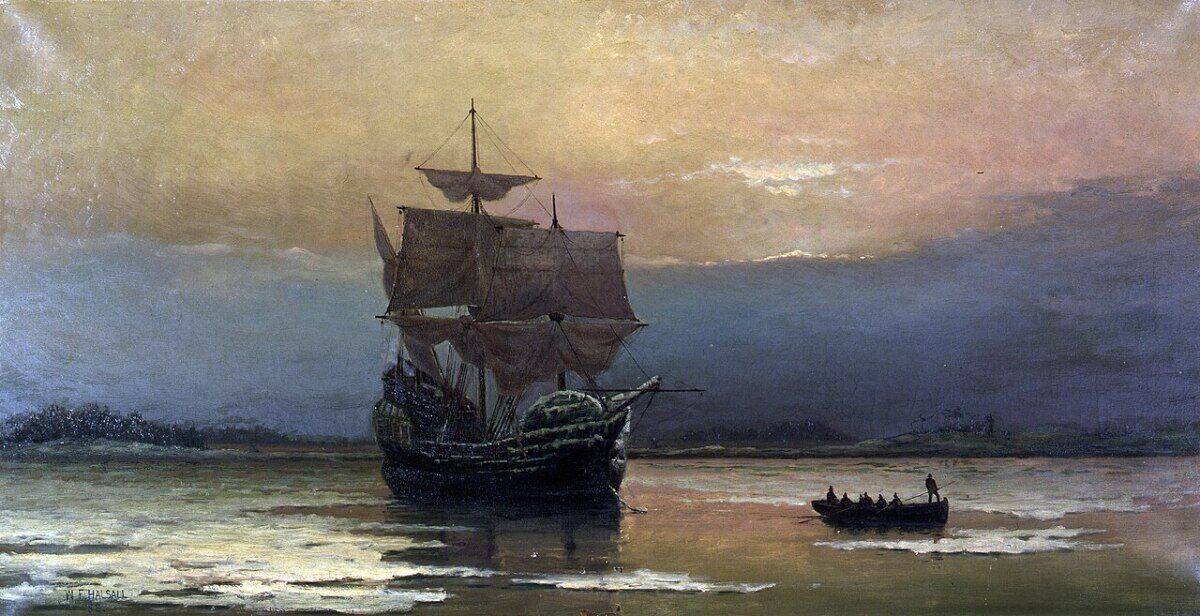
The leading figure of the time, William Bradford, likened the 1620 Mayflower journey to “Moses and the Israelites when they went out of Egypt.” aiba contributor Andrew Miiller wrote about how the Pilgrims at this time “drew heavily on biblical imagery, especially from Joshua, to portray the Pilgrims’ settlement of Massachusetts as a latter-day version of the Israelites’ settlement of Canaan.” He continued in his July-August 2026 Let the Stones Speak article “America’s Hebrew Roots”:
Later Puritan writers embraced this parallel even more explicitly. They cast John Carver as an American Moses who died after leading his people across the Atlantic Ocean, and Bradford as an American Joshua who guided them into the Promised Land. … William Bradford believed that God spoke Hebrew, and the colony he established came within one vote of adopting Hebrew as its official language at a time when no nation spoke it.
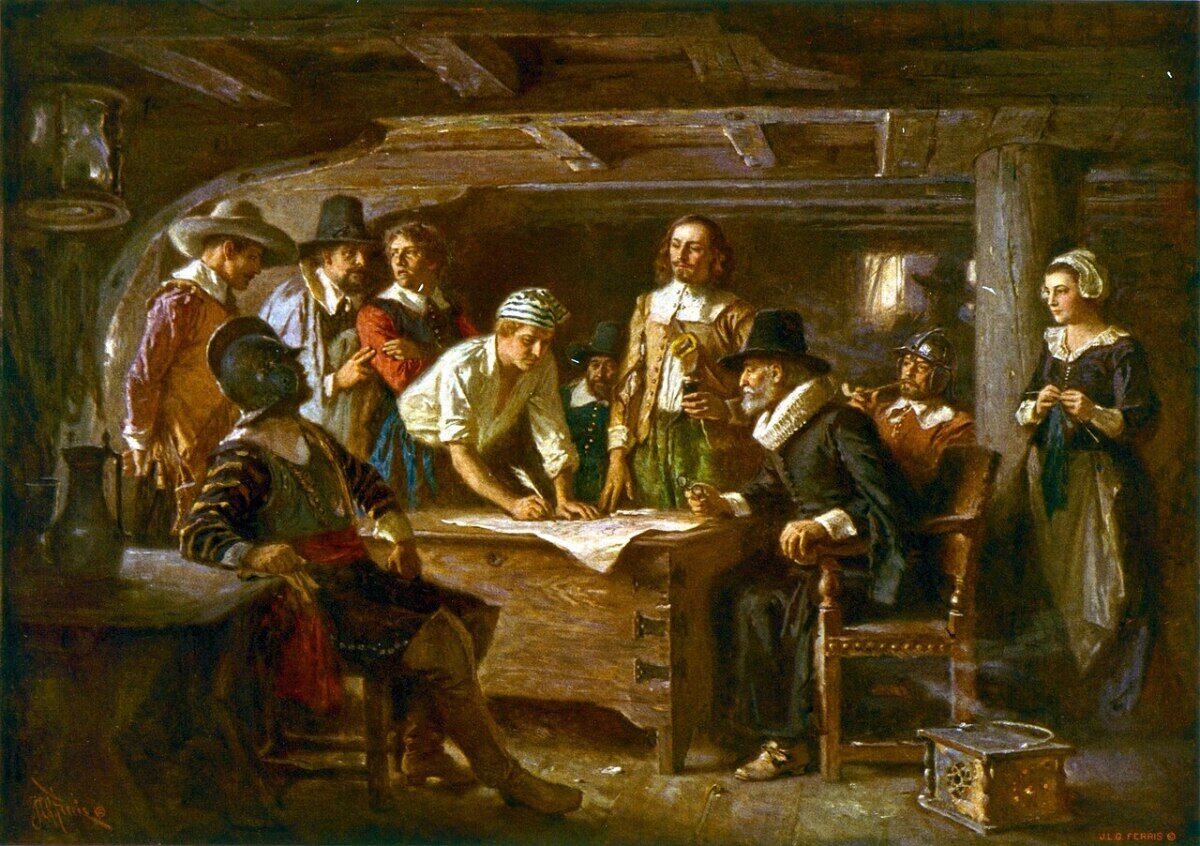
Looking back on America’s colonization and founding this Thanksgiving, one can’t help but see fascinating parallels not only with the history of ancient Israel and the United States of America but also the way that history is handled, perceived and interpreted—each with twin “Exodus” schemes that, on various levels, are debated, analyzed, interpreted and even directly compared (such as in Chapters 4 and 5 of Five Views on the Exodus: Historicity, Chronology and Theological Implications—comparing cultural memory of the Exodus to that of migration to America).
In the case of the United States of America, this year we look back on exactly 2½ centuries of a certain independence within the country in question—but we also look back on over 400 years to the founding migrations to get to it. For despite the more recent larger-than-life figures like King George iii or Ramesses ii—despite mighty battles, on land and at sea—that pivotal moment of a veritably biblical Exodus across the waters to a “New Israel” is buried much further back in a somewhat more hazy but no less significant point in time, over a century and a half earlier.
It’s fitting at this time of year, I think, to conclude with excerpts from the biblical “Hymn of Thanksgiving”—Psalm 136—itself a psalm of pilgrimage, with special focus on this Exodus.
O give thanks unto the Lord, for He is good,
For His mercy endureth for ever.
O give thanks unto the God of gods,
For His mercy endureth for ever.
O give thanks unto the Lord of lords,
For His mercy endureth for ever. …
To Him that smote Egypt in their first-born,
For His mercy endureth for ever;
And brought out Israel from among them,
For His mercy endureth for ever;
With a strong hand, and with an outstretched arm,
For His mercy endureth for ever.
To Him who divided the Red Sea in sunder,
For His mercy endureth for ever.
And made Israel to pass through the midst of it,
For His mercy endureth for ever ….
Who remembered us in our low estate,
For His mercy endureth for ever;
And hath delivered us from our adversaries,
For His mercy endureth for ever.
Who giveth food to all flesh,
For His mercy endureth for ever.
O give thanks unto the God of heaven,
For His mercy endureth for ever.