
Honorifics are a common feature of language. They are “a title or word implying or expressing respect” (The Oxford Dictionary of English). In English, they include terms and abbreviations such as Mr. (“Master”), Mrs. (“Mistress”), Sir (from monsieur, “my lord”), ma’am (from madame, “my dame/lady”), Dr., Prof., etc.
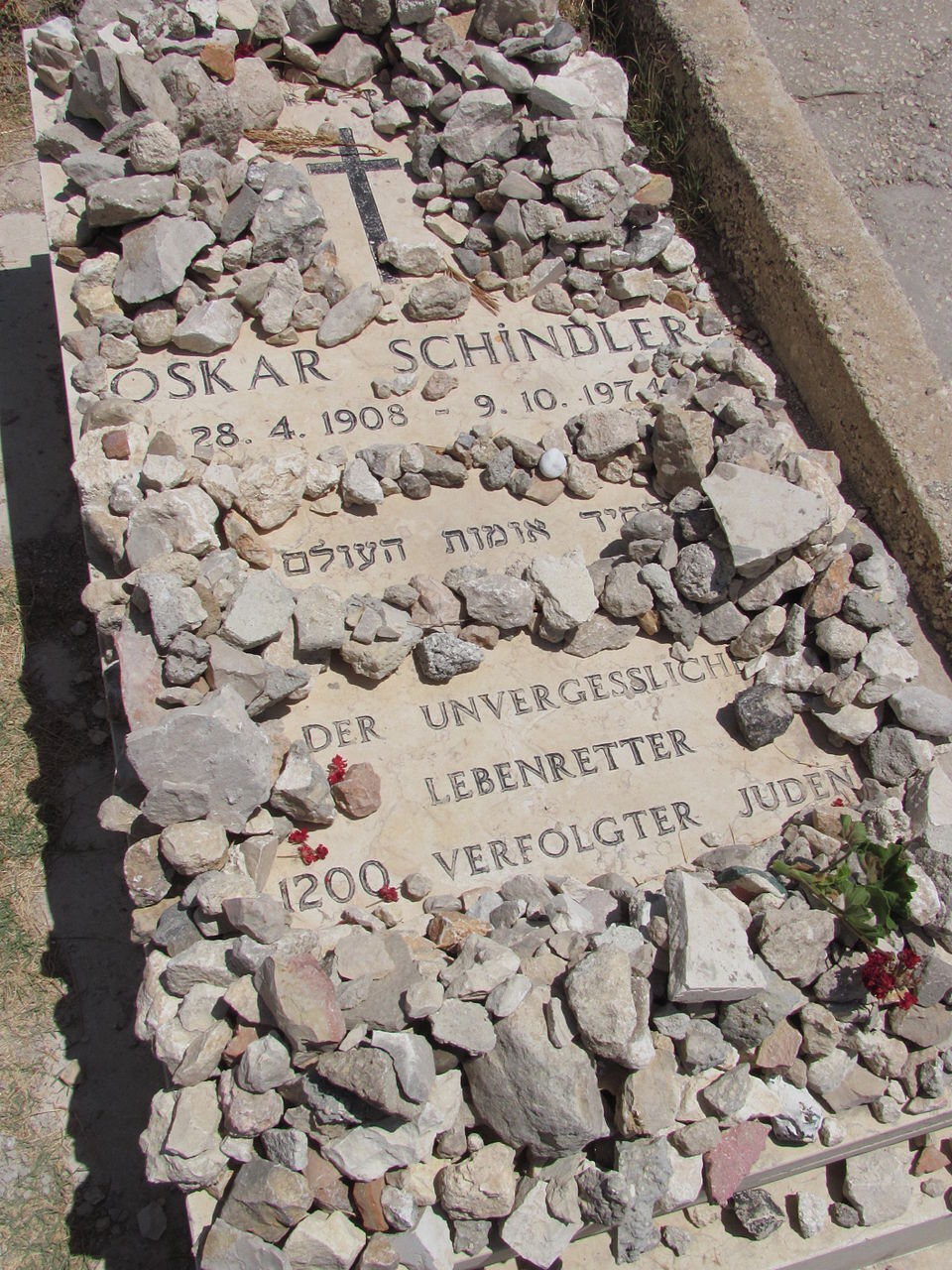
Many honorifics are endemic to specific cultures and religions. Judaism, for example, uses the honorific רב, Rav, also meaning “Master” or more literally “Great”; variants include רבי, Rabbi, with the added “my” suffix. For individuals recently deceased, names are often given with the abbreviation ז״ל following, for zikhrono/a livrakha, “may his/her memory be a blessing” (abbreviated in English as Z”L). Another related honorific-type act is to posthumously raise a soldier in rank who has died in battle. (This has sparked some level of confusion and conspiracies over the past two and a half years of conflict among unknowing observers, as to why so many Israeli “officers” have been killed.)
Some of the most detailed and repetitive honorifics are those found in the Arab/Islamic world. Reference to Allah, for example, is often followed by the words subhanahu wa-ta’ala, “gloried and exalted” (abbreviated in English as swt), or ‘azza wa-jall, “mighty and majestic” (abbreviated as azwj). Reference to the prophet Muhammad is followed by the words salla -llahu ‘alayhi wa-sallam, “blessings of Allah be upon him and peace,” with the condensed Arabic character ﷺ often used to represent this phrase online and in print. (English abbreviations are given either as saw, or as pbuh, for the English equivalent “peace and blessings be upon him.”) Various other honorifics are used for the companions of Muhammad; similarly, for angels and for many of the prophetic and royal figures also found in the biblical account.

King David is a case in point—a figure often unfortunately mischaracterized (especially by Western media) as enemy number one in the intersection of Judaism, Islam, archaeology and questions of historicity. Yet David is a figure spoken highly of in the Qur’an, regarded not only as a king but also as a prophet (paralleling his reference as such in the New Testament—Acts 2:29-30). His name, like many other such figures, is often followed by the honorific ‘alayhi -s-salam, “upon whom be peace” (abbreviated as AS).
Additionally, honorific titles found in the Islamic world include Sheikh, meaning “elder,” and Mufti, meaning “clarifier”/“explainer”—one who issues a fatwa (an etymologically related Arabic word).
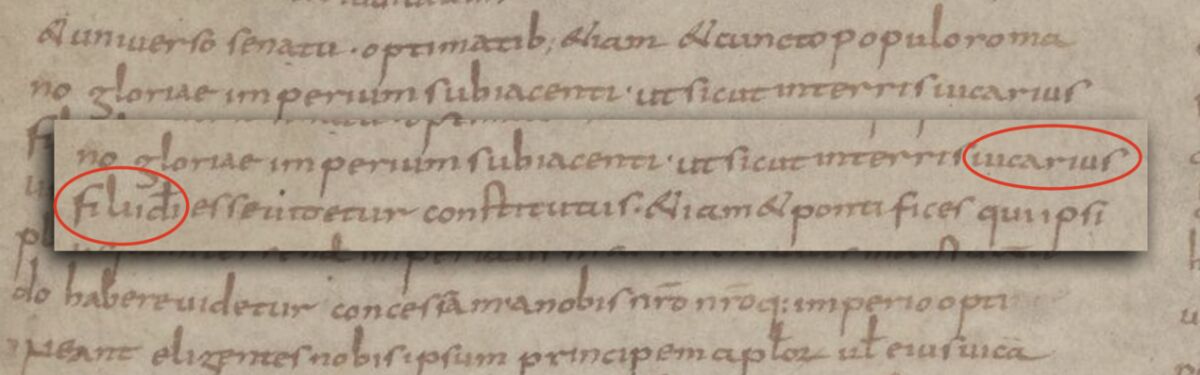
Different branches of Christianity also have their own honorific titles for leaders in the community, including pastor (from pastour, meaning “shepherd,” i.e. “to lead to pasture”), pope (from pappas, “father”) and the reverend/rev. (from reverendus, “to be revered”). The use of certain such titles can be controversial among different groups, such as the stylizing of “the reverend” for other than God, or the papal honorific vicar of Christ (“vicar,” from vicarius, meaning “substitute” or “in the place of”).
Similar honorifics for the dead to those found in Islam are also found in traditional Christianity and used throughout the Western world. These include the phrase “rest in peace” (R.I.P., from the Latin requiescat in pace); also the phrase often used after mentioning the name of one recently deceased: “God rest his/her soul.”
There are, of course, countless other honorifics that can be found around the world in various cultures and contexts. Such honorific terms prevalent in Eastern nations that might be recognizable to an English audience include titles such as the Japanese sensei (used to refer to a teacher, literally “one who comes before”) and the Hindu swami (roughly “master of oneself”). Those familiar with Korean dramas—which have enjoyed notable popularity in the West—may have noticed the constant repetition of terms such as -seumnida in dialogue. This is an honorific grammatical suffix (without direct translational equivalent) that is applied to the end of sentences when speaking in formal situations, to show respect.
The fascinating use of honorifics in various shapes and forms can also be found in certain biblical passages, as well as in historical documents going back thousands of years—with one particularly striking example.
Papyrus Sallier I
Papyrus Sallier i is a 19th Dynasty Egyptian document dating to the end of the 13th century b.c.e. It recounts an earlier story, dating to the end of the Second Intermediate Period (early-mid 16th century b.c.e.), of a dispute between the West Semitic Hyksos ruler Apophis of Lower Egypt and Theban King Seqnenre of Upper Egypt. This was a time in which Egypt was divided, with a native Egyptian dynasty controlling the south of the country, and a migratory Semitic dynasty from Canaan established in the north (for more on this familiar-sounding geopolitical situation, read “The Hyksos: Evidence of Jacob’s Family in Egypt?”).
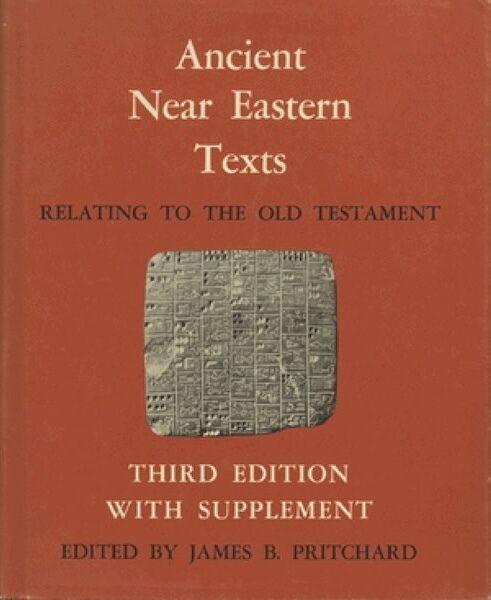
Intriguing in the text of Papyrus Sallier i is the extremely frequent use of the honorific “life, prosperity, health!” after mentioning names and titles of various individuals, even opposing figures. This phrase is so repetitious that translations of the papyrus sometimes abbreviate it as lph. Without reproducing the (relatively lengthy) text in full, here is a sampling of the document drawn from archaeologist Dr. James B. Pritchard’s Ancient Near Eastern Texts Relating to the Old Testament:
Now it so happened that the land of Egypt was in distress. There was no Lord—life, prosperity, health!—or king of the time. However, it happened that, as for King Seqnen-Re—life, prosperity, health!—he was Ruler—life, prosperity, health!—of the Southern City. Distress was in the town of the Asiatics, for Prince Apophis—life, prosperity, health—was in Avaris, and the entire land was subject to him with their dues, the north as well, with all the good produce of the Delta. Then King Apophis—life, prosperity, health!—made him Seth as lord, and he would not serve any god who was in the land [except] Seth. And [he] built a temple of good and eternal work beside the House of [King Apo]phis—life, prosperity, health!—[and] he appeared [every] day to have sacrifices made … daily to Seth. And the officials [of the King]—life, prosperity, health!—carried wreaths, just exactly as is done (in) the temple of the Re-Har-akhti. Now then, as for [King] A[pophis]—life, prosperity, health!—he wanted to [send] an irritating message (to) King Seqnen-Re—[life, prosperity, health!—the] Prince of the Southern City.
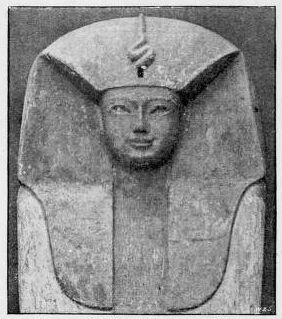
The text continues at length, with the same continuous use of the honorific throughout. The repetition is striking.
A similar example of honorific usage—in relation to the same ruler, Apophis—can be found on the Year 3 Stele of Kamose. This stele—dating to around 1570–1550 b.c.e. (depending on the chronology followed)—contains a message from Apophis to his Cushite counterpart, requesting assistance after being attacked by Kamose: “Do you see what Egypt has done to me? The ruler who is in it, Kamose-the-Brave, given life, is attacking me on my soil although I have not attacked him ….”
Honorifics in the Bible
The use of various honorifics can be found throughout the Hebrew Bible and New Testament. For the latter, we see the frequent use of titles such as rabbi and lord: “Then Jesus turned, and saw them following, and saith unto them, What seek ye? They said unto him, Rabbi, (which is to say, being interpreted, Master,) where dwellest thou?” (John 1:38); “Even as Sara obeyed Abraham, calling him lord” (1 Peter 3:6); “[W]hy call ye me, Lord, Lord, and do not the things which I say?” (Luke 6:46).
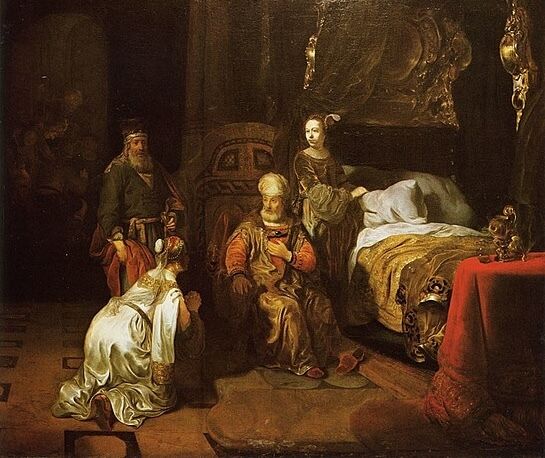
The Hebrew Bible contains a number of scenarios in which rulers are addressed with similar turns of phrase to that used in Papyrus Sallier i. For example, the phrase “king, live forever” can be found in Bathsheba’s words to David (1 Kings 1:31), Nehemiah’s words to Artaxerxes (Nehemiah 2:3), the Chaldeans to Nebuchadnezzar (Daniel 2:4; 3:9), the Babylonian queen to Belshazzar (Daniel 5:10), Daniel to Darius (Daniel 6:22; verse 21 in other versions), and so on.
Similar honorific-type sentiments can also be found elsewhere, such as the phrase “peace be to you” in Genesis 43:23, Judges 6:23, 19:20, 1 Samuel 25:6, Isaiah 57:19, Jeremiah 23:17, Psalm 122:8, 128:6 and Daniel 10:19. Even the opposite sense can also be found (although not in the sense of formal address) in 1 Kings 2:6: “Do therefore according to thy wisdom, and let not his hoar head go down to the grave in peace.”
The aforementioned honorific for the dead in Judaism—“may his/her memory be a blessing”—is derived from Proverbs 10:7: “The memory of the righteous shall be for a blessing.”

Honorific phrases for God are also found throughout, including various words of praise. Relatively frequent is the phrase “God, merciful and gracious”—such as in Exodus 34:6, Joel 2:13, Jonah 4:2, Psalm 86:15, 103:8, 111:4, 145:8, Nehemiah 9:17, 31 and 2 Chronicles 30:9. This closely parallels the common Arabic phrase ar-rahman ar-rahim—“the gracious, the merciful” (with the Hebrew word rahum, “merciful” or “compassionate,” as the direct translational equivalent).
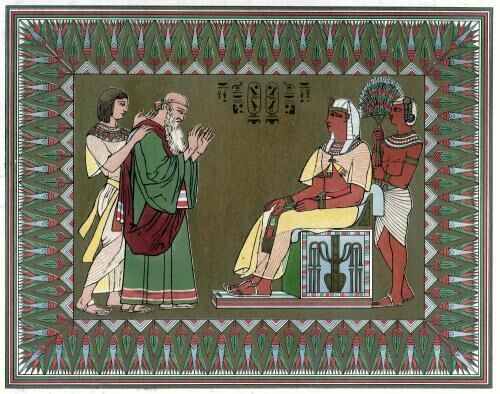
Other, more obscure biblical passages may also imply the use of honorifics. For example, Genesis 47:7 and 10 state, in the context of Jacob approaching and departing from the pharaoh, “Jacob blessed Pharaoh.” Rather than issuing some kind of lengthy “blessing” for the pharaoh twice over, this probably refers to a shorter honorific-type blessing given first upon coming into the presence of the pharaoh, and then upon departing. The Cambridge Bible for Schools and Colleges states: “Genesis 47:7: Jacob blessed Pharaoh. Here and in Genesis 47:10 Jacob is said to ‘bless’ Pharaoh. We should understand by this the solemn and benevolent benediction … in addressing those of much higher rank.” The same scenario is given in other passages, with the Hebrew word “bless” often translated as “salute” or “greet.” 1 Samuel 13:10 is a case in point: “Samuel came; and Saul went out to meet him, that he might salute [Hebrew, “bless”] him.”
It also brings to mind the words of God to Abram in Genesis 12: “I will bless them that bless thee, and curse him that curseth thee” (verse 3; King James Version).
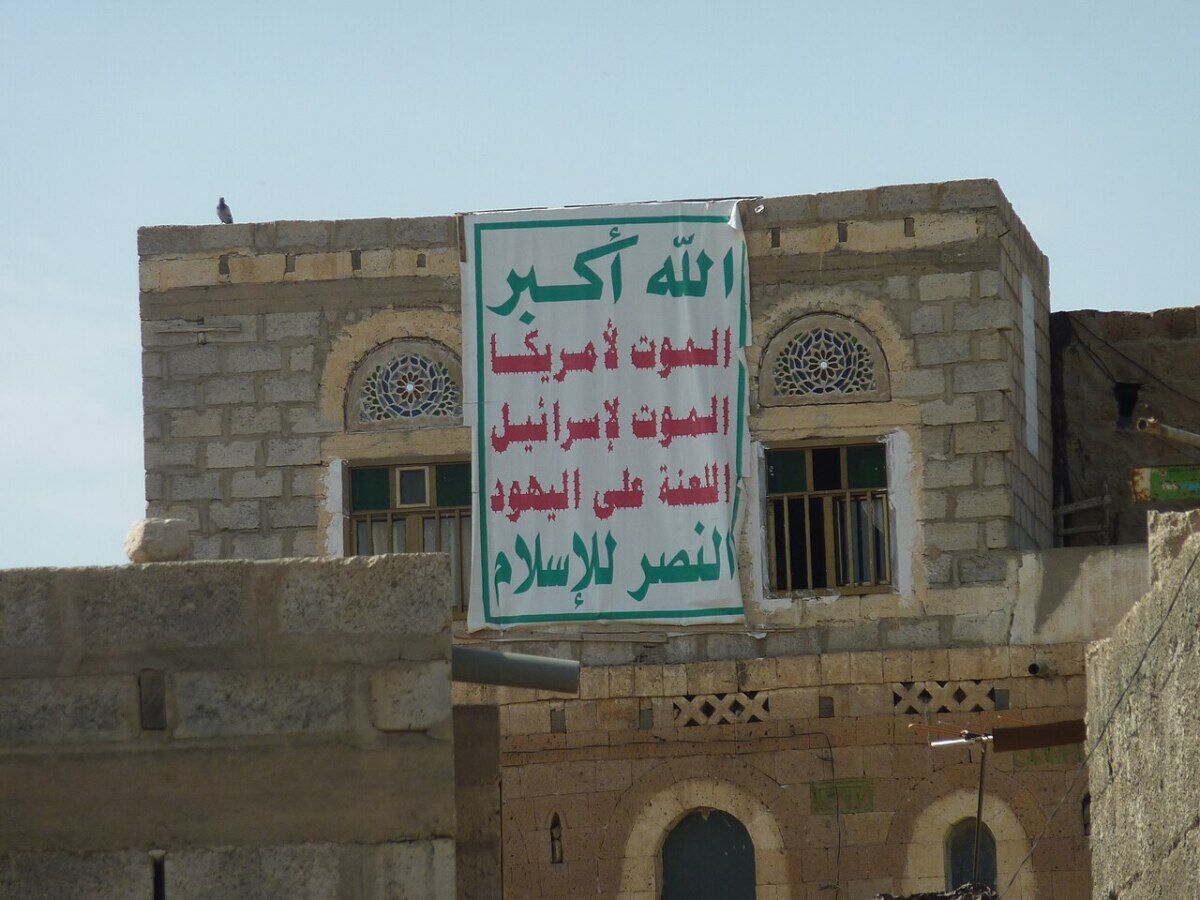
As an aside, one wonders if Yemen’s Houthis have not unwittingly brought such a curse upon themselves in adopting as their five-line slogan (the Sarkha): “Allah is the greatest, Death to America, Death to Israel, Cursed be the Jews, Victory to Islam.”
Of course, there are notable developmental and theological differences in the use of such honorifics as those described above, within different periods and communities—as in the aforementioned examples of the biblical use of honorifics for the living, as well as Judaism’s honorifics in memory of the dead, compared to Islam’s honorifics for the welfare of the deceased (something also echoed in terminology such as “rest in peace”).
In the end, considering the rich and ancient history of honorifics found in Egypt (as demonstrated above, in Papyrus Sallier i), perhaps it’s not unusual to find their use especially promulgated among those populations who claim matrilineal descent from Egypt, through Hagar—the Ishmaelites.
Perhaps, in some sense such an honorific might even be found in the words of Abraham, in Genesis 17:18: Ishmael—may he live!