Our March-April 2025 issue of Let the Stones Speak explored the identity of the pharaoh who “knew” Joseph—as articulated in Andrew Miiller’s cover story, “Who Was Joseph’s Pharaoh?” Yet long after his reign, “there arose a new king over Egypt, who knew not Joseph” (Exodus 1:8).
Who was this pharaoh who “knew not Joseph”?
A common belief is that it was Ahmose i, founder of the 18th Dynasty and initiator of Egypt’s golden age of unity—the New Kingdom Period. This follows the Second Intermediate Period, which was largely marked by division and disunity, with ancient Egypt split in half—the Semitic Hyksos dominating the Lower Egyptian Delta and native Egyptians controlling Upper Egypt. Broadly, the Second Intermediate Period is a good fit with the initial period of the Israelite sojourn in Egypt; the New Kingdom Period fits well with the period of oppression and Exodus. The Second Intermediate Period facilitated the immigration and growth of the Israelite populace in the land; the New Kingdom Period, enslavement under total vengeful Egyptian hierarchy and hegemony. Therefore, it stands to reason that the pharaoh who best fits the one who “knew not Joseph” was Ahmose i, as the first pharaoh of the New Kingdom Period, ruling over a united Egypt. This is an identification that has supporters from both sides of the early-versus-late-date-Exodus debate.
“Who was that king? The quick answer is that his name was Ahmose,” wrote Kris Udd for Crossroads Bible Church in his article, “The ‘King Who Knew Not Joseph’.” Michael Smith wrote, “Storage facilities, silos and military facilities were built at Avaris under his reign, as Manfred Bietak has shown, matching Exodus 1:11. … In my opinion Ahmose i is the most likely given the context of Exodus 1:8” (“The Pharaoh Who Didn’t Know Joseph: 3 Possibilities”). The Expanded Bible even includes an insertion about this pharaoh in its translation of verse 8, adding in brackets: “identification uncertain; may refer to Ahmose in 16th century b.c.e.” The Jamieson, Fausset and Brown Bible Commentary (first published in 1871) writes: “The new king, who neither knew the name nor cared for the services of Joseph, was either Amosis [Ahmose] or one of his immediate successors.”
I disagree. I think Ahmose i brought to fruition the desires of the pharaoh “who knew not Joseph.” But Exodus 1:8-10 is a statement of intent, not a summary of action. I believe this best fits the pharaoh who directly preceded Ahmose i—a pharaoh who set in motion the chain of events ultimately fulfilled by Ahmose.
In a handful of articles, I have referenced in passing the identity of the Exodus 1 pharaoh who “knew not Joseph” as this mid-16th century b.c.e. predecessor and brother to Ahmose i: Kamose. This has drawn some criticism. Prof. Douglas Petrovich’s 2024 article “Resolving Whether Senenmut Is Moses,” critiquing my article “Is This Moses?,” concluded: “On a final and tangential note, Kamose is not the pharaoh who did not know of Joseph (Exodus 1:8), as Eames suggested. Instead, this biblical pharaoh is Kamose’s brother and successor, Ahmose i, who completed the victory over the Hyksos by conquering Avaris and served both as the final king of the 17th Dynasty and as the first king of the 18th Dynasty.”
I believe the acts detailed in the account—the construction projects mentioned in verse 11, etc—best fit the projects initiated by Ahmose i (particularly at Avaris). But Exodus 1:8-10 are not about accomplishments; rather, they contain a statement of intent issued by a pharaoh on the basis of his “not knowing Joseph.” And in this, I believe the best fit is Kamose and, in particular, an inscription of his that reads remarkably similar to the abbreviated text of Exodus 1:8-10.
Enter the Hyksos
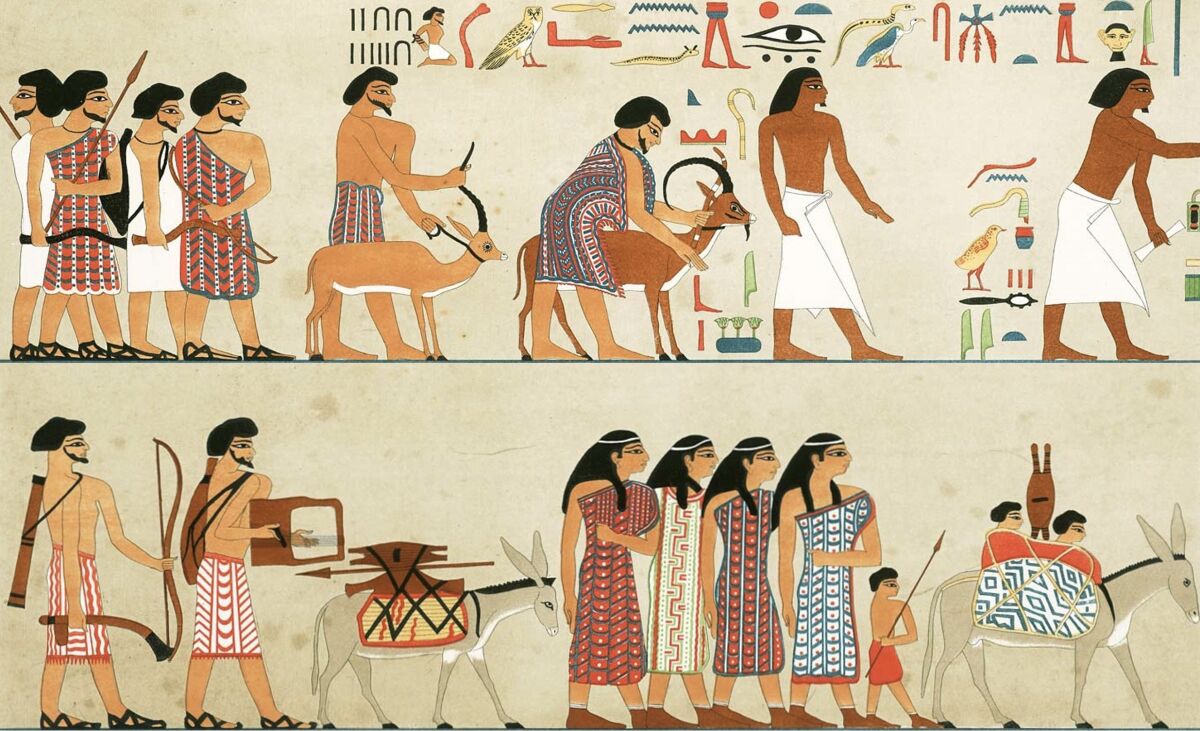
In other articles, I have made the case for the Israelites as constituting at least a core component of the Hyksos population that migrated from Canaan, settled in and ruled Lower Egypt in the first half of the second millennium b.c.e. (matching the biblical chronology for the period of the arrival of the Israelites on the basis of what is known as the “short sojourn” view).
According to third-century b.c.e. Egyptian historian Manetho, the Hyksos—a shepherding population—first came to Egypt in the context of “gathering corn” (compare with Genesis 41:49), ultimately rising in power before being overthrown and later “journey[ing] from Egypt, through the wilderness … [to] that country which is now called Judea,” where they built a great city “and called it Jerusalem” (Against Apion 1.14). Names and titles of leading figures in the dynasty match Jacob, Issachar, Joseph and Benjamin—read “The Hyksos: Evidence of Jacob’s Family in Egypt?” for more detail.
“If you study ‘fake news’ from ancient Egypt, you would consider the Hyksos a band of nasty, marauding outsiders who invaded and then brutally ruled the Nile Delta until heroic kings expelled them,” wrote Egyptologist Danielle Candelora. “In fact, the Hyksos had a more diplomatic impact, contributing to progress in culture …. Rather than an ‘invasion,’ it appears that as the centralized authority of Egyptian kings declined, elites at Tell el-Dab’a [Avaris] increased their local power until, by a coup or simply a slow, peaceful process, they took the Heka Khasut [Hyksos—“foreign kings,” or “shepherd kings”] title and became kings in their own right” (“The Hyksos”).
By the mid-16th century b.c.e., one particular “heroic” native Egyptian king sought to change the status quo.
The Carnarvon Tablet
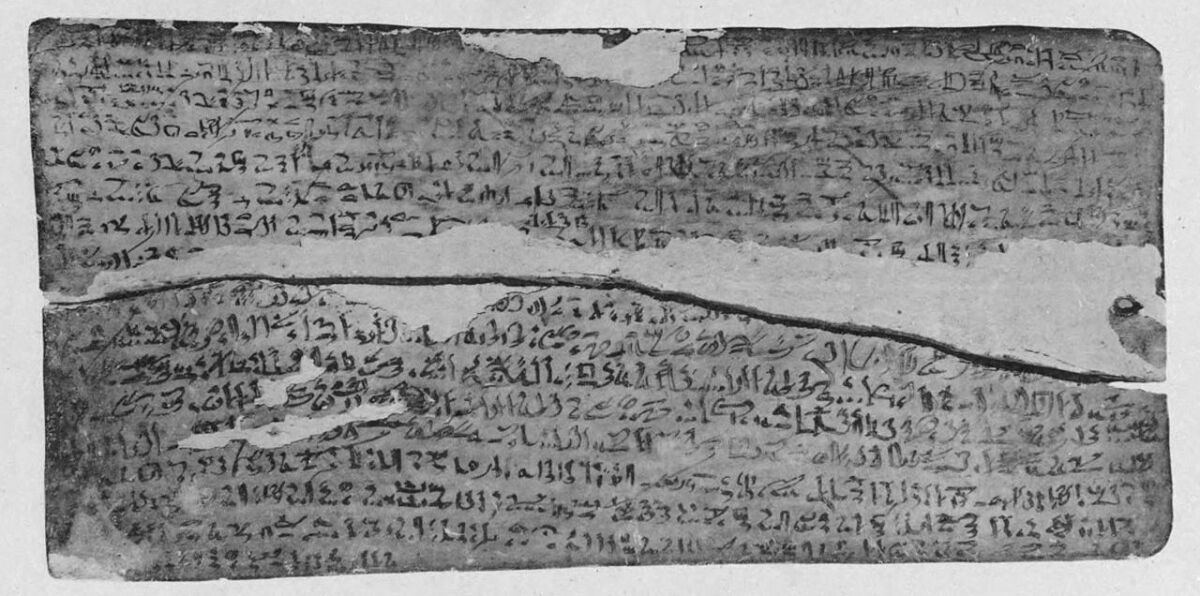
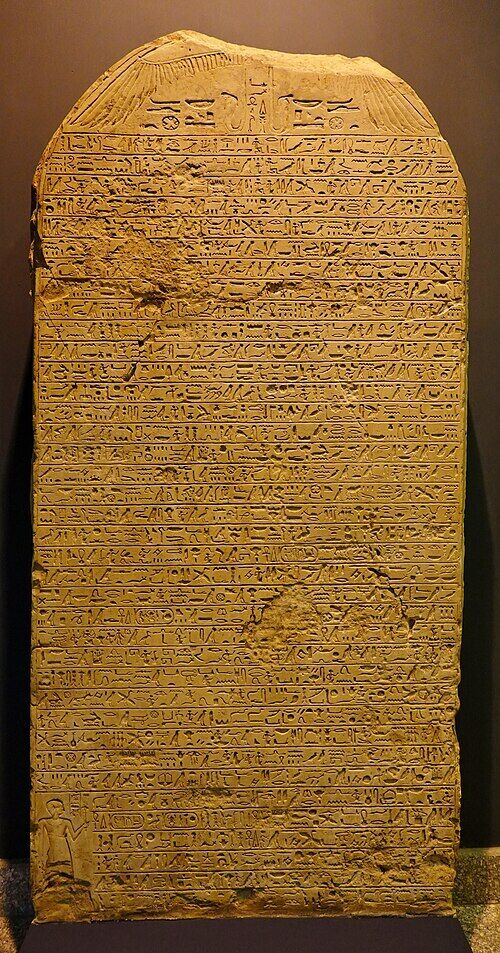
In 1908, George Edward Stanhope Molyneux Herbert, 5th Earl of Carnarvon, discovered a pair of plaster-covered wooden writing boards in the vicinity of Deir el-Bahari. Each contained inscriptions. The obverse side of Tablet i details Kamose’s war against the Hyksos. The boards were believed to be the product of a schoolboy’s exercise, probably copied from a preexisting victory stele belonging to Kamose. This hypothesis was proved correct in the 1930s when two fragments of a stele containing parallel text were discovered at Karnak.
The following is the entire text of the obverse side of Carnarvon Tablet i, as produced in Dr. James B. Pritchard’s Ancient Near Eastern Texts Relating to the Old Testament (1969). Note in particular paragraphs 3-5, where Kamose discusses with his counsellors the situation of the Semitic “Asiatics” (a term used for those of the Levant) established in northern Egypt, and Kushites in the south.
Year 3 of Horus: Appearing upon His Throne; the Two Goddesses: Repeating Monuments; Horus of Gold: Making the Two Lands Content; the King of Upper and Lower Egypt …: [Wadj]-kheper-[Re; the Son of Re …: Ka]-mose, given life, beloved of Amon-Re, Lord of the Thrones of the Two Lands, like Re forever and ever.
The mighty king in Thebes, Ka-mose, given life for-ever, was the beneficent king. It was [Re] himself [who made him] king and who assigned him strength in truth.
His majesty spoke in his palace to the council of nobles who were in his retinue: “Let me understand what this strength of mine is for! (One) prince is in Avaris [the Hyksos capital], another is in Ethiopia, and (here) I sit associated with an Asiatic [Hyksos] and a Negro! Each man has his slice of this Egypt, dividing up the land with me. I cannot pass by him as far as Memphis, the waters of Egypt, (but), behold, he has Hermopolis. No man can settle down, being despoiled by the imposts of the Asiatics. I will grapple with him, that I may cut open his belly! My wish is to save Egypt and to smite the Asiatics!”
The great men of his council spoke: “Behold, it is Asiatic water as far as Cusae, and they have pulled out their tongues that they might speak all together, (whereas) we are at ease in our (part of) Egypt. Elephantine is strong, and the middle (of the land) is with us as far as Cusae. The sleekest of their fields are plowed for us, and our cattle are pastured in the Delta. Emmer is sent for our pigs. Our cattle have not been taken away …. He holds the land of the Asiatics; we hold Egypt. Should someone come and act [against us], then we shall act against him!”
Then they were hurtful to the heart of his majesty: “As for this plan of yours, … He who divides the land with me will not respect me. [Shall I res]pect these Asiatics who … from him? I [shall] sail north to reach Lower Egypt. [If I fight with] the Asiatics, success will come. If he thinks to be content with … with weeping, the entire land … [rul]er in the midst of Thebes, Ka-mose, the protector of Egypt!”
I went north because I was strong (enough) to attack the Asiatics through the command of Amon, the just of counsels. My valiant army was in front of me like a blast of fire. The troops of the Madjoi were on the upper part of our cabins, to seek out the Asiatics and to push back their positions. East and west had their fat, and the army foraged for things everywhere. I sent out a strong troop of the Madjoi, while I was on the day’s patrol … to him in … Teti, the son of Pepi, within Nefrusi. I would not let him escape, while I held back the Asiatics who had withstood Egypt. He made Nefrusi the nest of the Asiatics. I spent the night in my boat, with my heart happy.
When day broke, I was on him as if it were a falcon. When the time of breakfast had come, I attacked him. I broke down his walls, I killed his people, and I made his wife come down to the riverbank. My soldiers were as lions are, with their spoil, having serfs, cattle, milk, fat, and honey, dividing up their property, their hearts gay. The region of Ne[frusi] was something fallen; it was not (too) much for us before its soul was hemmed in.
The [region] of Per-shaq was missing when I reach it. Their horses were fled inside. The patrol ….
The dialogue between Kamose and his counsellors is particularly striking in the context of Exodus 1:8 onward—a passage featuring the ruler’s appeal “unto his people.” Even more striking is the response of the counsellors to their monarch—that these “Asiatics” posed no threat, and if anything were facilitating trade and prosperity with Upper Egypt. (The reference to “our cattle” being “pastured in the Delta” is also interesting, given that this was both the location and task assigned to the Israelites—to “dwell in the land of Goshen” and become “rulers over my [the pharaoh’s] cattle”—Genesis 46:34, 47:6.)
Despite his advisers (who perhaps “knew” better the situation of Hyksos establishment), Kamose sought to end foreign dominion over the Delta with aims to consolidate Egypt under his rule.
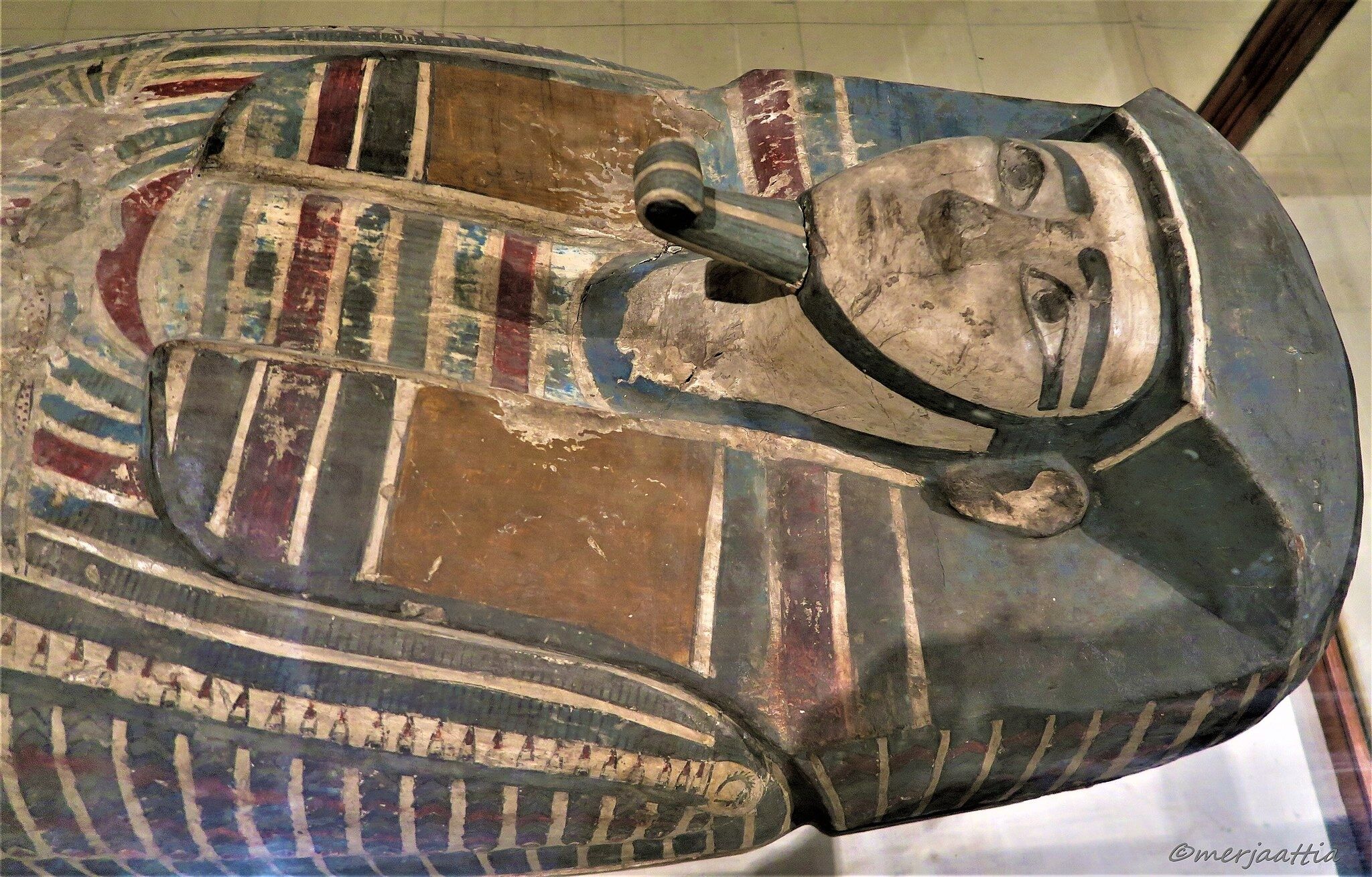
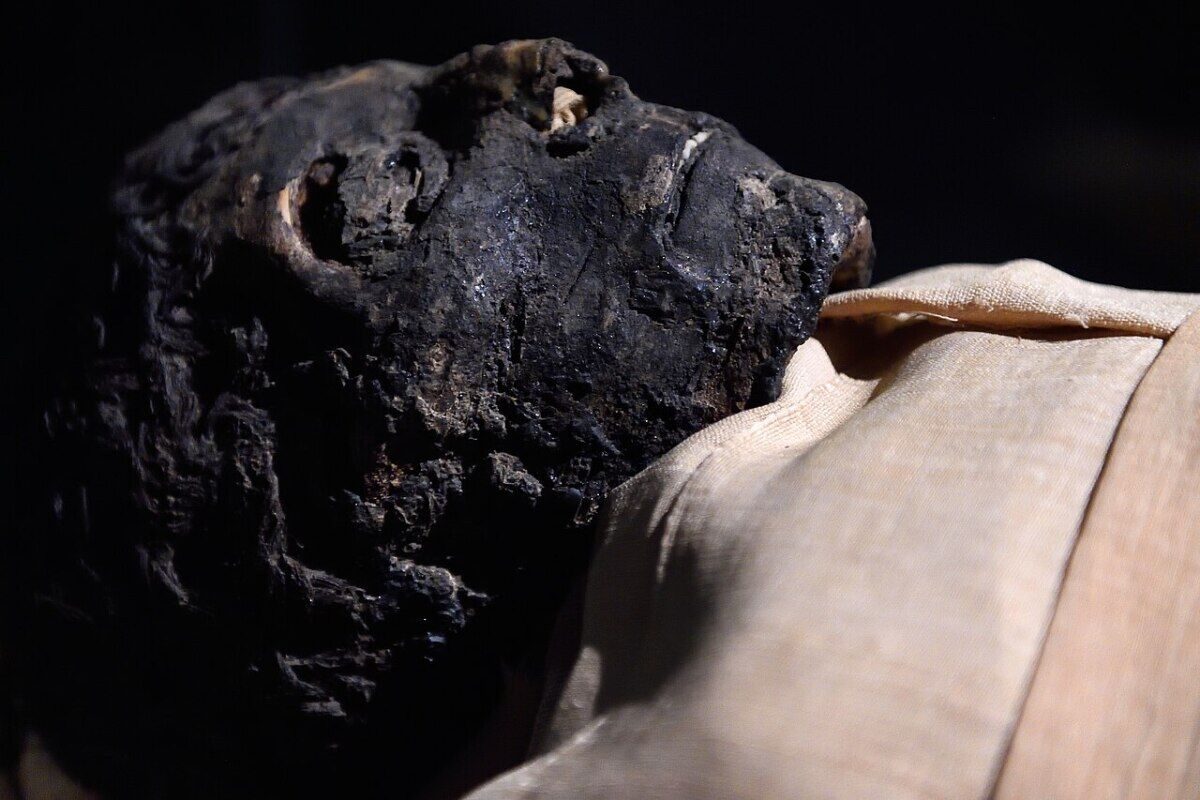
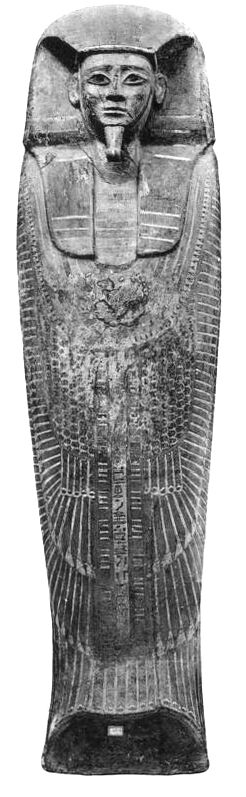
He only partially succeeded. In initiating a great war against the north, Kamose succeeded in gaining territory. Yet it appears he most likely died in battle—his reign suddenly ending after just three (or perhaps as many as five) years—his body subsequently interred in a more simplified wooden coffin. His brother Ahmose would go on to continue the conflict, ultimately conquering the northern capital of Avaris and bringing the Delta under his rulership.
Objections
In identifying the Hyksos with the Israelites—or, at very least, a key component of them—the identity of Kamose as this initial antagonist who “knew not Joseph” is only logical. There are, of course, objections.
The aforementioned Petrovich, for example, does not identify the Israelites with the Hyksos—in part on the basis of the “long sojourn” model, as opposed to the “short sojourn” (which does closely align with the arrival in Egypt of the Hyksos). He wrote in his 2019 article “Determining the Precise Length of the Israelite Sojourn in Egypt”:
Some advocates of the short-sojourn theory believe that the reigns of the Asiatic rulers in Egypt known as the Hyksos (Dynasty 15) fit well with a 215-year sojourn. Yet in reality, the details surrounding the Hyksos’ rule are quite damaging to their view. According to the Turin Royal Canon, the Hyksos ruled for 108 years from their capital at Avaris (ca. 1668–1560 b.c.e.) …. The short sojourn would date the Hebrews’ arrival in Egypt to approximately 1661 b.c.e., based on the proper date for the Exodus, about seven years after the Hyksos had arrived.
Far from seeing this as “damaging,” I would consider such a close fit to within the same decade (the 1660s b.c.e.) as a rather extraordinary parallel—particularly for an event some 3,700 years ago, for which there does remain debate about precisely when the Hyksos began to rule (with a number of ballpark variants proposed by Egyptologists such as Kim Ryholt, Thomas Schneider, etc). Nonetheless, in reckoning the Hyksos as an entirely separate entity, Petrovich identifies them as these nondescript “enemies” mentioned in verse 10 that the pharaoh is concerned about the Israelites allying with (as outlined in his book Origins of the Hebrews and elsewhere).
I would instead identify these general “enemies” of Upper Egypt primarily with the Kushites (Nubians), whom the Hyksos allied with after Kamose initiated his war. In the frantic words of an intercepted letter from the Hyksos king Apophis to his Kushite counterpart (recorded in Kamose’s Year 3 stele):
Do you see what Egypt has done to me? The ruler who is in it, Kamose-the-Brave, given life, is attacking me on my soil although I have not attacked him in the manner of all he has done against you. He is choosing these two lands to bring affliction upon them, my land and yours, and he has ravaged them ….
At the same time, these unnamed “enemies” of verse 10 could also represent any from the surrounding regions—including Libya and/or the Levant.
More potentially problematic, however, is the implication of the last part of the verse—the worry that if the Israelites are not dealt with, they will “get them up out of the land.” Yet wasn’t it the intention of the Egyptians to drive the Hyksos out of the land? And didn’t they succeed in doing so?
For the latter, note the assessment of Dr. Manfred Bietak, chief excavator of the Hyksos capital of Avaris (Tell el-Dab’a). He states that despite the overly simplistic claims of Manetho and others that the Hyksos were expelled to Canaan following their defeat in the mid-16th century b.c.e., there is no archaeological evidence for this. “[W]e have no evidence that the Western Asiatic population who carried the Hyksos rule in Egypt was expelled to the Levant.” Instead, following their defeat, “there is mounting evidence to suggest that a large part of this population stayed in Egypt and served their new overlords in various capacities” (“From Where Came the Hyksos and Where Did They Go?”; emphasis added). Evidence of this can be found throughout Egypt, including an “uninterrupted” production of Hyksos-style pottery in the Eastern Delta. This, fitting more closely with the biblical account of the Israelites being overthrown by the native Egyptian pharaoh and set to work on various production and construction jobs, probably in conditions of worsening severity—followed by a later Exodus event, befitting the biblical chronology.
Similarly, I see nothing in Kamose’s speech intimating a desire to necessarily expel the “Asiatics” at large—simply a desire to control the totality of the land from his throne. Victory over these conquered northerners would then open up a huge potential slave base for the sole monarch.
Finally, it is worth taking a closer look at the latter part of verse 10 and the fear that the people would “get them up out of the land.” Many translations use words like “escape,” “leave” or “get out.” Yet these interpretations go a little further than the literal Hebrew, which is arguably more open-ended—something akin to “rise up,” “arise,” or “ascend” from the land.
Take the following example: The New Living Translation follows most others in rendering the end of verse 10 as “they will join our enemies and fight against us. Then they will escape from the country.” It adds, however, the following note to the final sentence: “Or, will take the country.” Or take the Aramaic versions, such as the Peshitta: “[T]hey will fight with us and they will drive US out from the land.” Similarly, the Lamsa: “and fight against us, and so drive us out of the land.”
In this manner, the passage may read even more akin to the speech of Kamose—in his fear that the “Asiatics” would only grow in power, “rising up” from their northern territory and carving up even more of Egypt for themselves.
There may even be a good fit in the lead-in to verse 8, with the words “there arose a new king over Egypt.” In the words of Prof. Paul Ray Jr: “In Hebrew, the verb qwm plus the preposition ‘al often means ‘to rise against’ (cf. Deuteronomy 19:11; 28:7; Judges 9:18; et al)” (“The Duration of the Israelite Sojourn in Egypt”). Though Ray ultimately settles on a different interpretation, he grants that “possibly, as is sometimes suggested, it could refer to Ahmose i (ca. 1575–1553 b.c.e.), the first king of the 18th Dynasty (ca. 1575–1318 b.c.e.), in taking back a throne [over all Egypt] that was rightfully his ….” Here again though, I would see his predecessor Kamose as the better fit—as this individual who initially “arose,” the pharaoh whose schemes are laid out in the following verses—the one who initiated this attempt to reconquer the land.
As I see it, Kamose is the best fit for this pharaoh who “knew not Joseph,” and the pharaoh’s speech to his officers in Exodus 1:8-10 is essentially an abbreviation of what we find in the Carnarvon Tablet and on Kamose’s stelae (which would have been on prominent display in ancient Egypt), recording the pharaoh’s dialogue with his counselors. (The full first chapter of Exodus 1 itself being but a brief abbreviation of the Israelite sojourn in Egypt up until the time of the Exodus.) This, I believe, is the best fit with the lynchpin pharaoh in whose words and intent demonstrated that he “knew not Joseph”—while conversely, his closest advisers did, in their arguing for maintaining the status quo with the Hyksos—given the opportunities created by them, in maintaining Egyptian herds, facilitating trade, etc.
Kamose, of course, did not survive long enough to see his vision of Egyptian domination fulfilled, succeeding only in subjugating parts of the northern country before his untimely death. That vision in its totality would be ultimately brought to fruition by his brother, Ahmose i—again, a pharaoh that is a good fit with the initial pharaoh of the oppression, ruling over a newly-enslaved populace.
But that “vision” of the singular specific pharaoh who “knew not Joseph,” I would say, is best attributed to Kamose.