
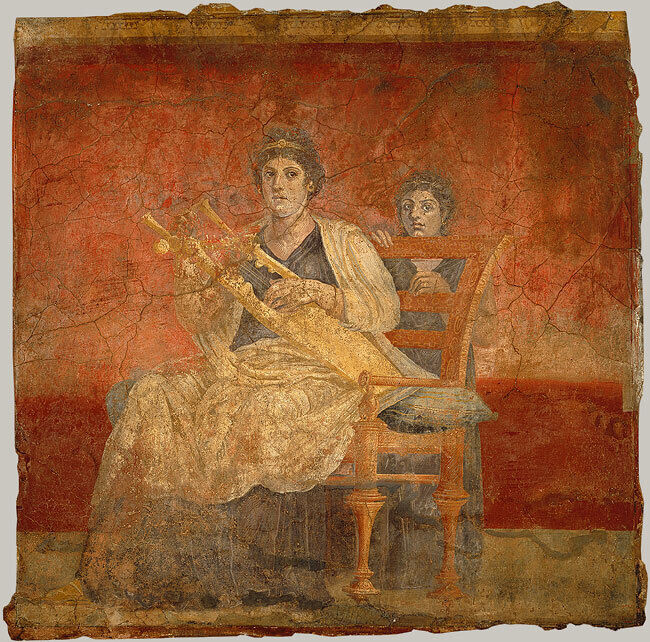
“And the herald cried aloud: ‘To you it is commanded, O peoples, nations, and languages, that at what time ye hear the sound of the horn, pipe, harp, trigon, psaltery, bagpipe, and all kinds of music, ye fall down and worship the golden image that Nebuchadnezzar the king hath set up ….” So reads Daniel 3:4-5, describing King Nebuchadnezzar of Babylon’s dedication ceremony to a golden idol. This passage historically has been far more controversial than meets the eye. While written in Aramaic, several of these words have an apparent Greek origin. Critics in the 19th and early 20th centuries claimed this betrays much later Hellenistic influence in Daniel—indicating the book was not written until after Alexander the Great brought Greek culture to the Middle East, over two centuries after its claimed authorship.
“The book does contain Greek words—a sum total of three,” we wrote in our article “Can We Trust the Book of Daniel?” “What would be unusual is for a second-century b.c.e. book to be so devoid of Greek terminology. If Daniel had been written during the second century b.c.e., when Greek language and culture were saturating the region, surely it would contain more than three different Greek words.”
Indeed, the hypothesis of the passage’s Greek language being a giveaway of the book as a later forgery has somewhat fallen out of favor. But there is more to the story. Which particular words are of Greek origin?
The three are: kitharis, rendered as “harp” in the above Jewish Publication Society translation; psanterin, rendered as “psaltery”; and sumponeya, rendered as “bagpipe” (the King James Version renders it as “dulcimer”). All three are listed together in Daniel 3:5 as well as verses 7, 9 and 15.
What exactly did these instruments look and sound like? What were they doing in a Babylonian “orchestra”? And what might their presence say about intercultural exchange in the late Iron Age?
Kitharis
The Aramaic kitharis is derived from the Greek kithara (κιθάρα) and refers to a specific type of lyre. Musical instruments in ancient Greece were made of wood, animal entrails and other perishable materials—so unfortunately, archaeology has turned up relatively few remains of the actual instruments. But a handful of exceptions have been found, especially lyres.
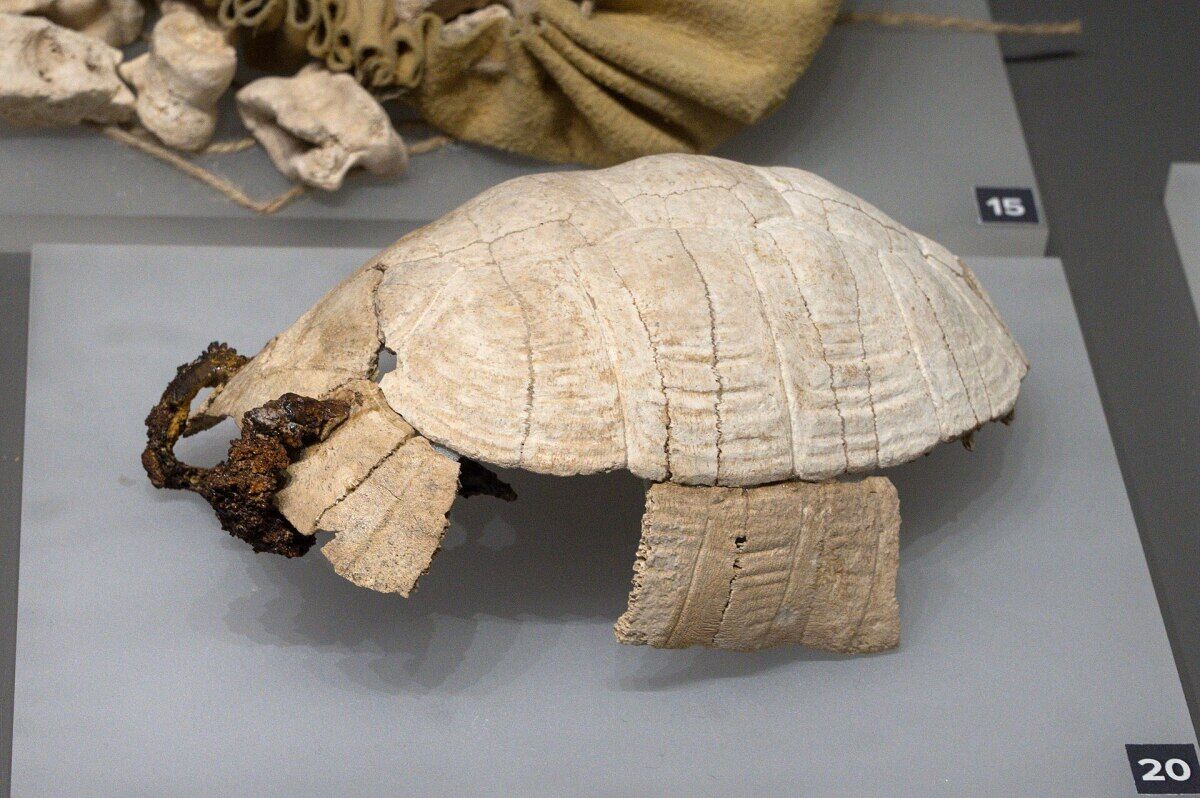
One type of lyre whose remains are more commonly uncovered is the chelys. Literally meaning “turtle,” it was unique in that its sound box was designed from a modified tortoise shell. Its strings would have been made from animal entrails. Tradition claims the chelys is the oldest member of the lyre family in Greek culture, legendarily invented by the god Hermes himself. Tortoiseshell fragments dating from circa 1200–1100 b.c.e. from the island of Melos suggest the Mycenaeans, or Bronze Age Greek civilization, used the chelys. One example of a chelys was uncovered from a grave in Corinth, dating to between the Late Archaic and Early Classical periods of ancient Greece (between the sixth and fifth centuries b.c.e.)—not far removed from Daniel’s time. It is now on display at the Archaeological Museum of Ancient Corinth.
We know enough about the chelys to create accurate, playable reconstructions, giving us a window into what some of this music of the ancient Greeks sounded like:
Remains of the kithara itself are unfortunately far harder to find, making reconstruction more hypothetical. But in belonging to the same family of instruments, its design has the same basis as that of the chelys. Its soundbox was carved of wood. Many depictions of it survive in classical art from Attic pottery to Roman frescoes, showing its approximate size in relation to the musician. Whereas the chelys would have been more accessible for the public to obtain, the kithara generally was only played by professional musicians. A kithara could have anywhere from three to as many as 12 strings. In the first century c.e., the New Testament refers to the kithara (in the King James Version rendered as “harp”) in 1 Corinthians 14:7, Revelation 5:8, 14:2 and 15:2.
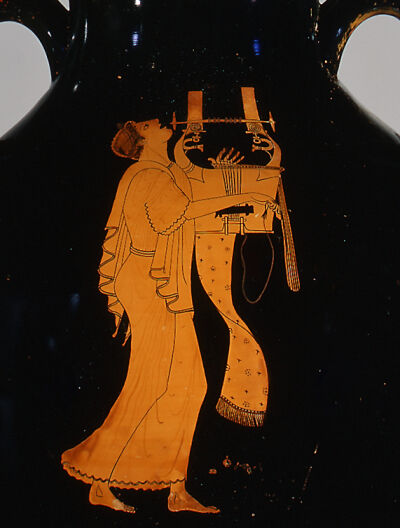
The kithara even leaves us a perhaps surprising modern legacy: The word kithara is the root of our modern English word “guitar.”
Psanterin
Most scholars associate the Aramaic word psanterin with the Greek psalterion (ψαλτήριον). Literally meaning “plucking instrument,” it is the generic Greek word for “harp” from the fourth century b.c.e. onward. The word for female harpists, psaltriai, literally means “pluckers.” But references to specific types of harps go back hundreds of years earlier. And despite psalterion becoming the main word in Greek for “harp” about 200 years after Daniel was written, the terminology for “plucking instruments” based on psalterion’s root words existed well before that.
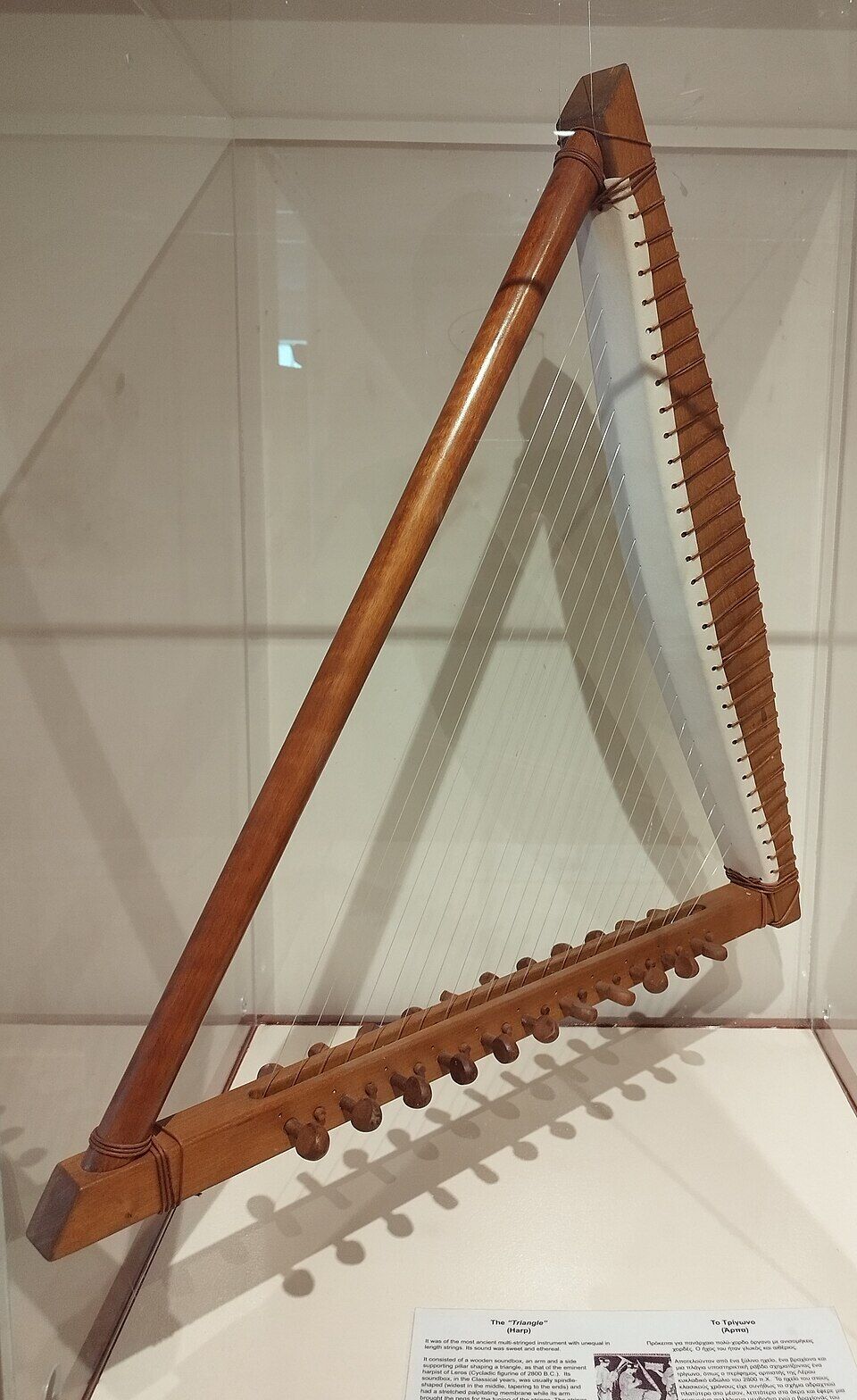
Figurines from the Cycladic culture (a Bronze Age civilization on the Greek islands closely associated with the more famous Minoans) depict musicians playing harps. But the main evidence classicists have of the Greeks of historical periods possessing harps comes from much later. Seventh and sixth centuries b.c.e. poets like Sappho and Pindar reference an instrument called a pektis. The pektis was a multi-stringed instrument played by plucking, which scholars are confident was a harp. Another instrument the early writers reference that was apparently separate from a pektis was a trigonon, named after its triangular shape.
Like with the kithara, Greek harps were unfortunately made of wood and so little has archaeologically survived from them. One exception was discovered in 1981 in Daphne, a district of Athens. Archaeologists discovered the tomb of a person in his early 20s buried with notebook leaves, writing material and remains of musical instruments. Dubbed the “tomb of the musician,” scholars date it to the mid-third century b.c.e. Crucially, the tomb contained the wooden remains of a harp. Enough of the harp remained to determine it was a “spindle harp”—a large, isosceles triangle-type design from Greek painting sometimes identified with the trigonon.
Sumponeya
This is the most mysterious of the three Greek words of Daniel 3:5. While we can be confident of the first two’s identification with existing instruments, we can’t say the same thing for sumponeya. Scholars associate it with the Greek symphonia (συμφωνία), where we get our English word “symphony.” Symphonia, literally meaning “sounding together,” indicates harmony in music. Its sole use in the New Testament is in Luke 15:25, where the kjv renders it as “musick.” The sixth- to seventh-century c.e. late Roman writer Isidore of Seville claims a symphonia in his day is the name for two separate instruments, one a drum and the other a sambuca. This probably the reason for the King James Version’s translators rendering the word “dulcimer” in Daniel (the sambuca and dulcimer are similar stringed instruments). But Isidore was writing over 1,000 years after the Babylonian Empire fell; his uses of symphonia almost certainly have little bearing on what Daniel was writing about.
In Hellenistic times, symphonia meant a synchronized general musical ensemble. But the root of the word goes back centuries earlier. The Homeric Hymn to Hermes, which some scholars date to the approximate time of the book of Daniel, mentions the adjective equivalent of the word, symphonous, describing the strings of Hermes’s lyre.
In the text of Daniel, symphonia is immediately followed by the phrase “and all kinds of music,” which already seems to imply the ensemble’s harmonization. Meanwhile, in the extensive list of instruments, there is one conspicuous absence—one that in both Israelite and Gentile cultures would usually accompany worship services like that described in Daniel 3. This would be the human voice.
In Greek texts, symphonia describes harmonization of instruments as well as singers. Writers from Plato to Aristotle to Plutarch reference singers being organized in a symphonia.
Nebuchadnezzar, in his day, was the most powerful man in the world, and possibly the most powerful the Eastern Mediterranean had ever seen to that point. If anybody could import exotic singers, it would have been him—and the export of musicians was a known phenomenon (case in point, Sennacherib’s tribute from King Hezekiah including “male and female musicians,” as described in his prism inscriptions). Nebuchadnezzar’s orchestra already had Greek instruments. And this would have been right at the time Greek culture was soon to reach its Classical zenith.
A plausible explanation to Daniel 3’s use of the word symphonia could therefore be that the author was referring to a specially designated Greek chorus performing among the rest of the ensemble. Or perhaps the Babylonians, interacting with Greek choruses and hearing the Greeks discuss symphonia among themselves, applied the name to the entire genre/medium.
Additionally, to this day, in referring to a “Greek chorus,” we are discussing a specific type of singing distinct and recognizable from essentially any other form—one that composers still use for modern compositions.
Greeks in the Near East?
Over a century after Nebuchadnezzar’s time, the Medo-Persian Empire, starting with Cyrus, would take over the rest of the Middle East, including Greek cities on the coast of Asia Minor like Ephesus and Miletus. The Persian Empire’s establishment would generally be considered the main starting point for when the Greek and Near Eastern cultures began to be irreversibly merged. Alexander the Great’s conquest of Persia and the subsequent settlement of Greeks throughout the known world from Egypt to India would make this merger permanent.
But that doesn’t mean there weren’t forerunners of this merger in the cultures immediately preceding Persia—before the conclusion of the Iron Age.
Textual evidence supports regular contact between Nebuchadnezzar’s empire and the Greek world. Ezekiel 27:13 and 19, written while Nebuchadnezzar was conquering the Middle East, mentions Greeks (“Javan”) engaging in commerce in the area. The sixth-century poet Alcaeus wrote of his brother, Antimenidas, fighting as a mercenary for the Babylonians at the time of Nebuchadnezzar. Nebuchadnezzar’s own archives mention Yamanāya (Ionians—Greeks) working in Babylon.
Daniel 3 demonstrates how far this cultural exchange had reached. A major musical ceremony commissioned by the most powerful man in the Near East featured Greek instruments and possibly even Greek voices. This ceremony was so influential that Greek words became canonized in the Bible before the Greeks reached the cultural golden age of Pericles and Aristotle.
Daniel 3 reflects a forerunner of the major Greek cultural interchange that was about to accelerate—an interchange that would even impact the development of the Hebrew Bible. The later, prophetic chapters of Daniel focus heavily on descriptions of Greece. The Greek military campaigns of the Persian King Xerxes (the biblical Ahasuerus) are accounted for in the chronology of the early chapters of Esther. Zechariah 9:13, another Persian-period text, refers to conflict between the Jews and the Greeks.
Daniel 3 hints at where this great cultural interchange of civilizations started—not with an immediate wash of Greek language indicating a late date of composition, but with a trickle of Greek exports into Mesopotamia: the kitharis, the psanterin and the sumponeya.