
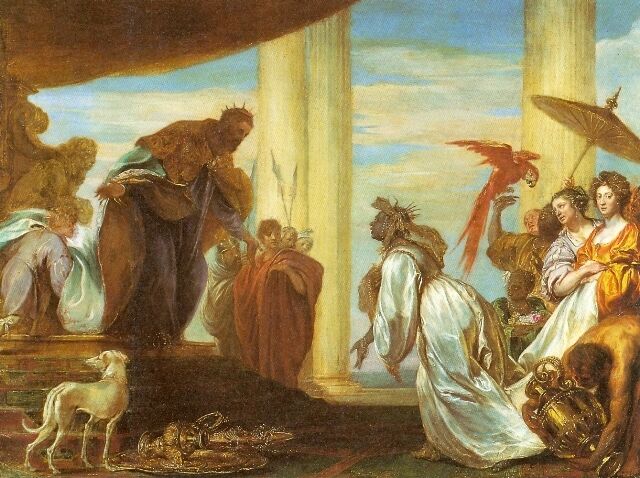
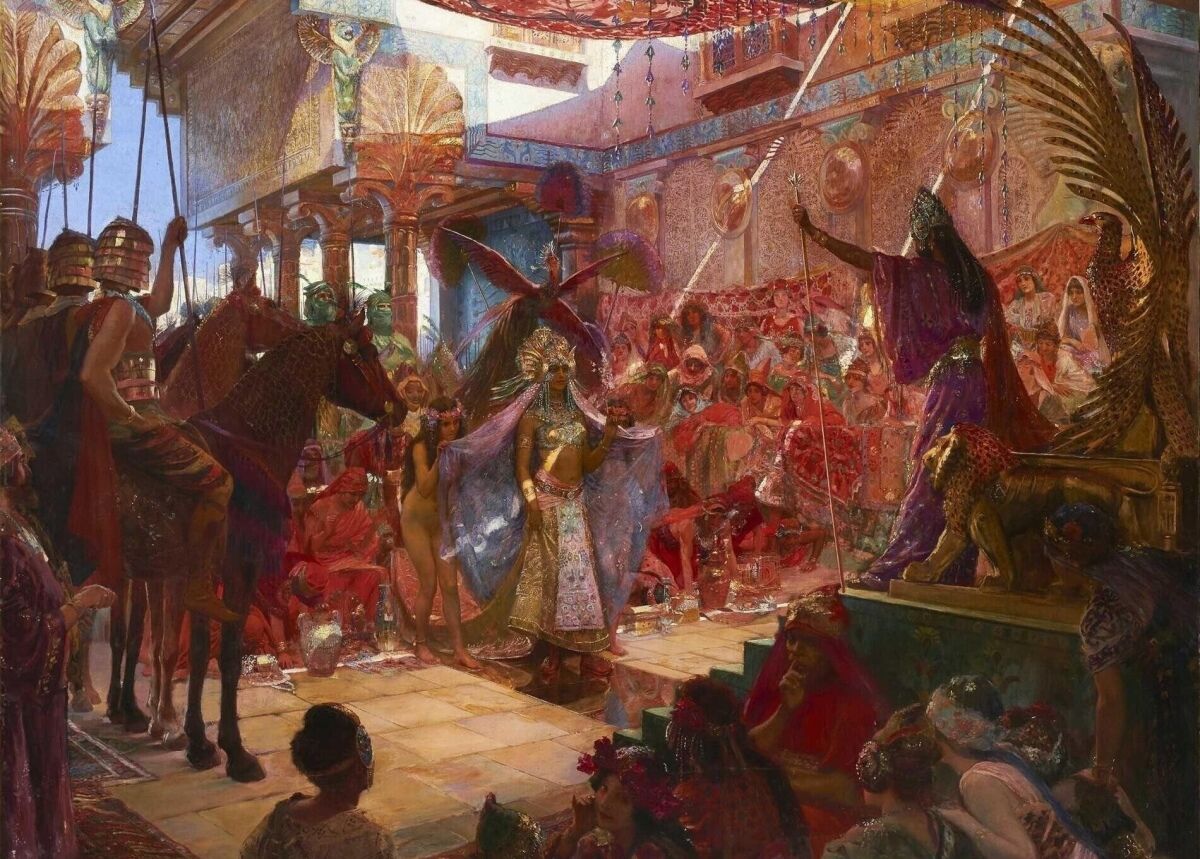
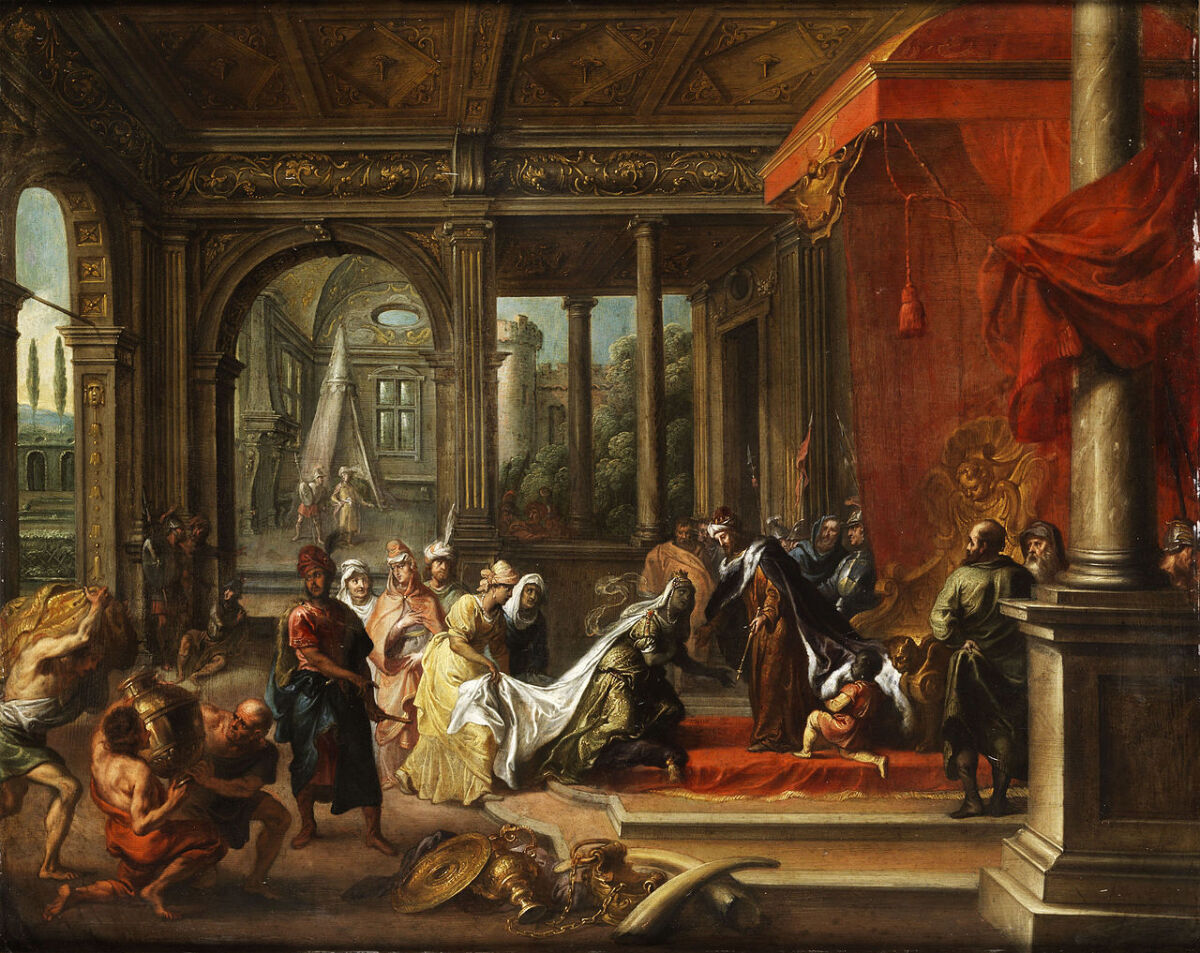
“Now when the queen of Sheba heard of the fame of Solomon concerning the name of the Lord, she came to test him with hard questions. She came to Jerusalem with a very great retinue …” (1 Kings 10:1-2; New King James Version). So begins the famous biblical account of the visit of the Queen of Sheba to Jerusalem with her great convoy of treasures, including “one hundred and twenty talents of gold, spices in great quantity, and precious stones” (verse 10; nkjv).
Yet who exactly was the Queen of Sheba? She is one of the most legendary queens in history, yet she’s not named in the two accounts of her contained in the Hebrew Bible (1 Kings 10; 2 Chronicles 9). Nor is she named in the New Testament, where she is referred to more generally as a “queen of the south” (Matthew 12:42; Luke 11:31). Nor is she named in the Qur’an, where her visit is described (An-Naml 27).
The identity of this female ruler of Sheba is a total mystery. Even among the most conservative, Bible-maximalist scholars and archaeologists—those who do emphasize parts of her story as having an air of genuine historicity—her actual identity is admitted as being completely elusive. In his classic 2003 book On the Reliability of the Old Testament, Egyptologist Prof. Kenneth Kitchen highlighted more general evidence showing that the Queen of Sheba indeed does “belong to genuine historical tradition”—although as to particulars, “we simply have no data yet, one way or the other.”
The key to solving this conundrum is the correct identification of her territory, the land of Sheba. This is popularly identified in scholarship with the southwestern part of the Arabian Peninsula. Yet even this identification is a minefield of numerous differing views and interpretations.
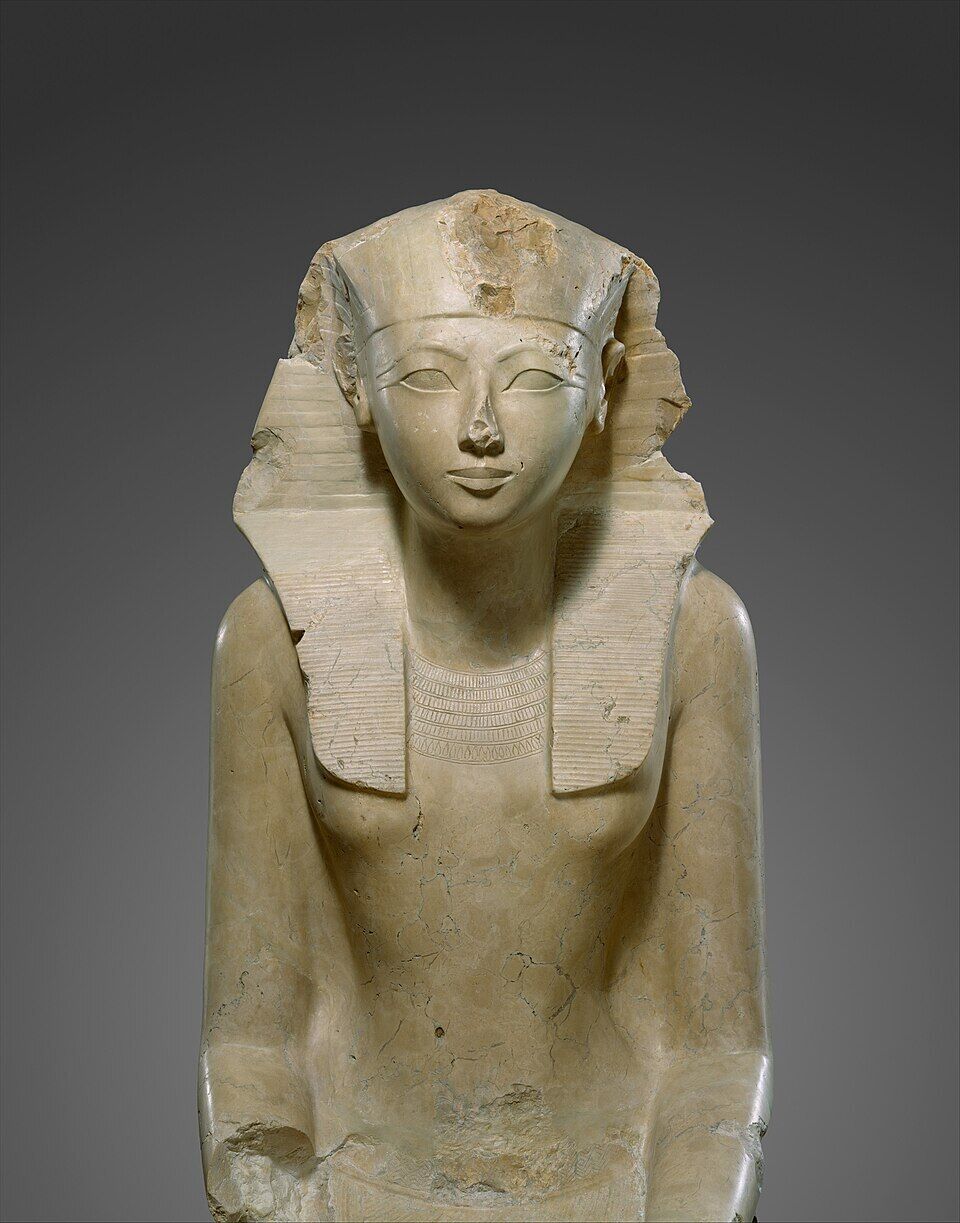
One particular attempt to identify the Queen of Sheba comes from the Velikovskian community—adherents to the chronology of Dr. Immanuel Velikovsky formulated in the 1940s. Velikovsky down-dated most of Egyptian history by up to six centuries. Drawing from Josephus’s mention of this woman as a “queen of Egypt,” Velikovsky identified her as the 15th-century b.c.e. female pharaoh Hatshepsut—down-dated, in his scheme, to the 10th century b.c.e., the time of Solomon.
As we have explained elsewhere, Velikovsky’s highly controversial chronology only unraveled in light of new research and discoveries over the course of the 20th century. Yet some continue to maintain his conclusions, chief among them his identification of Hatshepsut as the Queen of Sheba. Hatshepsut is a biblically significant figure, as we have argued elsewhere—and she does provide a link in the chain for identifying the Queen of Sheba—but perhaps not in the manner you might have thought (see Sidebar 2, below).
But what about on the conventional chronology of Near East events, for the early-mid 10th century b.c.e.? Is there anyone known who could be the Queen of Sheba? Or is the identity of the famous biblical queen really a total blank?
I believe there is a good candidate who emerges from the thick fog of this period. But to find her requires walking through the lines of evidence in a particular way.
First, the all-important question of territory.
Part I—A Tale of Two Shebas
The identification of Sheba with southwestern Arabia is common. “Hebrew Sheba is universally admitted to be the same name as the place-name commonly transcribed ‘Saba’ that denotes a community and kingdom in ancient Yemen in southwest Arabia,” Kitchen wrote. “It cannot be located in northwest Arabia for multiple reasons.”
Kitchen explained that trade routes from this region of Arabia were well established by the first half of the first millennium b.c.e. “In the late eighth and early seventh centuries we have Assyrian mentions of Itamru and Karibilu as kings of Saba, who belong to the line of Yemenite ‘paramount rulers’ (mukarribs) in southwest Arabian Saba. Before that, Assyrian sources record Sabean trade caravans explicitly for the later eighth and implicitly for the early ninth centuries …. As they traveled freely north, so could she have done.” Kitchen called the biblical queen “Solomon’s South Arabian visitor” (ibid; emphasis added throughout).
Yet this southwestern identification is not quite as “universal” as Kitchen makes out. In a 2004 publication, Arabian history expert and early Islamic scholar Prof. Patricia Crone wrote that the Queen of Sheba is “most plausibly seen as a north Arabian ruler. … [Q]ueens are well attested for north Arabian tribes in the [later] Assyrian records, whereas none are attested for South Arabia at any time; indeed, there is no independent evidence for monarchic institutions at all in South Arabia as early as 900 b.c.” (Meccan Trade and the Rise of Islam).
South Arabian scholar Dr. Albert Jamme wrote that the “historical period of South Arabia begins, according to common opinion, with the eighth century b.c.,” footnoting variant views on the extreme ends of the spectrum—from A. F. L. Beeston, “the sixth century b.c.”; from J. Ryckmans, “the ninth century b.c.” (“South-Arabian Inscriptions” in James B. Pritchard’s Ancient Near Eastern Texts). Yet even this earliest date remains a century too late. Archaeologist Dr. D. Brian Doe similarly noted in his book Southern Arabia the fact that “[n]ames of the rulers of the traditional dynasty of the Sabaeans are known from the eighth century bc. They are thought to have originated in the northern regions and settled in the area of Marib [western Yemen], whereas the other kingdoms seem to have already inhabited the southern regions …. If the story of [the Queen of Sheba’s] meeting with Solomon is to be believed, this points to the Sabaeans trading on their own behalf long before …. There is unfortunately so far no evidence that the Sabaeans then lived so far south as Marib and no archaeological evidence of this early date for the city.”
The first-century c.e. Jewish historian Josephus provides an altogether different assertion about the territorial derivation of the Queen of Sheba. He explicitly identifies her as ruler on another continent—and not just over Egypt. “[T]here was then a woman queen of Egypt and Ethiopia,” his account of her begins (Antiquities of the Jews 8.6.5). He elaborates on many of the same details contained in the biblical account, before concluding: “So when this queen of Ethiopia had obtained what we have already given an account of … she returned to her own kingdom” (8.6.6).
Josephus, then, identifies her primarily with the territory of Ethiopia, as well as linked somehow with neighboring Egypt. (Note that the early Greek term Aethiopia was used more broadly than it is today: This name, a reference to those of dark complexion, applied to territory directly south of the border of Egypt, including modern-day Sudan.)
William Whiston, esteemed 18th-century translator of Josephus’s work, rebuffed Josephus’s account in a footnote to this section of text as one of a number of “mistakes made by Josephus.” “That this queen of Sheba was a queen of Sabea in South Arabia, and not of Egypt and Ethiopia, as Josephus here asserts, is, I suppose, now generally agreed. … [T]here is little occasion for doubting in this matter.”
Yet these differing identifications—Arabian Peninsula vs. northeastern Africa—are not quite as contradictory as they might first appear. That’s because at various points in history, these territories have been united as part of the same kingdom—a polity bridging both sides of the southern Red Sea and the narrow Bab-el-Mandeb strait.
Sheba in Arabia—and Africa
This twin-territory entity is best known in the form of the Abyssinian kingdom of Aksum, ruled from Axum in northern Ethiopia—a two-part kingdom that flourished throughout the first millennium c.e. (see map, below). Of course, this is still much too late to be relevant to our Queen of Sheba.
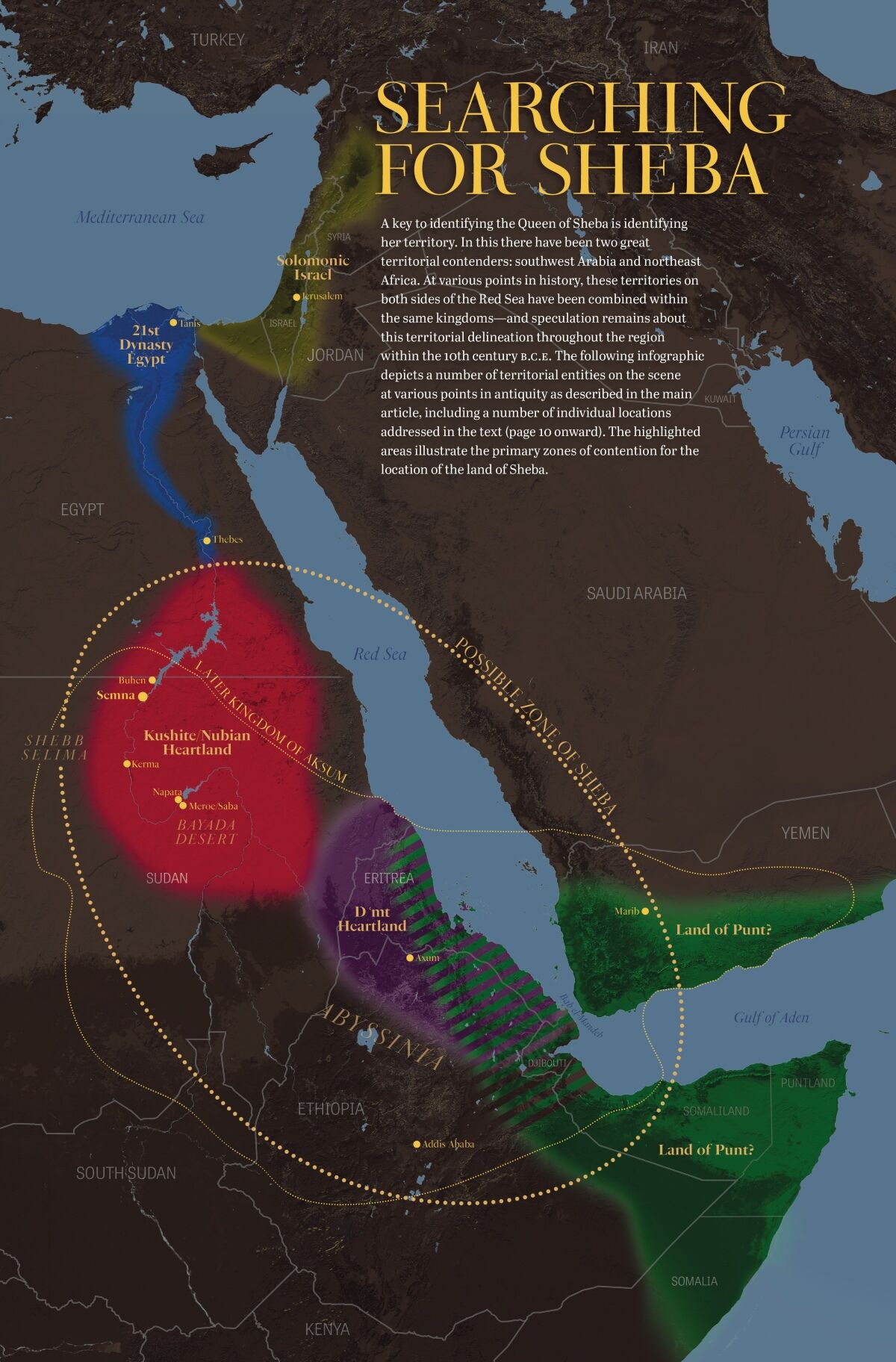
Prior to this was an elusive entity centered in northeast Africa known as Dʿmt, described generally as an Ethio-Sabaean kingdom spanning roughly from the eighth century b.c.e. to the fourth century b.c.e. We know comparatively little about this kingdom, although it bears marked evidence of Sabaean culture and influence, including architecture, art, burials and linguistic links shared across both sides of the Red Sea. Early scholarship posited a late “colonization theory” to explain this—that such elements were brought into Africa from Arabia. Newer research has, if anything, shown the opposite—a much earlier “indigenous origin” theory.
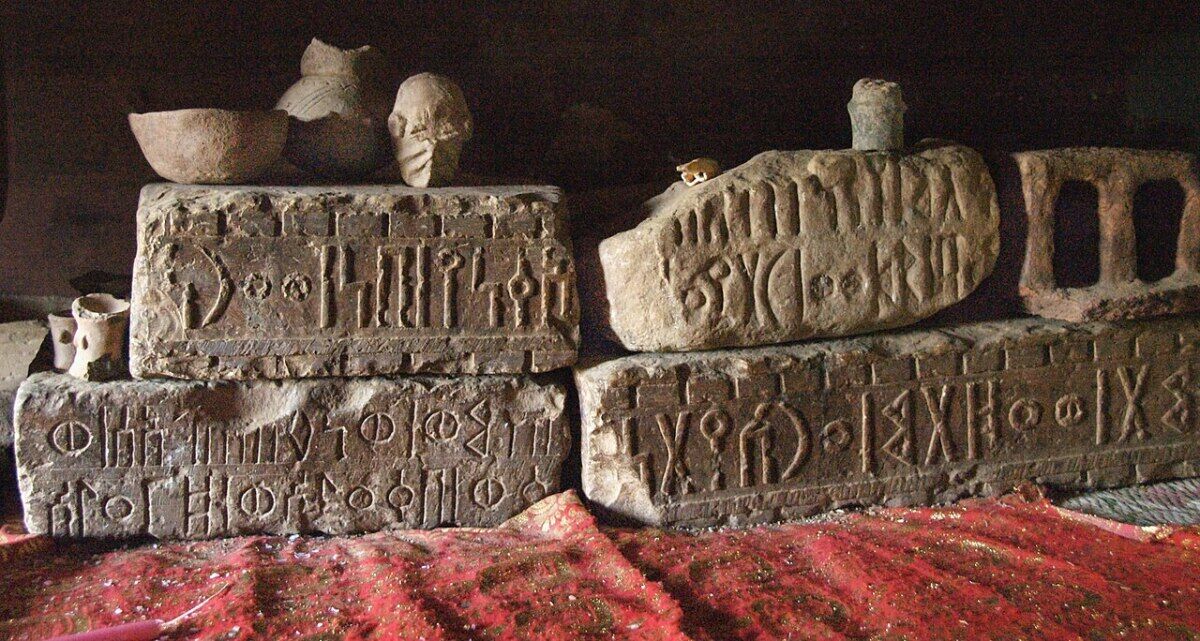
Yet if precious little is known about this early kingdom, even less is known about the prior centuries (see Sidebar 2, below, for an exception). Nevertheless, it is at least notable that it is from the Sabaic script, known as Ancient South Arabian—formulated somewhere just prior to the turn of the millennium, circa 1000 b.c.e.—that the modern Ethiopian Ge’ez script derives. (Ironically, despite its name, the modern Arabic script does not descend from Ancient South Arabian—instead, it descends separately from Aramaic through Nabataean.)
We have before us, then, a truly strange and confusing twin-territory conundrum. Yet it is one that the biblical account sheds some light on.
Semitic vs. Hamitic
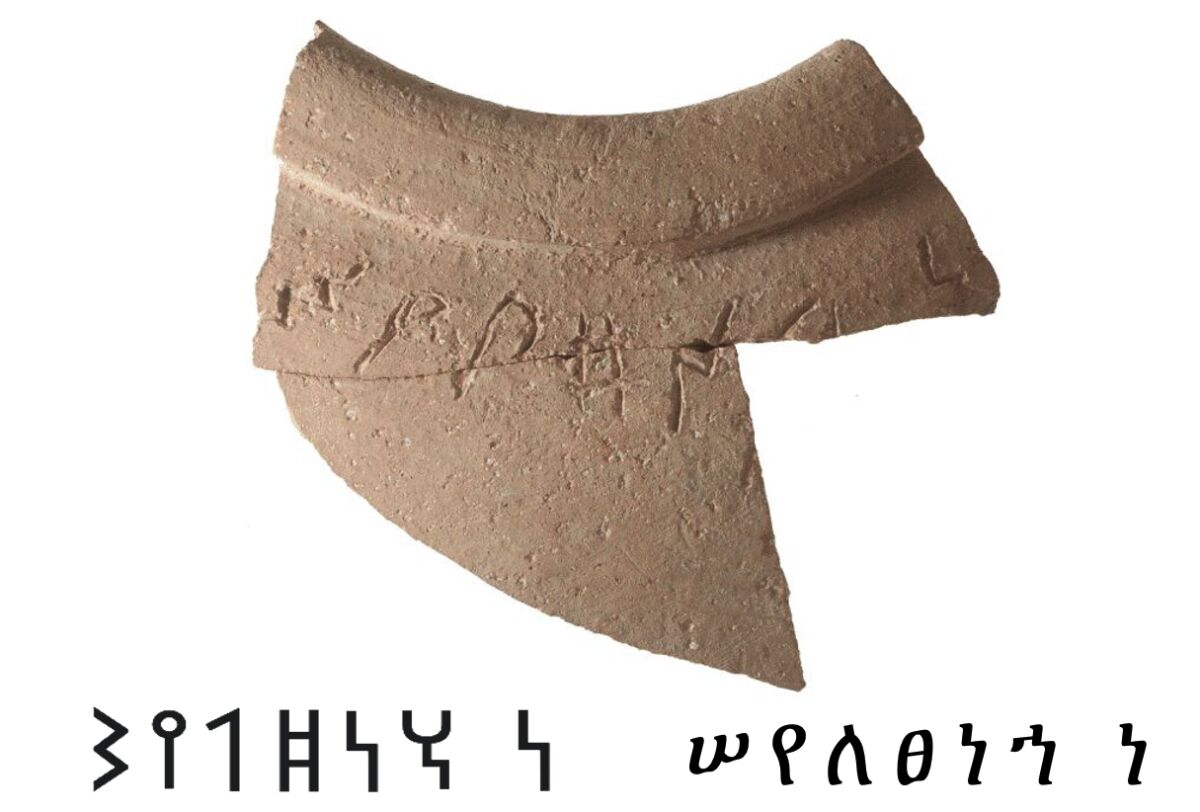
Genesis 10 lays out the descendants and territories of Noah’s sons Shem, Ham and Japheth. Among the dozens of names contained in this passage, one appears twice, for two clearly different groups—Sheba.
Spelled the same way as that of the territory of the Queen of Sheba (שבא), this name is associated with the family of Cush, son of Ham, in verse 7 (Cush, whose name means “black,” is the progenitor of the Kushites, or Nubians, south of Egypt); the same name Sheba is also identified with the family of Shem in verse 28—more specifically through the lineage of Joktan, who is generally associated with southern Arabia.
Note that certain of these entities in Genesis 10 do not necessarily refer to a descendant literally called by the supplied name. In many cases—some more obvious than others—these names refer to territories within which respective descendants lived. As such, in the case of Sheba, we would not necessarily have a descendant of Shem and a descendant of Ham coincidentally called precisely the same name שבא; rather, a broader territory of Sheba occupied by descendants of each (compare 1 Chronicles 1:9, 32).
Coincidentally(?), that is exactly what we find with this kingdom of Sheba/Saba at various points in its history: two sides of a coin, with Semitic south Arabians on the one side and Hamitic Kushites on the other.
But there’s more from the biblical account that may help us determine the “correct” Sheba for our story.
Cushite Brethren
Psalm 72, “A Psalm of Solomon,” contains a similar reference to a train of gifts coming from Sheba to Jerusalem, including gold (verses 10, 15). In introducing Sheba in Psalm 72, it pairs it together with another entity: “Sheba [שבא] and Seba [סבא] shall offer gifts.”
Seba is mentioned just three other times in the biblical account: twice as a member of the family of Cush right alongside Sheba (Genesis 10:7; 1 Chronicles 1:9); and once in Isaiah 43:3 alongside Egypt and Ethiopia/Cush. The implicit association in Psalm 72:10, then, appears to be a reference to Cushite Sheba delivering goods to Solomon—alongside kin of Cushite Seba.
Ezekiel 27:22 records the “merchants of Sheba” bearing exactly the same products described in the visit of the Queen of Sheba—that is, spices, precious stones and gold. It mentions this entity as distinct from Arabian merchants (verse 21). Instead, Sheba is paired with another entity: “merchants of Sheba and Raamah.” Once again, this “Raamah” is found in only two other verses—in exactly the same two passages of Cushite ancestry—Genesis 10:7 and 1 Chronicles 1:9—right alongside Sheba and Seba.
In Book 1 of Antiquities, Josephus credits the line of Ham as founding the Sabaean entity (1.6.2). Further, in Book 2, he explains how the core city of this African “Sheba” lost its name—“Saba, which was a royal city of Ethiopia, which Cambyses [ii, sixth century b.c.e.] afterwards named Mero” (2.10.2). This central Kushite city of Meroe is located on the banks of the Nile River in modern-day Sudan (see map, above), and indeed a “Meroitic” kingdom emerged from here in the sixth century b.c.e. onward.
On this, the classical scholar William Bodham Donne wrote in Dictionary of Greek and Roman Geography, Vol. ii: “Josephus affirms that the Queen of Sheba or Saba came from this region, and that it bore the name of Saba before it was known by that of Meroe. There seems also some affinity between the word Saba and the name or title of the kings of the Aethiopians, Saba-co”—the Kushite pharaohs Shabaqo and Shebitqo (late eighth century b.c.e.).
The land of “Sheba” can thus be identified with both Arabia and northeastern Africa. The question is, which land did our famous queen come from? The testimony of the earliest writers—from the biblical authors to Josephus—certainly trends in a particular direction. But would an Israelite connection with the lands of ancient Sudan-Ethiopia have even been possible?
In the words of archaeologist Prof. Aren Maeir, “connections between Judah and Sheba (Yemen? Ethiopia?) in the Iron Age, once thought to be completely mythical are now seen as distinctly possible in light of recent finds” (“The Early ‘Maritime Silk Road’”). Case in point: “Study Finds Levantine Ivory Came From Ethiopia, Not Egypt” (Phys.org, September 2025)—headlining new analysis of Iron Age ivories that has upended the assumption that Israel’s ivory was imported from neighboring Egypt, instead coming from sub-Saharan Africa. And we already know from later texts that the infamous Sabaean incense trade involved spices from both northeast Africa and Arabia. From the first century b.c.e. Strabo’s Geographica, citing Artemidorus: “the Sabaeans … traffic in aromatics, both the local kind [in Arabia] and those from Ethiopia” (16.4.19).
Finally, of these two “Sheba-ite” territories—the Arabian and the African—if we are to look at continuing cultural association, there is no competition: The most stubbornly held attachment and loyalty to the Queen of Sheba comes not from southwest Arabia—whose late, fantastical and conflicting accounts even speculate her to have descended from shape-shifting jinn. Instead, her greatest institutionalized devotion comes from Ethiopia.
Part II—Glory of the Kings
The Kebra Nagast (“Glory of the Kings”) is the national epic of Ethiopia. Compiled in its current form in the 14th century c.e., this epic, written in the Ge’ez script, purports to document Ethiopia’s royal dynasty back to the Queen of Sheba, whom it names as Makeda, Queen of Ethiopia.
The Kebra Nagast is, in the words of the late Ethiopian history scholar and Semitic languages expert Prof. Edward Ullendorff, “not merely a literary work, but—as the Old Testament to the Hebrews or the Koran to the Arabs—it is the repository of Ethiopian national and religious feelings.” This “foremost creation of Ethiopic literature … is woven into Ethiopian life in the most intimate manner. It has as its pièce de résistance the legend of the Queen of Sheba ….

“[T]he main story must have a very long period of gestation in Ethiopia and elsewhere …. Its author, the nebura ed Yeshaq of Aksum, was thus mainly redactor and interpreter of material which had long been known,” Ullendorff wrote. This Queen of Sheba connection has “very deep roots in Ethiopia and must be one of the most powerful and influential national sagas anywhere in the world. … The veneration of the Queen of Sheba and her appropriation as the national ancestress of the Ethiopian people are of considerable antiquity and certainly precede the medieval Kebra Nagast” (Ethiopia and the Bible, 1968).
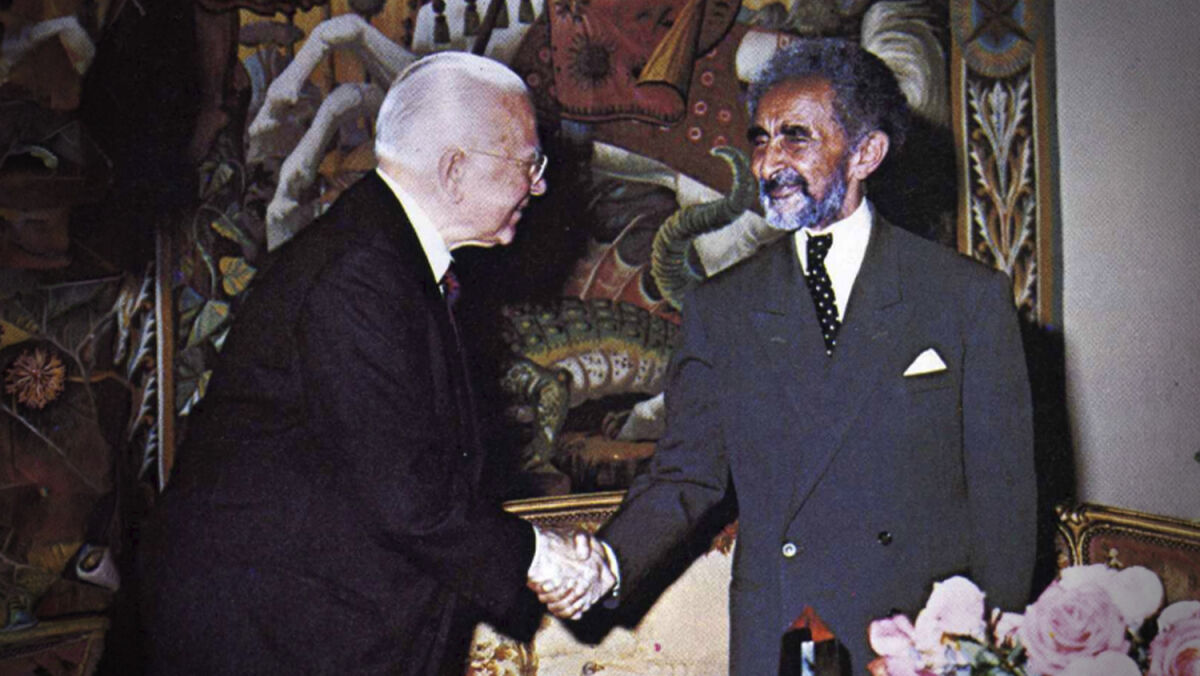
It is from this Queen of Sheba lineage, cemented in the Kebra Nagast tradition, that the rulers of Ethiopia claimed direct and unbroken descent—on up to the final emperor Haile Selassie i (reigned 1930–1974), whose royal lineage tied to the queen was even embedded in Article 2 of Ethiopia’s constitution. (See the following article from our namesake Herbert W. Armstrong on his meeting with the emperor.)
The most interesting observation about the Kebra Nagast is that while it represents a multilayered and much-extrapolated account, it bears marked differences to the other rather colorful medieval accounts of the visit of the Queen of Sheba. Later Jewish and Islamic texts—e.g. the Targum Sheni and Qur’an—include weird and wonderful details relating to demons in Solomon’s court, his lengthy dialogues with animals including a hoopoe bird who brings the queen to him, and architectural trickery to get the queen to expose herself. Yet the Kebra Nagast has a “totally different atmosphere,” wrote Ullendorff. The tale of the hoopoe bird is “replaced by the realistic story of Tamrin, the head of Sheba’s caravans, who is engaged in large-scale trading operations with Solomon,” who “reports to the queen in such enthusiastic terms that she decides to go and see for herself.” Such details in the Kebra Nagast “do not deviate substantially from the biblical account but simply supply many details on which the concise story in the Old Testament is silent” (“The Queen of Sheba,” 1963).
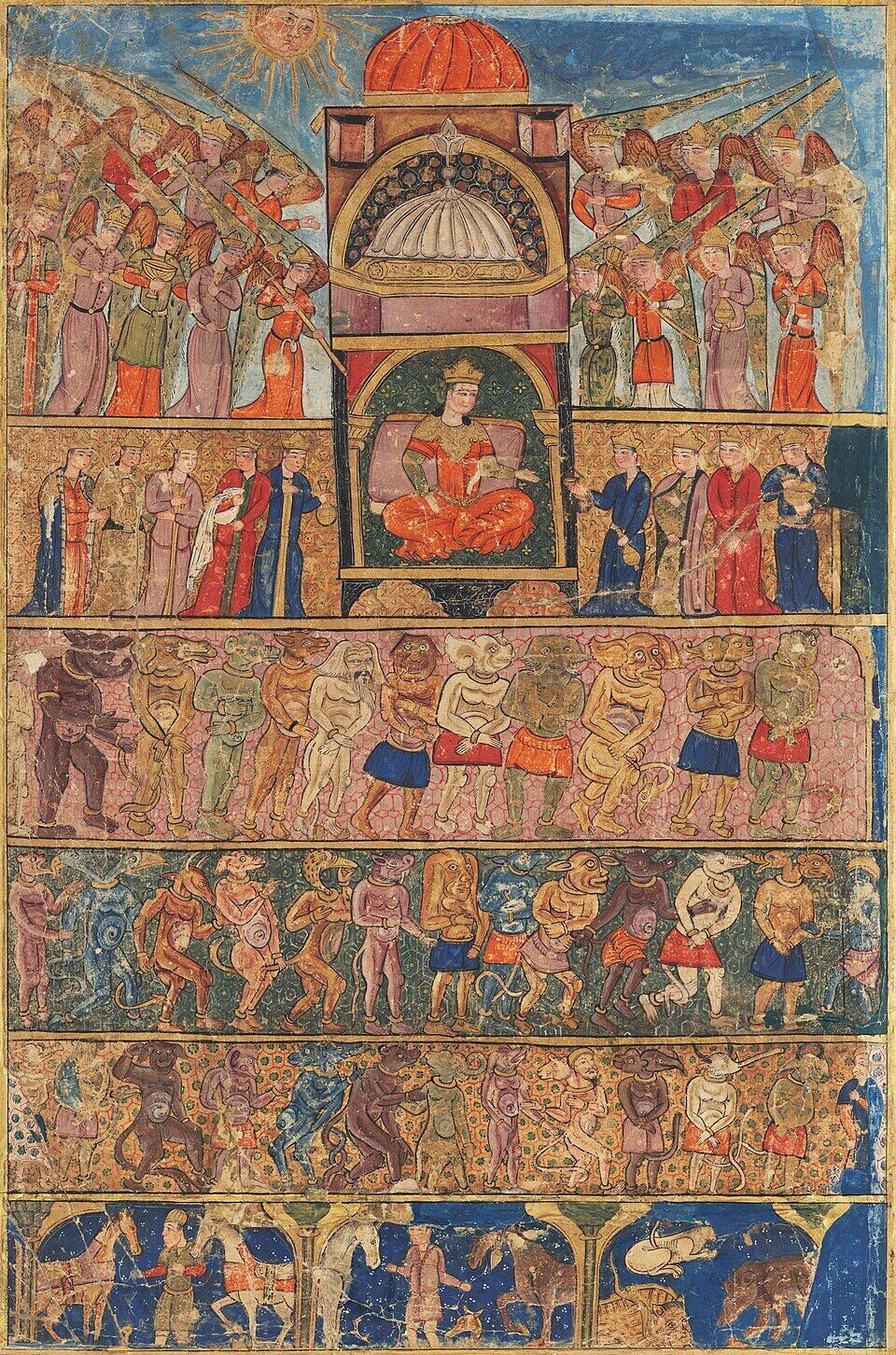
We have noted how striking it is that the earliest Jewish, Christian and Islamic accounts are all totally devoid of a name for the queen. It is not until much later (centuries post-Qur’an) that Arabic commentators begin applying the name Bilqis to the queen. Yet even here, Ullendorff pointed out that this is “almost certainly” derived from the biblical Piligiš/Greek Palakis—a generic word meaning “concubine.” Conversely, right from the outset in this Ethiopian tradition, we have an entirely different name applied to her: Makeda (ማክዳ), a word “which has no obvious explanation” (ibid).
Makeda = Kandake?
Regarding the unique name Makeda, Ullendorff believes it has an ancient origin—although nowhere near as ancient as that of the Queen of Sheba. Instead, he hypothesizes it is a corrupted graft from the New Testament account of the first-century c.e. ruler “Candace queen of the Ethiopians” (Acts 8:27).
The “Candace” of the New Testament is a reference to a kandake, a Meroitic term for the female regent of Kush. A number of kandakes are known from this time period—the one in the book of Acts probably refers to the mid-first century c.e. Kandake Amanitore.
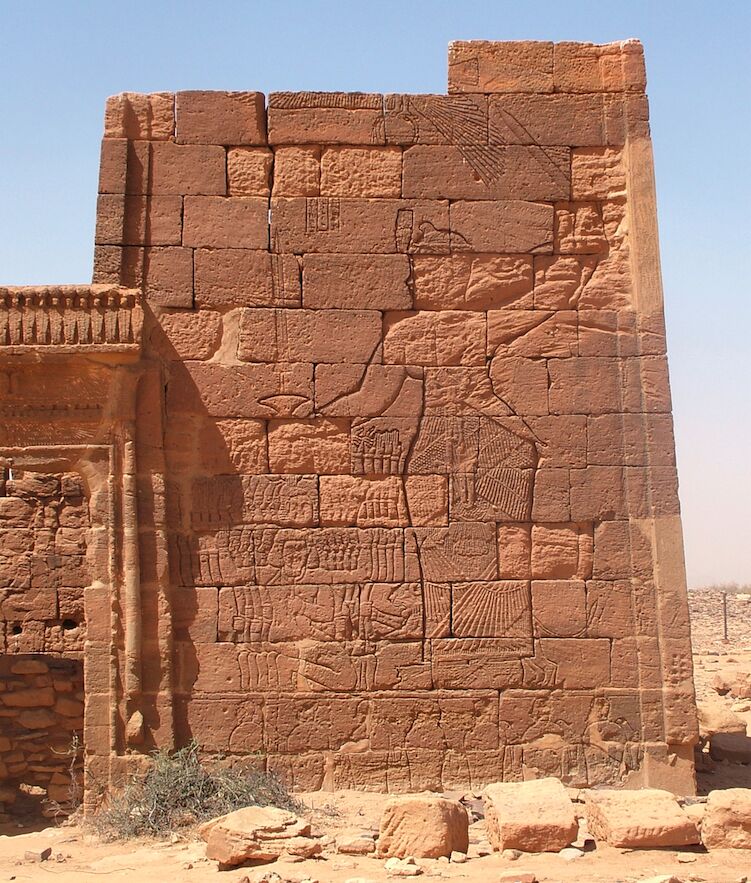
The presence of such influential female rulers in this Kushite territory is another interesting link to the Queen of Sheba. In his authoritative book The Kingdom of Kush: Handbook of the Napatan-Meroitic Civilization (1997), Prof. László Török highlighted this consistent theme of the importance of female regents in this region across the first millennium b.c.e. The “most significant feature of Kushite queenship is the strong accent laid on the ruler’s legitimacy through his mother and the mothers of his mother,” with the importance of a “female succession line,” he wrote.
Nevertheless, the kandake of the book of Acts is obviously no match for the Queen of Sheba, and drawing this connection relies on a rather convoluted explanation of how “Kandake” could become “Makeda.” Not only does Ullendorff not provide a phonetic explanation—he warned against even trying to find one: “This name has hitherto defied all attempts at an explanation, but I do not consider it impossible that Makeda is, in fact, a corruption of Candace (Kandake). One must not try to discover any phonetic reasons behind this corruption. If my conjecture is correct, then we have in the mixture of the names … [a] conflation of the stories.” Ullendorff dismissed the Kebra Nagast’s own etymology, which breaks down the words into two parts as ma kada—“ما كذا must, of course, be rejected.”
It would be one thing for the much later Kebra Nagast to confuse the first-century New Testament account of an Ethiopian kandake with the Queen of Sheba. It would be quite another for the first-century Josephus, on the scene at the time as this kandake, to do so. A much later conflation in name, perhaps—but not in territory, which, again, is firmly equated with Ethiopia.
Taking Stock
Let’s assess where we are. Despite the ambiguity surrounding the definition of the territory of Sheba during various periods, we do have Josephus’s assurance of the Queen of Sheba’s primary association with “Ethiopia”—more specifically, an identification “probably intended to cover Nubia-Meroe [further north] rather than Abyssinia proper, [yet] it does show a concentration on an African, instead of Arabian, origin,” wrote Ullendorff (ibid).
We also have a delivery of treasure that matches well with this territory, including examples of the processional delivery of goods (see Sidebar 2). We have continuous tradition of prominent female regents within this territory—from the New Testament period kandakes, back through the first millennium b.c.e. Kushite regents, right back even as far as the 19th century b.c.e., with a 12th Dynasty Egyptian execration figurine mentioning a sole female monarch over Nubia. And we have a fiercely held tradition among the Ethiopian community—with a number of unique, specific and, in some respects, comparatively more realistic elements—identifying the Queen of Sheba as coming from northeastern Africa.
Yet we have a problem. Archaeological data from this part of the world is comparatively lacking—most especially for the time period in which we are interested, during the first part of the Third Intermediate Period, during which Egypt shrunk north, largely evacuating the region. “The centuries between the end of Egyptian domination in the Middle Nile Region around 1069 b.c., the death of the last ruler of the Egyptian 20th Dynasty, and the reign of Kashta [eighth century b.c.e.] … represent the poorest-documented period of Kushite history,” wrote Török (op cit). “The evidence is entirely silent on the region south of the Egyptian border until the eighth century b.c.”—with one exception.
Part III—True Queen of the South
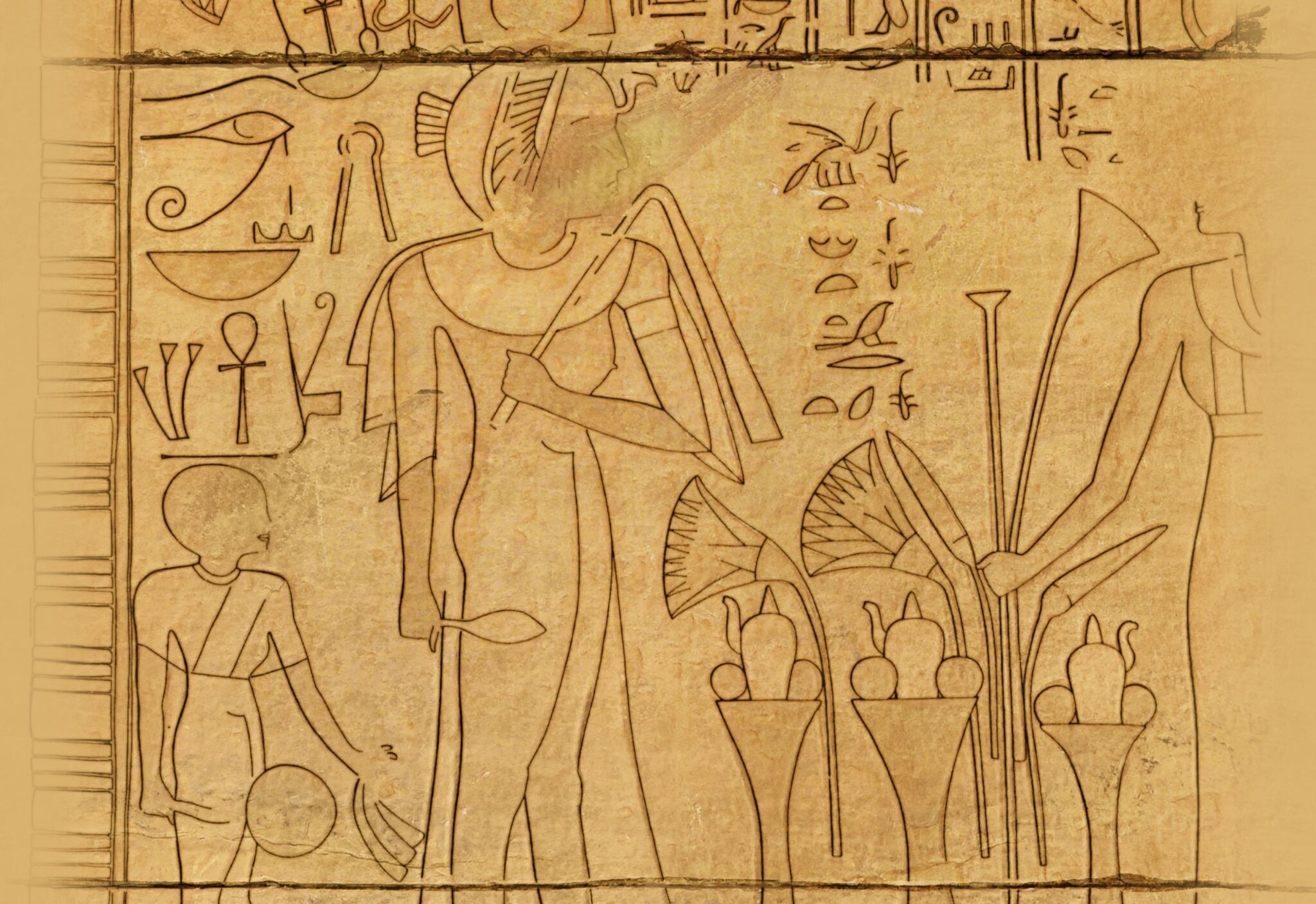
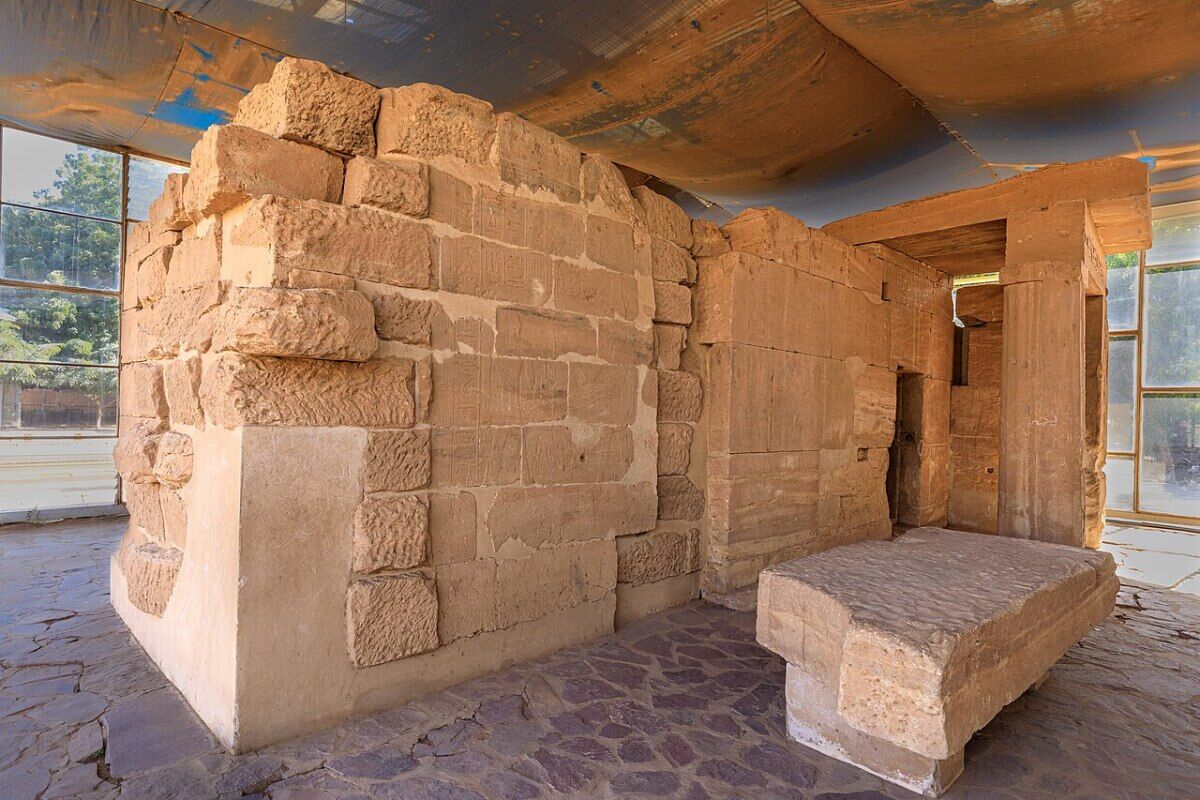
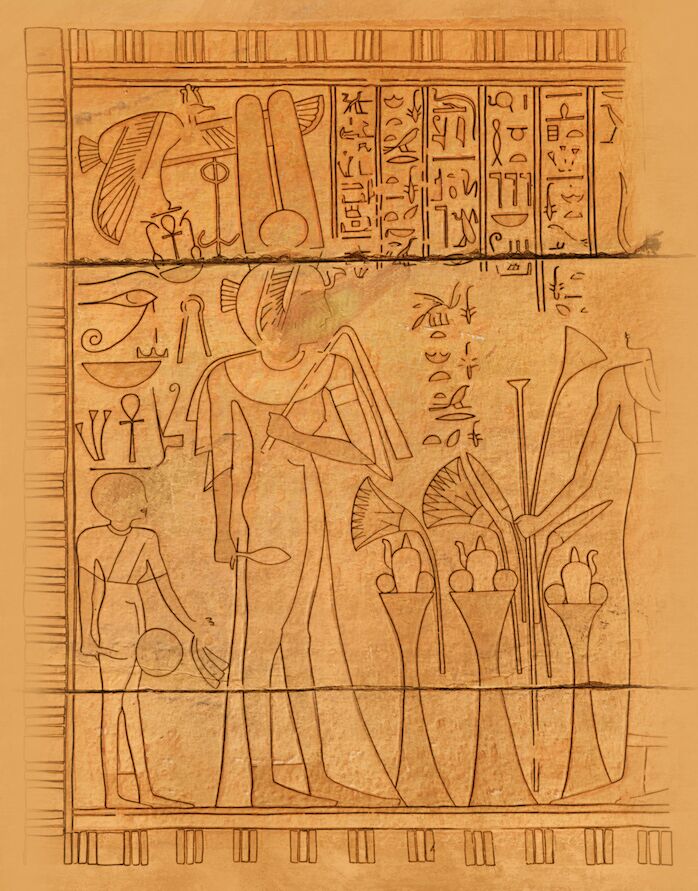
Engraved on an old Egyptian temple at Semna—a chief Nubian/Kushite site north of Meroe, in modern-day Sudan—is a later relief from the period of the 21st Dynasty (1077–948 b.c.e.). It contains an inscription and depiction of a great royal queen by the name of Katimala (variously Kadimalo or Karimala). The dating of her relief is not concrete but is generally placed within the early 10th century b.c.e., based on paleographic and historical considerations.
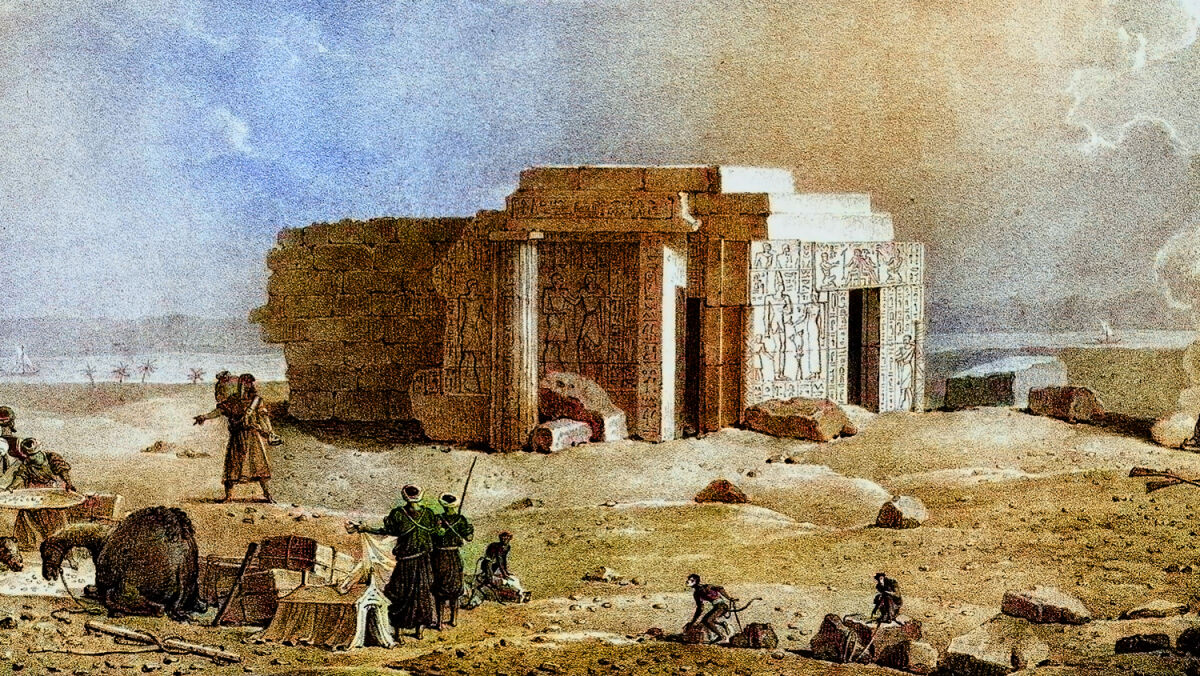
Little is known about this mysterious female monarch. All we have is this somewhat confounding inscription. Various theories have identified Katimala as perhaps the daughter of Pharaoh Osorkon the Elder (991–985 b.c.e.), the queen of Pharaoh Siamun (985–966 b.c.e.), or queen of Pharaoh Psusennes ii (966–943 b.c.e.). Such Egypt-centric models posit her serving as viceroy of Kush, governing Kushite territory on behalf of the pharaoh.
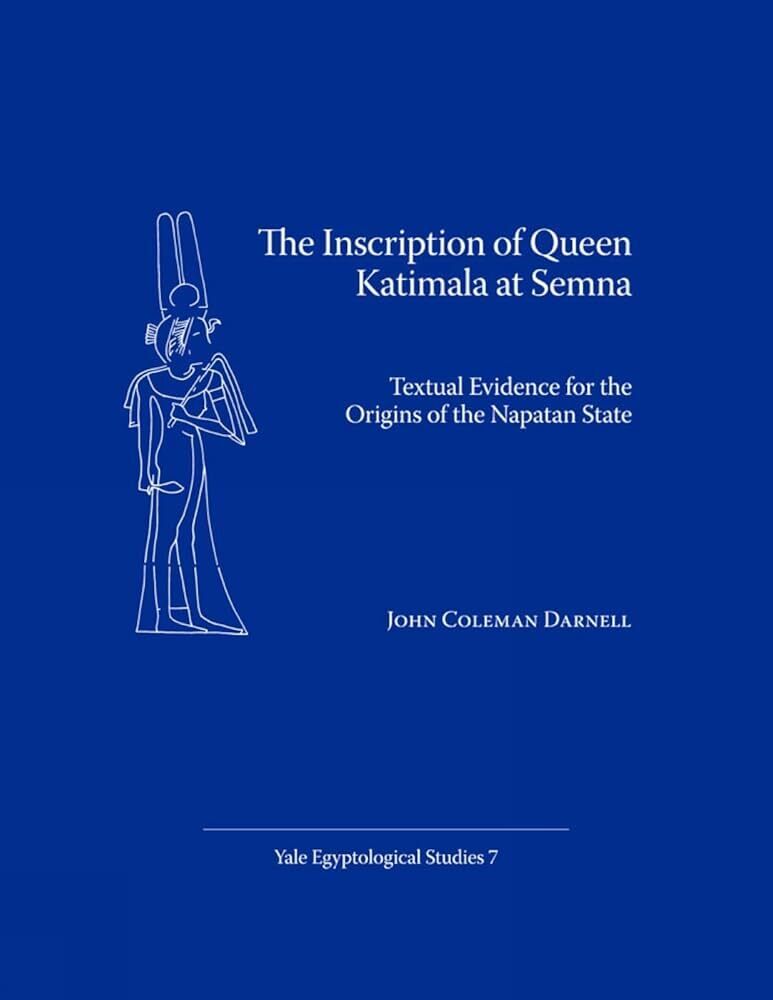
Egyptologist Prof. John Coleman Darnell begs to differ. In his landmark 2006 study The Inscription of Queen Katimala at Semna: Textual Evidence for the Origins of the Napatan State, he sees in Katimala a decidedly Nubian queen ruling an emerging Napatan (pre-Meroitic) kingdom south of Egypt. “The origins of the Napatan Kingdom, later to become, if but for a short time, the Napatan Empire of Kush and Egypt, remain mysterious,” writes Darnell. “Perhaps the only known epigraphic document that might shed light on the birth of this Nubian state is the inscription of a Queen Katimala at Semna.”
The inscription is contained primarily on the right side of the relief; on the left side is a “svelte” Katimala, “not dissimilar to the figure of Queen Abalo, the mother of Taharqa” (a late eighth-century b.c.e. Kushite pharaoh). Katimala “wears the vulture crown atop what appears to be her natural hair, worn close-cropped. This is not typical Egyptian regal fashion, in which the vulture crown is worn atop a long wig; there are, however, a number of Napatan and Meroitic parallels to this style.”
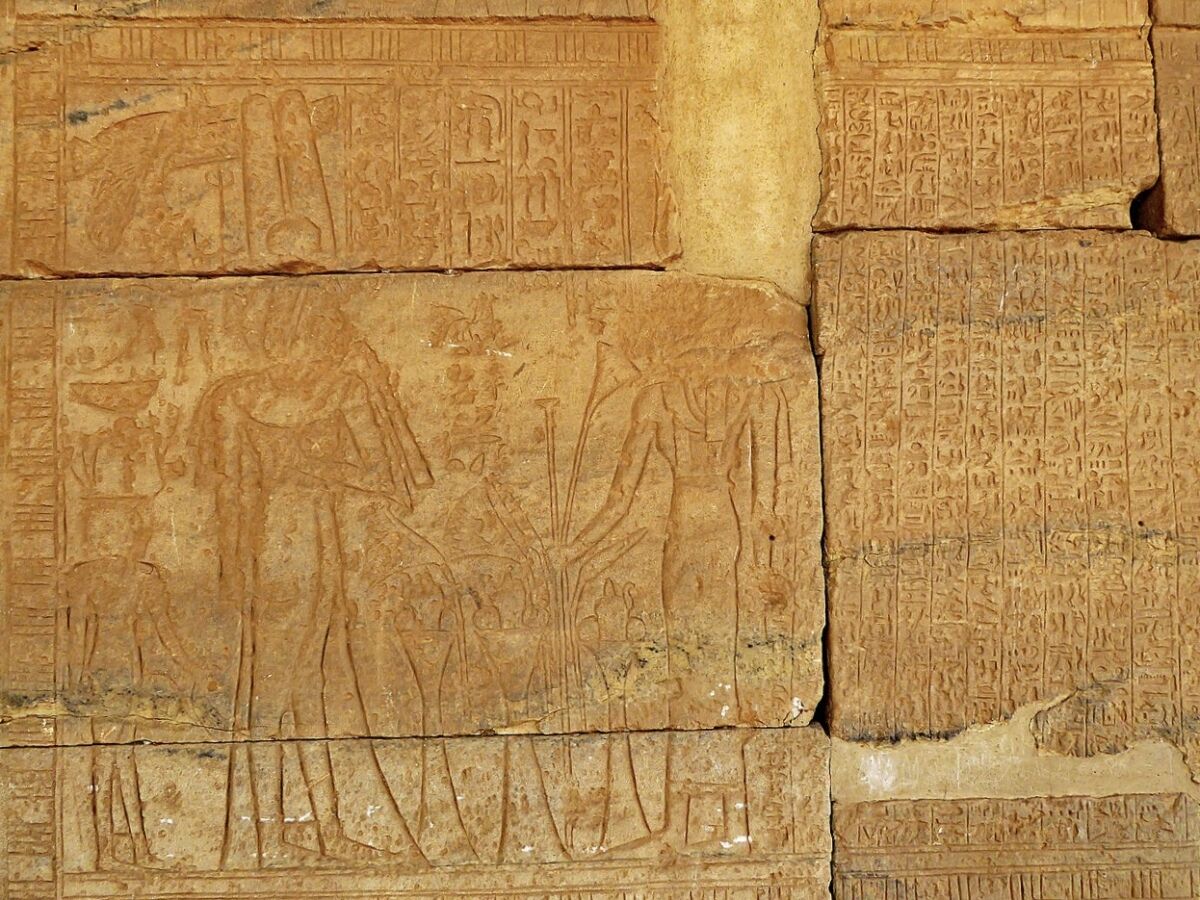
Paleographically and grammatically, Darnell affirms that the inscription is a good fit “sometime around the middle of the 11th to the middle to latter portion of the 10th centuries b.c.e.” Yet Darnell challenges the “almost total uncertainty that reigns in the Egyptological literature regarding the specific nature and import of the text,” especially in the “perceived impossibility of understanding the inscription”—not so much from unreadability, but rather from interpretation. (For the full text, see Sidebar 4, below.)
In brief overview, Darnell’s reanalysis reveals Katimala “was apparently a more remarkable woman than any may have thought.
A proper reading of the text reveals that Katimala assumed sole rule of the Napatan realm from a male ruler, perhaps her own husband, after what may have been the former ruler’s defeat at the hands of a rapacious enemy. The text relates that the male ruler became physically disabled, possibly after some skirmish with the inimical forces assailing the nascent Napatan realm. Although he may in fact have been victorious in the encounter, the text appears to emphasize that the enemy has brought repeated misery to the realm, and escaped again from the latest encounter. Katimala avers that she, with the help of Amun, then triumphed.
Katimala’s inscription can be divided into three main parts: 1) a preamble of the demise of a faithless male ruler following battle (“disabled and perhaps ultimately deceased”); 2) a response from the ascendant Queen Katimala of her faithfulness in Amun and courage in battle (especially in relation to a feat in the “mountains of gold”); and 3) a speech before her chieftains encouraging bravery and faith.
Kingdom of Gold
A key element in the text is the queen’s valor “in the mountains of gold”—Nubian gold-mining territory—likely in connection to engaging this enemy force. This, together with the placement of the inscription, allows us to infer some territorial conclusions. Darnell elaborates:
The location of Katimala’s inscription at the southern end of the Second Cataract, and her reference to fighting an enemy in the mountains of gold together suggest that Katimala was interested in securing control of both Nilotic and Eastern Desert routes, and she may also have desired to control the middle portion of the Western Desert routes passing through the small oases of Bir Nakhlai, Shebb and Selima. The location of many Napatan sites at land and river trade route termini show trade, specifically in gold to the north and iron to the south, to have been integral to the Napatan state. …
The extension of Napatan control to the region of Semna would also secure the ‘Gold of Kush’ near the Nile between Kerma and Buhen. As the mining of gold in the Egyptian Eastern Desert appears to have ceased at the end of the Ramesside Period [early 11th century b.c.e.], not to be resumed until the Ptolemaic Period [late fourth century b.c.e.], securing and reopening or even continuing unabated the mining of gold in Nubia would provide a powerful advantage to the nascent Napatan State.
Darnell points to tombs at Hillat el-Arab showing signs of increased wealth at this time—the “probable source of this wealth, the mountains of gold of the Nubian Eastern Desert,” he states.
With this significant emphasis on gold and trade, one cannot help but see another parallel with the account of the Queen of Sheba, who delivered to Solomon “very much gold” (1 Kings 10:2) and whose merchants take on a legendary status in both the biblical and later texts.
Territorially, “one may reasonably suggest that the queen may allude to the extension of a proto-Napatan state across the Bayuda Desert and the incorporation of Meroe into the nascent polity”—the very location of Josephus’s Saba!
Warrior Queen, Poetess
Katimala’s relief stands at the “head of a tradition of important female administrators of the Third Intermediate Period,” writes Darnell. “The importance of Katimala at the dawn of Napatan royal power supports the significance of female influence on the later Napatan royal succession.
“Katimala was not only effective in dealing with the enemy menace; she was also eloquent …. In this Katimala appears to stand near the beginning of a Third Intermediate Period tradition of eloquent women, a tradition that could well correspond to an apparent general rise in the status of women during the Third Intermediate Period”—once again, a picture that fits strikingly well with the biblical Queen of Sheba.
Queenship aside, even the point about eloquence—the “poetic nature and psychological depth” of Katimala’s text—is uncanny. Recall that the very reason the Queen of Sheba came to visit Solomon was to “prove him with hard questions”—the Hebrew literally referring to “riddles.” The eloquence of Katimala’s inscription is not appreciated in translation, but it is embedded with symbolism, allusions and motifs—part of which makes it such a riddle to decipher.
What about her name? The late Argentine Egyptologist Ricardo Caminos argued it as corresponding to the Meroitic Kdi-mel(ye), drawing special attention to the initial element as the Meroitic k∂di (“Notes on Queen Katimala’s Inscribed Panel in the Temple of Semna,” 1994).
Could it be, perchance, that we might have here some linguistic link to the great name of Ethiopian tradition, Makeda—broken down as Ma-Kada—here in this Nubian queen’s name, Kadi-Mala? The phonetic similarity is certainly much closer than Kandake.
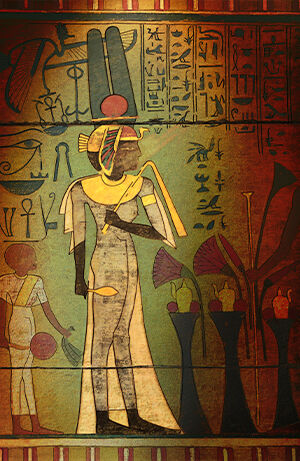
Overall, Katimala’s inscription “is a remarkable and thus far unique glimpse at the birth of the Napatan state,” Darnell concludes. “Although all elements of the iconography and language of Katimala’s tableau are Egyptian, nothing in the tableau supports an identification of Katimala as a daughter of any Egyptian ruler” (op cit). The associated iconography depicts Katimala in Nubian style together with an attendant, faced by the goddess Isis with solar deity symbolism above. If anything, even this religious symbolism is interesting in connection with the Queen of Sheba—later accounts label her a sun-worshiper at the start of her reign.
“Katimala’s inscription makes of her reign the introduction to a type of golden age,” with the regent “emerg[ing] as a remarkable person, a worthy ancestor—though we may not perceive clearly the lines of connection—for her often equally remarkable successors of the 25th Dynasty,” a Kushite dynasty that eventually rose up to rule Egypt during the eighth century b.c.e. (ibid).
Coming Full Circle
Could this foundational Kushite matriarchal progenitor—the eloquent, courageous and devout warrior queen and gold magnate, Katimala—be our Queen of Sheba? The dating, while still somewhat unclear, is a good general fit—and though comparatively little can be determined from a single relief, there is enough detail to infer a burgeoning kingdom including Meroe—the very city of Saba identified by Josephus. We can only speculate as to how much farther the kingdom may have expanded.
We have in Katimala a queen, then, primarily of Ethiopia (at least per Josephus’s use of the term)—secondarily of Egypt, insofar as her territory comprised that of former Egyptian dominion, and continued to reflect a “Theban spiritual hegemony over surviving priesthoods in Nubia”—Katimala’s tableau “strongly impl[ying] that … Nubian rulers were continuing and even developing an Egypt-Nubian state centered on the worship of the god Amun” (ibid). In a sense, Ethiopian in state—Egyptian in spirit, in religion.
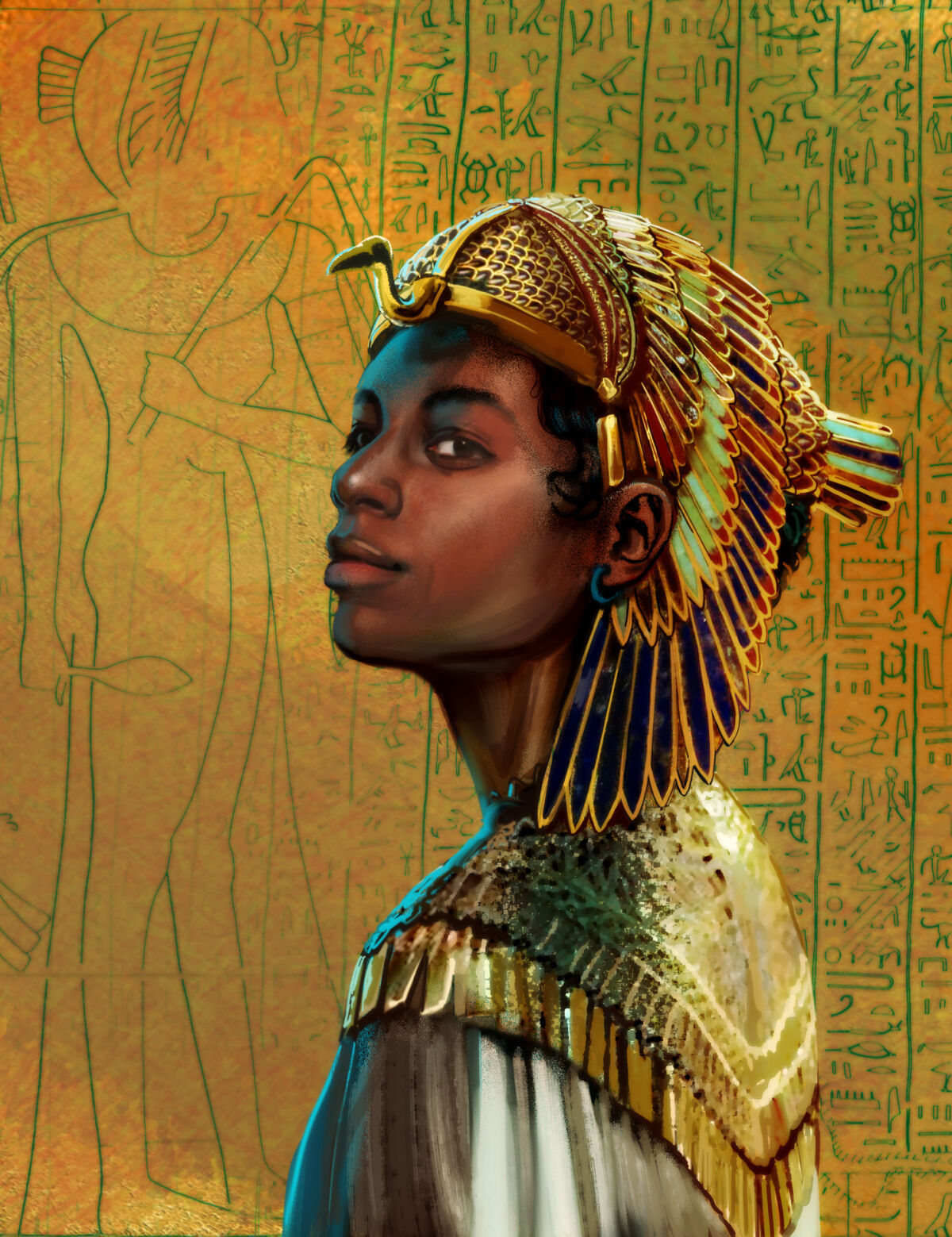
In this light, it is interesting that Josephus describes the arriving ruler as a “queen of Egypt and Ethiopia”—and following her spiritual transformation at Jerusalem, leaving as simply “queen of Ethiopia.”
“And when the queen of Sheba had seen all the wisdom of Solomon, and the house that he had built … there was no more spirit in her. And she said to the king: ‘It was a true report that I heard in mine own land of thine acts, and of thy wisdom. Howbeit I believed not …. Blessed be the Lord thy God” (1 Kings 10:4-7, 9).
Sidebar 1: Not a Queen—a Kingdom?
One interpretation of the Queen of Sheba episode in Judaism identifies her not as a queen at all, but rather a kingdom. This is rooted in a Talmudic passage, Bava Batra 15: “Rabbi Shmuel bar Naḥmani says that Rabbi Yonatan says: Anyone who says that the queen of Sheba (malkat Sheva) who came to visit King Solomon was a woman is nothing other than mistaken. What is the meaning of malkat Sheba? The kingdom (malkhuta) of Sheba.” This is based on a variant possible spelling theoretically rendering equally Queen of Sheba and Kingdom of Sheba.
What makes this kingdom interpretation especially problematic is playing it out in full throughout the passage. Take, for example, 1 Kings 10:1, “she came to prove him with hard questions,” or verse 13, “Solomon gave to the queen of Sheba all her desire …. So she turned, and went to her own land, she and her servants.” Kingdom is indeed a feminine word and would receive the singular feminine pronoun—but a kingdom coming to prove Solomon with hard questions? Solomon giving the kingdom all its desire? The kingdom turning, and going to its own land—it and its servants (which would surely be included in reference to the kingdom)? Not to mention the dubious variant spelling and pronunciation of the word kingdom to make this interpretation work (primarily מַמְלָכוּת/מַמְלָכָה—including in this same chapter, verse 20—and less frequently מַלְכוּת/מְלוּכָה; as opposed to queen, מַלְכָּה).
Indeed, the earliest Jewish writers are unanimous on reading this passage as referring to a queen of Sheba, rather than Kingdom of Sheba—and this is an interpretation carried through later Jewish texts (as well as Christian, Islamic and other). Why, then, this contrary opinion? Professor Ullendorff believes it was to counter circulating stories portraying the queen and Solomon in a less-than-favorable light: “[T]he Talmudic insistence that it was not a woman but a kingdom of Sheba (based on varying interpretations of Hebrew mlkt) that came to Jerusalem makes sense only on the assumption that a highly discreditable version of the Solomon-Sheba story was known to the rabbis” (“The Queen of Sheba,” 1963).
Sidebar 2: Case Study: The ‘Land of Punt’
If archaeological discoveries from eastern Africa around the turn of the first millennium b.c.e. are comparatively sparing, we do get a glimpse of this general region from much earlier Egyptian texts of the second millennium b.c.e. Egyptian trade records and art of this period refer to an almost fantastical “Land of Punt,” a mecca of export in gold, expensive woods, aromatics, wild animals and animal products. While debate surrounds this entity, it is widely believed to have comprised territory of Africa southeast of Egypt, especially around the Horn of Africa—possibly including part of southwest Arabia as well. In the words of Professor Crone, this “Land of Punt” appears to have referred to “the name of not only the African, but also the Arabian side of the Red Sea” (op cit).
It is from the reign of Hatshepsut (mid-second millennium b.c.e.) that we get our most striking picture of seafaring expeditions down to this Land of Punt, as well as a remarkable, almost Queen of Sheba-like processional depiction of a (rather girthy) Puntite Queen Ati with her husband and people delivering goods.
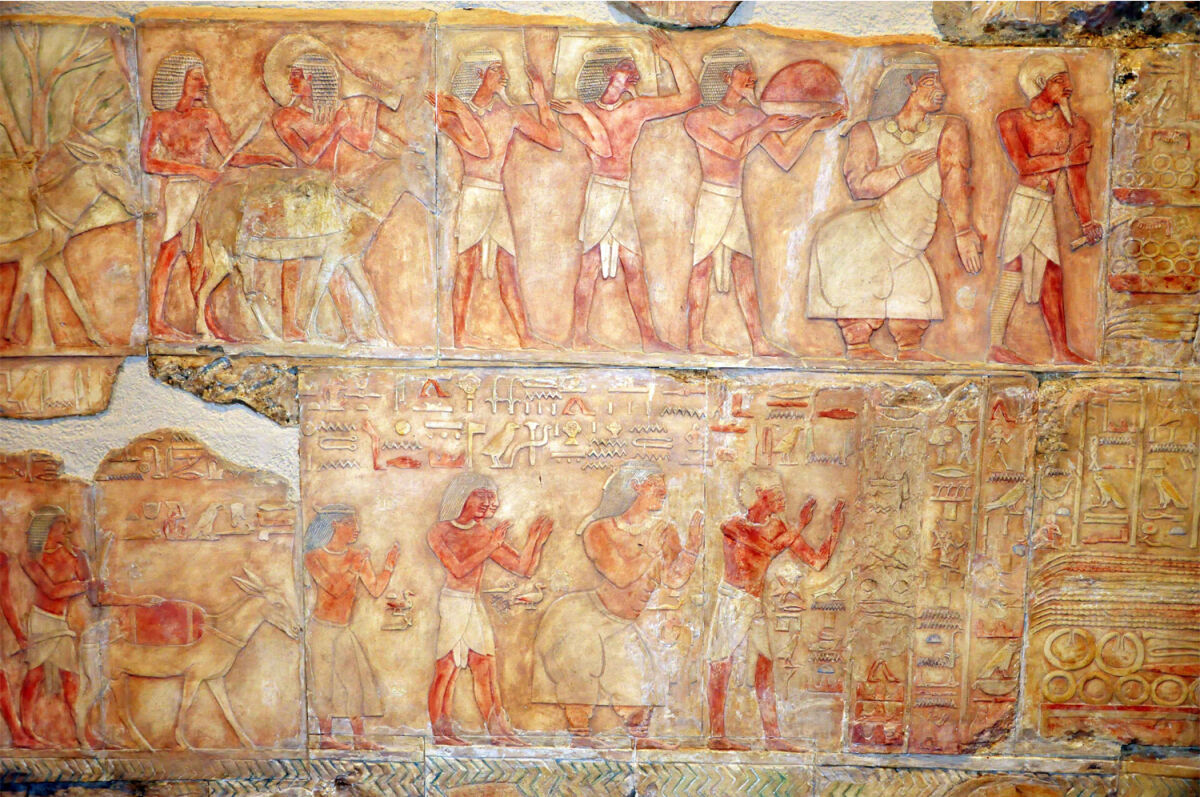
Prof. Francisco del Rio Sanchez wrote in a 2021 National Geographic article: “New scholarship about the queen and her origins are still emerging. Wendy Laura Belcher, professor of African literature at Princeton University, proposed that the queen might be from … the pre-Aksumite Ethiopian culture of Punt. Mentioned in Egyptian sources as early as the 15th century b.c., Punt provided Egypt with incense, spices and gold—all commodities associated with the queen and her visit with Solomon” (“Where Did the Queen of Sheba Rule—Arabia or Africa?”).
The biblical account describes the Queen of Sheba bringing Solomon “spices and gold very much, and precious stones” (1 Kings 10:2). Yet there is an added quirk to both biblical accounts of the Queen of Sheba in 1 Kings 10 and 2 Chronicles 9. In both texts, precisely within the middle of the account, there appears an inset describing Solomon’s navy bringing gold, precious wood especially for musical instruments, and precious stones (1 Kings 10:11-12; 2 Chronicles 9:10-11). This is often seen as a disconnected, unrelated addition—yet its presence within the Queen of Sheba account, right in the middle of the train of thought, may imply some relation to her visit. According to Ullendorff, “verses which relate to the Ophir fleet which fetched gold, precious stones and wood which was particularly suitable for the manufacture of musical instruments” might well be “part of the story referring to additional gifts which the queen had delivered by the Red Sea fleet” (“The Queen of Sheba,” 1963).
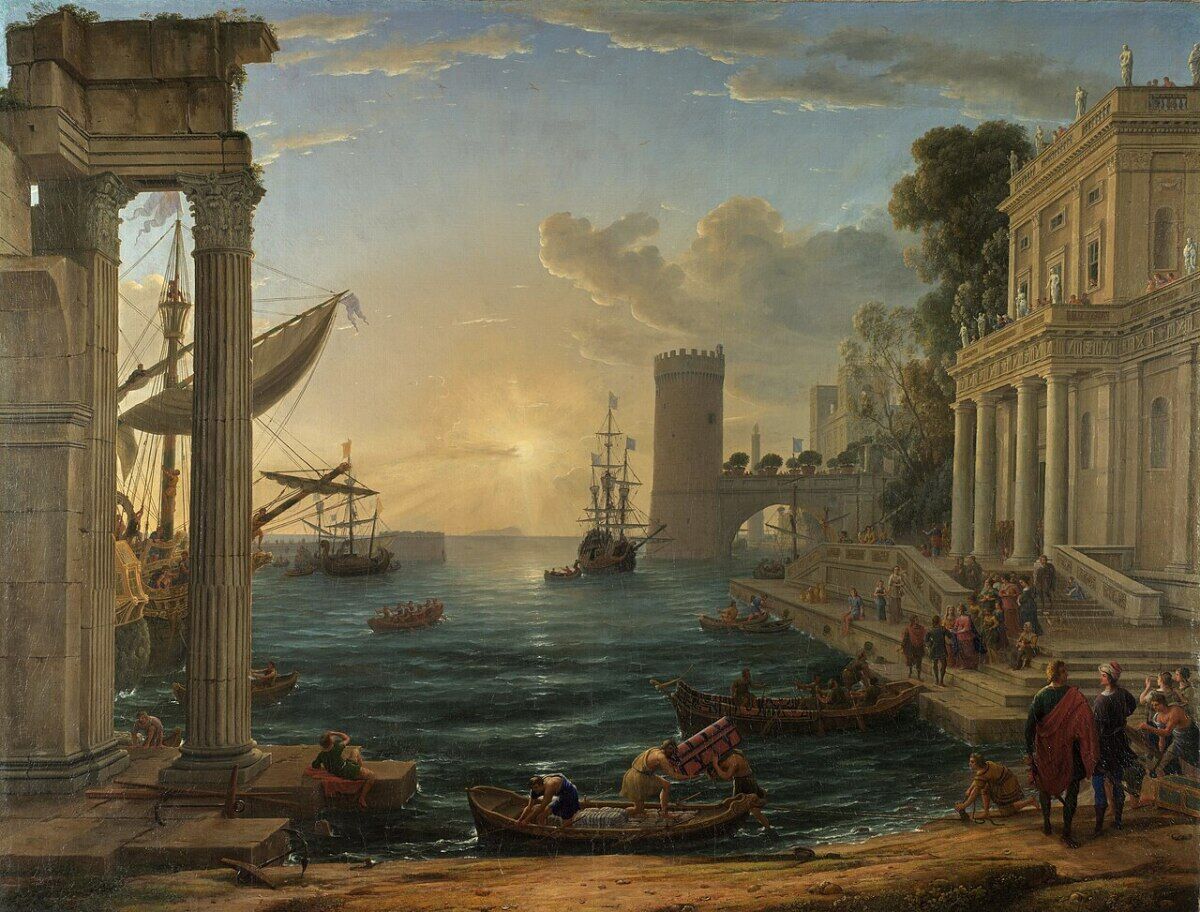
If these goods do represent a connection to the Queen of Sheba’s visit, they would fit well with the African origin—the Land of Punt, for example, as a known exporter of rare woods including African blackwood, a highly sought-after material for the construction of musical instruments. (This resonates with me, as an oboist—my own instrument is made from the highly sought after, extremely dense African blackwood known as grenadilla.)
Whatever the case, del Rio Sanchez concluded with the words of Professor Belcher: “[I]f any queen was going to travel north to Israel in the 10th century, it would have been an African queen.”
Sidebar 3: Cameleering—the Domain of Arabians?
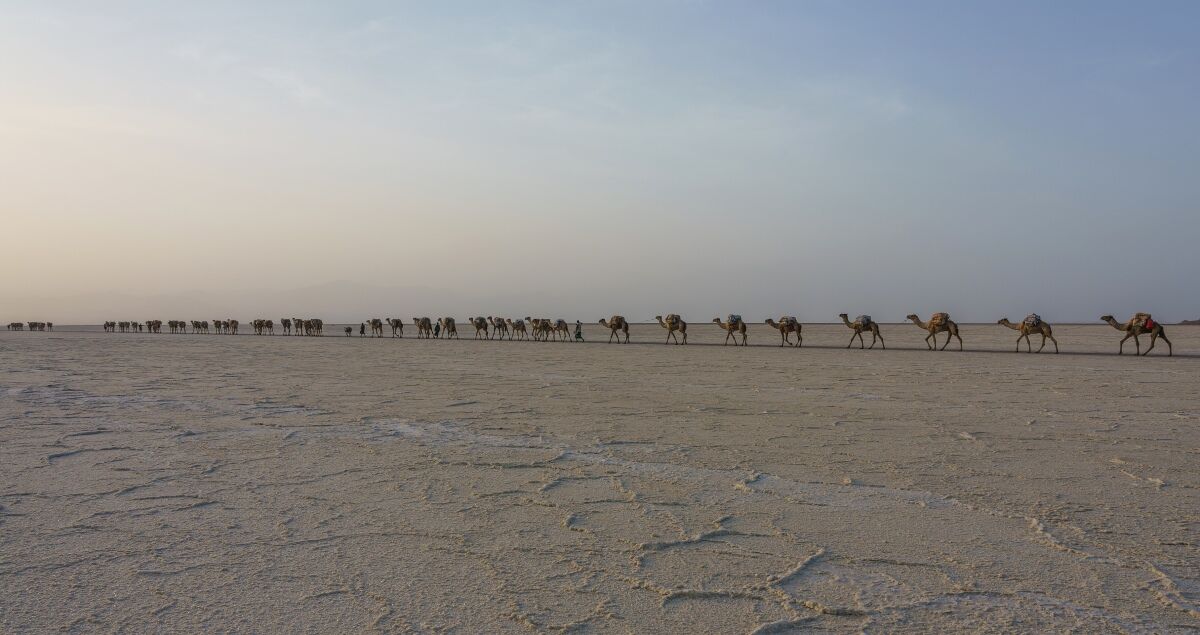
The Queen of Sheba’s “very great train, with camels” likely brings to mind first and foremost Middle Eastern imagery. And an African queen may well have transited the Red Sea and come up to Jerusalem by way of the Arabian Peninsula, bringing trade. But camels alone are in no way a marker of Middle Eastern origin or expertise: Did you know that the countries with the highest numbers of camels by far are all from Africa? Chad tops the list (10.7 million), followed by Somalia (7.5 million), Sudan (4.8 million) and Kenya (4.3 million)—only then followed by Saudi Arabia (2 million)—followed closely behind by two more African countries, Niger (1.9 million) and Ethiopia (1.8 million; World Population Review, “Camel Population by Country 2026”). Furthermore, some scholars believe the key moment in which domesticated camels facilitating trade were introduced into the Southern Levant was during the 10th century b.c.e., by way of the African continent (i.e. Lidar Sapir-Hen and Erez Ben-Yosef, “The Introduction of Domestic Camels to the Southern Levant: Evidence from the Aravah Valley,” 2014).
Sidebar 4: Katimala’s Semna Inscription
Part 1: Introduction—Complaint of a Ruler to Katimala
Year 14, month 2 of the Peret Season, day 9
Speech by his majesty to the king’s great wife and the daughter of the king, Katimala, vindicated:“Whither are we to turn if we do not serve among the servants of Amun?
When there is an opponent; otherwise will occur the annual thing that occurs to us; otherwise it will go badly for them (the servants of Amun); otherwise it will happen to us;
When there is a chieftain who has robbed gold and silver, and always treated Amun as accursed—who exalted me.
The enemy escaped.”
Part 2: The Queen Responds
“What I did was to act as a servant of Amun. for I did not remember the event which happened to me this year, since I have trusted in Amun, who attacks him who robbed gold and silver.
He whom my fathers—to whom I have succeeded—appointed hastened to me, after he had failed/become physically disabled; and I did it in the mountains of gold;
For it was that year I achieved the understanding—
then powerful is the magic of god.”
Part 3: The Queen Addresses a Council of Chiefs
“And I said to 30 of the chiefs of …
Bad is the pharaoh who is stripped of his strength.
Is it good to fear, and to show the back before the enemy, as did my fathers to whom I succeeded?
Since it was because of the event that occurred to me that … did … in that year.
Now as for my fathers who were wont to frighten all the enemies, they dwelled happily with their wives.
It is good to do evil to this one whom he (Amun) does not know; it is bad to do evil to people whom he (Amun) knows.
He shall appoint the one who is alive. See here—we have heard these evil ones, while they were yet alive—
‘It is bad to do good; that which god said is false.’
Do what makes life—do good.
Is it not good to make other lands for Amun, where there is not his place?
For as for the one who makes for Amun another place—look, he will … down to today, he (?) belonging to the annals of my fathers.
Is it bad to control this cattle of Amun daily? Is it good to sacrifice from the herd of Amun, like that which Makaresh did? Since daily all the city people cursed Makaresh, while there afflicted him likewise destruction, … not having done ….
Is it evil to flee before him, like the one who flees before the army of the one who does good for the entire land? Evil is doing for him that which …
… trampling … I know, while I act … against me, entirely. It is my reputation that has made …. It is your reputation that has made ….”
Article updated 16/10/26.
