
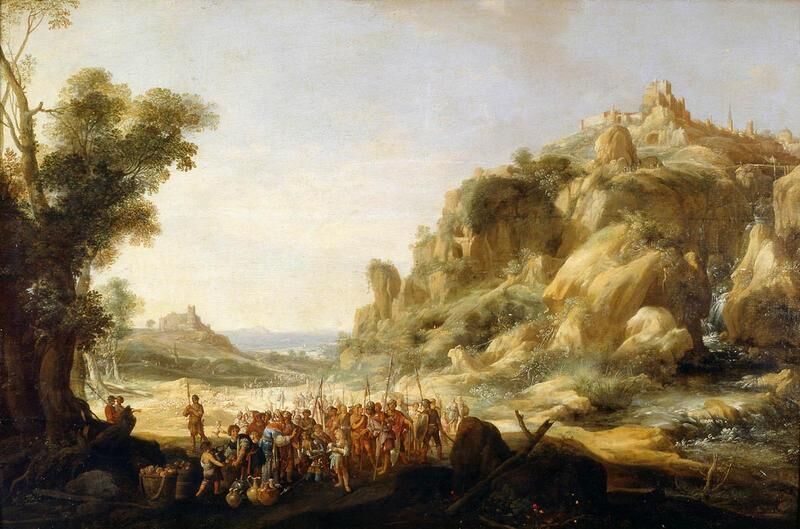
The word “tithe” comes from the Old English tēotha, meaning a “tenth”—with the verb “tithing” (tēothian) broadly descriptive of the act of paying a tenth of one’s income in support of a religious institution.
Tithing, as a practice, is relatively well known from the biblical account. It may come as a surprise to some readers, however, to learn not only of certain nuances in the biblical text relating to tithing, but also some of the ancient parallels to this practice, dating back thousands of years. You’ve heard of the tithes of the Israelites—but have you heard of the tithes of the biblical patriarchs, as well as the Assyrians, Babylonians, Egyptians, Phoenicians and Greeks?
In this article, we’ll review the subject of tithing in the Bible and archaeology, and the illuminating light that the latter sheds on the former.
Tithes of the Patriarchs
The Israelite practice of tithing is well known, yet the first biblical mention of tithing comes earlier than the Israelite nation—much earlier.
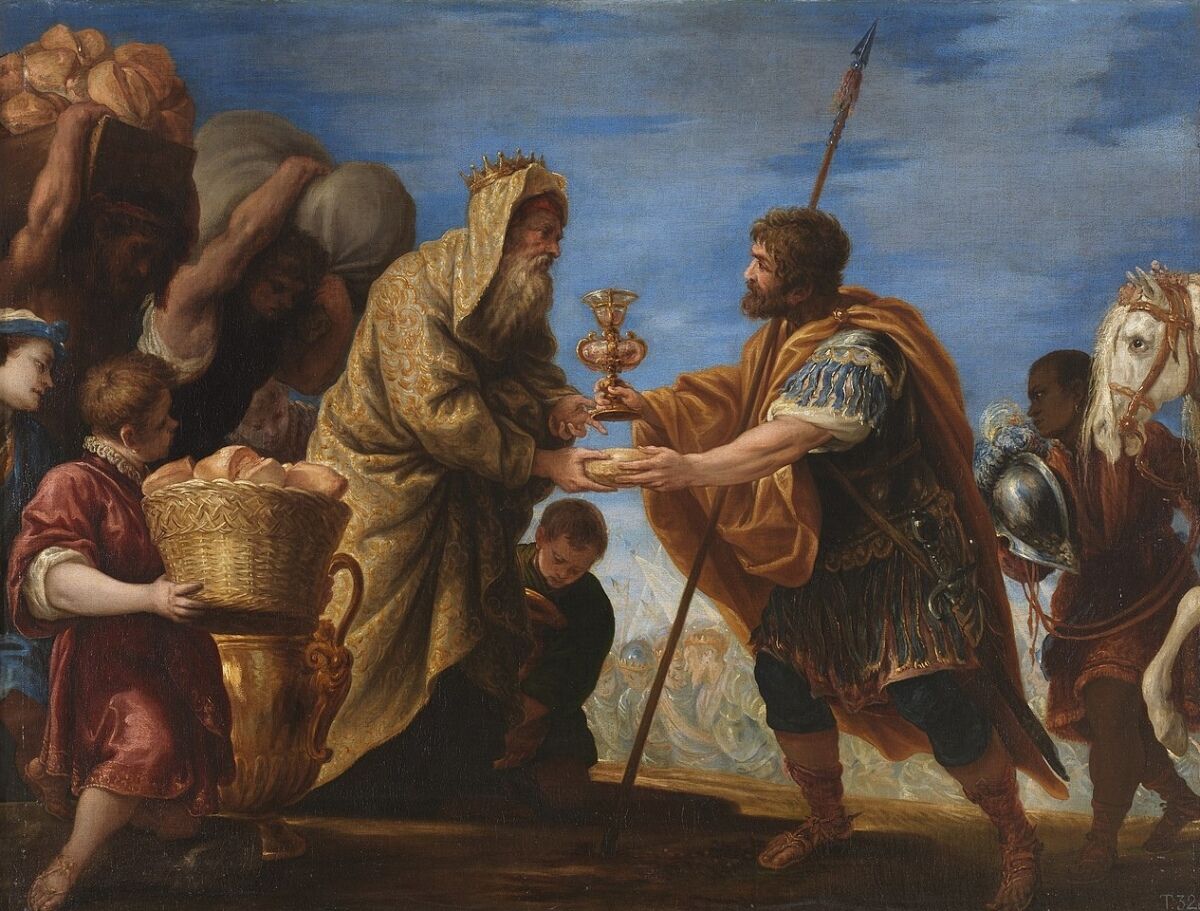
Genesis 14 contains the first explicit reference to tithing. This chapter describes Abram—whose name was later changed to Abraham—paying tithes to the mysterious king-priest of Jerusalem, Melchizedek. “And Melchizedek king of Salem brought out bread and wine. (He was priest of God Most High.) And he blessed him and said, ‘Blessed be Abram by God Most High, Possessor of heaven and earth; and blessed be God Most High, who has delivered your enemies into your hand!’ And Abram gave him a tenth [ma’aser, מעשר] of everything” (verses 18-20; English Standard Version). This Hebrew word, translated as tenth or tithe—מעשר—is directly related to the Hebrew word for ten, עשר.
This Genesis 14 passage relating Abram’s tithing is notable in its almost mundane nature, without any explanation or qualification. The reason for this will become readily apparent further down.
It should also be noted here that there is a minority opinion that it was Melchizedek who tithed to Abram, leaning into the apparent vagueness of the statement, “he gave him a tenth of all” (the literal Hebrew of verse 20). However, the earliest commentaries and extrapolations of this account are unanimous—such as the Book of Jubilees (second century b.c.e.), the Jewish philosopher Philo (first century b.c.e.–first century c.e.), the Jewish historian Josephus (first century c.e.), as well as the New Testament account (Hebrews 7)—it was indeed Abram who tithed to Melchizedek. This conclusion continues to be drawn out by a number of Christian and Jewish commentators (most notably Rashi) and becomes even more plain in light of archaeological discoveries.
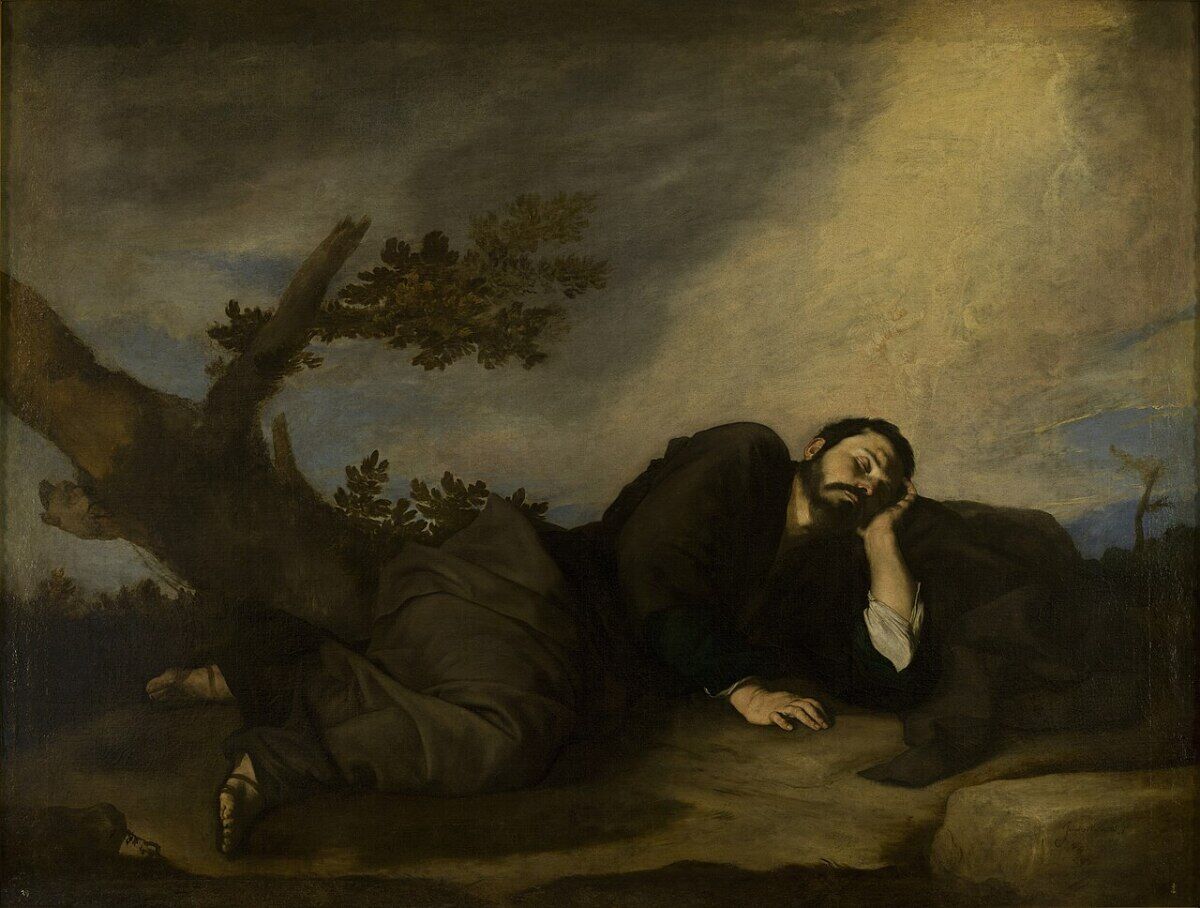
The same tithing practice is attributed to the patriarch Jacob, grandson of Abraham, following his vision-like dream at Bethel: “And Jacob awaked out of his sleep, and he said: ‘Surely the Lord is in this place; and I knew it not.’ And he was afraid, and said: ‘How full of awe is this place! this is none other than the house of God, and this is the gate of heaven.’ … [T]he Lord [shall] be my God, and this stone, which I have set up for a pillar, shall be God’s house; and of all that Thou shalt give me I will surely give the tenth unto Thee’” (Genesis 28:16-17, 21-22). The Hebrew at the end of this passage is a little different to that expressed in the English, actually containing two words referring to tithing: ‘aser ‘a’asrenu (עשר אעשרנו)—more literally, “a tenth will I tithe.”
Tithes of the Israelites
It is during the wilderness sojourn that we receive the most detailed biblical articulation of tithing. These tithes are generally categorized as follows:
- First tithe, ma’aser rishon (מעשר ראשון, “first tenth”)
This “holy” tenth was delivered for the functioning of Israel’s religious system. For example, Leviticus 27 states: “And all the tithe of the land whether of the seed of the land, or of the fruit of the tree, is the Lord’s; it is holy unto the Lord. … And all the tithe of the herd or the flock, whatsoever passeth under the rod, the tenth shall be holy unto the Lord. He shall not inquire whether it be good or bad, neither shall he change it” (verses 30, 32-33).
- Second tithe, ma’aser sheni (מעשר שני, “second tenth”)
This tenth was to be retained by the individual and used to facilitate prescribed festival celebrations “in the place which He [God] shall choose” (e.g. Deuteronomy 16:16). For example, Deuteronomy 12 writes of this tithe: “Thou mayest not eat within thy gates the tithe of thy corn or of thy wine, or of thine oil, or the firstlings of thy herd or of thy flock … but thou shalt eat them before the Lord thy God in the place which the Lord thy God shall choose” (verses 17-18). Deuteronomy 14 states: “And thou shalt eat before the Lord thy God, in the place which He shall choose to cause His name to dwell there, the tithe of thy corn, of thy wine, and of thine oil, and the firstlings of thy herd and of thy flock …. And if the way be too long for thee, so that thou art not able to carry it, because the place is too far … then shalt thou turn it into money, and bind up the money in thy hand, and shalt go unto the place which the Lord thy God shall choose. And thou shalt bestow the money for whatsoever thy soul desireth, for oxen, or for sheep, or for wine, or for strong drink, or for whatsoever thy should asketh of thee; and thou shalt eat there before the Lord thy God, and thou shalt rejoice, thou and thy household” (verses 23-26).
- Third tithe, ma’aser ani (מעשר עני, “pauper’s tenth”)
This was prescribed once every third and sixth year in a seven-year cycle, to be given to the poor. For example, Deuteronomy 14 records: “At the end of every three years, even in the same year, thou shalt bring forth all the tithe of thine increase, and shall lay it up within thy gates. And the Levite, because he hath no portion nor inheritance with thee, and the stranger, and the fatherless, and the widow, that are within thy gates, shall come, and shall eat and be satisfied; that the Lord thy God may bless thee in all the work of thy hand which thou doest” (verses 28-29).
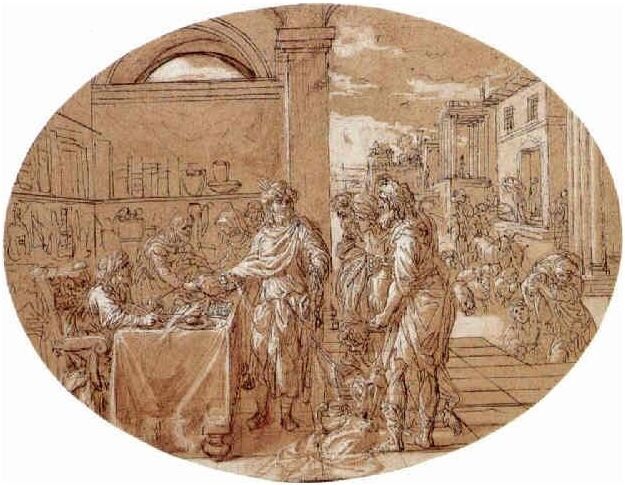
Such tithes are mentioned variously throughout the Hebrew Bible, during both the tabernacle, first temple, and second temple periods (e.g. 2 Chronicles 31; Nehemiah 10, 13; Amos 4). The Jewish historian Josephus—on the scene at the end of the second temple period—summarizes them as follows: “Besides those two tithes, which I have already said you are to pay every year, the one for the Levites, the other for the festivals, you are to bring every third year a third tithe to be distributed to those that want; to women also that are widows, and to children that are orphans” (Antiquities of the Jews 4.8.22).
The final mention of tithing in the Hebrew Bible—in the order of most Bible translations, containing Old and New Testaments—is especially notable and emphatic. It is found in Malachi 3 (in a passage prophesying of the time just prior to the Messianic age—see verses 1-5), which includes condemnation of a number of practices, including the withholding or misappropriation of tithes. “Will a man rob God? Yet ye have robbed me. But ye say, Wherein have we robbed thee? In tithes and offerings. Ye are cursed with a curse: for ye have robbed me, even this whole nation. Bring ye all the tithes into the storehouse, that there may be meat in mine house, and prove me now herewith, saith the Lord of hosts, if I will not open you the windows of heaven, and pour you out a blessing, that there shall not be room enough to receive it” (verses 8-10; King James Version).
Tithing in the New Testament
Some may be surprised to learn that tithing is also mentioned in some detail in the New Testament. “Then spake Jesus to the multitude, and to his disciples, Saying …. Woe unto you scribes and Pharisees, hypocrites! for ye pay tithe of mint and anise and cummin, and have omitted the weightier matters of the law, judgment, mercy, and faith: these ought ye to have done, and not to leave the other undone” (Matthew 23:1, 23). Jesus here criticized the imbalanced approach while still affirming the necessity of tithing even the minutiae (see also Luke 11:42.)
The book of Hebrews likewise contains a discussion of tithing, including mentioning Abraham’s tithes to the priesthood of Melchizedek (Hebrews 7:1-6) as well as the tithe subsequently required to the Levitical priesthood (verses 5-11)—using these examples in turn as a harbinger of New Testament priesthood, ministry and service (as explained through the following chapters). “And here men that die receive tithes; but there he receiveth them, of whom it is witnessed that he liveth” (verse 8).
This is further elaborated on by the Apostle Paul in his letter to the Corinthians: “Do ye not know that they which minister about holy things live of the things of the temple? and they which wait at the altar are partakers with the altar? Even so hath the Lord ordained that they which preach the gospel should live of the gospel” (1 Corinthians 9:13-14). As with the Levitical priesthood, the New Testament ministry was supported by the same system. Paul, however, goes on to describe his personal situation: “But I have used none of these things: neither have I written these things, that it should be so done unto me: for it were better for me to die, than that any man should make my glorying void” (1 Corinthians 9:15). Paul here writes that he could have justifiably subsisted off this system, but he chose not to, instead relying on his own separate income as a tent-maker (Acts 18:3).
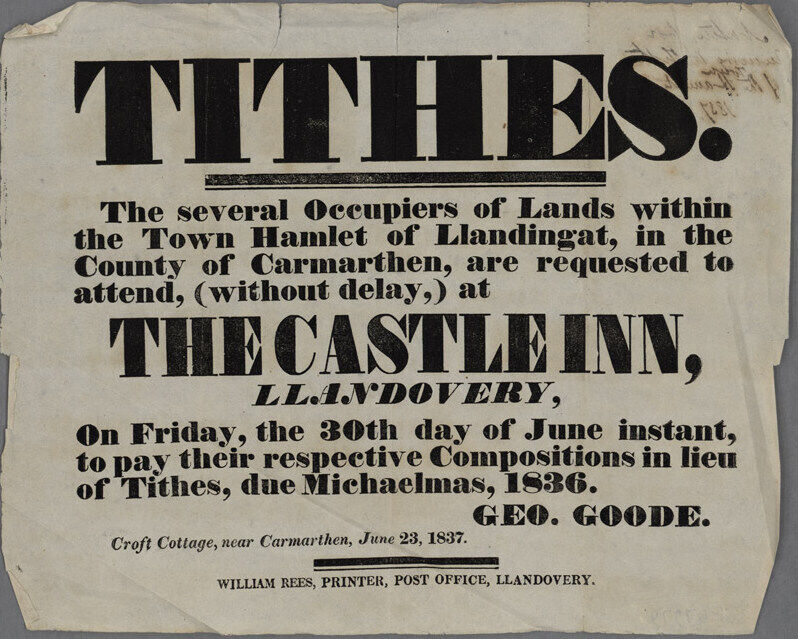
Given such references in both the Hebrew Bible and New Testament, a large number of churches and denominations continue to require, or at least advocate for, tithing. Even among those who do not enforce tithing, it is still advised in no uncertain terms. The Catholic Church, for example, no longer strictly requires tithing, although it was once a longstanding requirement on pain of excommunication. The Council of Trent (1545–1563) decreed that “the payment of tithes is due to God; and they who refuse to pay them, or hinder those who give them, usurp the property of another. … And they who either withhold them, or hinder them (from being paid), shall be excommunicated” (Canons and Decrees of the Council of Trent, Session xxv). The Institutiones Canonicae (1876) states: “The law of tithes can never be abrogated by prescription or custom, if the ministers of the Church have no suitable and sufficient provision from other sources; because then the natural and divine law, which can neither be abrogated nor antiquate, commands that the tithe be paid” (ii.1.5).
New Testament manuscripts researcher, theologian and Ph.D. candidate Wes Huff (currently a breakout star in the Christian apologetics community, with his recent appearances on numerous popular platforms, including the Joe Rogan podcast) recently gave an interview on tithing, titled “Is Tithing Biblical for Christians?” He stated:
[T]he Old Testament is clear, God’s people were to give back to him, and that he’d given instructions about what that entails. When we come to something like the law … it becomes clear that the tithe is God’s standard for giving. The tithe doesn’t even belong to the giver, but to God. We find that in the Levitical law, Leviticus 27:30 says that specifically. … Under the Mosaic Law, there appear to be three tithes—a regular tithe, given to support the priests and the work of the temple; a festival tithe, for the celebration of the required feast; and a charity tithe, that was given every third year … there’s this philanthropic tithe that is included.
Huff noted the same principle carried through the New Testament—if anything, with even greater emphasis (e.g. Luke 18:18-22; 19:8). He continued:
Christians are always to give to the poor and support other works that extend God’s Kingdom. We see that in 2 Corinthian 8-9—that’s the whole point of that—that basic tithe is to be given to the church to support the work and mission.
Tithing ≠ Taxation
An angle that sometimes arises in discussions of tithing relates to its relationship with state taxation. These are entirely separate matters. In fact, this is a concern dealt with in the Bible itself. Passages such as Amos 5:11 describe governmental taxation—mas’et (משאת), sometimes translated “burden”—separate and apart from the religious tithing system. (In some cases these taxes were criticized for their overburden of the population—see here for more detail on this particular topic.)
Dr. Peter Altmann tackled this subject from another angle in relation to the time of Nehemiah in his 2014 article “Tithes for the Clergy and Taxes for the King: State and Temple Contributions in Nehemiah.”
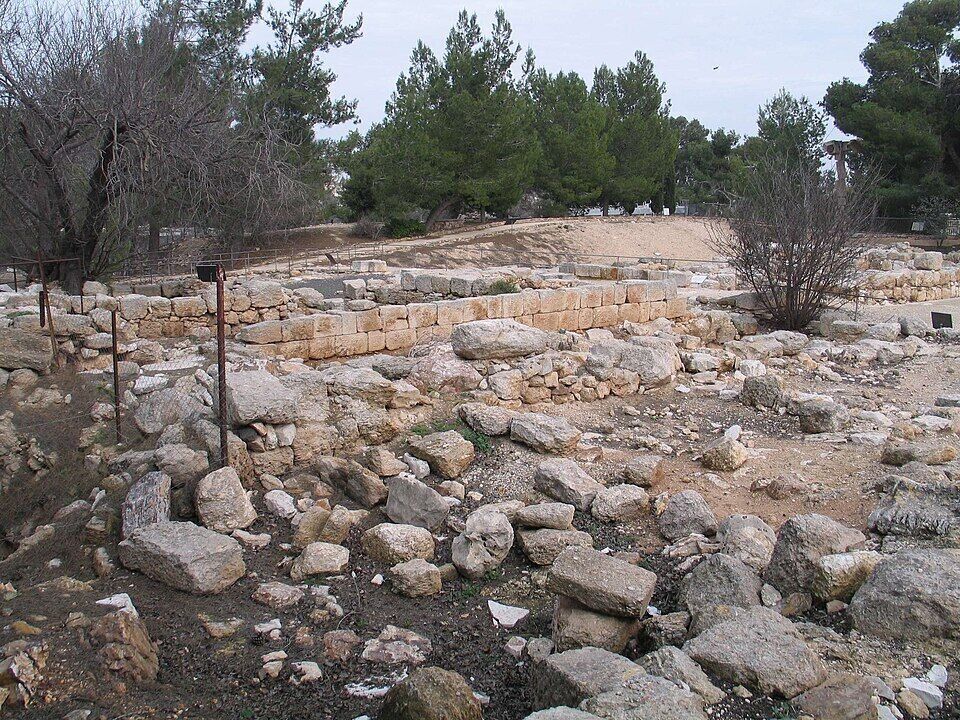
“The book of Nehemiah speaks of various tax burdens for the imperial bureaucracy such as the tax (מדה) for the king (5:4), on the one hand, and of payments for the cultic personnel such as the contributions, first fruits, and tithes for the priest and Levites (13:10-13) on the other,” he wrote. He argued that the imperial taxes were collected specifically at Ramat Rahel—a store-city roughly 3.5 kilometers (2 miles) southwest of the core city of Jerusalem—while the religious tithes were delivered to Jerusalem proper.
This situation results in a differentiation between the tax collection systems of royal and religious contributions of Nehemiah, at least until quite late in the fourth century [b.c.e.] ….
Two texts in Nehemiah address the collection of imperial taxes—Nehemiah 5:4 and 5:14-18. Nehemiah 5:4 makes a direct reference to the “tax of the king” (מדה המלך) …. The following section, verses 14-18 makes repeated mention of “the bread of the governor” (לחם הפחה). … In fact, the lxx translates לחם הפחה as βίαν αὐτῶν (“an extortion from them”) ….
לחם הפחה designates various duties in kind that the people were required to bring in order to provide for the regular “needs” of the rulers. With reference to rulers in the biblical text, 1 Kings 5:2-8 (Eng. 4:22-28) details such provisions for Solomon’s imperial table. With regard to provisions for governors, Malachi 1:8 uses the implied requirement to bring healthy animals for the governor’s table as an analogy for what worshipers should be bringing to yhwh ….
In the broader literature and iconography of the region, parallels are found at the Neo-Assyrian table and on the Apadana iconography in Persepolis. The Greek portrayals of the Persian table are well known in this regard. From the records of the Persian leadership themselves, the Persepolis Treasury Tablets show the payments in kind of numerous officials. In this way, as [H.G.M.] Williamson points out, the “bread of the governor” should be understood as his salary. Furthermore, an “invitation” to the governor’s table would function on analogy to an invitation to the king’s table—it did not necessarily designate actual presence at the table but rather, or additionally, an apportionment of rations, that is, payment in kind.
Conversely, “tithes and other contributions for cultic personnel are mentioned in Nehemiah 10:33-40 (Eng. 10:32-39) and then again in 13:4-13 and 13:31.” The text of Nehemiah, Altmann concluded, despite earlier theories to the contrary, shows “no compelling reasons to conflate the collection or storing of secular and temple taxes,” but rather that these are entirely separate collections, both descriptively and locationally.
In his 2009 work Tight Fists or Open Hands?: Wealth and Poverty in Old Testament Law, Dr. David Baker concurs that “all other biblical references to tithing are concerned with gifts or payments to sanctuaries and their personnel (Genesis 14:20; 28:22; Leviticus 27:30-33; Numbers 18:21-32; 2 Chronicles 31:4-21; Nehemiah 10:35-39; 12:44; 13:5, 12-13; Amos 4:4; Mal 3:8-10), with the exception of Samuel’s warning about royal tithe-taxes which are portrayed negatively and should not in any case be equated with the tithes prescribed in the laws (1 Samuel 8:15, 17).”
Archaeological Background
Now we come to perhaps the biggest surprise of all—the tithing parallels in archaeology and ancient history, with the important and surprisingly recurrent practice of the tenth part dedicated to a deity.
Dr. Baker writes that archaeological evidence shows tithing “was a widespread practice in the ancient Near East.”
The oldest known references to tithes are from Ur, in the 21st century b.c., and there are more from the 19th century, but the majority of Mesopotamian texts date to the Neo-Babylonian period (sixth century). Tithes were given to gods and their temples in the form of money, agricultural produce, animals, and manufactured goods. Apparently this was an obligation from which no one was exempt, not even priests and kings, and the temples prospered greatly as a result.
The following are some examples.
From Mesopotamia
The Assyrian Dictionary of the Oriental Institute of the University of Chicago (1958) notes the word “ešrû” (an etymologically-related word to the Hebrew “tenth”) as a “tithe payable to gods or temples.” It lists the following inscriptional examples (see source for citations):
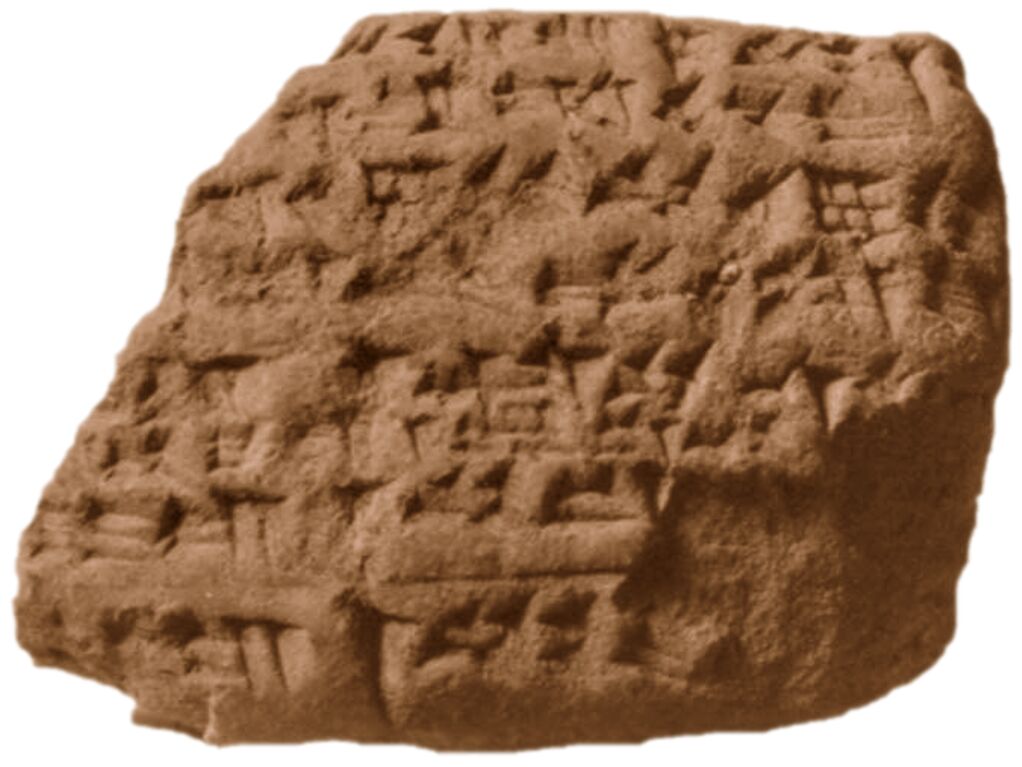
- “tithe of [the gods] Bēl, Nabû, Nergal”
- “tithe of [the god] Sin”
- “tithe of [the god] Bēl”
- “tithe of [the god] Marduk”
- “tithe of [the god] Šamaš”
- “tithe of [the god] Nergal”
- “tithe of [the god] Bēlti-ša-Uruk”
- “tithe of the exchequer of [the god] Nergal”
- “tithe of the exchequer of [the god] Šamaš”
- “tithe of the chief accountant, he has delivered it to [the god] Šamaš”
- “why do you not pay the tithe to the [goddess] Lady-of-Uruk?”
- “PN owes eight shekels of silver as tithe to [the deities] Ištar and Nanâ”
- “[the god] Šamaš requests tithe payments”
- “[the god] Šamaš demands the tithe”
- “PN owes (x barley and grapes) as balance of the tithe of the years three and four … he will deliver in [the temple] Eanna half of the barley and half of the dates”
- “the tithe, which PN has given … to [the deities] Bēl and Bēltija for the removal of the rubble from [the temple] Esagila”
- “[H]e has paid, in addition to the tithe for [the god] Ninurta, the šissinnu-tax of the gardener”
Other inscriptions refer to deity-dedicated “tithe-land”, as well as “tithe collectors” (e.g. “PN, the collector of tithe of the country Sumundar”).
From the Levant
From the territory of the Levant, Prof. William Hallo included the following 13th-century b.c.e. inscription (ktu 1.119) from the ancient city of Ugarit (northern Syria) in his 1996 tome Origins: The Ancient Near Eastern Background of Some Modern Western Institutions:
A bull, oh Ba’al, we consecrate (to you), a votive offering, oh Ba’al, we dedicate (to you), the first fruits, oh Ba’al, we consecrate (to you), the booty, oh Ba’al, we offer (to you), a tithe, oh Ba’al, we tithe (to you).
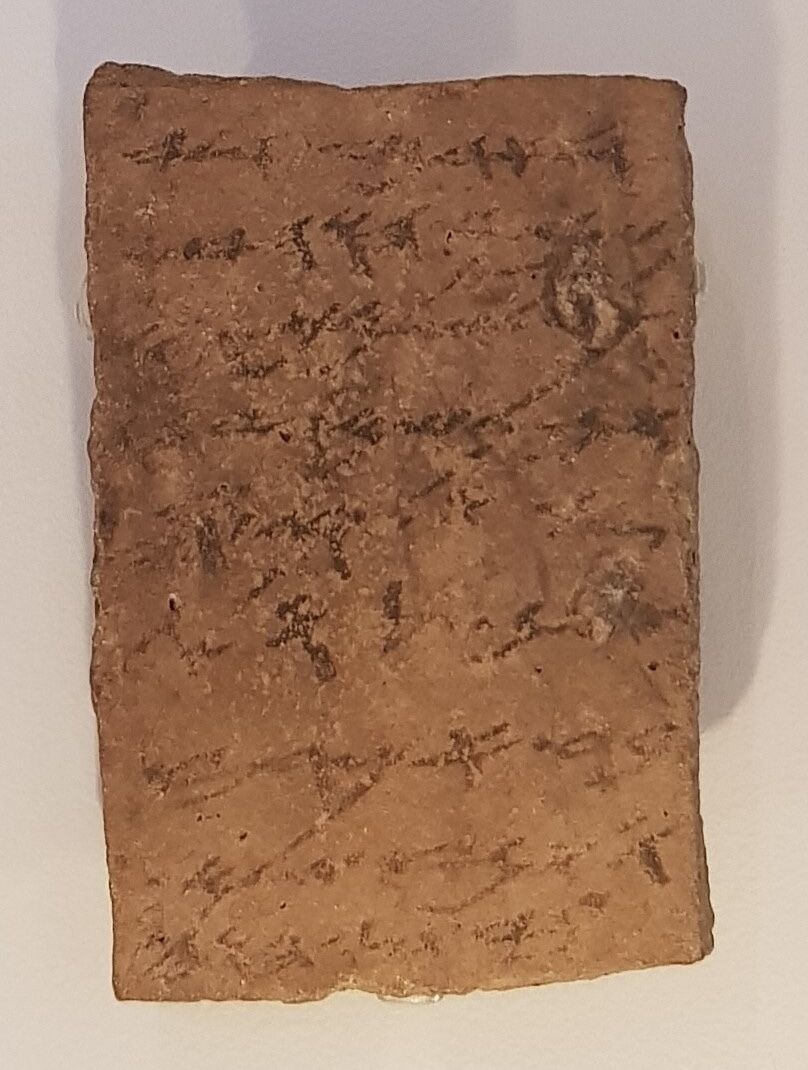
It is also worth noting from the Southern Levant a possible discovered reference to Israelite tithing in the late Iron Age—Baker notes that a “possible reference to the collection of tithes in the late Israelite monarchy occurs in a letter discovered at Arad,” a southern city of the kingdom of Judah (op cit). This circa 600 b.c.e. ostracon is summarized in Yohanan Aharoni’s 1981 work Arad Inscriptions as “one of Eliashib’s letters in which the word מעשר, ‘tithe’ appears (No. 5). If our reading is correct, then the wet measure, the bath, is meant—probably wine brought as tithe ….” Additionally, numerous references to tithing appear during the later second temple period, including among the Dead Sea Scrolls, an ostracon from Masada, etc (in addition to the testimonies of second temple period authors such as Josephus).
From the Mediterranean
Examples from the Greek world include a trove of votive offerings dating to the sixth and fifth centuries b.c.e., dedicated either as aparche (“firstfruits”) or dekate (“tithe/tenth”). Many dozens of such votive statue inscriptions have been discovered bearing text such as the following:
- “Lysias dedicated firstfruits to Athena. Euarchis dedicated a tithe to Athena”
- “a tithe given to the goddess [Athena]”
- “Peikon the potter dedicated this as a tithe to Athena”
- “Meleso dedicated it to Athena as a tithe”
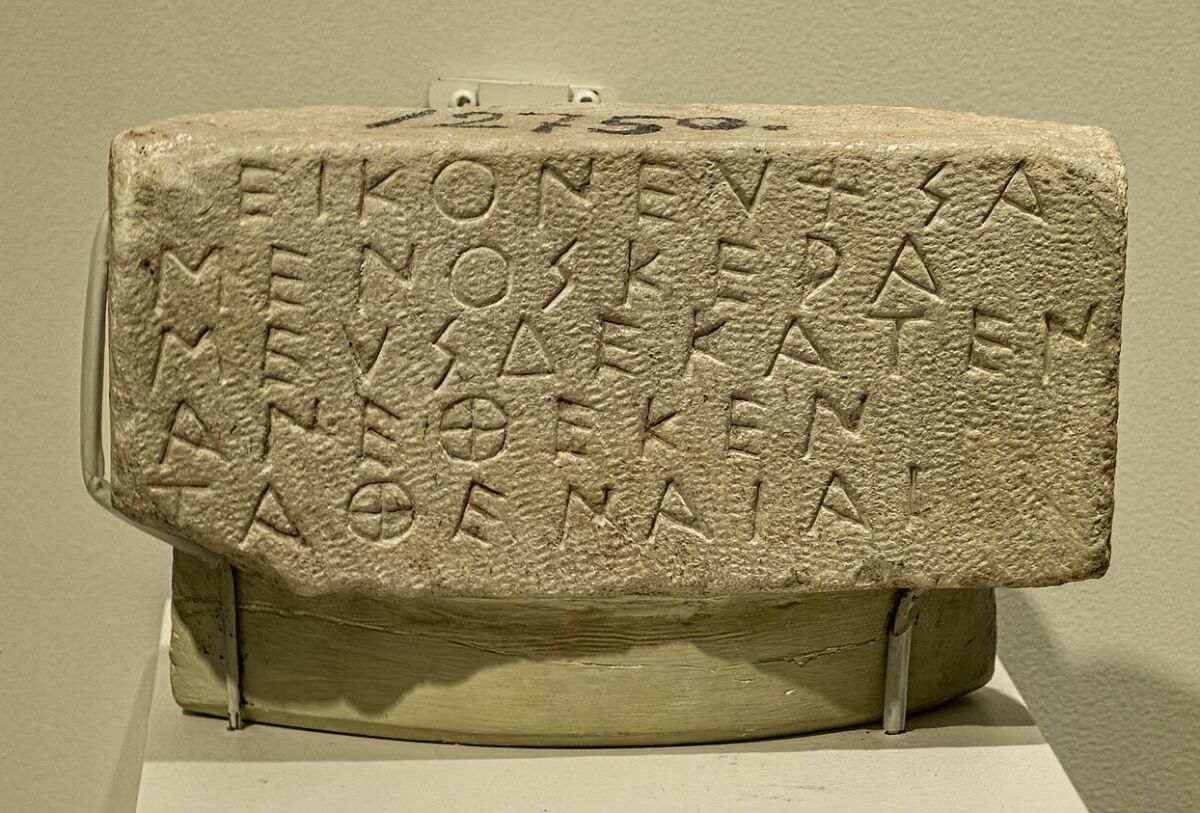
“[T]he most common use of the term dekate in Archaic and Classical Greece referred to the tithe, or tenth part of the spoils won in battle, that was given to the gods,” writes Prof. Catherine Keesling in The Votive Statues of the Athenian Acropolis, bringing to mind the aforementioned account of Abram giving of his own increase attained through the spoils of war to the priest Melchizedek. Keesling goes on:
It is apparent that a dekate is always conceived as a ten-percent share …. The 29 private dekate dedications clearly result from the individual practice of separating out ten percent of one’s wealth or profits to pay for a votive offering ….
[O]ne dekate [tithe-funded statue] was made from “works” (daa No. 234) and another from “produce and property” (DAA No. 184). Three of the dekatai were made from “land” or from “money” (daa Nos. 191, 246 and 283). The profits from a windfall profit such as a fish catch could apparently be dedicated either as an aparche [firstfruits offering] or a dekate [tithe offering]. Consequently, neither formula should be exclusively connected with profits from farming, craftsmanship, commerce, or fishing. …
“[The terms] aparche and dekate defined how worshippers placed their gifts within the context of communal religious practices,” she concludes.
From North Africa
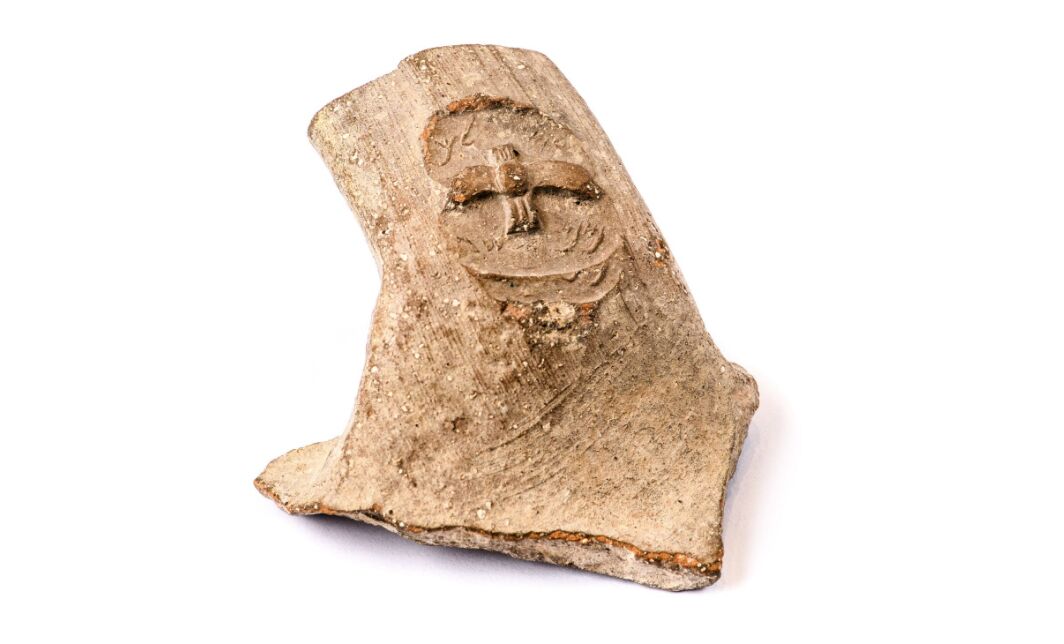
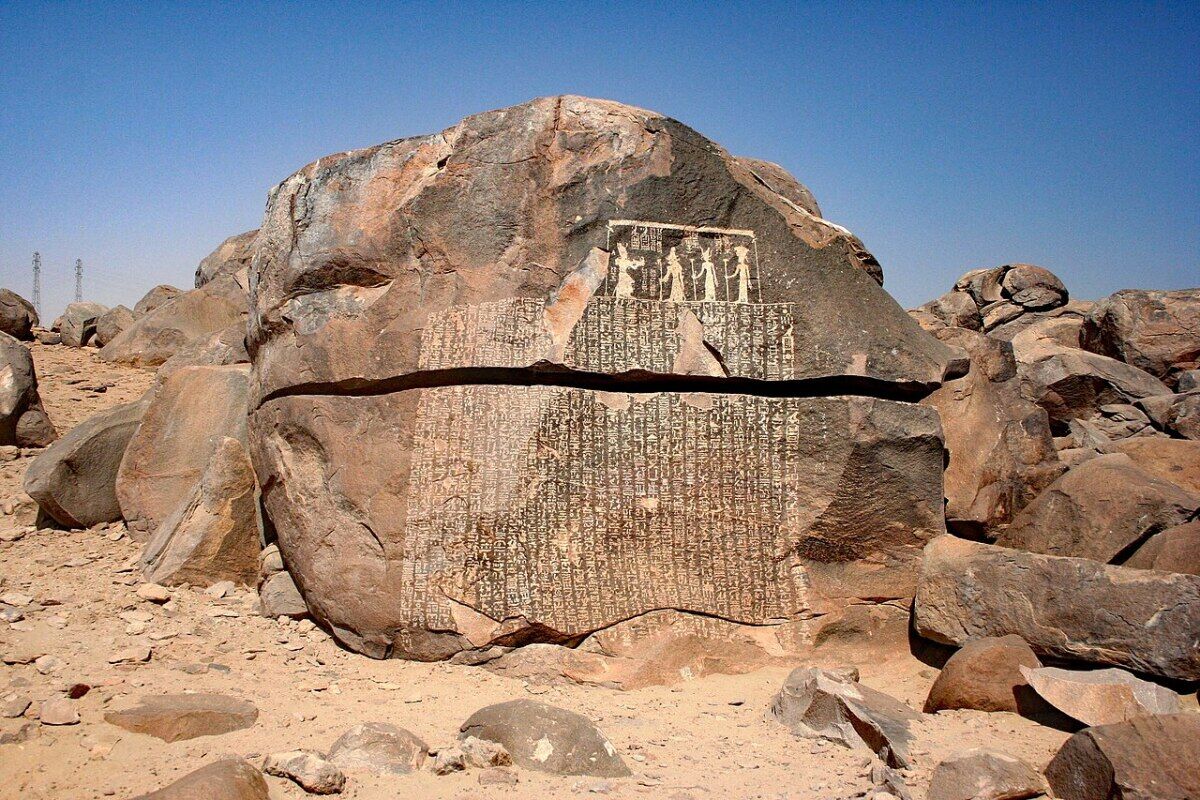
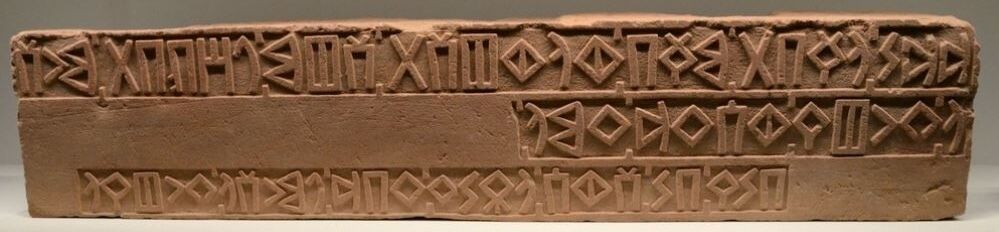
From Egypt—specifically, Sehel Island on the Nile River—comes a famous inscription known as the “Famine Stele.” Carved in Ptolemaic Egyptian script typical of the third or second centuries b.c.e., it recounts a story set some 2,000 years earlier, during the reign of Djoser. Part of the lengthy inscription includes the following stipulation: “Royal sacrifice for [the god] Khnum-Re …. All fishermen and trappers and hunters on the water and lion catchers in the desert, I impose on them a duty of one tenth of their catch. … Moreover one tenth of the gold and ivory and the wood and minerals and every tree stem and all things which the Nubians of Khenet-hen-nefer bring ….”
The first-century b.c.e. historian Diodorius Siculus also relays an account of tithing among the Carthaginians in the late fourth century b.c.e., following reversals at the Battle of White Tunis (Tunisia):
Therefore the Carthaginians, believing that the misfortune had come to them from the gods, betook themselves to every manner of supplication of the divine powers; and, because they believed that Heracles, who was worshipped in their mother city, was exceedingly angry with them, they sent a large sum of money and many of the most expensive offerings to Tyre. Since they had come as colonists from that city, it had been their custom in the earlier period to send to the god a tenth of all that was paid into the public revenue; but later, when they had acquired great wealth and were receiving more considerable revenues, they sent very little indeed, holding the divinity of little account. But turning to repentance because of this misfortune, they bethought them of all the gods of Tyre. (Bibliotheca Historica 20.14.1-2)
Coming Full Circle
It’s a small wonder, then, such passing references to tithing in the biblical patriarchal narratives—Abram’s tithing to the priest-king Melchizedek, and Jacob’s promise of tithe at Bethel (a name meaning “House of God”), upon his realization of God’s presence—that this was, in some sense, an already established, widely-known and expected practice required of, and rendered to, a deity.
But from a biblical perspective, perhaps the ubiquity of this practice should only be expected. After all, as early as the tithing references to Abram and Jacob are (and as influential as Abram is described as being on Babylonian and Egyptian society, based on the classical accounts), there is possible reference to such practice as far back as Cain and Abel.
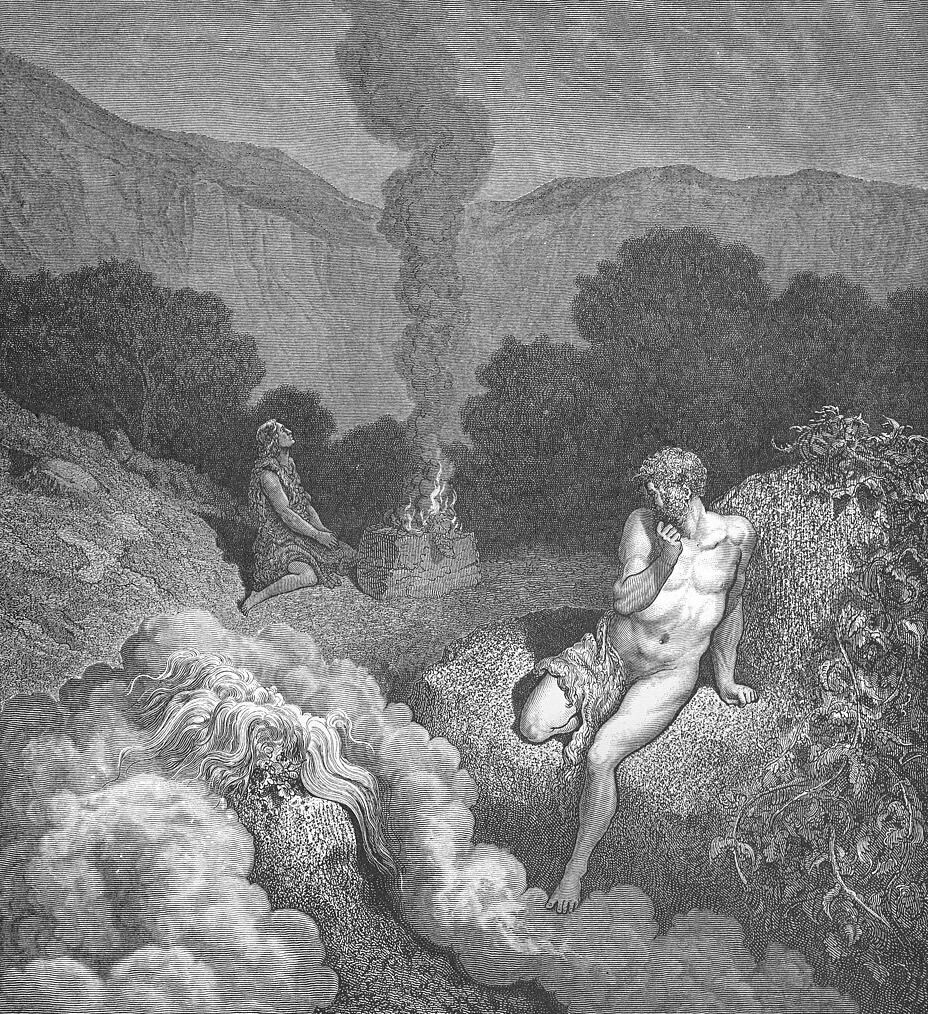
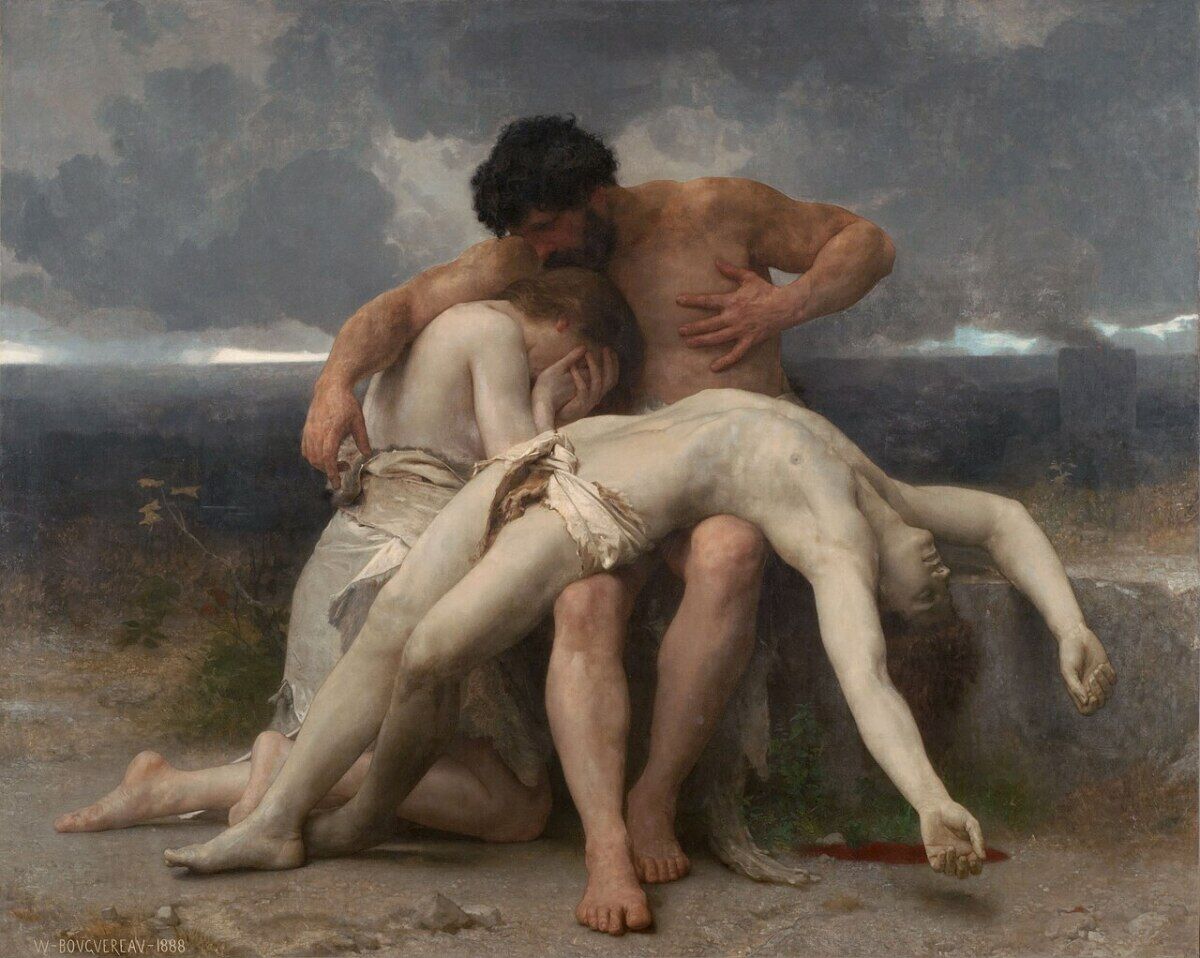
“And Abel was a keeper of sheep, but Cain was a tiller of the ground. And in the process of time it came to pass, that Cain brought of the fruit of the ground an offering unto the Lord. And Abel, he also brought of the firstlings of his flock and of the fat thereof. And the Lord had respect unto Abel and to his offering; but unto Cain and to his offering He had not respect. And Cain was very wroth, and his countenance fell. And the Lord said unto Cain: ‘Why art thou wroth? and why is thy countenance fallen? If thou doest well, shall it not be lifted up? and if thou doest not well, sin coucheth at the door; and unto thee is its desire, but thou mayest rule over it.’ And Cain spoke unto Abel his brother. And it came to pass, when they were in the field, that Cain rose up against Abel his brother, and slew him” (Genesis 4:2-8).
This passage is also highlighted and extrapolated on in the book of Hebrews: “By faith Abel offered God a greater sacrifice than Cain, and through his faith he was commended as righteous, because God commended him for his offerings. And through his faith he still speaks, though he is dead” (Hebrews 11:4; New English Translation).
About this account of Cain and Abel, Huff continued (op cit):
[I]t’s clear I think from Genesis 4, that the first family knew they had a responsibility to give back to God a portion of what God had given to them. They were even held responsible for the kind of offering they gave. God accepted Abel’s offering, and he rejected Cain’s. In addition, since the Old Testament later links the offering of the firstborn and firstfruits, it does it to the tithe, and so it’s possible Abel’s offering was accepted precisely because it was a form of a tithe.
Note in Genesis 4 the particular use of the terminology. Cain is described in verse 3 as bringing an “offering” (מנחה, variously translated as offering, gift, present). Abel is more specifically described as bringing of the “firstlings”—a relatively rare word that appears in passages relating to tithing (e.g. Deuteronomy 12:17; 14:23). While Abel’s act is also referred to subsequently with this more generic word for “offering,” as with Cain, only Abel’s has this added specificity.
“Righteous Abel may well have been the very first human being to fully exemplify this,” wrote Garner Ted Armstrong in a February 1976 Good News article on this subject of tithing. “Abel was a sheepherder; his brother Cain was a farmer. … They both gave gifts to God—but Abel put his God before all, he gave God the first, the choicest, and the fattest. Cain carelessly threw together a quick offering out of his harvest; apparently it was neither the first nor the best.”
Joel Hilliker summarized the same principle in his 2011 article “The Law of the Firstfruits,” noting these accounts of Abel, Abraham and Jacob:
Note Abel’s actions in Genesis 4:4. Whenever one of Abel’s animals would birth its first calf or kid, Abel would give the firstling to God. Consider what Abraham did at the end of Genesis 14:18-20. … Read Genesis 28:20-22 for evidence that Abraham also taught his household to do the same.
These are powerful historical examples of men who demonstrated love for God in specific, material ways. Through these physical acts, Abel, Abraham and Jacob were, in fact, obeying the first great commandment!
In Genesis 26:3-5, Abraham is given the following commendation from God: “I sware unto Abraham … I will make thy seed to multiply as the stars of heaven, and will give unto thy seed all these countries; and in thy seed shall all the nations of the earth be blessed; Because that Abraham obeyed my voice, and kept my charge, my commandments, my statutes, and my laws” (kjv)—preexisting requirements for worship, long before the Israelites at Mount Sinai, that surely included this very practice attributed to Abraham of tithing.
In Sum
Tithing, as we have seen, was not merely an ancient Israelite practice. It was a broader institution, well recognized and even expected across the ancient world, long prior to the Israelite nation—deep into human history—something widespread enough as to aptly be called a “natural law” (to use the above-cited words of Institutiones Canonicae). And though names of deities varied—recipients differed—still there remained the same underlying theme, separate and apart from secular taxation, of a tenth, the tithe, to be rightfully rendered unto God.
“Render to Caesar the things that are Caesar’s, and to God the things that are God’s.”
