How did ancient kings and emperors make important decisions? We know from the Bible that the righteous kings of Israel and Judah would look to God and oftentimes receive insight and directives from the biblical prophets.
But what about the kings of Gentile nations, such as Assyria and Babylon? One source tells us exactly how King Nebuchadnezzar made an important and fateful decision. Notice a peculiar verse in Ezekiel 21: “For the king of Babylon standeth at the parting of the way, at the head of the two ways, to use divination; he shaketh the arrows to and fro, he inquireth of the teraphim, he looketh in the liver” (verse 26, Jewish Publication Society; verse 21 in other versions).
This strange verse describes King Nebuchadnezzar using three different divination practices to determine whether or not to attack Jerusalem. We’ve written before about what it means to “looketh in the liver” (read our article “‘Looking Into the Liver’: Archaeology Illustrates a Peculiar Bible Verse” for more information). But what does Ezekiel mean by “he shaketh the arrows to and fro”?
What It Is
“He shaketh the arrows to and fro” is a reference to belomancy, the ancient divination practice of using arrows to solicit guidance from the gods. Belomancy comes from two Greek words: belos, which means “arrow” or “dart,” and manteía, which means “divination” or “the power to prophesy.”
Belomancy was a common pagan practice in the ancient world. Some believe it originated 1,000 years before the time of King David. It was practiced by the Babylonians, Phoenicians, Scythians, Arabs and Greeks.
But what exactly was it? How would one interpret divine instruction from arrows?
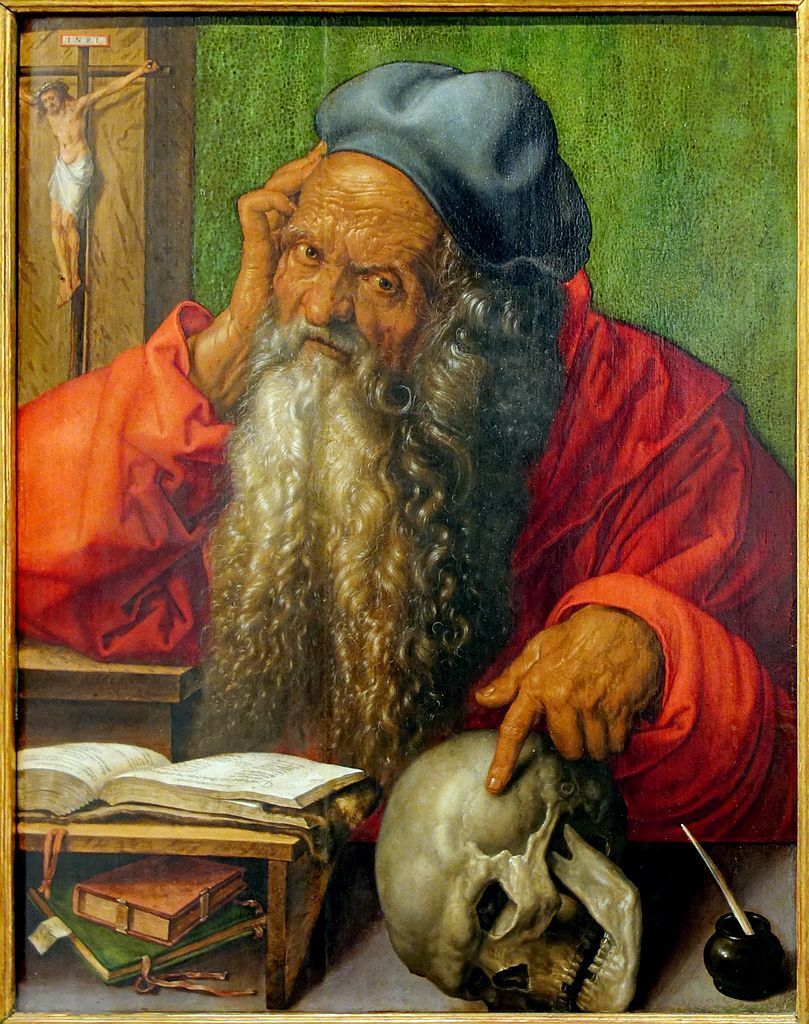
Regarding the practice of belomancy in Babylon, fourth-century c.e. historian Jerome wrote: “The king will stand at the very crossroads and consult the oracle according to the ritual practice of his people, in such a way that he puts the arrows, inscribed or marked with the names of individuals, into the quiver and reshuffles them, in order that they may see whose arrow comes out and what city he should attack” (Patrologia Latina, xxv).
This is precisely what Nebuchadnezzar did when determining whether to attack Rabbath or Jerusalem in Ezekiel 21.
The Archaeological Evidence
The practice of belomancy is not very well documented archaeologically. There are, however, a few archaeological discoveries that give us some insight into this unique divination practice.
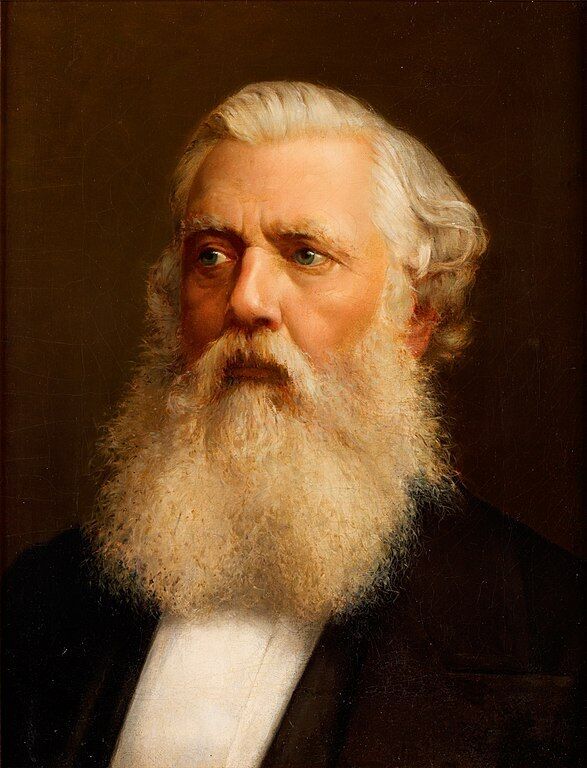
During his excavations of the northwest palace of Assyrian King Ashurbanipal ii at Nimrud in the 1840s, British archaeologist Sir Henry Layard uncovered sculptured slabs that date to the ninth century b.c.e. and depict Ashurbanipal practicing arrow casting. “Some of the sculptured slabs at Nimroud are supposed to represent divination of this sort, the king being seen with arrows in his hand,” writes Prof. James M. Freeman in Manner and Customs of the Bible. This evidence suggests that belomancy was a royal divination practice that was used by regional powers such as Assyria and Babylon at this time.
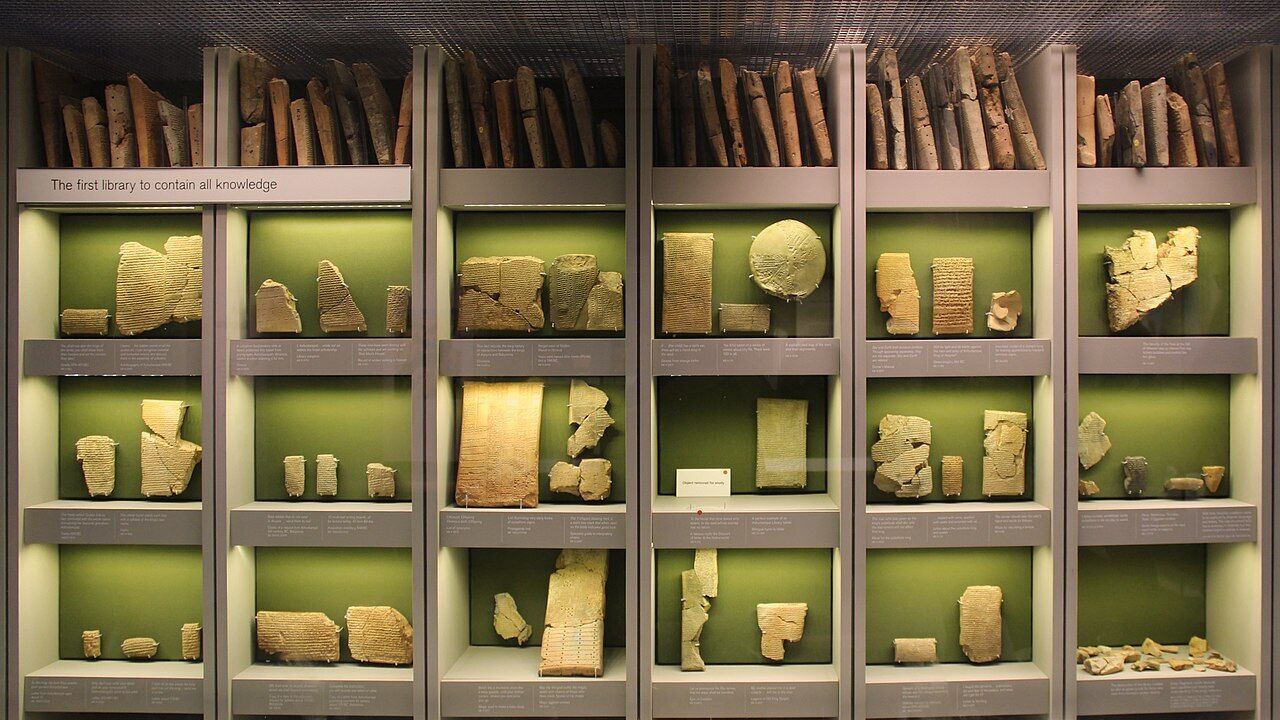
A neo-Assyrian tablet discovered at the Library of Ashurbanipal in Nineveh also seems to have connections to belomancy. The tablet, known as K. 2087, is displayed in the British Museum and discusses “the appearance of the forehead of a man” in relation to bad omens (translation by Fritz R. Kraus). The fragmentary text of the table reads: “If … bad appears on the forehead of a man, [his] days [will be short …], death through … together with [his] family ….” The cuneiform text used the symbol of an arrow to represent the word “bad,” as explained by Near East scholar Prof. Amar Annus in “Divination and Interpretation: Signs of the Ancient World.”
The most concrete evidence, however, comes from the arrowheads themselves. Throughout Yemen and Southern Arabia, excavations have uncovered many arrowheads with religious carvings on them. These most likely served ritualistic divination functions.
Scores of arrowheads, inscribed with the names of ancient cities, have been discovered at Philistine and Phoenician sites. Jerome wrote, “They wrote on several arrows the names of the cities they intended to assault; and then, putting them all together promiscuously in a quiver, they drew them out thence as lots are drawn; and that city whose name was written on the arrow first drawn was the city they first made war upon.”
One recent discovery in the Negev provides evidence that corroborates Ezekiel 21. In 2024, during a salvage excavation, Dr. Tali Erickson-Gini uncovered some special items from an ancient Babylonian mass burial tomb in the Negev of southern Israel. During a Let the Stones Speak interview, she told host Brent Nagtegaal, “I’m still dumbfounded that we came across such an unusual discovery—it’s never been found in Israel.”
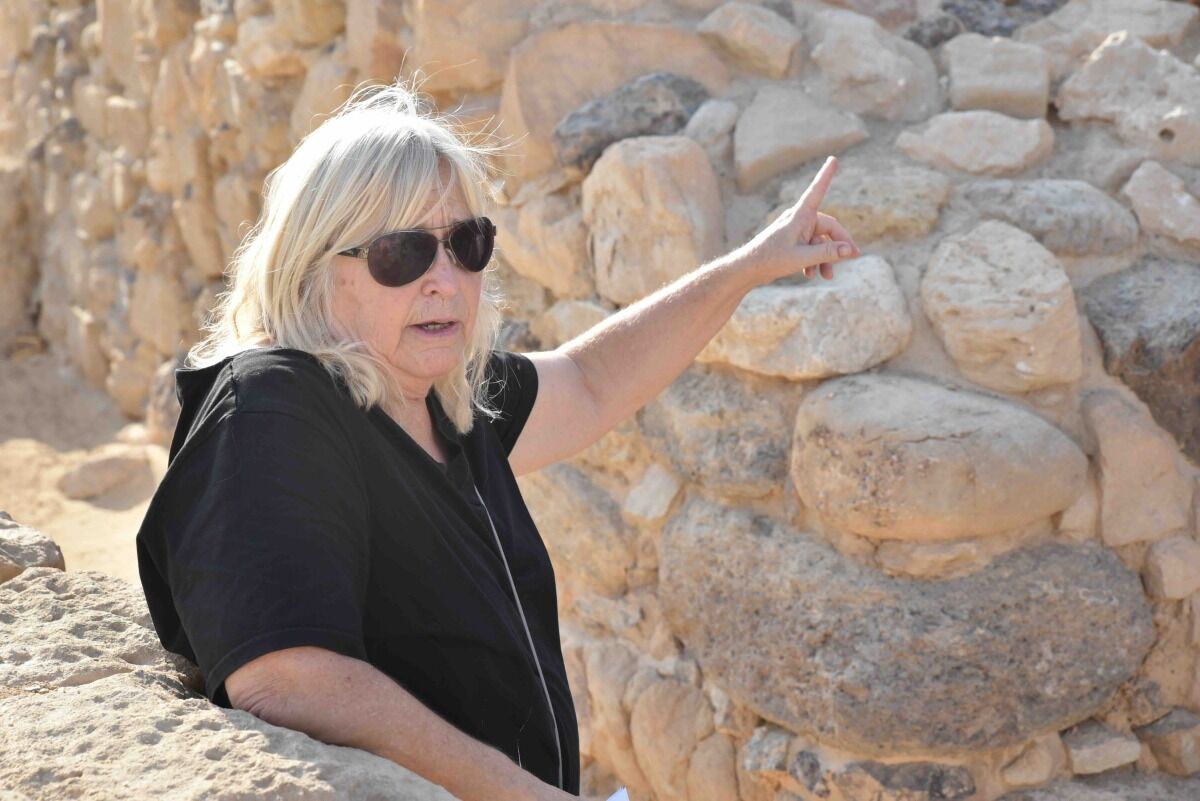
Initially, the tomb was thought to date to the Early Bronze Age, but further analysis proved the structure dates to the late Iron Age (seventh century b.c.e.). The main tomb contained 60 individuals and a smaller tomb contained seven others. Many artifacts were found in this burial, but Erickson-Gini drew attention to the more than 40 small flint and quartz microliths. According to Oxford Dictionary a microlith is “a minute-shaped flint, typically part of a composite tool such as a spear.” Erickson-Gini believes that these microliths were used in divination.
These microliths were unused, which shows they weren’t intended for battle. Erickson-Gini explains that during the Iron Age, stone arrowheads such as these were merely symbolic and used in religious practices.
Also, the location at which they were discovered tells us a lot about their intended use. They were found at an ancient T-junction, where the road split and travelers would have to choose their path. Could these arrowheads have been used to help decide which path to take? That’s precisely the scenario that played out in Ezekiel 21.
Forbidden and Condemned
Belomancy was a sacred practice to the Assyrians and Babylonians. They held it in high esteem as their medium to communicate with their gods. But God directly forbade and condemned such practices.
In Deuteronomy 18, God commanded the ancient Israelites to refrain from the divination practices of the people around them: “There shall not be found among you any one that maketh his son or his daughter to pass through the fire, or that useth divination, or an observer of times, or an enchanter, or a witch, Or a charmer, or a consulter with familiar spirits, or a wizard, or a necromancer. For all that do these things are an abomination unto the Lord: and because of these abominations the Lord thy God doth drive them out from before thee” (verses 10-12).
Yet it was because of pagan practices and turning away from the true God that Judah found itself in Nebuchadnezzar’s sights. Despite what Nebuchadnezzar may have believed, however, it wasn’t casting of arrows that sealed Jerusalem’s fate. That decision had already been made.
Nebuchadnezzar was a tool in God’s hands to punish Judah for its sins. As Daniel 4:17 says, “… the most High ruleth in the kingdom of men, and giveth it to whomsoever he will, and setteth up over it the basest of men.” Men may cast arrows, but ultimately, God decides what happens to nations and peoples. God had already prophesied that Jerusalem would fall. Matthew Henry Commentary says, “The resolution he was hereby brought to. Even by these sinful practices God served His own purposes and directed him to go to Jerusalem.”
Ezekiel 21:26 is certainly a peculiar verse, but history and archaeology make plain and illustrate exactly what this verse means. “Shaking the arrows” was a prominent ritual in the occult practices of Babylon, but these practices did not interfere with God’s plans. The history of belomancy illustrates the foolishness of the ancient occult religions and superstitious religions in this time period. As the Prophet Jeremiah wrote, these workings of men “are vanity, a work of delusion; In the time of their visitation they shall perish” (Jeremiah 10:15).
