
It’s one of the more ambiguous points in biblical chronology: What age was Terah when he begot Abram?
Contained within chapters 5 and 11 of Genesis are the “chronogenealogies” from Adam all the way to the patriarch Abram (later renamed Abraham). For almost all individuals, we have a clear chronological outline: Adam was 130 years old when he begot Seth, Seth was 105 when he begot Enos, Enos was 90 when he begot Cainan, etc.
Yet one of the most ambiguous and debated parts of these chronogenealogies comes from the very end—specifically, the jump from Terah to his son Abram.
“And Terah lived seventy years, and begot Abram, Nahor, and Haran” (Genesis 11:26). The passage is usually taken to mean that Terah was 70 years old when Abram was begotten, but the passage is arguably more open-ended. To this end, there is a popular position that Terah was actually 130 when Abram was born, and that the age of 70 applies to one of the other sons.
How old was Terah when Abram was born?
The Case for 130
At first glance Genesis 11:26 does seem to refer to Abram being begotten when Terah was 70 years old. And indeed, this is the traditional Jewish opinion. There is, however, an entirely different view found more often in Christian circles: This is that Terah was 130 when he begot Abram. This is concluded by comparing Genesis 11 and 12 with Stephen’s speech in the New Testament book of Acts.

“And he [Stephen] said, Men, brethren, and fathers, hearken; The God of glory appeared unto our father Abraham, when he was in Mesopotamia, before he dwelt in Charran, And said unto him, Get thee out of thy country, and from thy kindred, and come into the land which I shall shew thee. Then came he out of the land of the Chaldaeans, and dwelt in Charran: and from thence, when his father was dead, he removed him into this land, wherein ye now dwell” (Acts 7:2-4).

Genesis 11:32 states that “the days of Terah were two hundred and five years; and Terah died in Haran.” Further, Genesis 12:4 states that “Abram was seventy and five years old when he departed out of Haran.” If Abram was 75 when he departed Haran, and he did so following Terah’s death at 205, this would make Terah 130 when Abram was born.
How, then, should the statement that “Terah lived seventy years, and begot Abram, Nahor, and Haran” be interpreted? This is usually explained as not representing a chronological list of births, but rather an ordering based on biblical significance—Abram being, of course, the most significant figure, yet not the first born. Proponents also point out the unusual listing of several sons in Genesis 11:26, together with the single age, as hinting that something different is going on with this passage—i.e. that a different interpretation should be applied, other than simply associating the age with the first-listed son.
This 130-year-old conclusion is reached by several different commentaries and apologetic websites. A case in point is the Pulpit Commentary: “If Abram was Terah’s eldest son, then, as Abram was seventy-five years of age when Terah died (Genesis 12:4), Terah’s whole life could only have been 145 years. But Terah lived to the age of 205 years (Genesis 11:32); therefore Abram was born in Terah’s 130th year.”
This seems like a logical deduction, based especially on the testimony of Stephen. But is it watertight?
The Case for 70

About the age of Terah when he begot Abram, the first-century c.e. historian Josephus is unambiguous: “Terah begat Abram in his seventieth year” (Antiquities, 1.6.5). He also asserts that Terah was 205 when he died—clearly following the Genesis numerical information.
Again from Genesis 11:26: “And Terah lived seventy years, and begot Abram, Nahor, and Haran.”
“The simplest answer is usually the correct one” goes the Occam’s razor adage. Observing Genesis 11:26 at face value at least gives the logical impression that the first character listed in conjunction with the age, Abram—the leading figure of the continuing account no less—is the one referred to as being born when his father was 70.
Nowhere does the Bible—the Hebrew Bible or New Testament—state that Terah was 130 when Abram was born. It is a figure that is derived by what could be described as somewhat less than intuitive means. Yet the ages of begettal for all 18 prior patriarchs, back to Adam, and all patriarchs in the narrative following, up to Jacob, are clearly given. Could it be that such an important connection as Terah-Abraham is the single sole exception, against all 21 others—the single break in the chain—and this, when we already do have an apparent age of begettal given in Genesis 11:26? A straightforward reading of this text, especially in this wider context, does seem to imply that Terah was 70 when Abram was born to him.
Another point against the 130-year-old hypothesis is the matter of advanced age. Yes, the ages of begettal for the antediluvian patriarchs are extraordinarily high; but in the post-Flood era, there is a collapse. For example, Shem’s son Arphaxad was 35 when his son Salah was begotten; Salah, in turn, was 30; Eber, 34; Peleg, 30; Reu, 32; Serug, 30; and Nahor, 29, when his son Terah was begotten (Genesis 11). The age of 70 for Terah’s begettal of Abram is already an extraordinary increase—let alone 130. (There is additional nuance, when considering the different scriptural traditions relaying these ages of begettal for the patriarchs—see here for more detail on this enormous subject.) There are counterarguments to this, concerning Abraham’s relationship with and children from Keturah (Genesis 25:1-4). Still, there is Abraham’s own apparent incredulity about begetting a child in his old age with Sarah. “Shall a child be born unto him that is a hundred years old?” he marveled (Genesis 17:17). This sentiment seems odd if Abraham himself was conceived when Terah was 130.
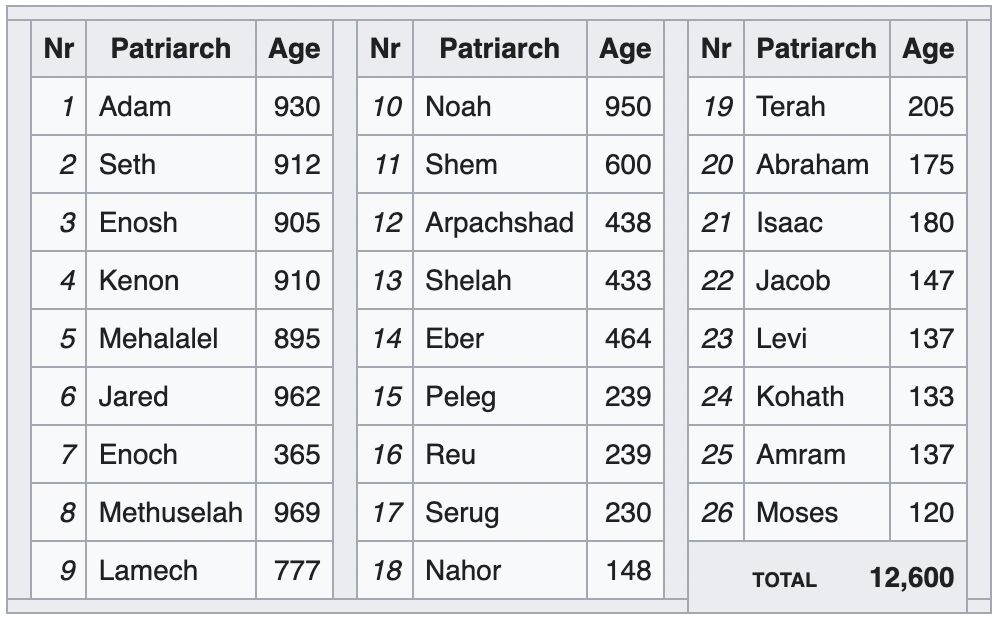
Another point in favor of the 70-year-old hypothesis is the intrinsic numeric symbolism. For certain of the especially important biblical patriarchs, significant biblical numbers are associated with their begettal and/or lifespan. Noah was 600 when the Flood came. Shem lived a total of 600 years. Noah’s father Lamech lived a total of 777 years (a sum of perhaps the most significant and repeated number in biblical numerology, seven). The sum total of all the lifespans of the figures in the biblical genealogy from Adam to Moses is 12,600 (see table, left)—a figure evenly divisible by each of the biblically significant numbers 7, 12, 40, 360, 600, 1,260 and 2,520.
The number 70, of course, is itself a highly symbolic and significant number. Is it just by chance that it is linked to the birth of the most significant patriarchal figure, Abraham? Or should it instead be linked to one of his siblings, for whom we know almost nothing about—with a comparatively numerically insignificant number applied to Abraham instead?

Then there are the records of the various early historians. Josephus, again, wrote that Terah was 70 when Abram was begotten. The first-century Jewish philosopher Philo, writing several decades earlier, took Terah’s age to be 70. And this same theme is not only found in Jewish or Christian sources: The prominent Muslim historian Ibn Kathir (1300–1373), for example, gives “Tarakh’s” age as 75 when “Ibrahim” was born. The slight difference in age, importantly, attests to this being derived from an independent calculation—yet it only points to the same ballpark age for the begettal of Abraham.
A point often brought up in relation to this subject should be mentioned: The Samaritan Pentateuch (SP) is an early Torah variant that gives Terah’s age at death as being 145, rather than 205. Philo follows suit, in attributing 145 years to Terah (in contrast to the 205 years of the Masoretic and Septuagint texts, as well as that of Josephus). This alternate opinion would put Terah’s death and Abram’s departure at the same time (in conjunction with Abram being born in Terah’s 70th year). Some 70-year proponents, therefore, prefer to adopt this variant.

I find this unlikely based on other deliberate chronological alterations in the SP text; this would also interrupt the symbolism in the collective lifespans to the time of Moses (equalling 12,600 years). This 145-year SP variant is also at odds with the 205-year unanimity found in the Hebrew Masoretic, Greek Septuagint, Latin Vulgate, Syriac and Arabic versions, as well as in Josephus and other early texts.
There is, of course, room for debate on this issue of Abram’s begettal. But my opinion is that the correct age of Terah at the time of Abram’s conception was indeed 70, based on the most straightforward reading of Genesis 11:26; further, the implication that Terah was still alive when Abram departed from Haran.

But does this mean Stephen’s statement in Acts 7 is in error?
Again, from Acts 7:4: “Then came he [Abraham] out of the land of the Chaldeans, and dwelt in Charran: and from thence, when [other translations, “after”] his father was dead, he removed him into this land.”
Christopher Langley Milton offers the following reconciliation: “The word ‘after,’ or ‘μετά,’ in Greek does not necessarily imply passage of time. See Perseus. Alternatively, an interpretation of the text could read, ‘From Haran (which is where his father died) God had him move …’.”
This is one recourse of explanation. But there is another alternative. For ironically, Stephen’s assertion is one that is still perpetuated within Jewish communities, by those believing Terah to have begotten Abram at 70 and Abram to have left Haran while his father was still alive. How?

The Man Who Fell Short
Despite Acts 7:4 appearing to be a “problem” passage for Christians—as it is occasionally mischaracterized—this is hardly an issue of validating Christian scripture. As we have seen above, this tension about when Abram departed can already be seen from the likes of Philo and in the Samaritan community—independent from and prior to the New Testament entirely—in providing a lower date of death for Terah (145), thus allowing Abram’s departure to occur afterward. (If anything, such a variant in the date of death for Terah would only serve to support the 70-year figure for the birth of Abram as the correct original interpretation.)
Why this tension? The answer comes from the story flow contained strictly within Genesis 11:32-12:1. The circa fifth-century c.e. Genesis Rabbah explained:
And Terah died in Haran (Genesis 11:32), which is followed by Now the Lord said unto Abram: Get thee (lek leka) [Genesis 12:1]. R. Isaac said: From the point of view of chronology a period of sixty-five years is still required [to bring the narrative to the death of Terah]. But first you may learn that the wicked, even during their lifetime, are called dead. For Abraham was afraid, saying, ‘Shall I go out and bring dishonour upon the Divine Name, as people will say, “He left his father in his old age and departed”?’ Therefore the Holy One, blessed be He, reassured him: ‘I exempt thee (leka) from the duty …. Moreover, I will record his death before thy departure.’ Hence, ‘And Terah died in Haran’ is stated first, and then, Now the Lord said unto Abram, etc. (Midrash Rabbah, translation Rabbi Dr. H. Freedman and Maurice Simon, 1961)
Note that from the outset, Terah led his family on their journey from Ur to Canaan. Genesis 11:31 reads: “And Terah took Abram his son, and Lot the son of Haran, his son’s son, and Sarai his daughter-in-law, his son Abram’s wife; and they went forth with them from Ur of the Chaldees, to go into the land of Canaan; and they came unto Haran, and dwelt there.” Abraham’s father went only as far as Haran, electing to stop and “dwell” there.
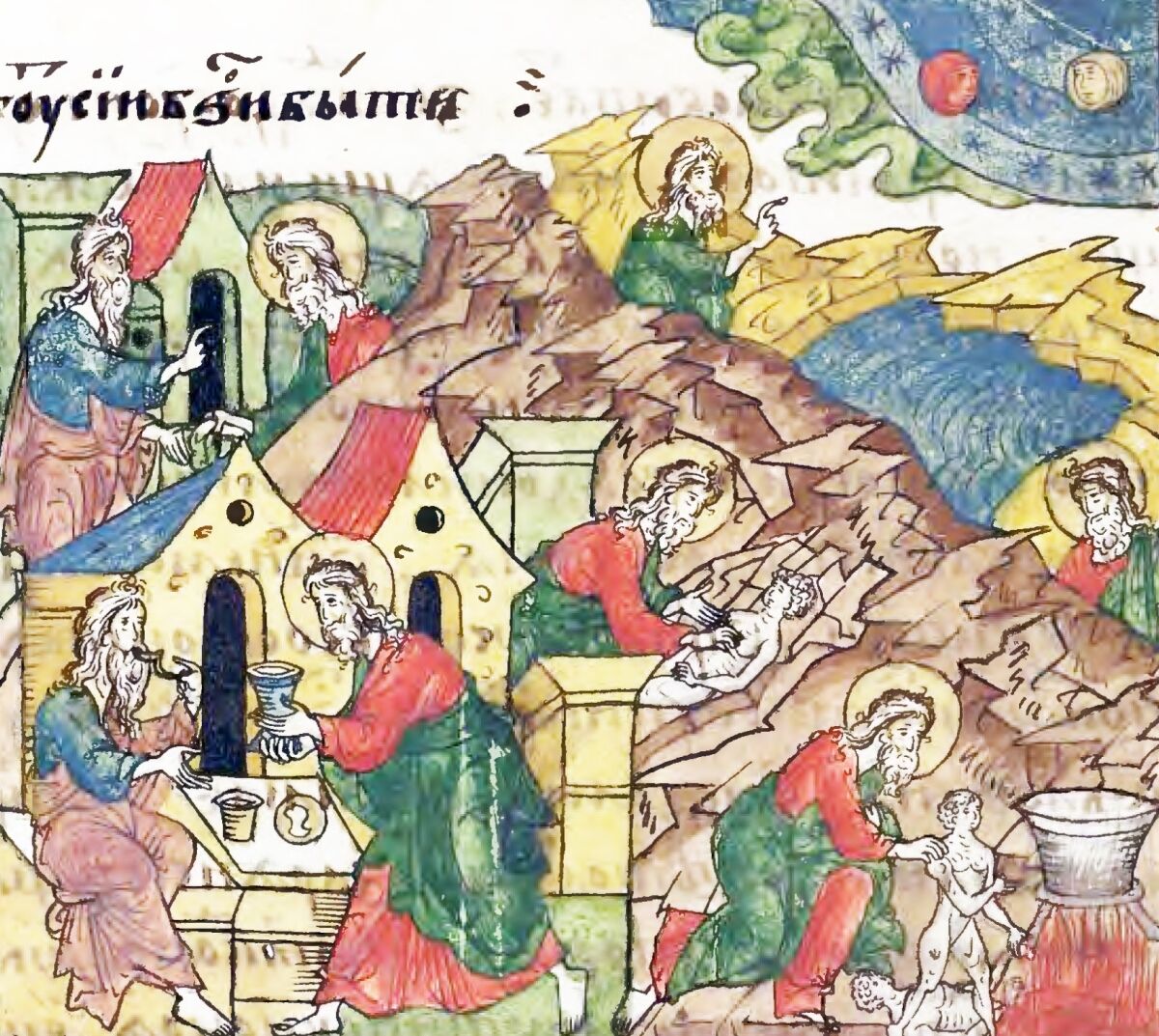
Did the “faithful” Abraham—per Acts 7:2, following the original command from God to leave while still in “Mesopotamia, before he dwelt in Charran”—only go partway in his journey, before stopping for a significant length of time to settle in Haran with his father?
Here we must fill in a little detail about Terah. Little is contained in the biblical account about him. Jewish tradition holds that Terah was a polytheist and idolater—this, based on Joshua 24:2 (“Terah, the father of Abraham … served other gods”)—but that he repented (Genesis Rabbah 30), leading his family on their journey out of Mesopotamia. A man who left with the original intent “to go into the land of Canaan” (Genesis 11:31)—yet who only went partway, prematurely ending his journey in electing to dwell in Haran. Thus, as explained by these later sources, Terah concreted his legacy as a man who fell short—a man unable to commit himself to go all the way—a man who, in a sense, died spiritually in Haran, following which Abram continued and completed the journey with Sarai, Lot and their families into Canaan. This, befitting the words given to Abram in Genesis 12:1: “Get thee [לך לך, literally “Go for yourself”] … from thy father’s house ….”
On this basis of Abram’s departure prior to Terah’s physical demise at Haran, might we identify any moment during Abram’s sojourn in Canaan at which his father finally did die? There is an intriguing possibility.
News Comes From Haran
With Terah begetting Abram at the age of 70 and then living on to the age of 205, this would put his death at Abraham’s age of 135. Is there anything notable in the biblical account relating to this general time frame in Abraham’s life?
Colin Heath offers the following (emphasis added):
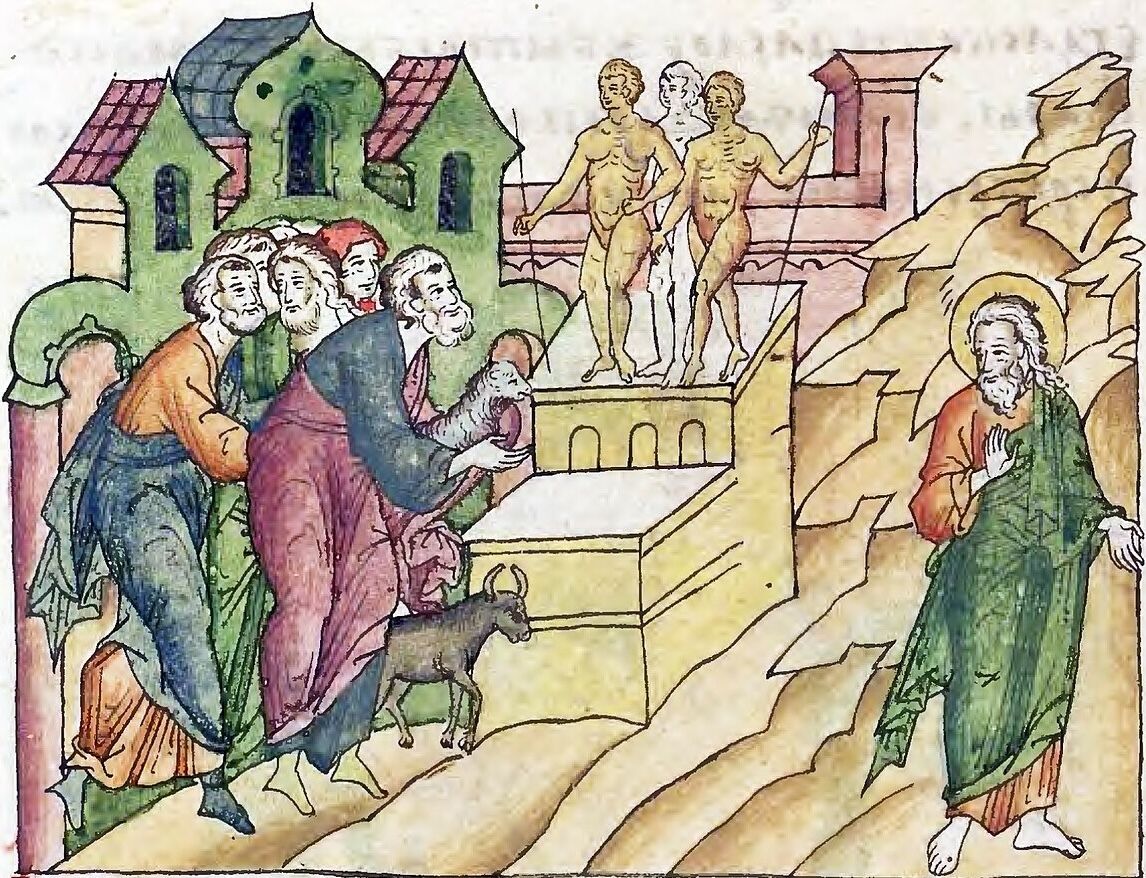
If one looks carefully, there is a subtle indication that Terah had died some time after Abraham entered the land of Canaan. Sarah died at 127 (Gen 23:1). As Abraham was about 10 years older than Sarah (Gen 17:17), Abraham would have been about 137. Prior to Sarah’s death, news came from Haran concerning the family of Nahor (Gen 22:20-24). … [T]he indication is that the news, which came as a result of a messenger being sent from Haran to Abraham, came because his family was sending news of the demise of Terah. (“The Death of Abraham’s Father”)
It does seem strangely suspicious that, just prior to this age point of 137, Abraham received a lengthy update from Haran about the state of his family, including the news of numerous children born. What could have prompted the sending of such otherwise sorely belated news at this particular time? Could it have been an update spurred by news of the death of Terah?
We can only speculate. Nonetheless, the timing is certainly interesting.
A Final Word … on Noah?

One interesting objection to Abram being begotten by Terah at the age of 70 that sometimes arises is that this would put him on the scene nearly 60 years prior to the death of Noah. That being the case, why is there no mention of Noah in relation to Abraham in the biblical text? Surely there should be interaction between these two important figures?
Actually, the Bible contains very little—next to nothing—about interactions between significant patriarchal or prophetic figures whose lifespans overlap. Take the eighth-century b.c.e. prophets as a case in point. “What is fascinating is that the prophets Isaiah, Amos, Hosea and Micah were all contemporaries,” wrote Dr. John Ahn in “Minor Prophets in the Bible: Amos.” “In other words, they prophesied and ministered about the same time. Yet not one of them ever mentions another” (emphasis added). This is especially notable, given the extremely close territorial proximity and message of these contemporaries.

Noah aside: According to the numbers contained in the Masoretic Text, Shem was on the scene throughout Abraham’s life—actually outliving Abraham (with Abraham being born to a 70-year-old Terah; if 130 years, this would put Shem’s death narrowly before Abraham’s). Yet Shem is not named anywhere during the lifetime of Abraham (putting aside one traditional opinion that he was one and the same as Melchizedek). Such associations between leading biblical figures are simply not important to the biblical account.
A final note on the subject of Terah: See “Has Abraham’s Father, Terah, Been Discovered?” for a curious link to a similarly-named individual, in a similarly-named place, on the scene at a similar time—in relation to this article, chronologically better fitting the shorter timeline for Terah’s begettal of Abram.
