
It was a celebration unlike anything the people of Israel had ever experienced. The streets of Jerusalem were filled with citizens from all over the kingdom. Everyone had gathered for one purpose: to keep Pesach (Passover) and Chag HaMatzot (the Feast of Unleavened Bread).
This particular festival year, in the late eighth century b.c.e., was so exciting and joyous the people decided to add an extra seven days “with gladness.” It was an exhilarating and altogether unique experience. “So there was great joy in Jerusalem; for since the time of Solomon the son of David king of Israel there was not the like in Jerusalem” (2 Chronicles 30:26).
Why so much joy?
King Hezekiah was on the warpath, eradicating false religion and pagan worship from Judah and returning the nation to true worship centered around the temple in Jerusalem. The results were stunning: “Now when all this was finished, all Israel that were present went out to the cities of Judah, and broke in pieces the pillars, and hewed down the Asherim, and broke down the high places and the altars out of all Judah and Benjamin, in Ephraim also and Manasseh, until they had destroyed them all. Then all the children of Israel returned, every man to his possession, into their own cities” (2 Chronicles 31:1).
Today there is a lot of skepticism about whether Hezekiah’s reforms actually took place. The rise of modern scholarship and textual criticism has seen many scholars cast doubt on the biblical account. Some scholars suggest Hezekiah’s reform was simply a projection of the acts of Josiah; others claim the Assyrians were actually responsible for desecrating Judah’s idols, but their actions were attributed to Hezekiah by the biblical authors.
“The historicity of Hezekiah’s reforms is a hotly debated topic, and as the historical credibility of the biblical texts gradually eroded, so the reliance on archaeological data increased,” wrote Prof. Avraham Faust from Bar-Ilan University (“Hezekiah’s Reform? A View From Tel ‘Eton on the Religious Development in Judah”). What does the archaeological data indicate? Let’s review the evidence of Hezekiah’s reforms, which now includes data from a site new to this debate: Tel ‘Eton.
Tel ‘Eton
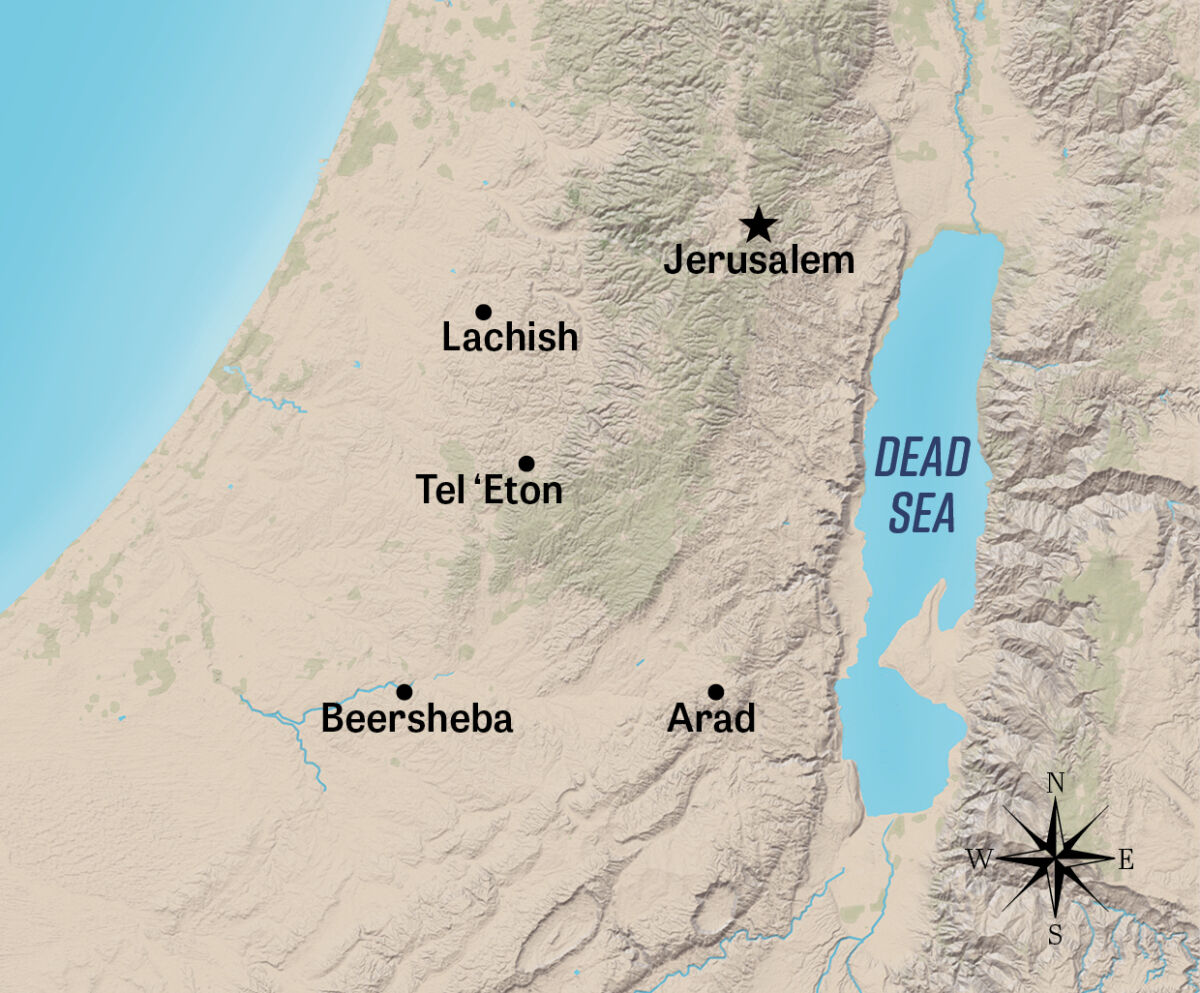
Tel ‘Eton is located 11 kilometers (7 miles) southeast of Lachish, Judah’s second city. The mound of Tel ‘Eton has been excavated over 10 seasons between 2006 and 2015 by a team from Bar-Ilan University led by Professor Faust.
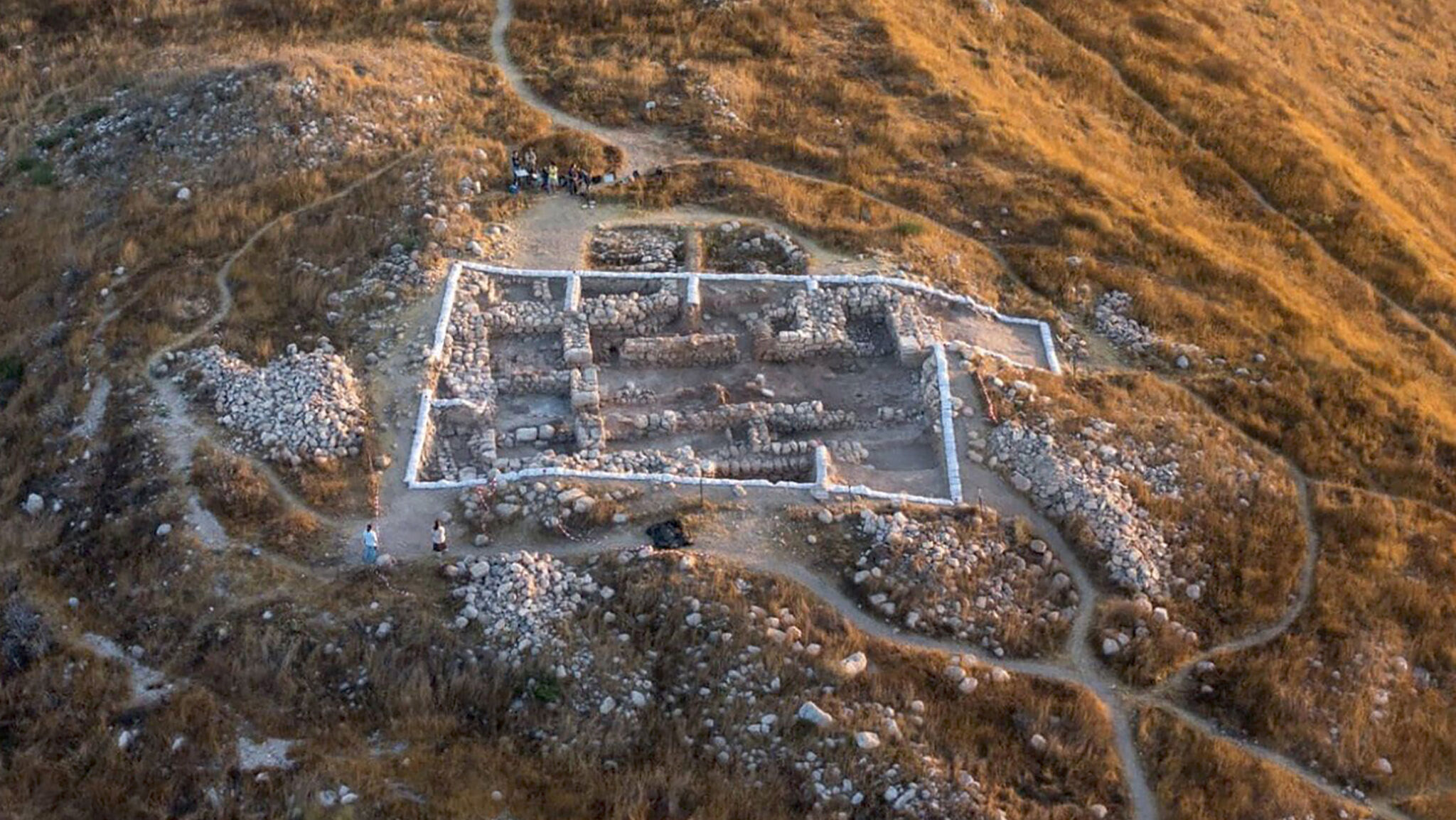
In Area A, excavators uncovered the remains of a large four-room house. Identified as Building 101, the structure is informally called the “governor’s residence,” due to its monumental size. According to Professor Faust, Building 101 would have likely housed multiple families. (For more on four-room houses, see our article “Let the Homes Speak!”) Radiocarbon specialists have dated the original construction of the “governor’s residence” to the 10th century b.c.e.
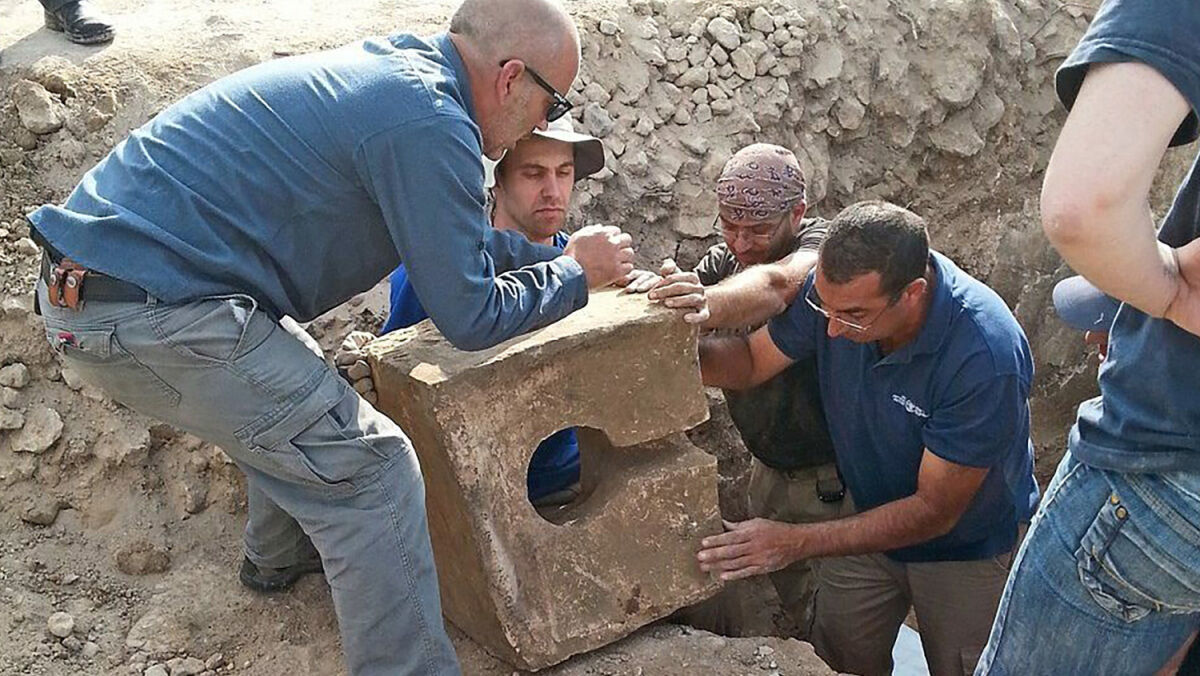
The walls of Building 101 were built on top of continuous foundations, where a long footing wall supports multiple above-ground walls. In its southwestern and largest room, excavators encountered a later dense platform of stones. Integrated into this platform was one “exceptionally large, worked stone” that had been broken in two. This stone sat on top of the continuous foundation, indicating the stone had been there since initial construction of the building.
Faust identified this unique stone as a massebah, or standing stone. Massebot were common in ancient Israel and sometimes functioned as idols in domestic cults. (For an in-depth explanation of these stones, read “The Sacred Standing Stones of Israel.”) Professor Faust suggested that the stone at Tel ‘Eton was a central part of the domestic cult of the people living in Building 101.
It seems the platform, which covered only part of the room, was constructed to conceal the massebah that was taken down. This suggests the object still held some sentimental value to the inhabitants of Building 101. Integrated into the platform, the stone no longer held sacred value, but the memory of the objects presence was preserved.
Since this standing stone was incorporated into the platform in the late eighth century b.c.e., before the Assyrian invasion—as the platform was in use before the destruction of the house, Faust has associated its dismantling with the reforms of Hezekiah. “It appears that the inhabitants of Building 101 abided by the new religious norms,” Faust wrote, “but were not happy to desecrate an element that was the focus of their household worship for so long. They, therefore, dismantled the massebah and incorporated it into the new platform.”
Arad, Beersheba and Lachish
Before the discovery of this standing stone at Tel ‘Eton, the archaeological debate about Hezekiah’s reform mainly revolved around evidence from three sites: Arad, Beersheba and Lachish. Each of these sites shows signs of cult destruction during Hezekiah’s reign; although some of the dating is disputed.
In the 1960s, archaeologist Yohanan Aharoni uncovered a temple at Tel Arad. The incense altars at this temple have been associated with the idolatrous reign of Hezekiah’s evil father, Ahaz. Over time, the cultic use of this pagan temple came to an abrupt end. Aharoni suggested that this cancellation occurred during the reforms of King Josiah. However, Prof. Ze’ev Herzog from Tel Aviv University constrains the use of the temple to the eighth century b.c.e. as there was no evidence of burning or destruction from the Assyrian invasion. Therefore, he connects the cancellation to Hezekiah’s reforms.
Though its cultic elements were abolished, many parts of the original temple were integrated into later phases of construction.
Aharoni also excavated Beersheba, where he found evidence of a large four-horned altar made of ashlar stones. The altar was destroyed and integrated into a wall belonging to the construction of Stratum ii, which was destroyed by the Assyrians, demonstrating that the altar was demolished and its stones reused before Sennacherib’s invasion.
Both the Arad temple and Beersheba altar have long been connected to Hezekiah’s reforms. “[A]lthough we do not have an archaeological proof that the intentional abolishment of the cultic centers of Arad and Tel Beer-sheba was made under orders from Hezekiah,” wrote Professor Herzog, “the combined archaeological and biblical data point in favor of this possibility” (“Perspectives on Southern Israel’s Cult Centralization: Arad and Beer-Sheba”).
More recently, evidence of King Hezekiah’s reforms has also been uncovered at Lachish. In one of the rooms of Lachish’s six-chambered gate, archaeologists Saar Ganor and Igor Kreimerman found the remnants of a gate shrine that was desecrated and replaced by an unused toilet. This toilet was later buried in the debris of the Assyrian destruction.
When was this cultic gate shrine desecrated? “The desecration of the shrine by breaking the horns of the altars and placing a latrine in the holy of holies can be reasonably associated with Hezekiah’s cultic reform,” wrote Ganor and Kreimerman (“An Eighth-Century b.c.e. Gate Shrine at Tel Lachish, Israel”).
Tel ‘Eton can now be added to the sites that demonstrate evidence of Hezekiah’s reforms. But this topic is not without debate.
Objection—Assyria?
Critics of the historicity of King Hezekiah’s reforms say the destruction at these sites is evidence of Assyria’s invasion at the end of the eighth century b.c.e. According to the skeptics, biblical authors attributed this destruction to Hezekiah to venerate his reign and reputation.
This argument is turned on its head, however, by the archaeological evidence uncovered at both Tel ‘Eton and Beersheba.
The removal and concealment of the Tel ‘Eton religious stone dates to several years before Assyria’s invasion of Judah. The platform it was integrated into was in use when the house was destroyed. Clearly, there was a deliberate cancellation of this domestic religious shrine before the Assyrians devastated the land of Judah.
The other sites tell the same story. Although the evidence from Arad and Lachish is a little more debated stratigraphically and interpretatively, Beersheba definitely shows that the altar was destroyed before the Assyrian destruction: The wall its remnants were integrated into was part of that destruction. “One way or another, the changes in at least some of the sites clearly preceded the arrival of the Assyrian army and cannot be associated with events surrounding the Assyrian conquest,” Faust wrote.
Therefore, these changes must be associated with an event preceding the Assyrian conquest at the end of the eighth century b.c.e. Of course, this could be an event that history did not record. However, as Faust wrote regarding Tel ‘Eton, “it is far more probable that the changes in Building 101 had to do with a broader event or at least more wide-reaching processes.” The most logical explanation, then, is King Hezekiah and his reforms documented in the biblical text.
Other Objections
Evidence for cultic sites during the Iron Age ii is quite limited. “We must remember that very few Iron Age ii Israelite cultic sites were excavated,” Faust wrote. And yet of the few cultic sites excavated, “all eighth-century cultic sites offer evidence for cult cancellation or, at least, alteration.” In short, archaeology confirms the destruction of various cultic sites in Judah in the late eighth century b.c.e., the time of King Hezekiah.
Part of the reason for the lack of evidence of early cultic behavior is Hezekiah’s destruction, which, according to the biblical text, was extensive. If the reform and destruction of idolatrous sites was indeed as extensive as Chronicles records, then we should not expect much evidence of local or domestic cultic activity continuing from the eighth to the seventh century b.c.e.
As it turns out, “there is not a single known (excavated) temple or cultic building that continued uninterruptedly from the eighth to the seventh century b.c.e.,” Faust wrote. “Hence, the limited evidence does not reflect the lack of evidence but is indicative of the nature of the cult and the scarcity of temples at the time.”
The few sites where we do find cultic evidence only serve to give possible context to how these cult desecrations may have taken place.
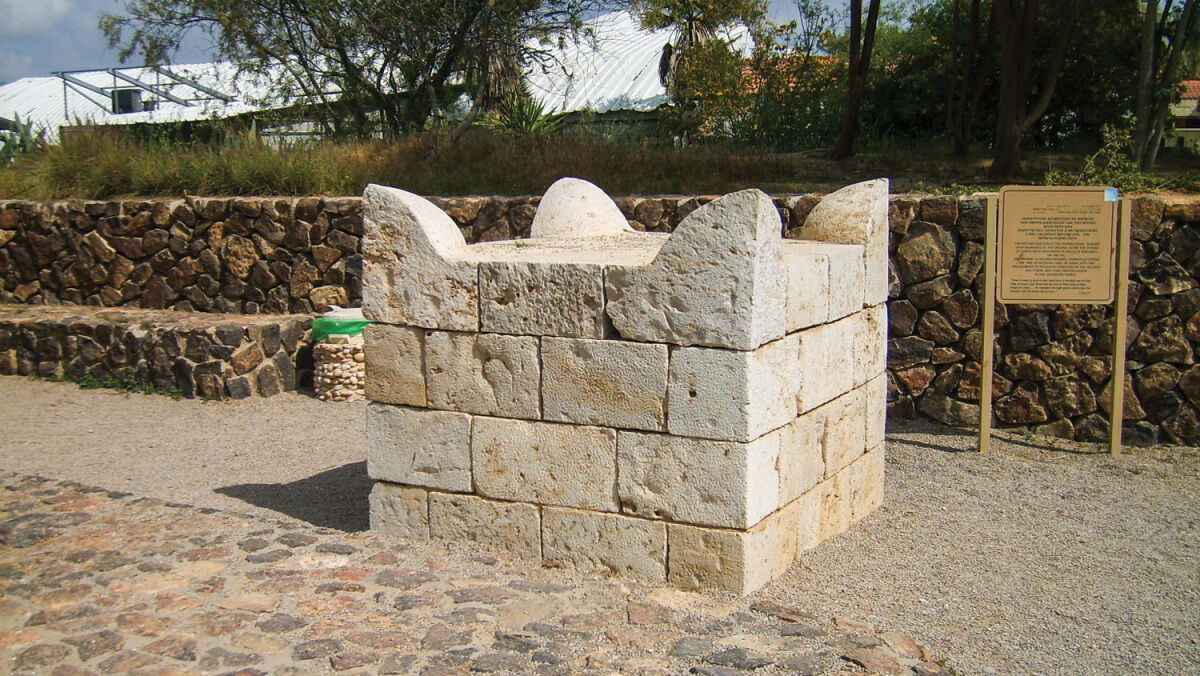
This leads us to another objection: Some critics claim that the inconsistency in destruction methods between sites is evidence against Hezekiah’s singular cultic reform.
In a 2022 article from TheTorah.com, “Hezekiah’s Reform: The Archaeological Evidence,” Dr. Sabine Kleiman questioned the evidence from Lachish, Beersheba and Arad used to support Hezekiah’s reform. “Even aside from the alternative interpretations for each site presented above, the three parade examples for Hezekiah’s reform show a clear inconsistency,” she wrote.
In Lachish, the site was supposedly defiled by vandalism and the installation of a toilet. Similarly, in Beersheba, the altar is treated as scrap, though we have no idea what happened to the cultic site. In Arad, however, the objects are buried with care [like at Tel ‘Eton] and treated as retaining a residual holiness.
This suggests that these three sites should not be seen as part of a single cultic reform dictated by the reigning king, and probably carried out, or at least overseen, by his representatives from Jerusalem, as such a reform would have left more consistent evidence.
Yet the differences in destruction tactics evidenced at each site does not mean that these cancellations were not part of a singular reform initiated by King Hezekiah in Jerusalem. The biblical text gives the big overview, saying that they continued “until they destroyed them all.” It does not reveal the specifics of how the pagan idols were destroyed. If representatives were carrying out the destruction, then the method of destruction was likely different at every site.
Just because the Bible does not go into great detail about Hezekiah’s reforms doesn’t mean it didn’t happen. “It is hardly likely that the [biblical] author had exact and detailed information about the actions as performed in each city of Judah,” Herzog wrote (op cit).
Looking at the first verse of 2 Chronicles 31, it is clear the reform was carried out by the general population. It was the people themselves who “broke in pieces the pillars [massebot], and hewed down the Asherim, and broke down the high places and the altars.”
“The fact that the archaeological picture is varied indicates that the orders were interpreted differently in each site,” continued Herzog. “In my view, the lack of match between the biblical orders and the archaeological reality strengthens the historical reliability of the reform, rather than weakens it ….”
This evidence provides possible insight into how these reforms were received among the general populous, rather than discrediting them. The difference in how these cultic cancellations occurred provides amazing archaeological context for the passage. The way the massebah at Tel ‘Eton was preserved in the stone platform may indicate that some of Hezekiah’s subjects were not entirely supportive of his reforms—something also witnessed at Tel Arad.
The Reform’s Reception
According to the Bible, Hezekiah’s reforms were so widespread that they were even well known among the Assyrian high command during the failed siege of Jerusalem. 2 Kings 18:22 records King Sennacherib’s general, Rabshakeh, threatening the royal officials of Jerusalem: “But if ye say unto me: We trust in the Lord our God; is not that He, whose high places and whose altars Hezekiah hath taken away, and hath said to Judah and to Jerusalem: Ye shall worship before this altar in Jerusalem?”
According to Jewish tradition, this Rabshakeh may have been an Israelite traitor, based on his ability to speak Hebrew and his knowledge of these reforms.
The account in Chronicles records a message sent from Sennacherib himself: “Doth not Hezekiah persuade you, to give you over to die by famine and by thirst, saying: The Lord our God will deliver us out of the hand of the king of Assyria? Hath not the same Hezekiah taken away His high places and His altars, and commanded Judah and Jerusalem, saying: Ye shall worship before one altar, and upon it shall ye offer?” (2 Chronicles 32:11-12).
The full account makes clear that both Rabshakeh and Sennacherib were trying to appeal to the dissatisfaction with and apprehension of the religious reforms. This fits well with the varied evidence from Lachish, Beersheba and Arad, but especially Tel ‘Eton. Perhaps the inhabitants of Building 101 found it hard to let go completely of their idolatrous past.
Why Doubt?
The period of Hezekiah’s reign is one of the most archaeologically attested periods in biblical history. We have evidence of the existence of Hezekiah from both Assyrian sources and his extant bullae. We have evidence of the Assyrian campaign in Judah. Additionally, a lack of a destruction layer from Jerusalem at this time proves the preservation of the capital city. All of these elements corroborate the biblical account.
The finds in Arad, Beersheba, Lachish and Tel ‘Eton add to the evidence verifying the accuracy of the Bible’s account of Hezekiah’s reign.
Hezekiah’s religious reform did take place. The discovery of this standing stone at Tel ‘Eton now gives us an even better understanding of how it might have taken place and how it was received.
Instead of disproving the Bible, the archaeological evidence brings this great history to life.
