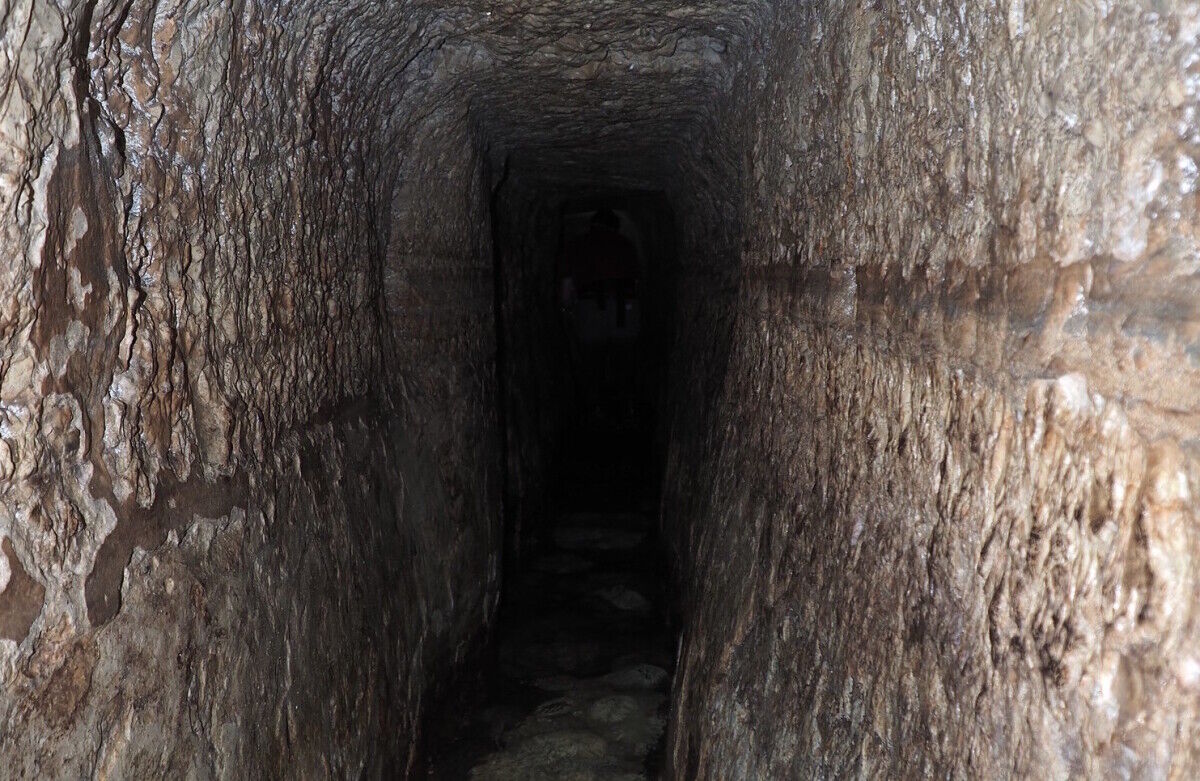
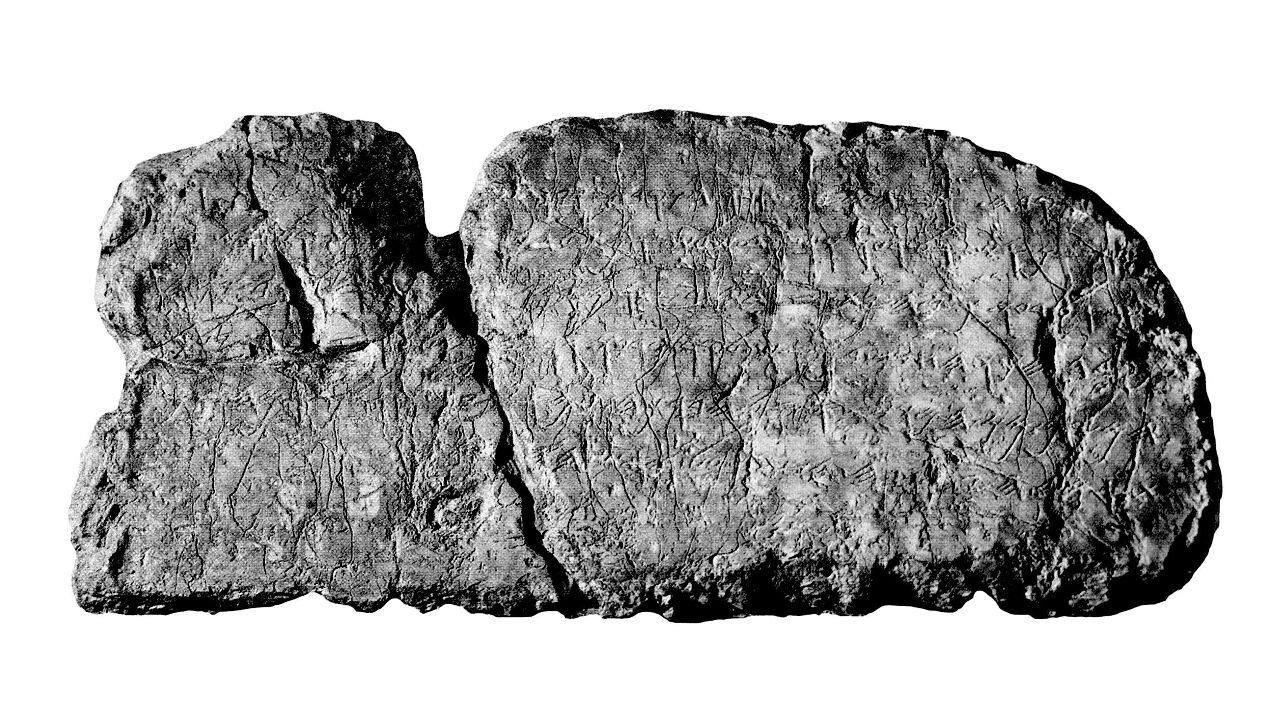
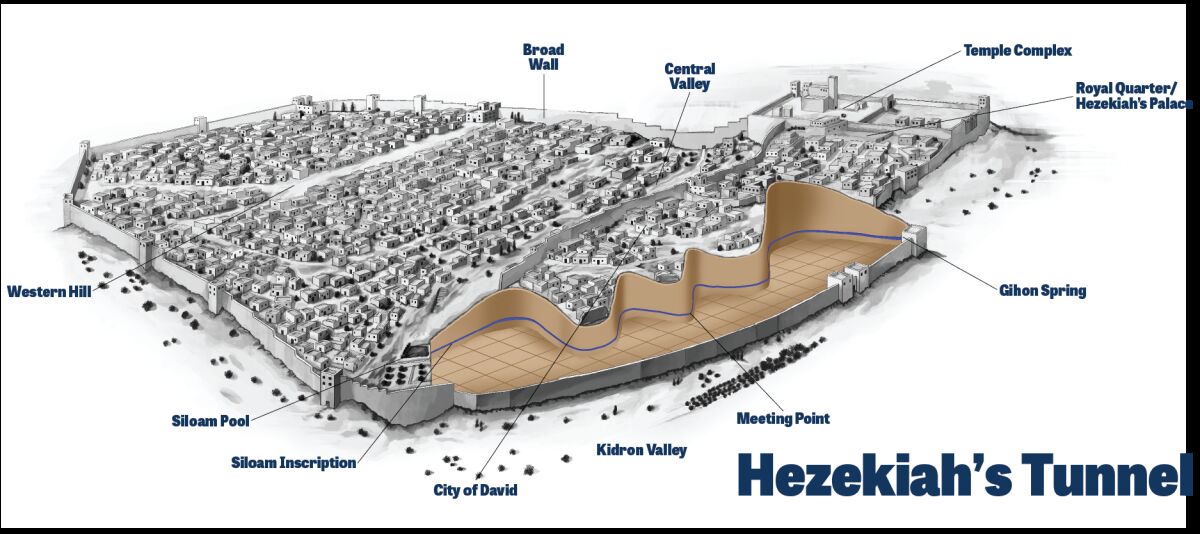
The Siloam Inscription—a bedrock-carved paleo-Hebrew text discovered near the outlet of Hezekiah’s Tunnel in 1880—is famous as one of the most important and lengthy biblical-period inscriptions. The eighth-century b.c.e. text, currently housed at the Istanbul Archaeology Museum, commemorates the feat of carving the impressive 533-meter-long tunnel from both ends, bringing the vital water of the Gihon Spring securely around to the western side of the city to a catchment area known as the Siloam Pool.
The ancient project, completed in advance of Sennacherib’s Assyrian invasion, is best summarized in 2 Chronicles 32: “And when Hezekiah saw that Sennacherib was come, and that he was purposed to fight against Jerusalem, he took counsel with his princes and his mighty men to stop the waters of the fountains which were without the city; and they helped him. So there was gathered much people together, and they stopped all the fountains, and the brook that flowed through the midst of the land, saying: ‘Why should the kings of Assyria come, and find much water?’ … This same Hezekiah also stopped the upper spring of the waters of Gihon, and brought them straight down on the west side of the city of David” (verses 2-4, 30).
Over the past century and a half, much has been written and theorized about the nature of the Siloam Tunnel—both exactly how and when this remarkable conduit was constructed, and how it functioned—with new research coming out on a relatively regular basis. Similarly, the inscription itself, commemorating the feat, has been translated and written about at length.
Yet while translations of the text are generally consistent, one damning section within the inscription has remained difficult to articulate, with a key word often left untranslated—generally taken to be a technical term for some kind of cleft in the bedrock.
In a new article in the Spring 2026 issue of Biblical Archaeology Review, one scholar proposes a new—and rather darker—interpretation: that this section of text is in fact referring to some kind of fatal accident while digging the tunnel—and that the Siloam Inscription is instead effectively a memorial to those who lost their lives.
Dedication—From Whom to Whom?
“Jerusalem’s Siloam Tunnel Inscription is traditionally interpreted as a commemorative text celebrating the completion of the project,” began Ariel Cohen, associate professor of linguistics at Ben Gurion University, in his article “The Siloam Tunnel Inscription: For the Living or the Dead?” “However, placing an inscription inside a dark tunnel, where nobody could read it, just makes no sense! Let me propose a better interpretation.”
Cohen highlighted the unusual location of the inscription within the tunnel, and its execution by those familiar with the project—the “broad consensus [being] that the inscription was authored by the stonecutters themselves,” based on its firsthand accounting of events and reference to details such as tools and measurements. At the same time, the inscription is totally devoid of the typical features of public inscriptions—no mention of who commissioned the tunnel, why and when. As such, this seems to have been a commemorative inscription placed within the dark recesses of the tunnel by the workers for the workers. Why? Was it simply a matter of pride, for a job well done—the proverbial “pat on the back”—or could there be something more?
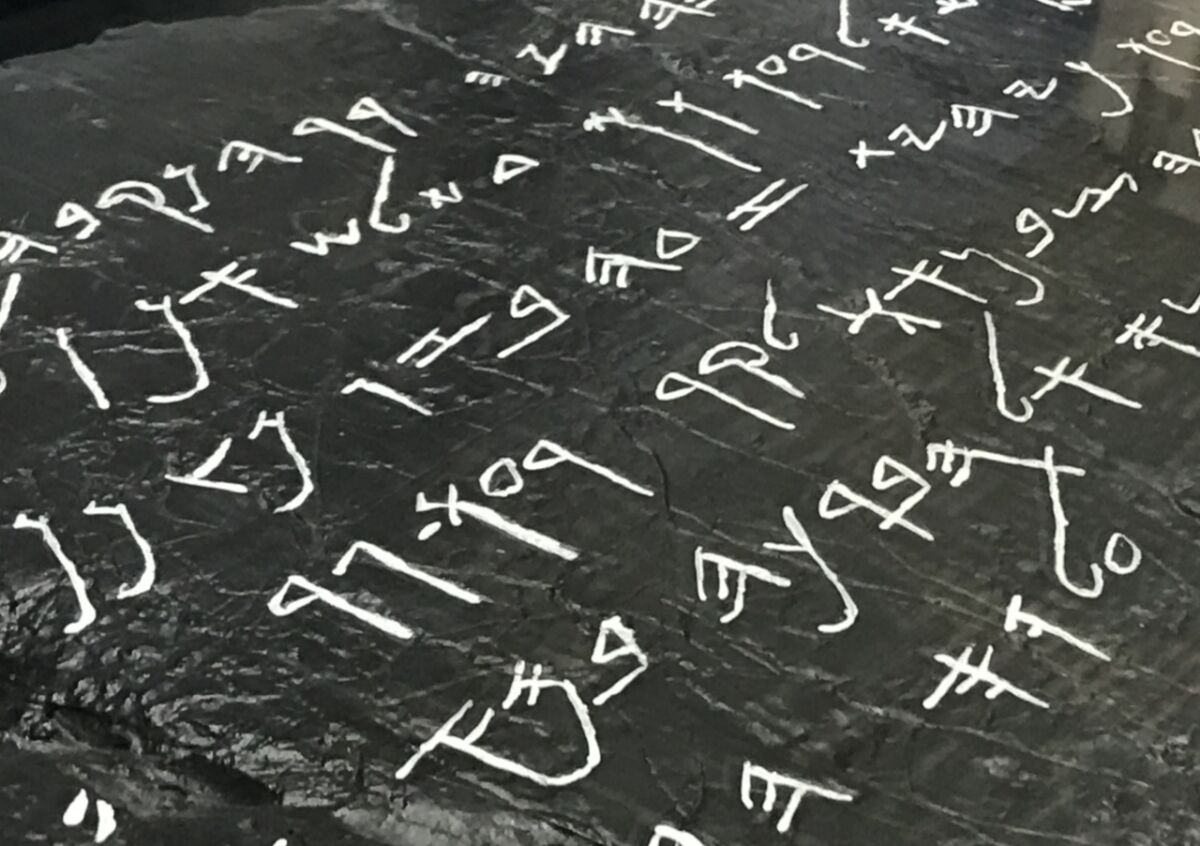
Professor Cohen believes so. The following is a fairly standard translation of the main part of the Siloam Inscription text, as provided in his article:
While [the stonecutters were swinging] the axe one toward the other, and while there were still three cubits to be cut th[rough, there was hear]d the sound of one calling to the other, for there was a zdh in the rock on the right and on the [le]ft.
And on the day of the cutting-through, the stonecutters were hewing each toward the other, axe upon [a]xe. And the water flowed from the outlet to the pool for one thousand [and t]wo hundred cubits. And one hu[nd]red cubits was the height of the rock over the heads of the stonecutter[s].
The untranslated word zdh (זדה) in the upper paragraph is confounding. It is generally taken to refer to some kind of fissure in the bedrock encountered as the workmen were cutting from either end, which allowed them to hear one another while there were just 3 cubits (1.4 meters) left to cut. Yet “studies have shown that, in this type of rock, hearing distance is substantially longer,” wrote Cohen—let alone with the aid of a fissure.
Zdh—What?
Professor Cohen noted the rarity of the word zdh (זדה), “but its probable root (z-w-d/z-y-d [זוד/זיד]) appears several times [in the Bible]. This root literally refers to a liquid that is overflowing.
It is metaphorically extended to the sense of breaking boundaries, that is, doing evil deeds. Interestingly, in Psalm 124:4-5, this root applies to water, where both literal and metaphorical interpretations are appropriate: ‘The water overwhelmed us … the overflowing/evil water went over our souls.’ It seems likely, therefore, that zdh in the inscription refers to a sudden and disastrous overflow of water ….
The exact spelling of zdh (זדה) is found once in the Bible—in Jeremiah 50:29, a strange metaphorical passage of condemnation against Babylon. “Call together the archers against Babylon, All them that bend the bow; Encamp against her round about, Let none thereof escape; Recompense her according to her work, According to all that she hath done, do unto her: For she hath been arrogant [זדה] against the Lord, Against the Holy One of Israel.” Translations variously render this word as arrogant, proud, defied, presumptuous, resisted, set up against, raised, lifted up. Gesenius’ Hebrew-Chaldee Lexicon likewise links this word with the root זוד/זיד, “to boil, to boil over (speaking of water) …. Hence to overflow (speaking of boiling water)”—a word used in the Bible to describe the boiling of water (e.g. Genesis 25:29). In this sense, “it is transferred to the violence or fierceness of a passionate mind … to act insolently, fiercely, wickedly” (ibid)—in a sense, “boiling over,” “bursting forth.”
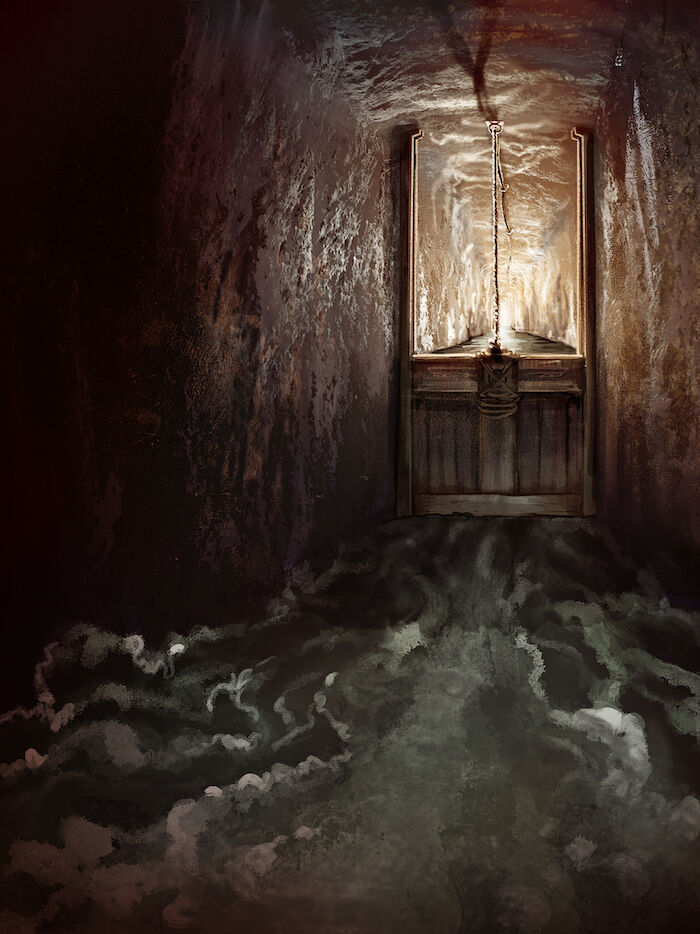
It doesn’t take too much imagination to apply this sense to the digging of Hezekiah’s Tunnel. “Most researchers agree that, before they started digging, the workers would have had to block the flow from the Gihon Spring to keep it from flooding the tunnel,” wrote Cohen. “If this blockage collapsed prematurely, the water would rage into the tunnel and endanger the lives of the workers.” He believes that just such a breach may have happened at the source, accompanied by a frantic voice of warning yelled down into the tunnel as the water rushed in—per the text of the inscription, “there was heard the sound of one calling to the other, for there was a zdh”—causing the deaths of certain of the workers trapped deep within.
“With all this in mind, the text is addressed to one or more workers who died in an accident while digging the tunnel,” concluded Cohen. “The inscription tells them that the sound they had heard just before they died was their comrades crying out a warning about the incoming water. Nevertheless, their death was not in vain, as the work was completed successfully.”
Ill-Advised Initiation?
Professor Cohen’s theory is certainly an interesting, novel take on a long-discussed artifact and sheds a very different light on the inscription, albeit with a reasonable amount of speculation. Time will tell if the interpretation stands up to scrutiny. But it does bring to mind another interesting, unusual biblical passage describing this period in question—Isaiah 22.
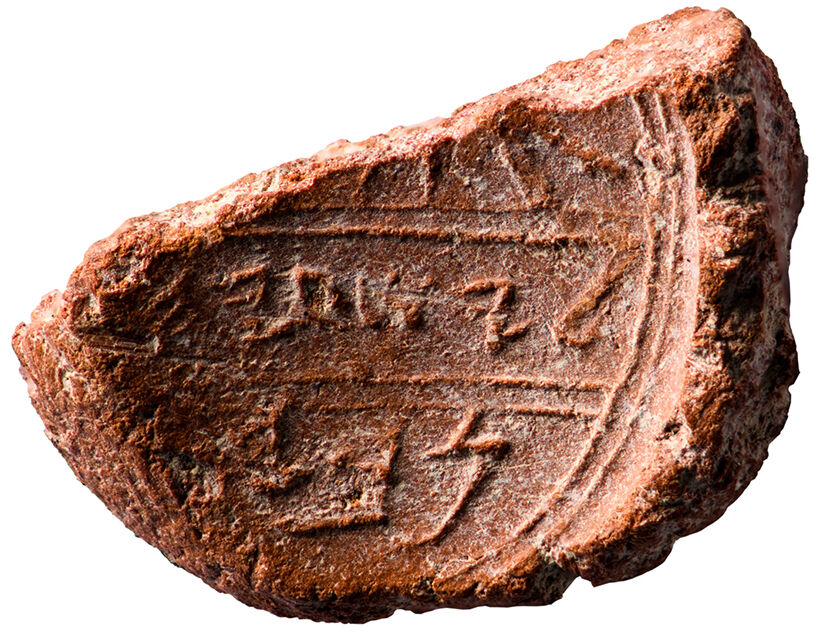
In this chapter, the Prophet Isaiah criticizes some of the siege preparations being made in advance of the Assyrian invasion—not necessarily the precautions themselves, but the misguided spirit in which they were undertaken. This includes criticism leveled specifically at the manipulation of the waterworks.
“Ye have seen also the breaches of the city of David, that they are many: and ye gathered together the waters of the lower pool. And ye have numbered the houses of Jerusalem, and the houses have ye broken down to fortify the wall. Ye made also a ditch between the two walls for the water of the old pool: but ye have not looked unto the maker thereof, neither had respect unto him that fashioned it long ago. And in that day did the Lord God of hosts call to weeping, and to mourning, and to baldness, and to girding with sackcloth” (Isaiah 22:9-12; King James Version). The Prophet Isaiah here condemns ill-advised and self-reliant endeavors, apparently including taking steps to alter features of the city without first “look[ing] to its Maker” and “hav[ing] respect for Him who fashioned it long ago” (verse 11; New King James Version).
These are not the only criticisms leveled by Isaiah at this time—see our article “Hezekiah’s Fatal Miscalculation? Evidence for ‘Trust in That Broken Reed, Egypt’” for more detail on this fascinating subject.
Price Per Person
In the grand scheme of things, the deaths of a handful of workers during the construction of the Siloam Tunnel—if indeed this did happen—would have been completely overshadowed by the brutal destruction and mass slaughter of much of the southern kingdom of Judah during Sennacherib’s slash-and-burn campaign—a regrettable workplace accident that may have been regarded as a comparatively small price in order to shore up the city for siege.
Risk assessments and cost-benefit analyses have always been key to embarking on any hazardous project. At the turn of the 20th century, the inherent risks of shipbuilding led to a considered “norm” of up to one death for every £100,000 spent on a project. Eight workers died during the construction of the RMS Titanic (actually fewer than anticipated, against her £1.5 million price tag); nine, during the construction of her sister-ship the RMS Olympic (which even featured a dockyard shooting, which ironically didn’t claim any lives—as accounted in Stephen Cameron’s Titanic: Belfast’s Own).
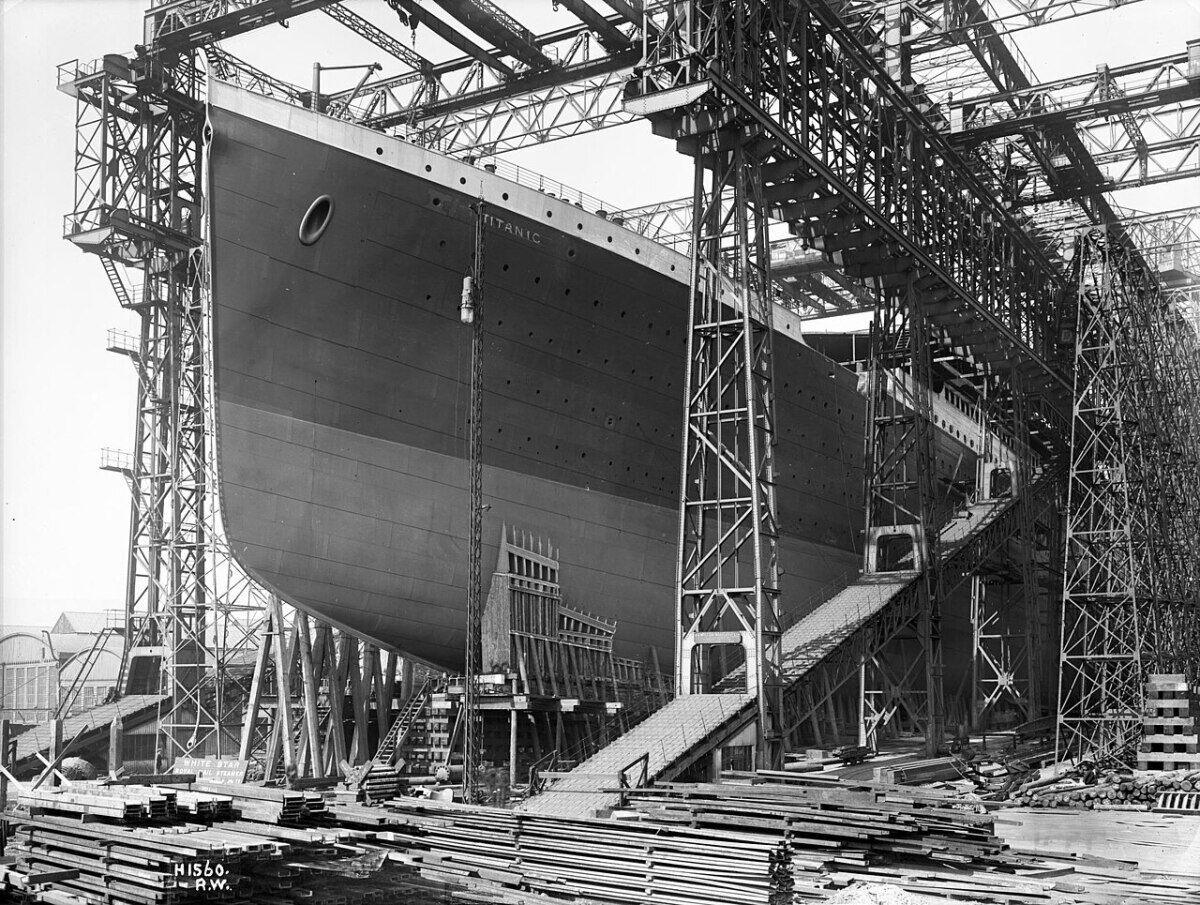
Was the Siloam Tunnel likewise the location of workplace tragedy in a high-stakes situation? And was the Siloam Inscription itself, rather than a tribute to triumph, instead a memorial of tragedy dedicated by the workmen to their fallen fellow compadres?
It’s not an either-or—for even if the inscription does contain reference to a tragic accident, one would still be justified in calling it both. In a sense, it may not be so different from memorials of our own—for even in victory, what are the monuments that populate the landscape? Not so much those celebrating victory, but rather memorials to the fallen—those who gave their lives in the effort.