
What was the state of Gath during the reign of King Hezekiah? Gath is most well known for being the Philistine capital during the 10th and ninth centuries b.c.e. But until recently, not much was known about this city during Hezekiah’s reign. Recent excavations at Tell es-Safi give us more detail about Gath after the ninth century.

Tell es-Safi contains evidence of three destruction layers. It has remains from many different kingdoms, revealing turmoil and continuous upheaval of local government. Archaeological evidence indicates that Gath was a thriving Philistine city during the 10th and ninth centuries b.c.e. But toward the end of the ninth century, Gath was completely destroyed by Syrian King Hazael.
During the beginning of the eighth century, Gath was partially rebuilt. But about 10 years after Hazael’s siege, a massive earthquake leveled the city once again. This earthquake is mentioned in Amos 1 and Zechariah 14.
This is where the kingdom of Judah enters the picture. In an article documenting recent discoveries found in Tell es-Safi, Dr. Jeffery R. Chadwick wrote, “It was … about 750 to 725 b.c.e. that the kingdom of Judah expanded its territorial control westward into Philistia and the coastal plain and occupied Tell es-Safi. … It is noted that King Hezekiah ‘attacked the Philistines as far as Gaza and its territory’ (2 Kings 18:8), an event which may have occurred around 727 b.c.e., during the reign of Hezekiah’s father, Ahaz, with Hezekiah acting as co-regent prince conducting the Judahite military push in Philistia” (“When Gath of the Philistines Became Gath of Judah: Dramatic Glimpse of Biblical Archaeology”).
What archaeological evidence is there of Judahite occupation at Tell es-Safi? And how much did Hezekiah build up this city? The first proof of Judahite occupation is multiple four-room houses that were found on the site, which date to the second half of the eighth century b.c.e. In a recent article about Gath, Prof. Yigal Levin wrote, “The eighth-century b.c.e. houses excavated in Area F, near the summit of the tell, seem to be of the type often referred to as ‘four-room’ or ‘pillared’ houses, which are typical of both Iron Age Israel and Judah” (“‘Tell It Not In Gath’ (Micah 1:10): What Is Gath Doing In A List Of The Destroyed Towns Of Judah?” Ägypten und Altes Testament 90, 2018). It is clear that Tell es-Safi was occupied and rebuilt by Judah. The Iron Age houses from this time are of Judahite design and hundreds of Judahite household items were found within these structures. (For more on four-room houses, read “Let the Homes Speak!”).
One especially important item found within these houses were Judahite stamps. “Additionally, several lmlk (‘belonging to the king’) stamp impressions, typical of the kingdom of Judah in the late eighth and early seventh centuries b.c.e. were found in the destruction layer of the city,” wrote Levin. “The eighth-century b.c.e. remains at Tell es-Safi clearly show that the former city of the Philistines was now part of the kingdom of Judah.”
The great earthquake in the early eighth century leveled the walls of the structures on Tell es-Safi, but the foundations of those structures remained intact. When rebuilding Gath, the Judean builders built their new structures on the previous foundations. “In order to erect their own new structures, rather than remove the collapses, they [the Judean builders] built terrace walls around the collapses and covered the brick debris over with fill soil, ultimately flattening it even with the tops of the terrace walls to create new flat spaces upon which to build,” Chadwick explained.
This reuse of pre-earthquake foundations shows two things: 1) It confirms the time frame of Judahite resettlement of Gath—late eighth century b.c.e.; 2) it reveals that Hezekiah did indeed rebuild Gath as a Jewish settlement.
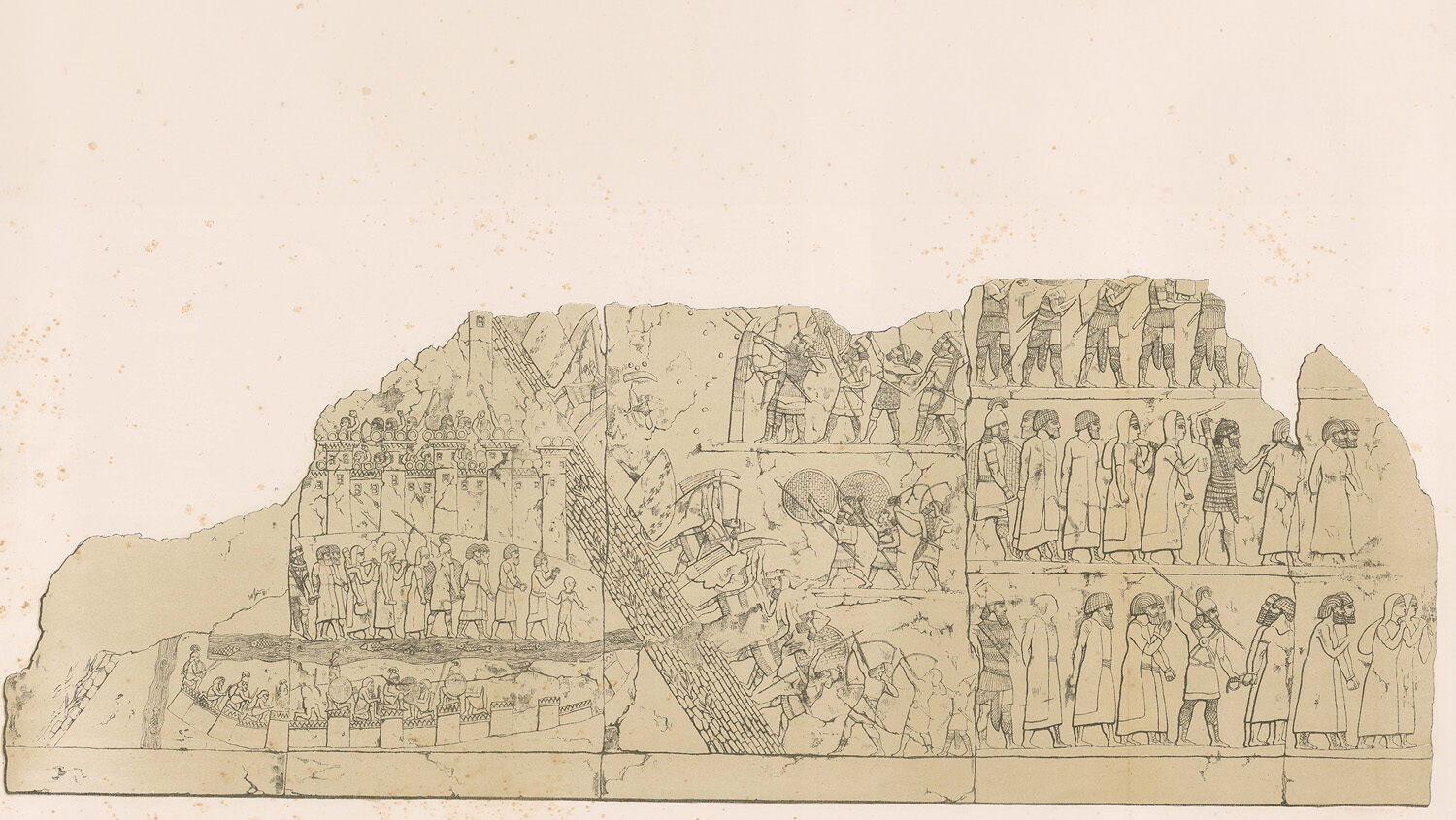
Judah’s occupation of Gath lasted only a brief time before it was captured and destroyed by the Assyrians at the end of the eighth century b.c.e. This brief occupation and later destruction of Tell es-Safi confirm the biblical account and help us better understand the history of Gath.
