

Golden furniture. Walls emblazoned with intricate images. Priceless statues. Jewels. If you were to step inside the tomb of an Egyptian pharaoh, you’d be surrounded by treasures and immense wealth. And while the pharaonic tombs have been some of the most dramatic discoveries in the field of archaeology, they have also provided a lot of information about ancient Egypt, its religious practices, belief systems and royal culture.
Whether a tomb, catacomb, sarcophagus or crypt, burials are some of the most important discoveries in archaeology because of what they can tell us about ancient cultures. Humans have almost always attached sentimental or ceremonial significance to the treatment of the dead.
Yet when it comes to the highlands of Israel in the Iron Age i (1200–1000 b.c.e.), there are very few known graves. According to Prof. Avraham Faust in “‘Mortuary Practices, Society and Ideology’: The Lack of Iron Age i Burials in the Highlands in Context,” “evidence [of burials] remains meager and most of the data is far from conclusive.” This is in comparison to the Late Bronze Age, which had an especially high number of tombs and burials despite a significantly smaller population.
The dead were certainly still buried in the Iron i highlands. Dr. Raz Kletter suggested that these Israelites simply buried their dead in graves without any markers. These simple burials are rarely discovered for two main reasons. First, they probably occurred on the outskirts of towns where modern excavations seldom occur. According to Professor Faust, only one such burial has been discovered at Khirbet et-Namlah, and it was by accident.
Second, farming in later periods would have occurred above these burials. “Even simple agricultural activity would destroy them,” Faust wrote. “In other words, even if the inhumation [burial] did survive, it is highly unlikely that any archaeologist would know about it and excavate it.”
Archaeology, therefore, has shown that Israelites of the highlands in Iron Age i buried the dead in a more elementary fashion than all of their neighbors. Why?

Phenomenal Possibilities
There is significant debate about the reasoning behind this archaeological phenomenon. Some have attributed it to a poor and remedial civilization too focused on survival to enshrine and memorialize their dead.
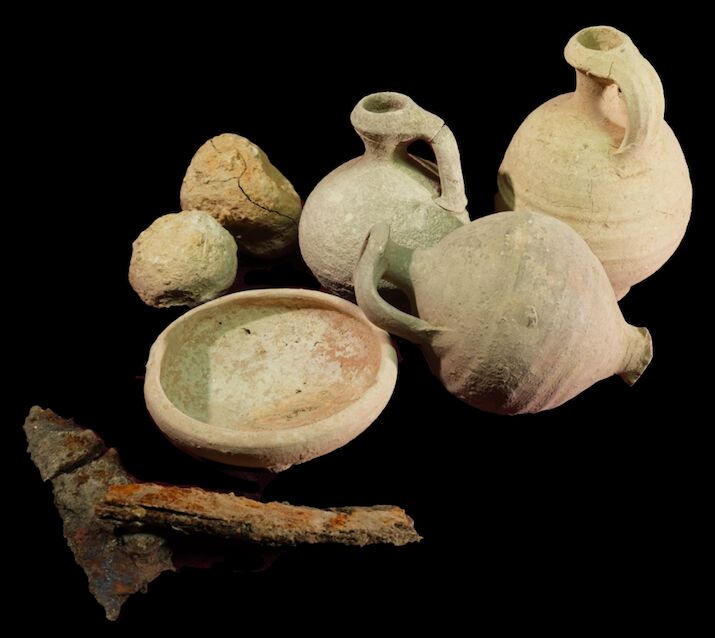
However, ornate burials have been discovered in far poorer civilizations. “[G]rave goods, including pottery of all types, were not expensive,” wrote Faust. “Even ‘poor’ or ‘simple’ societies (e.g. in the Neolithic) could afford them, let alone the Iron i society, which clearly possessed material surpluses.” So impoverishment does not appear to be the reason for these simple burials.
Kletter further explained the phenomena as resulting from a combination of factors, such as “limited archaeological database, a lack of technology, the short time span of the period in question, the limited population in the highlands during that period, and a lack of destructions. None of these accounts, however, is entirely satisfactory. Instead, a combination of all of them may be sought for” (“People Without Burials? The Lack of Iron i Burials in the Central Highlands of Palestine”).
Many of these factors, however, are even more pertinent and applicable to the Late Bronze Age, and yet many burials and tombs have been discovered from that period. Rather, there seems to have been something in the Israelite identity to explain this phenomenon.
Prof. William F. Albright, who has been called the father of biblical archaeology, attributed this lack of evidence to the egalitarianism (the equal treatment of all members) of Israelite society. Prof. William Dever wrote, “[A]t all levels, one is struck by the lack of any evidence for elites in the Iron i village.”
Based on newer discoveries, Faust refuted this assumption: “It is clear that the highland society was not really egalitarian, as such a society does not exist. … This can be seen in various traits, e.g., the differences in size and form of houses in ‘Izbet Sartah and other sites (e.g. Finkelstein 1986) and the development of relatively elaborate architecture in the 11th century b.c.e.” Israelite society was not truly egalitarian, but could this ideology have influenced the burials of commoners? Failure to enforce a belief in every facet of life does not mean it did not influence some facets of life—or death.
Faust focused rather on what he called an Israelite ideology of simplicity—the belief that the less ornate and complex is better. There is evidence for this ideology in the archaeology of Iron i Israel.
The Archaeology of Simplicity
The only valid way to test for the existence of an ideology of simplicity is not through making assumptions based on an absence of discoveries, as with the burials, but to search for this ideology in other aspects of Israelite archaeology. Several facets of Israelite culture show a similar ethos of Israelite ideological simplicity. Professor Faust wrote, “Is the same ideology mirrored in other archaeological remains? I think it is” (“An Egalitarian Society”).
Take, for example, pottery. Israel’s Philistine neighbors produced what is called “Philistine bichrome ware,” terracotta-colored vessels painted with black-and-white stripes and designs.
Israelite pottery, on the other hand, is famously simple. “It is well known that the Iron Age (both i and ii) highland pottery is non-decorated, in contrast to the Late Bronze Age and to the Iron i lowlands,” wrote Faust. “Pottery decoration is used to convey various types of messages, and the lack of decoration is a suitable channel for a message of egalitarianism and simplicity.”
The four-room homes of the highland Iron i are another sign of an ideology of simplicity in Israel (see here for detail about this subject). Four-room homes are marked by a long communal central courtyard surrounded by rooms. “Each room is easily accessible; there is no hierarchy in the structuring of the rooms,” wrote Faust. “Once in the central room, a person could go directly to the desired space. If a ‘better’ space was reserved for a superior person, this is not reflected in the spatial arrangements.” Each room was simple and the same for everyone, as the burials seem to have been.
Pottery and structures are two of the most prominent artifacts from this period. Both indicate an ideology of simplicity at the same time that burials were so simple that they cannot, in most cases, be found. There is, however, one more source that could shed light on these burial practices.
The Biblical Depiction
The Hebrew Bible consistently shows that it was considered shameful to die and not be buried. Enemies would leave their foes’ bodies rotting in the open air (1 Samuel 31:10). Just before the destruction of Jerusalem, the Prophet Jeremiah warned the people, “They shall die of grievous deaths; They shall not be lamented, Neither shall they be buried, They shall be as dung upon the face of the ground … And their carcasses shall be meat for the fowls of heaven, And for the beasts of the earth” (Jeremiah 16:4). Isaiah 14 and Jeremiah 8 provide similar depictions.
According to the Bible, the upper echelon of society was buried amidst regalia. For instance, despite being enemies, Jehu intended to bury Jezebel simply because “‘she is a king’s daughter’” (2 Kings 9:34). The Bible also indicates that there were particular tombs reserved for nobility or royalty, especially those of the Davidic dynasty. 1 Kings 11:43 says Solomon “was buried in the city of David.” 2 Chronicles 35:24 says Josiah “was buried in the sepulchres of his fathers.”
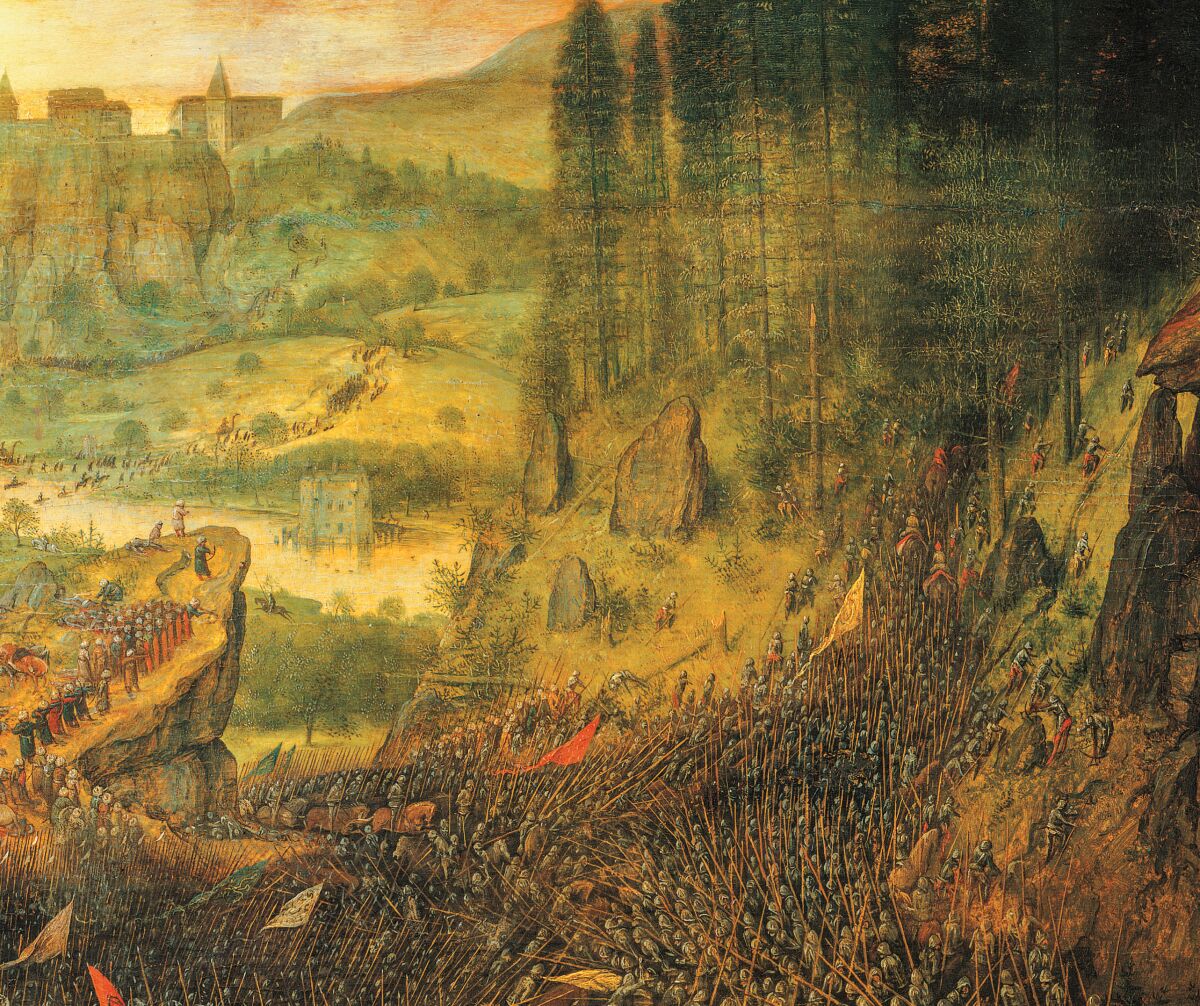
For the most part, however, these are all Iron iia-iib examples. Despite dozens of mentions of burial practices in the Hebrew Bible, there are almost no details regarding burials in the Iron i in central Israel. The only mention from the period is that of Saul, whose body was desecrated by Philistines at Beth Shean at the close of the Iron i.
For the Late Bronze Age, there are mentions of the burials of men such as Joseph and Joshua; the Iron ii, the burials of David and subsequent kings. The lack of textual evidence for the Iron i is well matched with the lack of archaeological evidence regarding these burials.
During the Iron i, Israel was in the judges period, when the nation was led by a succession of judges and not a king, with the exception of Saul at the end of this age. The biblical description of this period provides a few reasons burials may have been so simple.
There were few notable burials because there were few notable leaders. Only a few of the judges may have qualified for regalia, and many of those were not from the central highlands of Israel (such as Jephthah or Samson).
Even for those who could have qualified for burial paraphernalia, there might have been little hope of protecting their graves from robbers. Many burials throughout the ancient Near East were robbed in antiquity. The rule of law in Israel throughout the judges period appears to have been practically nonexistent; it was a time when “every man did that which was right in his own eyes” (Judges 21:25).
Also, the Hebrew Bible ascribes a certain humility to death. Less than a century after the Iron i age ended, King Solomon wrote, “For that which befalleth the sons of men befalleth beasts; even one thing befalleth them; as the one dieth, so dieth the other …. All go unto one place; all are of the dust, and all return to dust” (Ecclesiastes 3:19-20). If man dies as a beast, why bury him with so much wealth and material goods?
Solomon also wrote, “Whatsoever thy hand attaineth to do by thy strength, that do; for there is no work, nor device, nor knowledge, nor wisdom, in the grave, whither thou goest” (Ecclesiastes 9:10). If Israelites believed they could carry nothing with them into an afterlife, why bury the dead with such items? Why embellish the grave at all? This religious belief stands in stark contrast to lands that have yielded tremendous burial finds, like Egypt.
An argument based on the absence of discoveries is always fraught with uncertainty and is open to a variety of interpretations. It’s certainly unusual that Israel’s highlands in the Iron Age i have produced so few burials, but it could also reveal a lot about Israel’s society at that time.
Based on other discoveries and the Hebrew Bible, the simple burials were not the result of a poor or backward society. Rather, they were the result of a chaotic society believing in an ideology of simplicity. This changed once the nation was stabilized and the culture enriched under the leadership of the united monarchy.
