
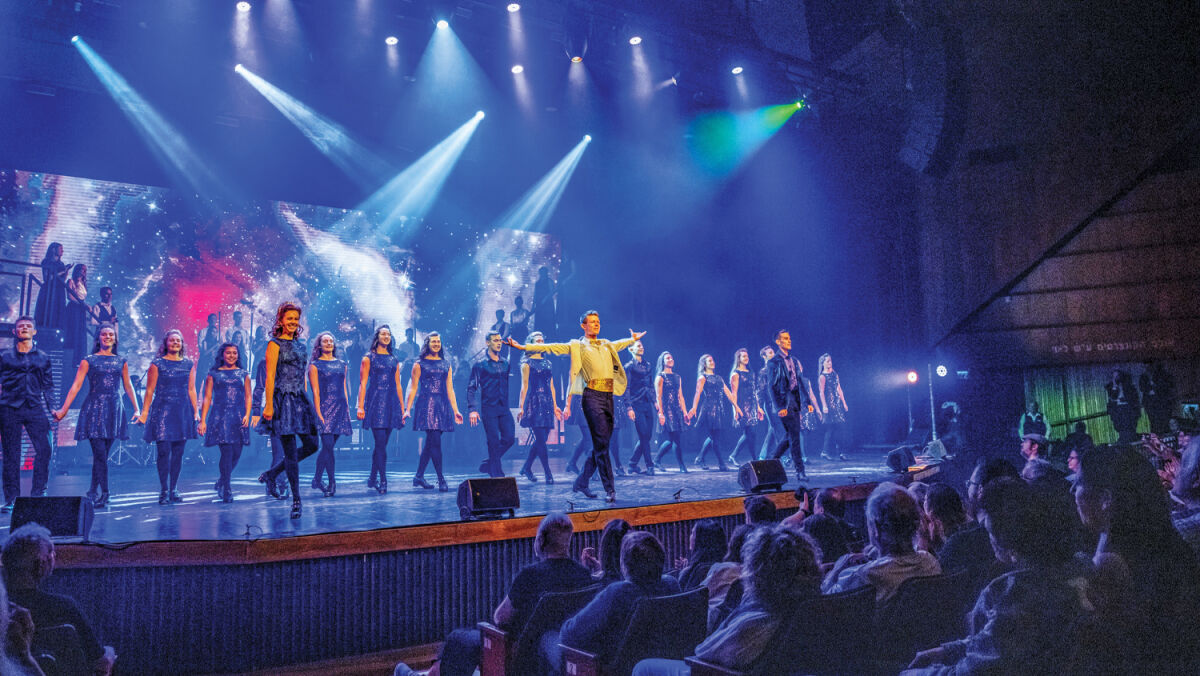
I will never forget Friday, June 13, 2025, the day Israel began its ferocious and necessary 12-day fusillade on Iran. I was in Israel visiting our archaeology institute and directing the Irish dance production Celtic Throne, a show we had announced to our readers in the January-February 2025 issue.
The 56 dancers and crew, which included several children and teenagers, had arrived in Israel the week prior and had a packed three-week schedule of shows, PR events and touring. At our Institute office in Jerusalem, Christopher Eames and Nicholas Irwin (and their families) were also preparing for the arrival of more than a dozen dig volunteers the following week. It was going to be a busy, productive summer!
Earlier in the week, Celtic Throne had performed two shows to large and rapturous audiences in Tel Aviv. The flood of excitement, joy and tearful gratitude from the Israeli people at the shows, in the media and on the streets was overwhelming and unexpected. But as wonderful as this was, we knew that it reflected the sad and growing reality that Israel is becoming increasingly isolated and lonely. (Our show was the first major foreign production to perform in Israel since Oct. 7, 2023.)
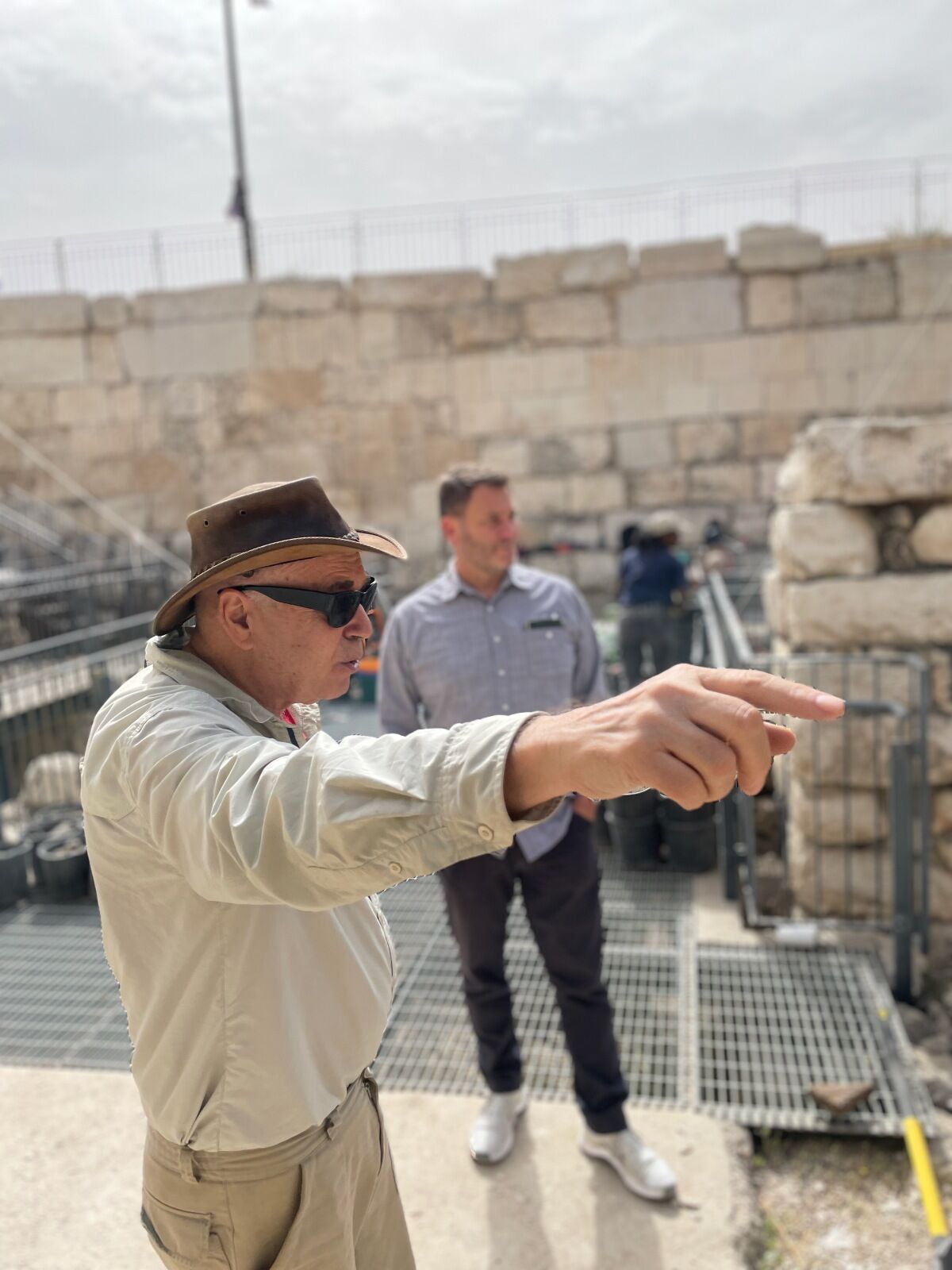
Two days before the war began, Chris, Nick and I took a trip to Tel Shiloh, a one-hour drive north of downtown Jerusalem. At Shiloh, we met with Dr. Scott Stripling and his dedicated crew of diggers, many of whom have been excavating the site for many years now. Shiloh was biblical Israel’s political and religious capital for roughly 300 years during the period of the judges (recorded in the books of Joshua and Judges). Dr. Stripling and others before him have done extensive excavations at this site for many years now, and the ancient biblical city coming to life is remarkable! While we were there, Chris interviewed Scott for our podcast, Let the Stones Speak. You can watch the full interview (and several others) on our Let the Stones Speak YouTube channel. We have published a transcript of this interview in this issue.
The following evening, the night Operation Rising Lion began, Celtic Throne performed in Haifa to another bouncing audience of 1,500. Many stayed around afterward to meet the troupe, take photos and to once again express gratitude for bringing the show to Israel. By the time we arrived at our accommodations in Israel’s capital it was after 1 a.m.

Looking back, it’s sobering to think that while we were climbing into our soft beds in tranquil Jerusalem in the early hours of Friday morning, dozens of Israeli Air Force pilots were climbing into the cockpits of their fighter jets. Their dangerous mission fought over the next few hours and days would ensure future generations of Israelis, and visitors like us, could do what we were doing—sleep in peace.
When I woke Friday morning (nearly all of us slept through the sirens), everything was normal. That is, until I switched on my phone and read the explosion of texts from our Israeli friends. “Are you guys OK?” “I’m so sorry this happened—stay safe!” “Are the children terrified—keep them safe!” Not knowing what had happened, I bolted outside. But the streets of Jerusalem were quiet, though perhaps eerily quiet. Checking the news online, I immediately realized—Israel was now a war zone.
It’s incredible how suddenly life can change. Most of us don’t appreciate our frailty, our vulnerability to forces beyond our power to control, until the sudden change happens. It’s humbling really. When I fell into bed early Friday morning, I had a clear, detailed plan for the next few days. When I woke a few hours later, it had all been swept away. The Celtic Throne tour was canceled, our flights were canceled, and our excavations were on hold.
That evening, from the safety of the enclosed, bunker-like veranda at the Institute in Talbiyeh (Jerusalem), we watched awe-struck as Tamir surface-to-air missiles were fired with astonishing precision by Israel’s missile defense system to intercept ballistic missiles fired from Iran and Yemen. It was a surreal experience. On the ground, the streets of Jerusalem had never seemed so tranquil. There was no traffic, no pedestrians, no protests. Yet a few hundred meters away, and accompanied by the loud and chilling whir of sirens, the night sky was lit up by missiles smashing into one another—missiles capable of killing the humans just below.
In moments like this, all men are philosophers. What if one of those contained uranium? I thought to myself. Iron Dome wouldn’t protect us. It might actually be an accomplice, colliding with the nuclear payload hundreds of meters in the air where it would be dispersed by the wind over all the nation. Watching missiles collide overhead and watching the people of a rich, powerful and sophisticated nation like Israel take to bomb shelters night after night, you can’t help but realize how small and powerless we are in the face of human nature. We are, in the words of King David and Winston Churchill, but a worm.
The next few days were a blizzard of commotion and uncertainty. The Celtic Throne troupe had to travel to England, where we had six shows planned. Our first show was in eight days. Meanwhile our diggers, students from Herbert W. Armstrong College, were scheduled to arrive in five days. But Ben Gurion Airport was closed indefinitely and all flights in and out of Israel were canceled. On Sunday morning, we purchased tickets to London flying out of Amman, Jordan. These were canceled four hours later, and it was impossible to rebook. At one point, I was in negotiations with the captain of a boat to take us to Cyprus. But by Monday, a plan had coalesced and seemed to be holding: We would travel via coach to the Taba border crossing near Eilat, cross the border into Egypt, then take a bus to Sharm el-Sheikh, a resort town on the Red Sea. From there, we were able to book flights to England. The ancient Israelites left Egypt for Canaan—this was the Exodus in reverse.
By Thursday morning, six days after the war began, the entire 56-member Celtic Throne troupe—a mixed-multitude of men, women and children loaded with more than 175 bags packed with clothes, show costumes and expensive tech equipment—arrived exhausted but safe in London. Miraculously, not a single item was lost and not a single person came down sick or injured. The show went on!

Unfortunately, we had to cancel our shows in Be’er Sheva and Jerusalem, as well as a special pre-show reception with some of our friends in Israel. This was disappointing, but the enthusiastic response to the first shows followed by the sudden cancellation of the last two performances only grew our enthusiasm to share the show with the Israelis. Celtic Throne has unfinished business in Israel, and to borrow the famous words of Gen. Douglas MacArthur, we shall return!
In addition to working on the tour, I planned to use the summer trip to Israel to check-in on some of our activities on the Ophel, where the Armstrong Institute of Biblical Archaeology (aiba) is involved in two exciting and important projects.
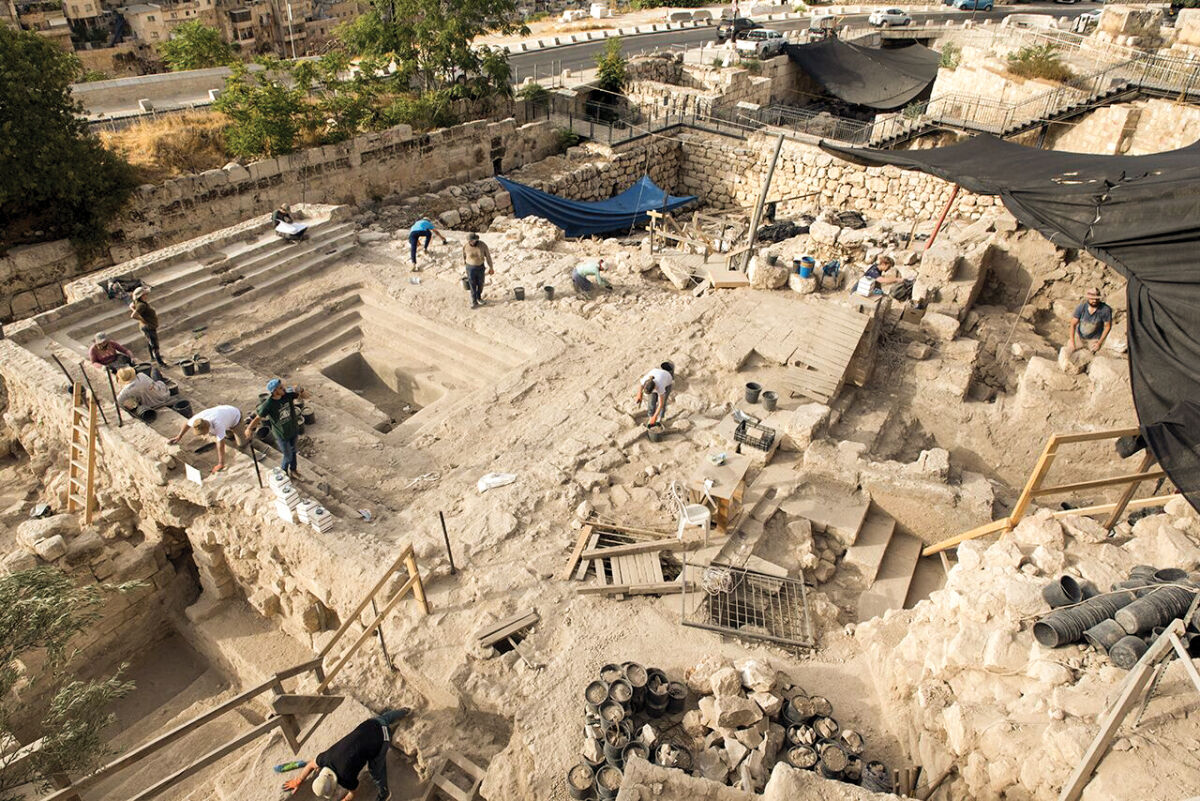
First, I was keen to see the progress being made on the Ophel Development Project. This is a venture that we are working on in support of the Israel Antiquities Authority (iaa) together with the Berkman-Mintz family, Hebrew University, East Jerusalem Development Ltd. and the Israel Nature and Parks Authority. Ultimately, the goal is to create a state-of-the-art tourist park on the Ophel, a place people can visit to learn and enjoy the history, biblical and otherwise, of this area. Phase i of this project began in March, with an excavation exposing some monumental Iron Age architecture and remains associated with the biblical kings of Judah, including King Solomon (read about this dig here).
In May, when the dig had ended, iaa employees began restoring the monumental architecture, a laborious yet vital process that, when complete, will give visitors a clear understanding of this part of Jerusalem from the 10th century to its destruction in 586 b.c.e. When Phase i is completed in fall 2026, visitors will be able to experience—that is, walk through, touch and read about—the world of some of Judah’s greatest kings, priests and prophets.
This relatively small section of the Ophel (together with the City of David, which is next door), contains much of the greatest archaeological evidence we have of biblical Jerusalem. This is why we believe the restoration of this area, and resurrecting its story, is so important: Every king and prophet from Solomon to Zedekiah lived on the Ophel!
(Some readers have inquired about how they might support this project, financially or otherwise; we’d be happy to give more detail, just send us an e-mail at letters@armstronginstitute.org.)
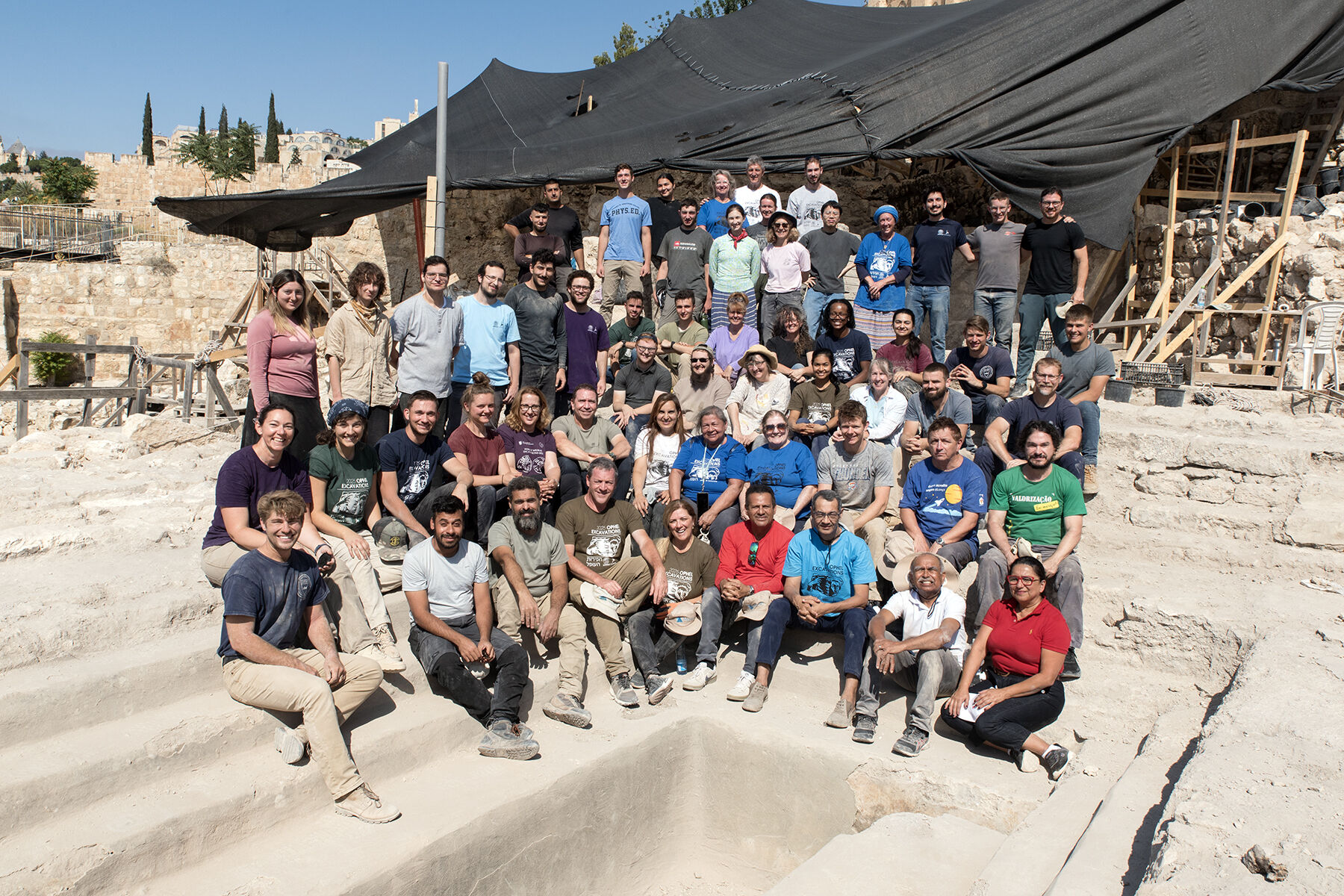
The other Ophel project slated for this summer was the next phase of our excavation with Hebrew University and Prof. Uzi Leibner and Dr. Orit Peleg-Barkat. Work at the site was set to begin June 22, eight days after the war began and the same day Celtic Throne performed in Birmingham, United Kingdom. We had 14 volunteers lined up to come over from the United States on June 18. Of course, everything had to be postponed, and it seemed inevitable that it might be canceled, like so many other digs across Israel.
As journalist Gordon Govier wrote on July 21, “Conflict in the Middle East has once again had the unintended effect of stalling efforts to excavate biblical history. Across Israel, digs were canceled when war broke out in mid-June. Though the war between Israel and Iran lasted only 12 days, it came in the middle of the dig season, when weather conditions and schedules align for archaeological work” (“War Interrupts Biblical Archaeology”).
With digs across Israel closing down, we remained in close contact with Professor Leibner and Dr. Peleg-Barkat and let them know we were keen to get our students to Israel and dig. They were keen too, and told us, If you can get your students here, we will dig!
Securing tickets to Israel for 14 diggers in the aftermath of war was like putting an octopus to bed. Just when we had one flight booked, another was canceled, postponed or redirected. But we persisted and our diggers arrived in Israel Tuesday, July 1—exactly one week after the war had ended. Some of the crew was onsite that afternoon, preparing for the first full day of work on Wednesday, July 2.
Although delayed and completed in a slightly shorter time frame, the 2025 Ophel excavation was able to go forward unhindered. In the space of just five weeks, we removed eight truckloads and 16 dumpsters worth of material from the area, exposing 2,000-plus-year-old remains across nearly the entire Upper Ophel excavation site. It was a short but incredibly successful excavation. If you haven’t already, you can learn more about this dig, and see plenty of photos, by visiting our blog page. We also hope to reveal more about this excavation in the next issue of this magazine.
We’re very thankful to Professor Leibner, Dr. Peleg-Barkat, the Hebrew University office team, and all the volunteers who came out and excavated even during these unique and trying times. This took a lot of sacrifice, and even boldness, and we are very grateful to be part of such a dedicated Ophel family.
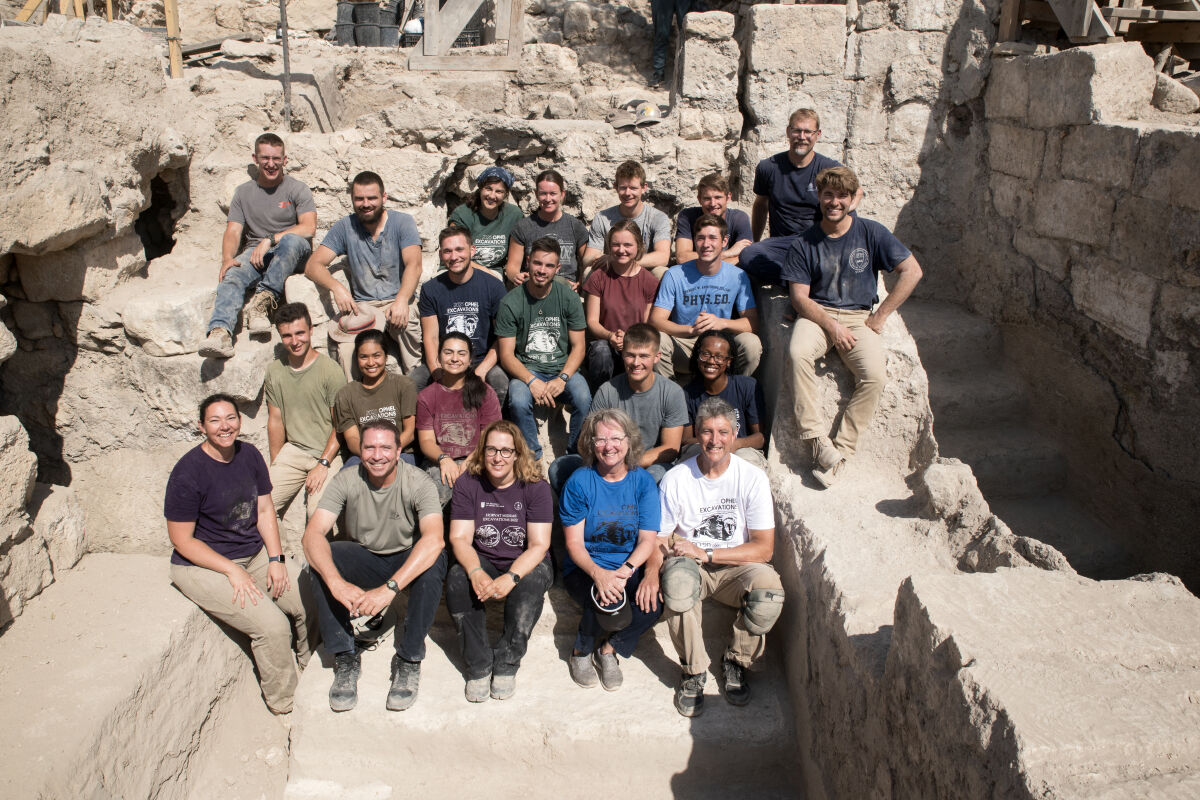
The situation that led into this year’s excavation is not unlike the circumstances that surrounded last year’s, which was bookended by missile attacks and canceled flights. In so many ways, this seems to be the new normal for our excavations, and for Israel.
As these situations become increasingly more common, we’ve had some ask why we continue to visit Israel. Traveling to Israel isn’t easy or simple; it’s often expensive, exhausting and difficult. But the reason we keep coming back is simple: because we love Israel and we love Israel’s archaeology—especially Jerusalem and its archaeology. Israel’s history is our history, and Israel’s story is our story.
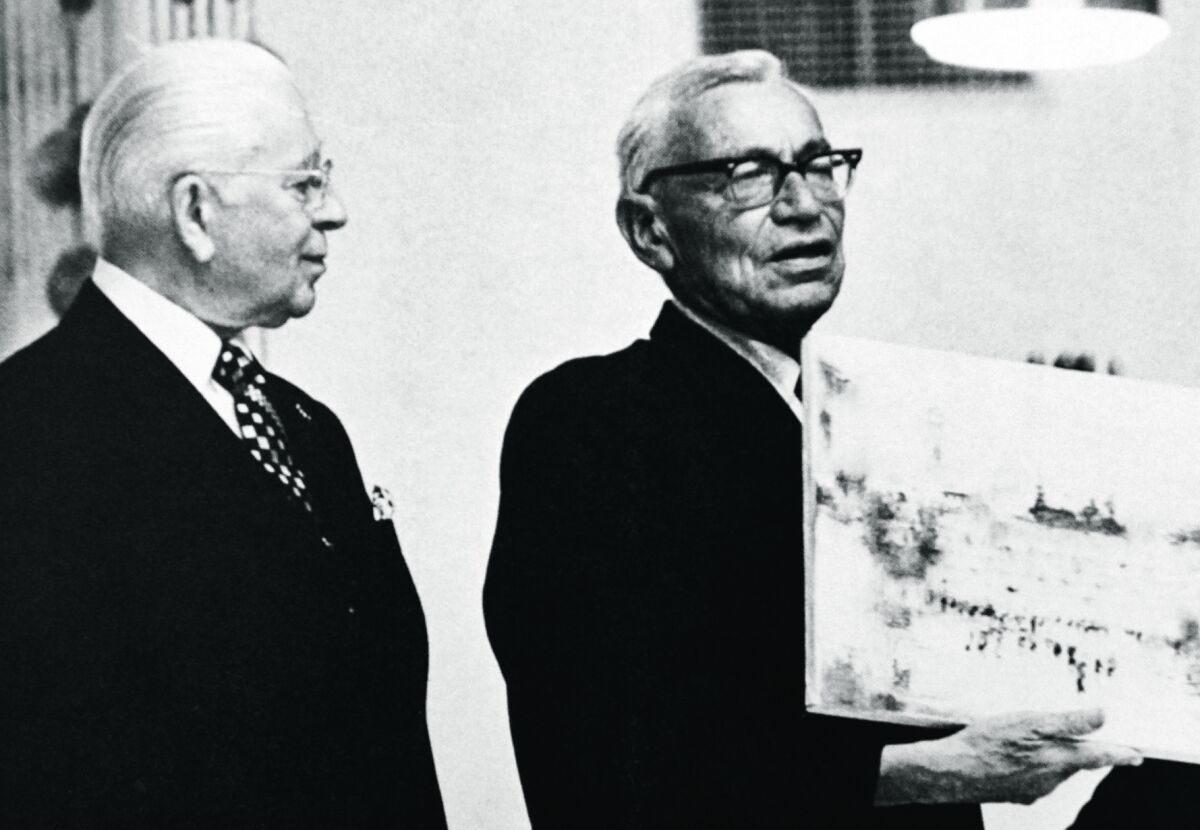
About our namesake Herbert W. Armstrong, Prof. Benjamin Mazar said: “Mr. Armstrong loves and admires Jerusalem, and wholeheartedly believes in the future of Israel and the Holy City, and for him, the unified Jerusalem is not only the metropolis of Israel and the spiritual center of monotheistic religions but also the symbol of a great past and the hope of a better future for mankind.” We hold fast to this belief. Israel is rich in history. There is so much yet to be uncovered. And we love being a part of the work of uncovering Israel’s history in Jerusalem.
That is why, when others are rushing to leave, we are doing everything we can to get into the country.
