

An American group of students’ first trip to Israel, attending the Jewish National Fund–U.S.A.’s Alexander Muss High School, turned out to be even more exciting than anticipated for 17-year-old Shiloh Attun. During a tour of the archaeological site of Tel Gezer, Shiloh chanced upon a 3,300-year-old Egyptian scarab, according to a press release issued yesterday by the Israel Antiquities Authority (iaa).
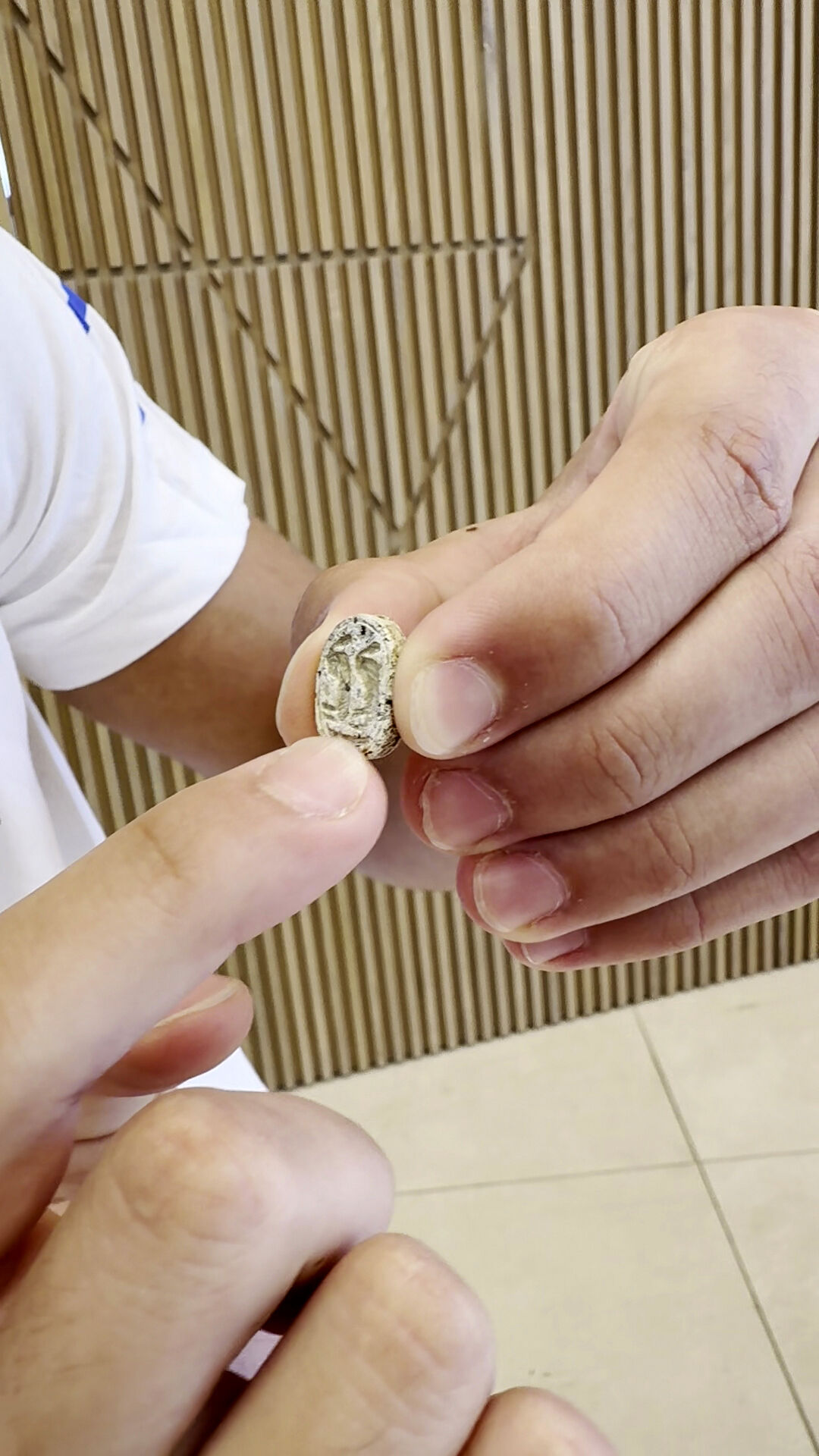
“This was our class’s first trip to see the country; we arrived only two days earlier,” Shiloh said. “As we were learning about Tel Gezer’s history and archaeology, I noticed a small, interesting object on the ground. It looked ancient. I picked it up and consulted my guide.”
Muss dean of students Benji Hain, who was guiding the tour at Gezer, said, “This discovery sparked great excitement among the students. As soon as we realized that this might be a significant archaeological find, it was important for us to immediately contact the Israel Antiquities Authority, report it, and ensure that we were acting in the right way.”
Shiloh continued: “I couldn’t believe it was happening to me. A moment ago we were talking about the slim chances of ever discovering such a find, and here was one right in my hand!”
Scarabs are Egyptian amulets in the shape of a dung beetle, which were considered symbols of new life. They could be used as seals or hung on a string as an amulet.
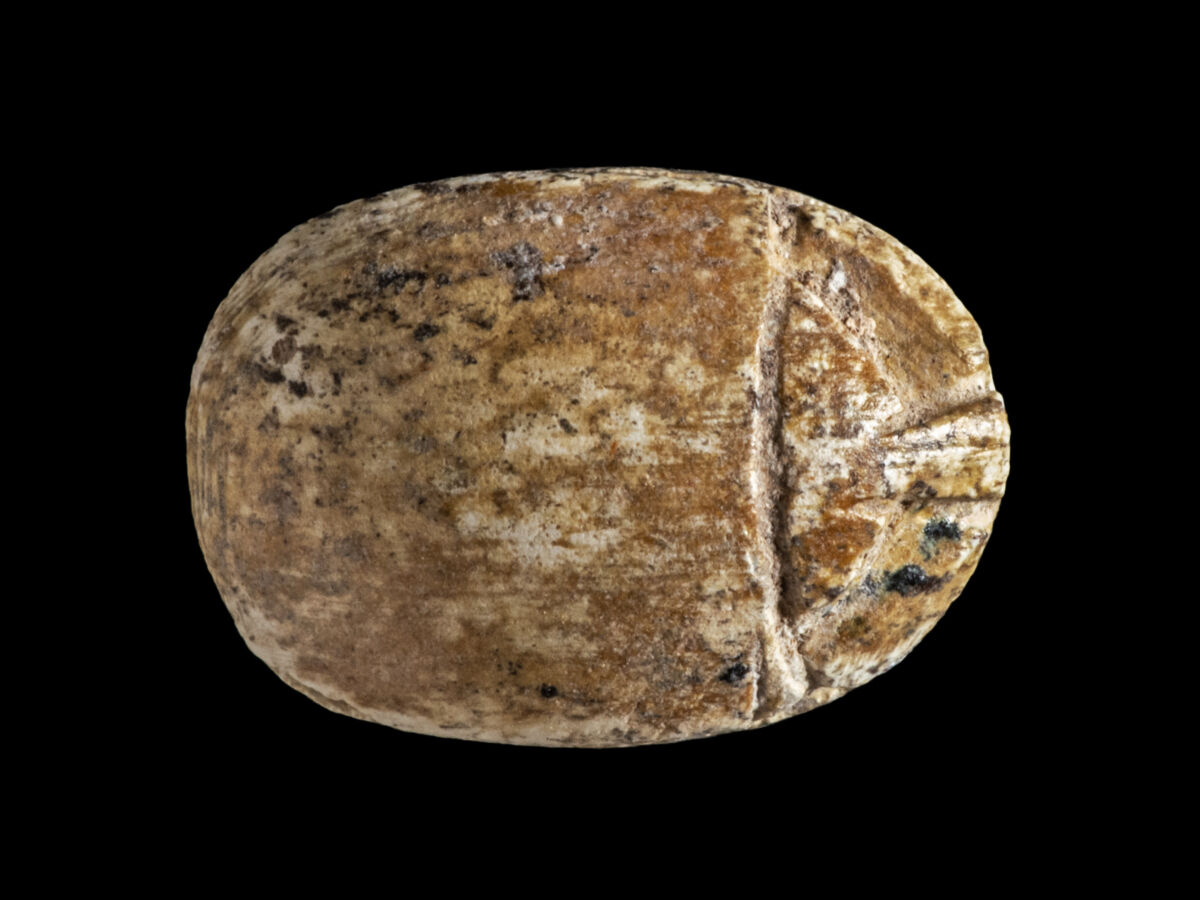
After the discovery was reported, archaeologist Adam William Asper from the iaa visited the school to collect the find.
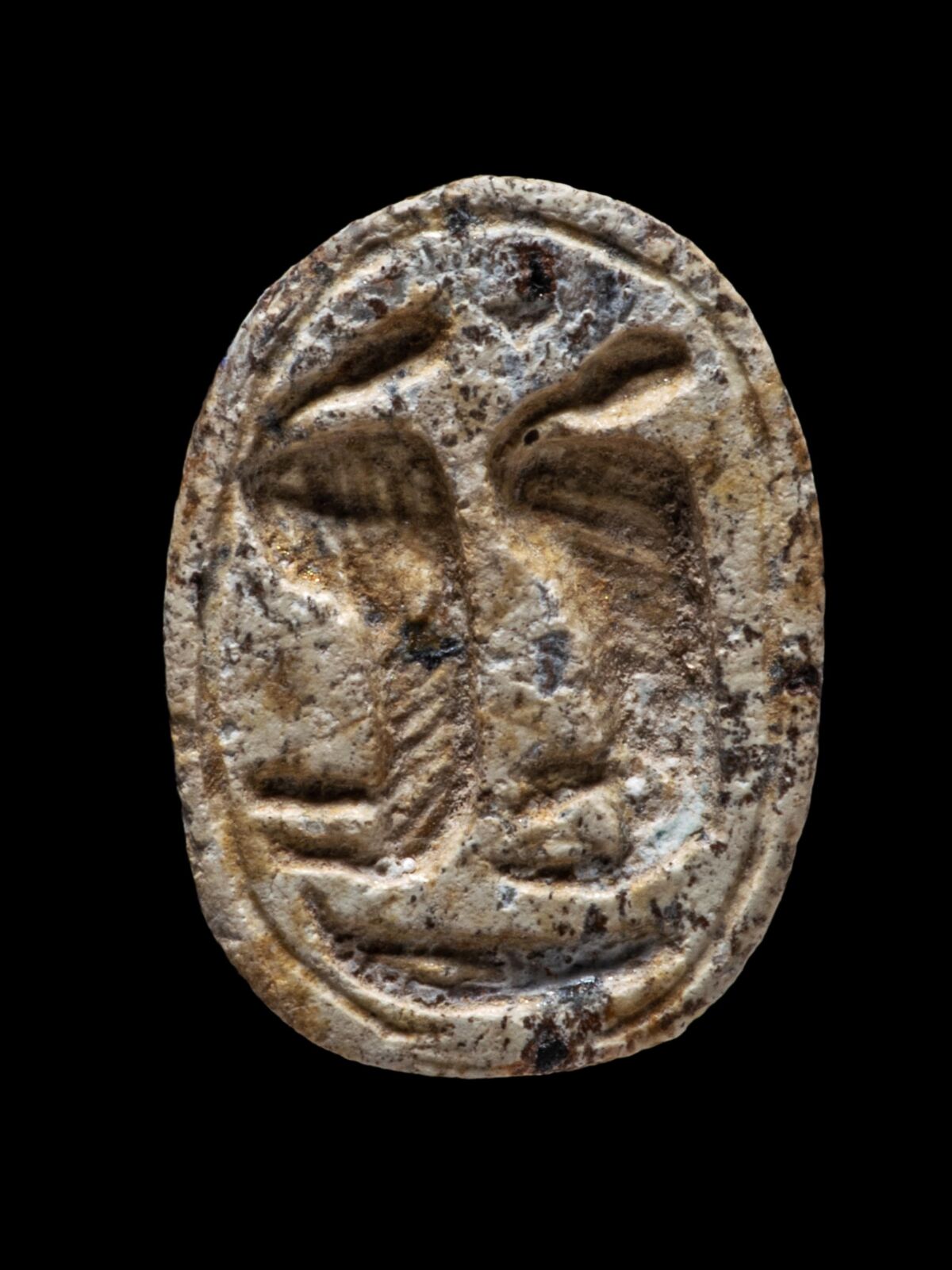
Prof. Ido Koch from the Department of Archaeology and Ancient Near Eastern Cultures at Tel Aviv examined the scarab and dated it to the Late Bronze Age, about 3,300 years ago. Koch explained the symbolism inscribed on the scarab in the press release:
An interesting scene appears on the scarab: two cobras above a semi-ellipse. The cobra, identified with the biblical serpent and called in Egyptian and in Greek “Uraeus,” was a very common protective and royal symbol in ancient Egypt and the southern Levant. The semi-ellipse below the cobras represents the Egyptian hieroglyphic sign “nb,” which means “lord.” A scarab depicting a similar scene—but with three snakes—was earlier found in the Tel Megiddo excavations.
The site of the scarab, Gezer, was an important city during the Late Bronze Age to early Iron Age, a period marked by increasing Egyptian domination in the Levant. It controlled a vital trade route in the Judean lowlands (the Shephelah). Eventually, the city was destroyed by Pharaoh Merneptah in the late 13th century b.c.e., as recorded on the Merneptah Stele (famous as the earliest-confirmed mention of the name “Israel” as a people-group in the land). The time frame of the scarab lines up with the biblical Judges era, a tumultuous time in Israel’s history when “there was no king in Israel; every man did that which was right in his own eyes” (Judges 21:25).
Amit Melman, educational director of the iaa, remarked on this experience for the student: “Shiloh’s story is a charming example of the connection forged between the young people who come to study in Israel and the country’s history and archaeology, through firsthand experience in the field.”
“This discovery underscores the tremendous importance we place on connecting young people from the Diaspora with the heritage of the land of Israel through direct encounters with the sites and artifacts that tell its story,” said Israeli Minister of Heritage Amichai Eliyahu. “I commend Shiloh for his discovery and for acting responsibly by handing over the ancient amulet to the state.”
Shiloh was awarded a certificate of good citizenship by the iaa for reporting the find.