
What is the difference between the terms Jews and Israelites? It is a common assumption that these terms are perfectly interchangeable and refer to exactly the same group of people. Many believe that all Jews are Israelites and that all Israelites are Jews.
These terms are preloaded with significant historical meaning and weight. They are also indelibly connected to one of the great enduring biblical mysteries—that of the “lost 10 tribes” of Israel.
Let’s start with the basics. The biblical name Israel was first applied to the patriarch Jacob and used as an umbrella term for the 12 tribes descending from his 12 sons—aka, Israelites. Israel/Jacob had a son named Judah, who was the patriarch of one of these tribes. This is the name from which the term Jew derives. (This is more obvious in Hebrew than in English: יהודי, Yehudi—Jew; from יהודה, Yehuda—Judah. “Judahite” is therefore arguably a better English counterpart to “Israelite.”)
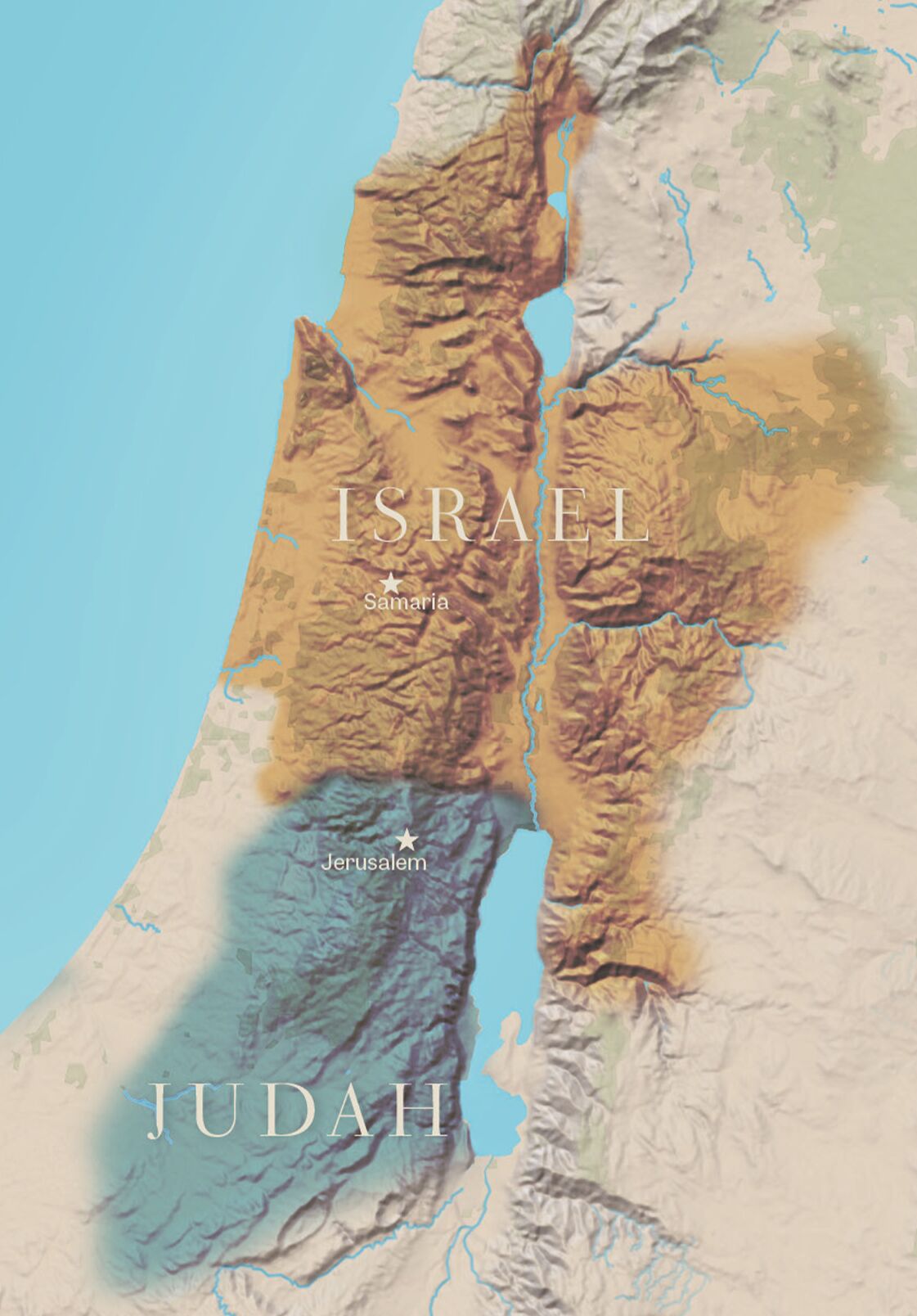
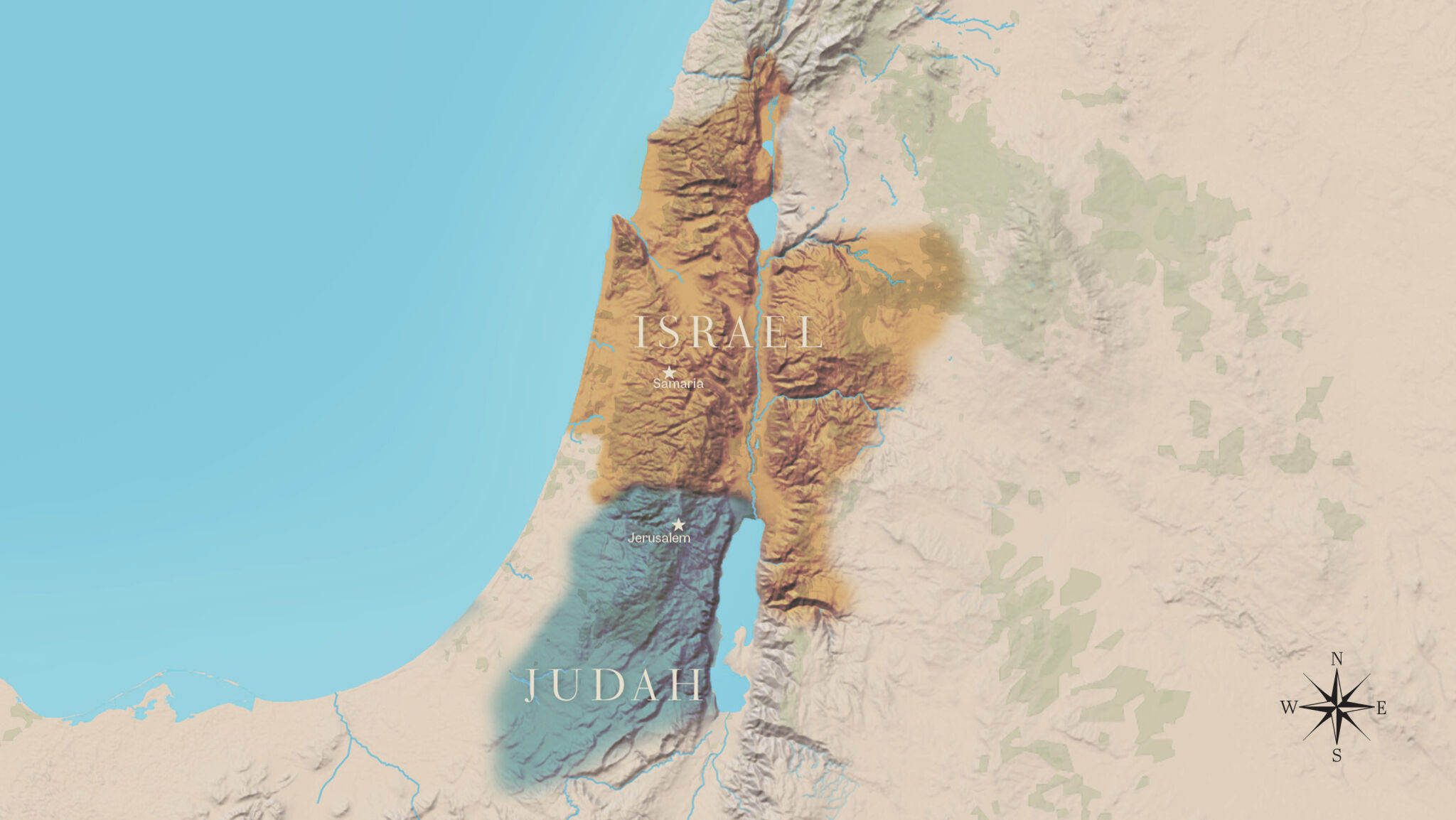
Most will be aware that the original united monarchy of Israel fractured following the reign of King Solomon. At this time, the 10 tribes in the north established the kingdom of Israel, which was led initially by the Ephraimite King Jeroboam i (1 Kings 11:31-35). In the south, the tribe of Judah, ruling from Jerusalem—together with the neighboring smaller tribe of Benjamin and a part of the priestly line of Levi—formed the kingdom of Judah. Israel’s initial united monarchy and eventual split into two distinct kingdoms is well-attested, both biblically and archaeologically (see, for starters, our exhibit issue, “David and Solomon’s Monumental Kingdom”).
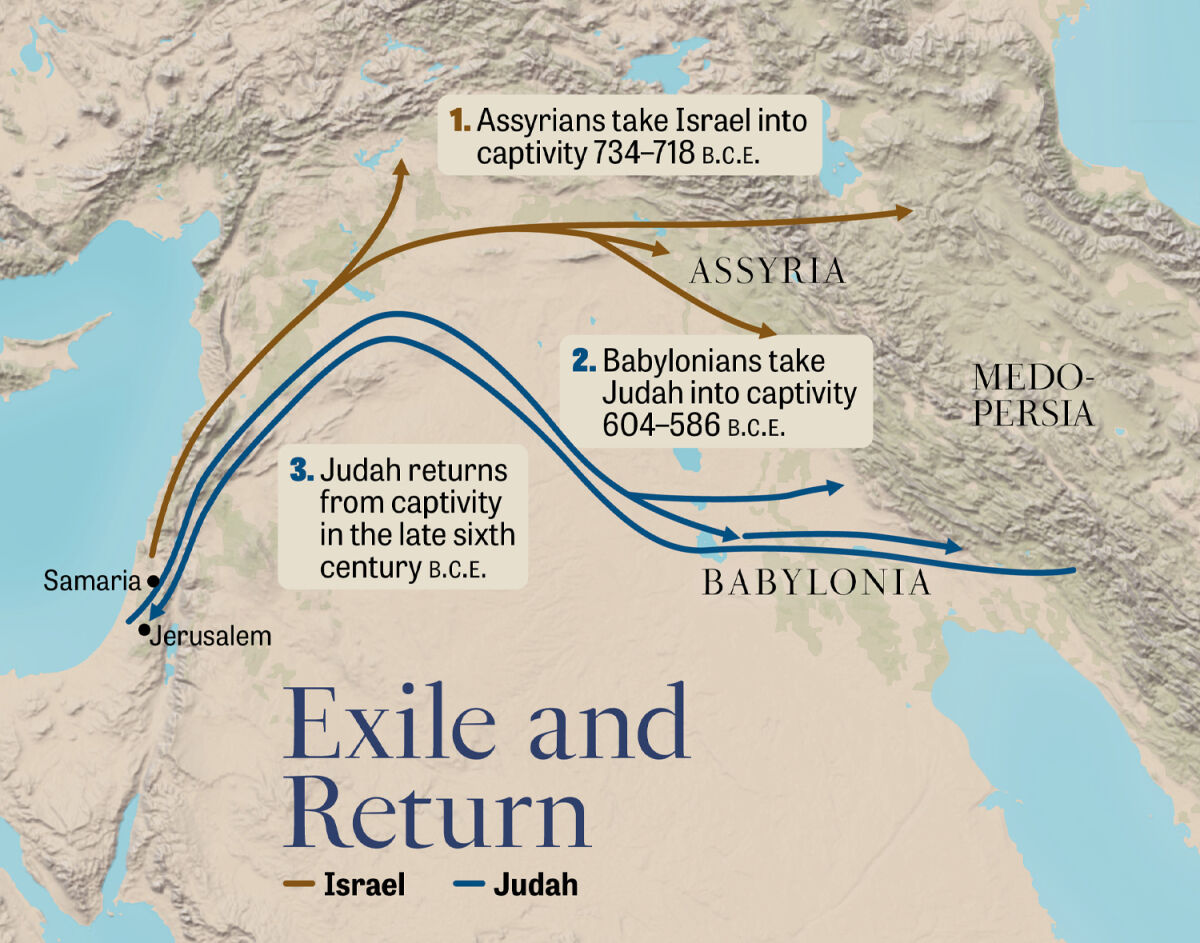
The northern kingdom of Israel lasted barely two centuries before being conquered and deported by Assyria in the late eighth century b.c.e. The kingdom of Judah lasted nearly 150 years longer, before being conquered and deported by the Babylonians in the early sixth century b.c.e.
Here’s something many people probably do not know: The very first time the word “Jews” (יהודים, Yehudim) appears in the Bible is in the second book of Kings—a full 12 books into the Bible, in a passage of text recording events that occurred near the end of the biblical kingdom period—after Israel’s split into two kingdoms. Even more interestingly, this first time the word is used is describing a conflict between “Israelites” and “Jews”—clearly, two distinct entities, with distinct terminology applied to each.
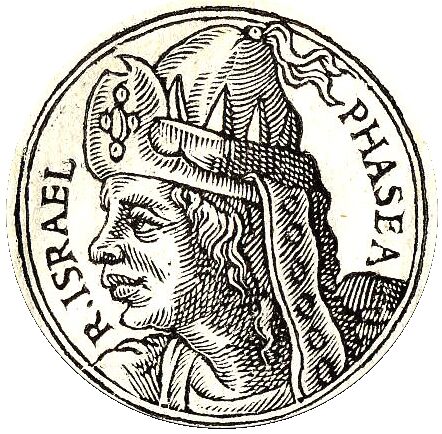
In this conflict, the “Israelites” of the northern kingdom formed an alliance with Aram (Syria) against the “Jews” from the southern kingdom of Judah: “Then Rezin king of Aram and Pekah son of Remaliah king of Israel came up to Jerusalem to war; and they besieged Ahaz [king of Judah], but could not overcome him. At that time Rezin king of Aram recovered Elath to Aram, and drove the Jews from Elath …” (2 Kings 16:5-6).

This passage continues to document the invasion of Israel by the Assyrians, beginning with Tiglath-Pileser iii in the late 730s b.c.e. and culminating in the total subjugation of the kingdom in 718 b.c.e. The siege of Israel’s capital Samaria (721–718 b.c.e.) was completed by Sargon ii, who deported the Israelite population to the farthest northeastern reaches of the Assyrian Empire, replacing the Israelites—in typical Assyrian fashion—with immigrants from Babylon and elsewhere (2 Kings 17:6, 24; see Sidebar 1, below).
This is the moment the saga of the “lost 10 tribes of Israel” begins. Where did the lost tribes ultimately go? Who are their modern-day descendants? Their identity is not the focus of this article. Rather, its purpose is to introduce the concept of the lost tribes through the use and interpretation of the terms “Jews” and “Israelites.” Why is this important?
It’s important because—despite the obvious ancient distinction between these terms and the peoples they represent—they have come to be used so interchangeably that each has been rendered effectively meaningless. Among scholars there is tremendous confusion and debate about these terms, leading to a significant degree of ignorance and confusion on this pivotal topic of national identity—both ancient and modern.

Amalgamation of Terms—and Peoples?
A case in point: Jewish historian and rabbi Dr. Henry Abramson of Touro University in New York City, in his 2020 lecture “The Ten Lost Tribes of Israel,” described how “Jews were taken from the northern part of the land of Israel” during the Assyrian conquest of the late eighth century b.c.e. He immediately caught himself in his use of the terminology, however, quickly adding: “I tend to use the term ‘Jews’ anachronistically—just forgive me for it—most Jews do that” (emphasis added throughout).
Another case in point comes from Joel Kramer, of the popular YouTube archaeology channel Expedition Bible. In a 2022 episode titled “The 10 Lost Tribes of Israel—Are They Really Lost?” (with nearly a million views), he argued that the “12 tribes of Israel are preserved in a remnant that survived the Assyrian conquest,” made up of “refugees that were fleeing the destruction of the northern kingdom” into Hezekiah’s southern kingdom of Judah, becoming amalgamated into the southern population. As such, with representation of survivors among each of the tribes, Kramer argued that there is “no such thing as the ‘lost’ 10 tribes of Israel”—with the northern representatives now incorporated into Judah (and thus referred to as “Jews”).
Fast-forward to the return of the Jewish exiles from Babylon to the Holy Land in the latter part of the sixth century b.c.e. This is the time of the rebuilding of the second temple—the time of Zerubbabel, later Ezra and Nehemiah. The return of the Jews at this time is often assumed to be a fulfillment of the great prophecies of the restoration of wider Israel to their homeland, with the ingathering of the tribes—as above, with the terminology of “Jews” now commonly seen as synonymous with Israel, if they were not already seen as such before.
Yet the genealogies of these returnees make it abundantly obvious: These people descended from the tribes of Judah, Benjamin and Levi, the tribes that exclusively constituted the southern kingdom of Judah. Their genealogies are clearly documented in passages such as Ezra 1:5, 3:9, 4:1 and 10:9.
Note too, these exiles came from areas within Babylon, not Assyria. And they returned to Judahite locations mainly in and around Jerusalem, not to land or cities in the north (now occupied by the Samaritans).
What about the claim that the 12 tribes were preserved in a remnant that survived the Assyrian conquest? There is some piecemeal archaeological evidence indicating certain northern Israelites fled into Hezekiah’s Judah and Jerusalem at the time of the Assyrian conquest (see here for more detail). But this represented a tiny fraction of the northern kingdom. The annals of Sargon ii, for example, describe his deportation of tens of thousands of captives from his completion of the siege of Samaria alone—the final nail in the coffin following numerous battles and deportations from the time of Tiglath-Pileser iii (see Sidebar 1).

Fast-forwarding another 500 years, the first-century Jewish historian Josephus leaves no room for doubt on this matter. He affirms that there remain only “two tribes in Asia and Europe subject to the Romans, while the 10 tribes are beyond Euphrates till now, and are an immense multitude, and not to be estimated by numbers” (Antiquities 11.5.2).
Bible Aside
Biblically speaking, we do witness a sharp distinction between the use of the terms Israelites and Jews, with the latter terminology used most especially in the works of Jeremiah, Esther, Ezra and Nehemiah—all works following the fall of the northern Israelite kingdom.
Yet modern scholarship is leery of an overemphasis on internal biblical information. After all, as the popular view goes, most of these biblical texts were assembled long after the events they purport to describe anyway—with many believing most of them to have been composed in the post-exilic period. Thus, the Hebrew Bible is a compilation of texts specifically written by Jews, for Jews, about Jews—if you believe it, that is.
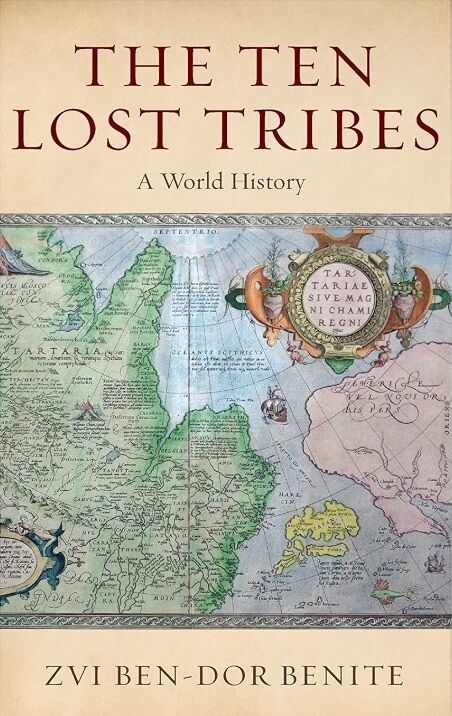
Prof. Zvi Ben-Dor Benite represents this critical perspective in The Ten Lost Tribes: A World History:
Derived mainly from the first and second books of Kings, the story [of the divide and collapse of the separate kingdoms of Israel and Judah] has been universally regarded by 10-tribes seekers as historical truth. Of course, nearly two centuries of probing biblical criticism and contested biblical archaeology have taught us nothing if not that the biblical narrative cannot be treated as a chronological history narrating the past as it happened.
Indeed, in the case of the biblical narrative with which we’re concerned here, it is important to bear in mind that at least the first part of the actual (as opposed to the prophetic) history of the 10 tribes story (the first book of Kings, which tells the story of the united kingdom created by David and its split into two under his grandson) is considered by biblical scholars to be almost entirely fictional. The second part, found in 2 Kings (which covers the history of the two kingdoms and the deportations of the Israelites), is thought to have been heavily edited and full of interpolations.
For those who subscribe to this (highly contestable) view—divorced from the necessity of taking at face value these biblical texts and instead giving primacy to a much later corpus of Second Temple Period literature and archaeological evidence—a definitional battleground has formed around how the terms “Israel,” “Jews,” etc were being used during these later periods. And for the past century, the scholarly consensus was that the terms Jews and Israelites were indeed being used synonymously to refer to the same group of people at this time.
What is the key source of this consensus? Irony of ironies, it traces back to a radical member of the Nazi Party!
The ‘Insider/Outsider’ Paradigm
In 2021, Dr. Jason Staples of North Carolina State University published an exhaustive 440-page reassessment of the relevant literature on this subject, titled The Idea of Israel in Second Temple Judaism: A New Theory of People, Exile and Israelite Identity. This book, now being heralded as the authoritative work on the subject, takes this long-held assumption of linguistic equivalency to task.
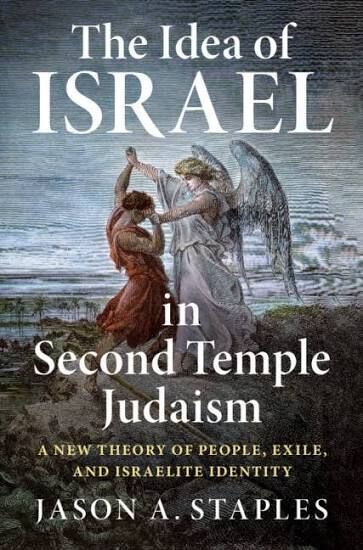
Staples exposes both the dirty underbelly of the modern scholarship on this topic and the entirely opposite unanimity on the subject in the ancient world. He begins: “The presumption that, after the Babylonian Exile, the term Israel is synonymous with ‘the Jews’ (that is, the people known in Greek as Ioudaioi and Hebrew as Yehudim) is so strong that it has gone unquestioned in numerous detailed studies on the semantic ranges of the respective terms.
“Indeed, few scholarly presumptions are so deeply rooted, as countless scholarly articles and books use these terms interchangeably, often alternating between them for stylistic reasons, regardless of the historical period under investigation. The two terms, however, are not evenly distributed across early Jewish literature or other ancient evidence,” leading to “numerous studies attempting to explain why these functionally equivalent terms tend to appear in different contexts.”
Dr. Staples explains how the debate over these terms was shaped by Dr. Karl G. Kuhn, in particular his 1938 article on the topic, published in Theologisches Wörterbuch zum Neuen Testament (twnt). Long story short: Kuhn suggested the term Jew was the “outsider” terminology—i.e. used by either foreigners or Hellenistic Jews—while the terms Israel/Israelite and Hebrew were “insider” terminology used by the Jewish community. Thus, different names from different reference points—but all of which have effectively the same meaning, referring to the same group of people.
In the words of Dr. Kuhn, “ישראל [Israel] is the name which the people uses for itself, whereas יהודים-Ἰουδαῖοι [Jews] is the non-Jewish name for it. Thus ישראל always emphasizes the religious aspect, namely, that ‘we are God’s chosen people,’ whereas Ἰουδαῖος may acquire on the lips of non-Jews a disrespectful and even contemptuous sound”—a word “which may often be used in a derogatory or even contemptuous sense” with a “depreciatory element that clings so easily” (as articulated in his article, “Ἰσραήλ, Ἰουδαῖος, Ἑβραῖος in Jewish Literature After the OT”).
Kuhn’s work laid the foundation of much of today’s understanding of the subject. Staples continues: “Kuhn’s insider/outsider model has proven so influential as to be baldly repeated, often without citation, in numerous subsequent studies, with some even using the model to distinguish between sources in the Gospels or to assess the implied audience of a text or even a chapter. … Even those who have recognized problems with Kuhn’s paradigm have tended to make small corrections rather than calling the model itself into question.”
There are indeed striking problems with Kuhn’s paradigm—starting first and foremost with the fact that “the negative valence of Ioudaios is unattested in antiquity,” writes Staples. Yet “Kuhn’s insider/outsider paradigm does describe the situation in 1930s Germany and Europe as a whole with remarkable accuracy.”
There’s a reason for that: Karl G. Kuhn was a member of the Nazi Party and a radical anti-Semite—as was his Doktorvator and editor of twnt, Gerhard Kittel. “Kuhn lent his authority as a scholar of ancient Judaism and Jewish texts to the cause, delivering a speech on April 1, 1933, at an event in the Tübingen marketplace advocating the boycott of Jewish businesses,” writes Staples.

Not only was Dr. Kuhn a member of the Nazi Party, he was one of the first 1,000 members to join the SA—the Sturmabteilung (loosely “Stormtroopers”), Adolf Hitler’s original paramilitary organization. Kuhn would proudly lecture on Jews and Judaism in his SA uniform “with an ‘Honorary Dagger With Dedication’ clinking at his side,” M. A. Beek remembered in his 1950 review of Kuhn’s Achtzehngebet und Vaterunser und der Reim. Given his “specialities” in the field, Kuhn was one of 15 appointed to the “Research Department for the Jewish Problem” in 1936. His aforementioned twnt article defining Israel, Ioudaios and Hebraios was published two years later—just prior to Kristallnacht and a series of highly publicized lectures from Kuhn addressing the “world problem” of Jewry, praising Hitler for “creating the conditions for a solution.”
“Remarkably, Kuhn’s reputation was rapidly rehabilitated after the war, owing largely to the supposed ‘purely objective-scientific attitude’ and ‘solid study of the sources’ evident in his publications,” writes Staples. He cites all the expected excuses. From Beek: “The dagger and the uniform never hindered Dr. Kuhn’s lectures on rabbinic texts. I have never been able to question his scientific purity on this point.” From J. S. Vos: In Kuhn’s dozen twnt articles, “I have found no trace of anti-Semitism or even of exegetical anti-Judaism” (“Antijudaismus/Antisemitismus,” 1984).

Staples concludes this fascinating introduction to his terminological study: “Faced with the empirical fact that Israelite and Ioudaios/Yehudi are used differently throughout the period he was surveying, Kuhn naturally turned to his immediate context for an explanation, assuming that Ioudaios was analogous to the German Jude—complete with the potentially derogatory outsider nuance—and constructing a model in which (just like [the German] Israeliten/Juden) Israelite/Ioudaios are synonymous but distinguished by insider/outsider preferences. … Kuhn thus explains the difference between Israelite and Ioudaios by superimposing the idiom of Nazi Germany upon antiquity.”
Later scholars, recognizing the complete lack of any original derogatory connotation to the term Jew, have tried to downplay the necessity of this part of Kuhn’s argument for the use of this term as the “outsider” element. Yet as Staples highlights, this aspect is fundamental to the thesis. “Kuhn’s paradigm has been taken for granted by scholars of this period for nearly a century …. Remarkably, some recent scholars have even attempted to employ Kuhn’s insider/outsider model in the fight against anti-Judaism, apparently oblivious to how that paradigm reads the anti-Semitic assumptions of Nazi Germany into the ancient world.”
Despite the counterargument that a flawed scholar does not necessarily equate to a flawed theory, Staples goes on to show that the insider/outsider paradigm is fatally flawed and cannot account for the uses of the terminology found in Second Temple Period literature. In fact, in rather extraordinarily consistent fashion, it is negated entirely across the broad spectrum of texts during this time, which use the terms Israel, Jews and Hebrews extremely particularly, separately and deliberately—just as in the biblical account!
Reassessing the Sources
In his book, Staples combs exhaustively through these texts, to see how all of them handle the various forms of these ethnonyms (e.g. Israel, Israelite, Judah, Judahite/Jew, Hebrew). The manifold texts he examines include the books of the Hebrew Bible, as well as the early Septuagint Greek translation’s handling of the source material; the New Testament; the works of Philo and Josephus; the many apocryphal and other works from the Second Temple Period (including the books of Enoch, Maccabees, Tobit, Judith, Jubilees, Susanna, Additions to Esther, The Wisdom of Ben Sira, Psalms of Solomon, Testaments of the Twelve Patriarchs, Baruch, 4 Ezra, the Testament of Moses, the Martyrdom and Ascension of Isaiah, Joseph and Asenath, the Letter of Aristeas, etc). Staples also examines the various works within the Dead Sea Scrolls corpus (besides its biblical texts), including the Damascus Document, the Community Rule, 4QMMT, the War Scroll, 4Q372 i, Pesharim, 4QApocryphon of Jeremiah, 4QPseudo-Moses, 4QPseudo-Ezekiel and the Temple Scroll. Accompanying his analysis of each of the texts are helpful charts tabulating and comparing the uses of these terms in focus.

The research is thorough and impressive, accompanied by a small-print bibliography nearly 60 pages long. And the conclusion is resounding and unanimous—there is a clear and consistent pattern right across the board. The data clearly shows a pattern of deliberate and consistent differentiation in the use of the names Hebrew, Israelite, Jew and their associated and derivative terms! (See Sidebar 3 for examples.)
“After examining a wide variety of evidence from the Second Temple Period in some detail, several conclusions can now be drawn,” Staples writes. “Remarkably, the one perspective not significantly represented in this body of evidence is the one usually assumed by modern scholars: namely, that Israel is equivalent to the Jews (Ioudaioi/Yehudim). … Instead, the evidence is overwhelming that the three terms and the concepts they represent are neither synonymous nor coextensive in the Second Temple Period, with each having its own specific nuance, overlapping with but not identical to the meaning of the others.”
Coming Full Circle
These three umbrella terms are summarized by Staples as follows: “Israel is the name either for the tribes of the biblical northern kingdom or for the 12-tribe covenantal people of yhwh …. Jew continues to refer to the subset of Israel specifically derived from the kingdom of Judah either by descent, marriage or (eventually) proselytism/conversion. … The third term, Hebrew (Hebraios), is often used to refer to someone from ancient, biblical Israel, especially in the pre-monarchy period, and also serves as a less ambiguous way of referring to the whole people in the period of the divided monarchies,” as well as “referring to a speaker (or perhaps reader) of a Semitic tongue … including what we call Hebrew today.”
“[A]lthough Jews are Israelites, not all Israelites are Jews,” concludes Staples.

As impressive as it is, Staples’s “new” 440-page paradigm does not present fundamentally new understanding—rather, it adds empirical evidence to what is a long-established reality. Indeed, our own namesake, Herbert W. Armstrong—who wrote on this subject at length from the late 1920s onward—noted that the “world in general, mistakenly, has considered that all Israelites were Jews. But in the Bible, the term Jew applied only to the tribes of Judah, Benjamin and Levi” (Mystery of the Ages). Elsewhere he wrote: “Jews are Israelites, just as Californians are Americans. But most Israelites are not Jews, just as most Americans are not Californians. The Jews are the house of Judah only, a part of the Israelites.”
One of the most obvious cases in point of Second Temple Period Jews seeing themselves as heirs and inheritors of specifically the southern kingdom of Judah is the Hasmoneans: In establishing their independent kingdom in the second century b.c.e., they called it “Judah” (Yehud/Ioudaia; interestingly, for the modern State of Israel, the name Judah was likewise a candidate in the running). Further, based on the character of these contemporary Second Temple Period texts, Staples highlights how Jews of this time saw themselves as operating within a liminal space between history and prophecy, as representatives, descendants and inheritors of the southern kingdom of Judah—still waiting for the expected future restoration of long-lost, exiled Israel.
Concern for the ‘Missing’ Israelites
What, then, about these missing tribes of Israel? What happened to them? This, it seems, was a mystery even to Jews in the Second Temple Period. “[S]ince only a small portion of the descendants of exiles from the kingdom of Judah ever returned to the land,” Staples writes, “a wide range of early Jewish texts … portray Israel’s exile as incomplete at best. Many of these texts continue to show a surprising degree of concern with the fate of the northern tribes scattered by Assyria in the eighth century b.c.e.
“The prevalence of this concern for the northern kingdom in so much early Jewish literature suggests that although there has been no lack of research on Jewish messianism and eschatology in the Second Temple Period, most of these studies have neglected a (perhaps the) key element of restoration eschatology: Jews in this period did not anticipate merely a Jewish restoration but a full restoration of all Israel. In keeping with this expectation, Jewish literature in this period consistently distinguishes between Israel (the whole) and the Jews (one part of the whole)”—once again, a clear and recognized distinction between Jews and Israelites.
As Staples thoroughly demonstrates, the Second Temple Period texts are virtually unanimous: The Jews are a known entity in the land—linked indelibly to the tribe and former kingdom of Judah. But the bulk of Israel remains somehow unknown, missing, abroad—“lost.”
For a representation of precisely this Jewish concern at this time, look no further than the New Testament. Jesus repeatedly admonishes his 12 disciples to “go rather to the lost sheep of the house of Israel” (Matthew 10:6). James, brother of Jesus, addresses his epistle “to the twelve tribes which are scattered abroad” (James 1:1). Further to this end, in light of Jesus’s command, it is notable that most of the apostles disappear entirely from the scene very early on. Who is it that instead remains as the most prominent and present figure in the continuing Greek New Testament—with by far the largest corpus of texts—operating within the Mediterranean realm of Josephus’s Rome, under whom just two particular tribes are subjected? It is Paul, the “Benjamite” (Philippians 3:5)—himself serving specifically as “the apostle to the Gentiles” (Romans 11:13). Where did the other apostles go?
Paul himself is an interesting case in point—whose works contain details about the identity of Israel that have long confounded researchers and theologians. Staples gives an example: “[T]he Apostle Paul declares ‘All Israel will be saved’ (Romans 11:26) but precedes this statement with the puzzling declaration that ‘not all from Israel are Israel’ (Romans 9:6). This juxtaposition has frustrated interpreters both modern and ancient, as Origen of Caesarea complains, ‘Who the “all Israel” are who will be saved … only God knows ….’”
Right Next Door All Along
Just who these missing “Israelites” are, separate and apart from the “Jews”—Josephus’s “immense multitude beyond Euphrates, not to be numbered” at the time of the first century—Jesus’s “lost sheep of the house of Israel”—James’s “tribes scattered abroad”—has proved one of the most enduring and alluring mysteries. Speculation abounds. Various stories and tales have been told, with explorers and adventurers setting out in search of the tribes—from Asia to the Pacific to Europe to Africa to the Americas.
Professor Ben-Dor Benite summarizes these attempts to find the lost 10 tribes in his aforementioned book. He also highlights a number of long-standing Jewish traditions, based on the interpretation of particular scriptures, that assert that the identity of the lost tribes would somehow become known in conjunction with the coming of the Messiah; even further, that it would be these lost tribes of Israel themselves that would somehow lead and facilitate the return of the Jews, long ago exiled by the Romans, back to their land.
“The 10 tribes, the most exiled of all, must lead the way for all the Jews,” Ben-Dor Benite writes. “Talmudic discussions about the 10 tribes deliberate as to whether or not they will return. Now, with the Midrash on Isaiah, all questions are over: The 10 tribes are unequivocally tied to the Jewish return from exile—they even instigate it” (op cit).
This immense and related subject of the actual identity of the lost tribes of Israel is a topic for another article. Suffice it to conclude with the following tantalizing words of Ben-Dor Benite: “While the characteristics of the tribes differ from tale to tale, in all such stories they are annoyingly, tauntingly elusive. The tribes are at once distant and very close. Only the bravest and cleverest can find them, yet once found, they are revealed to have been right next door all along.”
Sidebar 1: Annals of Assyrian Conquest
The following are excerpts from inscriptions relating to Assyrian kings Tiglath-Pileser iii, Shalmaneser v and Sargon ii, relaying their conquests of the northern kingdom of Israel and deportations of its inhabitants in waves in the late eighth century b.c.e.—culminating in the three-year siege of Samaria started by Shalmaneser v in 721 b.c.e. and concluded by Sargon ii in 718 b.c.e. Alongside each inscription excerpt is a parallel biblical text describing the events at hand. (For references, see James B. Pritchard’s Ancient Near Eastern Texts.)
TIGLATH-PILESER III (r. 745–727 b.c.e.)
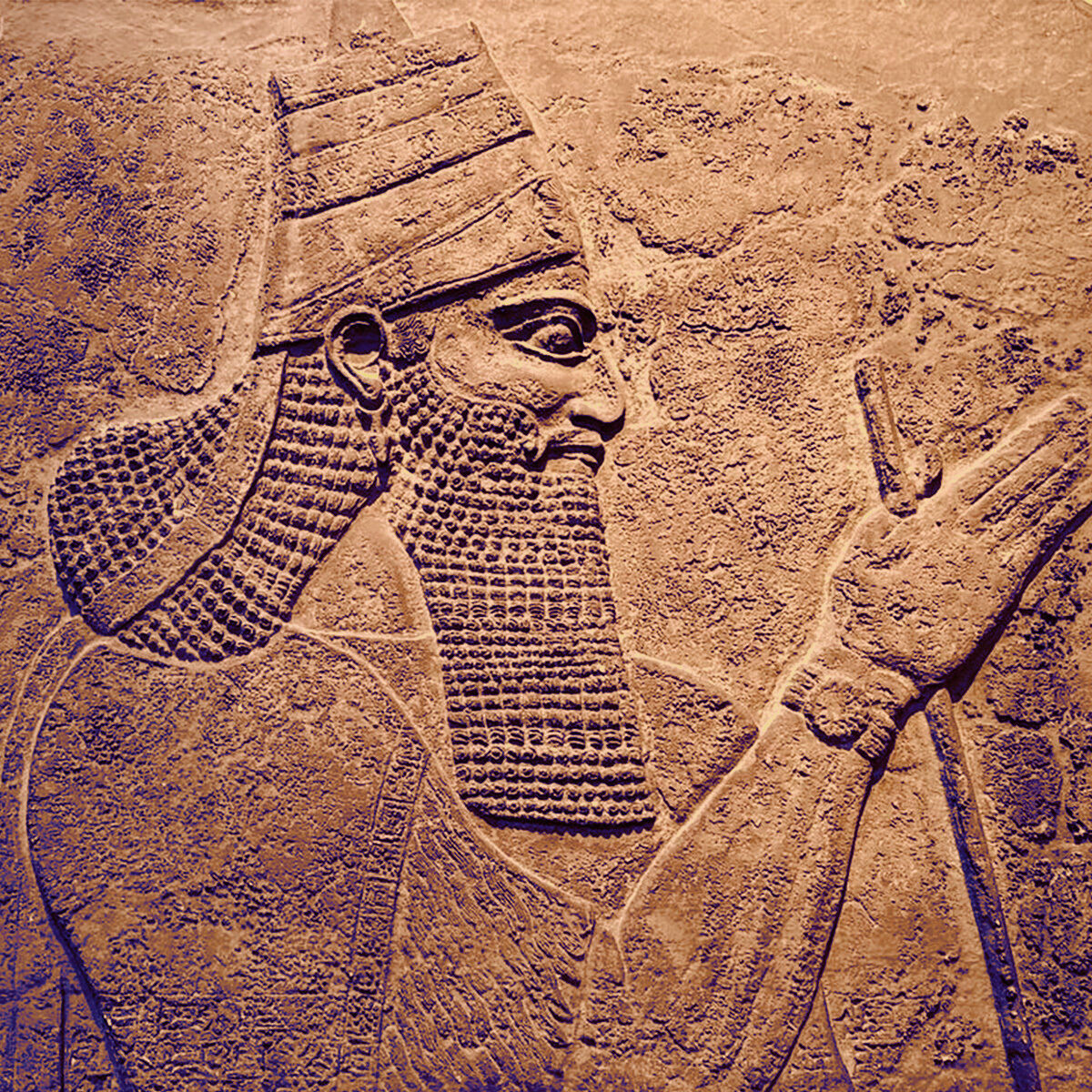
- Tiglath-Pileser iii Annalistic Records: [T]he towns … of the Upper Sea, I brought under my rule. Six officers of mine I installed as governors over them. … [Lands] which are adjacent to Israel and the wide land of Naphtali, in its entire extent, I united with Assyria. Officers of mine I installed as governors upon them. … Israel … all its inhabitants and their possessions I led to Assyria. They overthrew their king Pekah and I placed Hoshea as king over them. I received from them 10 talents of gold, 1,000(?) talents of silver as their tribute and brought them to Assyria.
- 2 Kings 15:29-30: In the days of Pekah king of Israel came Tiglath-pileser king of Assyria, and took Ijon, and Abel-beth-maacah, and Janoah, and Kedesh, and Hazor, and Gilead, and Galilee, all the land of Naphtali; and he carried them captive to Assyria. And Hoshea the son of Elah made a conspiracy against Pekah the son of Remaliah, and smote him, and slew him, and reigned in his stead ….
- Tiglath-Pileser iii Summary Inscription: I carried off to Assyria 13,520 people of Ḫatti, Gal’aza, Gilead, and [Abel-]beth-maacah together with their possessions ….
- 1 Chronicles 5:16: And the God of Israel stirred up the spirit of … Tillegath-pilneser king of Assyria, and he carried them away, even the Reubenites, and the Gadites, and the half-tribe of Manasseh [tribes inhabiting the Transjordan land of Gilead], and brought them unto Halah, and Habor, and Hara, and to the river of Gozan, unto this day.
SHALMANESER V (r. 726–721 b.c.e.)
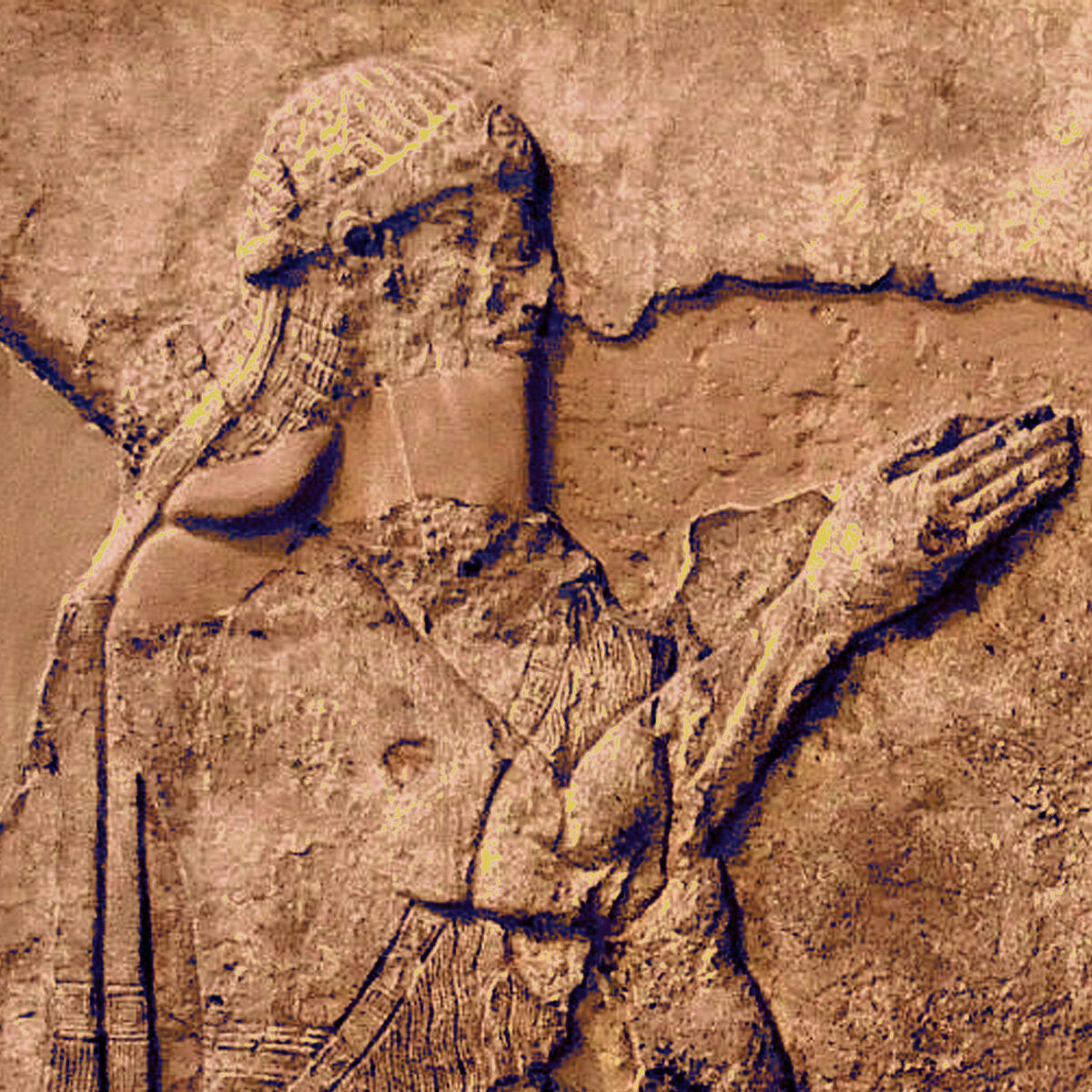
- Babylonian Chronicle i: On the 25th day of the month Tebet, Shalmaneser [v] ascended the throne of Assyria and Akkad. He ruined Samaria.
- 2 Kings 18:9: And it came to pass in the fourth year of king Hezekiah, which was the seventh year of Hoshea son of Elah king of Israel, that Shalmaneser king of Assyria came up against Samaria, and besieged it.
SARGON II (r. 721–705 b.c.e.)
- Sargon ii Gate Inscription: Property of Sargon, king of Assyria, conqueror of Samaria and of the entire country of Israel, who despoiled Ashdod ….
- Isaiah 20:1: In the year that Tartan came unto Ashdod, when Sargon the king of Assyria sent him, and he fought against Ashdod and took it.
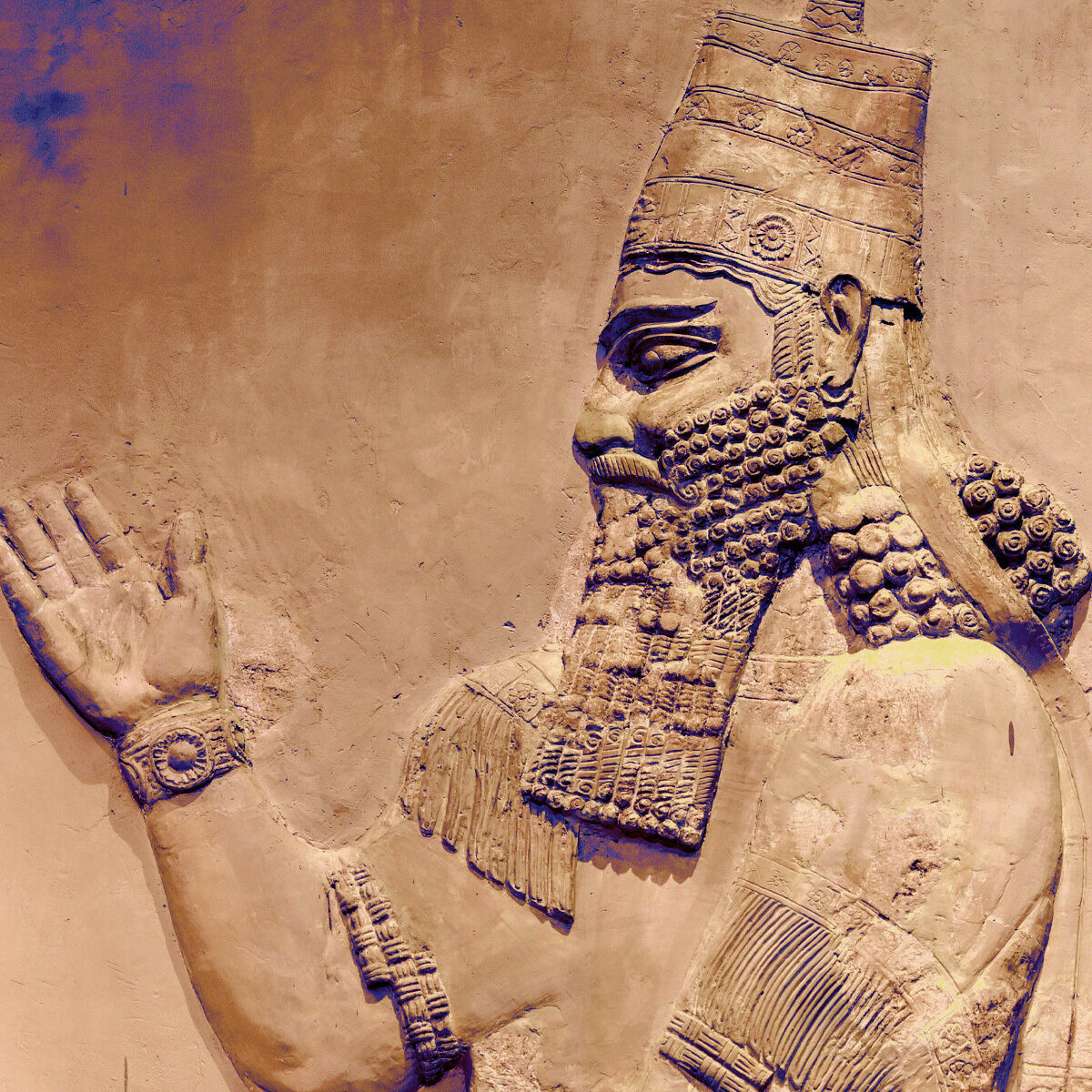
- Sargon ii Annalistic Reports: At the beginning of my royal rule … the town of the Samarians I besieged, conquered …. I led away as prisoners 27,290 inhabitants of it …. The town I rebuilt better than it was before and settled therein people from countries which I myself had conquered. I placed an officer of mine as governor over them and imposed upon them tribute as is customary for Assyrian citizens. … I conquered and sacked the towns Shinuhtu and Samaria, and all Israel. … Upon a trust-inspiring oracle given by my lord Ashur, I crushed the tribes of Tamud, Ibadidi, Marsimanu and Haiapa, the Arabs who live far away in the desert …. I deported their survivors and settled them in Samaria.
- 2 Kings 17:5-6, 23-24: Then the king of Assyria came up throughout all the land, and went up to Samaria, and besieged it three years. In the ninth year of Hoshea, the king of Assyria took Samaria, and carried Israel away unto Assyria, and placed them in Halah, and in Habor, on the river of Gozan, and in the cities of the Medes. … So Israel was carried away out of their own land to Assyria, unto this day. And the king of Assyria brought men from Babylon, and from Cuthah, and from Avva, and from Hamath and Sepharvaim, and placed them in the cities of Samaria instead of the children of Israel; and they possessed Samaria, and dwelt in the cities thereof.
Sidebar 2: Remaining Israelites?
Some who argue for a significant population of northern Israelites remaining in the land following the Assyrian conquests point to 2 Chronicles 30 and 34—chapters describing the reforms of Hezekiah and Josiah respectively. 2 Chronicles 30 is primarily appealed to, with its mention of Hezekiah sending letters to “all Israel and Judah, and [writing] letters also to Ephraim and Manasseh, that they should come to the house of the Lord at Jerusalem, to keep the passover …” (verse 1). The passage goes on to describe the rebuffing of the tribes of Ephraim, Manasseh and Zebulun, although certain individuals of the tribes of Asher, Ephraim, Issachar, Manasseh and Zebulun did come to Jerusalem to worship (verses 10-11, 18).
Yet here there is no contradiction: This invitation went out in the first year of Hezekiah’s reign (i.e. 2 Chronicles 29:17, 30:2); the northern kingdom, though severely destabilized by Assyria, did not fall until the sixth year of Hezekiah’s reign (2 Kings 18:10. Interestingly, no mention is made of Naphtali, Reuben, Gad or the Manassites of Gilead in 2 Chronicles 30—territories that had already fallen to Tiglath-Pileser iii in the years prior to Hezekiah’s reign—see Sidebar 1).
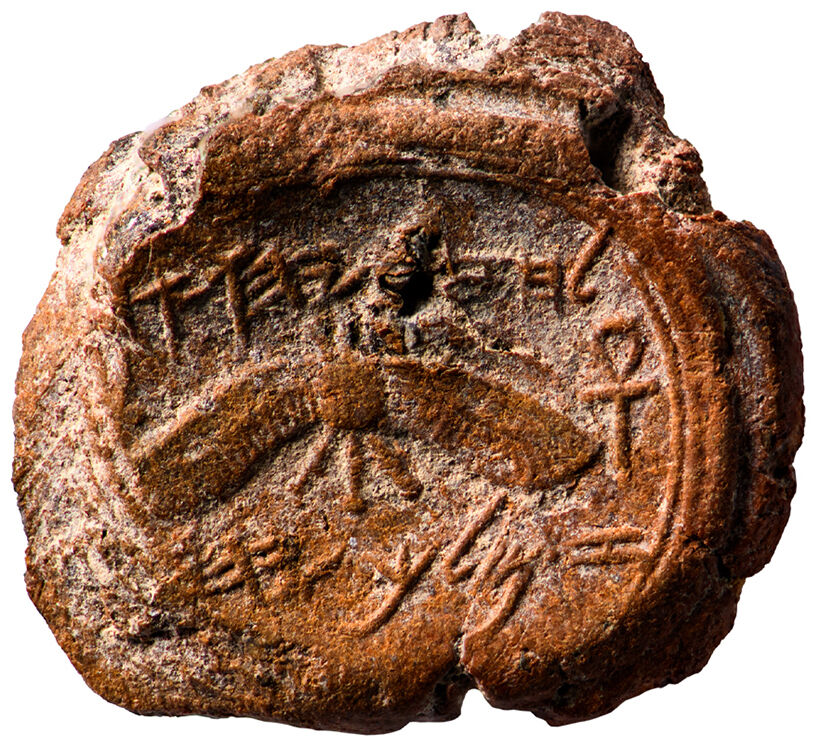
The placement of Hezekiah’s Passover invitation after the fall of the northern kingdom relies on a particular popular chronological reconstruction, beginning Hezekiah’s reign circa 716/715 b.c.e.—several years after the fall of Samaria. This popular chronology—one which, unbeknownst to many, is inherently based on the assumption of biblical error—is a complex subject for another article. Suffice it to say though that the internal biblical information is consistent in maintaining that the Passover letter went out before the kingdom of Israel fell. On this, Staples writes: “It is also surely no accident that in the chronicler’s time scheme Hezekiah’s invitation precedes the final destruction of Samaria and consequent deportation by five years, implying that had the northerners only returned to the Davidic kingdom, they might have managed to avoid such a devastating fate. This is an important point, as this passage is regularly cited as evidence that ‘Chronicles depicts a sizable Israelite remnant remaining in the land following the Assyrian invasions and deportations.’ Instead, Assyria did destroy the northern kingdom ….”
As for 2 Chronicles 34: The first half of the chapter describes an expedition of Josiah throughout Judah and even reaching deep into the former territory of northern Israel, destroying all traces of pagan worship throughout the lands and even digging up and burning the bones of deceased pagan priests—in fulfillment of a very specific prophecy in 1 Kings 13:1-2. The parallel account in 2 Kings 23 of Josiah’s destruction of these pagan sites further portrays them as high places and sepulchres of old that were discovered and disinterred. The single mention of individual tribes of the north in 2 Chronicles 34 is in verse 6, which mentions in passing this desecration happening “in the cities of Manasseh and Ephraim and Simeon, even unto Naphtali, with their axes round about.” This word axes—mattocks, in the King James Version—is an unusual word now usually translated as “ruins” in most Bible translations. The sense is clear—these are the once-populated, now-ruined cities and high places of these former tribes being purged by Josiah in fulfillment of prophecy.
Once again, the conclusion is consistent regarding the utter destruction and general deportation of the northern kingdom of Israel—from the biblical account to the Assyrian records to the later records of Josephus, with his “two tribes in Asia and Europe subject to the Romans [Judah and Benjamin], while the 10 tribes are beyond Euphrates till now, and are an immense multitude, and not to be estimated by numbers” (Antiquities 11.5.2).
Sidebar 3: Highlights From Staples’s Research
Josephus (late first century c.e.):
“Rather than treating these terms [Jews and Israelites] as equivalent, Josephus differentiates between them with striking consistency, even going out of his way to correct another historian’s conflation of the terms in Book 7 of his Jewish Antiquities …. Josephus uses Ioudaios [Jews] as the default term for his people, with that term appearing approximately 1,188 times in the Josephan corpus. But remarkably, despite its widespread use elsewhere in that corpus, that term appears only 26 times in the first 10 books of the Antiquities. The terms Israel and Israelite, on the other hand, appear 188 times in the first 11 books of the Antiquities—precisely where Ioudaios rarely appears—and then nowhere else in the Josephan corpus.”
Philo (early first century c.e.):
“[A]lthough he uses the term Israel or Israelite a combined 80 times in the extant Greek works, Philo never uses Israelite as synonymous with Ioudaios, nor does he ever refer to the contemporary people as Israel or Israelites. … Remarkably, with the exception of Embassy to Gaius, Philo never even uses Israel and Ioudaios (or Ioudaikos) in the same treatise, and even in that case, the terms are separated by 113 paragraphs.”
Dead Sea Scrolls:
- The Yahad (Dead Sea Scrolls community, second century b.c.e.–first century c.e.): “The sect thus identifies itself as comprised of Levi, Judah, and Benjamin (the traditional southern tribes), with the tribe of Levi listed first and suggesting priestly leadership. These southern tribes will ultimately be joined by the ‘exiles ….’”
- 4Q504 (second century b.c.e.): “The speaker clearly depicts Israel as remaining in exile.”
Letter of Aristeas (third century b.c.e.):
“The term Ioudaios appears 17 times in the Letter of Aristeas …. In contrast, Israel and cognates never occur.”
Tobit (third–second-century b.c.e. novella about a Naphtalite exile):
“Tobit is nowhere described as a Jew; instead, the book employs the term Israel and cognates 17 times while avoiding the term Ioudaios. … The very existence of a novella like Tobit is evidence for a continued concern for the northern tribes among early Jews. … [T]he narrative depends on the fact that the protagonists are not Jews at all.”
Jubilees (second-century b.c.e. exposition of Genesis and Exodus):
“Given its pre-Mosaic context, it should be no surprise that Jubilees uses the term Israel and cognates 112 times but avoids Yehudim and cognates.”
Susanna (second–first century b.c.e.):
“Remarkably, this passage distinguishes between Susanna as a ‘daughter of Judah’ and ‘daughters of Israel’ in general … ‘daughters of Judah’ apparently being a subset of the ‘daughters of Israel’ …. Susanna retains the concept of Ioudaioi as a subset of the larger body of Israel.”
Psalms of Solomon (second–first century b.c.e.):
“Ioudaios terminology does not appear in Psalms of Solomon. In contrast, the term Israel appears 32 times in Psalms of Solomon but is never used in reference to the contemporary Jewish people.”
3 Maccabees (first century b.c.e.–first century c.e.):
“When referring to the contemporary people, the book consistently uses the term Ioudaios, which appears 28 times. In contrast, Israel occurs only in prayer or as part of a stock reference to God.”
Testament of Moses (early first century c.e.):
“[T]he Testament of Moses portrays the 10 tribes as multiplying and increasing to huge numbers among the nations of their exile. … Test. Mos. entirely avoids Ioudaios language in favor of ten tribes/two tribes terminology, with both uses of Israel referring to the 12 tribes as a whole.”
4 Ezra (first century c.e.):
“4 Ezra never mentions ‘the Jews,’ instead preferring ‘Israel,’ which appears 12 times and consistently refers to the full 12-tribe nation.”
2 Baruch (late first–early second century c.e.):
“The 9½ tribes are thus envisioned as still in exile somewhere across the Euphrates, separated from those from Judah who have been exiled to Babylon. … 2 Baruch limits Israel language to the full 12-tribe entity (10 times) or the northern kingdom while avoiding Jew/Judahite language except for three references to the kings of Judah, strong evidence that 2 Baruch understands Jew to denote someone specifically from Judah.”
Testaments of the Twelve Patriarchs (up to second century c.e.)
“[T]he term Ioudaios never appears in the Testaments. Instead, the Testaments consistently highlight the continuing exile of Israel with particular emphasis on the fate of the north, expecting that all 12 tribes would one day be restored through divine intervention. … Israel in the Testaments of the Twelve Patriarchs denotes a larger group than the Jews, remarkably including even those who may have forgotten their tribal and ethnic heritage as Israelites.”
