

Another discovery from the time of the Hasmonean Period has hit the news just days before Israel celebrates the festival of Hanukkah, a memorial of the restoration and rededication of the temple by the Maccabees some 2,200 years ago.
On December 10, TPS-IL discussed the “First Material Evidence of Judah Maccabee’s Battlefield Discovered Near Jerusalem” in an interview with Dr. Dvir Raviv from Bar-Ilan University. This came two days after archaeologists from the Israel Antiquities Authority announced the discovery of a large Hasmonean wall section under an old Jerusalem prison.
Dr. Raviv related the results of a 2022 survey at Horbat Bet Zecharia in the Gush Etzion region, about 7 kilometers southwest of Bethlehem. It yielded artifacts showing evidence of the battlefield where Judah Maccabee fought Antiochus iv Epiphanes, the Seleucid king who set up an idol in the temple.
The site is commonly identified with the town of Bet Zecharia, where ancient records say this “fifth battle” of the Maccabees between Judah and Antiochus took place.
Josephus and the 1st book of Maccabees tell of Antiochus’s Seleucid army advancing northward on elephants toward Jerusalem along the Hebron-Jerusalem road. While Judah’s forces fought valiantly—especially his brother, who sacrificed himself to kill one of the war-elephants that then collapsed on him—they lost the battle. Antiochus went on to besiege the temple at Jerusalem.
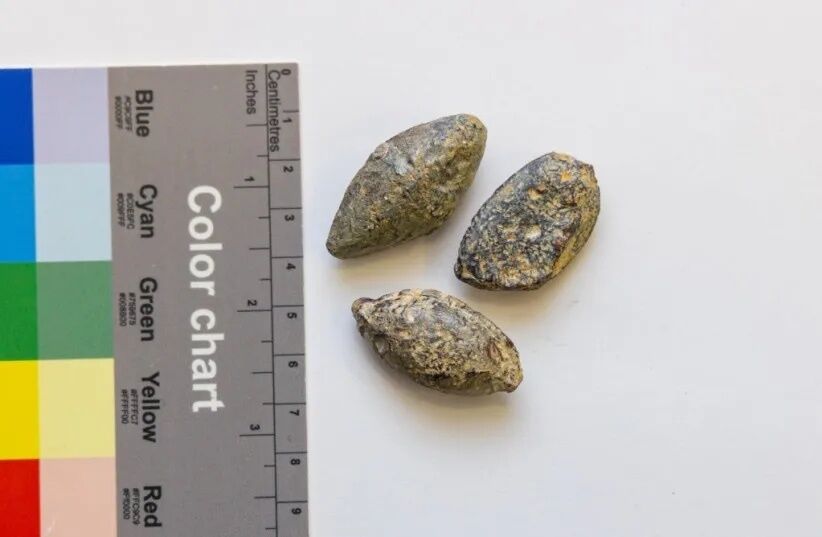
In his survey, Raviv discovered 92 coins and hundreds of pottery sherds from the Persian to the Hasmonean periods. But what really heightened his attention were four artifacts: three lead sling bullets and a bronze coin from the ancient city of Side.
The lead bullets were common ammunition for Hellenist slingers. Such bullets are well known from over 20 other sites across Israel, which historical records attribute to battlefields, siege works or forts. One of the three had a winged thunderbolt of Zeus on its side, a typical mark for such bullets. They were found on the slope at the western side of the site, toward the Hebron-Jerusalem road.
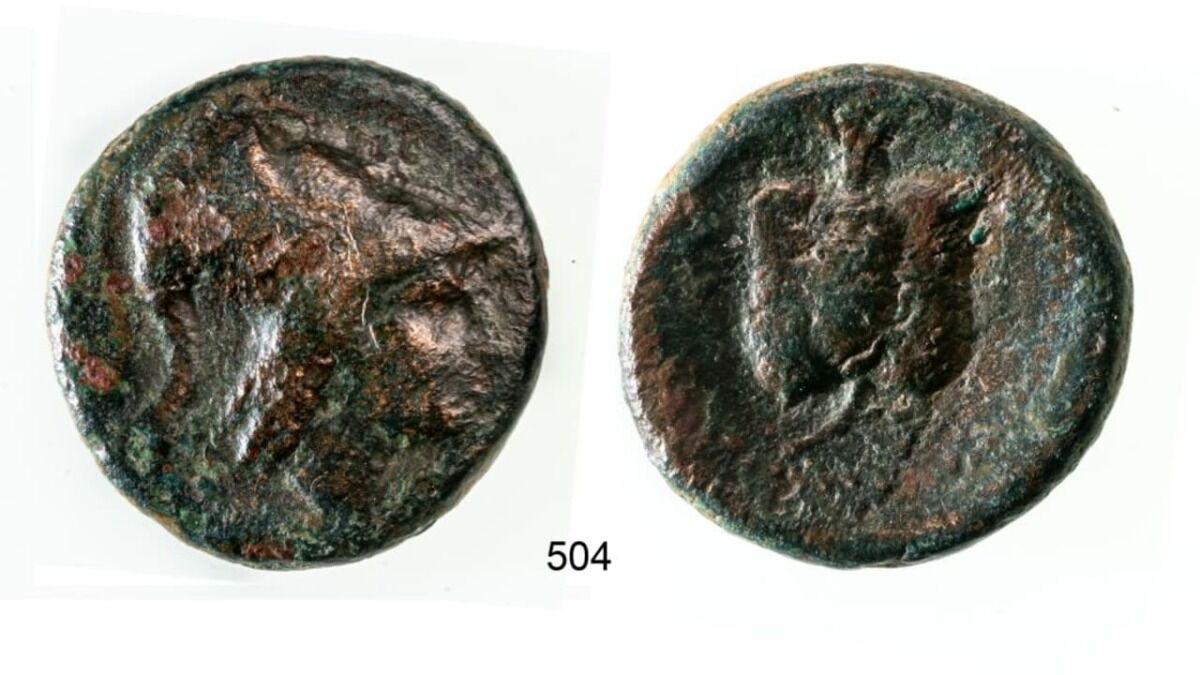
The bronze coin corroborates another detail from the historical description of the battle. One side has a picture of the Greek goddess Athena; the other depicts a pomegranate, the symbol of the city of Side in the south of modern-day Turkey.
Side served as one of the recruitment centers for mercenaries in the Seleucid army. 1 Maccabees 6:29 says Antiochus received support from “mercenary forces” against Judah Maccabee in this battle. These mercenaries would have been paid with coins like the one found at Bet Zecharia. Although many similar coins have been discovered across Israel, this is the first instance of one found at the site of a Maccabean battlefield.
While the site of the battle isn’t much disputed by historians, Raviv says the finds are still valuable. “The finds sit where the sources place the battle, along the old road below the village,” Raviv told TPS-IL. “They give us, for the first time, an archaeological echo of the confrontation described in the texts.”
With this discovery, we have yet another find that proves the millenniums-long history of the Jews in the Promised Land and their struggle to survive and remain independent.
