
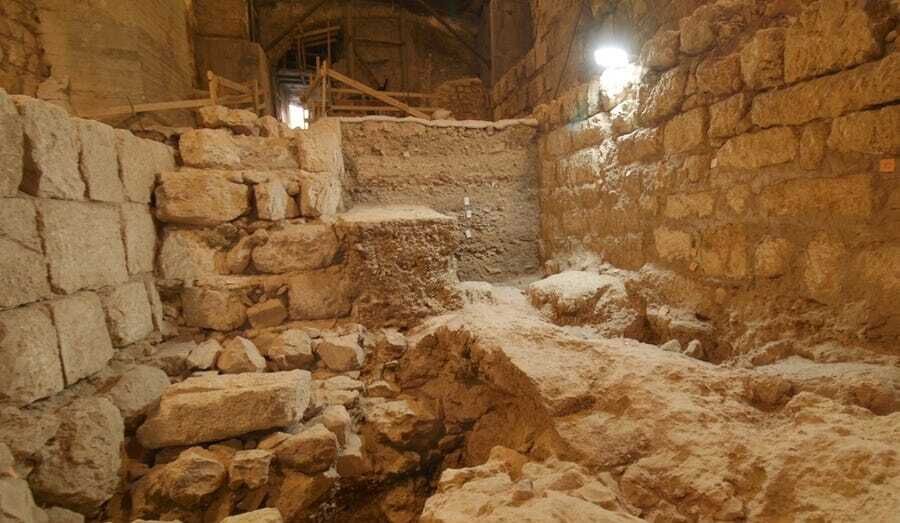
A large wall segment from the second-century b.c.e. Hasmonean kingdom has recently been uncovered in Jerusalem by the Israel Antiquities Authority (iaa). The iaa announced the discovery on December 8 at the Tower of David Jerusalem Museum.
It was uncovered at the Kishle complex, which served as a prison during the British Mandate (1920–1948), an area that was first excavated by the iaa in 1999. The Kishle is just south of the Tower of David citadel.

The wall section measures over 40 meters (131 feet) long and 5 meters (16 feet) wide. According to the excavation director, Dr. Amit Re’em, the wall might have been over 10 meters tall—taller than the remains of the still-standing Ottoman wall. This large, well-preserved Hasmonean wall gives us insight into Jerusalem’s fortifications in the second century b.c.e.
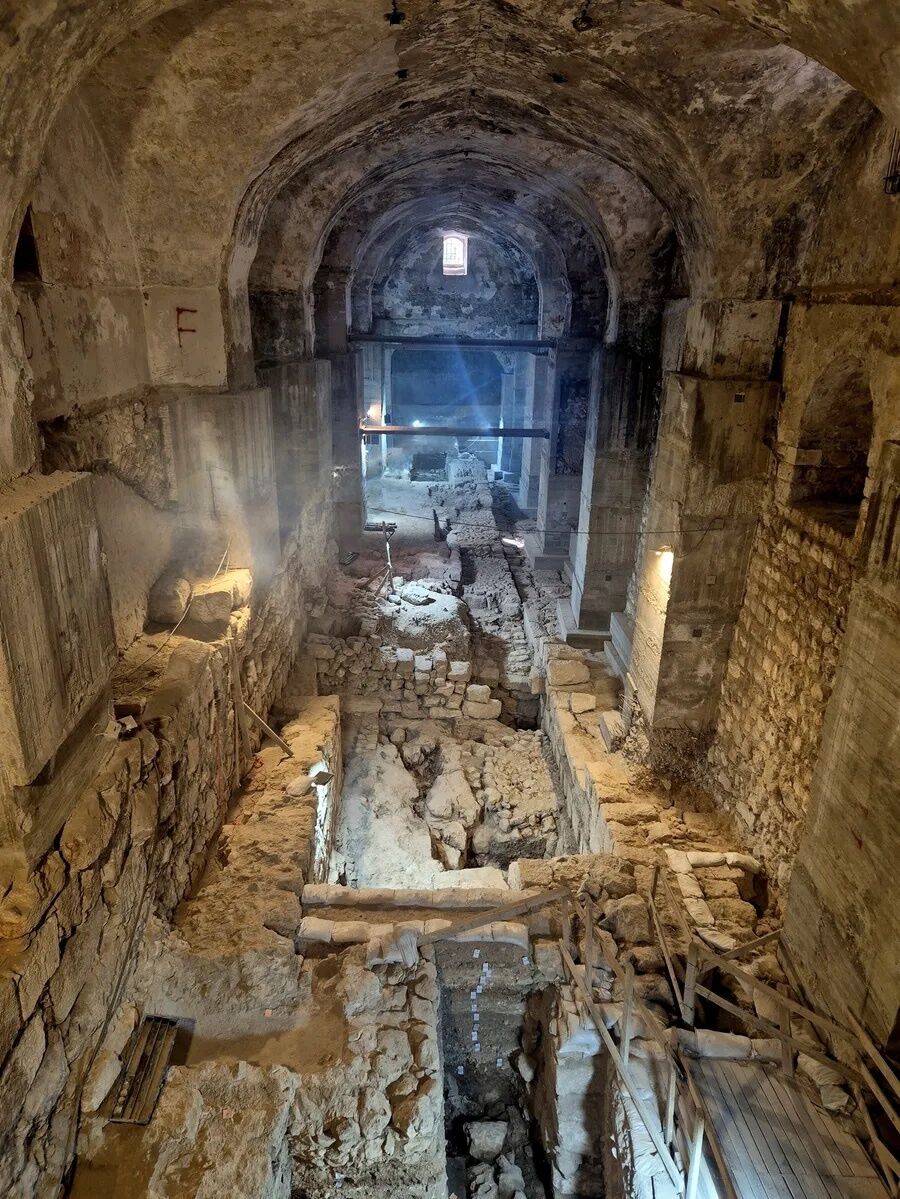
By the second century b.c.e., Jerusalem’s fortified borders had extended to the Western Hill. This wall segment was most likely constructed during the reign of John Hyrcanus i (135–104 b.c.e.). The first-century c.e. Jewish historian Josephus called it the “First Wall” and referred to it as “impregnable” with 60 towers dotting its circumference.
Other sections of the same wall have been found elsewhere in Jerusalem: “During the Second Temple Period, the Hasmonean city wall also surrounded Mount Zion, where sections of it have been found, as well as in the City of David, in the Citadel of David courtyard, and alongside the outer façade of the western city wall of Jerusalem’s Old City,” Re’em wrote in the press release.
The renewed excavations showed evidence that sometime after its construction in the second century b.c.e., the wall was deliberately torn down, with only the small stump of its base remaining. “It was razed to the ground, not as the result of a battle, but rather in a strategic, surgical operation,” Re’em told the Jerusalem Post. It was most likely dismantled in one of two circumstances.
Its destruction might have been one of the conditions of a peace treaty between Hyrcanus i and Seleucid King Antiochus vii Sidetes, who besieged the city between 134–132 b.c.e. As a precondition for halting the siege, Josephus wrote that Sidetes required the dismantlement of Jerusalem’s fortifications. Upon Hyrcanus’s compliance, the siege was abandoned.
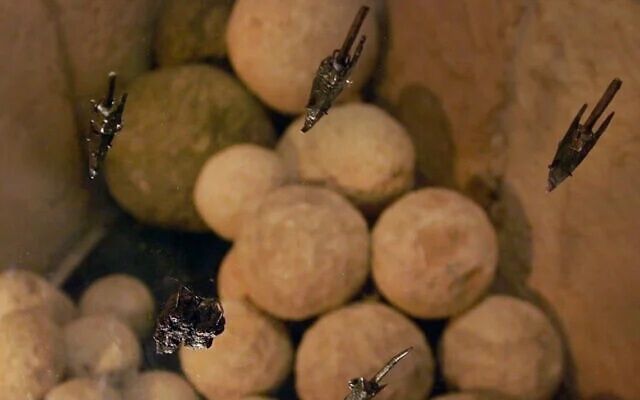
In the 1980s, archaeologists Renee Sivan and Giora Solar found material evidence of this siege—arrowheads, catapult stones and slingstones—at a section of the wall close to the one recently uncovered.
Another possibility Re’em suggests is that the wall was dismantled a century later by the infamous King Herod. Historical records, such as Josephus’s writings, show that he built his palace in the area of Jaffa Gate and the Tower of David. Perhaps he ordered that the Hasmonean wall be torn down to make room for his palace and demonstrate that the days of the Hasmonean monarchy were over.
No carbon dates could be secured for the structure yet, however, so the precise dating of its construction and destruction remains unknown.
Another section of what the excavators interpret as a First Temple Period wall was also found in the excavations. However, carbon-dating samples are still being processed, Re’em told the Times of Israel.
This recently uncovered Hasmonean wall testifies to the long-lasting historic connection of the Jews to the Promised Land and Jerusalem in particular. “The archaeological discoveries allow us to connect to the historical continuity that binds us—generations of Jews, to Jerusalem, and demonstrates and exhibits our proud heritage to the world,” Rabbi Amichai Eliyahu, Israeli minister of heritage, said.
Excavations on the wall were conducted in preparation for the expansion of the Tower of David Jerusalem Museum. The wall section will be visible through a glass floor as part of a new “Schulich Wing of Archaeology, Art and Innovation.”
