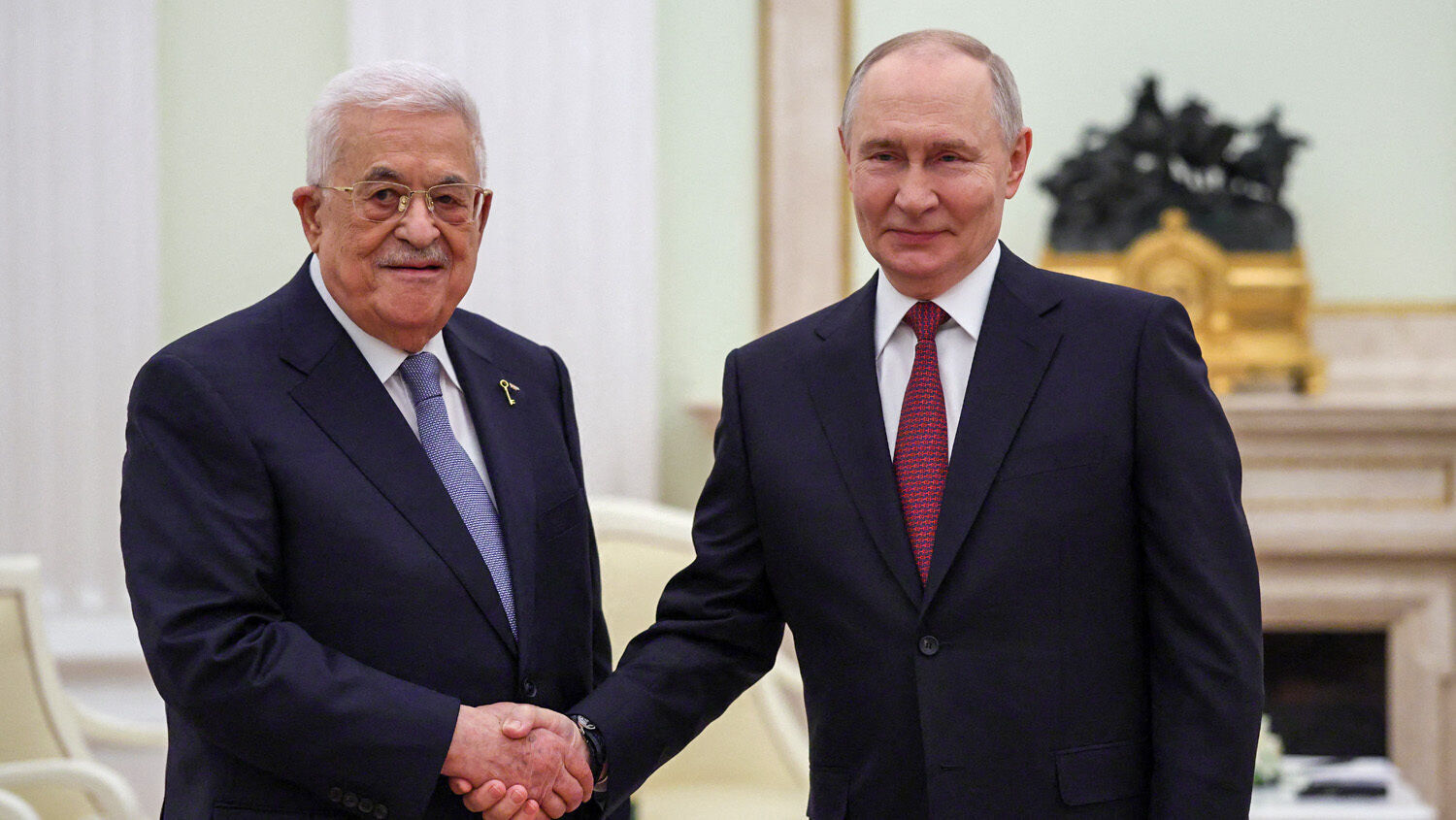
Russia integrated the Palestinian Authority (PA) into a major cultural heritage program July 9. The PA will now contribute to Russia’s Digital Archive of African and Islamic World Monuments project. The Russian Academy of Sciences plans to send a team in October to West Bank historic sites for “preserving and protecting cultural heritage.” But this is about far more than preservation work. This is about geopolitics, cultural diplomacy and undermining a key Western country.
Russian state media claim the project will create digital records of monuments “under threat of destruction.” Natalia Solovyova, the project’s head archaeologist, claimed the West Bank “is a hotspot [of conflict], and the monuments are suffering. The history is so rich that we must not of course allow it to be destroyed, rewritten, demolished or wiped from memory.”
Without naming names, it’s clear that Israel is being blamed.
This not token support. The academy plans to use geodetic technology and drones to survey the land. Israel controls the West Bank’s borders. Solovyova acknowledged in an interview Israel wouldn’t let this project go forward. She admitted the team will pretend to be tourists and lie to Israeli authorities.
One example of such accusations of Israel destroying heritage happened in November last year. Israel announced it was exercising jurisdiction over the archaeological remains of the West Bank town of Sebastia. One resident of Sebastia told the Guardian that Israel’s actions were “a violation of the history and the heritage of Palestine.”
To many, “Sebastia” may not sound immediately recognizable. The reader may be more familiar with its biblical name, “Samaria.” In the ninth and eighth centuries b.c.e., it was the capital of the northern kingdom of Israel, featuring prominently in the Bible.
Israel plans to develop this location—covered in significant ancient remains—into a tourist site. Israeli Minister of Heritage Amichai Eliyahu said the plan “is to breathe new life into the site and make it an attraction” to “strengthen the connection between the people, their heritage and their country.”
By the time the Holy Land became part of the Muslim world, Samaria was a small town of little importance. Hardly anything is standing from that period. Samaria’s archaeological heritage isn’t Muslim; it is Israelite. That is precisely why Palestinian activists don’t like development projects like this. It is these activists, not the Israelis, wiping history from memory.
Similar disputes surround West Bank archaeological areas like Hebron, Jericho and Bethlehem. Anybody with basic biblical understanding should know these places have strong Israelite heritage.
This is the context of Russia’s project to document West Bank monuments. For the PA, it’s not enough to let the international press demonize biblical archaeology. It is recruiting the resources of a Russia to rewrite the Bible out of the Holy Land’s history.
Russia, contrary to its common claim of being a Christian safe haven, is essentially declaring war on biblical history.
This worldview affects more than mere piles of Middle Eastern rubble. “The Hebrew Bible is one of the foundations of Judeo-Christian tradition and Western culture in general,” wrote Andrew Miiller, “so anyone who hates the Jews and rejects this foundation ends up rejecting civilization itself. … Ultimately, anti-Semitism is not about racial bigotry against Abraham’s descendants. It is about hatred for the biblical precepts upon which Western civilization was built” (article, “Why Anti-Semitism Is Anti-Western”).
This campaign to undermine biblical heritage is far more organized than many realize. It has some powerful backers. And it demands the supporters of biblical archaeology be at least just as organized. A lot is at stake in this important field.