
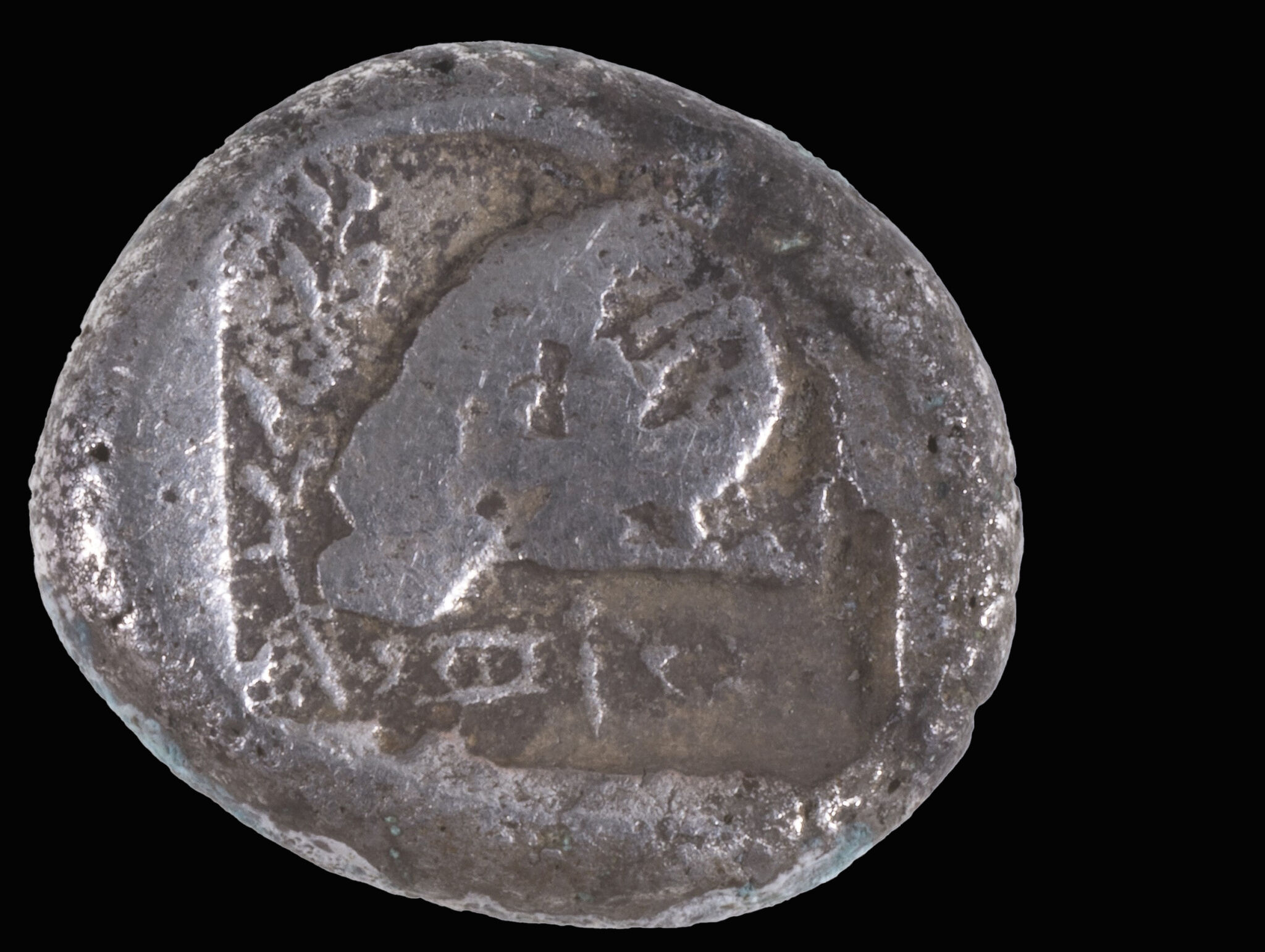
When people lose jewelry, keys or other objects on an Ashdod beach, Avi Chaprak, deputy director of the Ashdod Beaches Department, usually helps residents find them. During one particular search, he noticed a 2,500-year-old ancient coin—the first of its kind ever discovered in Israel.
Originally minted in the ancient city of Salamis, located on the east coast of Cyprus, it is a coin known as a “Siglos.” It weighs 11 grams and dates to the mid-fifth century b.c.e. At that time, the island was under Persian rule. The early date is notable, as coinage was a relatively new development.
“At first glance it looked to be made of silver,” Yanniv David Levy, researcher and curator in the Israel Antiquities Authority coin department, said, “but a closer examination showed it to actually be of metal that was only plated with silver; a known phenomenon in Cypriot silver coins from this period, given the shortage of silver on the island.”
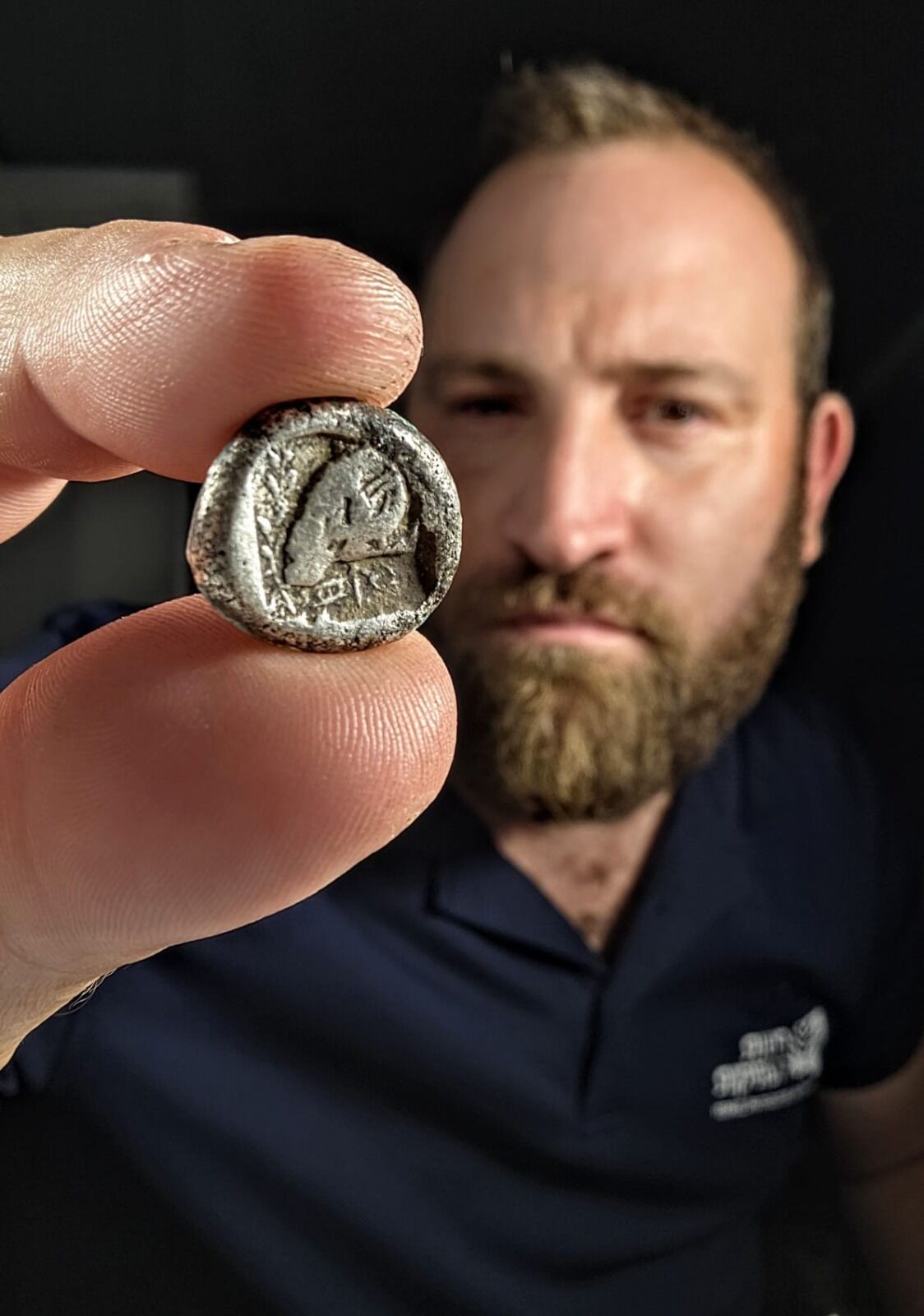
Not many silver coins were well preserved in antiquity, especially of this size. Often, silver coins were cut into smaller pieces and used in local trades. “The discovery of a complete coin from the coastal area is thus unusual on all accounts, and of special historical importance,” Levy continued.
Dr. Evangeline Markou, an Athens-based expert in ancient Cypriot coinage, wrote: “Salamis coins from the fifth century b.c.e. were circulating throughout the eastern Mediterranean. However, finds with an exact provenance are rarer, and therefore this coin potentially offers significant information about trade ties and movement between Cyprus and the land of Israel during this period.”
One side of the coin depicts a left-facing recumbent (lying) ram; the other, a ram’s head set within a square frame, alongside a laurel barrel and Cypriot syllabic script. This one-of-a-kind discovery highlights the maritime and commercial ties between the land of Israel and Cyprus.
Large quantities of Cypriot pottery have been discovered in Tel Shikmona. Isaiah 23:1, 12 show Cyprus (under the archaic name Kittim) being closely connected with Phoenician trade cities—the Phoenicians acting as a trade bridge between Israel’s coast and other nations. Further, in 2022, an isotope analysis from a shipwreck in Caesarea, revealed that 3,200 years ago Israel and Cyprus had vast commercial ties.
This unique coin now adds to the collection of evidence supporting such trade connections between these lands throughout various points in ancient history.

Avi Chaprak summarized his discovery: “If through this act I contributed another small piece towards the research and history of the land of Israel, then that is a great honor for me.”
In the words of Israel’s minister of heritage, Rabbi Amihai Eliyahu: “The public’s cooperation in reporting on antiquities makes it possible to preserve the heritage assets that belong to all of us, to deepen knowledge about the country’s past, and to ensure that the finds will be preserved and studied for the benefit of future generations.”