“I am a former subscriber to [a certain popular biblical archaeology magazine], and I exited that publication somewhat angry,” a reader recently wrote to us. “It seemed that the principals of [this publication] spent more time trying to refute the Bible than they did reenforcing it. …
“I think it was an article on the possible existence of ‘Lilith’ that pushed me over the edge,” he wrote, lamenting what he described as the tendency of certain writers to “smack the Bible every chance they got,” and an inordinate focus on this kind of Lilith-related, obscure “mysticism” on the other.
Perhaps this individual can forgive me for using his exasperation with the subject as a vehicle for my own article—indeed, not so much on Lilith herself, but on the persistent obsession with her, as well as some of the labyrinthine attempts to rationalize her into existence.
What’s up with Lilith—a malignant spirit that certain much later legends identify as Adam’s “first wife,” before Eve—and why is this subject such a magnet for attention?
Immense Appetite for Lilith
Thousands of articles have been written on the subject of Lilith, collectively generating multiple millions of views. Hundreds of videos populate YouTube on the subject, likewise garnering tens of millions of views—videos like The Legends of History’s “Lilith: The First Woman? Bible Stories Explained” and Religion for Breakfast’s “The Origins of Lilith: Adam’s First Wife?”, each with millions of views.
Many videos are framed in such a way as to imply that her story was surreptitiously “removed” from the Bible—videos such as Gnosticism for Breakfast’s “Why Churches Removed Lilith From Genesis,” Sleepless Devotion’s “The ENTIRE Story of Lilith—The Woman the Bible Tried to Erase” and Forbidden Gnosis’s “Lilith: The Woman Erased From Genesis—And Why Jung Said She Reveals the Real Story.” Other more “spiritual” channels try to “channel the power” of the she-demon, such as The Lilith Verse’s “Is Lilith Calling You? Building a Relationship With the Dark Goddess,” Grim Wire’s “Working With Lilith: The Full History & Personality of the Ancient Dark Goddess” and Cipher Grove’s “I Met Lilith: This Is What She Showed Me,” each of which have tens of thousands of views.
Then there’s the music, with hundreds of millions of listeners—including famous artist Halsey’s “Lilith,” from her Diablo iv album; Saint Avangeline’s “Lilith,” from her Gardener of Eden album; and Peter Gundry’s “Lilith,” from his Dark Magic Music album. Not to mention the popular music festival, Lilith Fair—cofounded by the famous singer-songwriter Sarah McLachlan, oriented around female solo artists and female-led bands—which went on in its day to become the biggest touring music fair in America.
And on and on. Look no further than Wikipedia—probably your top hit, if you type “Lilith” into your search engine—and one of the most telling representations of the lopsided treatment of the subject. The “Lilith” page has a length of roughly 11,000 words—nearly triple the length of the entry for mother Eve, who is afforded little more than 4,000 words—and Adam himself receiving less than 4,000 words. (This is hardly the only lopsided Wikipedia representation of matters biblical and archaeological—as the following article points out.)
Small wonder our aforementioned reader’s “Lilith fatigue.” And all this, for an obscure word of dubious translation found just once in the Bible—for that matter, nowhere near the book of Genesis—and an entire mythological genre that has grown up around it.
Lilith—Who?
The word lilith (Hebrew, לילית) is found in Isaiah 34, within a passage prophesying destruction and desolation to come upon the land of Edom. The King James Version reads: “But the cormorant and the bittern shall possess it, the owl also and the raven shall dwell in it …. And thorns shall come up in her palaces, nettles and brambles in the fortresses thereof: and it shall be a habitation of dragons, and a court for owls. The wild beasts of the desert shall also meet with the wild beasts of the island, and the satyr shall cry to his fellow; the screech owl [לילית] also shall rest there, and find for herself a place of rest. There shall the great owl make her nest, and lay, and hatch, and gather under her shadow: there shall the vultures also be gathered, every one with her mate” (verses 11, 13-15).
This passage contains a listing of many different creatures populating a desolate and uninhabited region. Among them is the lilith—translated by the King James Version as “screech owl” (also by the Geneva Bible, Holman Christian Standard Bible and Webster’s Bible Translation) and similarly by other translations as the “night-owl” (e.g. Literal Standard Version and Young’s Literal Translation) and “night bird” (e.g. Christian Standard Bible, English Standard Version and New American Standard Bible). Others translate this more generally as a “nocturnal animal” (e.g. New English Translation and New Heart English Bible) or “night creature” (e.g. Berean Study Bible, New King James Version, New International Version, New Living Translation and World English Bible). Still others leave it untranslated, as “lilith” (e.g. Darby Bible Translation and International Standard Version). Taking a darker turn, other translations include “night-monster” (e.g. American Standard Version, English Revised Version and Jewish Publication Society), “night spectre” (e.g. Smith’s Literal Translation), “night hag” (e.g. Revised Standard Version), “night demon” (e.g. Amplified Bible and Peshitta), even “ogress” (e.g. Catholic Public Domain Version) and “lamia” (child-eating monster—e.g. Bishop’s Bible, Douay-Rheims Bible and Coverdale Bible).
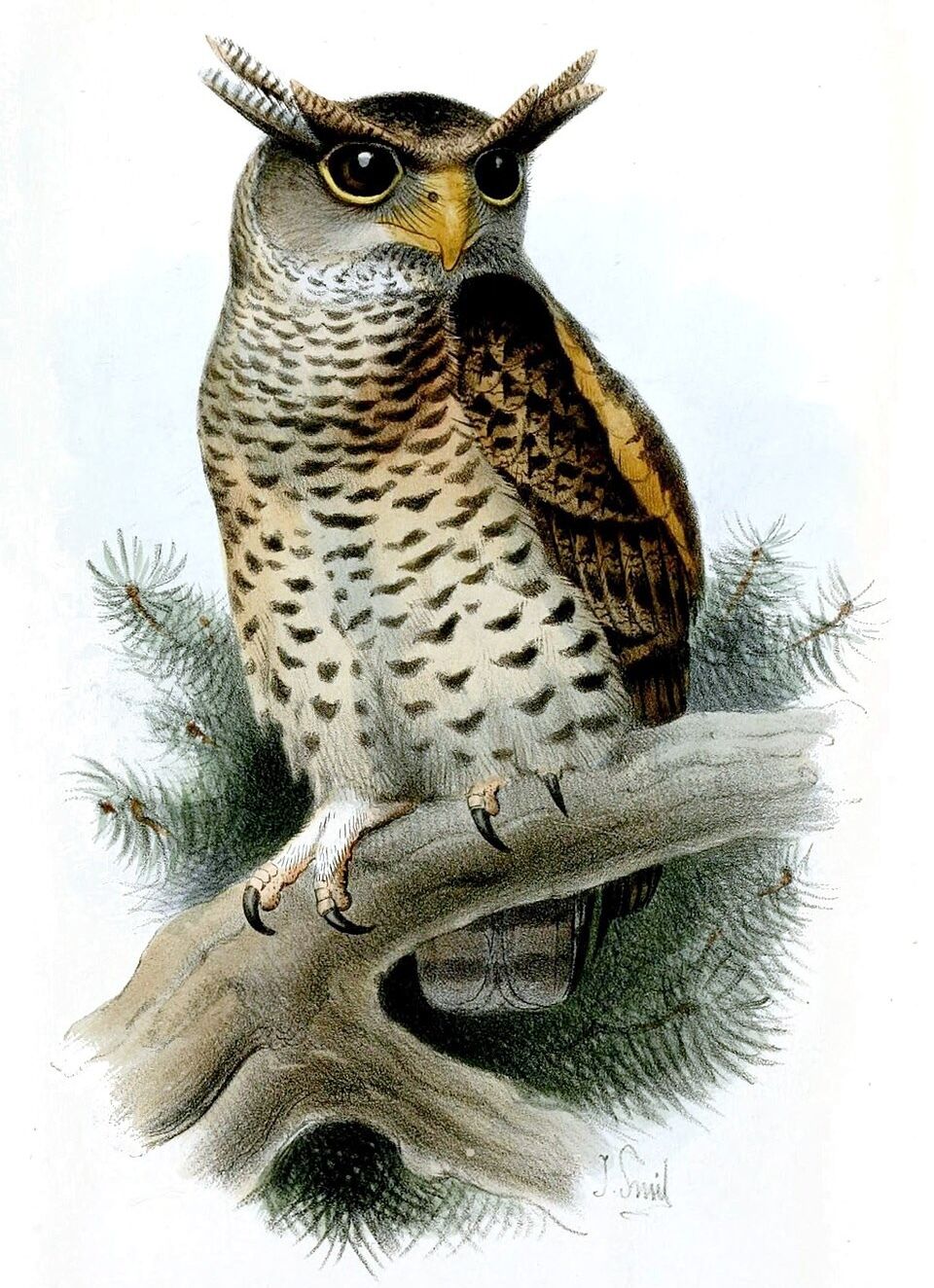
Corresponding to these differences in translation is a class of malignant spirits known from ancient Mesopotamia as lilu in Akkadian—feminine, lilitu. These were held to be spirits of adolescents who had died before marriage and conceiving children. In light of this, debate surrounding the use of lilith in Isaiah 34:14 typically focuses on if the author meant to refer here to such an evil spirit occupying these waste places—or, simply an animal whose name bore a shared etymology or derivation. In the case of the latter, what we have here may be not too dissimilar to the case of Sri Lanka’s ulama, or “Devil Bird”—commonly identified with the Spot-Bellied Eagle Owl, or Large Horned Owl (pictured left)—known for its bloodcurdling, human-like scream. (Many animals with terrifying sounds or appearances bear names linked to the supernatural.)
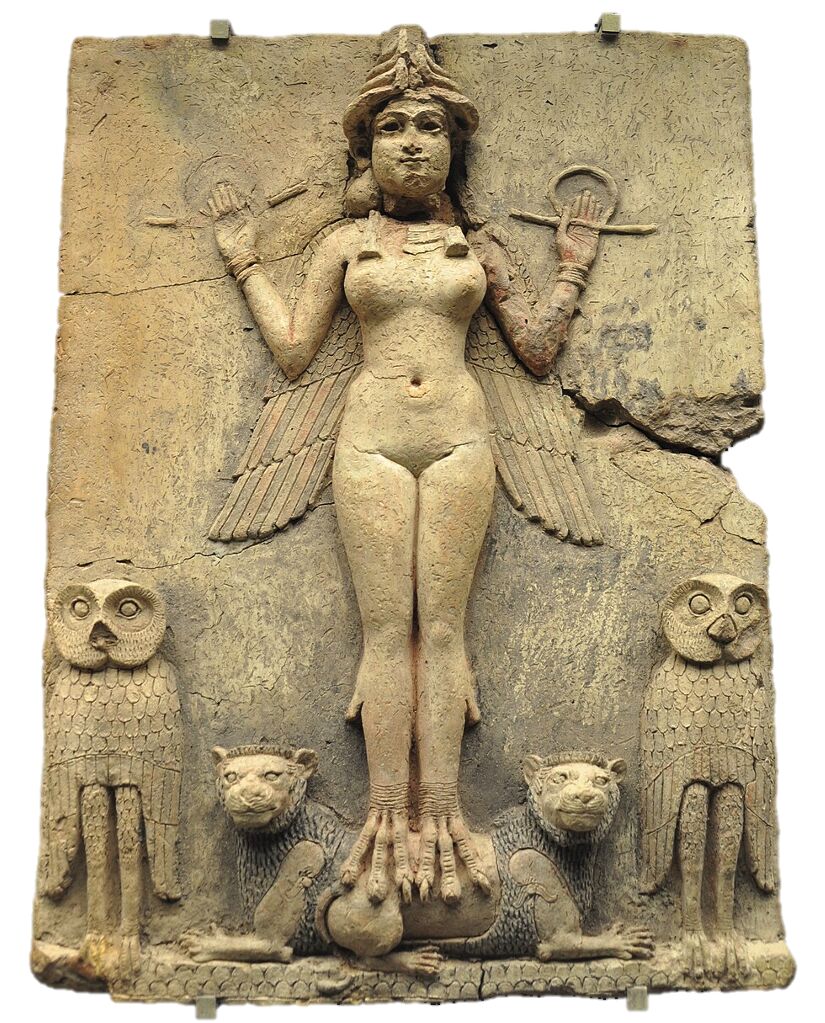
In arguing for a more spiritual interpretation, some point to the New Testament’s description of possessive “unclean spirits” wandering “dry places, seeking rest, and find[ing] none” (Matthew 12:43). Yet in the case of Isaiah’s לילית, we do have a creature—whatever it is—mentioned twice as finding “rest” in this wilderness.
But all this is a side-study. Where do Adam, Eve and Genesis come into the picture?
Certainly not within the biblical text—rather much, much later. The earliest text explicitly mentioning “Lilith” as Adam’s first wife is the pseudepigraphical Alphabet of Sirach, a work of the Middle Ages—dated somewhere between the eighth to 10th century c.e.—held to be the oldest form of this legend.
Devil in the Details
Such later legends of another wife of Adam, prior to Eve, seem to have formulated around a very particular reading of the Genesis account. “So God created man in his own image, in the image of God created he him; male and female created he them”—so states Genesis 1:27, within the account of the sixth day of creation (verses 24-31). Genesis 2 describes separately and in special detail Eve’s creation, from Adam’s rib—after Adam had named the animals, and realized his own loneliness (verse 19-20). As such, typical interpretations either compress these events of Genesis 2 into the sixth day of creation, or consider Genesis 1:27’s reference to “male and female” not as part of the chronological flow of the sixth day of creation, but merely added detail—with the woman created later.
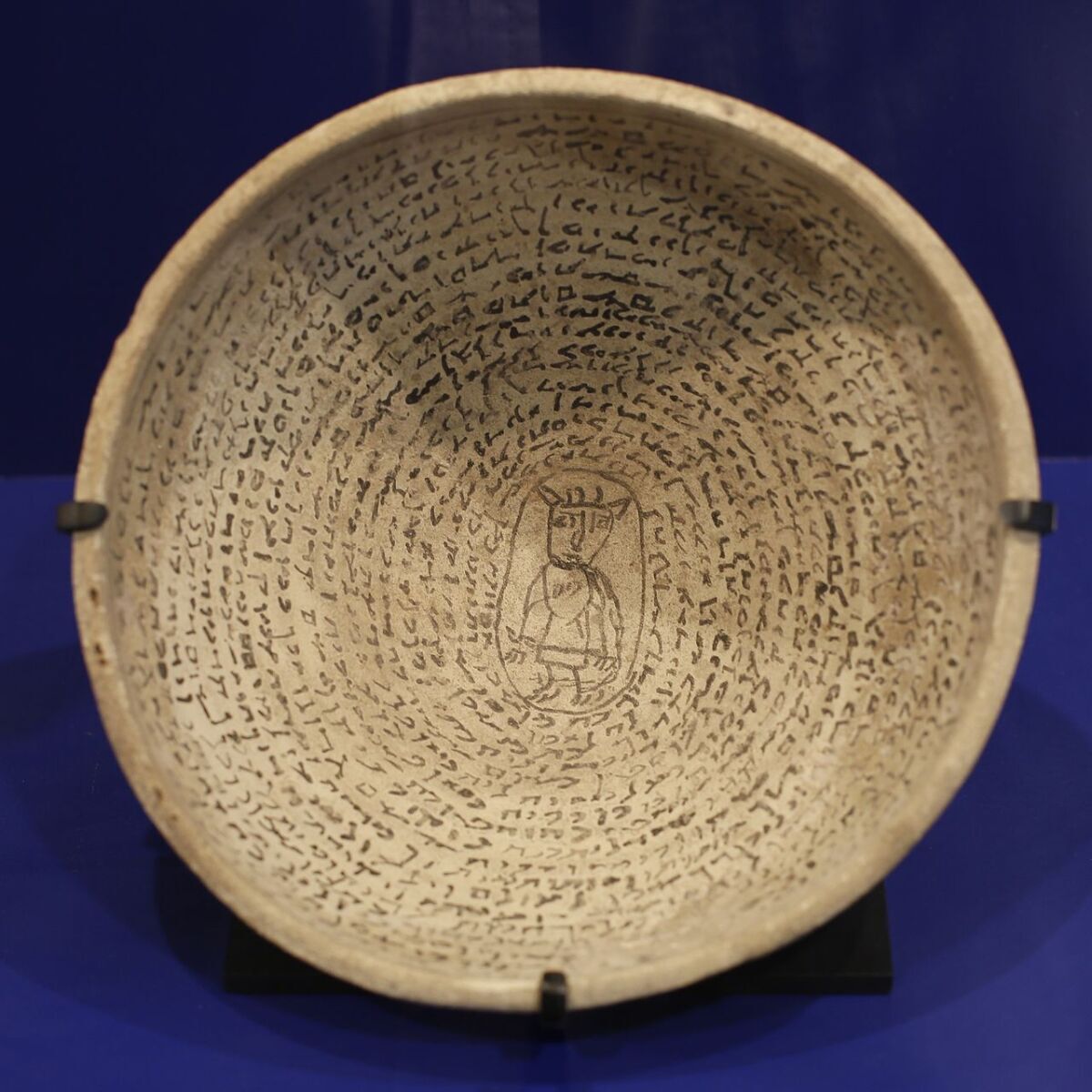
Naturally, where a degree of ambiguity can be found, speculation abounds. It was through this cracked-open door that the incarnated Mesopotamian she-demon Lilith was inserted—already a developing demonic figure in later traditions (for example, she makes a cameo appearance in Dead Sea Scroll 4Q510-511, and mid-first millennium c.e. incantation bowls pronounce curses against her).
Centuries of layering, especially from the Alphabet of Sirach onward, have resulted in a rather fantastical story. To make it short—and there are variations—the common story told is of Adam and Lilith, both created from clay. Considering herself in all respects thus to be of equal standing, Lilith refuses to be “underneath” Adam during marital relations and generally refuses to be submissive. Eventually, in defiance Lilith commits an act of blasphemy and is transformed into an evil, winged spirit that flies away. In her place—so the story goes—God created Eve from Adam’s own body, with the invocation that her “desire shall be to thy husband, and he shall rule over thee” (Genesis 3:16). As for Lilith, she goes on to become a child-devouring monster—whom Adam liasons with during the 130-year period before Seth is born.
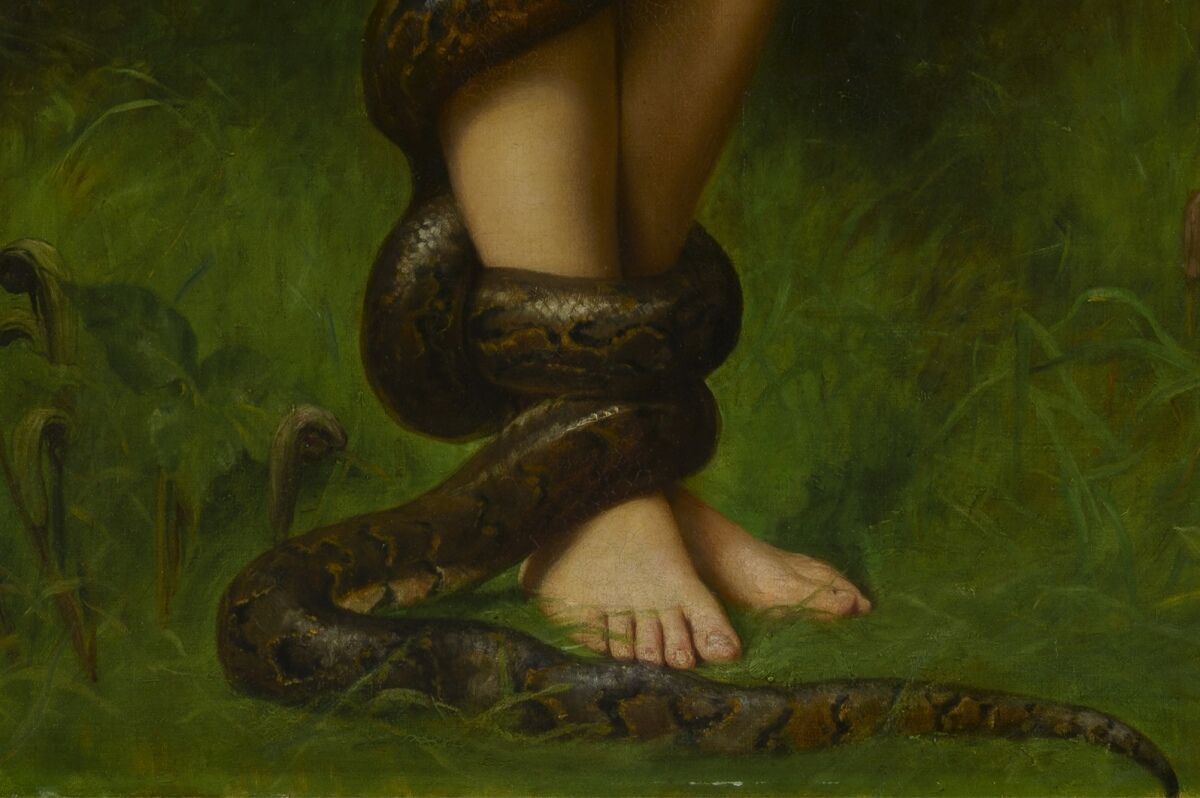
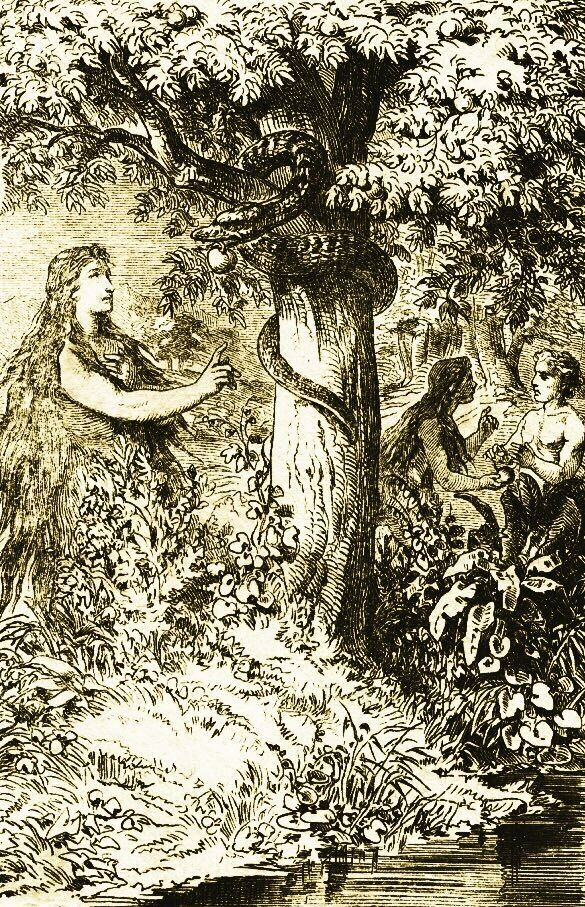
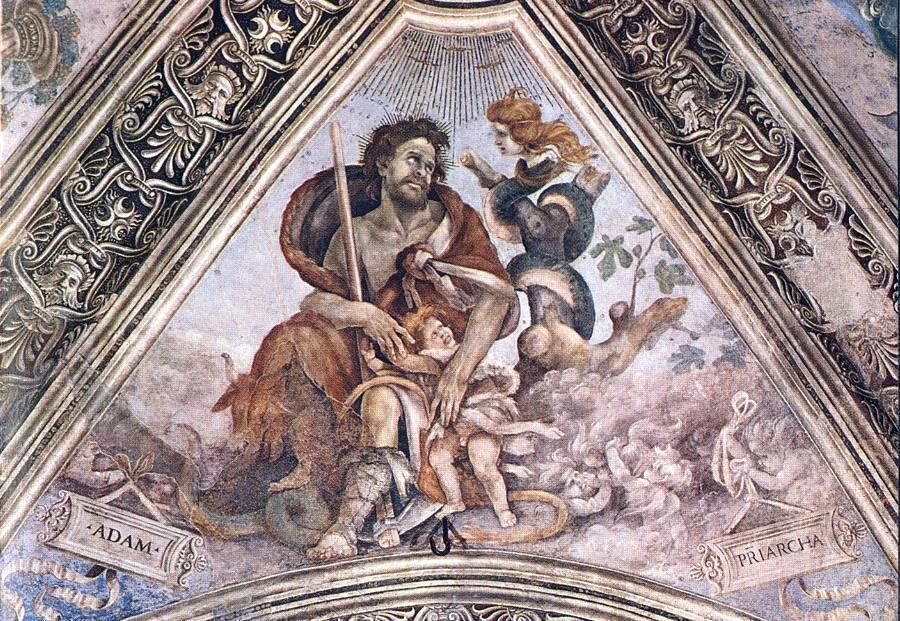
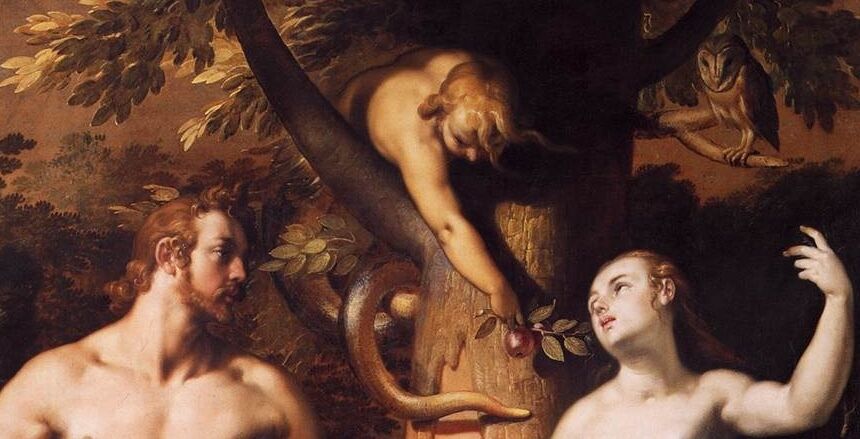
Some variations to the story even have Lilith herself as the serpent in the Garden of Eden—numerous works of art portray her as half-human, half-serpent, wrapped around the Tree of the Knowledge of Good and Evil.
This cutting-and-pasting of various pieces of text—such as Eve’s curse following the “fall,” and this most obscure reference in Isaiah 34—will surely be uncomfortable to a lot of readers, to say the least. Indeed, so wild is the Alphabet of Sirach account, that some scholars believe it to have been composed as a deliberate mockery of the Bible or prevailing attempts at exegesis. (In this case—coming full-circle to our reader’s comments at the start of this article—we would have a direct line between “smacking the Bible” and Lilith-type “mysticism.”)
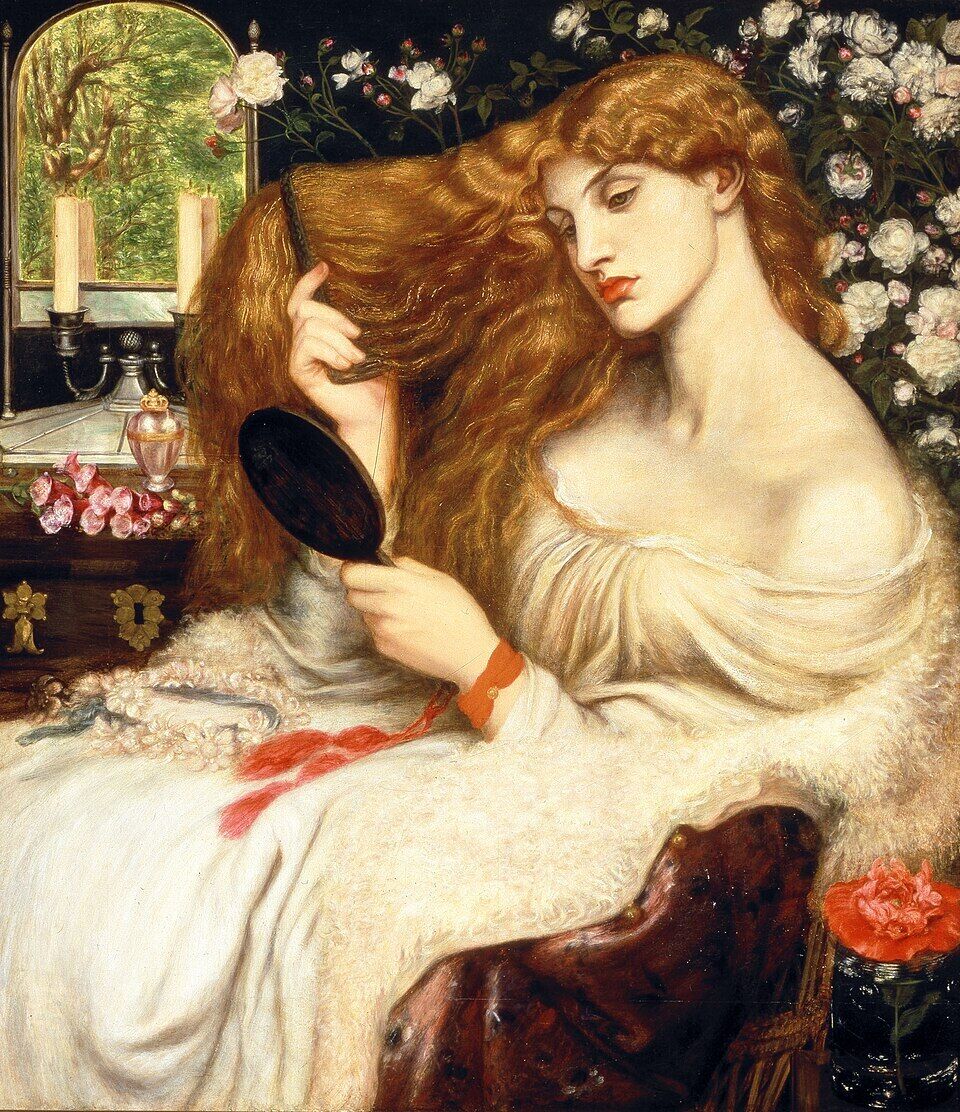
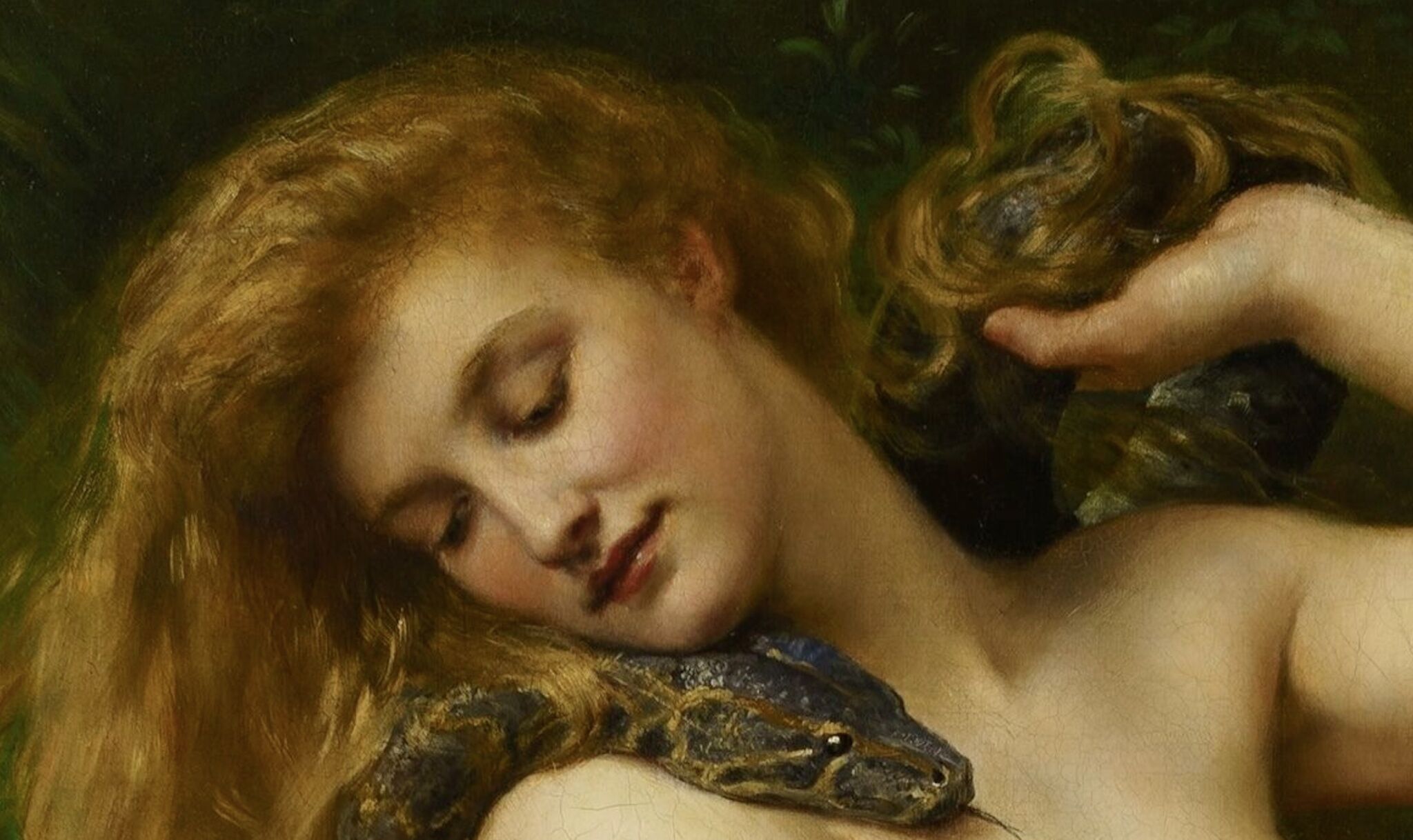
Whatever the case, through twists, turns and variations, the story has stuck—and Lilith, in this composite, amalgamated form of Mesopotamian she-demon, seductress and exiled “first wife” of Adam who refused to submit has become adopted and celebrated as a key modern symbol of feminism and women’s empowerment (albeit less so the child-killing part). She makes an appearance in endless works of art (such as John Collier’s Lilith), poems (such as George Sterling’s Lilith: A Dramatic Poem), plays (such as Goethe’s Faust: A Tragedy), novels (such as C. S. Lewis’s The Lion, the Witch and the Wardrobe), movies (such as The Fifth Element), TV series (such as The Chosen) and video games, as well as our aforementioned articles, videos and music—even clothing. Of course, anything that keys into subjects of the sensual and sexual will naturally draw attention. Likewise unsurprisingly, Lilith’s popularity is ever increasing in modern occult movements.
Perhaps more surprisingly, the name is also growing in popularity for newborns—in the U.S., sharply climbing from 991st place in 2010 to 277th place in 2025; in England and Wales, from 965th place in 2015 to 357th place in 2025. “Embrace the drama of life with this Babylonian girl’s name,” reads theBump.com. “With this name, you can give baby a powerful figure to look up to, someone who doesn’t let anything hold her back.”
Modern-Day ‘Athenians’
It’s certainly something people have an immense appetite for—the weird and wonderful.
A similar example may be seen in director Darren Aronofsky’s 2014 film Noah—in some ways, a cinematic masterpiece—but also a movie that seriously ruffled feathers in the religious world, due to its frequent departures from the biblical story. Aronofsky himself is widely cited as calling Noah “the least biblical film ever made.” That’s not to call his retelling of the story original, however—instead, it is based in large part around the apocryphal book of Enoch (circa second-first centuries b.c.e.), particularly with its emphasis on the fallen “watchers”—with Aronofsky framing the narrative in such a way as to draw sympathy for fallen angels and impugn the Creator. As with the Lilith in Eden account, hardly a story within a story—more of a story outside of (and in contradiction to) a story.
This obsession for some “new thing” often carries over into the broader world of archaeology and history. The anonymously written History Reclaimed article “The Rise of Archaeologists Anonymous” sums it up: “Queer Vikings, transgender skeletons, female warriors … not a week seems to go by without some new claim”—claims that, when later proved false, are “quietly retracted afterwards.”
This appetite for the weird and wonderful brings to mind the classic first-century description of the Athenians, described in the New Testament book of Acts. “And they took him, and brought him unto Areopagus, saying, May we know what this new doctrine, whereof thou speakest, is? For thou bringest certain strange things to our ears: we would know therefore what these things mean. (For all the Athenians and strangers which were there spent their time in nothing else, but either to tell, or to hear some new thing.) Then Paul stood in the midst of Mars’ hill, and said, Ye men of Athens, I perceive that in all things ye are too superstitious” (Acts 17:19-22).

A similar sentiment regarding Lilith seems to have been held by the famous 12th-century c.e. rabbi Maimonides (Rambam), who apparently regarded her the product of irrational superstition (as accounted, for example, in Marc Shapiro’s Studies in Maimonides and His Interpreters). Hebrew University professor Rabbi Yossi Paltiel holds a slightly different view, articulated in his video “The Biblical Lilith NEVER Even Existed”: Lilith “was not another woman. Lilith was another spirit—in Eve,” one of “rebellion.”
His advice on the subject, at the end of the day? “Don’t go to Wikipedia to read about Lilith.” Amen to that.