
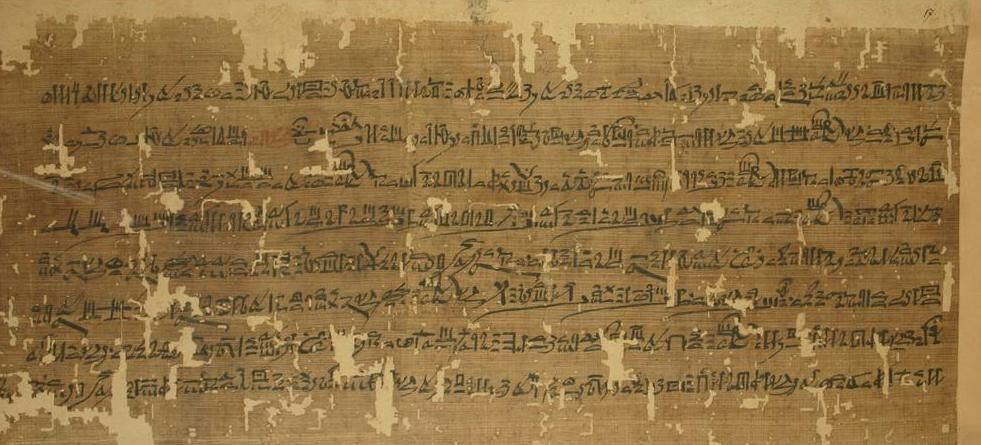
The Merneptah Stele represents one of the most significant discoveries in biblical archaeology. Dating to circa 1207 b.c.e., during the reign of Pharaoh Merneptah, it bears the earliest extra-biblical mention of the name “Israel,” as representing a people-group on the scene in the Levant during the 13th century b.c.e.
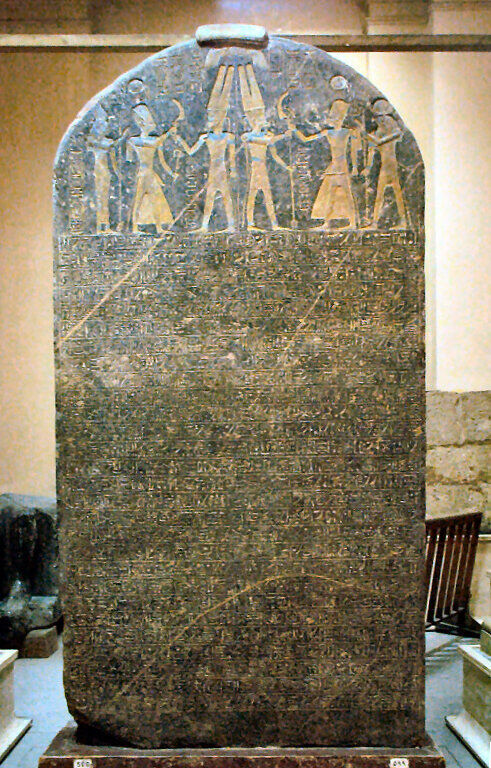
This artifact has particular relevance for those attempting to date the period of the biblical Exodus and conquest. Over the decades and centuries, researchers have proposed many different scenarios, with varying degrees of consistency with the biblical text. The Merneptah Stele is often a pivotal hinge point in this debate, leading researchers to place the Exodus and conquest somewhere prior to it (although there still remain proponents of later schemes—these require somehow explaining away the significance of the Merneptah Stele, and typically hold only very loosely to internal biblical evidence).
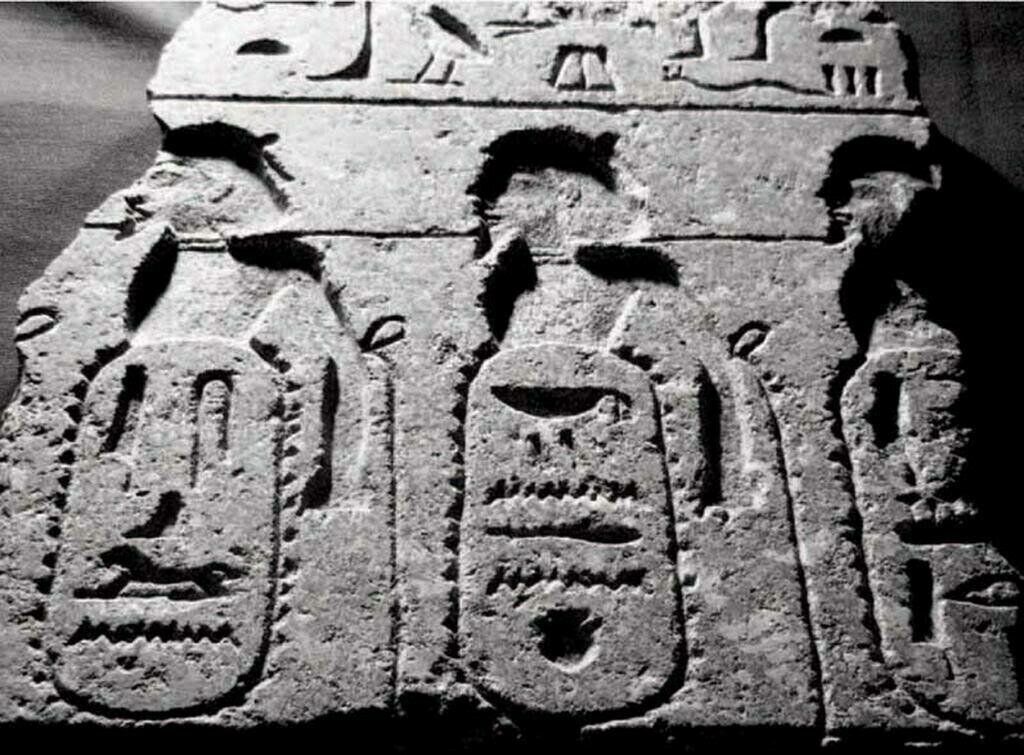
There is a more debated “Israel” inscription—the Berlin Pedestal—which has been offered as dating even earlier, potentially as early as the late 15th to early 14th centuries b.c.e. This artifact is often featured by early Exodus proponents, in making the case for an earlier sequence of biblical events. Still, significant debate surrounds this item.
As it stands, the Merneptah Stele still allows a broad range of theories for the time of the Exodus, conquest and establishment of Israel in the Promised Land—including the prominent late-date, 13th-century b.c.e. Ramesside Exodus theory, typically proposing Ramesses ii as pharaoh of the Exodus. Even still, the timing is tight—given Merneptah was his son and successor.
In a number of articles, we have argued for an early Exodus position, putting the Exodus and ongoing conquest period within the 15th to 14th century b.c.e. This is based on a more literalist reading of internal biblical chronology, together with certain archaeological clues and the earliest Egyptian texts from the classical period naming the Exodus pharaoh as “Amenophis” (Amenhotep).
There is, however, another series of inscriptions that preclude a 13th-century b.c.e. Exodus and conquest, and point to Israel—or more specifically, the tribe of Asher—as an already-established entity on the scene within their territorial allotment.
Back to Seti I
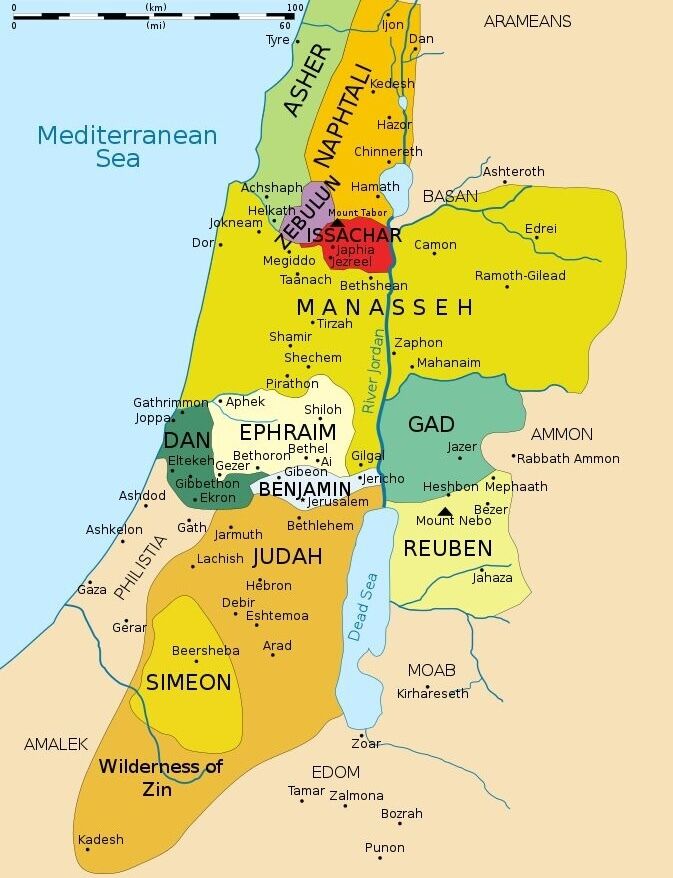
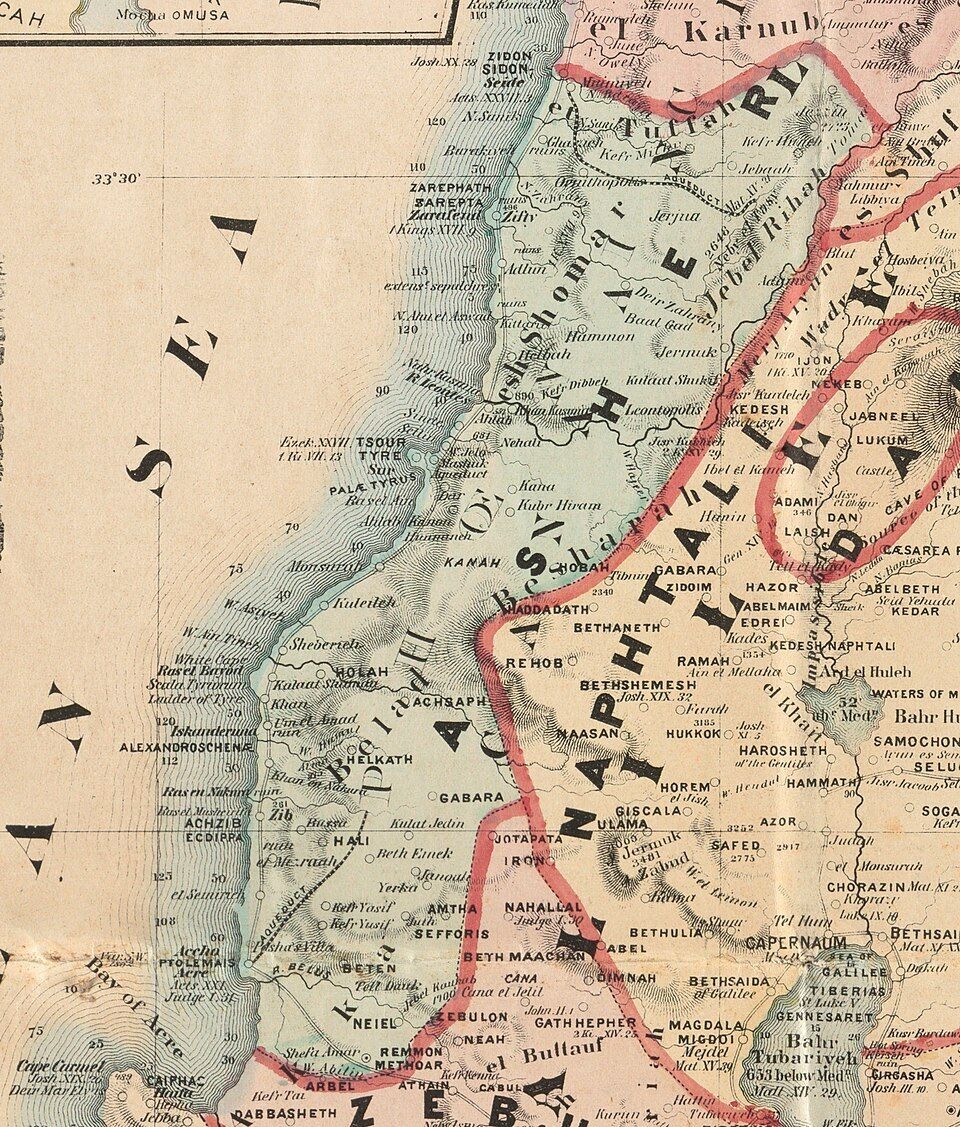
The biblical account describes the tribe of Asher as occupying a prominent swathe of territory along Israel’s northern coast, in the western Galilee region and continuing northward into a liminal area shared with the Phoenicians (e.g. Joshua 19:24-31). The following map (right) portrays a fairly standard outline for this territory.
Pharaoh Seti i (1294–1279 b.c.e.) was the father and predecessor of Ramesses ii. A fragmentary list of his, within the Temple of Amenhotep iv, includes a reference to a strikingly similar entity in this region, í-s-r. The name reappears in inscriptions dating to the reign of Ramesses ii.
Dr. S. Douglas Waterhouse summarizes these inscriptions in his 2001 Journal of the Adventist Theological Society article, “Who Are the Ḫabiru of the Amarna Letters?”: “[L]ate-Egyptian texts and inscriptions from the time of Seti i (1294–1279 b.c.) and Ramses ii (1279–1213 b.c.) speak of the Western portion of Galilee as ʾIsr, a seeming reference to territory settled by the Hebrew tribe of Asher [ʾšr, אשר]. In Papyrus Anastasi i (the so-called ‘Satirical Letter’), composed during the reign of Ramses ii, the Asherites evidently were long enough in Canaan to have given rise to a folk-tale about a ‘chief of Aser’ who escaped from an angry bear by climbing a tree somewhere near the region of Megiddo.”
The identity of this polity as Asher has not been without dispute, however. Late-date Ramesside Exodus proponents William F. Albright and Kenneth A. Kitchen both objected to the identification—Albright mentioning it in passing in his 1954 article “Northwest-Semitic Names in a List of Egyptian Slaves from the Eighteenth Century B.C.,” and Kitchen in his 1966 book Ancient Orient and Old Testament. “In Egyptian documents of c. 1300–1250 b.c., a place-name í-s-r in Palestine was identified by some with the biblical tribe of Asher,” wrote Kitchen. “[I]t was then argued that this tribe was already in Palestine before the main Exodus took place: either they had a separate Exodus, or were never in Egypt.” This, of course, leaves out another option—that the Exodus took place prior to this time. Nevertheless, Kitchen dismissed the link on the basis of Albright’s 18th century b.c.e. Egyptian parallel for the name Asher as “í-sh-r (í-š-r) not í-s-r—so the references to í-s-r have nothing to do with the biblical Asher, and the theories based on this false equation must be abandoned.”
Israeli archaeologist and first director of the Israel Antiquities Authority, Shemuel Yeivin, begged to differ. He wrote the following in his 1971 tome, The Israelite Conquest of Canaan, arguing the “Asher” identification as “quite certain”:
[W]ith the xixth dynasty one begins to feel changed conditions. With Seti i a new name makes its appearance, namely Í-Ś3-RW. Now this place-name has been the subject of a heated controversy. Some scholars maintain its identity with the Hebrew Asher (‘Asher), one of the Zilpah tribes; while others have as resolutely opposed this identification, insisting that this name equals Assur. The latter equation is improbable, since Assur appears in Egyptian topographic names as Í-Ś-SW-R(3) …. The spelling with a ś3 sign makes the etymological derivation of Asher from the original Canaanite ‘Atra(t) quite certain …. The same Asher figures also in one of Ramses ii’s lists, spelled Í-Ś-RW.
According to Yeivin, Eduard Meyer was “apparently the first to suggest the identification of this name with the Israelite tribe of Asher” in W. M. Mueller’s 1893 Asien und Europa. This identification was considered so certain that it became “accepted by scholarly consensus of opinion, with few exceptions.” This was later challenged by the prominent late-date proponent Albright, who offered an alternative explanation based on a slightly different name-spelling he believed to represent “Asher” within the 18th-century b.c.e. Brooklyn Papyrus. Yet Yeivin believed this particular Middle Kingdom Period name “has nothing to do with the biblical Asher” and has no bearing on these mid-late New Kingdom Period texts. He concluded that “the appearance of the name of Asher in Canaan in the early years of Seti i, i.e. in any case before the close of the xiv century b.c.e. … hit against a snag” for “the protagonists of the theory of a late Exodus,”—Seti i’s list thus “point[ing] towards an early entry into Canaan.”

Diana Edelman expounds on the Asher link further with relation to the territory involved, writing the following for The Anchor Bible Dictionary (1992, Vol. I, A-C, entry “Asher”):
The territory traditionally associated with Asher is located in the W Galilean hills …. The association of the name Asher with the W portion of Galilee tends to be supported by Egyptian texts. The name appears with the determinative for foreign land as early as the reign of Pharaoh Seti i (1291–1272 b.c.e.) (Simons 1937: 147). Two additional occurrences are known from the reign of Rameses ii (Simons 1937: 162; ANET 475-79), and an additional unpublished reference appears in the Golenischeff collection (Gauthier 1925: 105). The occurrence of Asher in the list of Seti i provides the clearest indication for the name’s connection with W Galilee. It appears in a geographical sequence between Kadish, probably representing the Syrian city-state of Kadesh on the Orontes River with its surrounding domain, and Megiddo, the city-state that controlled the NW portion of the Megiddo Plain-Jezreel Valley corridor. Asher seems to represent the hinterland of Phoenicia at the time of Seti i, the W Galilean hills N of Megiddo, as far as Lebanon (Müller 1893: 236).
The “Asher” inscriptions, then, provide good grounds to situate the Exodus and settlement prior to the 13th century b.c.e.—at least, prior to the reign of Seti i, at the start of that century. They also would align well with the biblical description of this Asherite region.
The sense from the biblical text is that prior to the Israelite monarchy, the Asherites operated with some significant level of autonomy. This is seen, for example, in the particular language of 2 Samuel 2:9 (concerning the “Ashurites” backing Ishbosheth, Saul’s son); it is also seen in the Song of Deborah, in which the prophetess condemns the Asherites for not joining in battle with their fellow Israelite tribes (Judges 5:17). Lawrence Stager wrote in his 1989 Biblical Archaeology Review article “The Song of Deborah”: “The reluctance of Dan and Asher to join the highlanders in this war against the Canaanites seems more understandable in light of their economic dependence on non-Israelite groups in the maritime trade. Like Reuben and Gilead/Gad, Dan and Asher had ties to non-Israelites that proved stronger than those that bound them to their tribal confederation.” Indeed, the tribe of Asher also seems to have operated within some kind of blended territory together with the Phoenicians, whose land they had initially been assigned (e.g. Judges 1:31).
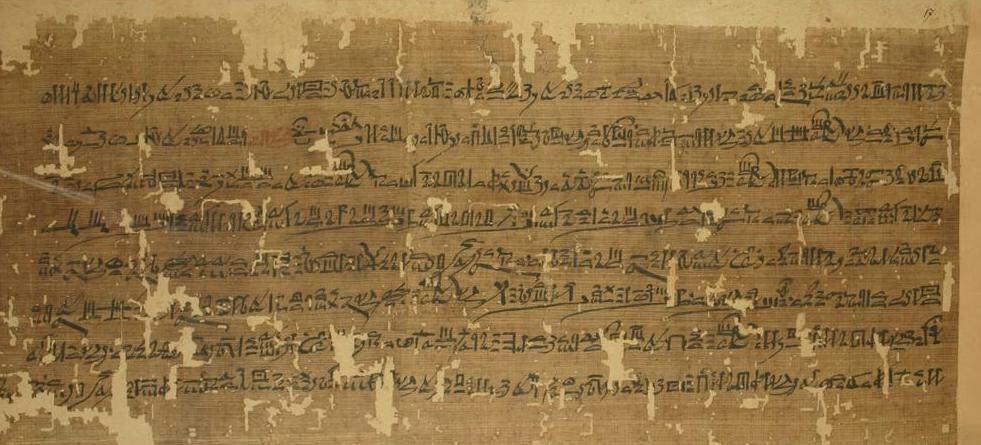
It’s interesting to consider the tribe of Asher not joining the Judges 4-5 fight—choosing instead to dwell safe and secure (“Asher sat still at the haven”—Judges 5:17; American Standard Version)—in light of the Ramesside Papyrus Anastasi i. This text name-checks a chieftain of this polity as a byword for cowardice. The Egyptian scribe Amen-em-Opet is warned that his reputation could “become like that of K-d-r-d-y, the chief of ʾI-s-r, when the hyena found him in the balsam tree” (translation by Alan Gardiner; others render this animal as a bear). Yeivin draws attention to the significance of this artifact once again: “The reference to Asher in Pap. Anastasi i proves that at the time of its composition the Asherites have been long enough in the country (i.e. Canaan) to give rise to a folk-tale concerning their chieftain” who bears a “perfectly good West-Semitic name.”
The Asherite tribe is far from the only one with any bearing on discussions surrounding the timeframe of the Israelite establishment within the Promised Land. But these other tribal entities will save for another day.