

Excavations by the Israel Antiquities Authority (iaa) along a 1.2-kilometer (o.7 mile) stretch of Highway 66 at Tel Megiddo have yielded several discoveries relating to early wine production and religious practices of the Canaanites. The excavations were part of the Connecting Israel infrastructural plan to conserve the history of the area on behalf of the National Infrastructure Transportation Company of Israel.
One significant find of the salvage excavations was a rock-hewn winepress of the Early Bronze ib period; it consisted of a treading floor, which sloped into a collection vat embedded in the bedrock. The archaeologists suggest that the installation might have something to do with Megiddo being a cultic center, as the discovery was made in one of the residential areas of the city.
Previously, researchers had found traces of wine on several vessels from a residential area and an elite monumental tomb. Amir Golani, co-director of the excavations, told Haaretz: “We knew the Canaanites drank wine, and we knew wine was being produced.” This find now conclusively proves that wine production was already taking place in this early stage of the land’s development.

Researchers also found several artifacts that belonged to the Late Bronze Age ii—about 3,300 years ago. The excavators uncovered an array of vessels. Perhaps most intriguing, however, was a libation set shaped like a ram. The ram had an opening on its back into which liquids—such as water, milk or wine—were poured. A small cup was pushed into the opening during its ritual burial in the pit; two other cups that completed the ensemble were uncovered.
“For the first time in the entire region, we get a glimpse into the way Canaanites used these vessels in their ritual ceremonies thousands of years ago,” Golani said.
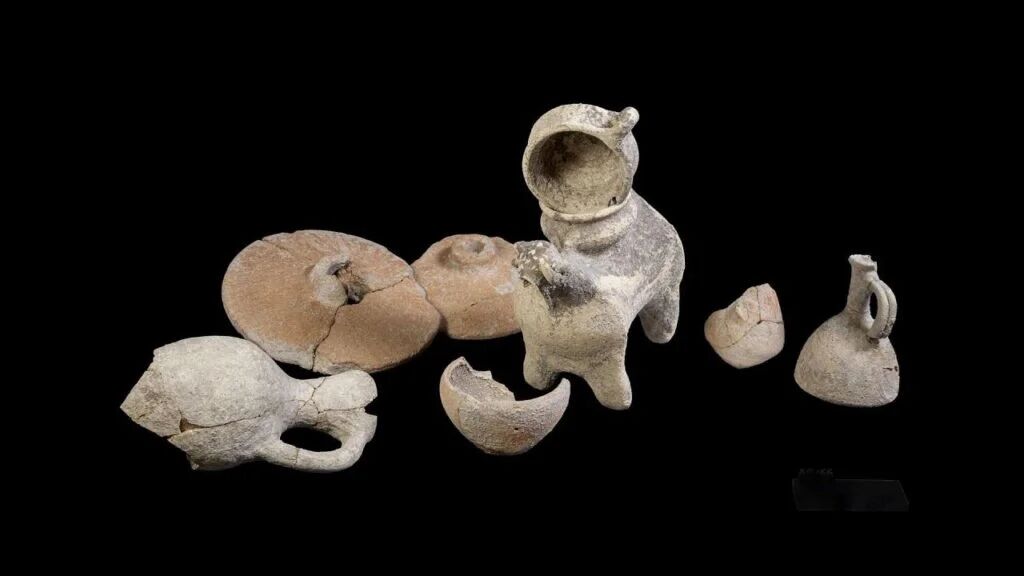
Another revealing find from this time period was a ceramic shrine model of a Canaanite temple. It’s a square box with an opening at the front, a small patio and a visor. Although it might not be the most impressive example of a shrine model, it is still a valuable find. “This is what the real temples in the Canaanite Late Bronze Age may have looked like,” Golani said.
The Canaanites inhabited the Levant before the Israelites moved in and conquered the land, which was promised to them by God. Joshua 12:21 records that the Israelites defeated the king of Megiddo in their conquest. These excavations give us insight into the way of life of these ancient people who preceded the Israelites and with whom the Israelites interacted.
iaa director Eli Eskosido told the Jerusalem Post: “The broad excavation along Highway 66 is revealing the wealth of history embedded in this soil; the wine-making installations and evidence of folk worship let us meet the region’s residents across millenniums.”
Starting November 9, the finds of the excavation will be exhibited at the National Archaeological Park of the Land of Israel on the Jane and Jeannie Schottenstein National campus for Archaeology in Jerusalem.