
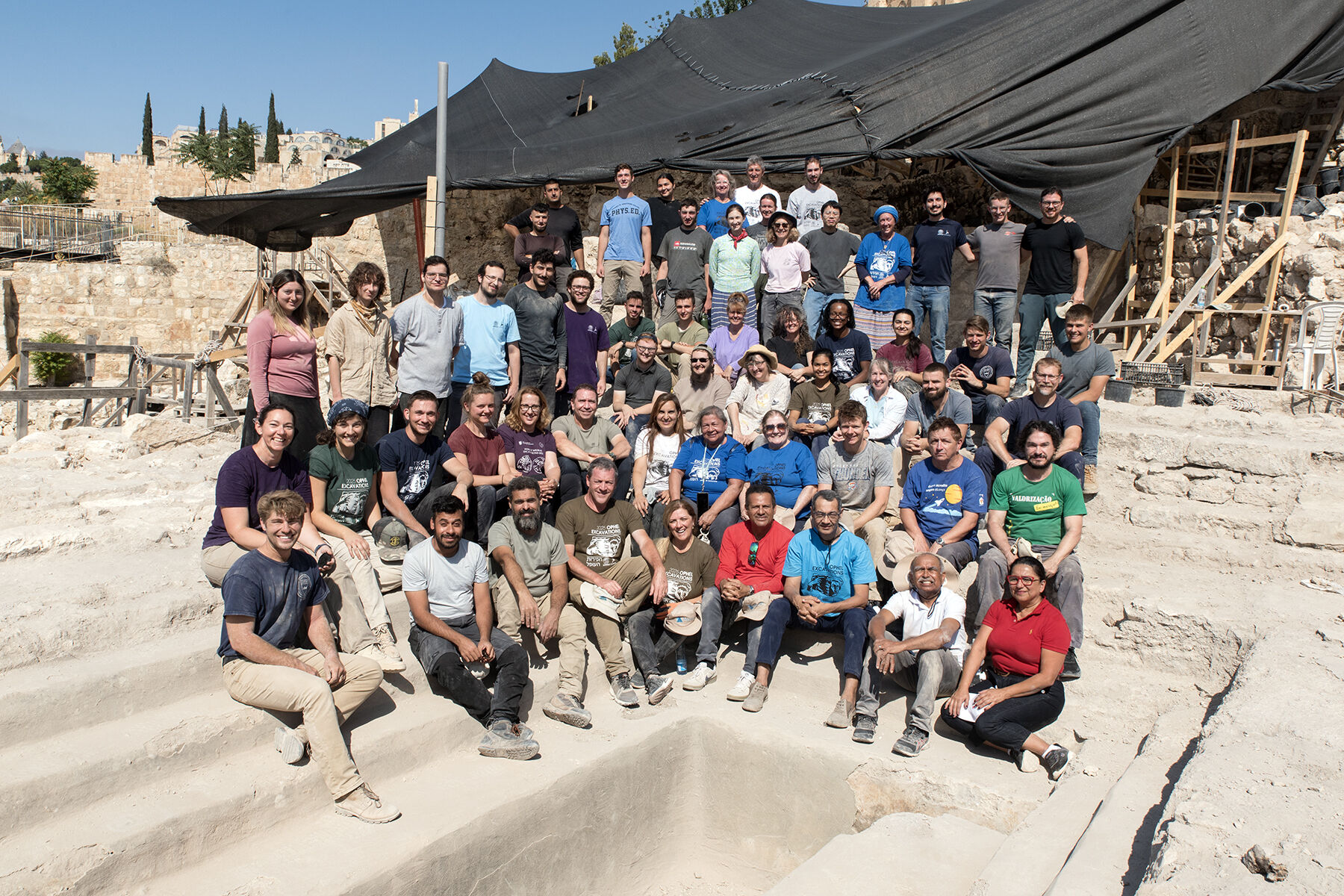
Our Ophel site has never looked more different. Not only has the site changed dramatically from when we first began excavating this location in 2012, but it also looks completely different from the start of this year’s excavation. All of the volunteers worked hard, and we’re very grateful for their contributions during the five weeks of excavation.
Between July 6 and August 7, we removed eight truckloads and 16 dumpsters worth of dirt, stone and material from the site.
While every year we remove a lot of earth and reveal new and exciting developments, this year was especially exciting as we phased out the majority of the Byzantine layer and revealed more Second Temple Period remains—and even some Iron Age.
Our summer excavations generally consist of between two and three areas. In 2012, there were two areas (A and B); in 2013, there were three (A, B and C); in 2018, two (D and M); 2022, two (D and D1); 2023, four (D, D1, E and F); 2024, two (D and D1).
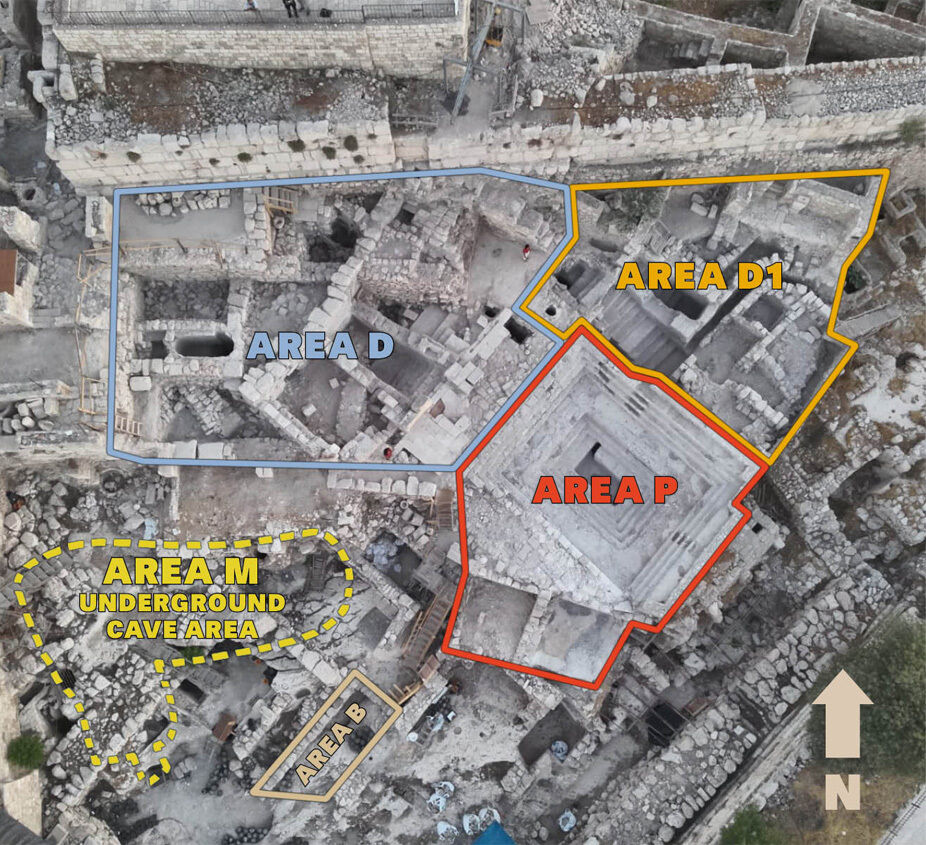
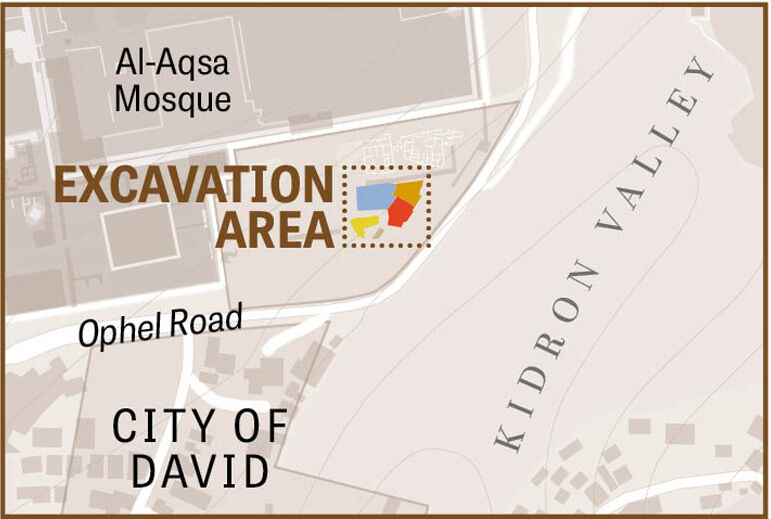
This summer, once again under the direction of Prof. Uzi Leibner and Dr. Orit Peleg-Barkat from the Institute of Archaeology at Hebrew University, we excavated our largest number of active areas: a total of five. In addition to areas D and D1, we added the brand-new Area P (the Ophel pool) and returned to areas M (the Ophel cave) and B (lower Iron Age area).
Let’s examine what we accomplished in these five areas, highlighting some of our more important discoveries.

Area D
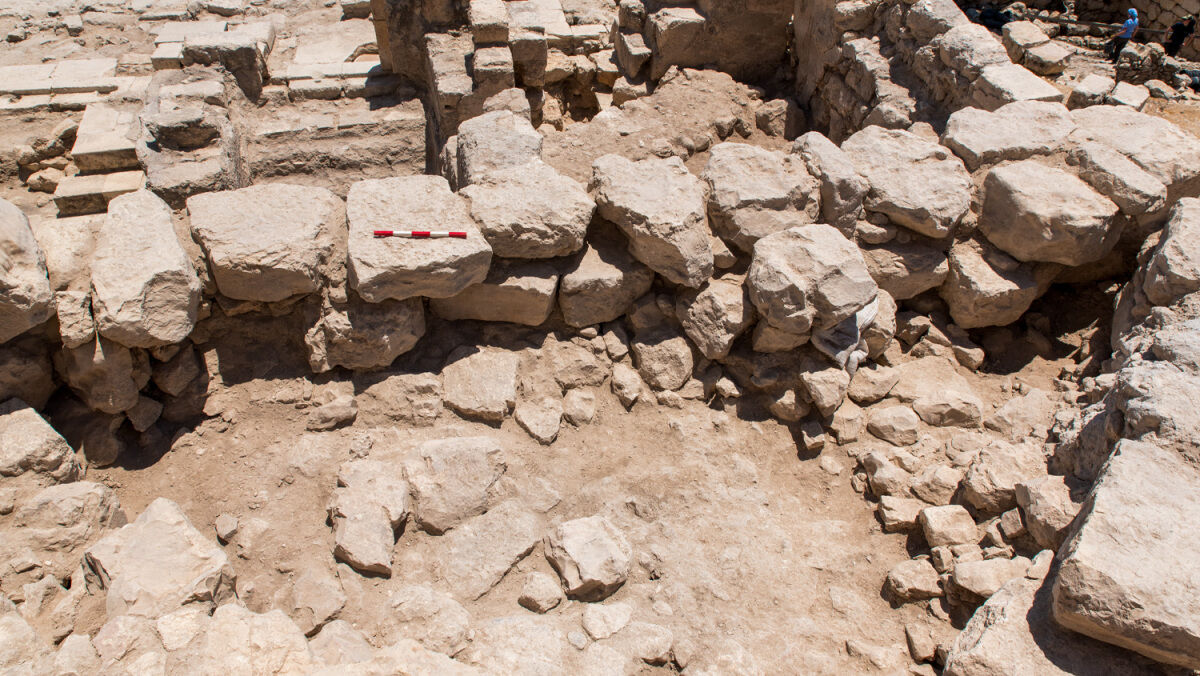
This was our fifth season of excavation in Area D, the uppermost area, led once again by area supervisor Amir Cohen-Klonymous and this time supported by assistants Shoham Buskila and Aviv Shalom. The primary focus of the work in Area D during previous seasons has been excavating through several major phases of the large Byzantine structure in this area, with aims of exposing the monumental Early Roman/Second Temple Period structure below—the very edges of which have been taunting us since they were first exposed in 2013.
After four seasons of excavation, the area still primarily represented the Byzantine Period. This season that finally changed, as we removed the final phase and began to see more of the first century b.c.e.-first century c.e. structure that the Byzantine building was built on top of: 2,000-year-old monumental architecture that likely incorporated even older, Iron Age ii (biblical kingdom period) elements.
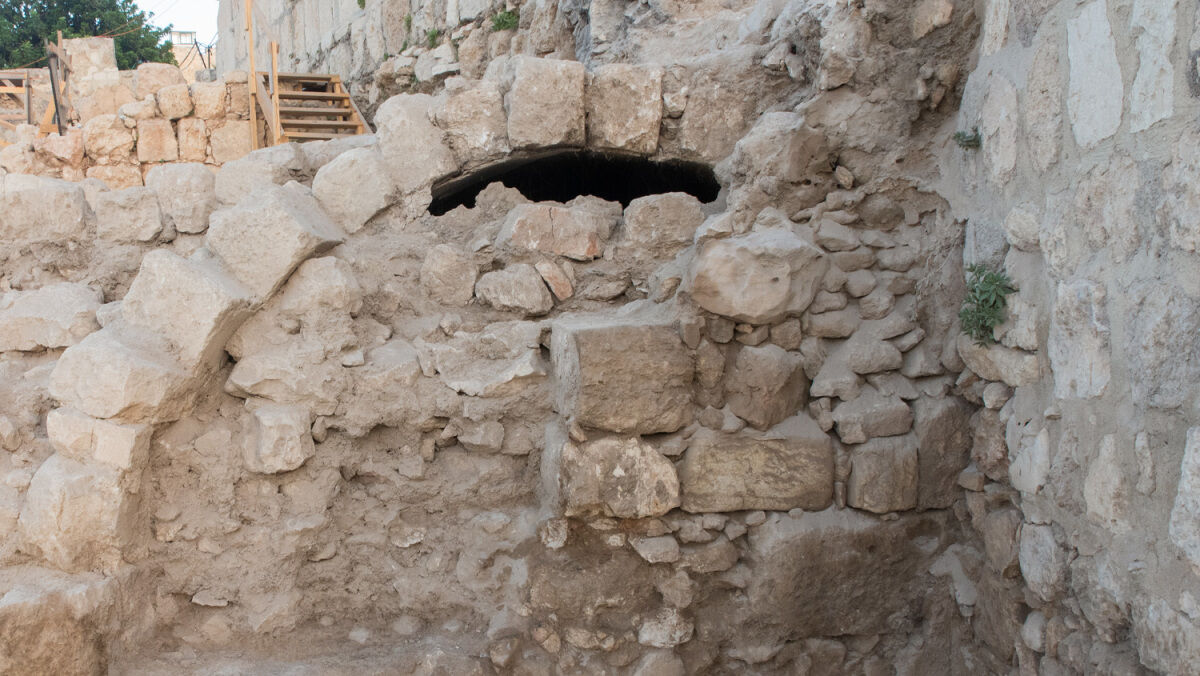
Excavating through the final floor of the Byzantine building meant that most of our effort this year went toward removing a significant fill layer. This layer was made up of exceptionally large stones that the Byzantine builders would have taken from the earlier walls to make up the foundation of their own structure.
Of the Second Temple Period structure in Area D, we have now revealed four main sections with a monumental wall framing its western side and a series of walls integrated into it from north to south, dividing the building into separate rooms. We believe that this large western wall is most likely an Iron Age wall reused and incorporated into the Second Temple Period structure—this is based on the unusually large boulders used to construct the wall (atypical of our early Roman period structures) and the large amount of Iron Age pottery and finds next to the wall (more on this further down). This wall, thickly plastered on its eastern face, was revealed to a height of around 3 meters over the course of the summer excavation, with probably another meter or so of fill yet to be excavated.
Our Second Temple Period structure consists of vaulted rooms on the northern and southern ends. The northern arch is exposed and preserved all the way across; the southern is only partially preserved. In the central area are two stepped rooms—the southern one consists of a deep plastered mikveh (Jewish ritual purification bath), and the northern one, a dry-stepped descent, constructed of exceptionally well-cut stones. This prominent structure was fronted by the impressive outer porch that leads to the iconic four-sided Ophel pool/mikveh (Area P).
Additionally, a very large and deep underground cistern system was opened in the western half of Area D. This cistern has been digitally mapped by an experienced cave archaeologist and will need to be further probed to see its phases of use and how it relates to the structure above.
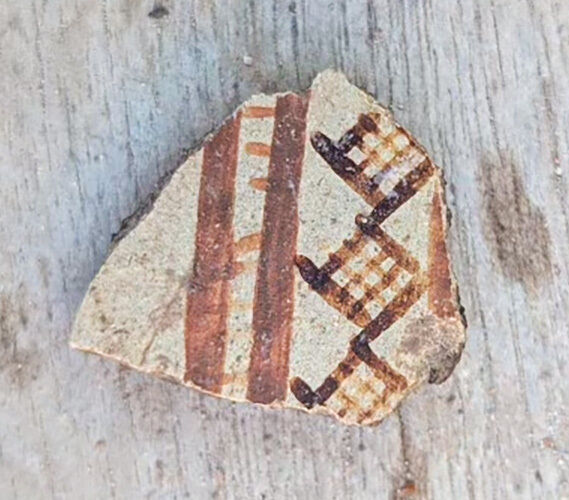
A major surprise was the wealth of Iron Age material within fills, especially those associated with the large western wall of the Area D structure. We discovered pottery from the Iron Age ii era (10th–sixth century b.c.e.); the majority, however, came from the end of the Iron Age—the period just before the destruction of Jerusalem at the hands of the Babylonian army led by King Nebuchadnezzar in 586 b.c.e. Massive amounts of Iron Age fills had evidently been used inside the construction of the earliest phase of the Byzantine structure.
These rich finds are being analyzed by Iron Age ceramic expert Dr. Ariel Winderbaum, long-time friend and colleague of the late Dr. Eilat Mazar (and supervisor of Area C in 2013), who received his Ph.D. based on his study of the early Iron Age pottery from the Ophel excavations and is currently working on the final reports for all the Iron Age pottery from the previous excavations.
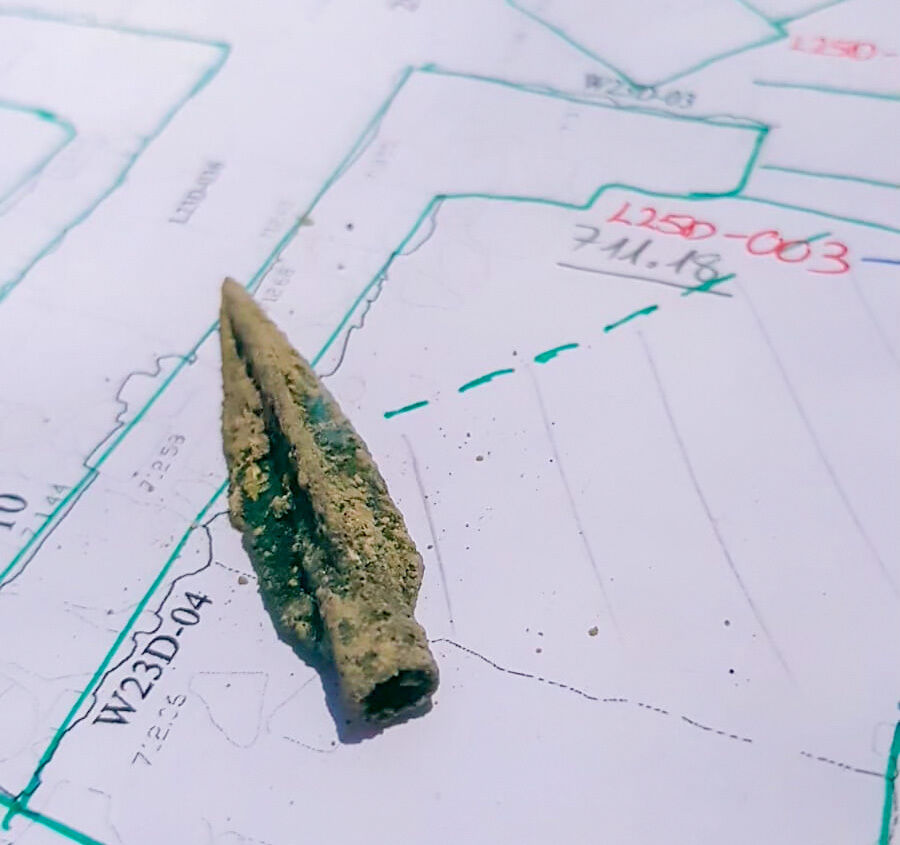
Along with all manner of vessels, there were some interesting small finds within the Iron Age fills. These are finds that are most typical of the decades leading up to the Babylonian destruction of Jerusalem. One such find was a beautiful bronze triple-bladed Irano-Scythian arrowhead. Similar arrowheads have been found at En Gedi, Azekah, Ramat Rachel and at other sites in Jerusalem. We found several of this same type in Dr. Eilat Mazar’s excavations of Area G in the City of David. Examples of this type have also been found in the destruction levels at Nineveh, Nimrud and Carchemish—Assyrian cities destroyed at the hands of Nebuchadnezzar’s Babylonian army.
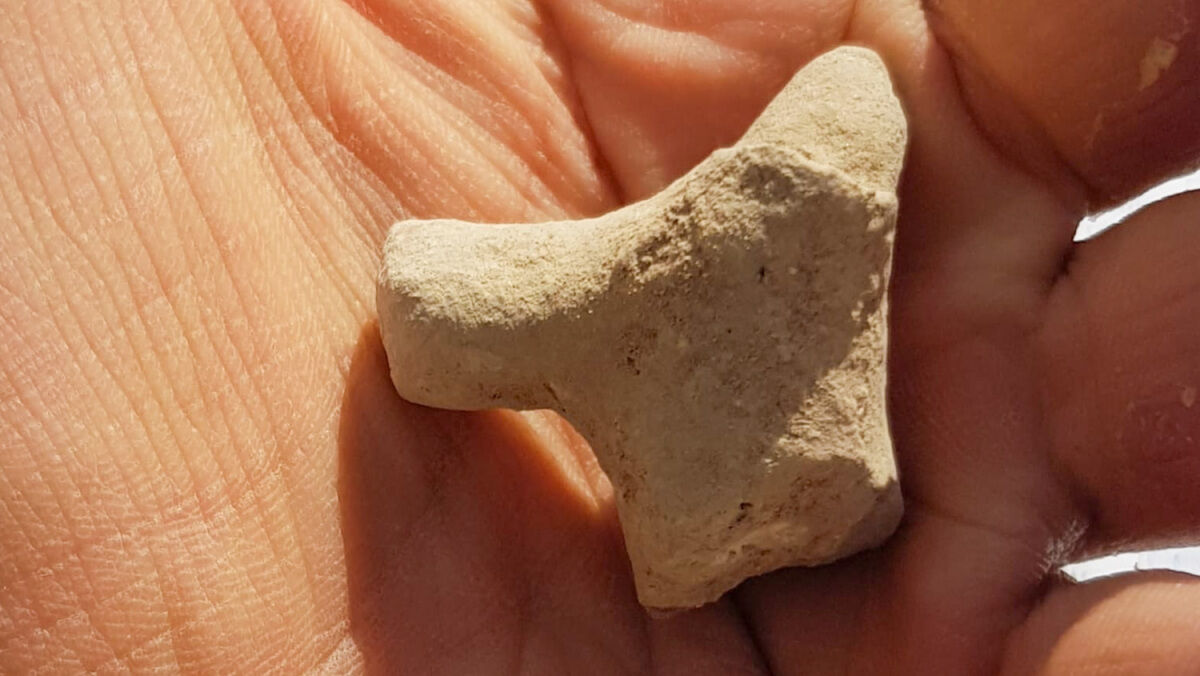
Along with the arrowhead, we also discovered a number of zoomorphic and humanoid figurines. These figurines were likely used as idols by the Judeans in the lead-up to the Babylonian incursion. They were covered with a whitewash paint, which is typically associated with cultic use. The animal figurines are normally associated with the well-known “Judean Pillar Figurines.”
While the exact use and function of the figurines is debated, the fact that they are almost always found broken has led some to associate them with Josiah’s religious reform at the end of the seventh century b.c.e.; around the same time as Jeremiah the prophet. The discovery of such a wealth of Iron Age material was a pleasant surprise for our excavation season.
Area D1
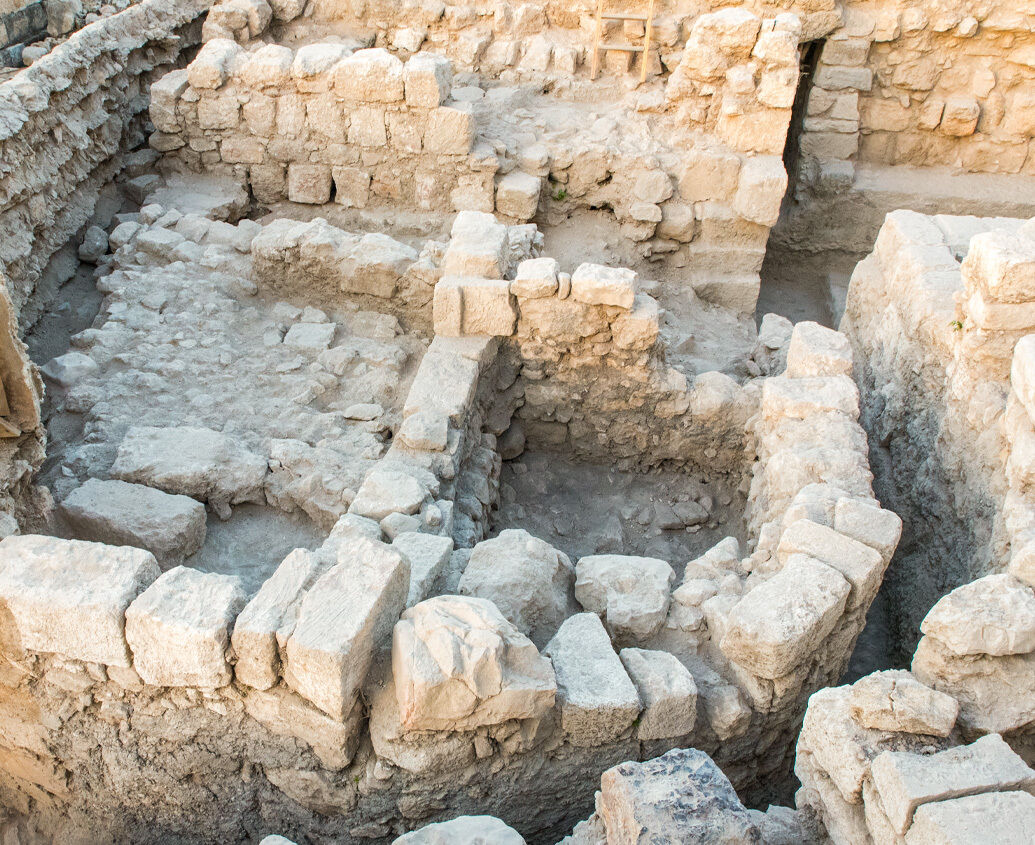
This was our fourth consecutive season of excavation in Area D1, supervised once again by Let the Stones Speak contributing editor Christopher Eames and assistant supervisor Nadav Rosenthal. Area D1 began as the designation for an underground drainage system located directly beneath Area D. Over the years of excavation, we’ve followed this drainage system in its full continuation toward the east. The walls of the drainage system form part of the foundations of the Second Temple Period structure (monumental building, porch and pool) above, thus the remains excavated from it are crucial in helping date the construction of the overall structure.
In following the continuation of the drainage system to the east, Area D1 has expanded to include the excavation of a series of eastern Byzantine rooms, and as with Area D, this year has now seen the removal of most of these walls and a near-complete representation of Early Roman/Second Temple Period remains, primarily consisting of mikvaot (plural of mikveh)—mikveh remains that have proved rather confounding.
The main drainage system cutting through Area D1 was built to facilitate two mikvaot in Area D and the large four-sided Ophel mikveh/pool. Excavation of Area D1 revealed an earlier, grand mikveh that was cut (and thus canceled out) by this later drain—the steps of which were entirely cut from bedrock, and the walls of which were shaped of well-cut white stones, preserved to a height of over 3 meters. This mikveh was found to have at least two, possibly three phases, with steps reworked in different directions.
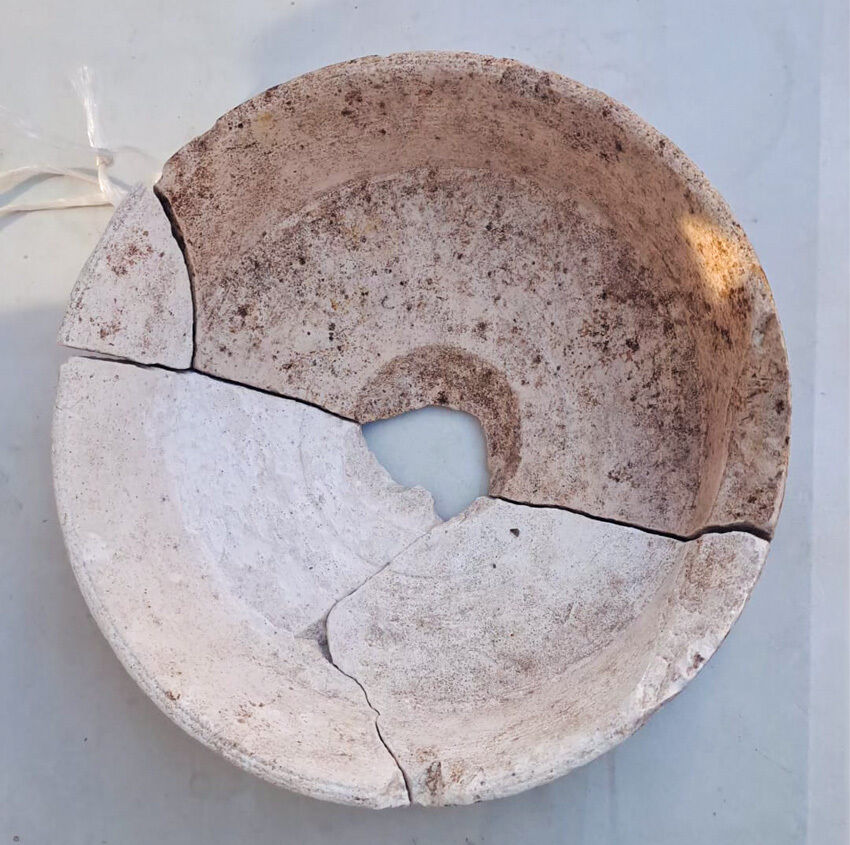
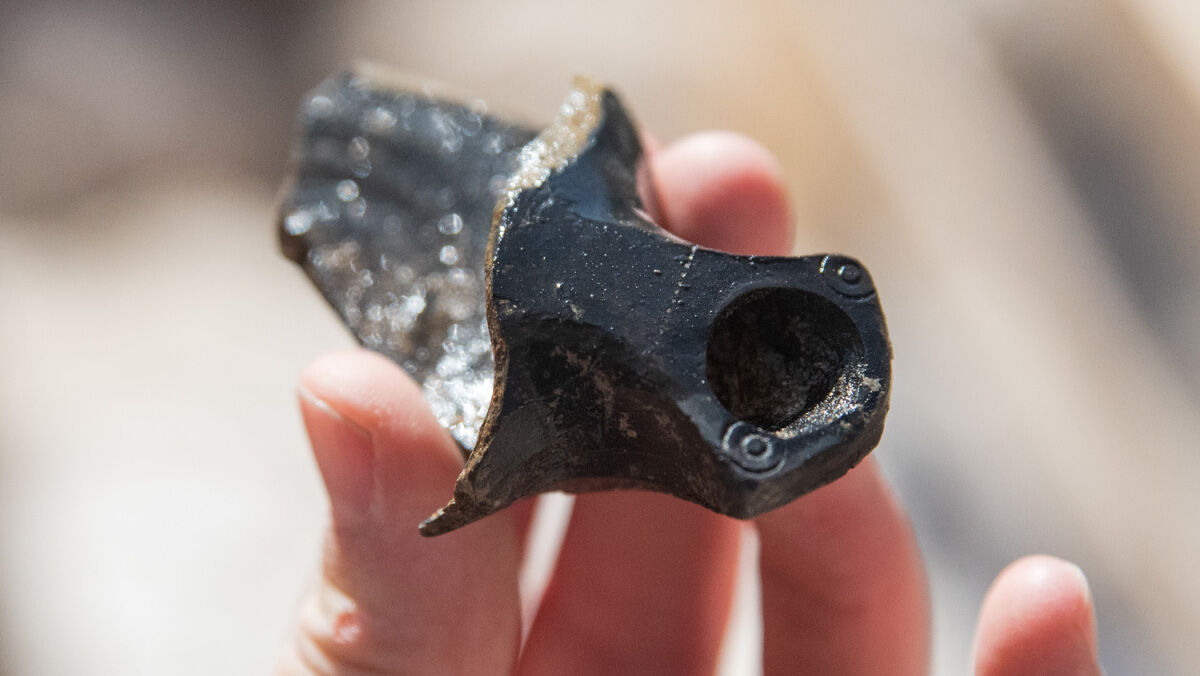
A later, much narrower mikveh was found alongside it. The fill within this mikveh was full of pottery, including complete vessels and oil lamps. And an even later period mikveh was found to have been built on top of these, with a preserved continuation to the northwest. This mikveh, in turn, had been cut by a deep shaft that led to a large bottle-shaped underground cistern.
Confused? Join the club. The sheer number of ritual purification baths in this area, built so close and even on top of one another, and within such a narrow time frame, is striking—and fits the almost desperate picture of fulfilling purification needs so close to the temple complex at this time.
Additionally, a number of associated Second Temple Period walls and rooms were discovered in Area D1 over the course of the 2025 season, and even a small area of preserved Iron Age floor and fills rich in Iron Age remains—including zoomorphic figurines.
Area P
The major new area opened during the 2025 season was Area P for “pool”—consisting of the large four-sided Ophel pool/mikveh and adjacent rooms to the south. This area was led by supervisor Akiva Goldenhersh and assistant supervisor Amichay Lifshits.
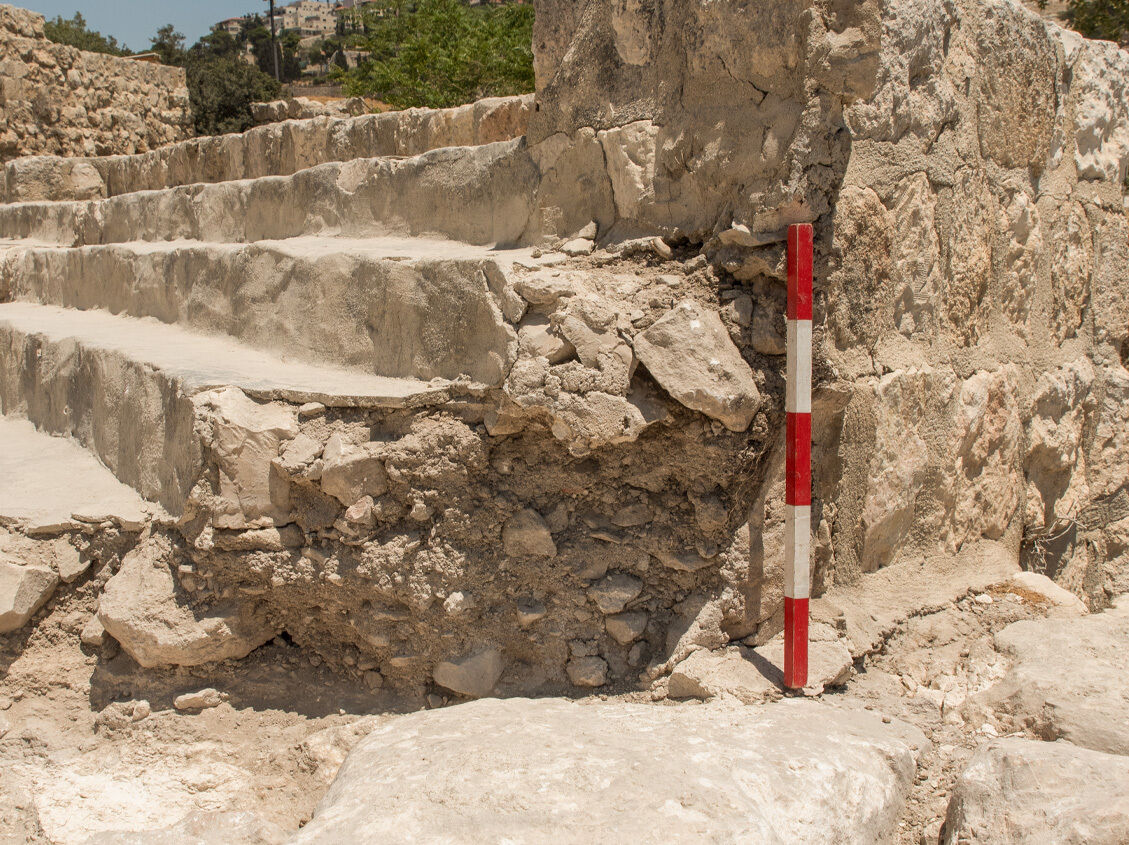
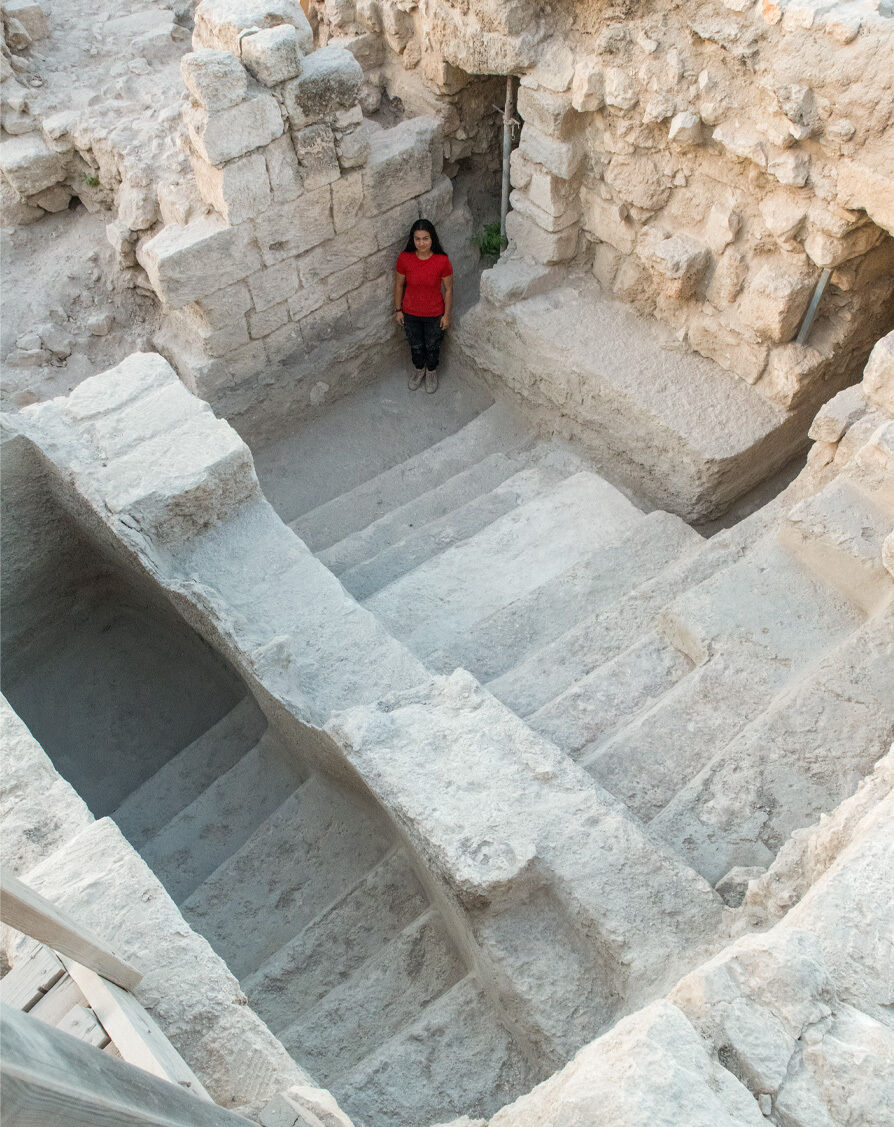
With its unique four-way staircase, consisting of an upper and a lower flight of stairs, this pool has become somewhat of a landmark of ancient Jerusalem. However, it is also very unusual. Debate remains as to whether or not this functioned as a pool or ritual purification bath (hence the typical qualifying name, “pool/mikveh”). Typically, mikvaot have a single descending staircase. Ours is a rare four-sided example.
That debate aside, a key function of opening this new area has been to re-reveal just how much of the pool/mikveh is original.
The pool was first excavated in the 1970s; however, almost all documentation about it is missing. Large-scale preservation work in the 1980s included rebuilding the pool around all four sides, pouring cement over the original stonework and plaster. Significant questions have remained, however, as to how much of the pool was original and if it was indeed correctly reconstructed as a four-sided pool.
This year a picture of at least part of the pool as it appeared pre-reconstruction was discovered by a good friend of the late Dr. Eilat Mazar, Herr Alexander Schick. This picture shows that the lower four-sided flight of stairs was original, but much of the upper, eastern and southern sides were not.
The goal of Area P, then, was to investigate and make sense of the pool and better understand why it was reconstructed in the way it was reconstructed. In the words of Goldenhersh: “Sometimes we try to understand the motivation of people 2,000 years ago; we’re trying to understand the motivation of people 50 years ago.” The excavation of several probes around the pool confirmed that most of the northern, southern and eastern upper flights of stairs were the product of reconstruction. Essentially, as far as the original upper flight goes, we have a U-shape course of stairs around the western end of the structure, descending from the porch. It is now evident that these steps only wrapped around and continued along the northern and southern sides of the pool for about 4 to 5 meters before leveling out into a stretch of flagstones. We do not have any evidence of stairs occupying the eastern side of the pool.
Excavation of Area P also included the investigation of two Byzantine rooms on the southern side of the pool, which had likewise been heavily reconstructed—these, and some of the original Byzantine remains, were excavated over the course of the 2025 season. We already know of the presence of Early Roman and Iron Age period walls that continue under this area and will hopefully continue to expose these next year.
Area M
Area M designates the large Ophel cave (“M” for “m’arah,” the word for cave in Hebrew). This area was last excavated in 2018. Work is underway on preparing the material from that excavation in a forthcoming publication. Some remaining questions about the area prompted a return to the cave to further excavate two main sections. This area was directed by Dr. Evie Gassner and overseen by Dr. Rachel Bar-Nathan, both of whom are working on the forthcoming publication, and facilitated by the late Dr. Eilat Mazar’s sister, Avital Mazar-Tsairi, who is leading the effort to wrap up Eilat’s unfinished excavation publications.
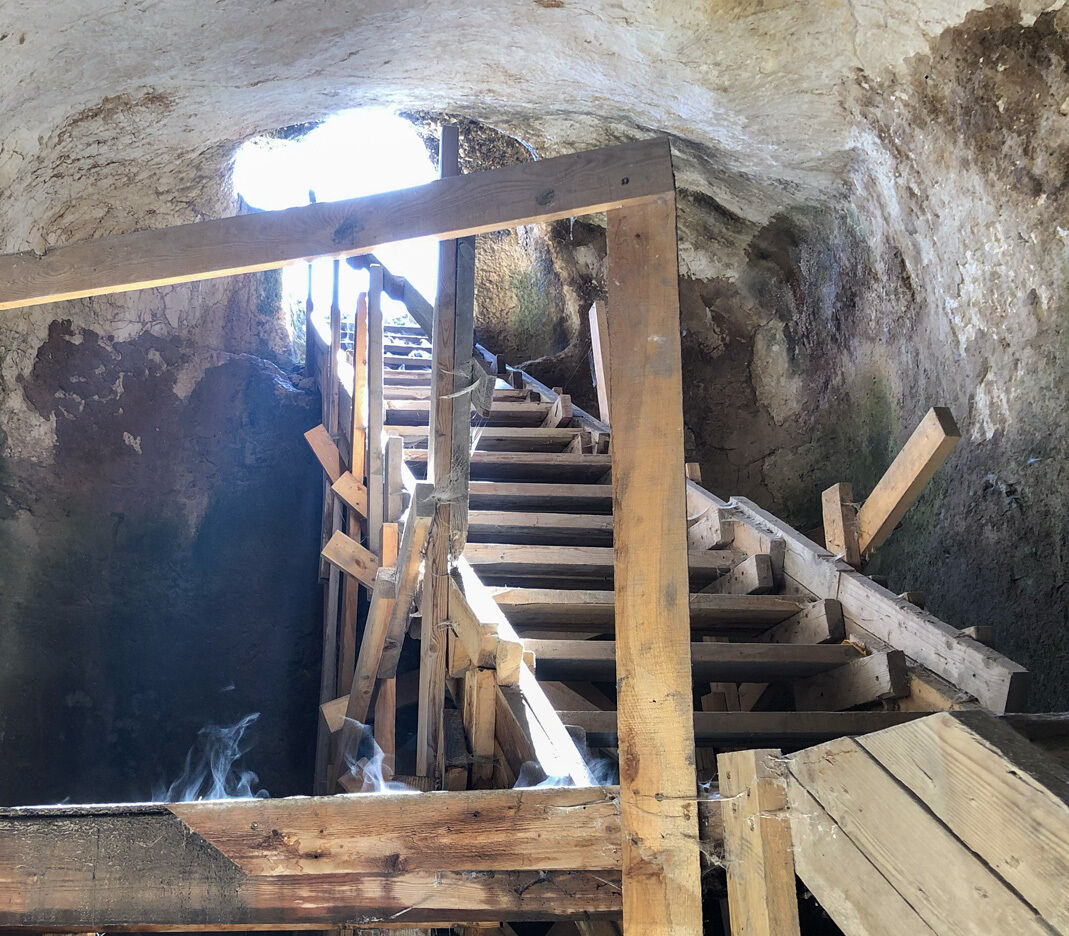
The Ophel cave functioned as a cistern during the Iron Age and contains significant Hasmonean Period fills, as well as a brief 70 c.e. occupation level—the final year of the Great Revolt, in which Josephus wrote that inhabitants of the city sought their “last hope … in the caves and caverns underground.” During our 2018 excavation, we discovered one of the largest-ever Year Four coin hoards—dozens of coins from the final full year of the First Revolt in Jerusalem, bearing the phrase “For the Redemption of Zion” (a sober change from the coins of earlier years of the revolt, which bore the more triumphant message “For the Freedom of Zion”).
Our cave excavation this year consisted primarily of cutting two large sections left from the 2018 season, in order to secure a better pottery chronology. Finds included rich quantities of pottery from the Hasmonean Period (second century b.c.e.) onward—as well as the peculiar discovery of a 2,000-year-old canine skull, probably belonging to a jackal that was scavenging within the city. This brings to mind the prophecy of Jeremiah: “I will make Jerusalem a heap of ruins, a den of jackals …” (Jeremiah 9:11; New King James Version).
Finally, samples of plaster were also taken from the cave by visiting radiocarbon experts from the Weizmann Institute of Science, Prof. Elisabetta Boaretto and Dr. Johanna Regev. Their analysis of the samples will hopefully determine the earlier periods in which the cave had been originally plastered.
Area B
Area B originally constituted a large Iron Age area on the southern end of the upper Ophel site.
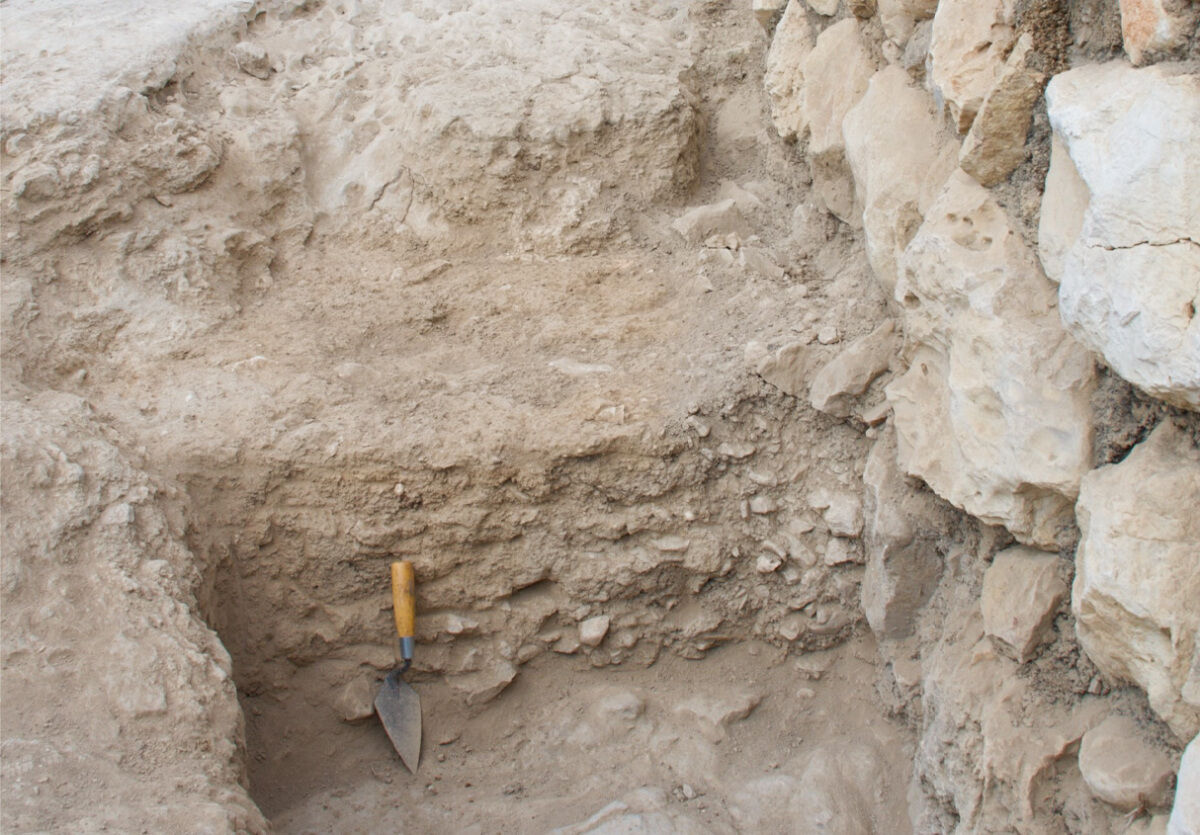
Excavated in 2012 and 2013 under the supervision of Brent Nagtegaal, a large number of Iron Age iia (10th century b.c.e.) walls and small finds had come from the area, including a Phoenician earring pendant whose research and publication made headlines in 2024.
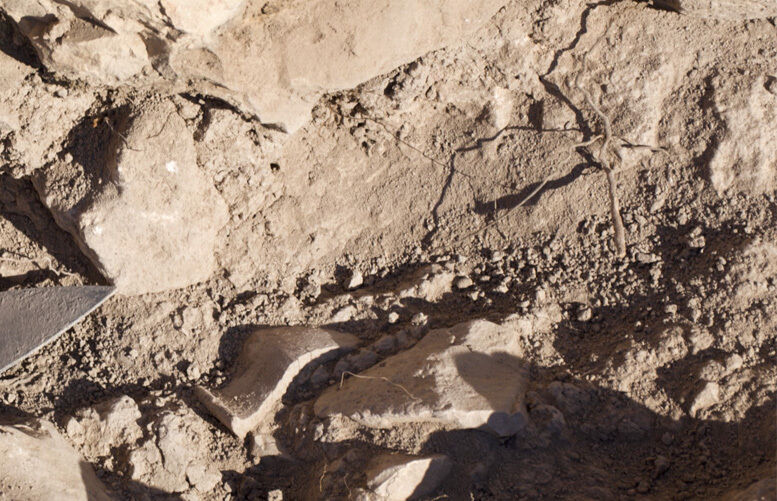
Nagtegaal, visiting from the United States for the 2025 excavation, took the opportunity to complete a final area of excavation within his area, carefully uncovering, dry-sifting and wet-sifting a preserved Iron Age iia floor fill abutting a stretch of wall from the same period. While no significant small items were found, a number of typical early Iron Age vessels were, including one particularly beautiful, highly burnished example.
After a successful summer 2025 excavation, we look forward to what next year has in store!
