
From where did ancient Israel source the tin it used to create bronze? Bronze consists of 90 percent copper and 10 percent tin. Many copper mines have been found in the area around Israel, such as Timna and Faynan. And while the Middle East is not lacking in tin mines, they are of a smaller, local scale—not large enough to provide the amount of tin necessary to sustain the bronze consumption of the Mediterranean during the Bronze Age.
The source of ancient Israel’s tin has been debated for more than two centuries. But now, a recent study, led by Dr. Alan Williams from the Department of Archaeology at Durham University, provides a conclusive answer.
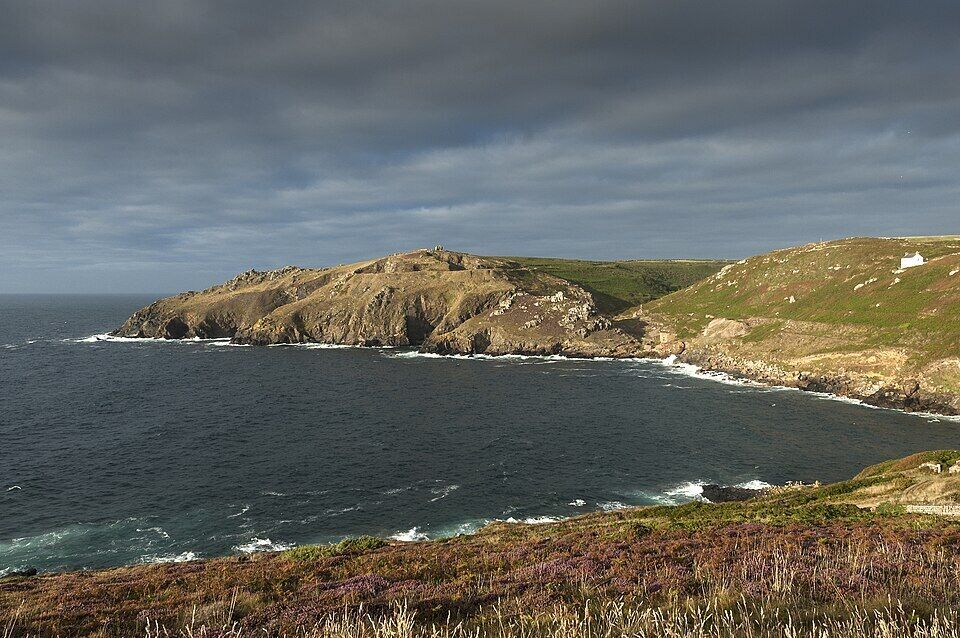
The study, published in Antiquity, investigated tin ingots discovered in 14th-13th-century b.c.e. shipwrecks off the coast of Israel. It found that the tin was derived from mines in Cornwall and Devon in southwest Britain—one of the largest tin deposits in the world.
For Project Ancient Tin, researchers took the tin ingots from the Mediterranean and compared them with tin found in Cornwall, Devon and other large European tin deposits. Previously, researchers used tin isotope composition to determine the origin of tin found in the shipwrecks. This new study, however, added more advanced techniques, such as measuring the trace elements and lead isotopes of the tin.
They found that the isotopic data from the tin from the shipwrecks off the coast of Israel is fully consistent with the isotopic ranges from the mines at Cornwall—and less so with the other European sources.
They also used indium level to reach a more definite conclusion: “All Bronze Age to Early Iron Age tin ingots from the Mediterranean shipwrecks analyzed to date have indium levels consistent with Cornwall and Devon ores ….”
Based on archaeological finds extending from Britain to the Mediterranean, the researchers were able to determine that the trade of tin began to flourish between 1500–1300 b.c.e.
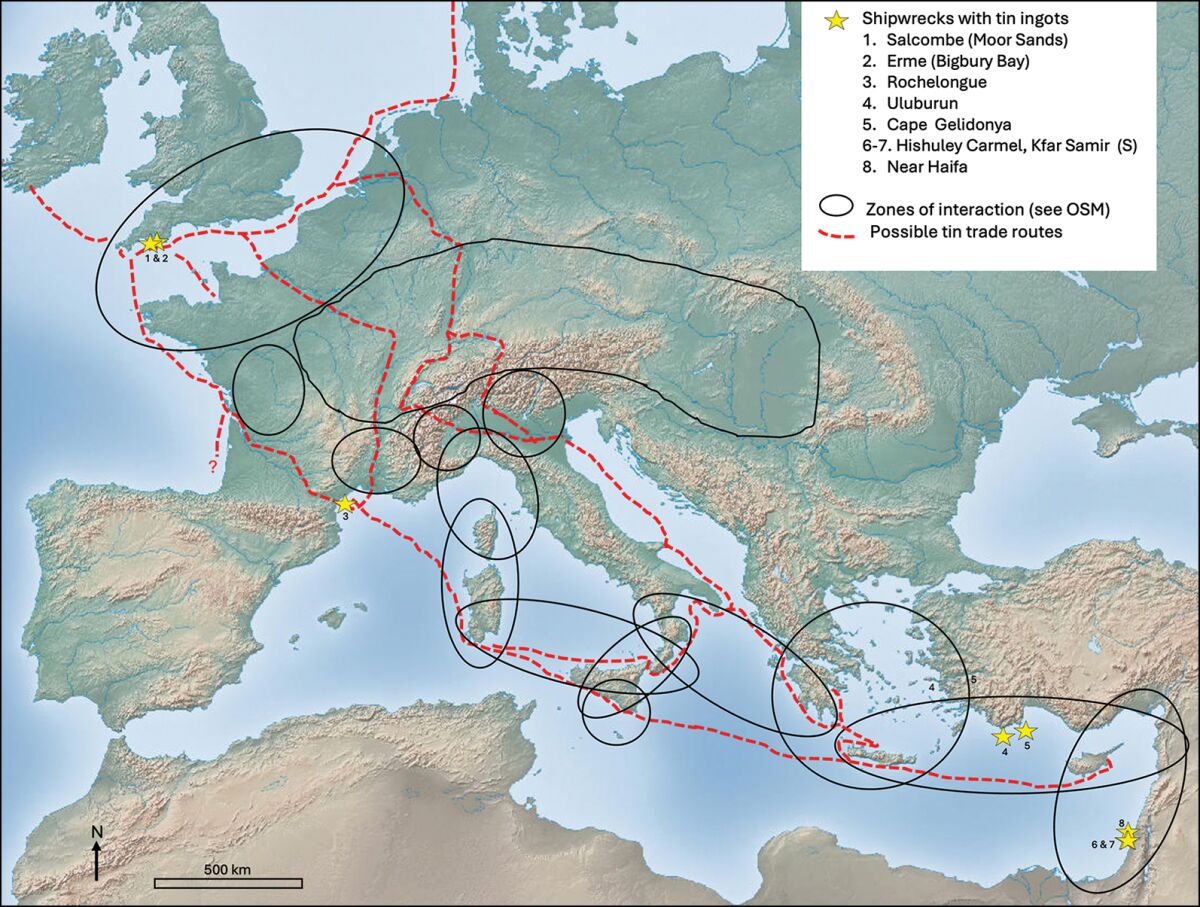
The abundance of copper being produced at mines such as Timna and Faynan also led the researchers to determine that “tens or even hundreds of tonnes of tin were being traded each year—perhaps across distances of thousands of miles.”
This highlights the international maritime trade that would have occurred between port cities of the Levant and Britain—even during this early period. Such trade would have required great naval capability with able navigators. A shipwreck discovered in the middle of the Mediterranean Sea last year proved that sailors at the time had the capacity to navigate far distances at sea.
As we have written, it was more than likely the Israelites themselves who traveled to Britain to acquire the tin. The Bible puts the Israelites in ships during the judges period and indicates that some Israelite tribes specifically had an interest in maritime trade.
For example, the Bible describes that when Deborah and Barak fought against Jabin of Hazor around 1200 b.c.e., two sea-faring tribes—Dan and Asher—failed to join the rest of the nation. “Dan, why doth he sojourn by the ships? Asher dwelt at the shore of the sea, And abideth by its bays” (Judges 5:17).
In a 1989 Biblical Archaeology Review article, Prof. Lawrence Stager suggested that these tribes didn’t fulfill their duty because they were preoccupied with their own maritime endeavors around the Mediterranean. He proposed that the word for sojourn could mean “to serve as a client,” possibly meaning that they worked under or in tandem with another people. It is highly likely they were cooperating with the neighboring, and well-known sea-faring Phoenicians in their travel around the Mediterranean—and possibly as far as Britain. “The reluctance of Dan and Asher to join the highlanders in this war against the Canaanites seems more understandable in light of their economic dependence on non-Israelite groups in the maritime trade,” he wrote.
Could it be that Dan and Asher traveled to Britain? The Bible specifically connects Asher to metallurgy (Deuteronomy 33:24-25). To produce bronze, they needed to get large amounts of tin from somewhere. As of now, it looks like they most likely traveled to Britain for such needs.
To learn more about the ancient tin trade and its biblical connection, read “Did Israel Source Tin From Britain?”
