
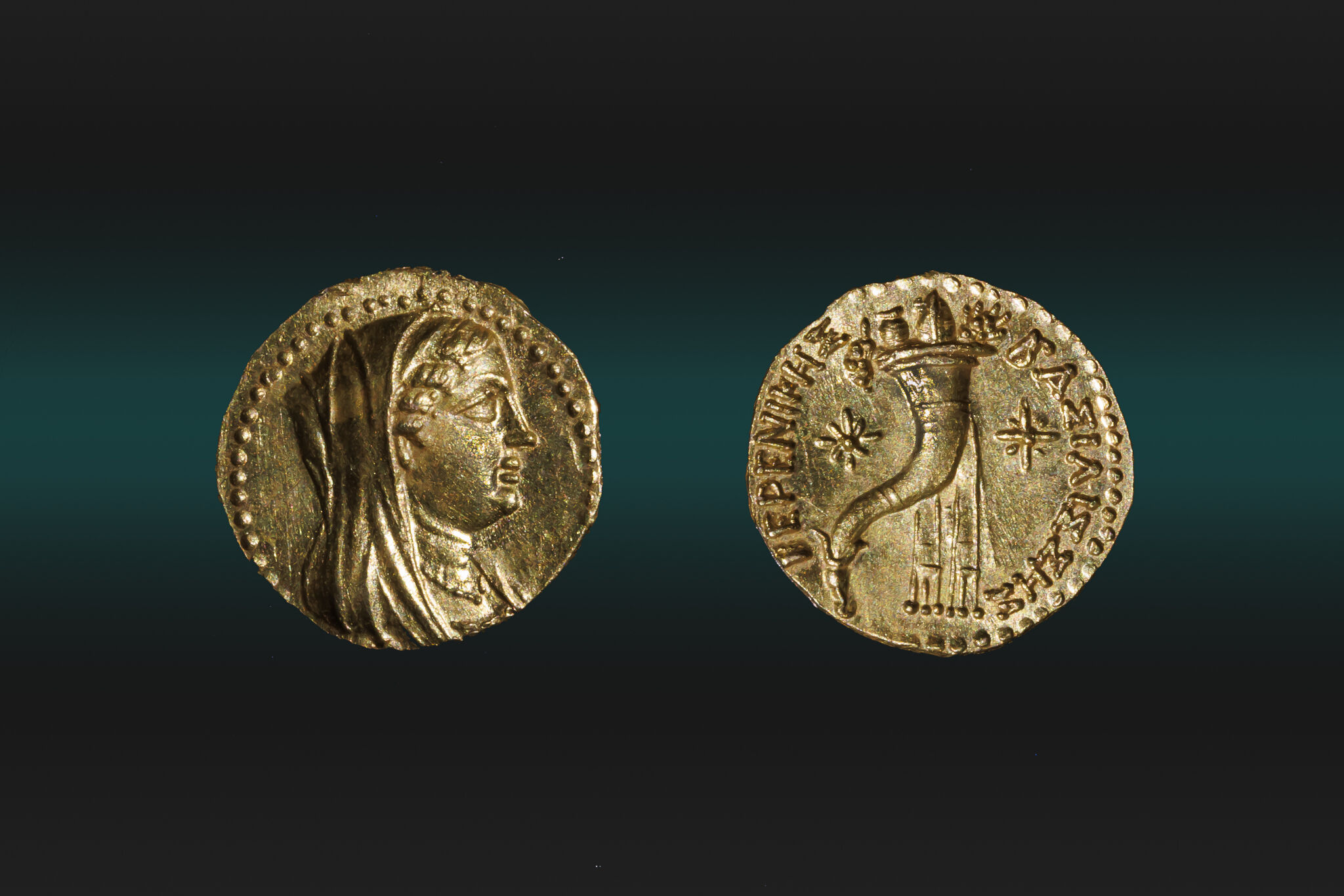
Archaeologists excavating the City of David in Jerusalem have uncovered a rare 2,300-year-old pure gold coin, the Israel Antiquities Authority (iaa) announced on Wednesday, August 20. The coin bears the profile of Queen Berenice ii of Ptolemaic Egypt, who lived in the third century b.c.e. and was the wife of Ptolemy iii, ruler of Egypt.

According to Dr. Robert Kool, head of the Numismatics Department at the Israel Antiquities Authority, and Dr. Haim Gitler, chief curator of archaeology and curator of numismatics at the Israel Museum, “As far as we know, the coin is the only one of it’s kind ever discovered outside Egypt.”
The front of the coin displays Berenice wearing a diadem veil and a necklace around her neck. The backside features a full cornucopia, an ancient symbol of prosperity and fertility with two stars beneath it, surrounded by the Greek words “of Queen Berenice.”

According to the iaa, the coin is a quarter drachma made up of 99.3 percent gold and dates to 246–241 b.c.e. Only 20 of these coins have been discovered, but this is the first time such a coin has been found in a controled archaeological excavation. Archaeologists suggest it was minted in Alexandria as a reward for soldiers who fought in the Third Syrian War (246-41 b.c.e.).
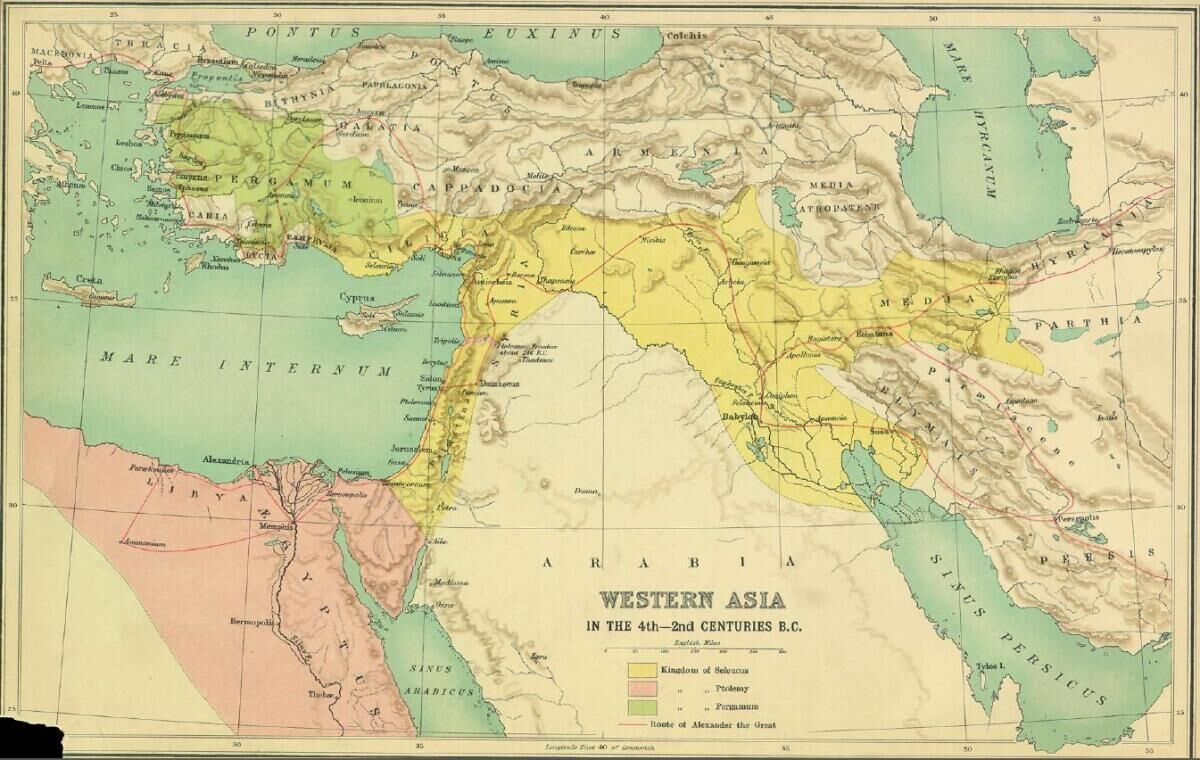
The coin reveals interesting characteristics of Queen Berenice. According to the iaa, “the Greek inscription ‘basilisses’—‘of the Queen’—is rare on coins of this period. Women appeared occasionally on Ptolemaic coins for nearly 300 years (305–30 b.c.e.), the most famous of whom was Cleopatra. However, this is one of the earliest cases of a Ptolemaic queen appearing on a coin with such a title during her lifetime—possibly evidence of her exceptional status and political power.” For a time, Berenice ii ruled as regent over Egypt when her husband was fighting in Syria against Seleucid rivals.
Up until recently, Jerusalem of the third century b.c.e. was thought of by some scholars to be small and weak, still in the recovery stages after the destruction of the first temple in 586 b.c.e. This find creates an argument against that idea, suggesting Jerusalem was a city that was connected with cultures and kingdoms in the Hellenistic world.
According to excavation director Yiftah Shalev, the coin demonstrates Jerusalem’s integration into regional power structures and highlights its revival centuries before previously believed. The gold coin may be small, but it opens massive possibilities of what Jerusalem was actually like in the third century b.c.e.
Biblical history contained in the books of Ezra and Nehemiah also notes that as early as the fifth century b.c.e. Jerusalem was already part of an international trade network (Nehemiah 3:16). Although the Hebrew Bible ends its historical narrative at the close of the book of Nehemiah, the prophetic book of Daniel forecasts future events. Chapter 11 of Daniel looks specifically details the interplay between the Hellenistic kingdoms based in Egypt (Ptolemaic) and Syria (Seleucid).
Unfortunately, Berenice ii is not mentioned in the chapter. However, its generaly agreed by scholars that her husband’s successful venture against the Seleucids in the Third Syrian War is addressed: Ptolemy iii “shall stand up in his place, and shall come unto the army, and shall enter into the stronghold of the king of the north [Seleucids), and shall deal with them, and shall prevail; and also their gods, with their molten images, and with their precious vessels of silver and of gold, shall he bring into captivity into Egypt; and he shall desist some years from the king of the north” (Daniel 11:7-8). Naturally, Jerusalem’s location in the middle of two warring kingdoms would put the Jewish population of Judea in frequent contact with the powers of the region.
The coin will be displayed alongside gold jewelry that was found in the Givati Parking Lot excavations during the 26th Annual City of David Research Conference in early September. The excavations are a joint project of the Institute of Archaeology at Tel Aviv University and the iaa.
