
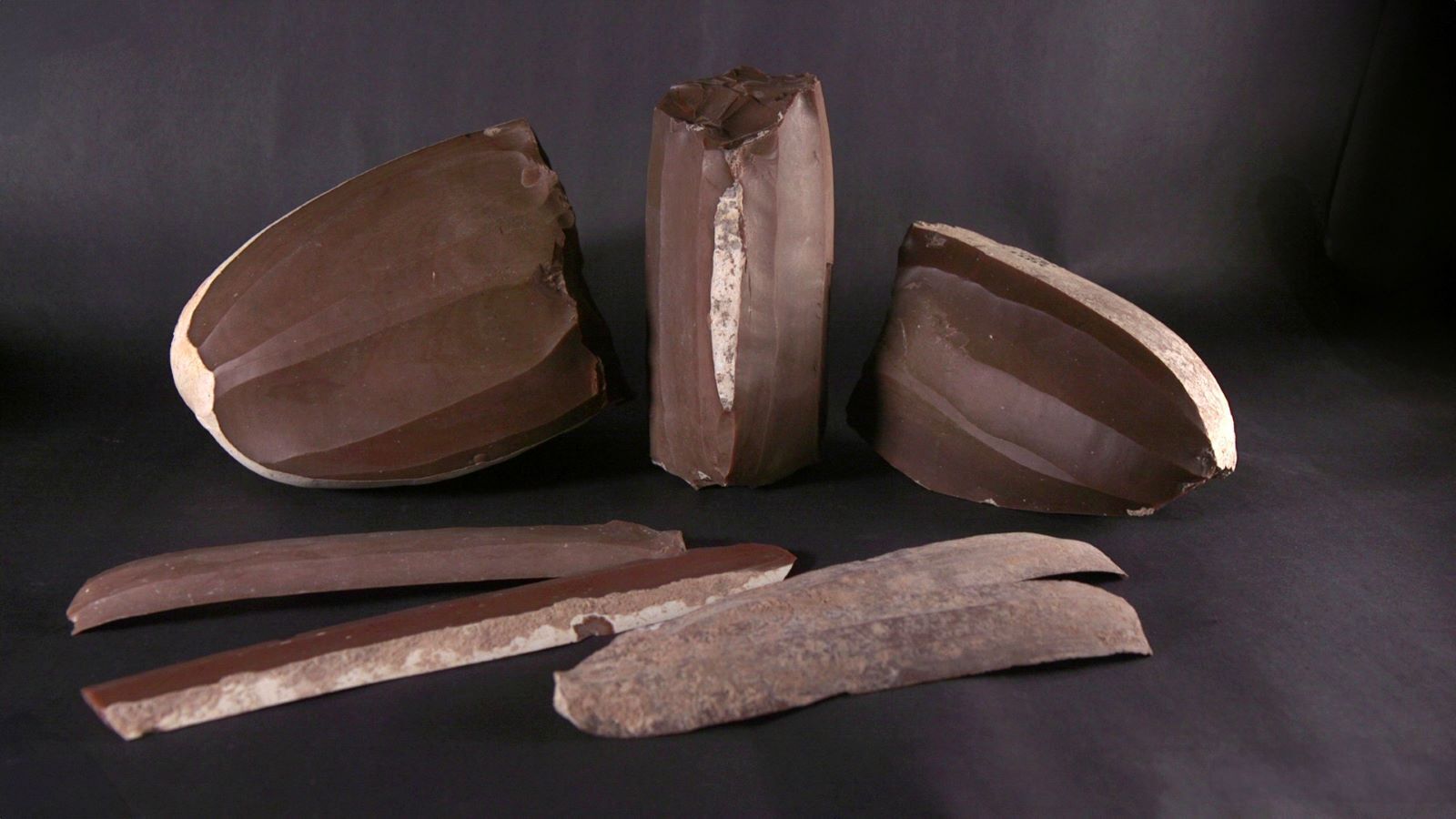
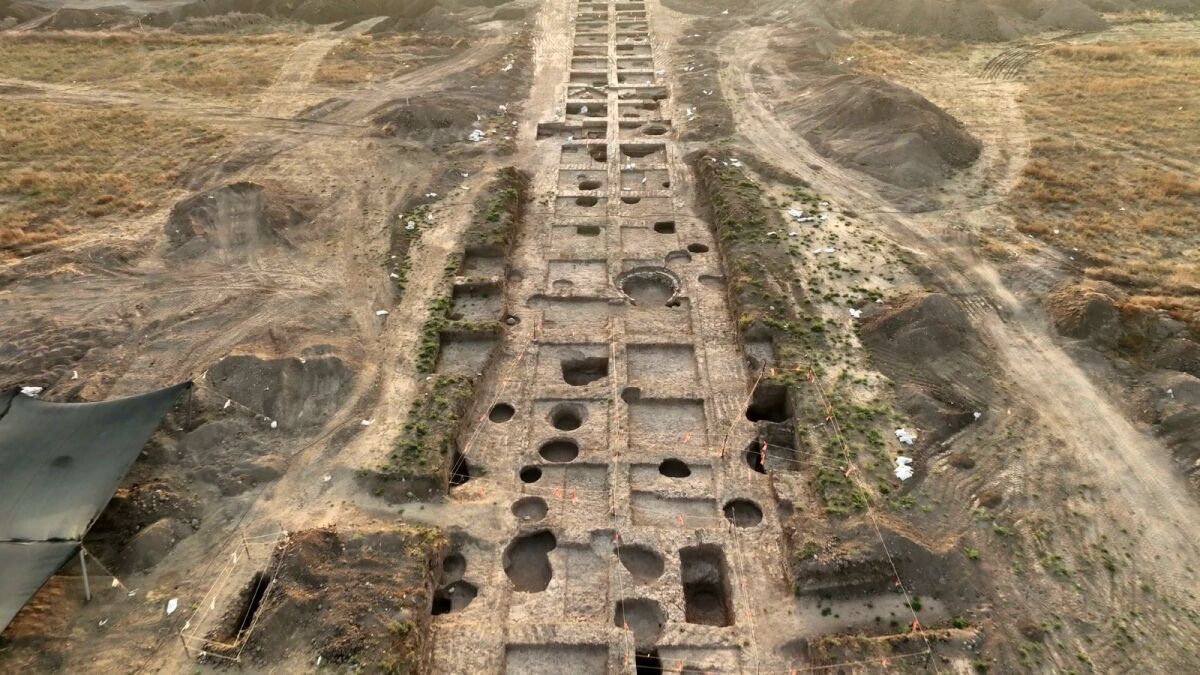
Excavations conducted by the Israel Antiquities Authority (iaa) near Kiryat Gat (about 35 miles south of Tel Aviv) have revealed an Early Bronze Age flint blade production workshop—the first ever of its kind discovered in Southern Israel.
The dig, commissioned prior to the construction of a new neighborhood, was directed by Dr. Martin David Pasternak, Shira Lifshitz and Dr. Nathan Ben-Ari.
According to iaa prehistorians Dr. Jacob Vardi and Dudu Biton, an “advanced industry was revealed at the site, requiring an extremely high level of expertise. Only exceptional individuals knew how to produce the Canaanite blades. This is clear evidence that already at the onset of the Bronze Age, the local society here was organized and complex, and had professional specialization.”
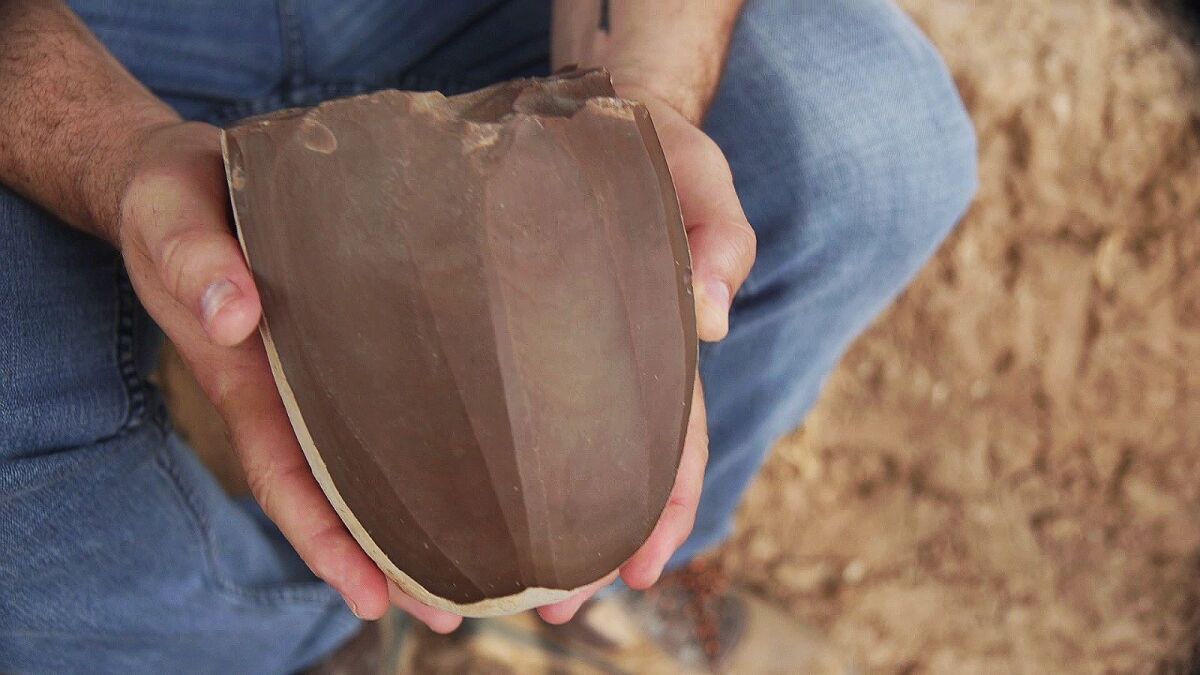
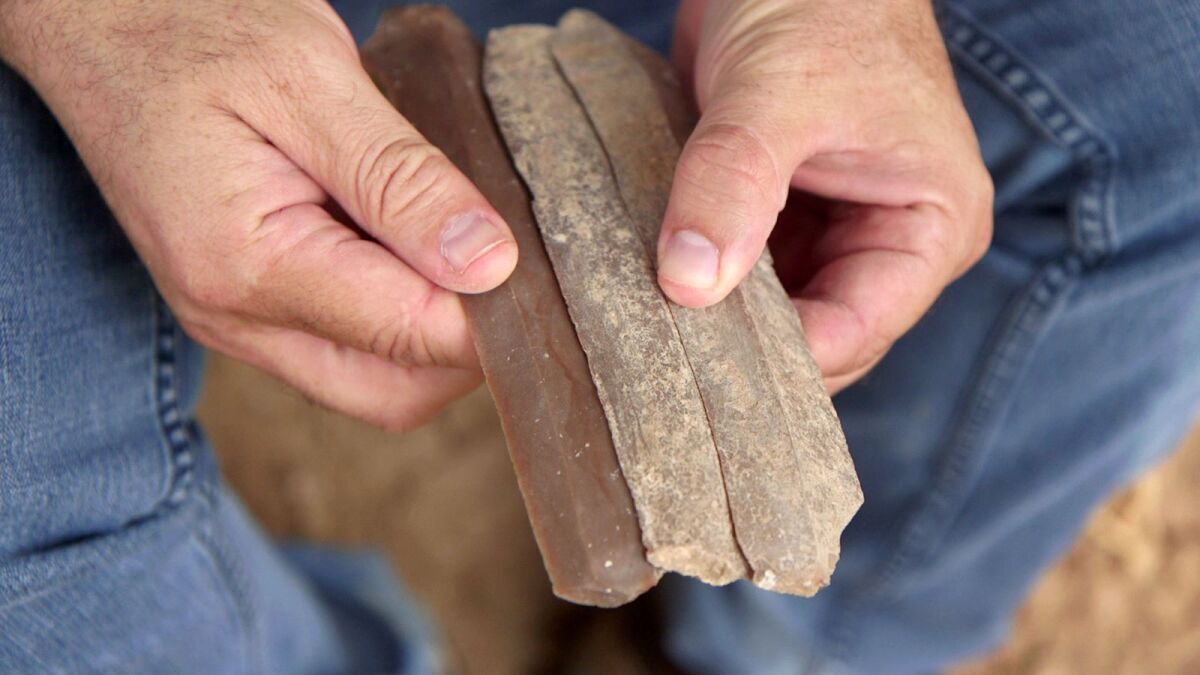
Archaeologists discovered impressive large flint cores, which were used to uniformly shape extremely sharp blades. This sort of advanced production technology—dated by the researchers to the mid-fourth millennium b.c.e.—is a marvel for the Early Bronze Age. Additionally, the discovery of long flint blades showed further evidence of technological sophistication during this time.
In a joint statement, Pasternak, Lifshitz and Ben-Ari noted:
Although evidence of the Canaanite blade industry has been discovered in the country’s center and north, there are almost no known workshops for their systematic production.
The discovery of a sophisticated workshop indicates a society with a complex social and economic structure already at the beginning of the Early Bronze Age. This is an important find in that it deepens the understanding of both the beginnings of urbanization and of professional specialization in the Land of Israel—phenomena that led to the establishment of large settlements and that catalyzed the creation of new social structures.
This archaeological site we excavated was used as an active settlement continuously for hundreds of years—from the Chalcolithic period through to the Early Bronze Age. The excavation shows that the settlement covered a much larger area than previous estimates—over half a kilometer—and it includes hundreds of underground pits, some lined with mud bricks. These pits served a variety of purposes: storage, dwellings, production crafts and cultic/social rituals.
Interestingly, the debitage (waste material from the production of stone tools) was not scattered outside the site. Dr. Vadi speculates that this was done in order to preserve the knowledge of the craft within the group of experts. He concluded: “Today, we understand that this site served as a center, from which Canaanite blades were distributed across broad regions in the Levant.”
The finds are being presented to the public for the first time this summer; tours are conducted at the Jay and Jeanie Schottenstein National Campus for the Archaeology of Israel in Jerusalem.