
Warts and All: the Bible’s Unique Presentation of Its Heroes
“It’s all propaganda. Everything is propaganda.”
This was the assessment of a recent Bible and Archaeology video comparing and contrasting the mid-late ninth century b.c.e. Mesha Stele with its associated biblical account in 2 Kings 3. The Mesha Stele has long been celebrated as effectively telling the Moabite side of the story found in 2 Kings 3, with its first-person account of the Moabite ruler Mesha (compare verse 4); his rebellion against Israelite hegemony over Moab (compare verse 5); naming the Israelite king Omri, as well as the opposing deities Chemosh of Moab and yhwh; even mentioning the Israelite tribe of Gad specifically as occupying “Ataroth from ancient times” (compare Numbers 32:34). The stele even bears a more recently confirmed reference to King David, first posited in 1992—even before the discovery of the Tel Dan Stele and its own famous David inscription.
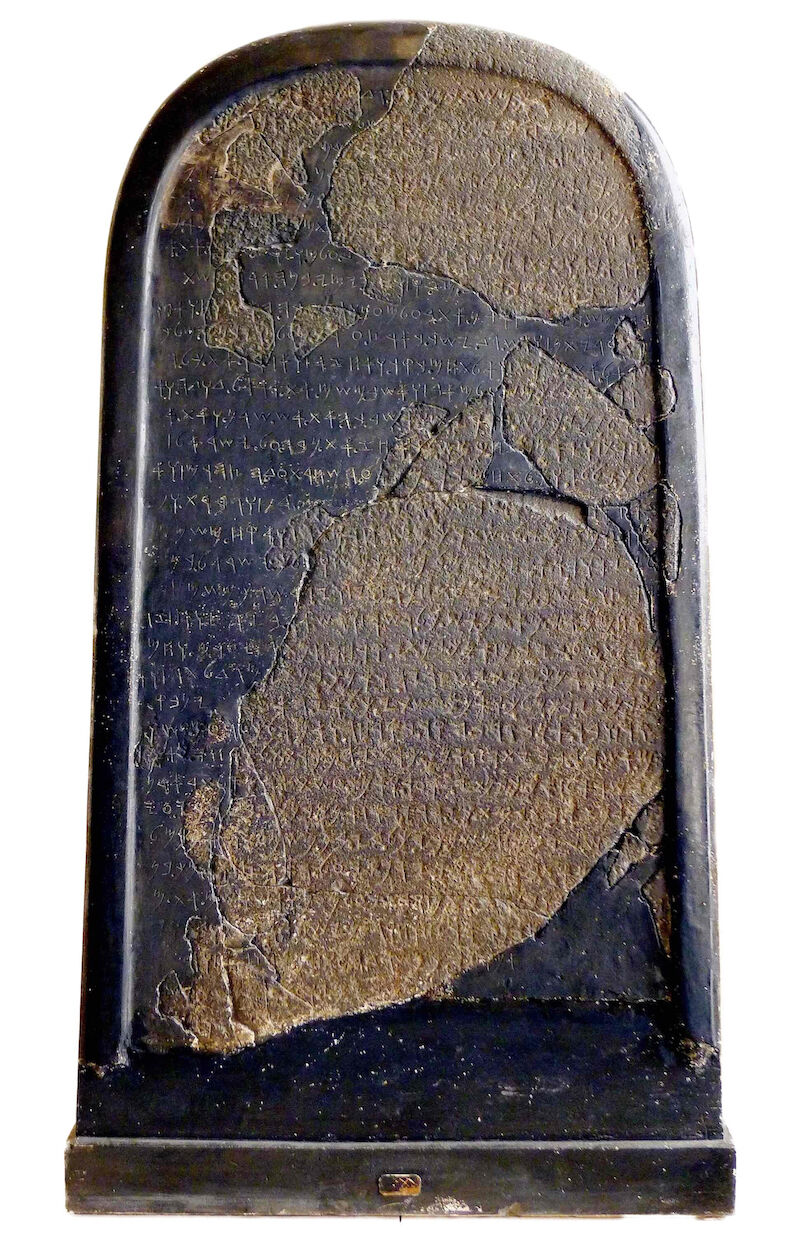
Unsurprisingly, the stele has frequently been highlighted in biblical archaeology circles for its striking parallels with the biblical account, and the way it slots into a very specific time and place in the biblical record. Yet the presenters of the aforementioned program, “The Moabite Stone Changes How We Read the Bible,” took exception with some of the—shall we say—“exuberance” of enthusiasts in pointing to the Mesha Stele as corroboration for the biblical account.
“None of these things are telling the truth of what happens here,” said presenter Dr. Jordan Jones.
To which co-host Mary Kate Lichty replied: “No. They’re both politicized agendas; one is just a book, and the other one’s a stone.”
Jones: “You can’t point at the Moabite Stone and have the criticism that it is propaganda—which it is—and not simultaneously apply it to 2 Kings 3.”
Lichty: “It’s all propaganda. It’s all propaganda.”
Jones: “They are both varying forms of propaganda. So, does it ‘confirm’? It’s impossible for one to confirm the other’s account.”
Lichty: “I mean, it contextualizes, but confirmation is a very sticky word in this. … [P]roof and confirmation are things you cannot get from these artifacts. And that’s what people want so badly. … [Y]ou people just want proof so badly. Isn’t context enough?”
Jones: “No—for certain communities, no. The context of the thing is not interesting; it’s not desired. Which leads to—and makes one susceptible to, maybe we should say—the misapplication, or the intentional misreading, or the willful ignorance ….”
To this, a viewer made the following interesting observation in the comments:
Referring to both biblical and Mesha Stele accounts as propaganda might be true, but it steamrolls over an important point—that it is the biblical accounts that are self-critical far more than self-aggrandizing. This lends a far more balanced flavor to the narrative, but the self-criticism is sincere.
This particular Bible and Archaeology episode was not the catalyst for this article—rather, it aired as I was assembling material on this subject. Yet it, and especially the associated comment, makes for a fitting introduction to the subject of the Bible’s truly strange, “self-critical” presentation of its greatest heroes and stories, as compared to other ancient texts—and the logical implications thereof, concerning “proof” and “confirmation.”
The Bible’s Curious Treatment of Its Heroes
If I were to ask you who were the Bible’s greatest figures, a number of names might immediately spring to mind: Noah, Abraham, Moses, Samuel, David, Hezekiah, Josiah and Jeremiah.
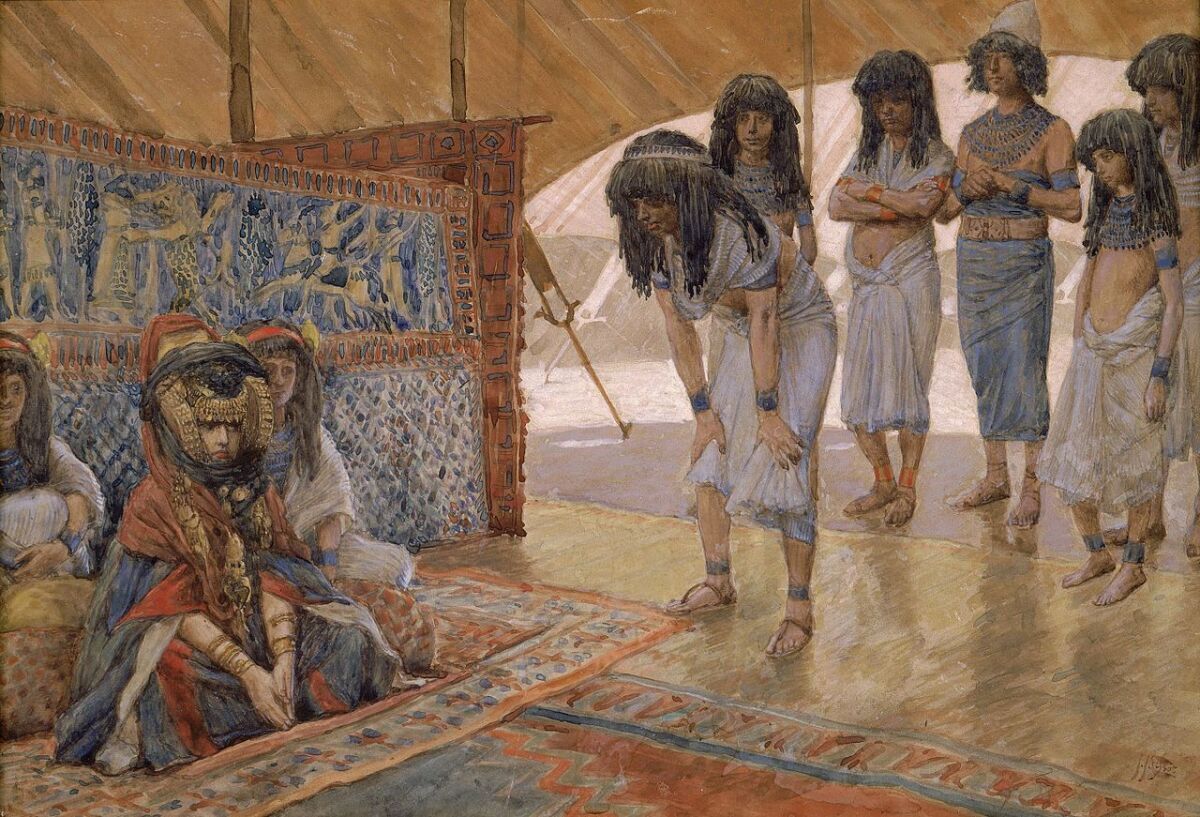
Yet take each of these individuals on a case-by-case basis. Take “righteous” Noah—the climax of his story, following the Flood, is marred by an episode of drunkenness, followed by a mysterious event involving sexual impropriety committed against him (Genesis 9). Take Abraham, “friend of God” and “father of the faithful”—whose moments of weakness and self-preservation resulted in his wife Sarah being wrongfully taken as a harem-wife (Genesis 12, 20), and whose moment of faithlessness resulted in an improper union with his wife’s handmaid—with a resultant continuous conflict that to this day is still popularly traced back to this episode.
Take Moses, the “meekest man on earth”—“there hath not arisen a prophet since in Israel like unto Moses, whom the Lord knew face to face” (Deuteronomy 34:10)—who attempted to backpedal multiple times out of his divine mission and was nearly executed right from the outset by God Himself (Exodus 4), and whose sin ultimately prevented him from entering the Promised Land (Numbers 20; Deuteronomy 32). The Prophet Samuel, while his own record could be described as clean, had sons who became corrupt judges, taking bribes and “perverting judgment”—who were cited by the Israelites as the reason for their fateful request of a king (1 Samuel 8).
Take mighty King David—his acts of adultery and murder—who “shed blood abundantly,” preventing him from building the temple (1 Chronicles 22:8). His unthinkable family strife included incest, murder and civil war (2 Samuel 13), resulting in the deaths of tens of thousands of countrymen. Take King Hezekiah—whose misguided and condemned alliance with Egypt brought on the brutal onslaught of Assyrian King Sennacherib, nearly destroying the kingdom of Judah entirely, and whose interactions with the representatives of Merodach-Baladan paved the way for the ultimate Babylonian conquest (Isaiah 39). Take King Josiah—his misguided fight against Egypt resulting in his premature death and the defeat of Judah, fast-forwarding the kingdom toward its ultimate destruction at the hands of the Babylonians (2 Chronicles 35). Take the Prophet Jeremiah—who himself goes through what might be described as a faith crisis, including some surprising language (Jeremiah 20; see also the last half of Psalm 89, which has been attributed to Jeremiah).
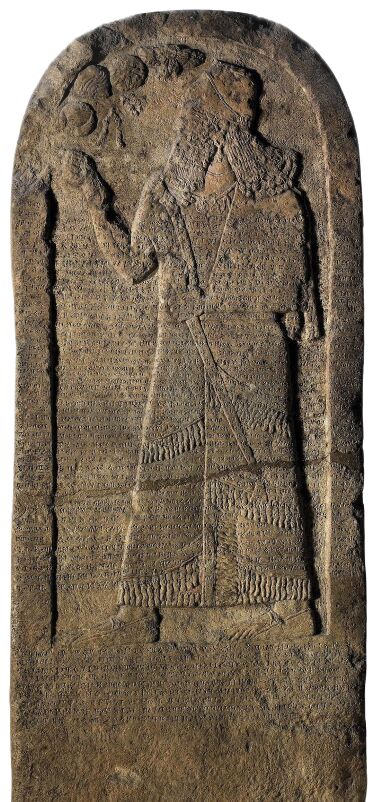
We can also do this exercise in reverse: What are some of the worst figures of the Hebrew Bible? Take King Ahab, for example—since he was brought up in the aforementioned program. Jones describes him as a representative example of the northern kings of Israel who are “heavily demonized in the text,” whose description in the biblical account “does not necessarily reflect the political reality, the geographic reality, the military reality of what other things are telling us that they do. Like Ahab participating in the rebellion of the Battle of Qarqar [as part of a Levantine alliance against Assyria, per the Kurkh Monolith]. You don’t get all of this, because those things are going to paint you in a light that doesn’t maybe align with what we [the biblical authors] want to say about you ….”
Indeed, there is no direct mention of the Battle of Qarqar in the biblical text (although there is at least allusion to the context of it). That aside, though: Far from seeing Ahab as “heavily demonized,” with anything remotely positive being erased out of spite, I come away with almost the opposite impression—noting the strikingly open and candid, occasionally even jovial back-and-forth nature of his relationship with Elijah (e.g. 1 Kings 18:41, 44); Ahab’s miraculous victories against the Aramean ruler Ben-Hadad (1 Kings 20); his reticence at least to personally prosecute further his quarrel with Naboth (1 Kings 21); even Ahab’s fasting and “humbling” himself before God, postponing judgment upon his family until after his death (verse 29). That’s not to lessen the ultimate biblical estimation of Ahab as an unrighteous king—but I don’t come away from the biblical account of Ahab seeing it as “heavily demonizing” the king, writing out anything positive from his reign. (If anything, even a lack of detail about the Battle of Qarqar could be seen as a saving grace for Ahab, given the apparently heavy losses.)
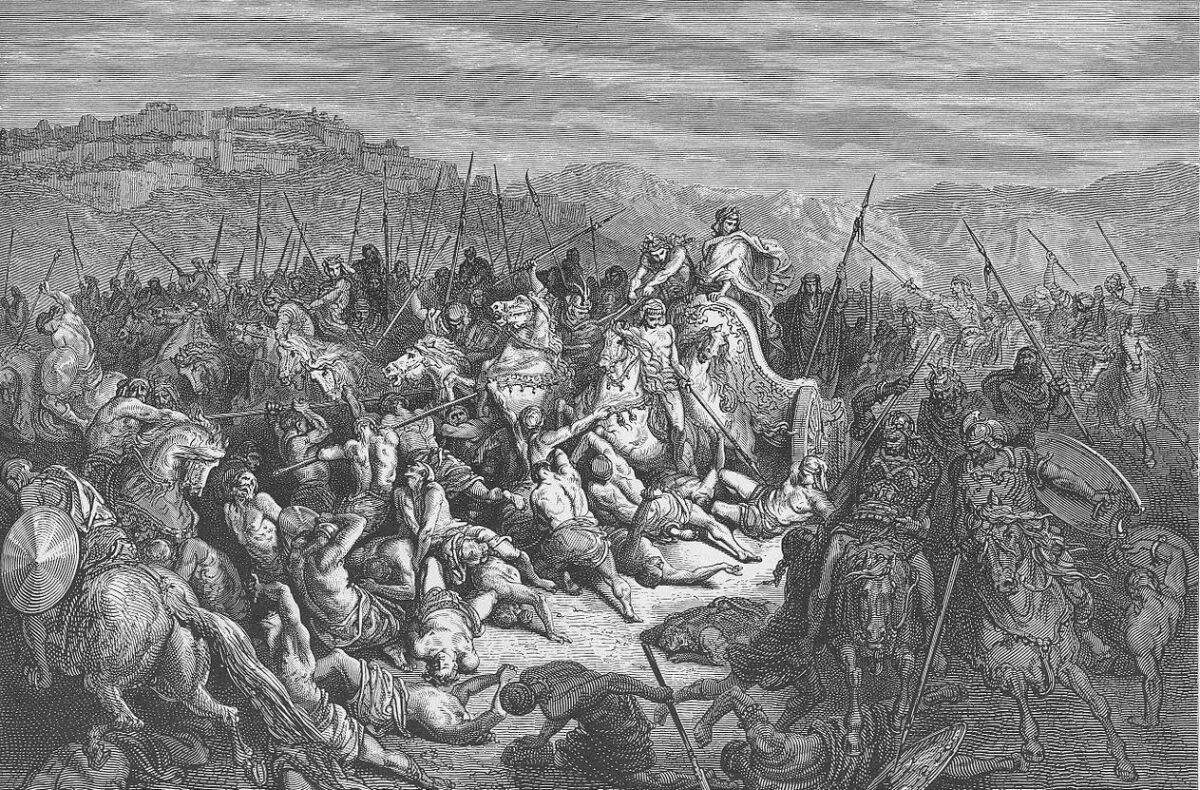
Or take the king probably seen most widely as the most wicked of them all—ironically, not a northern king, but of the southern kingdom of Judah—King Manasseh. His rank paganism, witchcraft, child-sacrifice and “shedding of innocent blood very much” (2 Kings 21:16) is legendary. Longstanding Jewish and Christian tradition has it that Manasseh even had the Prophet Isaiah executed—sawn in two. Repeatedly, a brunt of the blame for Judah’s ultimate demise is attributed to this king. Yet the Bible also records his later repentance and reinstatement to the throne following Assyrian captivity, as well as other highlights of the latter part of his reign (2 Chronicles 33).
Wrestling With the Text
The biblical text is, in a real sense, startling frank and open in its portrayal of both its heroic figures and its unsavory characters. Perhaps it’s unsurprising, then, that some have had difficulties with the presentation of some of these texts.
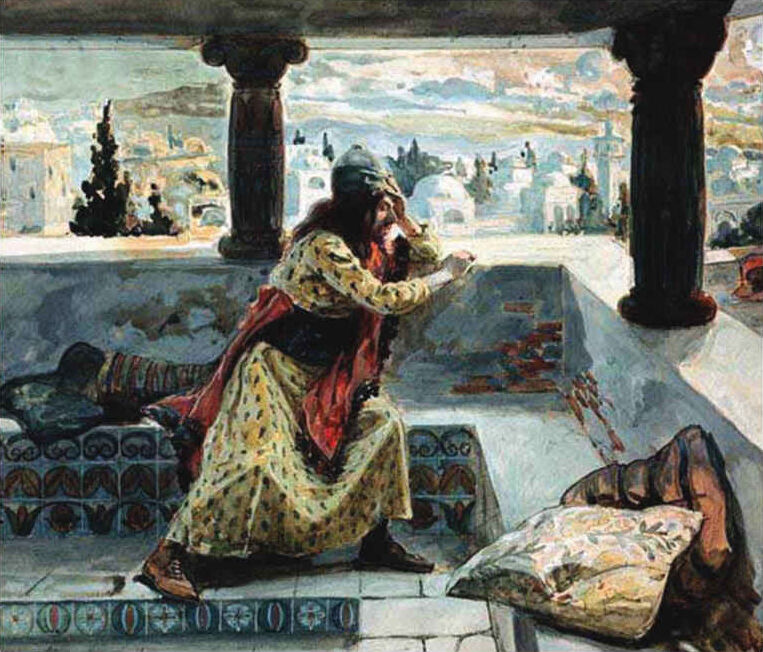
Regarding the story of David and Bathsheba, for example, the Talmud contains a rather humorous account of David’s coming to lay eyes on her quite by accident. Sanhedrin 107a relays the following: “Bathsheba was shampooing her head behind a beehive, which concealed her from sight. Satan came and appeared to David as a bird. David shot an arrow at the bird, the arrow severed the beehive, Bathsheba was exposed, and David saw her.” Further, while admitting the sinfulness of David’s rendezvous with Bathsheba, this is a union described as having been divinely ordained from time immemorial anyway—simply one acted upon too early. Continuing in the passage:
Rava taught: What is the meaning of that which is written: “For I am ready to stumble [letzela] and my pain is always before me” (Psalms 38:18)? Bathsheba, daughter of Eliam, was designated as fit for David from the six days of Creation. Rava interprets that the term letzela is referring to Eve, who was taken from the side [tzela] of Adam, the first man, and explains that she was destined for him, just as Eve was destined for Adam. But she came to him through pain. And likewise, the school of Rabbi Yishmael taught: Bathsheba, daughter of Eliam, was designated as fit for David, but he partook of her unripe, before the appointed time. David would have ultimately married her in a permitted manner after the death of Uriah.
Wrestling new meaning and interpretation into or out of an existing text as it stands is one thing—rewriting is another. And this is where the seventh-century c.e. Qur’an comes to the fore, in its own handling of supposedly “problematic” biblical accounts.
Enter the Qur’an
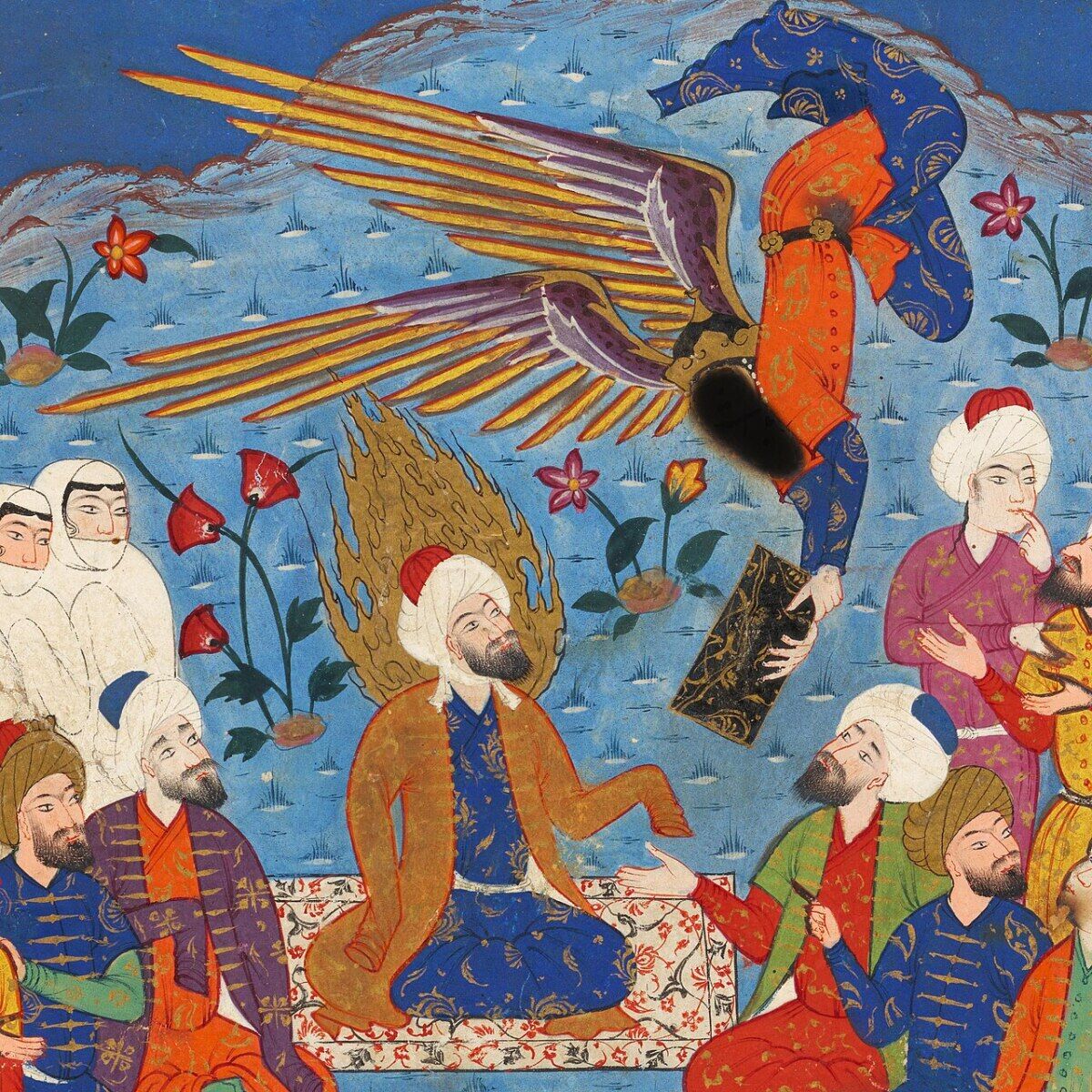
Many are aware that the Qur’an is built upon many of the same stories of the Bible (as well as later associated traditions), including mentioning and venerating many of the same figures. Musa (Moses), for example, is by far the most-mentioned person in the Qur’an, named 136 times. Ibrahim (Abraham) comes in second, with 69 mentions, followed by Nuh (Noah) with 43 mentions. Dawud (David) and Sulayman (Solomon) are mentioned 16 and 17 times respectively, and are spoken highly of. Some may be surprised to learn that even lower on the list is the great Arabian patriarch Isma’il (Ishmael), mentioned 12 times; the Prophet Muhammad himself, mentioned by name just four times. The Qur’an even claims the “Tawrat” (Torah) and “Injeel” (Gospel) to have been divinely revealed scriptures. Yet the Qur’an deliberately “corrects” what it sees as problematic passages reflective of the reputations of some of these biblical figures.
Take Musa/Moses, for example. The Bible describes one of the miracles establishing his prophethood as follows: “And the Lord said furthermore unto him: ‘Put now thy hand into they bosom.’ And he put his hand into his bosom; and when he took it out, behold, his hand was leprous, as white as snow. And He said: ‘Put thy hand back into thy bosom.—And he put his hand back into his bosom; and when he took it out of his bosom, behold, it was turned again as his other flesh” (Exodus 4:6-7). The Qur’an’s take on this episode is deliberately transformative: “And draw your hand to your side; it will come out shining white, without disease—another sign” (Ta-Ha 20:22; cf. An-Naml 27:12). This is a key example of qur’anic “correction” to the biblical text popularly highlighted by Muslim apologists, “correcting” what is seen as a biblical “corruption” concerning Moses’s purity.
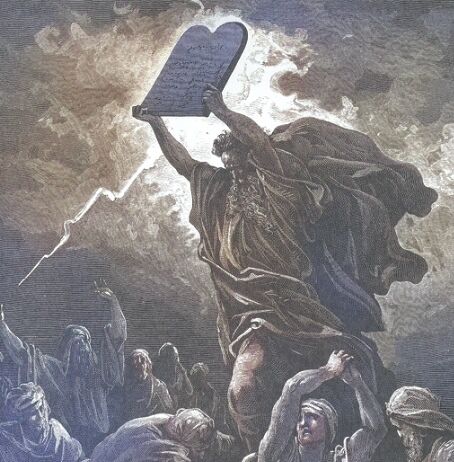
Another famous biblical episode is the one in which Moses casts down and breaks the divinely given tablets at the base of Mount Sinai, before the golden calf. “[A]nd he cast the tables out of his hands, and broke them beneath the mount” (Exodus 32:19). The qur’anic version does not have the tablets breaking—and while there is some debate about the exact sense of Al A’raf 7:150, a common translation is that Moses “put down the Tablets.” On this, Islamic scholar Abdullah Yusuf Ali writes in The Meaning of the Holy Qur’an: “[W]e are not told that the Tablets were broken; in fact 7:154 (below) shows that they were whole. They contained Allah’s Message. There is a touch of disrespect (if not blasphemy) in supposing that Allah’s Messenger broke the Tablets in his incontinent rage, as is stated in the Old Testament ….” (There is in fact more going on with this biblical account, including a possible reference to a curious ancient ritual—see the following article for more information.)
Such sentiments—qur’anic “tweaks” to the earlier stories—tap into a key part of Islamic theology: Ismah, the infallibility of the prophets. It is important to note that the designation of “prophet” is used much more broadly than in the Bible—for example, Adam, Lut (Lot), Isma’il, Ayyub (Job) and many others generally not referred to as prophets in the Bible are regarded as such in Islam.
Naturally, there is disagreement among differing sects about the exact interpretation of this doctrine of ismah. Broadly speaking, a majority of Sunnis believe the prophets to be impervious to major or intentional sins, with the possible exception of minor, non-public offenses, whereas a majority of Shias believe the prophets to be completely impervious to sin. The way this issue plays out for these shared figures of the Bible and Qur’an is especially interesting. For example, in the case of the prophet Adam, the Qur’an does include a version of the story of his casting out of paradise. Yet there are two general opinions regarding it: One, that Adam’s ismah (infallibility) began only after he was cast out, at which point he became a prophet; the other, that Adam was predestined by Allah to eat of the forbidden fruit, and was thus only acting as an obedient agent in Allah’s ultimate plan.
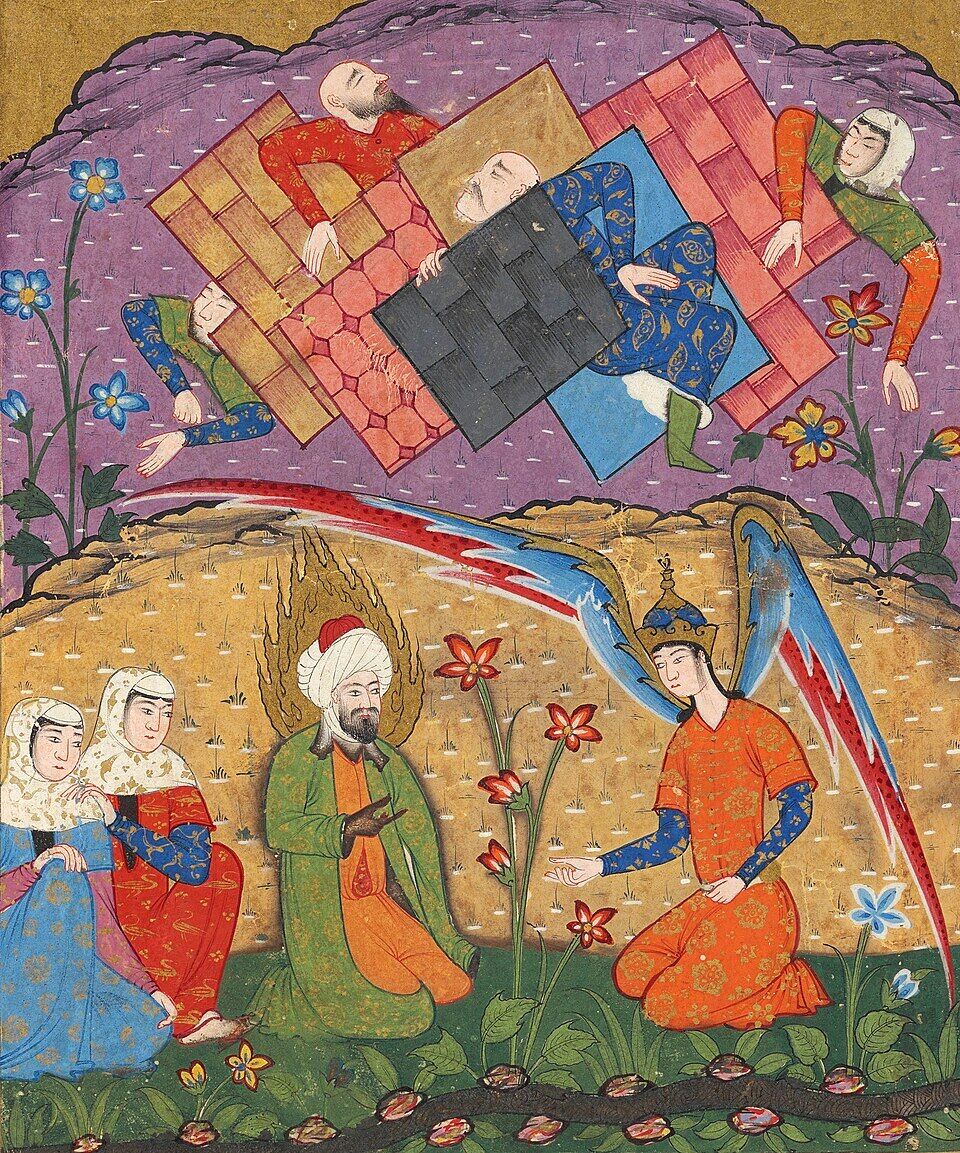
In the case of the Prophet Lut, the biblical account of his unwitting drunken incest with his daughters following the destruction of Sodom and Gomorrah (Genesis 19) is totally omitted in the qur’anic account. The same is true for the account of the Prophet Nuh, with his intoxication following the biblical Flood (Genesis 9)—completely omitted in the qur’anic account. The same is also true of the prophet and King Dawud—the account of his sin with Bathsheba is totally omitted while, ironically, the biblical metaphorical story used by the prophet Nathan to condemn David for this sin (2 Samuel 12) is preserved in the Qur’an in variant form (Sad 38:21-25).
Some adherents may find the qur’anic version a more “respectful” representation of events and significant individuals; others will see it as effectively a whitewash. The Qur’an certainly does not bear anything like the self-critical nature found in the Bible, exposing the good, the bad and the ugly of the text’s most significant figures—the greater marker of objectivity.
But much later talmudic and qur’anic reflections and reinterpretations aside—what about comparing the biblical account with other early accounts found in the archaeological record?
Comparing and Contrasting the Stelae
In the spirit of the introduction, let’s compare and contrast with the Bible the accounts of the two great stelae of biblical archaeology—the Tel Dan Stele and Mesha Stele—the former of which was also mentioned on the program: “Like, the way they talk about the Tel Dan [Stele],” said Jones. “This is one that comes up in the same spaces.”
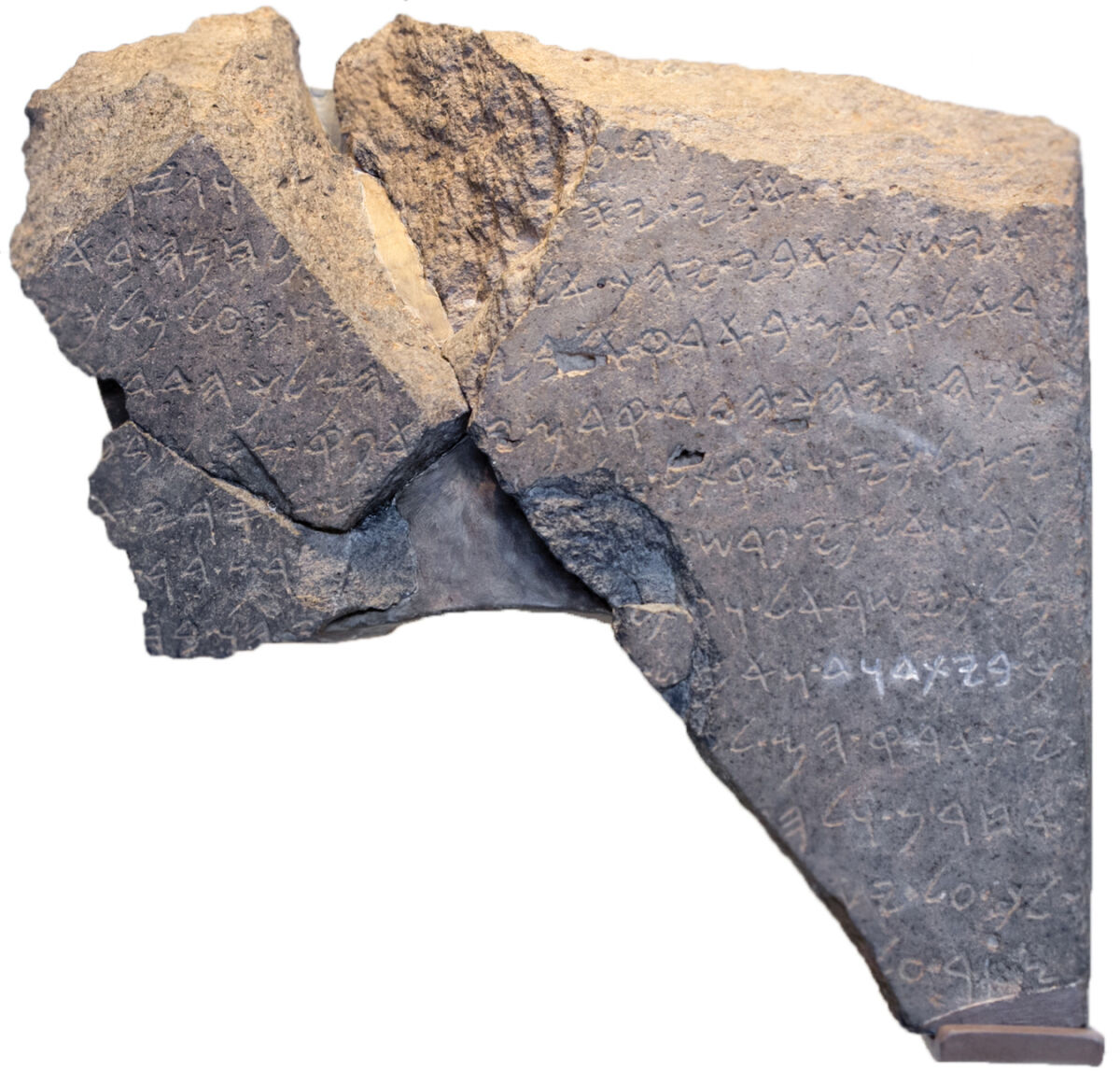
The ninth-century b.c.e. Tel Dan Stele, while much more fragmentary, is generally understood to reflect the perspective of King Hazael of Aram, in his victory against numerous kings including Ahaziah of Judah and Joram of Israel—the stele typically read as referring to Hazael killing them both. The stone represents an extended boast about the Aramean king’s exploits against his enemies with the help of the deity Hadad. (Ironically, this same king boastful of the demise of a king of Judah can be thanked for his preservation for us of the name of the most famous king of them all—David.)
Compare this with the biblical account of events found in 2 Kings 8-13. Hazael is foretold by Elisha that he will be king of Aram, and that he will be victorious against Israel. The biblical account proceeds to describe Ahaziah and Joram as indeed both killed during a protracted war with the kingdom of Aram—but it goes into particular detail to state that Joram was wounded in battle, and while behind the lines convalescing, both he and Ahaziah were killed in an internal coup launched by the captain Jehu. The biblical account goes on to describe Hazael’s continuing victories, right on down into Gath (for which there is significant archaeological evidence), followed by Jehoash’s pillaging of the temple to pay Hazael off and dissuade him from destroying Jerusalem.
One of these things is not like the other. The Tel Dan Stele is certainly simplistic as it is biased. Many will also regard the biblical accounting as presenting a bias of some sort. Yet if there is any biblical “bias,” it is not against Hazael, but rather the kings of Israel and Judah. And while the biblical account does broadly parallel the Tel Dan Stele in its general overview, where the texts appear to differ (in respect of the exact blame for the demise of Ahaziah and Joram), the biblical account’s greater specificity of detail and palpably more neutral presentation style certainly comes across as the more authentic telling of events.
Finally, the Mesha Stele: In similar form to the Tel Dan Stele, this is an unabashedly proud retelling of events from Mesha in praise of his god Chemosh, who “saved me from all aggressors, and made me look upon all mine enemies with contempt”—boasting about his overthrow of Israelite hegemony as well as his various construction projects.
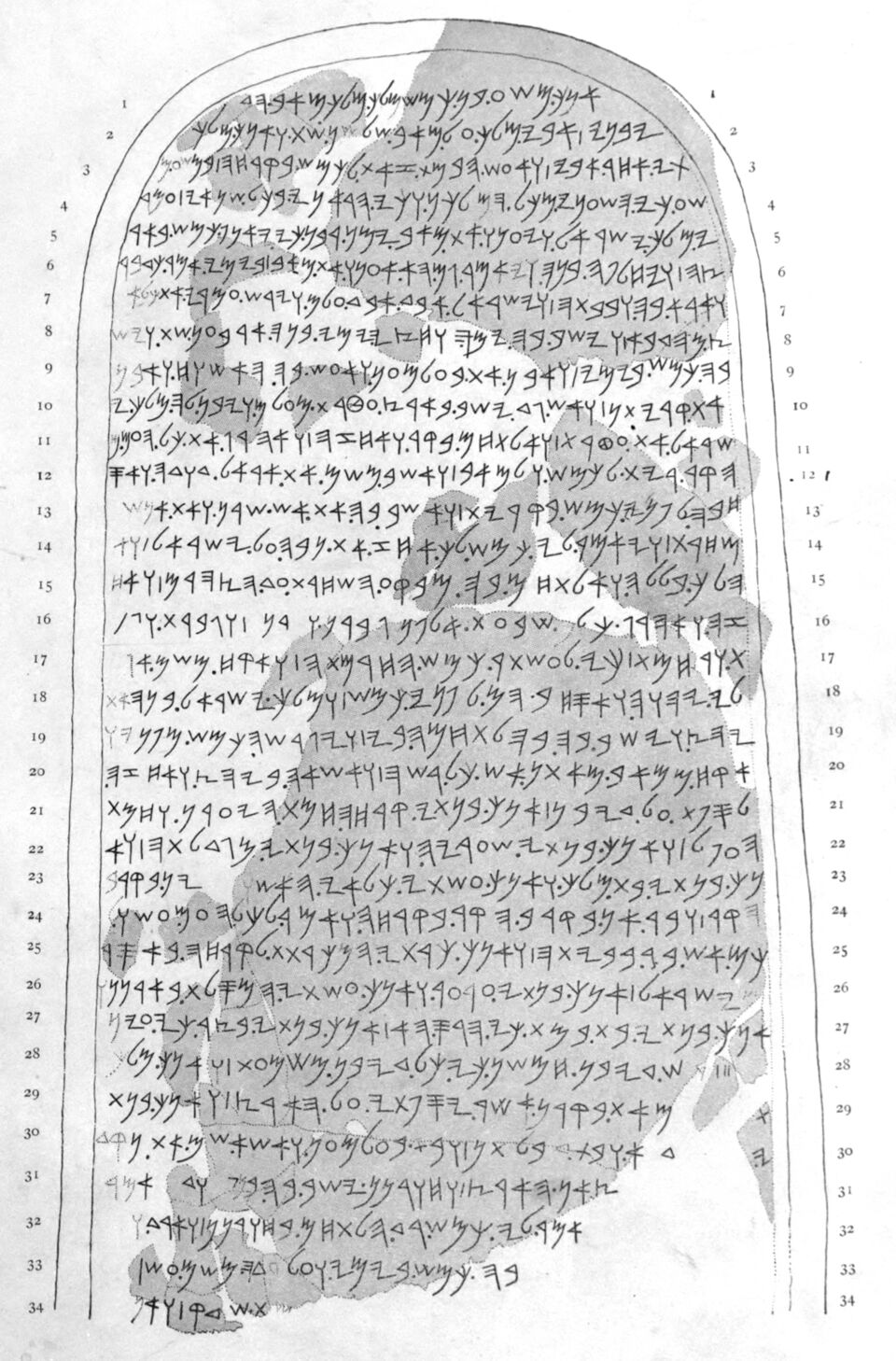
A lot of the interpretation of the Mesha Stele depends on where exactly you place its construction, as well as its many described events and acts—whether following the events of 2 Kings 3 entirely, or within the window of time in verse 5 (prior to the reprisals of Israel, Judah and Edom), or a bit of both. Nevertheless, while written in a rose-colored, first-person Moabite perspective, nothing of actual deeds mentioned in the text strikes as obviously contradicting the biblical account. On the contrary, as described briefly at the top of this article, the parallels are quite remarkable.
Yet compare Mesha’s first-person account to the third-person account found in 2 Kings 3. This biblical passage describes Mesha’s successful rebellion, followed by Israelite King Joram’s ill-fated alliance with Jehoshaphat king of Judah and the king of Edom. It describes near catastrophe befalling the three armies on their march against Moab, even before any military engagement begins—following which the Prophet Elisha begrudgingly gives guidance. The account proceeds to describe a string of victories for the three-army alliance, before a final act of desperation on the part of the king of Moab shocks the armies and sparks “great indignation against Israel,” following which they withdraw. (This act, described in the final verse of the chapter—verse 27—is typically interpreted as the Moabite king sacrificing his heir. There is significant debate about this verse however, in what it actually says and means—a subject for another article.)
Once again, one of these accounts is not like the other. We are not comparing a pro-Moab account (the stele) with a pro-Israel one (the Bible); nor is the latter even pro-Judah, with only a thin nod toward Jehoshaphat and the impression that he should never have been part of the war effort. Mesha himself is presented in the Bible without commendation or condemnation, even for his act at the end of the account—it is simply documented in dry narrative prose, with the added comment of “indignation” leveled instead at Israel.
After all this, it’s also worth keeping in mind that when it comes to such “monumental inscriptions” as the Mesha Stele and Tel Dan Stele, these “inscriptions, which, being mainly reports to the gods about royal achievements, are far from complete or reliable as historical records. They are more akin to modern-day résumés, and just as conspicuous for their failure to note setbacks of any kind,” notes Prof. Joshua Berman (Ani Maamin: Biblical Criticism, Historical Truth, and the Thirteen Principles of Faith).
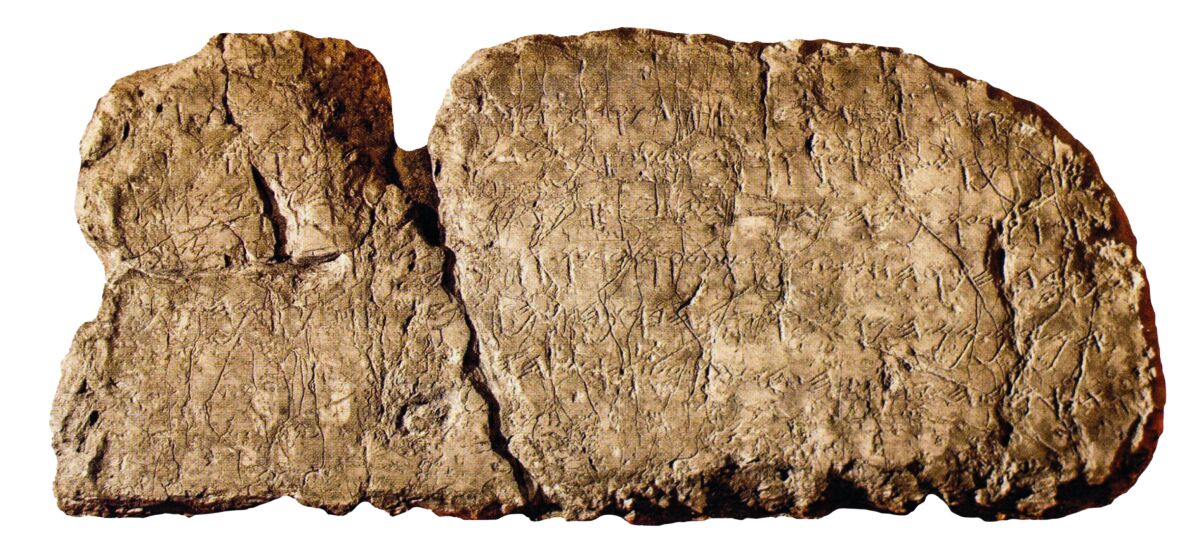
Even then, it is at least interesting to compare such monumental inscriptions of Aram and Moab with the one fully preserved example discovered from the Kingdom of Judah: the Siloam Inscription, not a boastful or self-congratulatory text in honor of Judah’s king, but rather, a dedication to the efforts of the public workforce that constructed the Siloam Tunnel.
The Criterion of Embarrassment
One of the tools of historical analysis, in assessing the historicity or reliability of an account, is something known as the “criterion of embarrassment”: the likelihood of an account as more truthful if contains otherwise embarrassing or self-impugning information, especially when it is not critical to the main thread of the story. In United States law, the equivalent term is a “declaration against interest”—a “statement made by an unavailable witness that, at the time it was made, was so contrary to their financial, property, or criminal interests that a reasonable person would not have made it unless it were true”; a statement whose “self-incriminating nature suggests a high degree of trustworthiness” (LSD Law, “Legal Definitions: Declaration Against Interest”).
If the criterion of embarrassment is a sign of anything, the Bible has it in spades—certainly in comparison to other ancient Near Eastern documents.
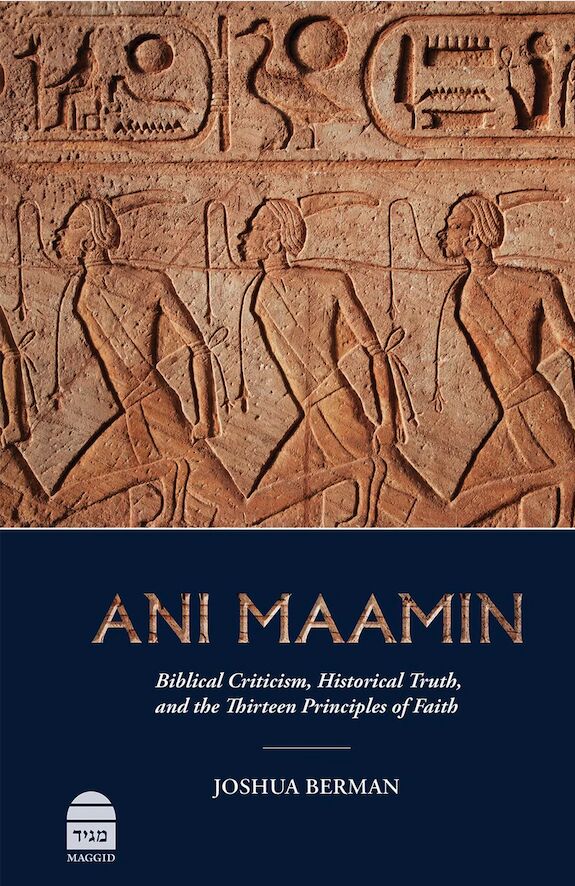
Yet unfortunately, this means vanishingly little in modern academia. Professor Berman elaborates: “[T]o one degree or another, scholars routinely accept ancient Near Eastern texts as historically reliable”—this, as he points out, despite such texts also containing manifold miraculous and even fantastical elements, divine revelations, descriptions of events centuries after the fact, and sharply contradictory details with other ancient records. Case in point the famous Battle of Kadesh, for which “Hittite accounts of the battle, brief as they are, do not corroborate the Egyptian accounts,” and for which “[a]rchaeological excavations of Tel Kadesh have produced no evidence of the battle.” Yet “[l]iterally dozens of scholars have attempted historical recreations of the Battle of Kadesh on the basis of Rameses’s inscriptions alone. …
By contrast, however, when it comes to biblical sources, the questionable elements are often taken as prima facie evidence of the untrustworthiness of the whole. This is all the more remarkable (to put it mildly) in light of one significant difference between biblical literature and the writings of other ancient Near Eastern civilizations. Throughout, the Tanakh [Hebrew Bible] displays a penchant for judging its heroes harshly, and for recording Israel’s failures even more than its successes. No other ancient Near Eastern culture produced a literature so revealing of fault, so realistic about the abuses of power, or so committed to recording those abuses for posterity. On this point, at least, there is universal agreement. Yet in academic precinct, recognition of this fact has not in the least improved the Tanakh’s reputation as an honest reporter of historical events. (ibid, emphasis added)
It’s a shame—but certainly will not be a surprise to anyone reading. In the end, although we might be presented with a simplified comparison of propaganda on rock versus propaganda on paper—one “just a book, and the other one’s a stone”—the truth is much different.