
Phoenician Scarab Found in Sardinia
Excavators digging at the ancient site of Nuraghe Ruinas of Arzana on the Italian island of Sardinia have found a Phoenician-type scarab seal, the Superintendency of Archaeology for the Sassari and Nuoro provinces in Sardinia announced on February 3. This discovery further confirms the presence of the Phoenicians on the island during the Iron Age (c. 950-500 b.c.e.).
The scarab is made of steatite, one of the most common materials for these seals, and contains hieroglyphic writing on its face. Researchers have not yet revealed what was written on the scarab. The seal would have originally had a silver frame. Evidence of a bezel has lead the excavators to believe it served as a pendant.
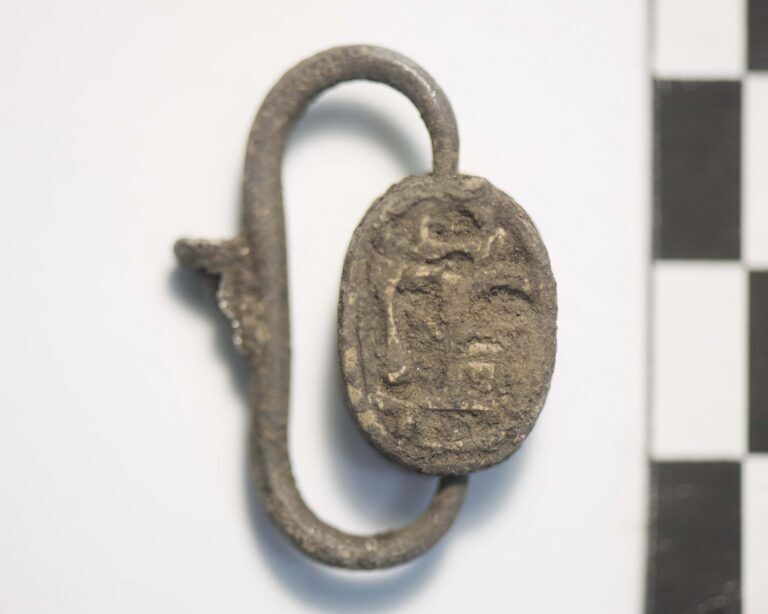
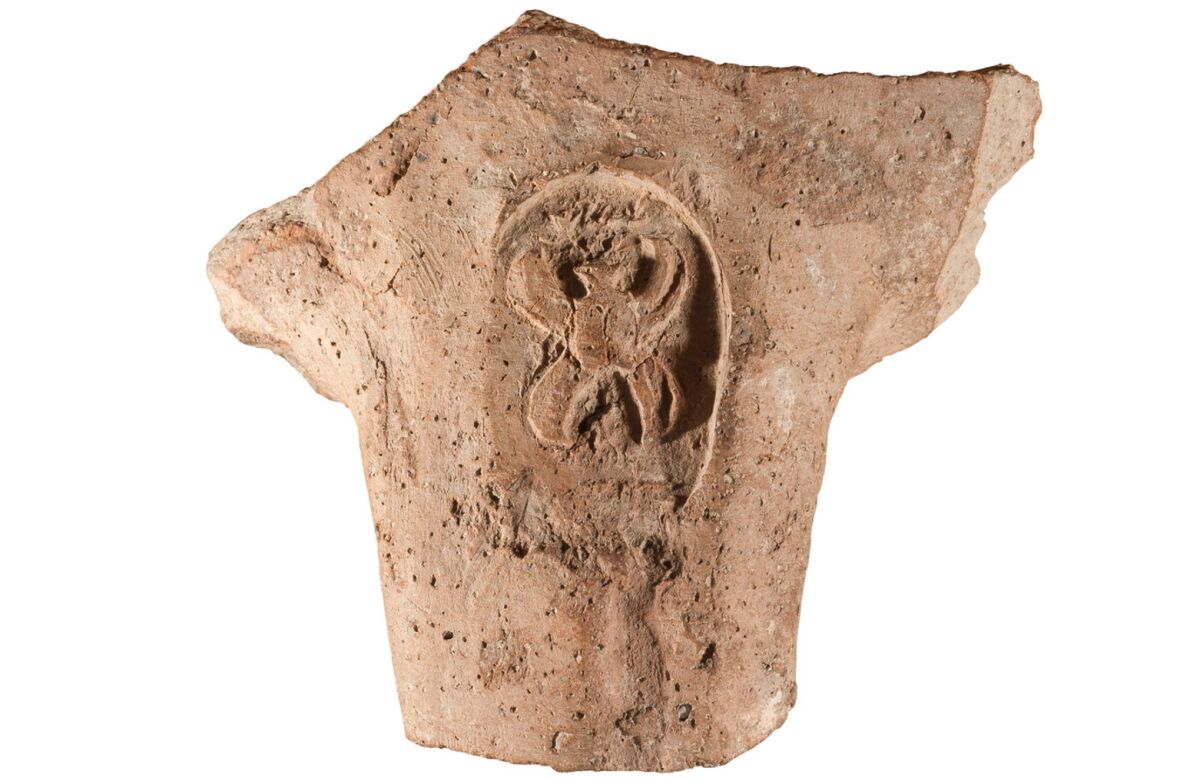
Scarab seals originated in Egypt in the late Old Kingdom Period (2575–2130 b.c.e.), becoming more prominent later on. The seals were shaped in the form of a dung beetle. This symbol was closely related to the sun god Khepri, who the Egyptians believed rolled the sun across the horizon like a dung beetle. As with most religious symbols, these scarabs were appropriated and adapted by other civilizations, as is well attested to through archaeology. Take, for example, Judah at the time of King Hezekiah: Archaeology has produced evidence that he adopted this scarab symbol for his official seals (for more information read, “Hezekiah’s Fatal Miscalculation: Evidence for ‘Trust in That Broken Reed, Egypt’”).
The Sardinia scarab was found at the ruins of a nuraghe, a defensive tower-fortress in the form of a cone built by the Nuragic civilization (named after the unusual buildings) starting around 1800 b.c.e. The nuraghe at Ruinas is one of around 8,000 such megalithic structures that are exclusively located in Sardinia. Previous evidence of Phoenician settlements along the Sardinian coast was found at Nora, Tharros and other sites. The Nora Stone, for example, contains Phoenician script and even contains references to “Tarshish,” a faraway place mentioned in the Bible (e.g. 1 Kings 10:22) most likely in modern-day Spain. Ruinas, however, lies much further inland. Thus, this discovery shows that Phoenician impact on the island was much more extensive than initially thought.
The Phoenicians were well-known for their maritime trade, extending from the Levant to Iberia, North Africa and beyond. As the seafarers of the ancient world, they established trading posts and colonies all along this route. This small new discovery reveals the island of Sardinia as part of this large Phoenician trading network that not only brought many commercial goods across the Mediterranean but also people and cultural/religious symbols.
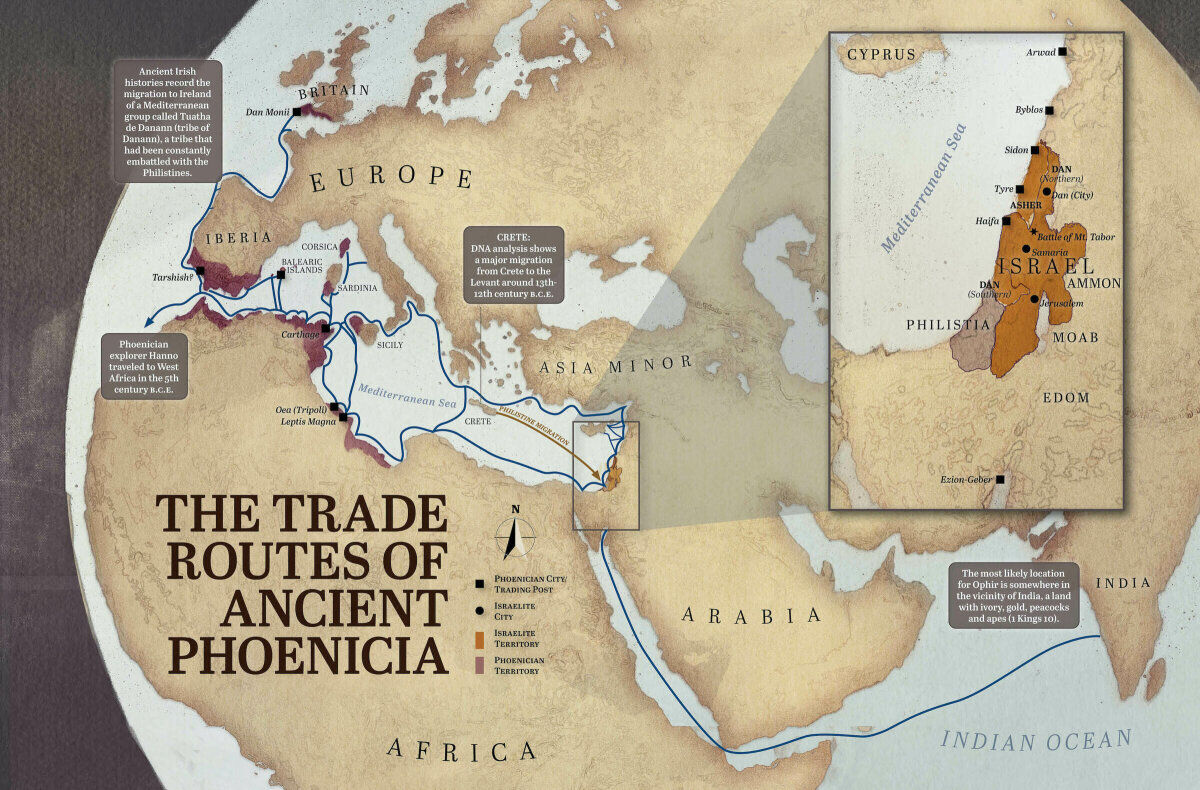
Biblical history shows that the ancient Israelites cooperated closely with the Phoenicians in this international trade. King Hiram of Tyre was great friends with both David and Solomon as brought out in 1 Kings 5:1. Chapter 10 of 1 Kings even discusses the combined Israelite-Phoenician “navy of Tarshish,” which would sail the Mediterranean and beyond, bringing back “gold, and silver, ivory, and apes, and peacocks” every three years. Such a close connection is backed by evidence of a Phoenician presence in Jerusalem in the form of a 10th-century b.c.e. earring pendant, among other sites and discoveries. (For more on the Phoenicians, read “Israel’s Phoenician Friends.”)
This seal provides another piece of evidence that supports the impact this Phoenician-Israelite trade alliance had on the Mediterranean of the biblical world, even impacting the Nuragic civilization of Sardinia.
Researchers will have to further study the hieroglyphs on the seal to determine the artifact’s exact dating and origin. After the conservation work and research is complete, an appropriate place to display the object will be found.