
Ghosts of Biblical Holy Days—in the Ancient Arabian and Islamic Calendar
The biblical holy day known in Hebrew as Yom Kippur takes place this year from the evening of September 20 to September 21. This important holy day, commonly known in English as the Day of Atonement, is observed on the 10th day of the month Tishrei. It is especially notable as a day of fasting—abstaining from both food and water. Leviticus 23:26-32 outline the following stipulations for this holy day:
And the Lord spoke unto Moses, saying: Howbeit on the tenth day of this seventh month is the day of atonement; there shall be a holy convocation unto you, and ye shall afflict your souls; and ye shall bring an offering made by fire unto the Lord. And ye shall do no manner of work in that same day; for it is a day of atonement, to make atonement for you before the Lord your God. For whatsoever soul it be that shall not be afflicted in that same day, he shall be cut off from his people. And whatsoever soul it be that doeth any manner of work in that same day, that soul will I destroy from among his people. Ye shall do no manner of work; it is a statute for ever throughout your generations in all your dwellings. It shall be unto you a sabbath of solemn rest, and ye shall afflict your souls; in the ninth day of the month at even, from even unto even, shall ye keep your sabbath.
This holy day takes on additional significance in Christianity, particularly in relation to a certain ritual practice involving two goats described in Leviticus 16, expounded on in passages such as Hebrews 9-10 and Revelation 20:1-3 (cf. Mark 9:28-29). Some may be surprised to learn that the fast of Yom Kippur/Atonement is mentioned as a day of observance in the New Testament (i.e. Acts 27:9)—as are the other holy days prescribed in Leviticus 23.
It may come as even more of a surprise to learn that in Islam, there is what might be described as a ghost of this holy day and its theme preserved in Ashura—a name meaning “tenth” in Arabic—a notable day of fasting, on the 10th day following Ra’s as-Sanah—linguistically equivalent to the Hebrew Rosh HaShanah, likewise at the start of the equivalent month.
In fact, there are a number of similar observances, symbolisms and parallels to the festivals of the Hebrew calendar buried within the early Arabian and Islamic calendars. What are they, and more importantly—where did they come from?
The Biblical Holy Days
The biblical holy days, or festivals, are broadly known as outlined in the Hebrew Bible—especially within Leviticus 23. Beginning in the early spring and ending in the autumn, they consist of Pesach (Passover), the seven-day Feast of Unleavened Bread (referred to collectively later on under the name “Pesach”), Shavuot (Pentecost), Rosh HaShanah/Yom Teruah (the Day of Trumpeting/Trumpets), Yom Kippur (Atonement), Sukkot (the Feast of Tabernacles) and Shemini Atzeret (the Last Great Day)—a series of biblical “annual sabbaths,” or high holy days, ordained by God alongside the weekly Sabbath.
These annual observances are mentioned numerous times throughout the Hebrew Bible (i.e. Exodus 12; Numbers 9; Leviticus 16, 23; Deuteronomy 16; 2 Kings 23; 2 Chronicles 30, 35; Ezra 6; Nehemiah 8; Zechariah 14). They are also mentioned a significant number of times in the New Testament, both during the ministry of Jesus in the gospels (i.e. Matthew 26; Mark 14; Luke 22; John 7) as well as continuing to be observed by the New Testament church (i.e. Acts 2:1; 18:21; 20:6, 16; 27:9; 1 Corinthians 5:6-8; 16:8).
An uncanny resemblance to several of these observances can be found in the early Arabian and Islamic calendars, some of which continue to be kept in some form or other with similar themes, and others which have fallen by the wayside. Understanding how they compare, however, requires some understanding of the workings of the calendrical systems involved.
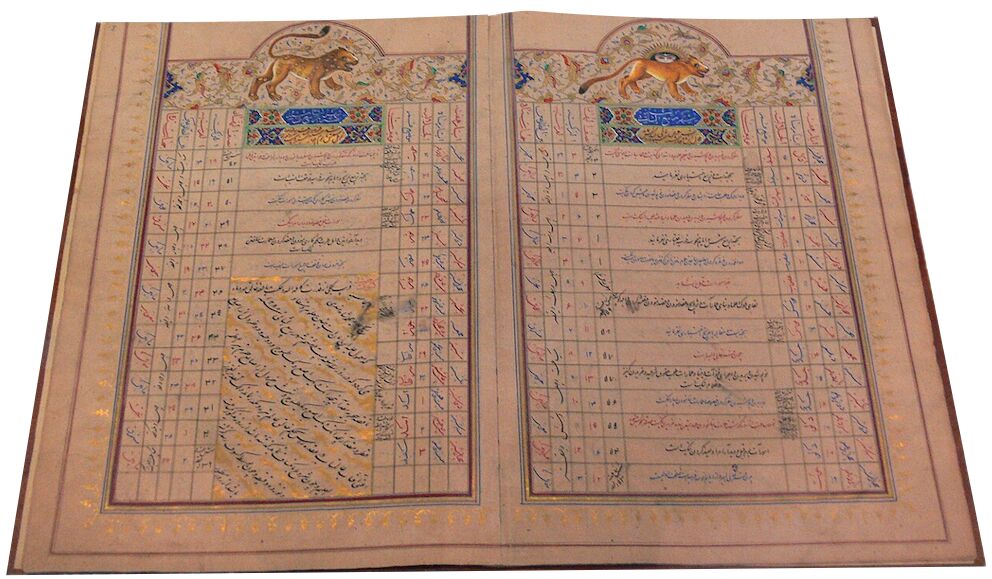
Comparing Calendars
In our modern Gregorian calendar, we are, of course, currently in the year 2026. The Gregorian calendar is what is known as an Anno Domini (a.d.) calendar—Latin for “in the year of the Lord”—anchored on the birth of Jesus. Actually, this birth year is well-known to be wrong—Jesus is more widely considered to have been born several years earlier, about 4 b.c.e. (Note that Herod, who attempted to kill the infant Jesus, died this same year.) This is one reason many scholars, including Christians, prefer to use the semantically more accurate terms b.c.e./c.e. rather than b.c./a.d. (see here for more detail).
In the traditional Hebrew calendar, we are in the year 5787. This calendar is what is known as an Anno Mundi (a.m.) calendar—Latin for “in the year of the world”—and is calculated from Creation using internal figures given in the Hebrew Bible, wedded to later dates. This calendar is a rather interpretive post-biblical construct formulated in the late second century c.e., and likewise is widely recognized even in traditional Jewish circles for containing significant error—particularly a period of around 165 “missing years” that would alone put the count in the mid-late 5900s (see here for more detail).
The current year on the Islamic calendar is 1448. The Islamic calendar is what is known as an Anno Hegirae (a.h.) calendar—Latin for “in the year of the Hijra”—the year in which the prophet Muhammad and his followers migrated from Mecca to Medina (then Yathrib), corresponding to 622 c.e. on the Gregorian calendar.
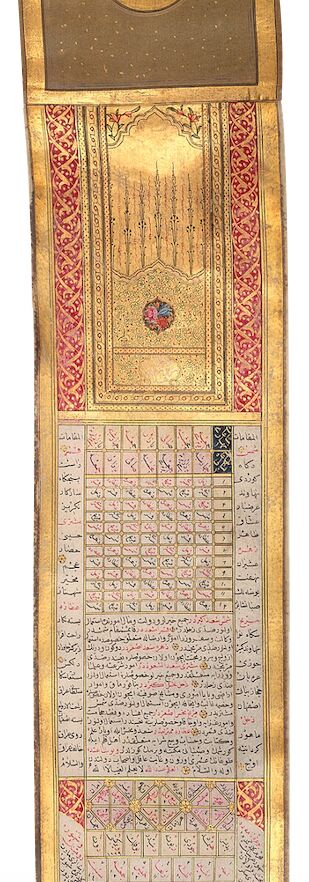
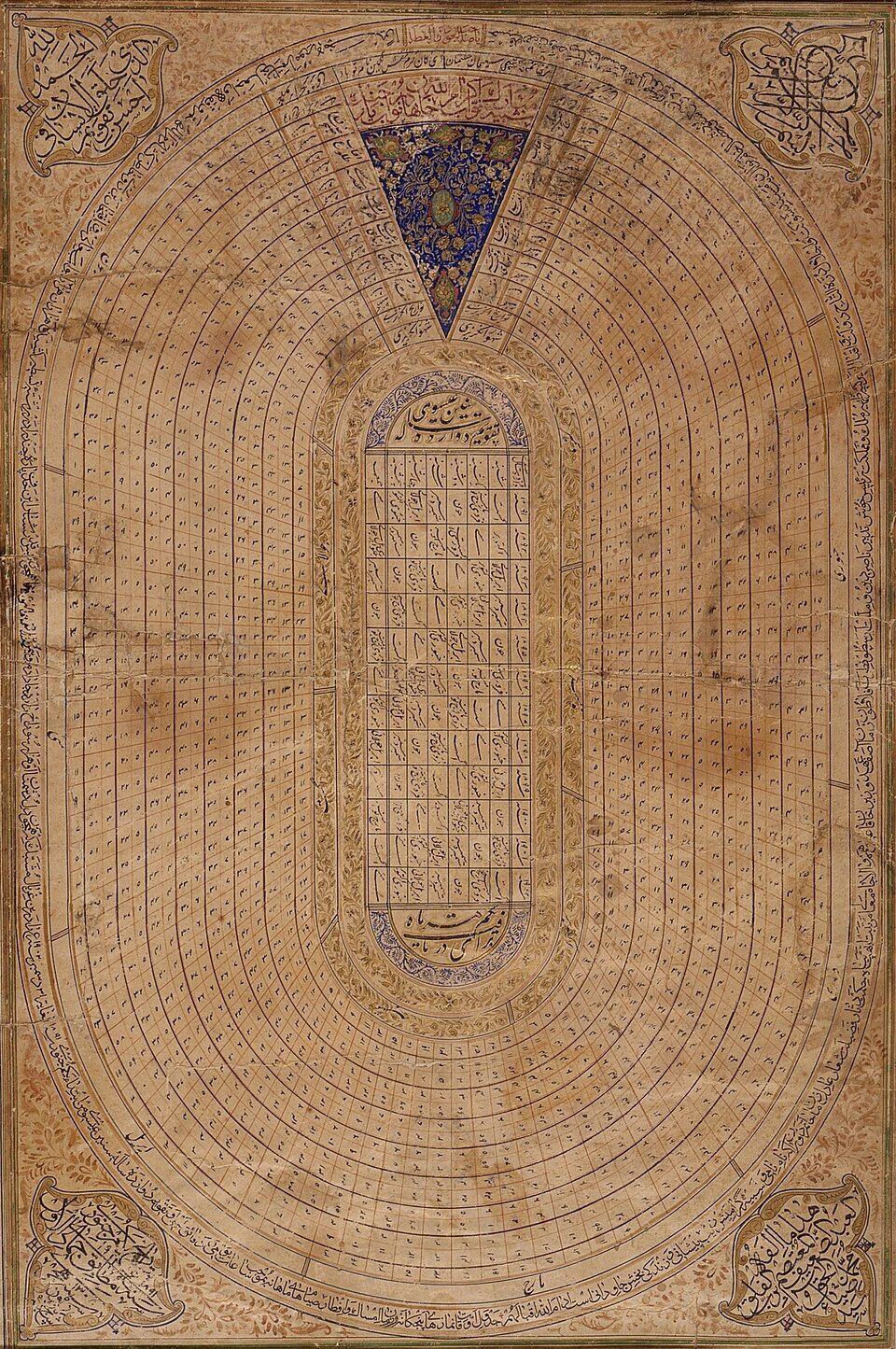
There is an additional caveat to this, however. The astute observer will know that 622 + 1448 (minus 1—no year 0) does not equal our current year of 2026—in fact, it equals 2069. There’s a reason for that: The 12-month Islamic calendar is strictly a lunar one, as compared to the solar Gregorian calendar, or the lunisolar Hebrew calendar. It consists of just 354-355 days, resulting in a significant amount of slippage compared to the Gregorian and Hebrew calendars, which function in longer-term unison. (The solar Gregorian calendar has longer months of preset duration and supplemental leap years; the lunisolar Hebrew calendar, while its 12 months do follow the phases of the moon, also includes an additional 13th month—Adar ii—seven times out of every 19-year time cycle.) As such, the Islamic calendar cannot readily be compared at any singular point in time. For example, Ramadan on the Islamic calendar this year began in the winter; 12 years ago, it began in summer. Given the floating nature of the calendars, they cannot be directly compared at any given point in time—instead, what must be compared are their individual inherent divisional structures and characteristics.
Also from the outset, a couple of additional, sometimes-confusing quirks should be pointed out—this time within the Hebrew calendar. First, the most commonly-used names for the Hebrew months were adopted following the Babylonian captivity, and differ from their original names. Going forward, where applicable, both month names will be given.
Second, and more importantly, the Hebrew calendar is divided separately into both a religious and civil calendar. The religious calendar begins, as described in Leviticus 23, in the initial spring month of Abib (later called Nisan), within which the first of the religious observances are described (Passover onwards). The civil year begins exactly halfway into this year, on the first day of the seventh month, beginning with the festival Rosh HaShanah (meaning “head of the year”)—otherwise known as the “Day of Trumpets/Trumpeting” (a closer approximation to the original title of this festival given in Leviticus 23 and elsewhere—Yom Teruah, “day of blasting”). For example, illustrating this religious/civil calendrical divide, the biblical chronologist Edwin Thiele highlighted a combination of biblical and extrabiblical evidence demonstrating that the northern Kingdom of Israel began counting their regnal years from the start of the first month of the religious calendar and seventh month of the civil, Abib/Nisan; the southern Kingdom of Judah, from the start of the seventh month of the religious calendar and first month of the civil, Ethanim/Tishrei. (This subject is articulated in Thiele’s book, The Mysterious Numbers of the Hebrew Kings.)
It is from this festival of Rosh HaShanah onwards—marking the start of the civil year—that we will begin our comparison.
Ra’s as-Sanah
This is the most obvious link, at least in terms of name—Ra’s as-Sanah, the Arabic equivalent to the Hebrew Rosh HaShanah. The etymologies are the same, each meaning “head of the year,” and are marked as religious holy days (with the Arabic calendar, like the Hebrew, beginning at sunset).
This particular month in the Hebrew calendar—Ethanim/Tishrei—is the most holy day/festival-dense of the entire Hebrew calendar. It begins on the 1st day with Rosh HaShanah, followed on the 10th day by the fast of Yom Kippur (Atonement), followed beginning the 15th by the seven-day Sukkot (Feast of Tabernacles) and the eighth-day Shemini Atzeret (the Last Great Day). This month therefore comprises one of three great biblical pilgrimage periods in ancient Israel (Deuteronomy 16:16).
Interestingly, this first month on the Islamic calendar, begun by Ra’s as-Sanah and known as Muharram, is one of four sacred months of the year—originally three, in pre-Islamic Arabia. During such sacred months offensive warfare is forbidden, especially to allow for free passage of pilgrims.
Ashura
The subsequent holy day following Ra’s as-Sanah is, as covered in the introduction, Ashura—once again, meaning “tenth” in Arabic—and is sometimes called Yawm Ashura (“tenth day”). It is, as its name suggests, observed on the 10th day of this month of Muharram and is a notable fast day. In Sunni Islam in particular, it is more widely observed with fasting; in Shia Islam, it is at least observed with mourning rituals.
This 10th-day fast is most striking since the tenth day following Rosh HaShanah on the Hebrew calendar of this equivalent month is Yom Kippur/Atonement—the great day of fasting. From another prescriptive passage, in Leviticus 16: “And it shall be a statute for ever unto you: in the seventh month, on the tenth day [Asur] of the month, ye shall afflict your souls [fast], and shall do no manner of work, the home-born, or the stranger that sojourneth among you. For on this day shall atonement be made for you, to cleanse you; from all your sins shall ye be clean before the Lord. It is a sabbath of solemn rest unto you, and ye shall afflict your souls; it is a statute for ever” (verses 29-31).
Besides Ra’s as-Sanah and Ashura specifically, there are no apparent direct parallels with the final religiously significant period of this month in the Hebrew calendar—the seven-day Sukkot, culminating in the eighth day Shemini Atzeret. Nevertheless, once again, it is significant that these fall generally within a month overall seen as sacred—as reflected in the month-name Muharram, literally meaning “sacred.” There is even some connection with Jerusalem on this month—this city, of course, being the key point of festival pilgrimage in biblical antiquity. It is memorialized on the 16th day of the month Muharram that Jerusalem would be the qibla, the direction in which prayers would be made (compare 1 Kings 8:29-30. This qibla direction was later changed to Mecca).
Rajab/Shahr al-’Atira
Following Muharram, the next “sacred month” is Rajab (meaning “glory”)—the seventh month on the Islamic calendar, corresponding to the seventh month on the Hebrew civil calendar and thus first month on the Hebrew religious calendar—the second-densest month of religious observances. It is during this month on the Hebrew calendar that the Passover sacrifice was offered on the 14th (Leviticus 23:5) followed by seven “days of unleavened bread” observed from the 15th to the 21st (verses 6-8)—capped on the first and last days with a “high sabbath” and “holy convocation” (assembly). The Passover, of course, was the time of the ritual slaughter of lambs and the death of the Egyptian firstborn; in the New Testament, the crucifixion of Jesus.
Intriguingly, the month of Rajab was marked during pre-Islamic times as a notable period of ritual slaughter, known more broadly as Shahr al-’Atira (“Month of Sacrifice”). This would include sacrifice of firstling camels or sheep—generally paralleling the slaughter of lambs by the Israelites during this equivalent month.
The continued observance of slaughter on Shahr al-’Atira was highly controversial in the early years of Islam—firmly maintained by some, and countered by others as a holdover from deep within the so-called Jahiliyya (a reference to the pre-Islamic “Age of Ignorance”). “The holy month of Rajab was observed during the period of the Jāhiliyya in spring. It was the month of the ‘umra and of offering of the sacrifices of the ‘atā’ir” wrote Arabic language and literature professor Meir J. Kister in his article “‘Rajab Is the Month of God …’: A Study in the Persistence of an Early Tradition” (1971). He continued:
The veneration of this month seems to have continued in the period of Islam and to have survived until recent times. Contradictory traditions attributed to the Prophet, recommending some practices of Rajab or interdicting it, bear evidence of divergent opinion on this subject in the Muslim community during the early centuries of Islam. … The widely circulated utterance of the Prophet lā fara’a wa-lā ‘atīrata, “no sacrifice of the firstlings (of the flock) nor of the animals slaughtered in Rajab,” indicates explicitly the interdiction to perform the sacrifices of Rajab.
Another point concerns the memorializing of the timing of the Israelites’ Red Sea crossing. There is debate in some Islamic circles as to when this occurred. A popular opinion is that it was in the first month, Muharram. Nevertheless, Kister highlights an alternate tradition that “[i]n Rajab God split the sea for Moses”—thus corresponding tidily to the splitting of the Red Sea during the last day of unleavened bread on the equivalent month in the Hebrew calendar. (Some level of confusion in events corresponding to the first and seventh months may be appreciated in what we have covered above, in that the first and seventh months were interchangeable on the Hebrew civil vs. religious calendars.) Kister continues: “Rajab was also nicknamed al-asabb, ‘the Pouring’, because the mercy of God poured forth during this month and flooded His servants; God bestows on them in this month graces and rewards which never an eye has seen, nor an ear heard, nor had it occurred to the mind of a man” (quoting Al-Jīlānī, in a paraphrase of Isaiah 64:4—also quoted in 1 Corinthians 2:9).
Interestingly, there is even some connection with bread and persecution on this month (cf. Deuteronomy 16:3). Kister goes on to describe Saum al-Yatīma, a certain practice of fasting in Rajab broken by cooked meals of coarsely ground wheat, commemorating a story of ill-treatment and persecution; another story and practice noted by Kister features barley-bread.
Finally, more generally, Kister notes “a tradition reported on the authority of ‘Ā’isha [that] the Prophet is said to have stated that Rajab was the month of God” (ibid).
Laylat al-Qadr
Finally, we come to Laylat al-Qadr—the “Night of Power.” This falls in Ramadan, the second month following the aforementioned month Rajab (after Sha’ban)—as does the next holy day in the biblical Hebrew calendar, Shavuot, in the second month (Sivan) following Abib/Nisan (after Ziv/Iyar).
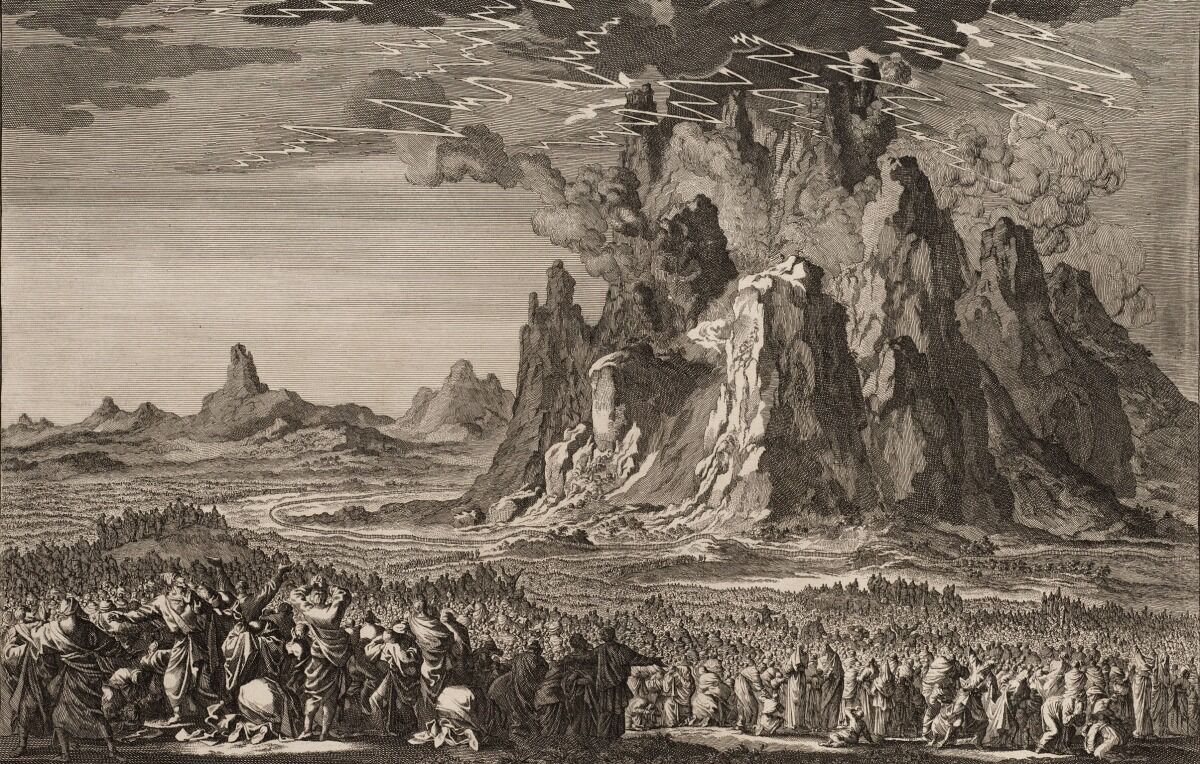
The biblical holy day Shavuot, whose name means “weeks”—after the prescription of counting seven full weeks to arrive at it (Leviticus 23:15-16)—is better known in the English language as Pentecost, meaning “fiftieth” (day of the count). This important Spring harvest festival, which follows on nearly two months after the Passover sacrifice and the seven “days of unleavened bread,” is significant for a number of reasons—not least in commemorating the giving of the 10 commandments on this day at Mount Sinai (Exodus 19-20). This holy day takes on additional significance in Christianity, marking the giving of the Holy Spirit to the New Testament church (Acts 2). In both Judaism and Christianity, Shavuot/Pentecost has a significant underlying theme of divine revelation marking the day.

Interestingly, this theme carries through into Islam, with Laylat al-Qadr taken to represent the time in which the first revelation of the Qur’an was given at Mount al-Nour.
Even more intriguingly, just as no date is given in the Hebrew Bible for the observance of Shavuot—it is a festival that must be carefully counted (per Leviticus 23:15-16)—so too is no certain date given for Laylat al-Qadr. The general explanation is that this date was somehow “forgotten,” and Sunni and Shia Muslims vary in their understanding of exactly when within the month of Ramadan this observance best falls.
This difference of opinion between Sunnis and Shias for Laylat al-Qadr brings to mind the 2,000-year-old debate about how to count the 50 days to Shavuot between the two prominent Jewish sects—the Pharisees and Boethusians (Sadducees). The former took the “shabbat” in Leviticus 23:15 from which to begin the count to refer to the annual sabbath beginning the seven days of unleavened bread on the 15th of Abib/Nisan (verses 6-7), thus producing a fixed end date on the sixth of Sivan. The latter understood the count to begin from the weekly sabbath that falls within the seven-day festival, thus resulting in Shavuot always landing on a Sunday, the day after the seventh “shabbat” (per verse 16), yet never on the same calendrical date—thus explaining the reason no specific date was give for this holy day, why it must be carefully calculated each year.
In the millenniums since, those following the Oral Law (i.e. rabbinic Judaism) follow the pattern of the Pharisees; those who do not, instead leaning on a “literal reading” of Leviticus 23:15-16 (in the words of Rabbi Jonathan Sacks, a proponent of the rabbinic scheme), follow the pattern of the Boethusians—anchoring this festival to Sunday. These include Karaite Jews, Samaritans and many Christians—including both those who continue to observe such festivals and even those who do not (many of whom at least recognize this day historically by the name “Whitsunday”). This is why many Jews this year observed Shavuot/Pentecost on Friday, Sivan 6/May 22; other Jews, Samaritans and Christians on Sunday.
Thus far is a brief overview of some of the surprising parallels between the Hebrew calendar and the Arabian/Islamic calendar. Naturally, there are manifold differences with the latter, including many added observances particular to Islam. Nevertheless, for the parallels that do exist—these observable “ghosts” of biblical holy days in the Islamic and early Arabian calendar—the question becomes, where did they come from?
Strange as it may seem, the biblical account indicates a particular answer to this question.
From Whence?
A common assumption is that such observances were adopted from certain Jewish communities living within Arabia. This may be the case for Yom Kippur/Atonement as Ashura—later hadith traditions state that when the prophet Muhammad arrived at Medina, he and his followers encountered Jews fasting on the 10th of Muharram, and therefore adopted this practice; other traditions, however, claim that this fast was an already well-established practice by the tribespeople in Mecca.
In answering this question, there is a further biblical connection worth exploring. This goes beyond just holy day observances, but includes other notable, veritably “biblical” practices found among such communities—including such things as halal dietary laws, the most famous of which being the prohibition of pork, as well as the flesh of carnivorous animals and blood (compare Leviticus 11:7, 17:14; Deuteronomy 12:23, 14:8). In the case of seafood, opinions differ—while various Sunni schools are more permissive, the Hanafi school, as well as Shia Islam, generally are restrictive to fish that have scales (compare Leviticus 11:9-12 and Deuteronomy 14:9-10).
Also notable are such customs as circumcision, practiced in the Jewish world on infants in the eighth day after birth, as well as practiced in the Islamic world—although there is no such specific date held to, and many boys are circumcised in late childhood or even at the age of puberty. Interestingly, this corresponds to the biblical account of Abraham receiving the command to circumcise (Genesis 17): Isaac was circumcised at eight days old (Genesis 21:4); Ishmael, however, was already 13 when this injunction was given and carried out (17:25).
Father of the Faithful
The patriarch Abraham was father of both Ishmael through Hagar and Isaac through Sarah—thus progenitor of the Ishmaelites and Israelites. He was also progenitor of a number of other tribes, including the Edomites (descended through his grandson Esau) as well as the Midianites and others through Keturah (Genesis 25). Abraham is referred to in the Bible as the “father of the faithful,” and to him is attributed some of the most soaring biblical sentiments and commendations. Genesis 18:19, for example, contains the following praise from God Himself: “For I know him, that he will command his children and his household after him, and they shall keep the way of the Lord, to do justice and judgment” (King James Version).
What was this “way of the Lord” that God trusted Abraham to command his children? Genesis 26:5 reads: “[B]ecause that Abraham hearkened to My voice, and kept My charge, My commandments, My statutes, and My laws.” My mitsvot, My chokot, My torah.
These three—commandments, statutes, laws—are what continue to be described and prescribed in detail in the continuing Torah, especially from Mount Sinai onwards. Yet here we read of Abraham already keeping pre-existing commandments, statutes and laws. What could these have been, communicated by Abraham to his children?
The Cambridge Bible for Schools and Colleges struggles with this passage, in its early pre-Sinai reference to such laws of God. “The observance of legal enactments, ascribed to Abraham, is, strictly speaking, an anachronism. Cf. Deuteronomy 11:1, ‘Therefore thou shall love the Lord thy God, and keep his charge, and his statutes, and his judgements, and his commandments, always’; 1 Kings 2:3.” Yet consider: We already have the establishment of the “kosher” foods (“halal,” if you like—both words have the same general meaning of permissible, lawful), delineated as early as Genesis 7. A number of other laws are also outlined pre-Mount Sinai.
Yet biblical festivals as early as Abraham?
The Pulpit Commentary writes of Genesis 26:5: “Because that Abraham obeyed … my statutes—or permanent ordinances, such as the Passover ….” Interestingly, the word here attributed to Abraham as observing—statutes—is repeatedly used for holy days (i.e. Leviticus 23:14, 21, 31, 41).
It might come as a surprise to learn of some of the evidence for the commemoration of biblical festivals at the time of the patriarchs. Such includes a Passover connection to Genesis 22 and a Days of Unleavened Bread connection to Genesis chapters 18-19 (note especially 18:6 and 19:3, as well as Toby Janicki’s article on the subject, entitled “Abraham’s Passover”). The aforementioned Rabbi Sacks, in his book Ceremony and Celebration: Introduction to the Holidays (2017), draws further attention to traditions from the second century b.c.e. Book of Jubilees linking Shavuot/Pentecost to both Noah and Abraham. Rabbi Moishe New goes so far as to say that “Abraham studied the Torah, and his children studied the Torah … kept it, and observed it—there was nothing new with the revelation at Sinai”—the distinction at Sinai being, as he describes it, in the manner in which the Torah was accessible and fully realized (lecture, “When Was the Torah Given?”).
Most notably, the establishment of such biblical holy days can even be witnessed in Genesis 1, in the very ordering of the cosmos—“for signs, and for seasons, and for days and years” (verse 14). This word for seasons does not simply refer to our four-season year (i.e. spring, summer, autumn, winter), but refers in particular to biblical festivals. The New International Version reads, “signs to mark sacred times”; the Holman Christian Standard Bible, “signs for festivals”; God’s Word Translation, “signs [that] will mark religious festivals.” The Hebrew word used is mo’ed—the word used ubiquitously for religious festivals (i.e. Leviticus 23:2, 4, 37, 44).
Could it be that some form of at least some such festivals were being observed and promulgated in much earlier Arabia, among the family of Abraham—alongside dietary laws and other practices?
Judging by the biblical assessment of Abraham’s character—how could they not?