Worship—or Workshop? Making Sense of the City of David ‘Rock-Cut Rooms’
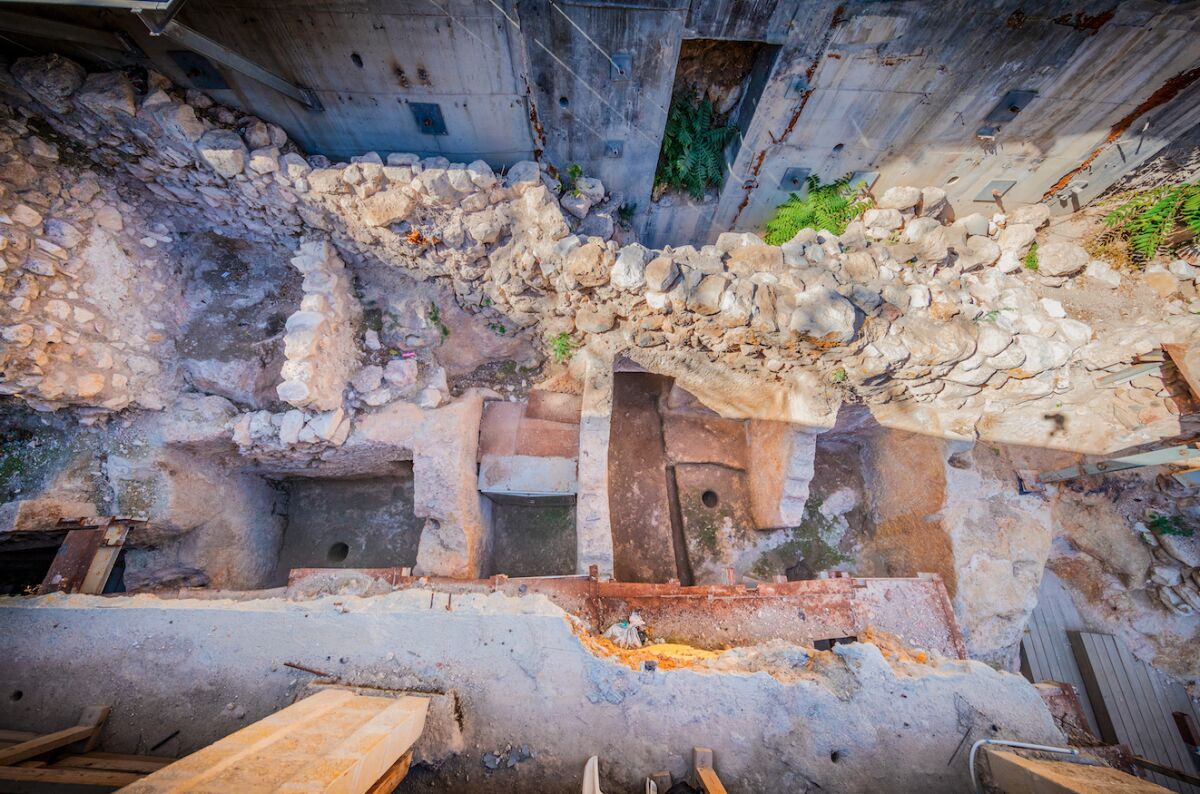
Since their unearthing in the 2010–2011 excavations of Eli Shukron and Ronny Reich, the City of David “rock-cut rooms” have generated significant interest and speculation. The unusual nature of the rooms, including apparently cultic installations and Middle Bronze Age pottery, has led to a popular conclusion that the complex is none other than the temple of Melchizedek, the mysterious king-priest of Salem on the scene at the time of Abraham (Genesis 14).
The interpretation of this structure as “Temple Zero” (as it has become popularly known) has generated an enormous amount of online interest—especially on YouTube, with Christian and Jewish channels collectively pulling in millions of views (such as cbn News’s “Archaeologist Says a Stone Pillar in the City of David Is Where Abraham Met Melchizedek”). A popular Mormon podcast even highlights the discovery as evidence for Latter-Day Saint-specific theology (“Did These Guys Find the LOST ‘Temple Zero’ of Melchizedek!?”).
Over the past decade and a half, talking points have generally centered around the site’s use beginning in the Middle Bronze Age (the time of the biblical patriarchs); the possibility that this was the location of David’s tabernacle and Solomon’s anointing (due to the presence of an oil press and proximity to the Gihon Spring—1 Kings 1:38-39); and the decommissioning of the site at the time of Hezekiah during his religious reforms.
Yet significant questions about the nature of the structure and its dating have remained.
Finally, last year Eli Shukron, Liora Freud, Helena Roth, Reli Avisar and Efrat Bocher published a detailed scientific report on the structure in the Israel Antiquities Authority journal ‘Atiqot (Vol. 116). The paper, titled “Evidence of Worship in the Rock-Cut Rooms on the Eastern Slope of the City of David, Jerusalem,” while technically part of the 2024 volume, was uploaded in early 2025, and was followed by an Israel Antiquities Authority press release (which generated a number of news headlines). As such, it made a number of “Top 10” lists of discoveries in biblical archaeology for 2025.
Among them was Christianity Today’s list of “10 Striking Biblical Archaeology Stories of 2025,” where the article took No. 1 place—although some peculiarities were noted. “A curious discovery announced early in 2025 rates a closer look, not only for its timing but also for what the announcement didn’t say,” wrote archaeology correspondent Gordon Govier.
The Melchizedek speculation was omitted from the news release in 2025, but Shukron shared his conviction of the connection in several online videos. Perhaps more importantly, the release also failed to mention any possible connection to the crowning of King Solomon and what it signified. …
[W]hy the hush-hush about the two connections? Archaeologists are uncomfortable with the word likely. Untethered, it can lead to wild speculation. However, ancient cities had to be centered around a water source and a worship center of some type. This historical knowledge gives the discovery resonance. Perhaps further evidence to support the discovery is waiting to be dug up.
Yet the ‘Atiqot article, and the accompanying press release, was significant for what it did say—including certain details that may exclude some of these more popular interpretations made over the past 15 years (or at least render them more unlikely). In addition, a brand new publication has been released, arguing for an entirely different interpretation of the complex.
What are we to make of the City of David rock-cut rooms? Do they represent ground zero for worship in Jerusalem—or something else entirely?
Overview
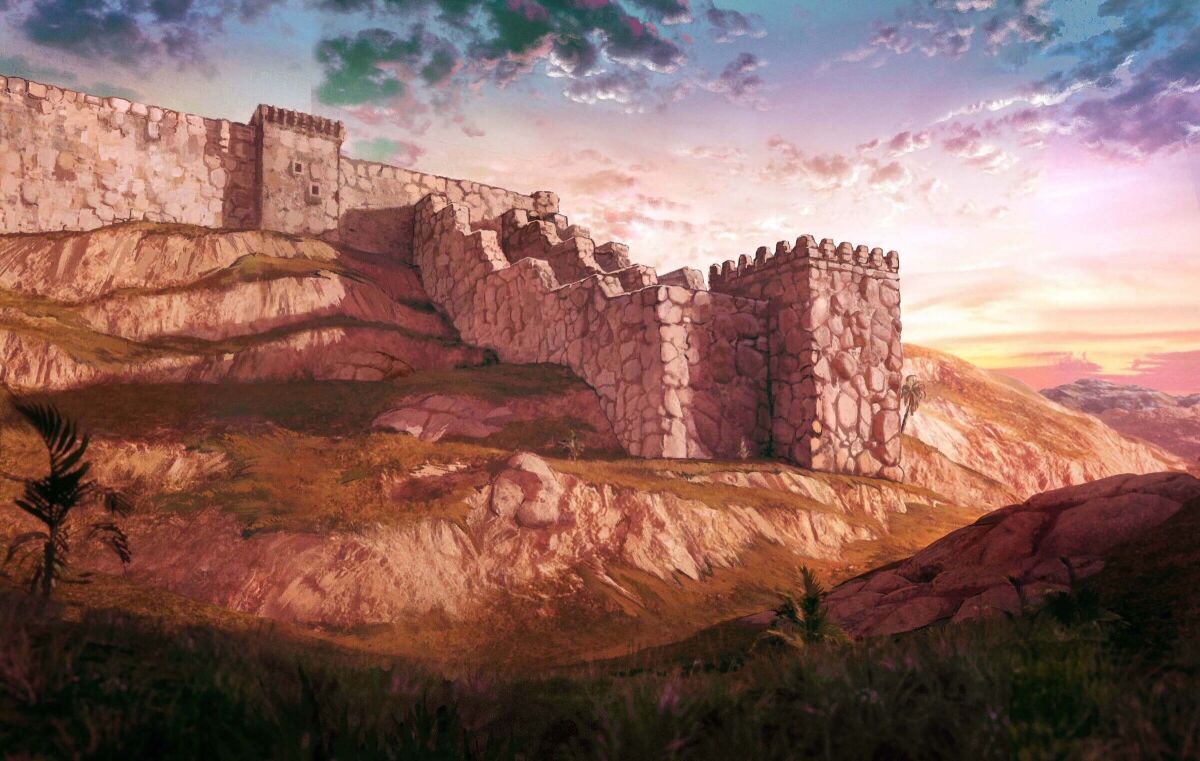
In simple overview, the rock-cut rooms are a series of bedrock-cut chambers located partway down the eastern slope of the City of David, adjacent southwest of the Gihon Spring. They consist of a number of unusual features carved into the bedrock, including one room containing three strange deeply cut V-shaped incisions; another with some kind of channel leading from a small bedrock platform; and another with a small oil press apparatus. Most notably, one of the central rooms contained a small rock-built platform supporting a thin “standing stone” about 20 centimeters high and 1 meter wide, interpreted as a massebah (a ritual standing stone feature found throughout the Holy Land and also described in the biblical account). These features had been found to have been cancelled out—covered with earth—sometime during the eighth century b.c.e.
In the ‘Atiqot article, these features were summarized as evidence for “a cultic complex, likely constructed in the Middle Bronze Age, with its final stage in the Iron iib. This complex offers profound evidence for the diversity of cultic practices in the capital of the kingdom of Judah”—the “most important find” of which being the “stone massebah and the platform built around it … undoubtably used for worship.”
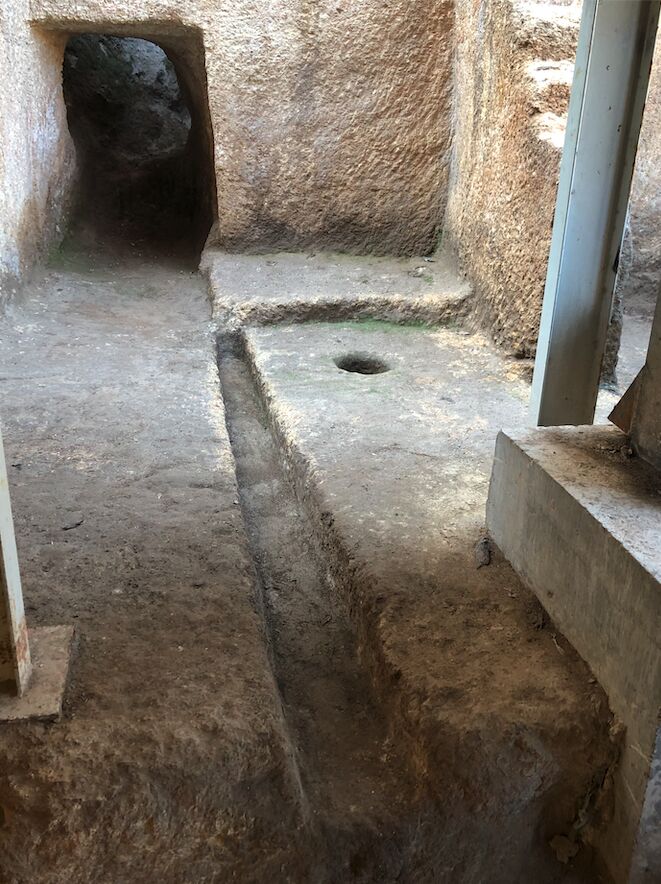
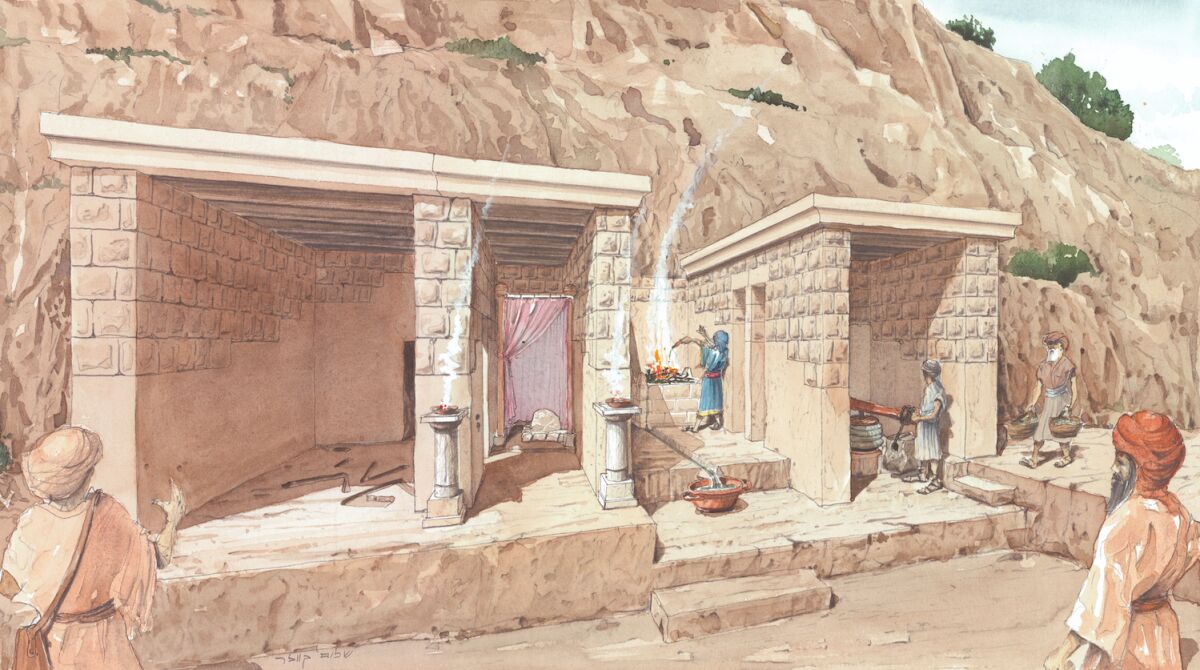
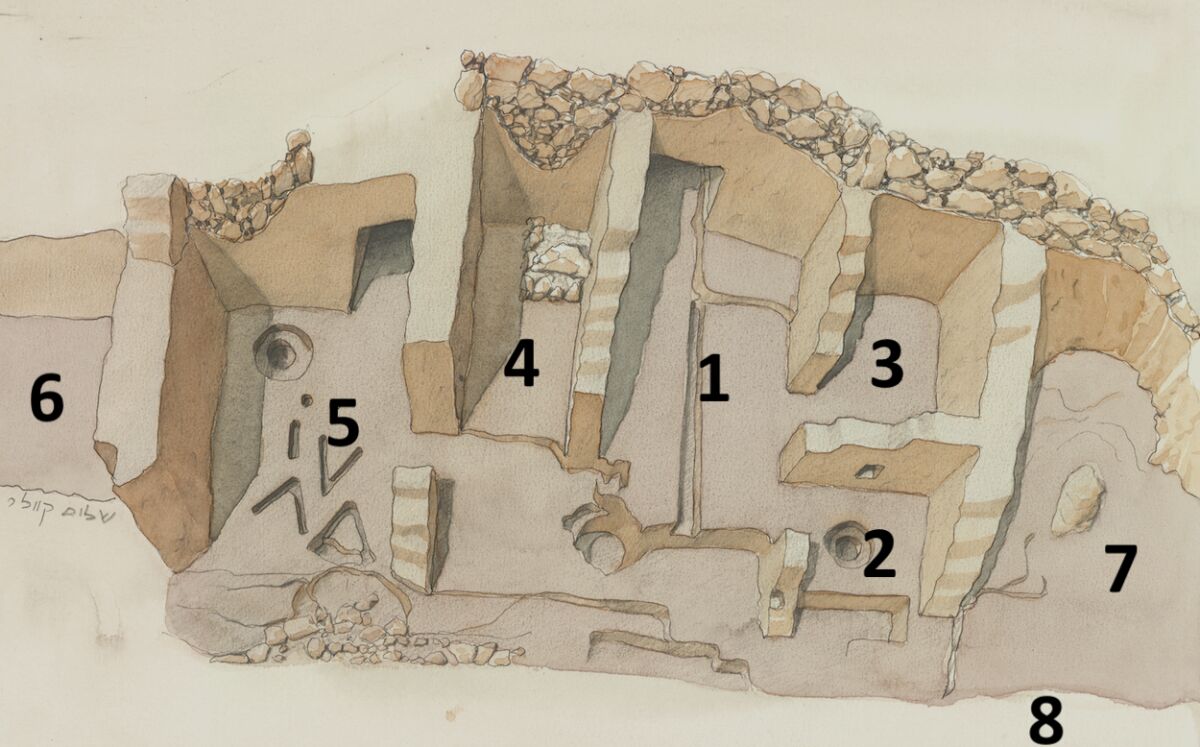
Once again, while not described in the scientific article, these features have been articulated in popular reporting as beginning at the time of Melchizedek, perhaps being reused as the location of the ark at the time of King David, and finally, buried during the reign of Hezekiah as part of his reforms aimed at centralizing worship around the temple (including destroying not only pagan items, but also misappropriated items such as the “brazen serpent”—e.g. 2 Kings 18:4). In this context, the raised rectangular platform with a drainage channel in Room 1 has been interpreted as perhaps the foundation and drain for an altar; the olive press in Room 2 as being used for ritual purposes (i.e. the production of anointing oil); Room 4, with its standing stone, perhaps representing a sort of holy of holies; Room 5, containing a favissa (a location for ritually discarded cultic materials) within its separate western chamber; and finally, the V-shaped cutouts in the open part of Room 5 perhaps serving as the support for a tripod or contraption of some kind to slaughter animals (see picture below for room numbering).
It’s an appealing interpretation, but there are some niggling questions—not least the unusual functional layout of the rooms, the oddly shaped and comparatively diminutive nature of the complex (next to the mighty Spring Tower), the oddly shaped hewn “altar” foundation (compare Exodus 20:22—verse 25 in other translations), and the notion of another temple being maintained until the latter part of the Iron Age. The press release described it as a site “used for ritual purposes while the temple still stood on the Temple Mount, just a few hundred meters away.”
“Evidently, Solomon’s temple had no problem with this sanctuary,” Shukron said in an interview. “Worship took place at the same time in both.”
And the ‘Atiqot publication introduces some additional elements that only complicate the picture further.
Middle Bronze—When?
Chief among them is the dating for the initial construction of the complex. This is based primarily on Middle Bronze Age pottery found in Room 8—the assemblage of which “exhibits a continuity of types from the MB iii–LB i transitional phase” whose placement “suggests a singular deposition event rather than a gradual accumulation over centuries, culminating in their incorporation in Room 8.”
“The ceramic finds retrieved from the fill in Room 8 date to the transition between MB iii and the Late Bronze Age,” Shukron et al wrote. “Consequently, the assemblage is best attributed to the MB iii–LB i transitional phase” (ibid). In light of this, the article concluded: “The settlement in this area probably began in the transition from the Middle to the Late Bronze Age.”
The Middle Bronze Age generally spans 2100–1550 b.c.e. and is indeed widely seen as the period representative of the biblical patriarchs. Yet most schemes place the patriarchs inside the Middle Bronze ii period (2000–1650 b.c.e., with some popular schemes even putting Abraham in the prior Middle Bronze i period—this is a subject of significant debate in conservative/maximalist circles). The Middle Bronze iii period spans 1650–1550 b.c.e.—and an even later date, the MB iii–LB i transition, would imply somewhere within the 1500s b.c.e.—centuries after even the later chronological views for the dating of Abraham.
This MB iii–LB i transition date was further confirmed by radiocarbon dating of the material in Room 8, which likewise yielded dates within the 16th century b.c.e. (Johanna Regev et al, “Middle Bronze Age Jerusalem: Recalculating its Character and Chronology,” 2021).
Iron IIB—When?
Additionally problematic is the date in which the structure fell out of use. Once again, the ‘Atiqot article affirms this as being within the Iron iib period generally and the eighth century b.c.e. specifically. Central to this is the dating for a certain cancelling wall—Wall 52. “Wall 52 was constructed after sealing the chamber in Room 5,” the authors wrote. “Further excavations in the area, which revealed additional sections of W52 date its construction to the mid-eighth century b.c.e. (Vukosavović, Chalaf and Uziel 2021). If this dating is correct, then the rock-cut rooms ceased to operate at this time.”
In the conclusion, the authors restated: “This complex went out of use in the mid-eighth century b.c.e.”—a timeframe potentially decades earlier than Hezekiah (whose reign corresponds to the late-eighth to early-seventh centuries b.c.e.).
Interestingly, there is a caveat included in the article—a footnote of disagreement among the authors. It states: “The excavators identified W52, W20005 and W13 as the continuation of the Kenyon-Shiloh wall, which they believe was built in the mid-eighth century b.c.e. In contrast, Shukron considers that it is difficult to assume that these walls were the continuation of Kenyon’s Wall na, as they are built on a different axis than the wall found by Kenyon and Shiloh.” It is interesting to speculate as to the reason for this inclusion—perhaps it relates to leaving open the possibility that this later wall was not the one revealed elsewhere securely dated to the mid-eighth century b.c.e., thus leaving open the possibility of a later cancellation of the area (i.e. during the reign of Hezekiah).
Whatever the case, based on the description in ‘Atiqot, we are left with a strange ritually oriented structure of an unusual layout which came into use in the middle of the second millennium b.c.e. and fell out of use in the middle of the eighth century b.c.e., at which point the area was filled in—perhaps not so much as the product of religious reforms as for the construction of a new city wall through this area.
And again, as noted by Govier, the ensuing press release contained no mention of the Bronze Age material at all—rather, simply noting the structure as “dating to the First Temple Period.”
One year on, an entirely new interpretation has emerged.
Maeir: Not Middle Bronze—or Cultic
Tell es-Safi (Gath) excavator Prof. Aren Maeir offered an entirely different interpretation of the structure in a new article contained within a recently published festschrift in honor of Prof. Angelika Berlejung. Maeir’s article, “Reviewing the Date and Function of the ‘Rock-Cut’ Rooms,” argues for the use of these rooms only within the middle part of the Iron ii period—and that the rooms “served as locations for the production of olive oil, cloth and wood objects,” with any cultic association as merely peripheral—if indeed cultic at all.
First, he tackled the dating. “The Middle Bronze Age dating is hard to accept, as this was based solely on the presence of Middle Bronze (and early Late Bronze Age) sherds in the fills in a constructed room (Room 8) which is situated to the east of the entire complex of rock-cut rooms and does not have any apparent connection with these rooms,” he wrote.
Similarly, their suggestion to date the use of this complex vaguely to the eighth century b.c.e. is not supported by the later excavations by Vukosavović, Chalaf and Uziel, which indicate that the city wall that cancelled out the rooms was built in the mid-eighth or early second half of the eighth century b.c.e. Thus, based on the finds from within the rooms and the city wall that cancelled them out, it appears that these rock-cut rooms were in use in the early eighth century b.c.e, and perhaps a bit earlier. There is no evidence for the use of these features in other periods.
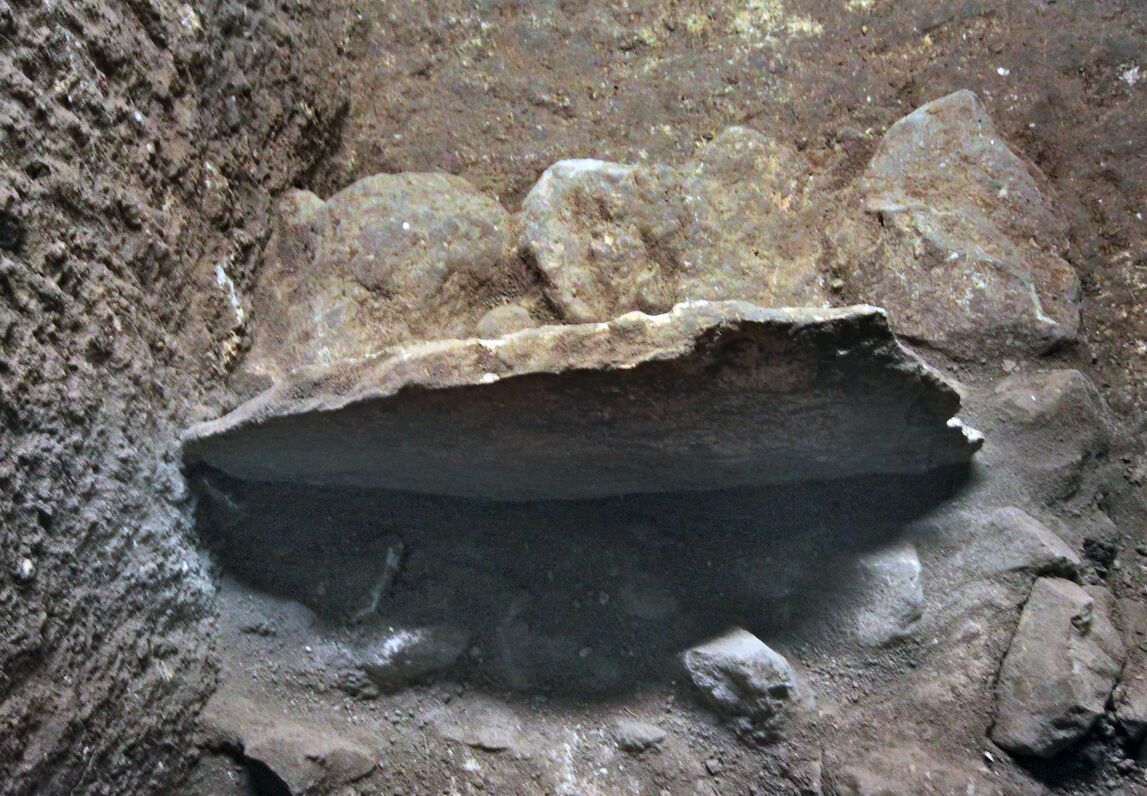
Secondly, he tackled the question of function. “Shukron et al understood this complex as being explicitly of cultic nature,” Maeir wrote. Yet “the focus on a cultic function and character of the rock-cut rooms is problematic. While there might be some cultic facets in these rooms, I believe that their primary function was for production—for olive oil, cloth and perhaps wooden objects.” In Maeir’s opinion, “very little can be clearly associated with cult” within the chambers. The standing stone, for example, “is very much different in shape from other massebot known from the Bronze and Iron Age southern Levant. In fact, most massebot are tall and narrow, and those that are wide, are usually as wide as they are high.” The City of David stone, by contrast, is several times wider than it is high, and is incredibly thin. As for the identification of a favissa in the Room 5 chamber—“hard to accept. The finds reported from this chamber are not in any way characteristic of objects found in other known favissae,” wrote Maeir.
Woodworking?
Maeir offered instead that this was a hub of production during the Iron iib period—with Room 2 indeed dedicated to the production of olive oil, and remains from Room 5 indicating weaving activity, based on the discovery of loom weights in the blocked chamber in this area.
A primary focus of Maeir’s article—a feature of interest to him in relation to his own site of Tell es-Safi/Gath—are the enigmatic V-shaped cutouts in Room 5. Similar bedrock cutouts have been found at Tell es-Safi and elsewhere, and while there is still debate as to their nature, Maeir suggested that they are related to wood-bending—the process of heating and gradually positioning wood in order curve and shape it, for items such as chariots.
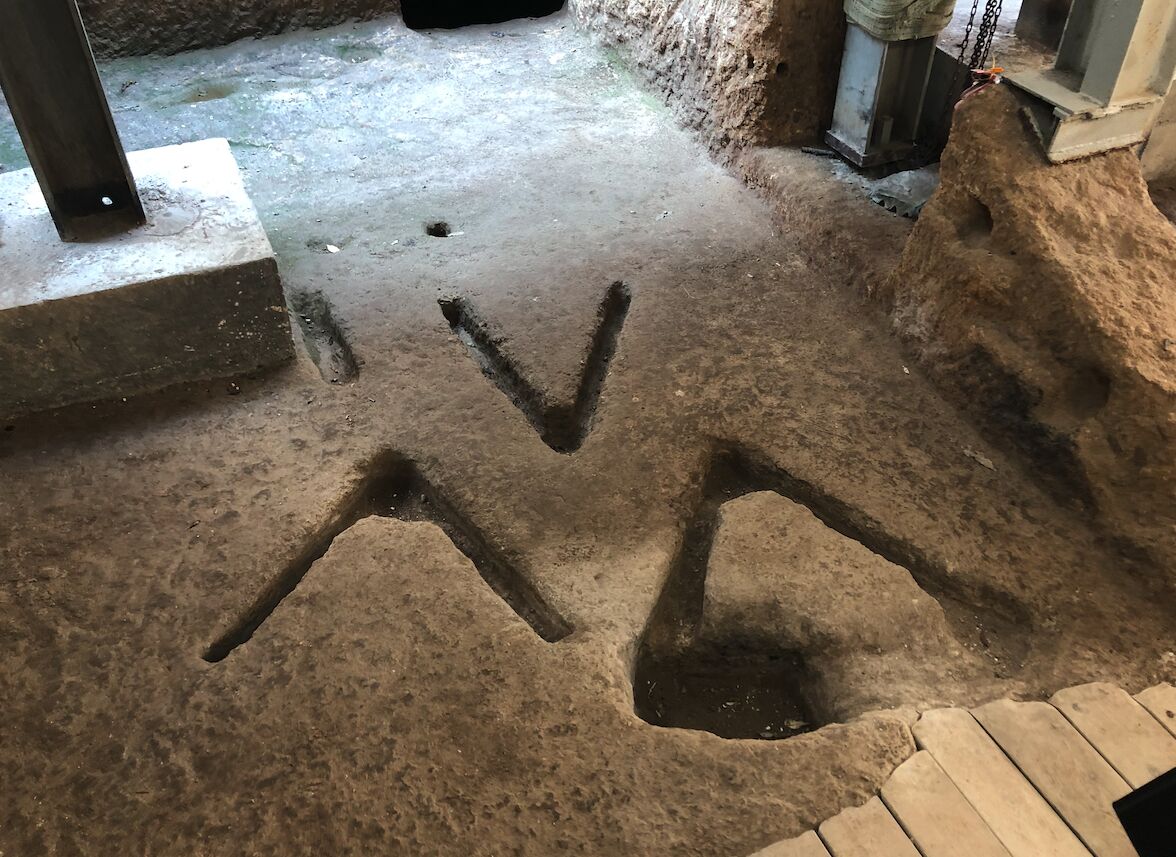
“While indeed the V-shaped carvings in the rock-cut rooms are not common, they are not without parallel. In fact, similar carvings are known from Tell es-Safi/Gath,” Maeir wrote. He cited the research of Prof. Erkan Konyar into similar features uncovered within the ancient Anatolian territory of Urartu, near the location of fortresses. “Konyar suggested that these rock cuttings (which are circles, ‘V’, ‘U’ and sickle shapes) most probably served as molds in which various wooden parts of chariots were shaped. In fact, Konyar posited that the V-shaped cuttings served for making the spokes of chariot wheels.” Maeir then offered scenarios as to how wood-bending could have taken place within the City of David room “based on parallels from known processes of wood bending”—utilizing the bedrock features found in the complex. (See the video below for a good representation of these V-shaped chariot parts.)
https://youtu.be/TP-lepshBXM?t=1395
Maeir concluded:
[E]ven if one accepts that there is some cultic activity in the rock-cut rooms in the City of David, this would be very limited in nature. The only object that might be considered of cultic nature (but see critique of this above) is the putative massebah in Room 4. … At most, this could be seen as cultic activities related to the production activities that were conducted in this complex, similar to production-related cult known from other Iron Age sites. … But even if this was the case, one can hardly identify this complex as being primarily cultic in nature.
Where to From Here?
In this alternative conception of the rock-cut rooms, then, we have not a series of rooms related to worship, but effectively a multi-room Iron Age “workshop” used for the production of various materials—e.g. wood, fabric and oil. It’s an interpretation that is certainly not as sensational—but then again, it may make better sense of the remains. And in a possible biblical link to the workshop theory, 2 Chronicles 26:15 draws particular attention to “cunning” woodworkers building military equipment in Jerusalem at the time of King Uzziah—during the same early eighth century b.c.e.
Whatever the case, Govier’s conclusion remains: “Perhaps further evidence to support the discovery is waiting to be dug up”—evidence supporting a link with Melchizedek on the one end and Hezekiah on the other. But for the meantime, if anything, the published evidence appears somewhat to the contrary—and there is a compelling new alternative interpretation. In the end, at very least, the Middle Bronze pottery found in the fills in Room 8, which do include a notable representation from the MB ii period, point to occupation in and around this area of Jerusalem during the patriarchal period—whether or not it is possible to directly associate with certain structures.
As with most archaeological discoveries, we’ll have to wait and see how the dust settles in this debate and the picture that emerges.