
Toi of Hamath: David’s Northern ‘Philistine’ Ally?
Throughout the reigns of David and Solomon several foreign kingdoms were allies of the united monarchy. King Hiram of Tyre, for example, helped David build his palace and helped Solomon build the temple. The Queen of Sheba gave Solomon a great store of wealth for his wisdom.
There is, however, one king who supported David who often gets overlooked because of his brief mention in the Bible. “And when Toi king of Hamath heard that David had smitten all the host of Hadadezer, then Toi sent Joram his son unto king David, to salute him, and to bless him—because he had fought against Hadadezer and smitten him; for Hadadezer had wars with Toi—and he brought with him vessels of silver, and vessels of gold, and vessels of brass” (2 Samuel 8:9-10).
Who was this “Toi king of Hamath”—and is there any archaeological evidence for his existence and his kingdom?
Taita Inscriptions
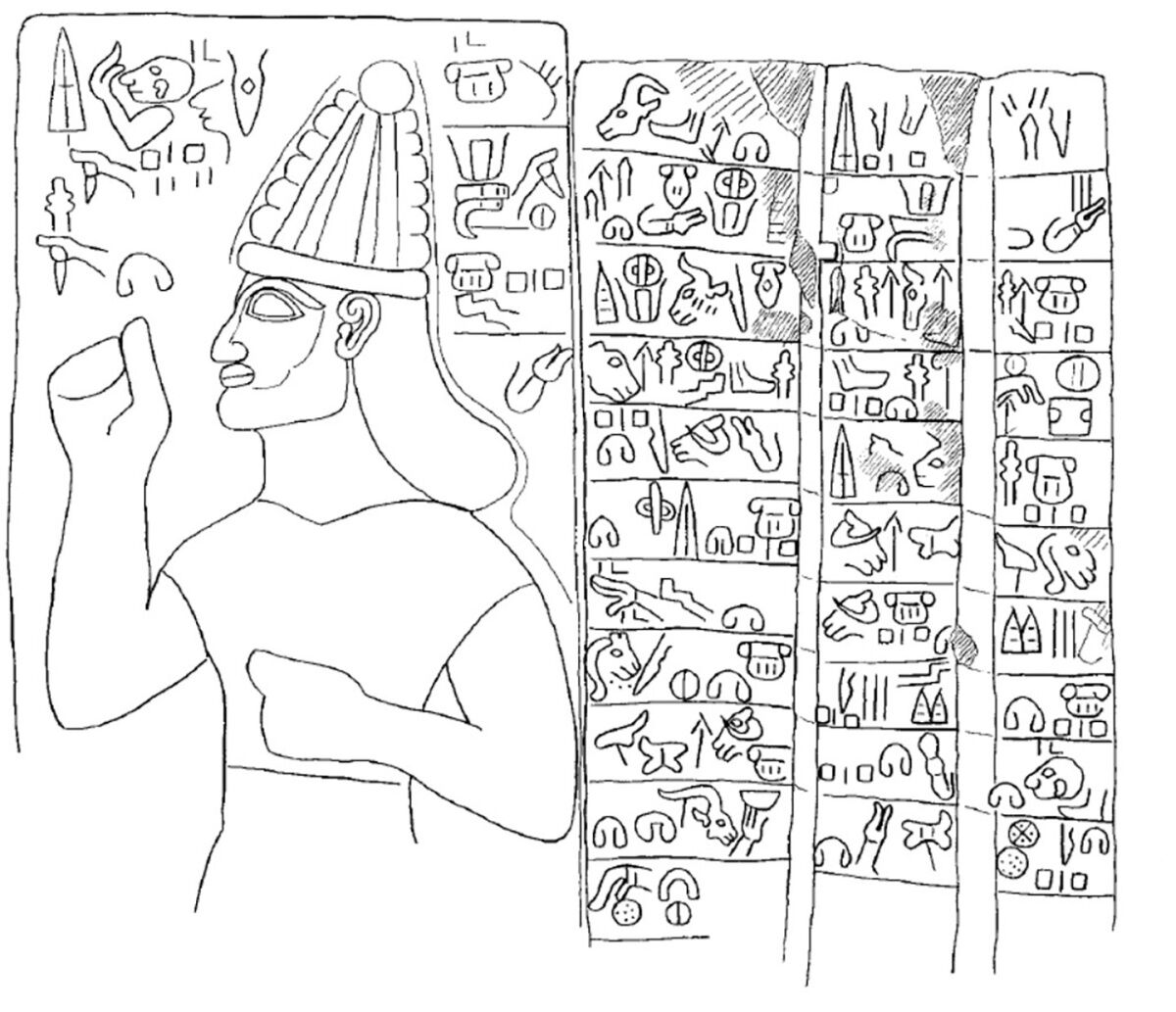
In 2003, German archaeologist Prof. Kay Kohlmeyer discovered a hieroglyphic Luwian inscription at the temple of the storm-god of Aleppo (northern Syria). Known as Aleppo 6, the inscription reads: “I am Taita the Hero, king of Palistin.” “Hero” was one of the honorific titles used in the Hittite empire period.
Scholars eventually connected this inscription to two others discovered in Sheizar and Meharde (just north of ancient Hamath)—both of which mention the name Taita. Later, Prof. David Hawkins revealed the discovery of another temple inscription (Aleppo 7) from Aleppo that bore the same name.
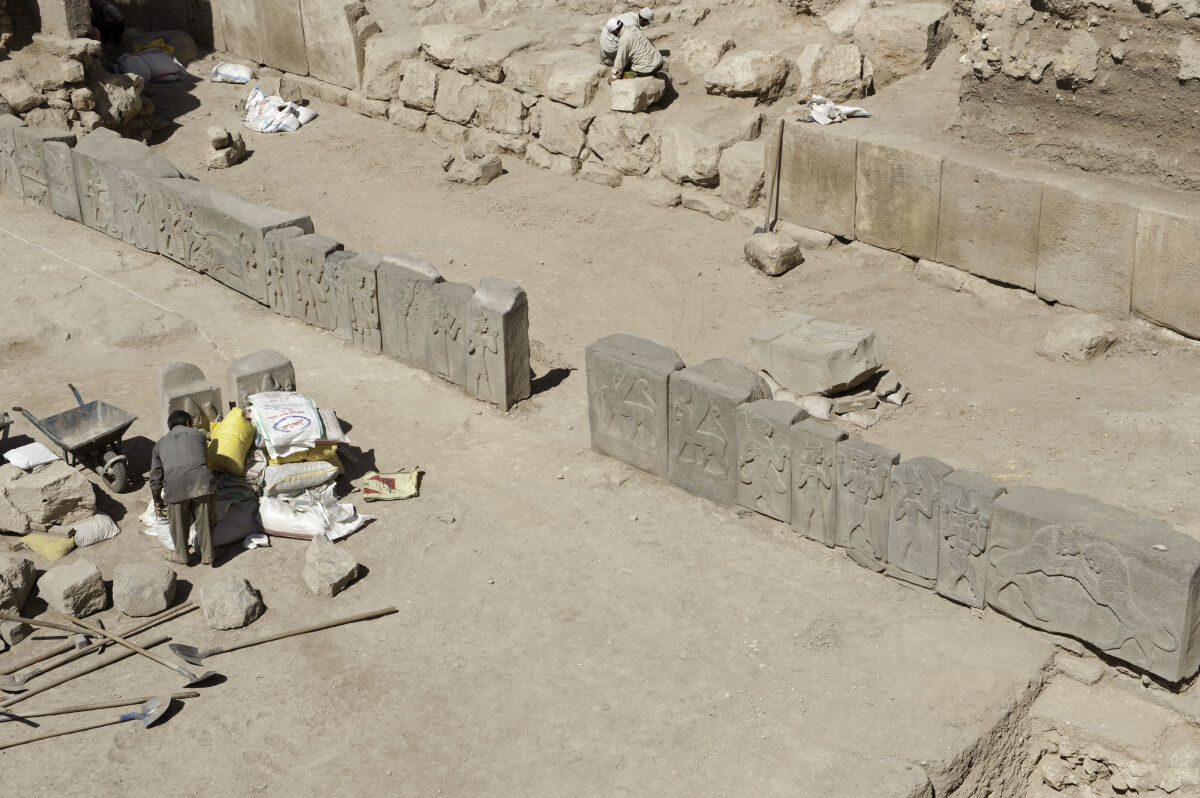
In 2010, Charles Steitler of the Academy of Science and Literature in Mainz, Germany, was the first to identify the “Taita” from these inscriptions with the Toi king of Hamath of 2 Samuel 8.
Although the names look similar, there are obvious differences in spelling. This is not unusual. Epigraphic studies are often able to explain these differences. The full Luwian name, Taitas, is most likely of Hurrian origin. According to Steitler, the name was probably derived from the root tahhe, meaning “man”—with examples of names using this root present at other sites. Not much is known about the second “ta” element and the final “s” is likely a nominative ending in the Luwian script (similar in Greek).
Concerning the vowel difference between “a” and “o,” Steitler writes:
Given the frequent shift of the long vowel ā to ō in Canaanite, as well as the presence of the vowel a in the first syllable of Toi’s name in Josephus and in some manuscripts of the Septuagint, it seems likely that the initial syllable of T’Y was originally pronounced with a vowel a. The final yod of the name is supported by the readings of Josephus, thainos, and of Codex Vaticanus, thaei.
The biblical Toi/Tai/Tou, as Steitler asserts, could be construed as a Hebrew abbreviation of “Taita.”
What about Taita’s kingdom? Does it fit with the biblical description of the king of Hamath?
Different Kingdoms, Different Kings?
Although the name of the king on the Aleppo, Sheizar and Mehard inscriptions is the same, the name of his kingdom is not. The main difference is that the kingdom of the Taita from the Aleppo temple inscriptions was called Palistin; the Taita of the Sheizar and Meharde inscriptions ruled a kingdom with the name Walistin.
This has led scholars to suggest the likelihood of two kings with the name Taita ruling over the same kingdom but at different times. Based on the epigraphic differences, the Taita from Aleppo was dated to the 11th century b.c.e. and the Taita from Sheizar and Meharde to the 10th century b.c.e.
“As to the alternation of initial pa- and wa-, we could suppose that it reflects a hesitation in rendering an initial f, where Egyptian, Hebrew and Akkadian all opted for p,” wrote Prof. David Hawkins. “We may also note that if we are to think in terms of two Taitas, the form Palistin would be the older by a clear margin.”
Professor Hawkins suggested that the gap between the two Taitas might be no more than one generation. Epigrapher Gershon Galil concurs, writing, “If Taita i ruled Palistin in the first half of the 11th century b.c.e., Taita ii, his grandson, may be dated to the late 11th–early 10th century b.c.e.” (“A Concise History of Palistin/Patin/Unqi/’mq in the 11th–9th Centuries B.C.”).
According to the biblical timeline, the proposed time frame for Taita ii lines up perfectly with the reign of King David and Toi, king of Hamath.
Taita’s Palistin
After the Hittite empire collapsed around 1200 b.c.e.—during a region-wide cataclysm known as the Bronze Age collapse—several smaller Neo-Hittite states emerged out of its ruins in the area of western Syria, southeastern Turkey and Lebanon. The Bible hints at this situation in 1 Kings 10:29, speaking of the plural “kings of the Hittites.”
As these inscriptions show, one of these kingdoms was Palistin. The heart of Palistin was located in the Amuq Valley (also known as the Plain of Antioch) in northwest Syria. One of the biggest changes in the Amuq Valley in the early 12th century b.c.e. was the move of its chief city from Tell Atchana (Alalakh) to Tell Tayinat (later known as Kanuluah; Calneh in the Bible—Amos 6:2). This is based on archaeological excavations at the site uncovering evidence of increased settlement and large construction later in the early Iron Age, as well as another inscription Tell Tayanit 1—with the name Palistin.
As to the extent of the kingdom, Prof. Lynn Welton from the University of Toronto and her colleagues write in their paper “Shifting Networks and Community Identity at Tell Tayinat in the Iron I (ca. 12th to Mid 10th Century B.C.E.)”: “Together, these inscriptions imply the existence of an early Iron Age kingdom known as Walastin/Palastin, centered in the Amuq Plain, encompassing an area that included Aleppo to the east, and extending southward in the Orontes Valley [Amuq Valley] as far as Hama [Hamath], with its capital located at Tell Tayinat.”
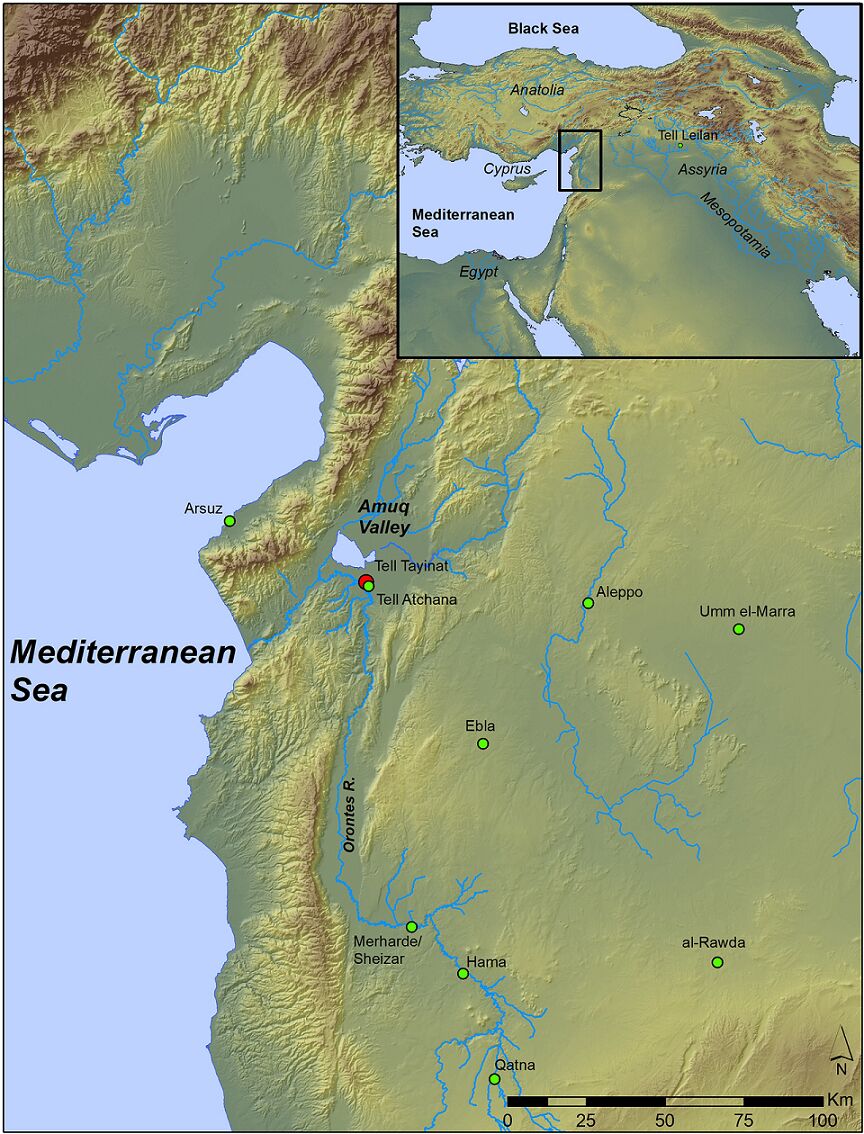
Two more inscriptions discovered at the coastal site of Arsuz (southern Turkey) mention the kingdom of Walastin, further revealing the extent of the kingdom at the time of Taita ii.
But if this was the extent of the kingdom, then why is Toi/Taita called the king only of Hamath in the Bible—not king of Palistin?
Hamath was evidently under Taita’s control, and the battle David fought against Hadadezer was “by Hamath”—right at its border (1 Chronicles 18:3). As Dr. Mark Weeden wrote, “It might just be the case that the Judeans did not know about or found it irrelevant to mention the parts of Toi’s kingdom further to the north” (“After the Hittites: The Kingdoms of Karkamish and Palistin in Northern Syria”).
Evidence of control as far south as Hamath is dated only to the 10th century b.c.e., in connection with Taita ii. “The modification of the picture demanded by the recognition of two Taitas would be: a kingdom of perhaps three generations, 11th to early 10th century b.c.e., ruled from the Amuq by Taita i controlling Aleppo and Karkamiš(?); and by Taita ii controlling (additionally?) as far south as Meharde-Sheizar,” Hawkins explained.
Pottery from Cyprus and Mycenae was found at Alalakh, the previous capital in the Amuq plain, “demonstrating the involvement of this key site in the Eastern Mediterranean trade network of this period,” according to Jeffrey Emanuel, a specialist in Aegean archaeology from Harvard.
As Tell Tayinat became the main site of the Amuq Valley in the Iron Age i, it took over this role. “The role of the main site in the ‘Amuq as a gateway for imports continued in the Iron ii, as well, with Ta’yinat serving as a hub of exchange between Cyprus, the Aegean and the Levant.” This position as a trade hub could explain why the Bible says King Toi was so wealthy—able to send “vessels of silver, and vessels of gold, and vessels of brass” along with his son.
Palistin—Northern Philistines?
The name Palistin looks similar to the infamous Philistines of the Bible. This similarity has led scholars to suggest a connection between the two peoples—suggesting that at least part of the Palistineans were “northern Philistines.” Pottery styles also support this conclusion.
The Late Helladic iiic style pottery, an influence from the Aegean, entered Palistin in the 12th century b.c.e., resulting in “widespread distribution in the north Orontes Valley,” the Amuq Valley Regional Project Survey recorded. Aegean influences are often considered evidence of Sea People/Philistine influence in the Levant based on the ceramics found at the Philistine sites of Ekron, Ashdod and Ashkelon.
However, the locally produced Aegean-style wares were rare in the Iron Age i phase, when the Philistine Sea Peoples, as recorded on Ramesses iii’s Medinet Habu reliefs, were supposed to have appeared. Only in the late 12th to early 11th century b.c.e. does the style increase, though it declines again after about a century.
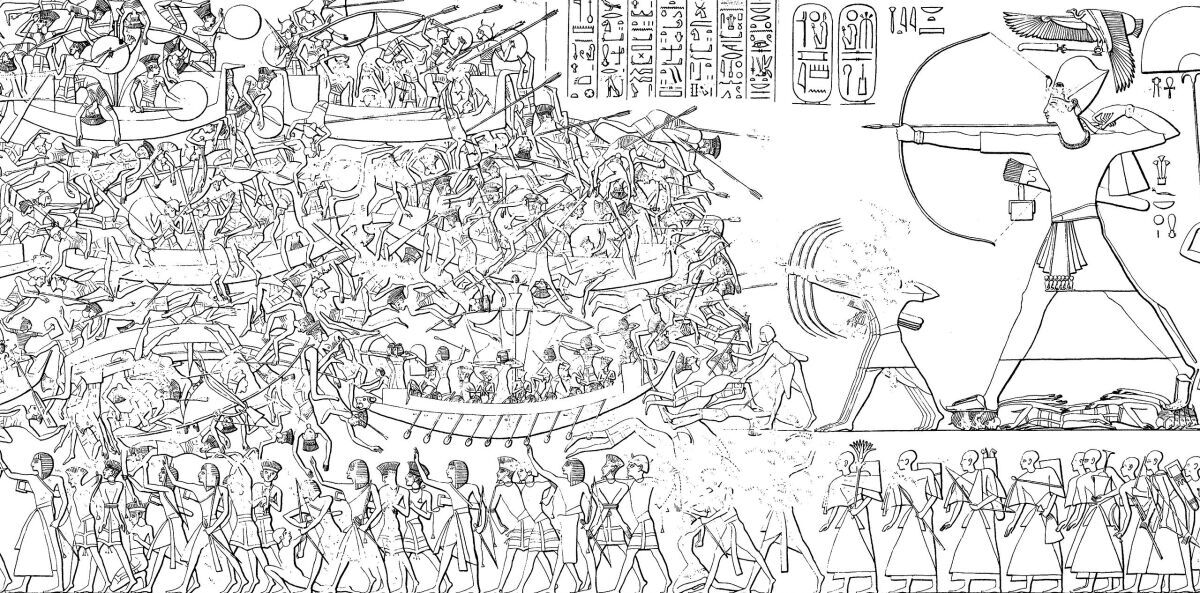
Pointing to this late introduction, independent researcher Michael Banyai believes that the Aegean wares should not be dogmatically connected with the Philistines. “It is possible that whoever introduced LH iiic 1b ceramics to Palestine did not necessarily identify as a Philistine,” he wrote. Instead, he proposed that these should be identified with another ethnic group.
In contrast to the Aegean influence, the excavated pottery also revealed a strong and continuing local Hittite tradition. This Hittite tradition stays the most predominant throughout the whole period until both the local pottery and Aegean-style pottery were replaced by Red Slip Burnished Wares in the Iron Age ii.
The pottery and the use of hieroglyphic Luwian script “suggest close cultural connections with the former Hittite world and the continuation of earlier ceramic industries,” according to Professor Welton. In addition, two basalt stelea uncovered in the city of Arsuz on the Mediterranean coast make mention of Supiluliuma, king of Walistin. The last ruler of the Hittite empire before its collapse was also called Supiluliuma. This has led some to suggest that he was a descendant in the continuing line of the Hittite royal house, ruling over one of its successor kingdoms. Although it seems that the main culture was Neo-Hittite, a foreign Aegean element, which some would say is Philistine, cannot be denied. (For more on the Philistines and their connection to the Palistin, read this article; for more on the Hittites, read this one.)
Later History
According to the Bible, after the reign of King David, the city of Hamath was brought under King Solomon’s sphere of influence. 1 Kings 8:65 states that Solomon’s kingdom extended “from the entrance of Hamath unto the Brook of Egypt.” 2 Chronicles 8:4 reveals that he built storage cities at Hamath.
Professor Hawkins wrote that the kingdom of Palastin “extended as far south as the environs of Hama[th], at a latest date of the early 10th century b.c.” This fits well with David’s reign ending around 970 b.c.e. and Solomon’s subsequent takeover of the area around Hamath. Some suggest that Toi’s son, Joram/Hadoram, became one of Solomon’s vassals.
After Solomon, Hamath must have fallen again to some other power, as 2 Kings 14:28 states that King Jeroboam ii (790–750 b.c.e.) “recovered Damascus, and Hamath, for Judah in Israel.” As for Palistin, a later kingdom named Patin (known as Unqi in Assyrian inscriptions) seems to have developed out of it. At this point, if Palistin was indeed influenced by the Philistines, the only evidence of that influence in these later stages would be the similarity in name.
Regardless of the origins of the kingdom of Palistin, the possibility of one of its kings being mentioned in the Bible is intriguing.
In their book The Bible’s First Kings: Uncovering the Story of Saul, David and Solomon, Avraham Faust of Bar-Ilan University and Zev Farber, chief editor of TheTorah.com, suggest that these findings strengthen the case for the accuracy of David’s story. If the identification is true, it reveals an author that “was familiar with the king’s name, which would be very unlikely for, let’s say, a seventh-century scribe looking to embellish David’s story.”
As the Bible has it in 2 Samuel 8, a king ruling over a Syro-Hittite state was on friendly terms with the united monarchy because of David’s victory over Hadadezer—one of his enemies. So far, this lines up well with archaeological evidence from the northern Orontes Valley. “Corroboration of the existence of an ally in these early campaigns would not only shore up the biblical narrative at an important juncture, but also provide evidence for the international standing of the state of Judah in the 10th century b.c.,” Weeden wrote.
“Taita” and his kingdom “Palistin” seem to be the closest match we can find of this northern ally of David described in the Bible.