New Inscription From Lachish Proves Early Use of Joseph’s Title
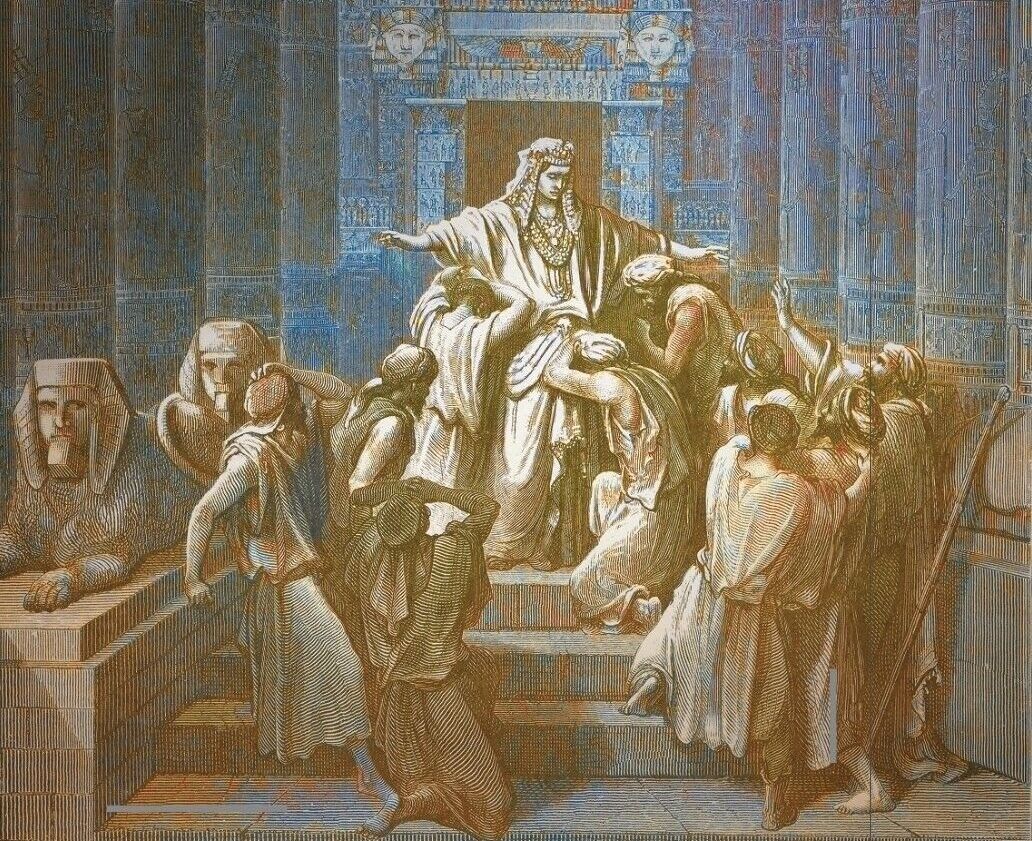
“And the sons of Israel came to buy among those that came; for the famine was in the land of Canaan. And Joseph was the governor [šalit] over the land” (Genesis 42:5-6).
While serving as regent in Egypt, Joseph was given an odd title: šalit (שלט/שליט). It’s a word, or a form of a word, found generally in late texts, e.g. Esther, Nehemiah and chiefly in the book of Ecclesiastes—a book commonly seen by textual critics as a very late composition of the Hellenistic Period. Actually, this late dating has been challenged by a recent reanalysis of the Dead Sea Scrolls by the AI-program Enoch; a fragment of a copy of Ecclesiastes was redated to much earlier within the third century b.c.e., challenging prevailing late-date compositional hypotheses.
Nevertheless, šalit has at least been generally recognized as a later Persian Period loan word, applied either during the editing or composition of these texts perhaps somewhere as late as the second half of the first millennium b.c.e.
A brand new inscription from Lachish, discovered just last year and published in a recent Jerusalem Journal of Archaeology article, challenges that conclusion—revealing the use of this word in the Levant as early as the second half of the second millennium b.c.e.—the end of the Late Bronze Age.
Bronze Age Lachish—Writing Metropolis
In the February 2026 article titled “A Late Bronze Age Canaanite Jar Inscription From the 2025 Excavation Season at Lachish,” authors Daniel Vainstub, Itamar Weissbein, Hoo-Goo Kang, Shai Halevi and Yosef Garfinkel revealed a “partially preserved inscription [that] was found in an unambiguous 12th-century b.c.e. archaeological context associated with the site’s last Late Bronze Age settlement.” Although the inscription is broken, enough of it has survived to “allow one to read the personal name B’lšlt. This name is built on the root šlt, which hitherto has been widely considered a much later (Persian Period) loan from Aramaic,” they wrote.
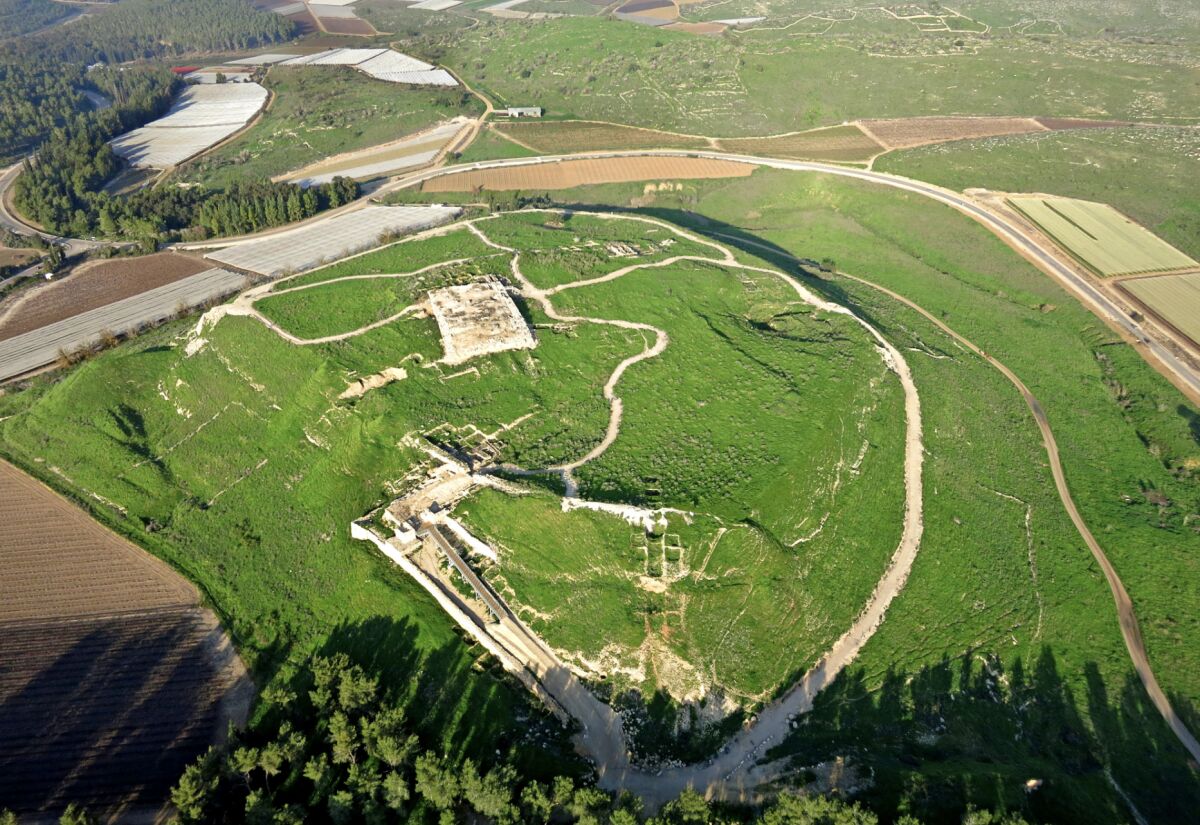
Lachish is a prominent archaeological tel located roughly 45 kilometers (28 miles) southwest of Jerusalem. It featured as Judah’s “second city” after Jerusalem during the Iron Age and was likewise a major site during the preceding Bronze Age. It is from this site that we have the “largest corpus of Bronze Age Canaanite inscriptions to date,” wrote Vainstub et al—inscriptions spanning from the later part of the Middle Bronze Age to the end of the Late Bronze Age, several of which have been revealed by the ongoing excavations directed primarily by Hebrew University professor Yosef Garfinkel. The recent discovery comes from the summer 2025 season of the Seventh Expedition to Tel Lachish.
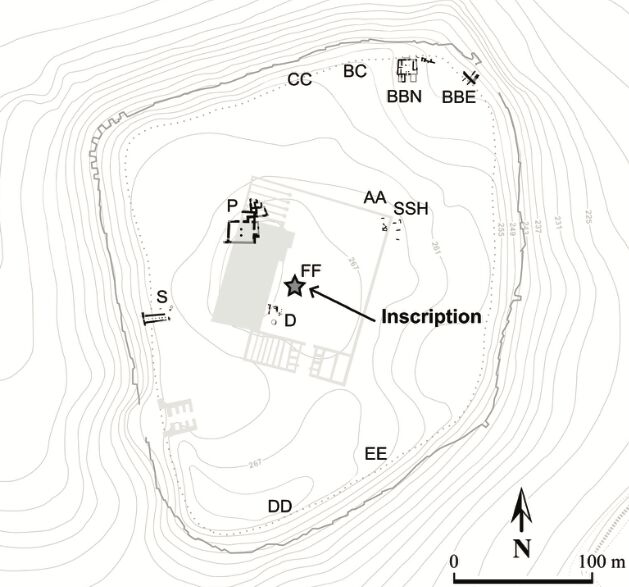
The inscription comes from a fill within Level vi at the administrative summit of the site—a level corresponding with the “last settlement horizon of Late Bronze Age Lachish, which was destroyed in the mid-12th century b.c.e.” in a “massive conflagration” (ibid). Chronologically, the find goes together with various structures unearthed belonging to this time period, including a large Late Bronze iii temple.
‘Baal Rules’
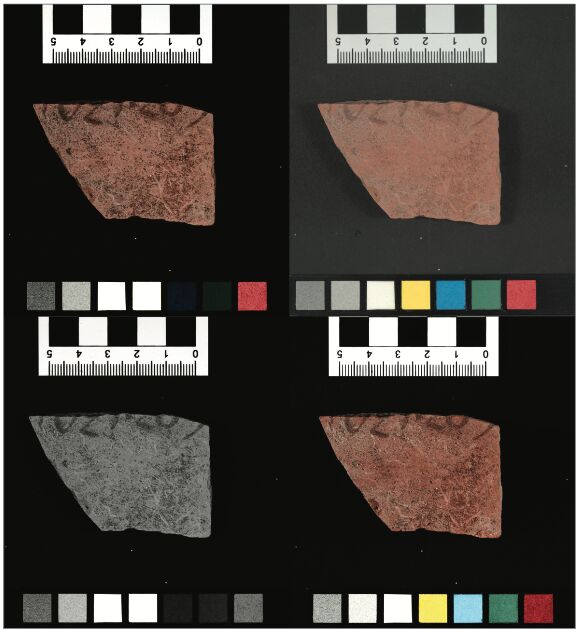
The inscription itself was written on the outside of a vessel in red ink. It was analyzed via multispectral photography in the Israel Antiquities Authority laboratories, which allowed optimal visualization of the inscription. All that remains of the inscription is the lower half of which Vainstub et al identify as a personal name—בעלשלט/B’lšlt—the first component corresponding to the famous deity Baal, and the second to our word šalit, “ruler.” The authors do note some uncertainty with the interpretation of the first letter, ב. “Nevertheless,” they wrote, “the lower halves of the five remaining letters offer unequivocal readings.”
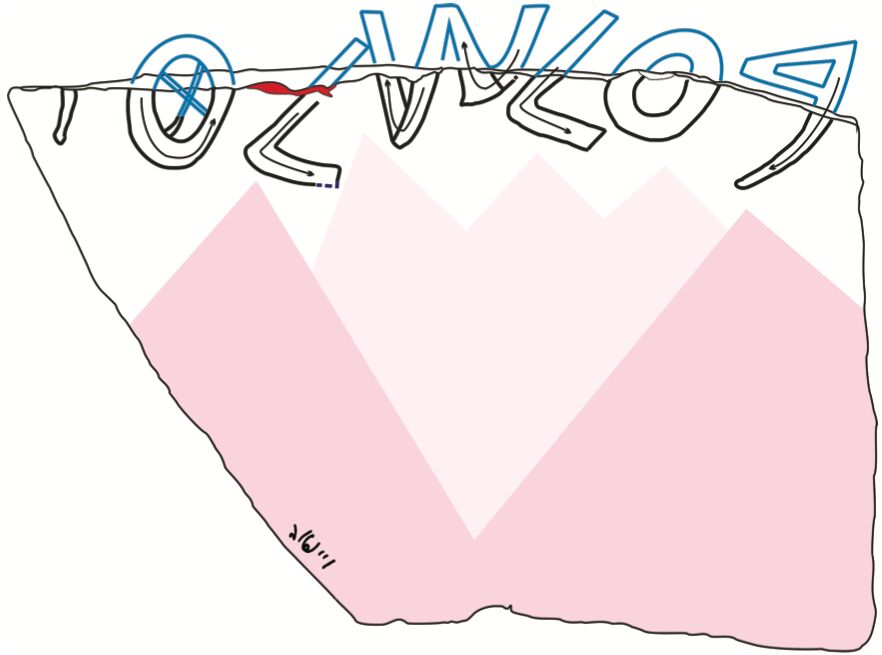
The name means something akin to “Baal rules”/“Baal ruled”—the initial element “appropriate for a Late Bronze Age Canaanite inscription, since Ba’al was the most venerated deity in the region.” The second component, however, is described as “surprising.” Vainstub et al continued:
The root של״ט (i.e. rule) in biblical Hebrew … is widely considered an Aramaism that was introduced in the Persian Period under the language’s extensive influence. This view relies on (a) the root’s alleged absence from languages other than Aramaic before the eighth century b.c.e., and (b) the fact that almost all the occurrences of the root in biblical Hebrew come in books produced in the Persian Period ….
This last point has two thorny exceptions: Genesis 42:6, “and Joseph was the regent (השליט) on the land,” and Psalm 119:133, “let no wrongdoing rule (אל-תשלט) over me.”
“[I]n the last two decades, minimalist voices have claimed that the Joseph stories were produced in the Persian or even the Hellenistic Period in the context of the Jewish diaspora in Egypt,” Vainstub et al wrote. Contrarily, they noted the conclusion of the late Hebrew Bible scholar Gordon Wenham, who “rejected the interpretation of שליט in Genesis 42:6 as a late term, correctly arguing that since the root occurs in Old Assyrian, it is a common Semitic one.” Sadly, Wenham died just months prior to the discovery of this inscription validating his conclusion.
“Rather than a loan, it is an old pan-Semitic root,” wrote Vainstub et al. “Although in Classical Hebrew it was secondary to the standard מש״ל, and overwhelmed it only in the Persian Period, under the influence of Aramaic, it can no longer be considered a decisive mark of lateness.”
Script Development—Earlier Than Realized
The šalit element of the inscription was far from the only notable feature. The authors noted that close analysis of the text shows it to have been written in a rather more developed alphabetic text of the time:
Our inscription makes an important contribution to the understanding of this significant stage in the development of the script in the following ways: (1) It precedes by about a century what are considered the most ancient known instances of the script dated to the 11th century b.c.e.; (2) it was written in a pottery workshop in the Lachish area, far south of Phoenicia, considered by many the place where this script first developed; and (3) the strokes’ varying thicknesses, resulting from a smooth and confident wielding of the stylus, seems to mark the beginning of the “shading” characteristic of Hebrew and Aramaic scripts.
In this latest of Lachish inscriptions, then, we have a remarkable attestation to an even earlier development of the Canaanite/Hebrew/Phoenician script. Not only that, we have a remarkable precedent for the use of this term šalit applied to Joseph, chronologically on the scene during the second millennium b.c.e. Bronze Age.
https://www.youtube.com/watch?v=VGkdaC3wEMQ
But perhaps the early use of this term should not have been a surprise. As we have highlighted before, this biblical figure is alluded to in the text of the third-century b.c.e. Egyptian priest-historian Manetho, in his description of the first of the immigrant Semitic Hyksos rulers from Canaan called Salitis (with the final Greek masculine -is element). This mysterious individual came to Egypt to “gather his corn” and established the dominant Semitic Hyksos dynasty in the north of Egypt (Against Apion 1.14).
“And Joseph gathered corn as the sand of the sea, very much …. And Joseph was the [Šalit] over the land” (Genesis 41:49; 42:6; King James Version).