
On the Threshold of Superstition—Quite Literally
I was recently conversing with a researcher at Hebrew University who was working on a Byzantine Period (324–638 c.e.) glass artifact discovered during our 2025 Ophel excavations. The artifact had been buried, apparently deliberately, adjacent a prominent door threshold on our site. The individual researching the artifact noted the commonality of superstitions surrounding entryways in the ancient world. Ancient Chinese structures, she noted as an example, were built with raised thresholds to keep evil spirits at bay.
I told her the same motif is found in the biblical account, such as in the account of the ark of the covenant in the temple of Dagon.
Superstition surrounding door thresholds remains common to this day in ways you might not have realized. Let’s briefly review this fascinating subject in general history and the biblical account.
Treading Lightly
It’s not hard to imagine how superstitions involving the crossing of a threshold came to be. Crossing a threshold means transitioning from one environment to the other; at religious sites, to cross a threshold is to leave the “profane” and enter a “sacred” dwelling. As in the example mentioned by my colleague, Taoist and Buddhist temples are built with high thresholds in order to keep away ghosts and evil spirits. These are thresholds that must be stepped carefully over, and not on.

For cultures around the world, the threshold represents a “liminal” zone—both physically and spiritually—between two environments. In fact, the word liminal is derived from the Latin limen, the very word for threshold. This was the presiding place for protective deities, such as the Roman Limentinus, god of thresholds. (Other Roman liminal deities included Cardea, Forculus, Lima and Janus.) Various rites and rituals were expected to either appease a respective deity or keep others at bay. A sense of this is found in the common phrase “rite of passage.” (“Crossing the line” is another common liminal, threshold-related phrase.)
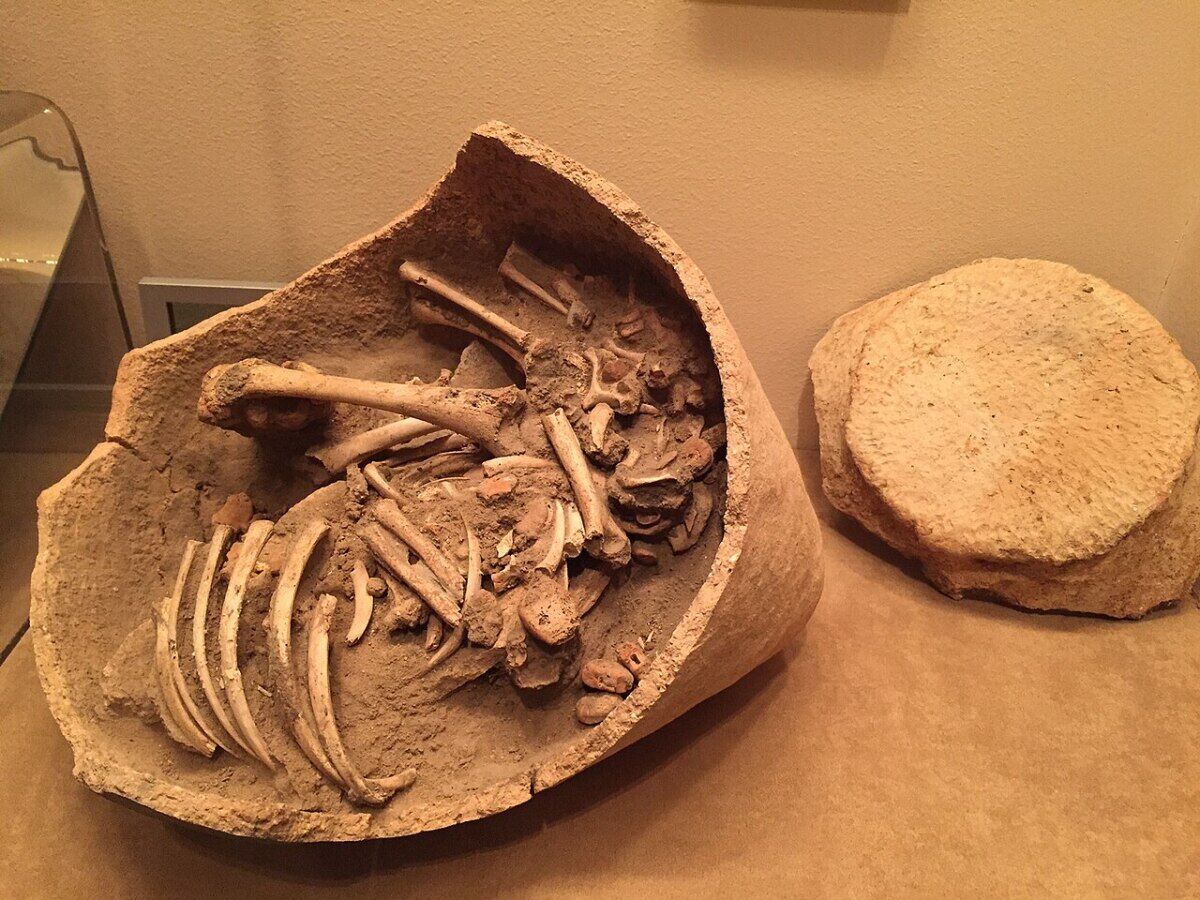
This translates into various actions, depending on the place and culture. One example is the ritual placement of certain objects in, around or under a threshold. These could include mundane objects (such as our glass item mentioned in the introduction—the publication of which is forthcoming). On the more extreme end of the spectrum, it could include the burial of children (typically within jars). Some sense of this may be contained in the biblical account of the cursed Hiel, who built Jericho during the reign of Ahab: Hiel “set up the gates thereof in his youngest son Segub” (1 Kings 16:34; King James Version). The death of Segub has traditionally been seen by early commentators as a misfortune due to Hiel’s disobedience—his son simply having died at the time in which the gates were mounted. The “accumulating evidence of the prevalence of the rite,” however, has led more modern scholars and archaeologists to suggest this as relaying a deliberate infant burial (T. F. Wright, “How Was the Curse on Jericho Fulfilled?”).
Other practices involve the manner in which thresholds are crossed. One such common practice is to step or even leap over thresholds entirely, so as not to trip and incur bad luck. Interestingly, Zephaniah 1:9 warns: “In the same day also will I punish all those that leap over the threshold, That fill their master’s house with violence and deceit.”

In the world of Islam, there is a host of doorway entering and exiting practices. It is a common practice to cross the threshold into a home or mosque with the right foot and to exit with the left; conversely, to enter a bathroom with the left and to exit with the right. This is often done reciting a prayer. For example, upon entering the mosque, an individual would request “refuge in Allah … from the outcast Shaytaan”; upon exiting, to be protected “from the accursed Shaytaan”; upon entering the bathroom, refuge “from the male and female devils,” which reside there; upon exiting, asking for forgiveness. (For references to each of these, note Sahih Abu Dawud 441; Sahih Al-Jami’ 515; Sahih al-Bukhari 142; Al-Tawdih li-Sharh al-Jami’ al-Sahih 29/229; Sunan Abu Dawood 30; Sunan al-Tirmidhi 7; Sunan Ibn Majah 300.)
.jpg)
Threshold-crossing rituals are also found in Western culture, though they are less well known and perhaps even done without realization. This famously includes the practice of a groom carrying his bride over the threshold. While the origin of this tradition often goes unrealized, its purpose was to prevent the possibility of the bride tripping and incurring bad luck or angering household spirits—beings that would otherwise see the new family member as an intruder.
An example of wedding-related superstition can be found in the following marital recitation, “Porch Verse” (published in the 17th-century poet Robert Herrick’s Hesperides):
Welcome! but yet no entrance till we blesse
First you, then you, and both for white successe:
Profane no porch, young man and maid, for fear
Ye wrong the threshold god that keeps peace here:
Please him, and then all good luck will betide
You the brisk bridegroom, and you the dainty bride.
Edward Muir gives an example of threshold-related marital superstition among the Welsh in Ritual in Early Modern Europe:
Among the lower classes marriage rites might be quite informal. In Wales, the groom and then the bride merely jumped across a birch-broom that had been set aslant across the open door of the bridal cottage. Witnesses had to be present, and sensitivities of the magical potentialities of the act required that neither partner touch the broom or door post. It is telling that this rite of passage focused so completely on the threshold and the potential dangers evoked in crossing it.
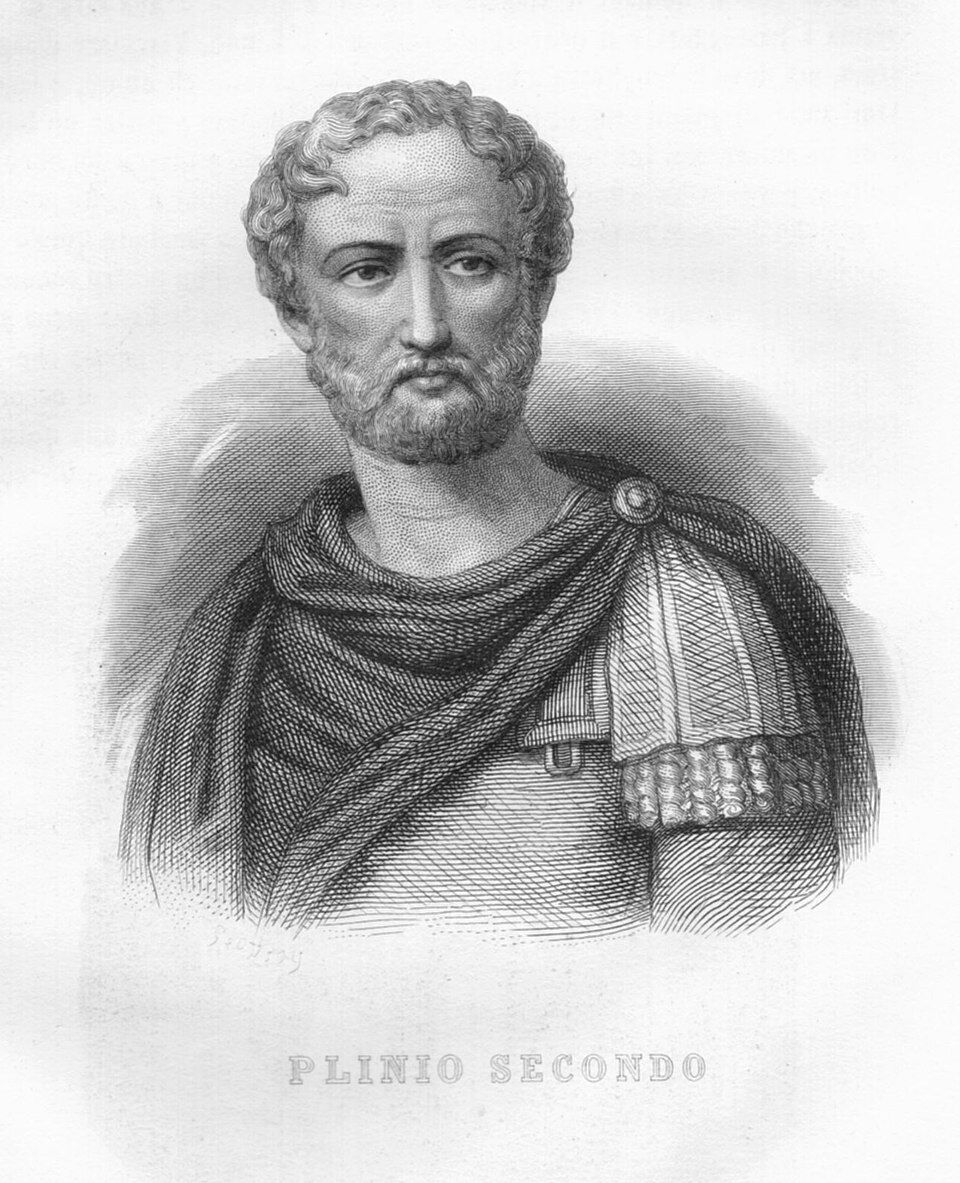
The list of peculiar threshold-related superstitions and rites goes on (as outlined in H. Clay Trumbull’s The Threshold Covenant). Having trouble with nightmares? The first-century c.e. Pliny the Elder prescribed in Natural History taking nails extracted from coffins and driving a line of them in front of the bedroom threshold in order to keep the mare—demon or goblin—away at night (perhaps the etymology of the word nightmare is news to you).
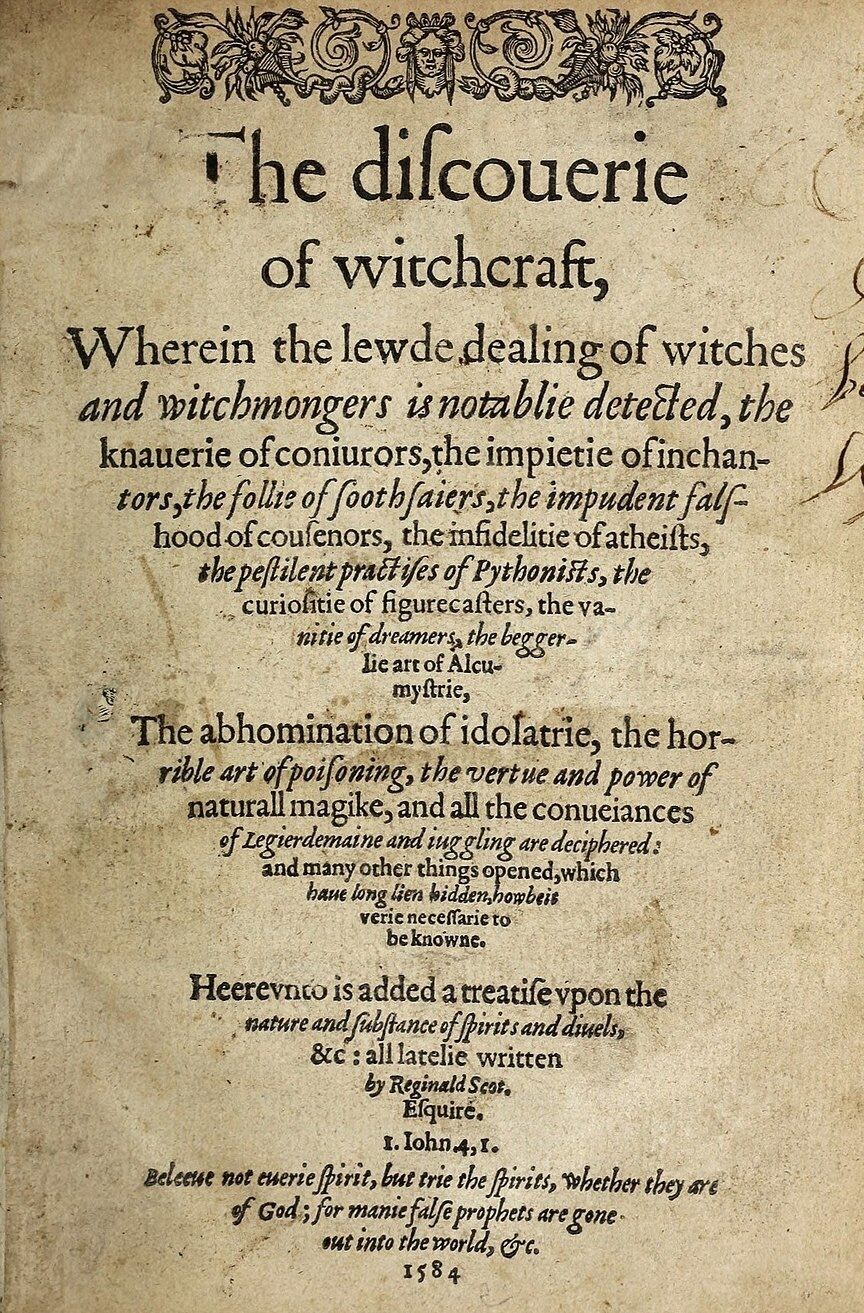
What about “bewitched” livestock? The barn threshold is key. The 16th-century English politician Reginald Scot recorded the practice of taking wax from an Easter candle, melting it onto the forehead of the beasts in question, and leaving what is left of it “upon the threshold … and, for all that year your cattle shall never be bewitched” (The Discoverie of Witchcraft).
The 18th-century antiquarian John Brand collected these and many other such examples of superstition in Popular Antiquities of Great Britain—including unusual recipes for anointing thresholds with “an unguent composed of the gall of a black cat, the fat of a white hen, and the blood of a screech-owl.”
Rites, rituals and symbolism surrounding thresholds are found all around the world. “All these rites vary from people to people and become more complicated if the threshold is the seat of the spirit of the house, the family or the threshold god,” wrote Arnold van Gennep in his authoritative work The Rites of Passage. “Some prostrate themselves before the threshold, some kiss it, some touch it with their hands, some walk upon it or remove their shoes before doing so, some step over it, some are carried over it, etc.” Some of these practices are so common that they continue, even if unrealized, not only in practice, but even within language.
When it comes to the biblical account, one threshold-related story in particular stands out.
Entering the Temple of Dagon (Carefully)
Notice a passage in 1 Samuel 5: “And the Philistines took the ark of God, and brought it into the house of Dagon, and set it by Dagon. And when they of Ashdod arose early on the morrow, behold, Dagon was fallen upon his face to the ground before the ark of the Lord. And they took Dagon, and set him in his place again. And when they arose early on the morrow morning, behold, Dagon was fallen upon his face to the ground before the ark of the Lord; and the head of Dagon and both the palms of his hands lay cut off upon the threshold; only the trunk of Dagon was left to him. Therefore neither the priests of Dagon, nor any that come into Dagon’s house, tread on the threshold of Dagon in Ashdod unto this day” (verses 2-5).
This passage contains a motif curiously similar to the one mentioned in Zephaniah 1:9—“those that leap over the threshold.”
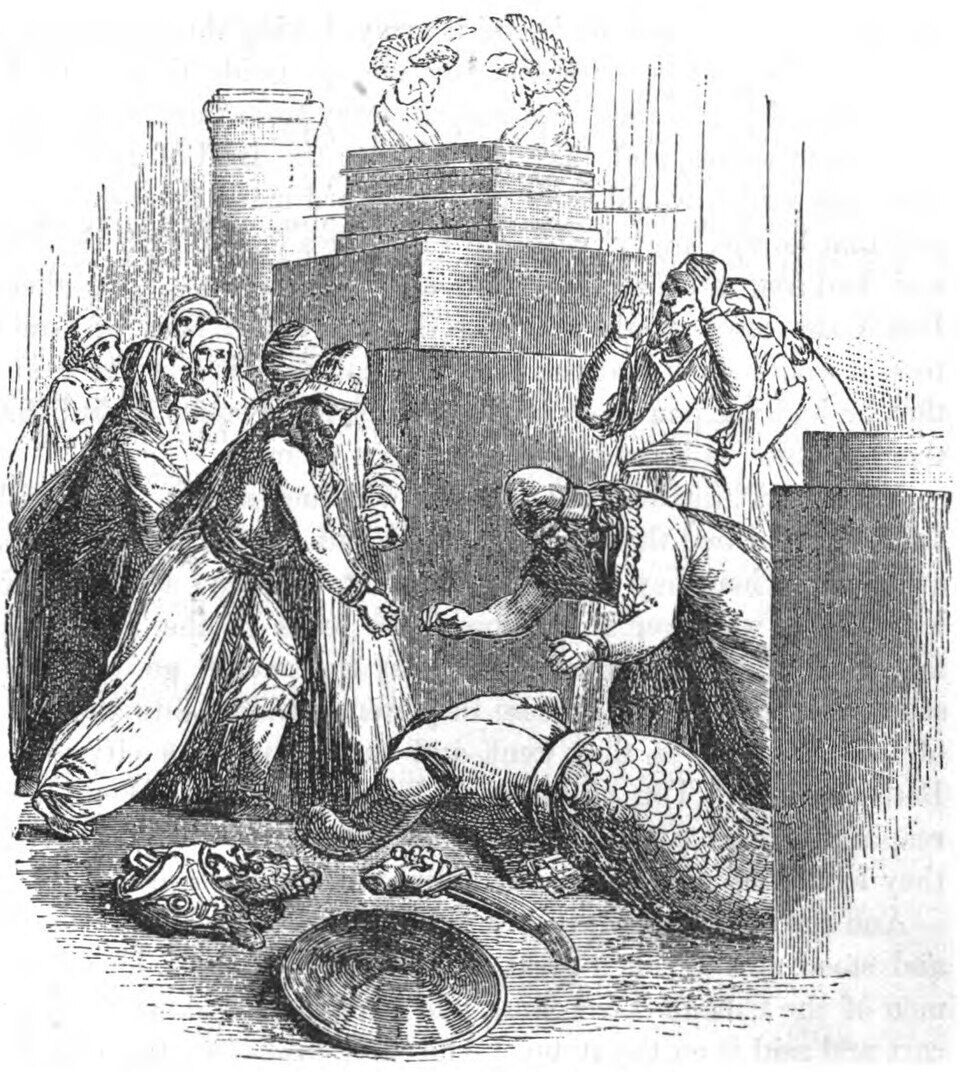
The symbolism and shock factor for these Philistine priests can perhaps better be appreciated after examining other threshold superstitions from other cultures. After the first night, the priests seem to have assumed their idol had simply toppled over. The message was not received. After the second night, not only was Dagon found prostrate before the ark of the covenant, his head and hands were found sliced off at the door to his own dwelling place. For the Philistine priests, this room had become the domain of a much more powerful spirit. Even long after the ark had been returned (“unto this day”), this location of threshold carnage was seen as requiring extra care when crossing.
“[T]he suggestion of the gloss is that the unwillingness of the Philistines to tread on the threshold of the temple (which appears to have been of primitive origin) did not exist among the worshipers of Dagon prior to this incident,” wrote Trumbull (ibid). “The original force of the wonder was in Dagon’s being overthrown at his very shrine, falling maimed on the threshold altar of his temple.”
This event undoubtedly served as an emphatic and powerful symbol within the worldview of the pagan priests of Ashdod, thus leading to their own cultic practices of entering and leaving—practices “noted and censured long after,” notes Matthew Poole’s Commentary, citing Zephaniah 1:9.
“Leaping over the threshold is at times spoken of in the Bible as if it had a taint of idolatry,” concluded Trumbull. “Thus Zephaniah, foretelling, in the name of the Lord, the divine judgments on idolaters, says: ‘In that day I will punish all those that leap over the threshold.’”