
Using ‘Cosmic Rays’ to Map Ancient Subterranean Jerusalem
Jerusalem is a challenging location to excavate. Not only is there layer upon layer of rubble, but on top of that lies a crowded modern city with high-powered religious sensitivities. What if there were a way to map what is under the surface of Jerusalem without having to break through the modern layers of habitation?
In recent years, a new technology has been under development that could revolutionize archaeology in Jerusalem: muon tomography—a “noninvasive imaging technique” that makes use of subatomic particles called muons generated by cosmic rays. These muons can penetrate deep under the surface and are detected by specially made muon detectors. The data from these detectors can be used to reconstruct a 3D map of subsurface spaces.
In April, researchers from Tel Aviv University (tau) published a report showcasing how they used this technology in the City of David. For 10 days, the team operated a muon detector in a cistern near the Gihon Spring to determine how the detector would measure the open space. The study “successfully demonstrated the utility of muon imaging as an effective noninvasive imaging technique for mapping underground features, specifically within the archaeological context of Jeremiah’s cistern in the City of David, Jerusalem.”
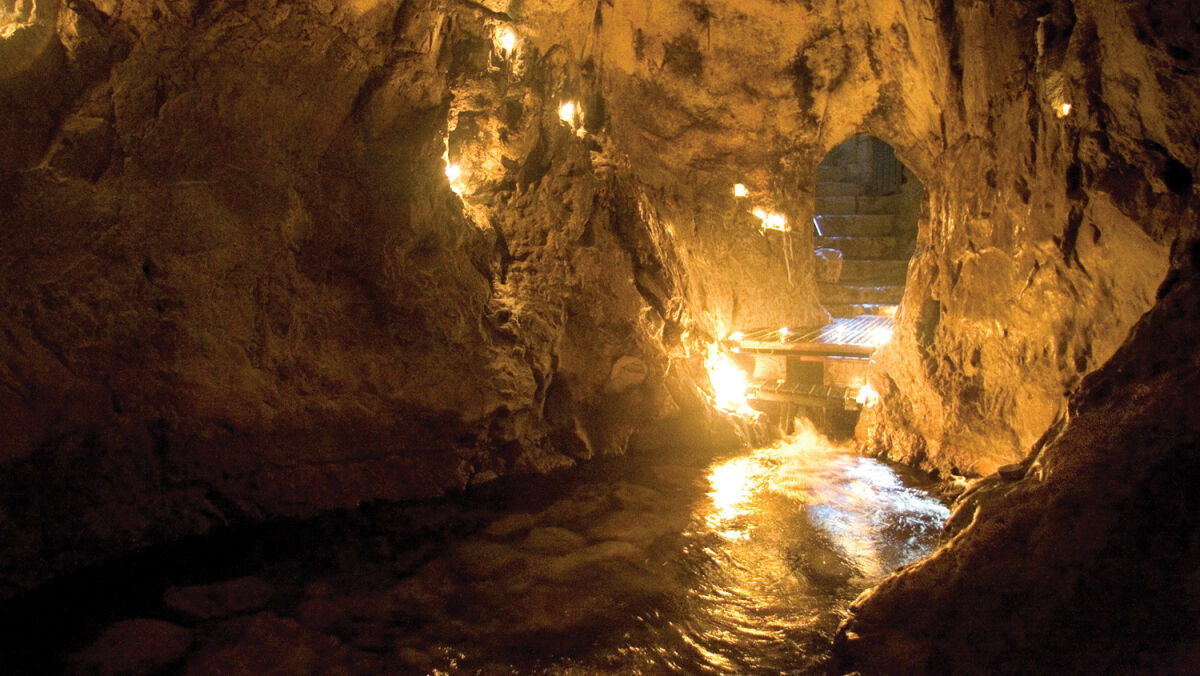
With more development, this technology could allow archaeologists to identify tunnels and other cavities underneath the city that they could later confirm through excavation.
Jerusalem has an abundance of underground tunnels, cisterns and caverns. Prof. Yuval Gadot from tau’s Institute of Archaeology, one of the leaders of the project, stated, “Underground passages and tunnels were a cardinal component in Jerusalem’s political life, and so far, we have explored the spaces located by the spring, but there are many more tunnels that were exploited by the ancient elites of Jerusalem for all sorts of reasons.”
The Bible discusses some of these underground systems—the most famous being Hezekiah’s Tunnel (2 Kings 20:20; 2 Chronicles 32:3-4). One lesser-known tunnel is a shaft late archaeologist Dr. Eilat Mazar identified as the potential tsinnor—the passageway the Bible describes Joab using to conquer Jerusalem for King David (2 Samuel 5:8).
In his description of the fall of Jerusalem in 70 c.e., the first-century Jewish historian Josephus wrote that the Jewish rebels “escaped into the subterranean caverns” (The Jewish War, xi). In 2011, archaeologists announced the discovery of a sword, oil lamp, pots and coins in a 2,000-year-old drainage tunnel under the City of David. They believed the discoveries were linked to the rebellion and that the tunnel was used as a place of refuge for the Jewish inhabitants.
This technology could potentially significantly aid archaeologists in making more discoveries in Jerusalem. It could help them better understand the underground geography of Jerusalem and help them decide where to dig.
Sometime in the future, researchers from the tau team hope to install more detectors around the City of David in search of secret passageways connected to the Gihon Spring.
Along with the Gihon Spring, a great number of other areas could be explored and mapped using muon tomography. It could aid in the search for the “sepulchers of David” (Nehemiah 3:16)—possibly located near what Dr. Mazar identified as David’s palace—as well as lead to the discovery of many underground waterways and tunnels on the Ophel.
A century ago, excavations conducted in the northern reaches of the City of David by R. A. S. Macalister documented the existence of cave entrances. Some of these caves and cisterns remain unexcavated to this day. Muon tomography could clarify the dimensions of the caverns and help archaeologists determine whether costly excavation is worthwhile.
The use of this technology in archaeological research in Jerusalem is still in its early stages. But tau researchers are constantly improving the calibration of the detectors as well as refining their design, enabling them to be used more effectively. While more field testing will have to be done to make muon tomography a reliable tool for mapping underground Jerusalem, the tau study illustrates the potential this technology has to change the way archaeologists excavate and understand ancient Jerusalem.
Hopefully in the future, muon tomography can be used to shed light on the illustrious past of Jerusalem’s underground spaces and aid in making new discoveries. For now, the Armstrong Institute of Biblical Archaeology will continue to follow and cheer on the development of this remarkable technology.