
The Cyrus Cylinder: Substantiating an Almost Unbelievable Biblical Decree
Among the many discoveries that have shaped our understanding of the ancient world, few artifacts have generated as much historical interest and cultural significance as the Cyrus Cylinder. This cylinder provides a remarkable glimpse into the reign of Cyrus the Great (Cyrus ii, circa 600–530 b.c.e.) and the policies that defined his rule. The artifact records Cyrus’s conquest of Babylon, his restoration of religious sanctuaries, and his decree allowing displaced peoples to return to their homelands and rebuild their nations and temples. Because of these actions, many historians regard Cyrus as one of antiquity’s earliest rulers to promote religious tolerance and humanitarian governance.
Discovered nearly 150 years ago, the Cyrus Cylinder is one of the most important archaeological testimonies to the legacy of Cyrus the Great and the ancient Persian Empire. It also stands as one of the most important artifacts in the world of biblical archaeology for its direct relationship to key scriptural passages.
In this article, we will review this iconic artifact—its discovery, interpretation and parallels to the biblical text.
The Discovery
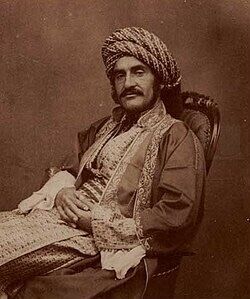
In a Nov. 17, 1879, address at a meeting held by the Royal Asiatic Society, Sir Henry Rawlinson announced the discovery of the Cyrus Cylinder. The cylinder had been discovered earlier that same year during excavations in Babylon, headed by Hormuzd Rassam on behalf of the British Museum. Rawlinson’s paper on the cylinder, titled “Notes on a Newly Discovered Clay Cylinder of Cyrus the Great,” was published in January 1880 in the Journal of the Royal Asiatic Society.
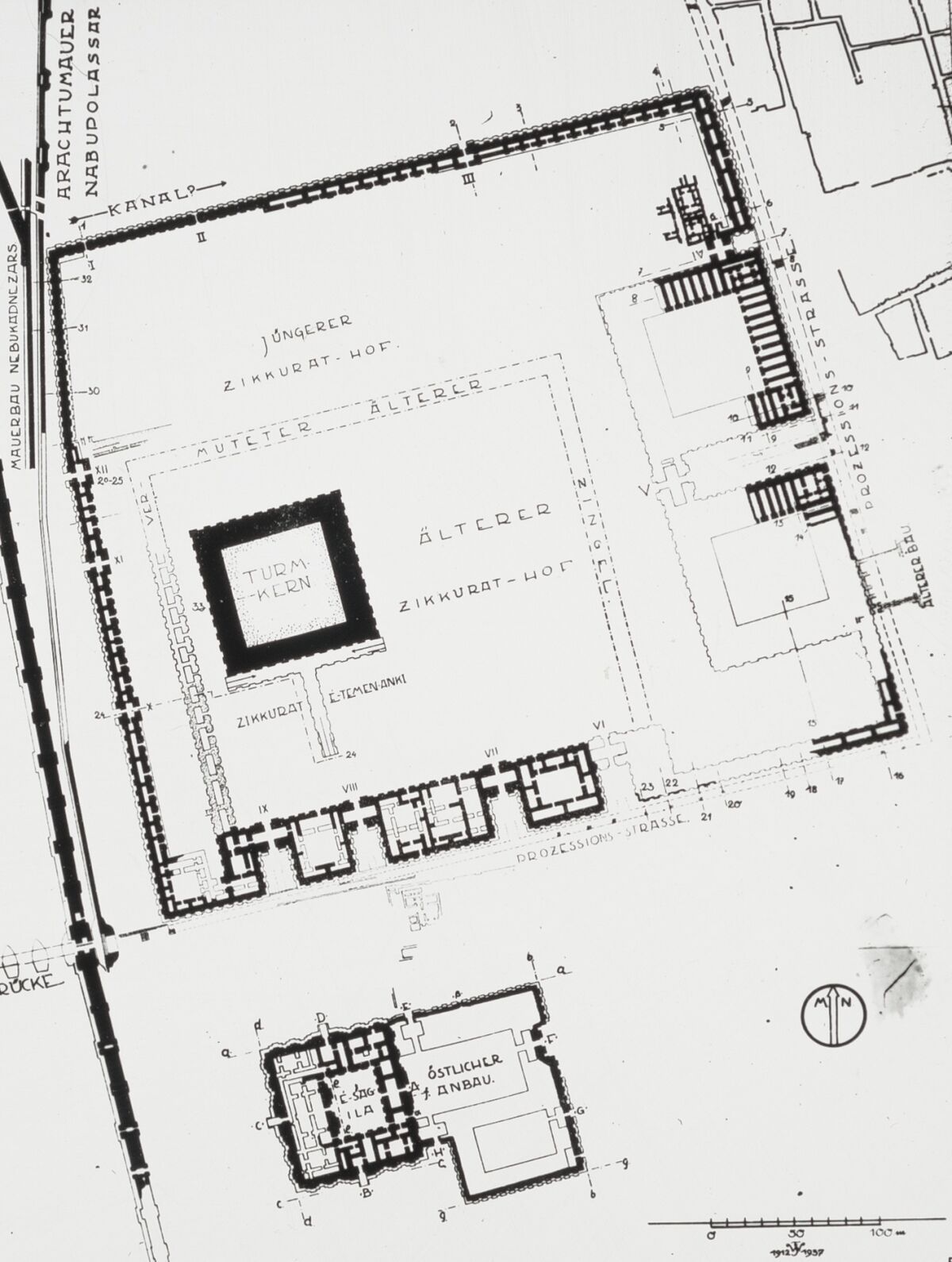
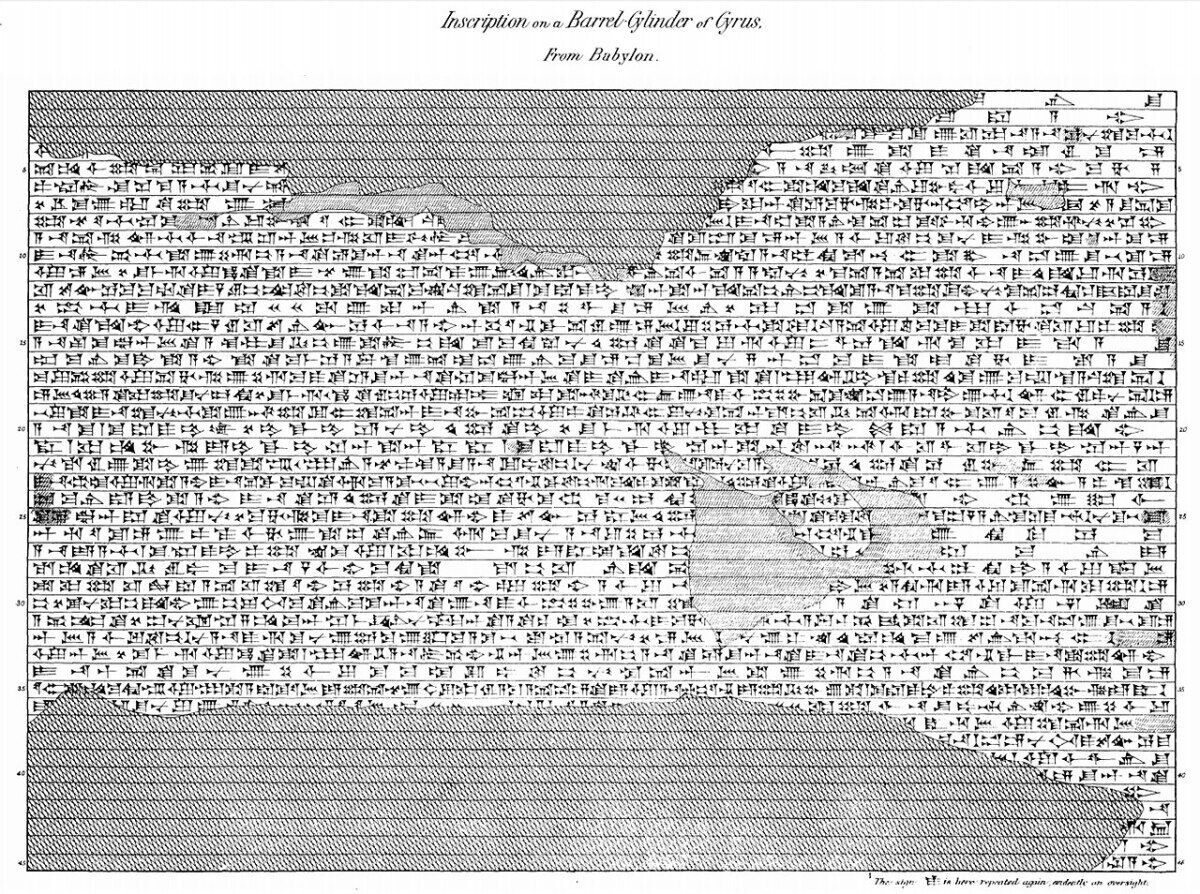
The focus of the 1879 excavations was on the ruins of Esagila, a temple shrine dedicated to the god Marduk in Babylon (modern-day central Iraq). As the excavators dug around its walls, they uncovered a clay, barrel-shaped cylinder measuring approximately 23 centimeters (9 inches) long and 10.5 centimeters (4 inches) in diameter. The cylinder was wrapped in 45 lines of Akkadian cuneiform text.
Rassam acquired a permit from the Ottoman government signed by the sultan of Istanbul, allowing him to export his finds back to England for examination.
While the cylinder was described as having been found buried in the foundation deposit of the city wall in the ruins of a Babylonian temple, there was some controversy surrounding the exact findspot. In a letter to the Keeper of the Department of Oriental Antiquities of the British Museum, dated Nov. 20, 1879, Rassam wrote that it was discovered in “Omron.” Yet Rassam’s book Asshur and the Land of Nimrod (1897) claimed the cylinder was found in the ruins of Jumjamah, a village marked in several different places on several different maps. The apparent contradiction was not resolved until Robert Koldewey—a prominent German archaeologist who excavated Babylon from 1899 to 1917—published a map marking Jumjamah as the southern part of the mound Omron.
The British Museum took receipt of the cylinder in August 1879. Although the inscription was carefully reassembled by curator and Assyriologist Theophilus Pinches, significant chunks of the inscription were missing. Nearly a century later, in 1970, a large missing chunk of the cylinder was identified by Paul-Richard Berger among Yale University’s collection of inscription fragments. This fragment was delivered to the British Museum and added to the cylinder.
The Purpose
What was the cylinder’s purpose? And what is recorded on it?
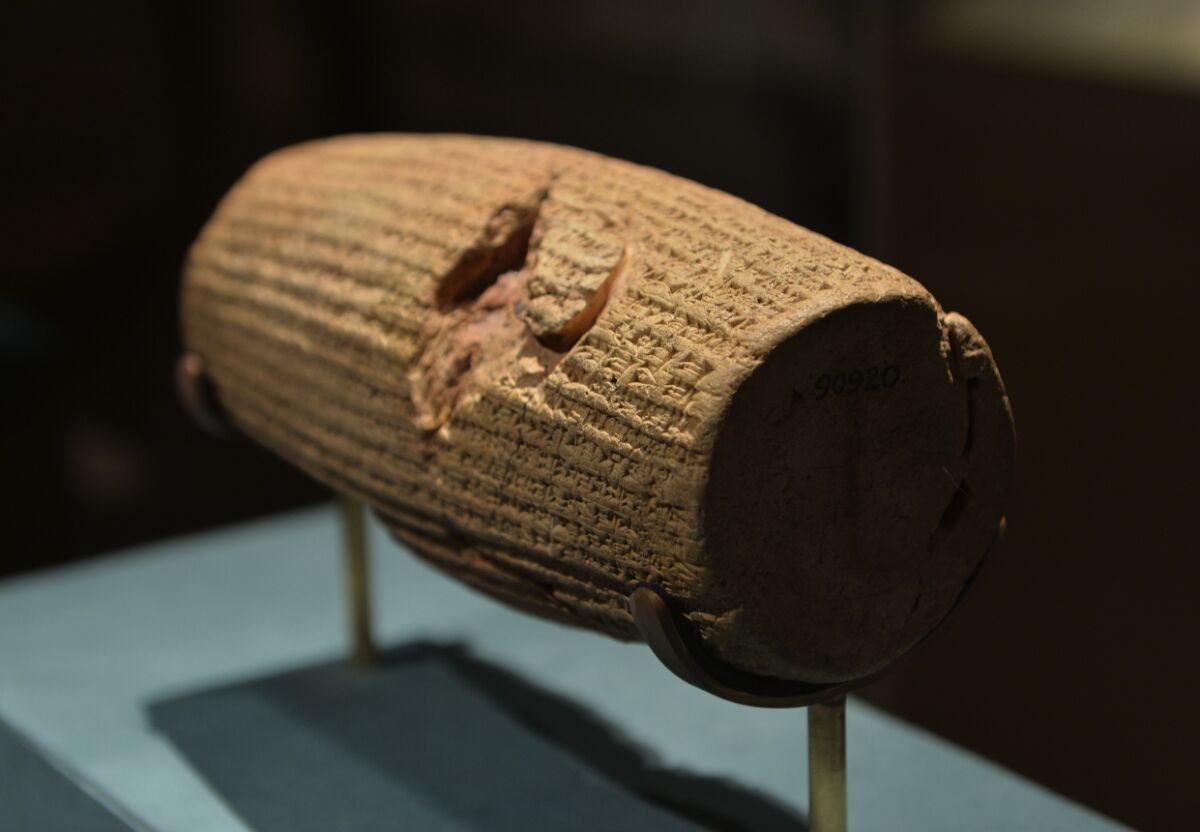
The cylinder’s introduction contains a condemnation of the previous Babylonian ruler conquered by Cyrus, Nabonidus, including his offense toward the Babylonian god Marduk. The cylinder identifies Cyrus as Marduk’s chosen successor to rule the city. Lines 1-19 are recorded in third person; starting with line 20, the text is written in first person, as if Cyrus himself were writing:
I am Cyrus, king of the world, great king, mighty king, king of Babylon, king of Sumer and Akkad, king of the four quarters, the son of Cambyses, great king, king of Anšan, grandson of Cyrus [i], great king, king of Anšan, descendant of Teispes, great king, king of Anšan, of an eternal line of kingship, whose rule Bêl and Nabu love, whose kingship they desire for their hearts’ pleasure.
Further down, Cyrus’s humanitarian decree is recorded:
I collected together all of their people and returned them to their settlements, and the gods of the land of Sumer and Akkad, which Nabonidus, to the fury of the lord of the gods, had brought into Shuanna; at the command of Marduk, the great lord, I returned them unharmed to their cells, in the sanctuaries that make them happy. May all the gods that I returned to their sanctuaries, every day before Marduk and Nabu, ask for a long life for me, and mention my good deeds, and say to Marduk, my lord, this: ‘Cyrus, the king who fears you, and Cambyses his son, may their […].’ The population of Babylon calls blessings on my kingship, and I have enabled all the lands to live in peace.
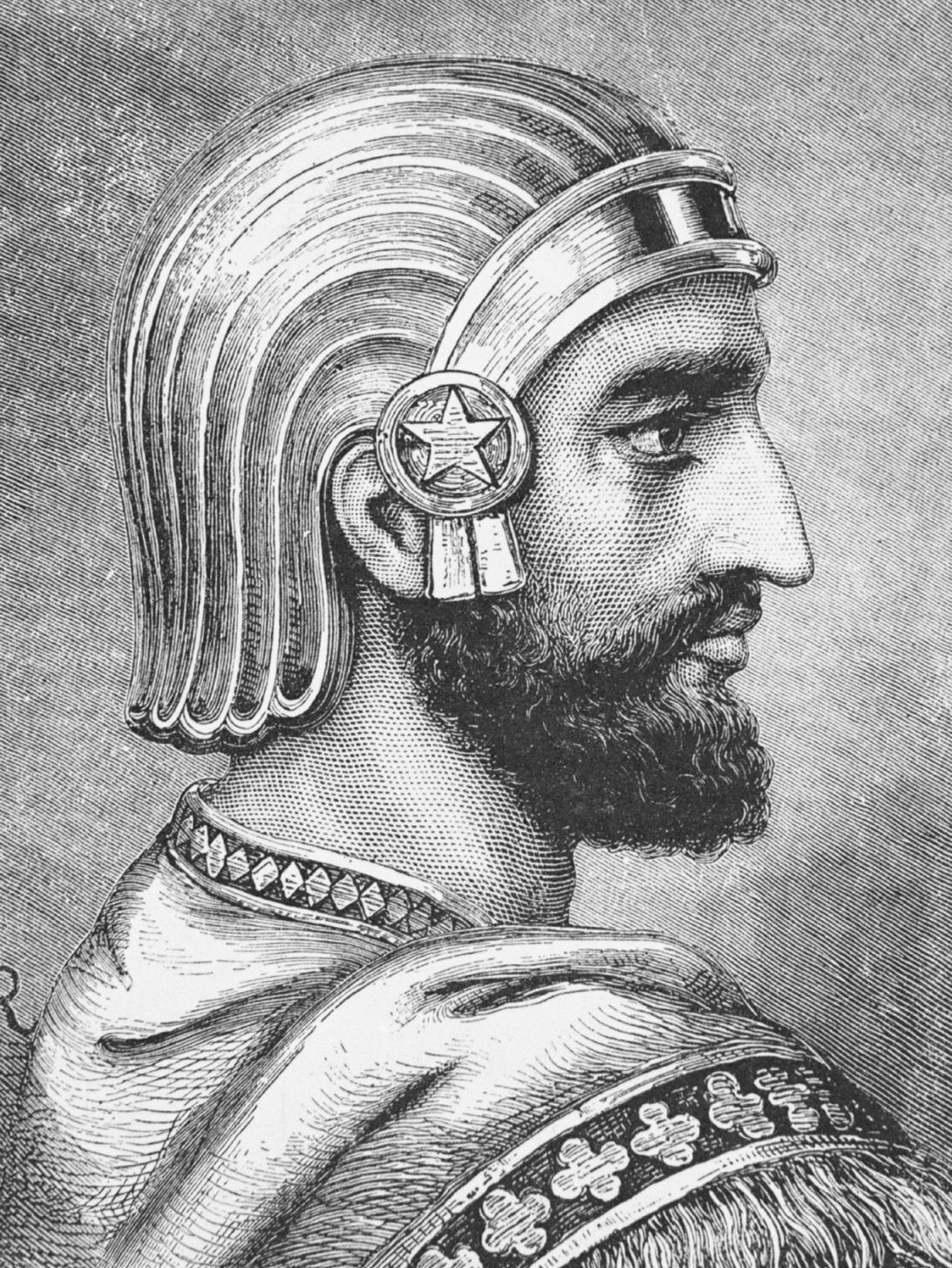
Here we are introduced to Cyrus the humanitarian. The text of the cylinder aligns with other historical records, confirming Cyrus’s unique tolerance in the ancient Near East for religion and respect for the background of the people he conquered.
This leads into one of the most fascinating angles of this artifact—its parallels to the biblical account.
The Biblical History
King Cyrus’s name is mentioned 23 times in the Hebrew Bible. Chronologically, the earliest of these is in the book of Isaiah, within a passage prophesying of Cyrus by name a century and a half prior to his arrival: “Thus saith the Lord, thy redeemer …. That saith of Cyrus, He is my shepherd, and shall perform all my pleasure: even saying to Jerusalem, Thou shalt be built; and to the temple, Thy foundation shall be laid. Thus saith the Lord to his anointed, to Cyrus, whose right hand I have holden, to subdue nations before him … that thou mayest know that I, the Lord, which call thee by thy name, am the God of Israel. For Jacob my servant’s sake, and Israel mine elect, I have even called thee by thy name: I have surnamed thee, though thou hast not known me” (Isaiah 44:24; 28-45:1, 3-4; King James Version).
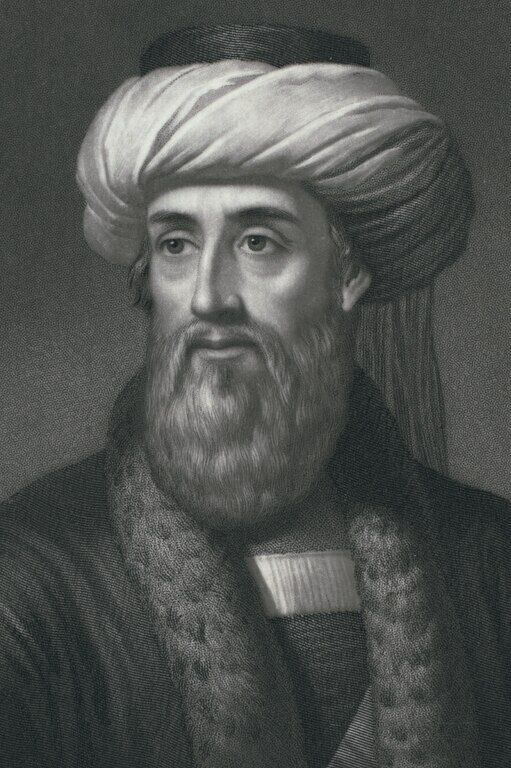
The first-century c.e. Jewish historian Josephus described Cyrus being shown this prophecy, “foretold by Isaiah one hundred and forty years before the temple was demolished. Accordingly, when Cyrus read this, and admired the divine power, an earnest desire and ambition seized upon him to fulfill what was so written; so he called for the most eminent Jews that were in Babylon, and said to them, that he gave them leave to go back to their own country, and to rebuild their city Jerusalem, and the temple of God, for that he would be their assistant, and that he would write to the rulers and governors that were in the neighborhood of their country of Judea, that they should contribute to them gold and silver for the building of the temple, and besides that, beasts for their sacrifices” (Antiquities of the Jews, 11.1.2).
The biblical books of 2 Chronicles and Ezra detail these actions of Cyrus in allowing the Jews to return to Jerusalem and rebuild the temple, with both texts quoting directly from Cyrus’s decree. Ezra 1:1-4 read as follows:
Now in the first year of Cyrus king of Persia, that the word of the Lord … might be accomplished, the Lord stirred up the spirit of Cyrus king of Persia, that he made a proclamation throughout all his kingdom, and put it also in writing, saying: “Thus saith Cyrus king of Persia: All the kingdoms of the earth hath the Lord, the God of heaven, given me; and He hath charged me to build Him a house in Jerusalem, which is in Judah. Whosoever there is among you of all His people—his God be with him—let him go up to Jerusalem, which is in Judah, and build the house of the Lord, the God of Israel, He is the God who is in Jerusalem. And whosoever is left, in any place where he sojourneth, let the men of his place help him with silver, and with gold, and with goods, and with beasts, beside the freewill-offering for the house of God which is in Jerusalem.”
In general content and theme, the Cyrus Cylinder—while directed specifically to the population of Babylon, concerning their god and temple—reads as an astounding parallel to the decree delivered to the Jewish population. The artifact serves to substantiate the existence of just such a decree mentioned and quoted from in 2 Chronicles and Ezra, delivered to the Jews in the late sixth century b.c.e.—an extraordinary and otherwise unbelievable missive coming from a ruler of the ancient world.

The discovery of the Cyrus Cylinder provided historians and archaeologists with one of the most important diplomatic documents of the ancient world. The artifact has come to be popularly regarded as the “world’s first charter of human rights.” More than a simple artifact, the cylinder reveals the character and policies of Cyrus the Great, a ruler remembered for his military success, respect for conquered peoples, and unusual level of religious tolerance. Its text not only documents the fall of Babylon and the restoration of temples and displaced peoples, but it also connects closely with the biblical accounts found in Isaiah, 2 Chronicles and Ezra concerning the return of the Jewish people to Jerusalem and the rebuilding of the temple. Through both secular history and Scripture, Cyrus emerges as a unique figure whose leadership influenced millions and left a lasting legacy that continues to be studied today. The Cyrus Cylinder remains a powerful symbol of ancient governance, cultural restoration, and the enduring intersection between archaeology, history and the Bible.