
From Sinai to Jerusalem to Philadelphia
The United States of America is one of the world’s youngest major nations, yet it possesses the world’s oldest, continuously functioning, written national constitution. Written in 1787, this document has endured while dozens of other nations have cycled through new ones, even as they have tried to replicate its principles and its success. Since that time, France has adopted roughly 15 constitutions, Thailand more than 20, Venezuela around 26, and the Dominican Republic at least 32.
What explains the U.S. Constitution’s remarkable durability? How did it help lay the foundation for the most powerful, prosperous and free nation in modern history?
Armstrong Institute of Biblical Archaeology founder Gerald Flurry addressed this subject in a 2018 lecture. “Many people today hate the Constitution, and yet it’s one of the most noble documents ever on this Earth,” he said, “because it was established by many principles of the law of God.” Its authors “were firmly rooted in divine law, and of course, that certainly saturated much of the Constitution. Now, that’s why this document is much more important than most foundational documents of other nations.”
These statements reflect a vital but overlooked truth that many would challenge or dismiss. The Constitution’s text of only about 4,500 words contains no direct scriptural quotes and makes no explicit references to Bible verses. It establishes no national church or theocracy.
So how is the Constitution based on the Bible? Or is it?
A Written Covenant
The tendency of early Americans to identify with the children of Israel is central to understanding why the U.S. Constitution took the form it did. Britain, the mother country these colonists left behind, had no single written constitutional document. Its system of government had simply accumulated over centuries through common law, royal charters, parliamentary statutes and unwritten precedent. The American colonists broke from that pattern entirely and insisted on writing their political arrangements down.
This mirrored the way God structured His own relationship with ancient Israel.
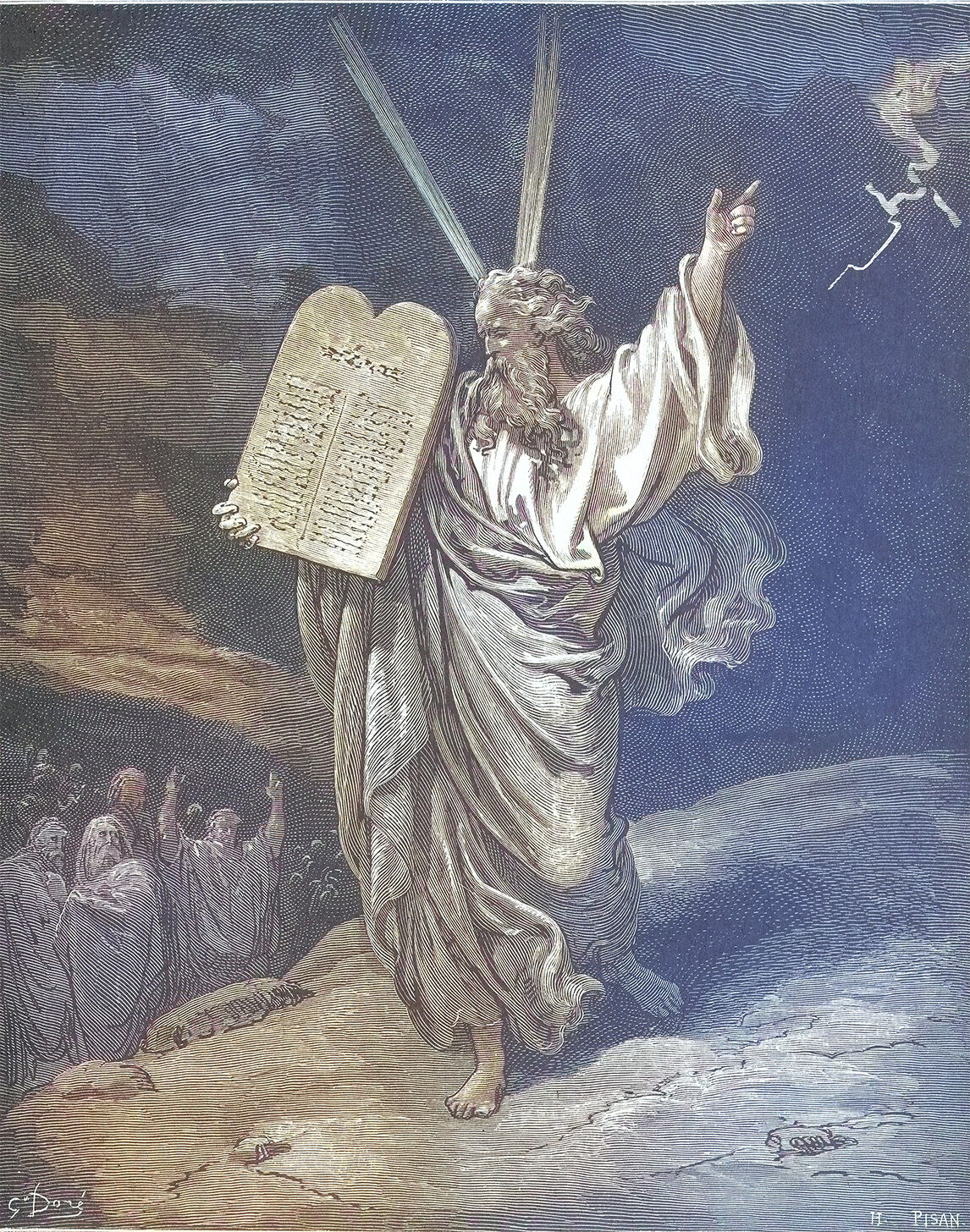
“Ye have seen what I did unto the Egyptians, and how I bore you on eagles’ wings, and brought you unto Myself. Now therefore, if ye will hearken unto My voice indeed, and keep My covenant, then ye shall be Mine own treasure from among all peoples; for all the earth is Mine; and ye shall be unto Me a kingdom of priests, and a holy nation.” The elders replied, “All that the Lord hath spoken we will do” (Exodus 19:4-6, 8).
Moses then recorded the full terms of that agreement in writing. This mattered enormously: What had only been spoken became something fixed, public and permanent—a record that bound both parties.
Here is the principle buried inside that transaction: Even God submitted His side of the relationship to a written, knowable standard, rather than ruling by unrecorded decree. That is not how Near Eastern kings operated. Yet it is exactly the template the American colonists reached for over 3,000 years later, translating one written charter after another—compacts, colonial constitutions, state charters—into an increasingly sophisticated practice of self-government, culminating in Philadelphia in 1787.
By the time the founders sat down to draft a national constitution, this habit of writing things down was normal. It was already the American way of doing things, inherited from generations who had absorbed the biblical conviction that legitimate authority has to be able to show its terms in writing.
Consider how unusual that assumption still is by the world’s standards. The vast majority of nations today have some form of written constitution, which can make the practice look like the ordinary, self-evident way to run a government. Yet most of those documents are recent, often direct imitations of the American model, adopted only after 1787 demonstrated that a nation could govern itself this way. Few of the officials who administer those constitutions today—or the citizens who live under them—would trace the lineage back far enough to land on Sinai. But the paper trail runs there all the same.
The Law Made Supreme
Written constitutions are invaluable in establishing the rule of law. They set fixed limits on government power, define the rights of citizens, and provide standards against which rulers can be held accountable.
The Bible powerfully illustrates this principle. The laws God recorded in Scripture are intended to govern everyone in the nation, from king to judge to citizen to immigrant. The king was to write out a personal copy of the law, read from it daily, and obey it faithfully (Deuteronomy 17:18-19). God Himself is the Lawgiver, and He decides what laws His people must be subject to. This is not decided by the whims of a human leader.
Early American settlers united this biblical understanding with their political thinking. Paul Johnson expressed this truth in “No Law Without Order, No Freedom Without Law.” “The rule of law, as distinct from the rule of a person, or class or people, and as opposed to the rule of force, is an abstract, sophisticated concept,” he wrote. “[T]he essence of the rule of law is its impersonality, omnipotence and ubiquity. It is the same law for everyone, everywhere—kings, emperors, high priests, the state itself, are subject to it. If exceptions are made, the rule of law begins to collapse” (Sunday Telegraph, Dec. 26, 1999).
Studying the history of ancient Israel, Greece, Rome and other civilizations, the founders realized that these societies ultimately collapsed partly because they failed to conquer human nature and preserve the rule of law as opposed to the rule of force. They, therefore, sought to develop a system that, while powerful enough to protect and regulate the people, divided power among branches, balancing centers of power to check one another and to restrain any one leader or branch from abusing its power.
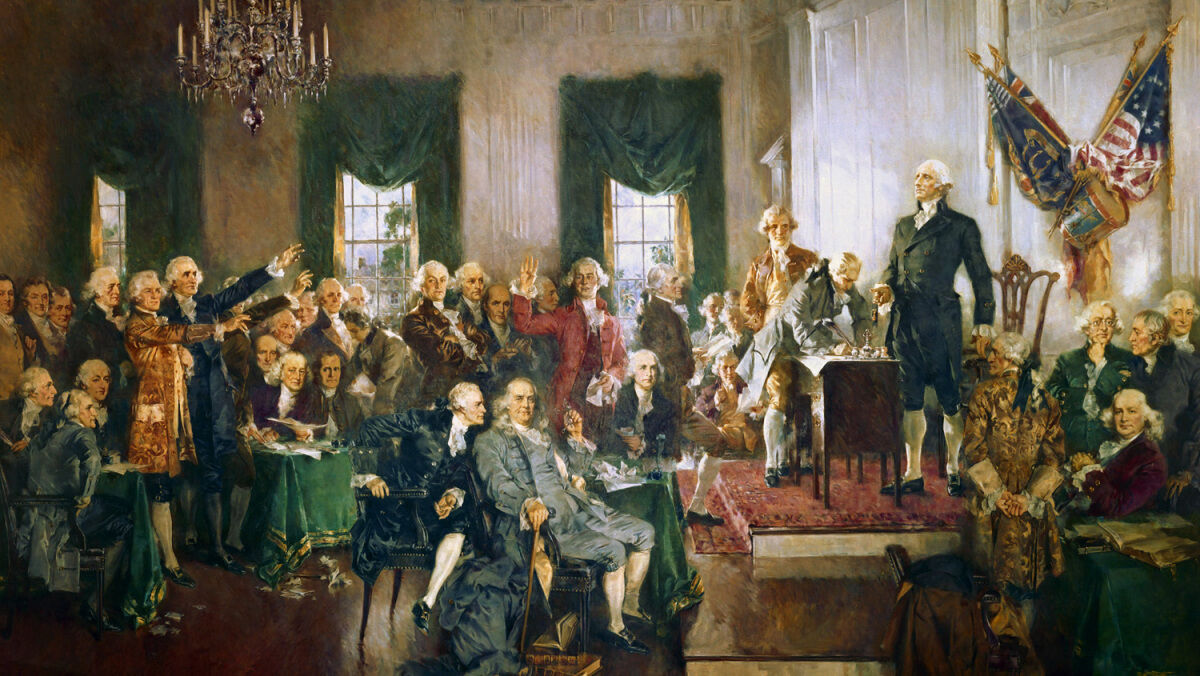
The founders enumerated the powers of each part within the government and specified that all powers not explicitly mentioned belonged to state and local governments or to the people themselves. And they sought to preserve individuals’ God-given rights and give them a measure of responsibility in self-rule.
This realistic view of human nature—drawn directly from the Bible’s teaching on the sinfulness of man—became one of the most important reasons for the Constitution’s remarkable endurance.
Yet the founders’ system of checks and balances is more directly traceable to the governing structures of the Roman Republic than to ancient Israel. This is a major reason why we see the checks and balances the founders established being circumvented today. No system of checks and balances, however cleverly designed, can long survive a people who reject biblical standards of self-control and virtue.
Equal Justice
One of the Bible’s most revolutionary teachings is equal justice. In a world dominated by kings, pharaohs and rigid class systems, where rulers often determined the law according to their own will, the God of Israel declared that all human beings are created in His image and likeness (Genesis 1:26-27).
Because every person bears God’s image, no individual—regardless of wealth, status or ethnicity—has greater inherent value than another. From this principle flow repeated commands for impartial justice: one law for both native and stranger (Leviticus 24:22; Numbers 15:15-16), “thou shalt not respect persons” in judgment (Deuteronomy 16:19), equal treatment for rich and poor alike (Exodus 30:12-15).
These biblical laws profoundly influenced the development of Anglo-American law and political thought. English philosopher John Locke wrote that there should be “one rule for rich and poor, for the favorite at court and the countryman at plow.” These principles also helped shape the ideals embraced by America’s founders as they established a nation grounded in the principle of equal justice under law. Political scientist Donald S. Lutz found in a landmark study that Locke was the fourth-most cited source among America’s Founding Fathers—behind the Bible, Baron de Montesquieu and William Blackstone.
The Declaration of Independence declares that all men are endowed with specific, unalienable rights, not by the government but by their Creator. This profound truth enabled America to abolish slavery.
Although the U.S. Constitution initially left the issue of slavery largely to the individual states, President Abraham Lincoln—echoing Proverbs 25:11—described the Declaration as “an apple of gold in settings of silver.” He believed the Constitution was designed to protect the Declaration’s central truth about human equality. Lincoln used the constitutional amendment process the founders had established to ensure there was “one manner of law … for the stranger, as for one of your own country.”
That vision was realized through the 13th and 14th Amendments.
The 13th Amendment, ratified in December 1865, permanently abolished slavery and involuntary servitude throughout the United States. The 14th Amendment, ratified in 1868, advanced the principle of equality further by declaring all persons born or naturalized in the United States to be citizens and guaranteeing that no state could “deprive any person of life, liberty or property, without due process of law; nor deny to any person within its jurisdiction the equal protection of the laws.” These two amendments embedded the biblical ideal of impartial justice more deeply into America’s framework.
Free Enterprise
The Bible also lays a strong foundation for free enterprise and economic liberty, bedrock principles that helped fuel America’s unmatched prosperity. The Eighth Commandment (“Thou shalt not steal,” Exodus 20:13) and the Tenth (“Thou shalt not covet,” verse 14) clearly affirm property rights. These commands would be meaningless without the assumption that people can own possessions.
America’s founders drew on this biblical heritage and explicitly rejected socialism and all systems that undermine property rights. In A Defense of the Constitutions of Government of the United States of America, John Adams wrote, “The moment the idea is admitted into society that property is not as sacred as the laws of God, and that there is not a force of law and public justice to protect it, anarchy and tyranny commence. If ‘Thou shalt not covet,’ and ‘Thou shalt not steal,’ were not commandments of heaven, they must be made inviolable precepts in every society before it can be civilized or made free.”
This biblical view of property and economic liberty was powerfully reinforced by the Scottish moral philosopher Adam Smith. His landmark 1776 work, The Wealth of Nations, arrived in America just months after the Declaration of Independence and was widely read by the founding generation.
Smith argued that when individuals are free to pursue their own interests within a framework of justice and limited government, an “invisible hand” directs resources in ways that benefit society as a whole. He strongly opposed mercantilism, monopolies and excessive state interference, a view that aligned closely with the biblical emphasis on honest dealing, voluntary exchange and personal stewardship.
Thomas Jefferson called The Wealth of Nations “the best book extant” on political economy. Alexander Hamilton engaged deeply with Smith’s ideas while shaping early American economic policy.
The Constitution reflected this understanding in powerful ways. The Fifth Amendment declares: “No person shall be … deprived of life, liberty or property, without due process of law; nor shall private property be taken for public use, without just compensation.” This clause placed strict limits on the government’s power to seize or redistribute wealth. The Contract Clause (Article i, Section 10) further protected the right to make and enforce private agreements. The Commerce Clause created a marketplace free from state tariffs. These provisions rejected the European model of state favoritism, instead establishing an order protecting private property, honest contracts and voluntary trade.
Righteous Character
The Constitution is a practical attempt to implement foundational biblical principles in the U.S. government. Popular sovereignty, individual rights, limited government, separation of powers, checks and balances, republicanism, federalism—these are the seven principles of the Constitution, and they are based on the framers’ understanding of “the laws of nature and of nature’s God.”
George Washington acknowledged that the Constitution wasn’t perfect, but he wrote that it was “the best that can be obtained at this epoch” and that it “approaches nearer to perfection than any government hitherto instituted among men.” This form of government and the obedience of the people to the Bible enabled America to receive the greatest combination of wealth, power and freedom in history.
America’s founders established limited government to protect people from the evils of human reason wielding massive power. They wanted to check tyrants, unjust judges and other misguided leaders. They knew, however, that this would create an enormous amount of freedom for the people. That is why founder after founder emphasized that it was crucial for the individual to be accountable to God.
The individual had to voluntarily obey the Bible’s laws.
Before the constitutional convention, Benjamin Franklin wrote to friends, “Only a virtuous people are capable of freedom. As nations become corrupt and vicious, they have more need of masters.” After the convention, he was reportedly asked by a woman what sort of government had been created. His reply: “A republic, madam, if you can keep it.” In his First Inaugural Address, George Washington famously stated, “The foundations of our national policy will be laid in the pure and immutable principles of private morality.” In his Farewell Address, he said, “Of all the dispositions and habits which lead to political prosperity, religion and morality are indispensable supports.” John Adams was equally direct: “It is religion and morality alone which can establish the principles upon which freedom can securely stand.”
Why was the Constitution written only for a moral and religious people? Alexis de Tocqueville answered this question powerfully in his classic Democracy in America. After traveling the United States in the early 1830s, the French observer concluded that religion and morality were essential to the republic’s survival. The Constitution granted Americans sweeping liberty to do as they pleased, but only biblical faith and moral conviction kept them from doing what was immoral or unjust. Without the restraints of a higher spiritual law, liberty quickly descends into license and anarchy, which destroys true freedom.
The founders reemphasized religion and morality because they knew that developing self-control and virtue was a job that was always meant to belong to something outside the government itself—and the founders were candid that they were counting on it. Whatever one makes of their theology, the historical record is clear: A nation that borrowed its founding principles from Sinai has now outlasted nearly every constitution built on principles of its own invention. America’s success depends on its founding formula.