
Rare Assyrian-Period, Mother-of-pearl Seal Discovered at Tel Hadid
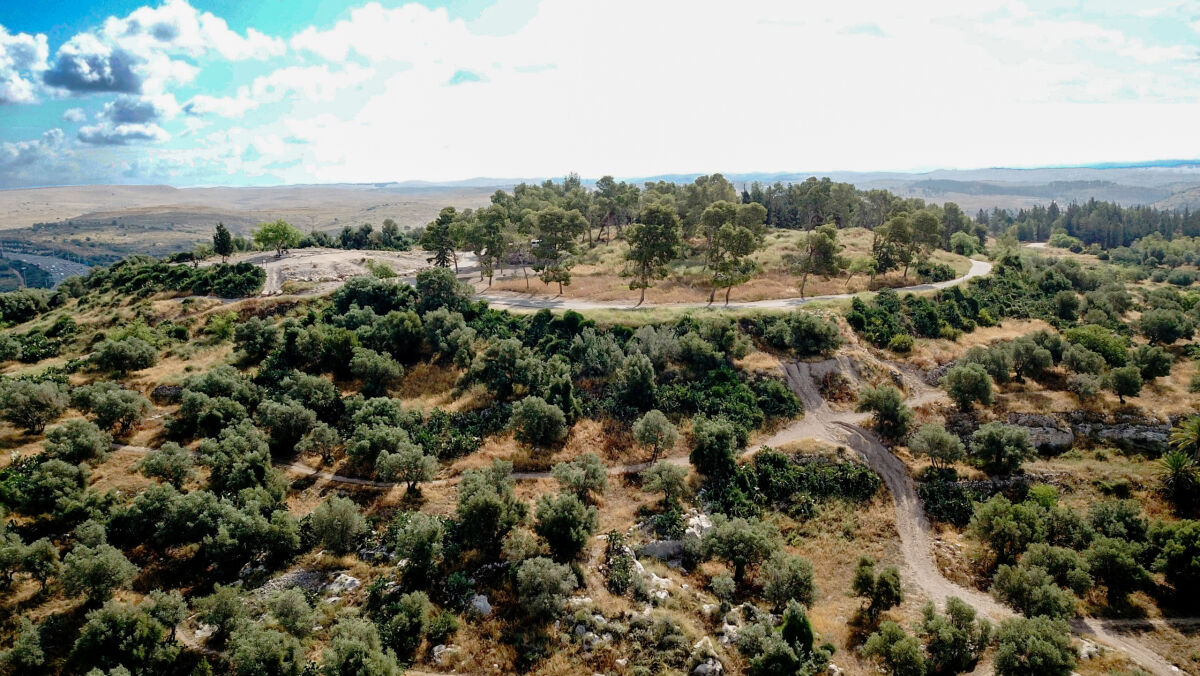
Excavators of Tel Hadid recently released the discovery of a unique seal stamp from the seventh century b.c.e., the time of Assyrian domination of the Levant. It is not the first find from this remarkable site that gives us a better understanding of the people who were moved into Israel during the Assyrian period.
In their paper about the find, Prof. Ido Koch from Tel Aviv University and his colleagues write about the manufacture of the seal and the meaning of its symbols.
The first thing to stand out about the small oval seal (less than 2 centimeters at its widest) is its unique material. Made out of the inner shell of a nacreous mollusk, also known as mother-of-pearl because of its role in the creation of pearls, it is the first of its kind found in the Southern Levant. Based on the structure and thickness of the nacre, researchers believe it came from the Indo-Pacific region.
Further analysis shows the seal was likely shaped and perforated at the top and bottom by a skilled craftsman, allowing it to be hung on a string as an amulet, which the authors believe was its primary function. The work of the engraving, done by a copper-alloy tool, was of lesser quality than the perforation, so it is possible the engraving was done later.
The highly valuable material means the wearer was likely prestigious with a “special social status.”
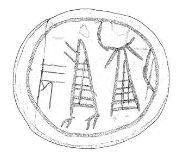
The seal has four main engravings that could be interpreted through parallels with artifacts with similar iconography. Starting on the right of the seal is a bow-like element attached to the frame; next, a triangular stand out of which two lines extend with a crescent on top; a second triangular shape with certain human features (the appearance of legs and arms) faces left; finally, three horizontal lines appear above a vertical line.
Of most interest is the second feature—the crescent on a triangular stand. Researchers identified this feature with the crescent-on-standard motif associated with Sin, the moon god of Harran in Mesopotamia. This symbol spread throughout the Southern Levant under Assyria’s domination. Koch and colleagues point to a parallel on a seventh-century b.c.e. tablet from nearby Tel Gezer.
Next to the moon on a standard is the other triangular shape that has “leglike features,” as the authors describe it. Because of these human characteristics, they propose it could depict a worshiper. A cylinder seal discovered in the Garden Tomb in Jerusalem, dating to the seventh century b.c.e., contains a similar triangular figure identified as a worshiper.
They suggest the leftmost feature could represent an altar.
The crescent-on-stand emblem, associated with moon worship, shows the foreign religious influence in Israel after the Assyrian deportations of the late eighth century b.c.e. Koch, et al, write:
The Tel Ḥadid stamp seal emerges from a site embedded in the Assyrian colonial order of the seventh century b.c.e., that followed the Assyrian conquests of the late eighth century b.c.e.: the incorporation of the former kingdom of Israel into the provincial system, accompanied by deportation and resettlement policies that reshaped the demographic and social fabric of the region.

As our article “Assyrian Deportation Policy at Tel Hadid” shows, several finds from the site point to the foreigners the Assyrians moved into the area after they deported the Israelites, just as the Bible describes in 2 Kings 17.
In Deuteronomy 4:19, the Israelites are warned not to worship the sun, moon and stars. 2 Kings 17 says that one of the reasons the Israelites went into Assyrian captivity was because they “worshipped all the host of heaven” (verse 16). Once the Israelites had been moved out, foreigners from Mesopotamia—“men from Babylon, and from Cuthah, and from Avva, and from Hamath and Sepharvaim”—were moved in (verse 24).
Tel Hadid lies along the Via Maris (meaning “way of the sea”; this was the most important trade route between Egypt and the Northern Levant) and is located a few miles north of Tel Gezer, an ancient border town between Israel and Judah. Its location gave it a strategic position within the western provinces of the Assyrian Empire.
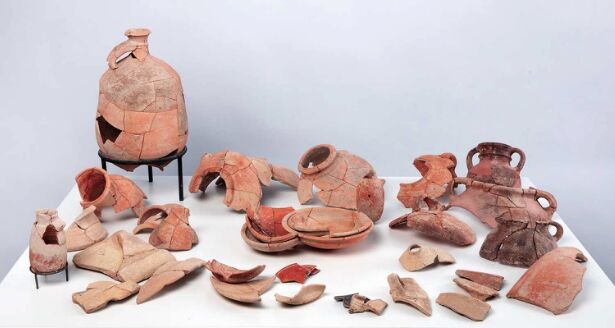
Like the seal itself, the finds surrounding it point to the presence of people from Mesopotamia at Tel Hadid. The rock-cut refuse pit from the Iron Age iic where the seal was discovered, contained pottery from both local and non-local forms, as well as types that mix the two. This shows that several cultures met at Tel Hadid, just as the Bible describes—captives from Mesopotamia who gradually adopted the local culture while under Assyrian rule.
The pottery finds from this pit match those of two domestic buildings a little northwest, excavated in the 1990s. Two Akkadian cuneiform tablets from these structures discuss economic transactions and follow Assyrian formulation practices, pointing to foreigners operating under the Assyrian imperial administration. The first dated to 968 b.c.e.; the second was written in 664 b.c.e.
These texts were written according to Assyrian formulae, thus confirming the existence of imperial administration in the region and, on linguistic and onomastic grounds, suggesting that at least some of the individuals involved were newcomers to the area, most likely having arrived during the population relocations carried out by the Assyrian Empire.
Assyrian domination in the area also had a big influence on the southern kingdom of Judah, which would become just as idolatrous as its northern neighbor during this period. The Prophet Zephaniah criticized the Jews of his day for celestial worship, warning that God would come against Judah and Jerusalem because of “them that worship the host of heaven upon the housetops” (Zephaniah 1:4-5). Jeremiah also warned of God’s judgment on those who practiced such idolatry (Jeremiah 8:1-2).
2 Kings 23 records King Josiah’s religious reforms targeting the priests who made offerings to heavenly bodies.
This seal once more attests to the foreign (and idolatrous) influence brought into the region by the Assyrian Empire.