
Youth Discovers 1,700-Year-Old Statuette Fragment in Ramon Crater
During a paratrooper reserve team family weekend at the Ramon Crater region in Israel’s Negev desert, eight-year-old Dor Wolynitz found a fragment of a 1,700-year-old statuette. “I was looking for special things on the ground that I could show in class,” Dor said. “Suddenly, I noticed an interesting stone with stripes lying on the ground, and picked it up. It seemed like an unusual object to me, so I showed it to Akiva, an archaeologist and my Dad’s friend.”
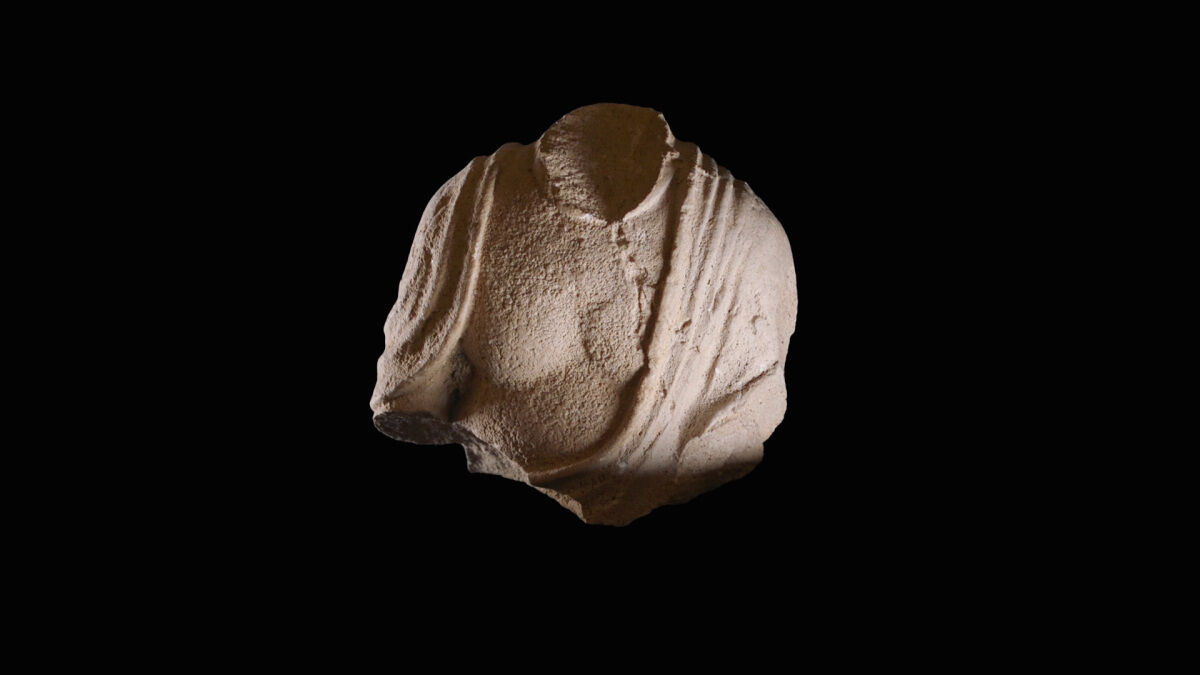
“At first I thought it was a fossil,” said Akiva Goldenhersh, a supervisor at the Israel Antiquities Authority’s (iaa) Theft Prevention Unit, “but then I noticed the sculpted folds of the garment—and I was very excited!”
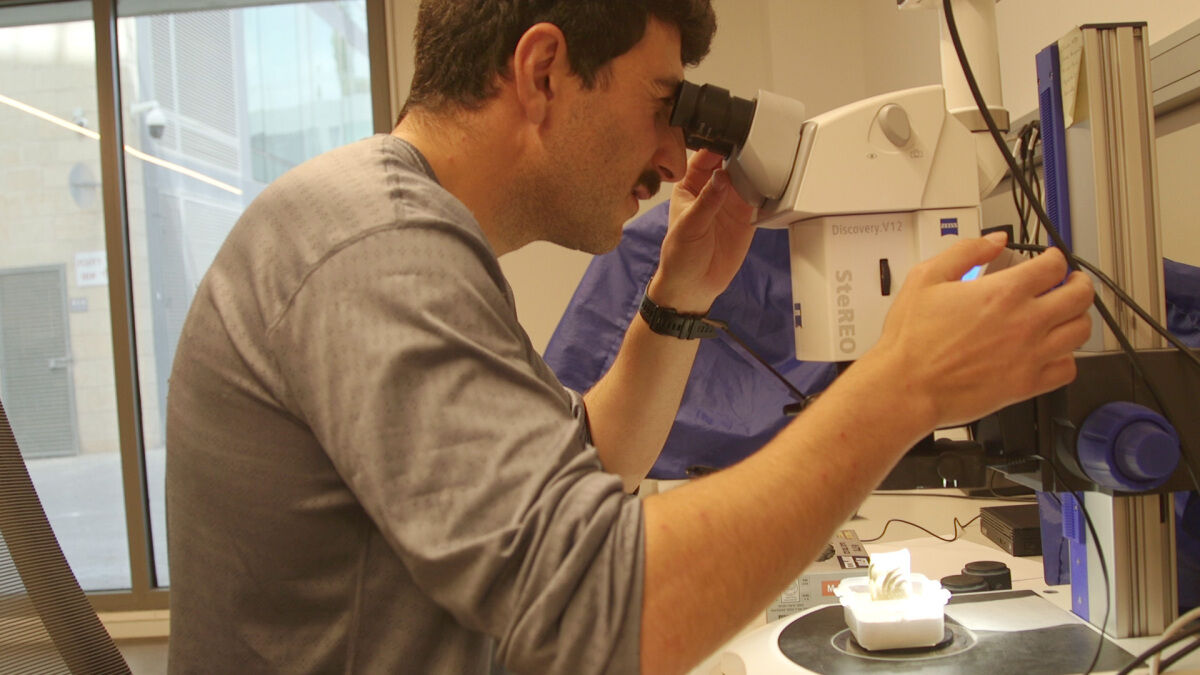
The object is a small statuette fragment, about 6 by 6 centimeters, preserving part of a human figure draped in carefully carved folds of fabric that resemble a cloak. Testing in the iaa laboratories by geologist Dr. Nimrod Wieler identified the stone as a light phosphorite mineral common in the Negev.
Goldenhersh, who has been a colleague of ours in Jerusalem for our Ophel excavations, indicated that the item is made from local material and thus it is reasonable to assume it was not imported.
“The style of clothing and sculpture is appropriate for the Roman Period,” Goldenhersh said. “The figure is depicted wearing a type of heavy mantle called a himation, with no visible chiton, or undergarment. The manner of sculpting the folds and the choice of such a delicate material indicate a very high level of skill on the part of the artist.”
He further added:
The absence of characteristic markings on the fragment make identification difficult, but stylistically, it might be of the god Jupiter, or Zeus-Dushara—a Nabatean god who was identified and merged with Zeus in the context of the encounter between the Nabatean culture that was widespread in the Negev region, and the Hellenistic-Roman world; it is also found in Petra. This tiny find thus reflects the combination of local traditions with influences from the classical world.
The Ramon Crater region is situated along the ancient spice route that linked the Far East with Mediterranean ports and functioned as a major corridor in the Roman and Nabatean periods. The fragment adds to the archaeological record of activity along this desert network.
Young Dor turned the find over to the National Treasures Department and received a certificate of appreciation from the iaa for doing so. “Every archaeological find is part of our joint heritage in this land. Handing it over to the National Treasures allows us to study it, preserve it, and make the knowledge accessible to the general public,” Goldenhersh said. “The responsible conduct of Dor and his family is an example of proper civic responsibility and the preservation of our country’s cultural assets. Dor is a role model for us all.”
Israel minister of heritage Rabbi Amichai Eliyahu commented:
On a family trip of reservists, a curious child discovered a piece of our past. It’s a moment that illustrates how much history is right under our feet. I congratulate Dor for his vigilance and responsibility; thanks to him, the find was discovered, will be preserved, and will be able to tell us all the story of the people and cultures that passed through here thousands of years ago.