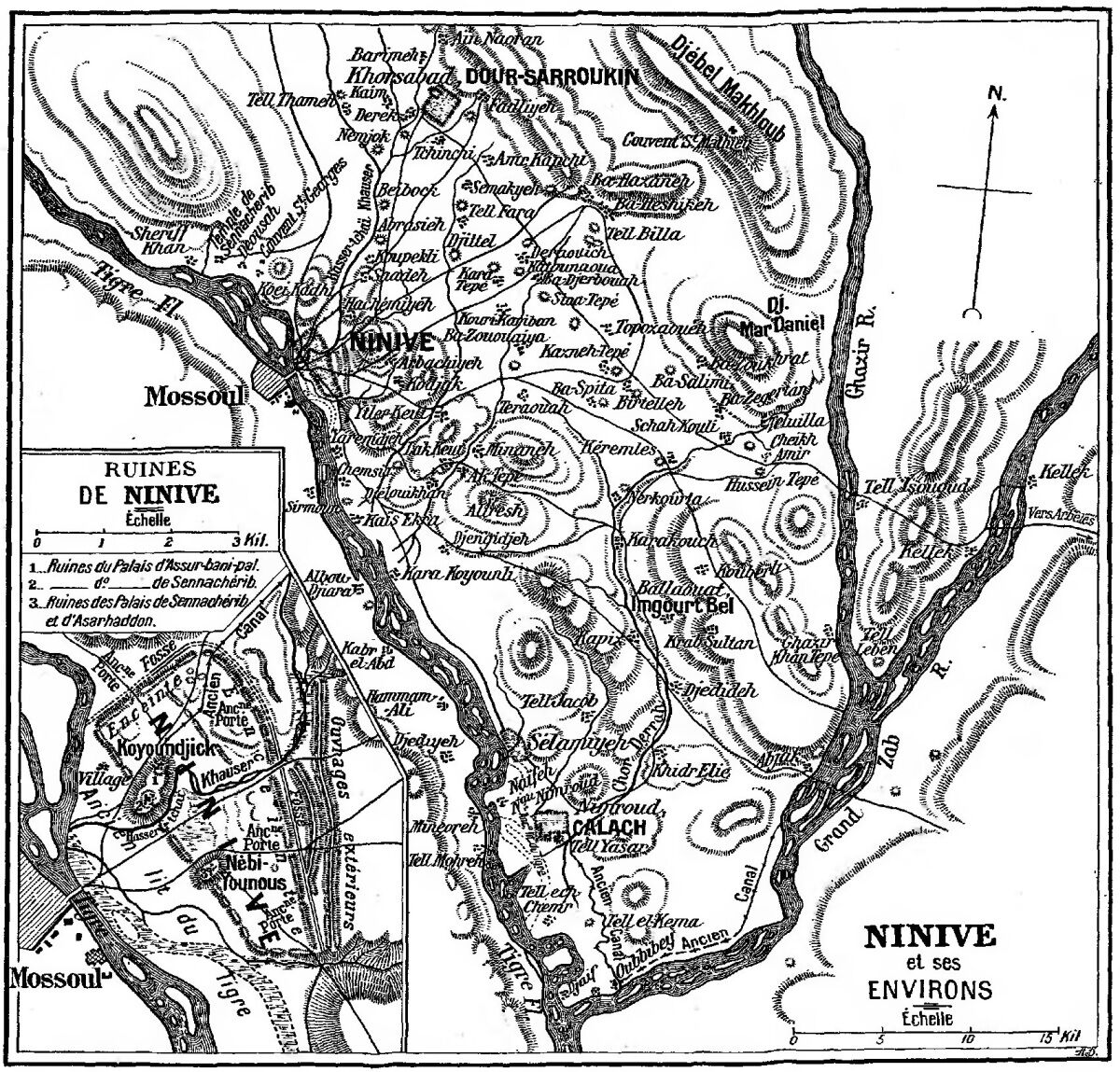
Was Nineveh Really ‘Three Days’ Journey’ in Size?
In the book of Jonah, the city of Nineveh is described as being so large it took three days to cross (Jonah 3:3). Modern excavators have measured the city walls, and it seems traversing the city, wall to wall, would have taken a couple of hours.
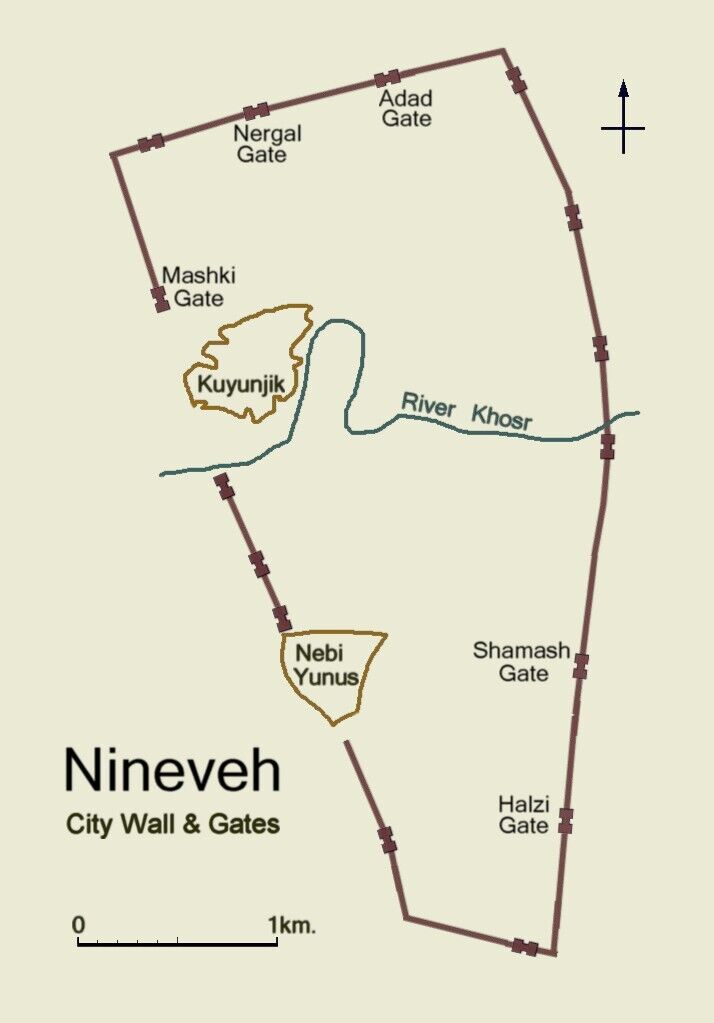
Commentators suggest that the biblical author was merely exaggerating, in order to emphasize the scale of the capitol of the Assyrian Empire. Others say it would have taken three days to walk through all the streets and alleys, or that the circumference would have taken three days to walk around—an interpretation that also has issues.
So, did the biblical authors have a problem with measurement, or were they a bunch of local yokels who merely imagined Nineveh to be so massive?
I would like to posit a different explanation. What did they actually consider constituted a city?
The wise woman of Abel Beth Maacah said to Joab, “seekest thou to destroy a city and a mother in Israel?” (2 Samuel 20:19).
Joshua 15:47—describing the allotment of the tribe of Judah—includes Gaza and benoteyah ve’chatzereiyah, variously translated as “her towns and villages’ dependencies,” but the literal meaning is “its daughters and homesteads/courtyards/enclosures.” This shows that the city and areas around it are as a mother and her daughters.
Deuteronomy 20:19 warns against cutting down fruit trees belonging to a city when besieging it, implying that orchards were commonplace around cities—and corresponded to the same city’s jurisdictions and boundaries.
Deuteronomy 21:1-9 describe what is to happen if a body is found lying in a field: “[T]hen thy elders and thy judges shall come forth, and they shall measure unto the cities which are round about him that is slain. And it shall be, that the city which is nearest” would be subject to a particular ritual performed to absolve the residents of that city of the crime (verses 2-3). Clearly, the implication is that the city authorities are responsible and accountable for the land around it, which falls under their jurisdiction. They also are required to perform exact measurements of distance.

For a modern literary example, J. R. R. Tolkien’s The Return of the King describes the city of Minas Tirith as an ancient shining city on a hill—with sprawling towns and countryside directly associated with the city proper. “The townlands were rich, wide tilth and many orchards and homesteads there were, with oast garner, fold and byre.” Farmers living on the outskirts of the city would retreat to safety behind the city walls in times of peril—an ancient and medieval reality that Tolkien drew upon for his novel.
In a recent National Geographic program, “Lost Cities of the Bible,” a featured archaeologist mentioned the city or Ur in Mesopotamia as having some 65,000 inhabitants in its heyday, “some 20,000 of whom lived within the city walls”—recognizing the fact that a city included its townlands and their inhabitants, who provided food for the city—a population and area far greater than the walled city itself.
Such projects to examine not only central cities but their directly associated “hinterlands” are ongoing, such as around Tel Burna (ancient Libnah). Discoveries around Iron Age Jerusalem include fields, orchards, vineyards, homesteads and royal estates, for many miles all around.
When it comes to the case of the mighty city of Nineveh, were the biblical authors simply imagining things, or unable to conceptualize distances in describing the powerful city as one of “three days’ journey” to cross? Was the figure simply pulled from a hat?
Assuredly not. The city at that time, as well as long before and after, included its life-support system—the “daughter” townlands. And for mighty Nineveh, these townlands around it would certainly have conceivably taken three days to cross.