
2,100-Year-Old Sarcastic Bullet Inscription Discovered in Galilee
A 2,100-year-old sling bullet bearing a unique inscription was discovered by archaeologists on the east coast of the Sea of Galilee.
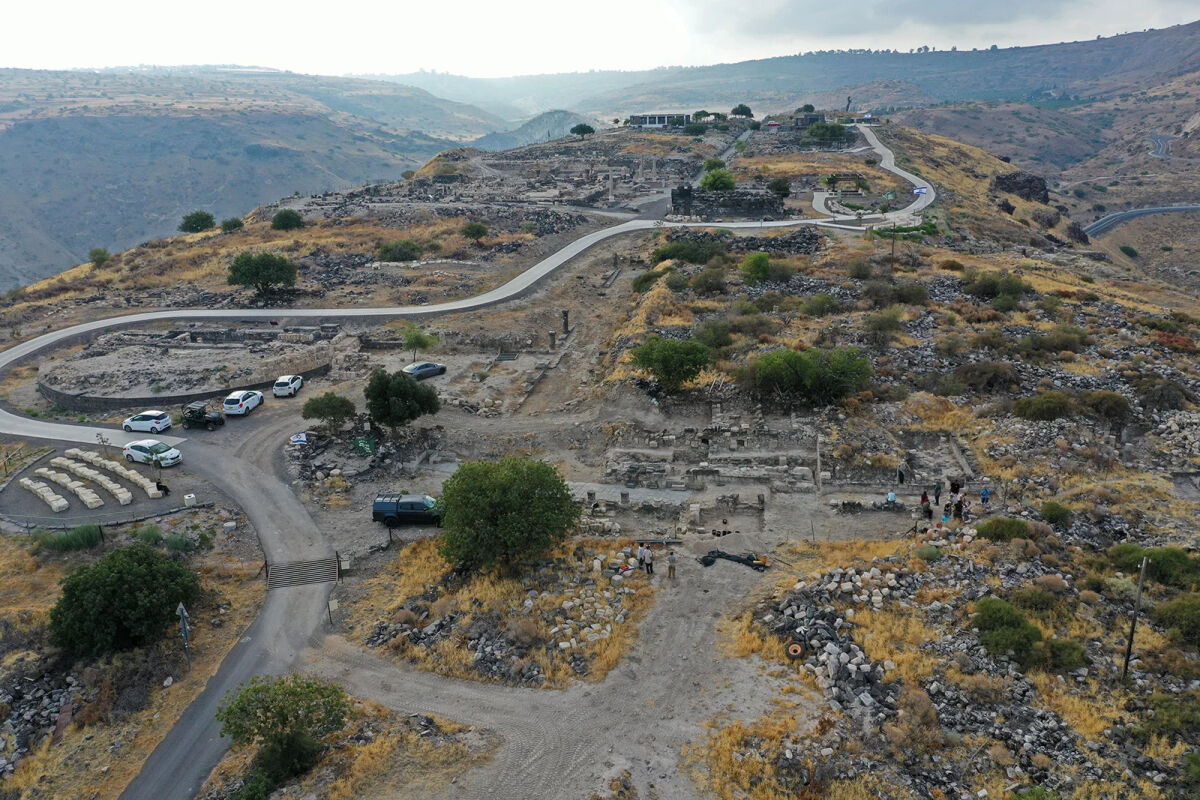
The site, Antiochia Hippos, or Sussita in Aramaic, was founded after the Battle of Paneion (circa 199 b.c.e.), either by Antiochus iii the Great or Antiochus iv Epiphanes. The bullet was found using a metal detector near what was proposed to be an ancient road.
According to researchers, this almond-shaped sling bullet “could have been used in any of the several battles during the Hellenistic Period in which Hippos was involved.” Researchers indicate that it was likely used by the Greeks to defend the city against the Hasmonean army of King Alexander Jannaeus in 101 b.c.e. as he expanded his kingdom toward Galilee and the Golan.
The find-spot matches what researchers indicate is “the most convenient point of attack toward the city’s main gate on the east for any besieging forces, especially those with heavy siege machinery.”
Lead sling bullets were cheap, efficient and highly effective. “They were the most common munitions in the Hellenistic world,” excavation co-director Michael Eisenberg of Haifa University said.
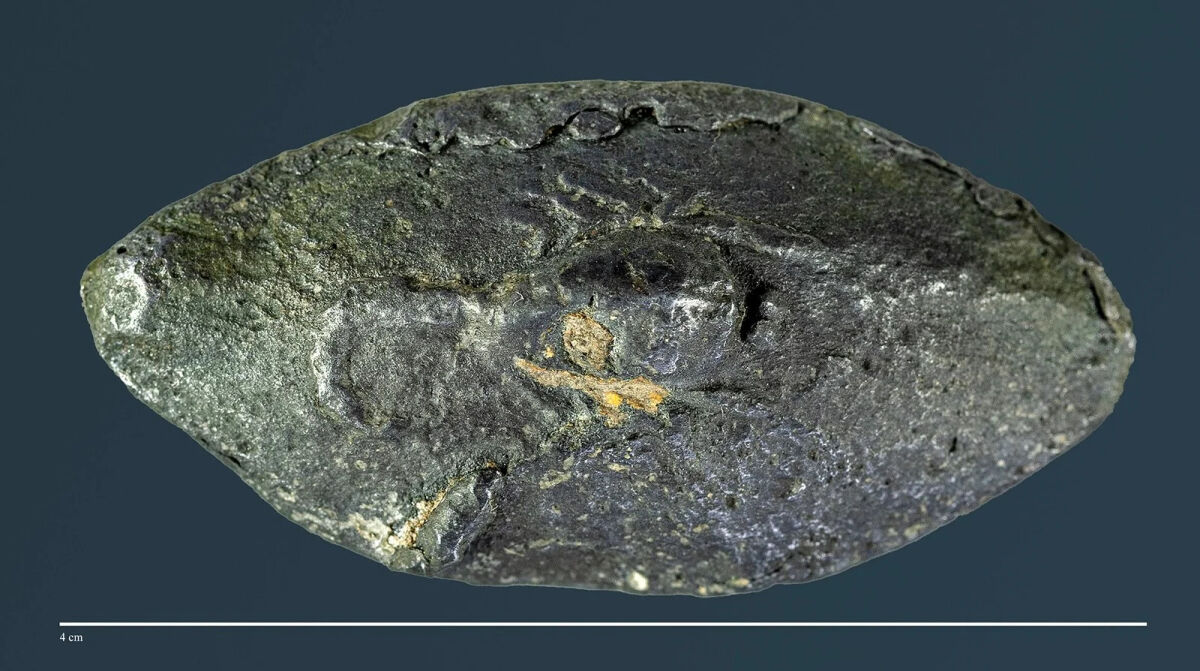
Other lead bullets uncovered in antiquity have victory exclamations, personal names, deities or military units. Over the past 26 years of excavation at Hippos, various lead bullets with images, such as scorpions or lightning bolts, have been discovered, but this particular find has an inscription that consists of five Greek letters: “ΜΑΘΟΥ,” which means “Learn.”
While this is not the first inscribed bullet to be found at Hippos, this specific inscription is the first of its kind worldwide.
The research paper explained that, although rare, there are instances of “sarcastic” inscriptions on sling bullets, such as: “Take a taste,” “Receive this” or “Take it!” Eisenberg and the other authors of the paper believe the inscription, “Learn,” falls into this same taunting category. He told the Times of Israel, “It uses a very strange structure that only exists in Greek. It’s like the sling tells itself, ‘I’m learning my job by hitting the enemy.’ Perhaps the idea was [to tell the enemy], ‘Learn your lesson,’ or ‘Next time, you should learn not to come here.’”
The paper notes that “a skilled slinger using a light bullet (up to 40 grams [this one is 38 grams]) could have reached a distance of 400 meters, but it is estimated that regular combat distances were shorter, between 100 meters and 300 meters.”
It’s obvious that the bullet hit something. “We don’t know if it was a rock or a person, but there was definitely an impact,” Eisenberg stated.
Such artifacts provide a unique glimpse into the past. You can imagine battle-ready soldiers engraving this sarcastic term onto their bullets as the approaching army gathered for combat. King Janneus eventually conquered Hippos in 83 b.c.e. Now, in 2026, we have the unique opportunity to “learn” about discoveries such as this.
https://www.youtube.com/watch?v=RqbBd9EVz_M