
Ashur and Ishtar Found At Nineveh
In May 2025, archaeologists excavating ancient Nineveh announced the discovery of a seventh-century b.c.e. stone relief depicting the “last great king” of Assyria—Ashurbanipal (669–631 b.c.e.). On the relief, he is depicted as standing between Ashur and Ishtar—two of ancient Assyria’s most important deities. Assyria dominated the Middle East between the ninth and the seventh centuries b.c.e.
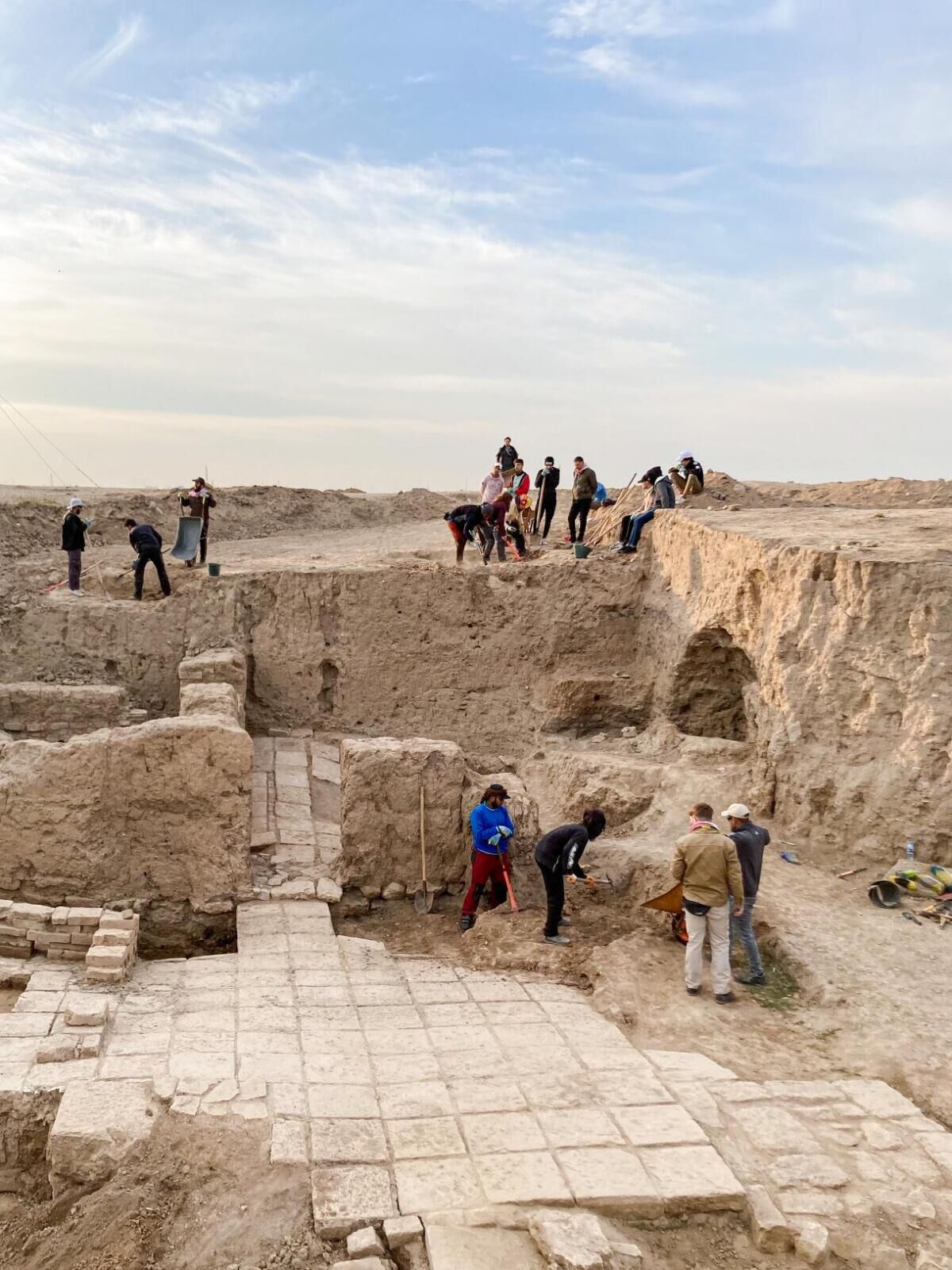
In 2022, a team from the University of Heidelberg in Germany, led by Prof. Aaron Schmitt, began excavating the North Palace of Nineveh. The ruins of Nineveh lay on the east bank of the Tigris River, close to the city of Mosul in modern-day Iraq. The large relief was found in multiple pieces behind a niche located opposite the throne room. The relief would have originally been 18 feet long and 12 feet high and weigh about 13.2 tons.
Ashurbanipal lived during the reigns of Judean kings Manasseh, Amon and Josiah. He is famous for collecting over 20,000 cuneiform inscribed tablets in his library, and he was a notorious lion hunter, as depicted on his palace wall reliefs. He’s possibly mentioned in Ezra 4:10 as the “the great and noble Asnappar” (King James Version).
In his annals he often ascribes his victorious conquests and famous lion hunts to his gods, Ashur and Ishtar. On Cylinder F, he wrote, “A valiant hero, beloved of Ashur and Ishtar, of royal lineage, am I.” The relief discovered by the team at Nineveh in May 2025 is the first time Ashurbanipal has been depicted with Ashur and Ishtar.
Ashur, found on the left side of the king, was one of the national gods of the Assyrians, based on the progenitor of the Assyrian people—Asshur. Genesis 10:22 says that Asshur was one of the children of Shem; verse 11 reveals that he built Nineveh.
Regarding Ashur’s role in Assyria, Encyclopedia Brittanica states: “The Assyrians believed that he granted rule over Assyria and supported Assyrian arms against enemies; detailed written reports from the Assyrian kings about their campaigns were even submitted to him.”
Ishtar was worshiped in other cultures under several similar names, including Asherah, Ashtaroth and Astarte, and was known as the goddess of fertility and war. In Jeremiah 44:25, she is called the “queen of heaven.”
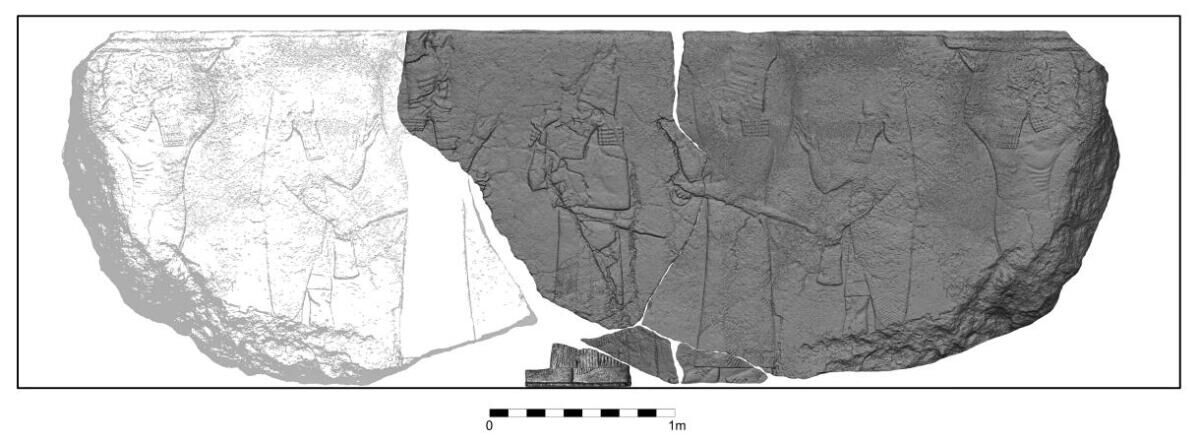
Finding such a depiction of major Assyrian gods is rare and unique. “Among the many relief images of Assyrian palaces we know of, there are no depictions of major deities,” Schmitt said.
Alongside both deities, a fish genie and a scorpion-man support a structure. According to Schmitt this suggests “that a massive, winged sun disk was originally mounted above the relief.” The excavators believe that the relief was originally located across from the main entrance of the throne room—a prominent position. It was eventually torn down and buried in a pit behind the entrance by the Hellenistic occupants of the site in the third to second century b.c.e. “The fact that these fragments were buried is surely one reason why the British archeologists never found them over a hundred years ago,” Schmitt stated.
Researches will continue studying the relief to determine its material make-up. The researchers hope future excavations will reveal more about why the relief was torn down by the Greeks. For now the relief will be displayed at its original location to the public.