
Another Menorah Medallion Found in Jerusalem
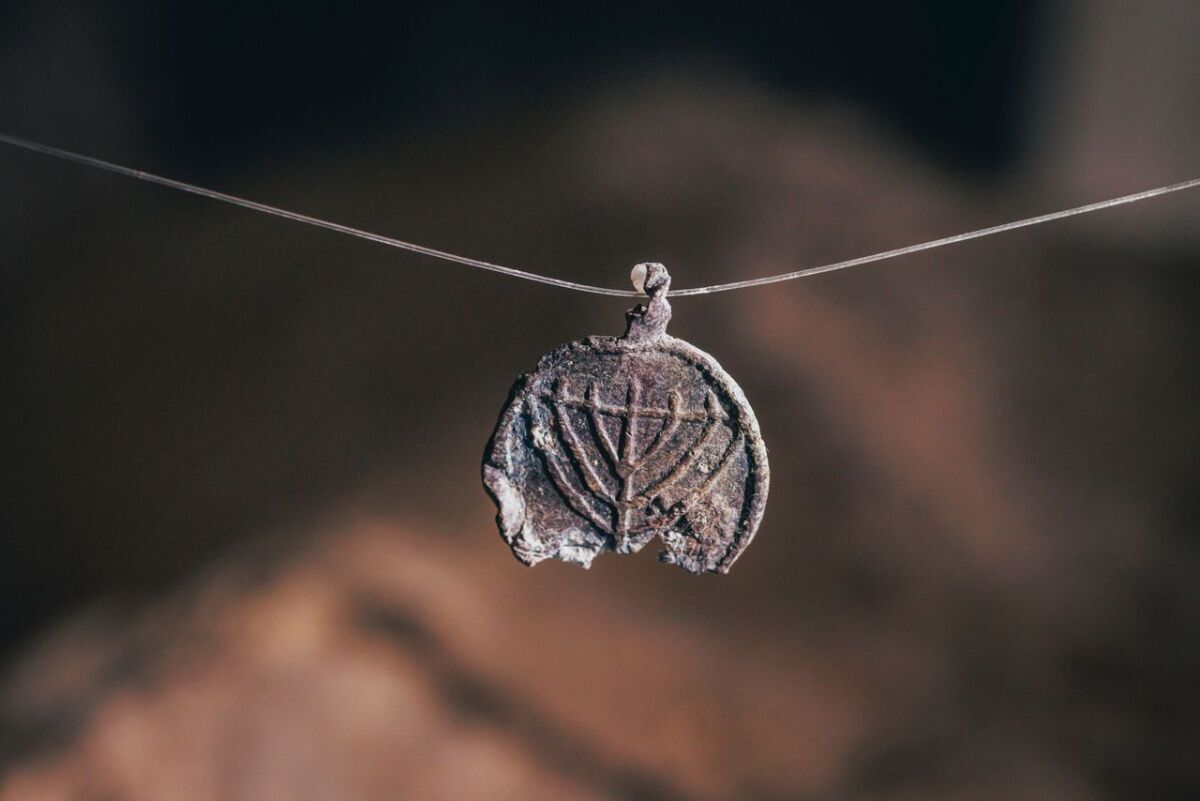
A rare, 1,300-year-old, lead pendant with the depiction of a menorah has been found close to the Temple Mount in Jerusalem, archaeologists announced earlier this week. The find reignites questions on the presence of Jews in Jerusalem during the Byzantine period.
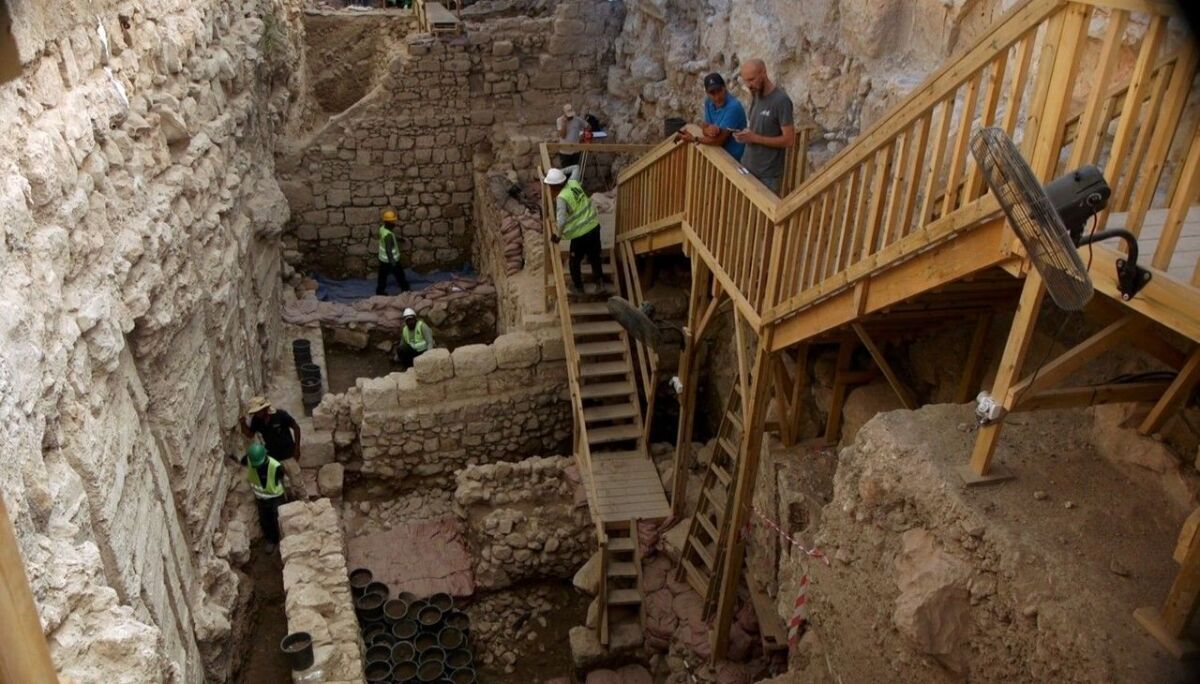
The pendant was found in excavations conducted by the Israel Antiquities Authority (iaa) and the City of David Foundation, along with the Company for the Restoration and Preservation of the Jewish Quarter.
The late Byzantine period (late sixth-early seventh century c.e.) structure where the pendant was found is in the Davidson Archaeological Park of Jerusalem at the southwestern corner of the Temple Mount. It had previously been called the House of the Menorah because three of the building’s walls had a menorah depiction.
The pendant is made of almost 100 percent lead. Both sides contain an identical depiction of a seven-branched menorah; however, one side is badly damaged due to weathering. According to the iaa, the lead pendant is “an exceptionally rare find.” Although other menorah pendants made from different materials have been found, only one other made of lead has been discovered. That pendant is on display at the Walters Art Museum in Baltimore, Maryland, and has an unknown origin.
This new pendant is the first of its kind to be found in a controlled scientific excavation.
Ayayu Belete, the City of David staff member who discovered the pendant, said: “One day while I was digging inside an ancient structure, I suddenly saw something different—gray—among the stones. I picked up the object … and saw that it was a pendant with a menorah on it. I immediately showed the find to Esther Rakow-Mellet, the area director, and she said it was an especially rare find. I was deeply moved and excited!”
According to excavation director Dr. Yuval Baruch, the pendant would have been used as a personal amulet rather than an ornate piece of jewelry due to its simple nature. Lead was “a common and particularly popular material for making amulets at that time,” he said.
Depictions of menorahs are quite common in Byzantine-era Israel. According to Dr. Baruch, the menorah became a “symbol of national memory” during this period when the temple had long been destroyed. It expressed the “expectation of national revival among the Jewish communities in the land of Israel.”
What makes this pendant especially interesting is that, starting with the Romans and continuing into the Byzantine period, Jews were rarely allowed to enter their holy city. When the Persians conquered Jerusalem, they briefly allowed them back in—some of the Jews had even helped them in the siege—but changed their mind not long after. It didn’t prevent the Jews from finding ways to enter, however.
Baruch says that the find “attests that during periods when imperial edicts were issued prohibiting Jews from residing in the city, they did not stop coming there!”
Archaeological discoveries of menorah depictions are not a rarity in Israel. One exquisite example stands out in particular.
Over a decade ago, the late Dr. Eilat Mazar’s excavations on the Ophel revealed a golden medallion with a seven-branched menorah on it alongside a cache of gold coins and other objects. It was also found in a Byzantine-period structure, most likely hidden by Jews in Jerusalem right before the Persian invasion.
She termed it a “once in a lifetime” find. It showed that, even before the Persians, some Jews were still present in Jerusalem.
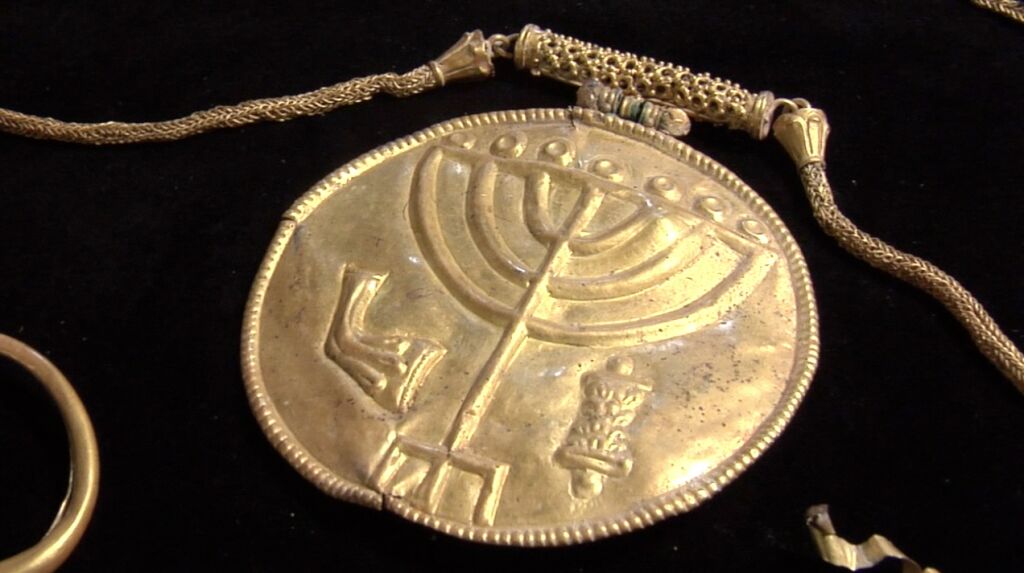
According to Mazar, the medallion might have been part of a treasure brought by prominent Jews for the service of the temple they had hoped to rebuild under the Persians—to no avail.
Rabbi Amichai Eliyahu, Israeli minister of Heritage, said that finds such as these “tell the story of the continuity and devotion of the Jewish people in the city. Even during periods when Jews were prohibited from entering Jerusalem, the connection to this holy place did not cease.”
The rare pendant, testifying to the unceasing Jewish connection to Jerusalem, was displayed to the public for the first time during Hanukkah as part of the Heritage Week events at the Jay and Jeanie Schottenstein National Campus for the Archaeology of Israel in Jerusalem.
https://www.youtube.com/watch?v=fM4z-Qj9des