
Revealing Royal Jerusalem!
The Ophel was the core of biblical Jerusalem for roughly 400 years. Starting with the reign of King Solomon, the Ophel was the seat of Judah’s royal government and home to many of the Bible’s greatest kings, priests and prophets.
Today, the Ophel is a mystery!
Every year, millions of people from across Israel and around the world visit the Holy Land and its many revered sites. But only a handful of these tourists ever visit the Ophel. In fact, most people have never heard of the Ophel and know nothing about its illustrious history—even though the Ophel borders two of Jerusalem’s most popular destinations: the Temple Mount and the City of David.
“Revealing Royal Jerusalem” will unlock the Ophel mystery!
The Archaeology of the Ophel
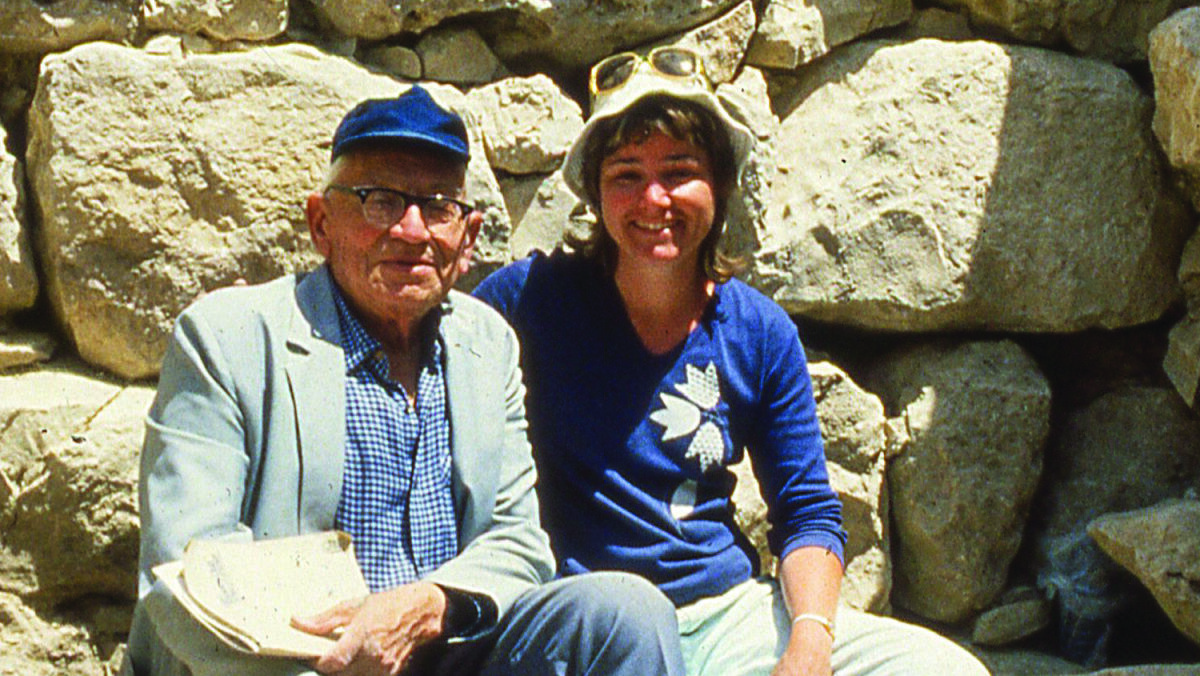
The Ophel was first excavated in the 19th and 20th centuries by legendary archaeologists Sir Charles Warren and Dame Kathleen Kenyon. These excavations revealed a site with a rich history and intriguing potential. More concerted efforts to excavate the wider Ophel began in the 1970s under the leadership of Hebrew University archaeologist Prof. Benjamin Mazar and later by his granddaughter Dr. Eilat Mazar. Today, the Ophel continues to be excavated by Prof. Uzi Leibner, Dr. Orit Peleg-Barkat and Prof. Yosef Garfinkel of the Hebrew University of Jerusalem.
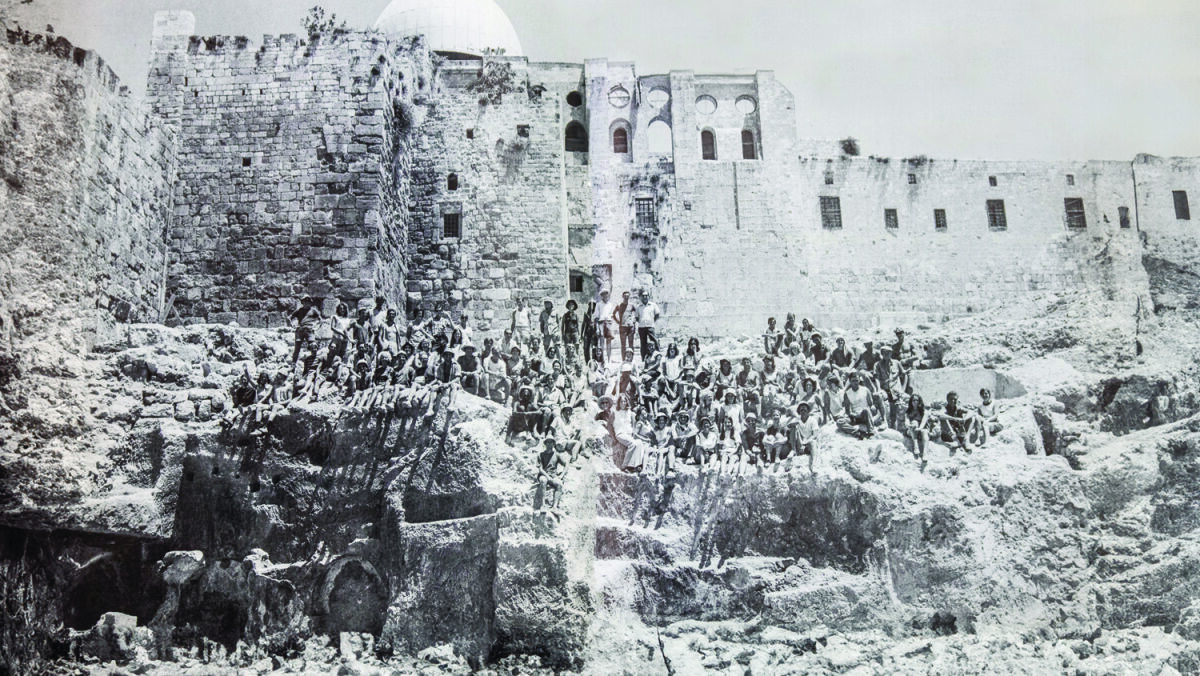
The Ophel is one of the most important archaeological and historical sites on Earth! It contains history that is central to the identity of Jews, Christians and Muslims. The Ophel has furnished some truly sensational discoveries—the time has come to tell their story!
What Is the Ophel?
The biblical word Ophel signifies a raised, fortified acropolis. Geographically, the Ophel is an approximately 8-acre expanse of land situated between the City of David and the Temple Mount in Jerusalem.
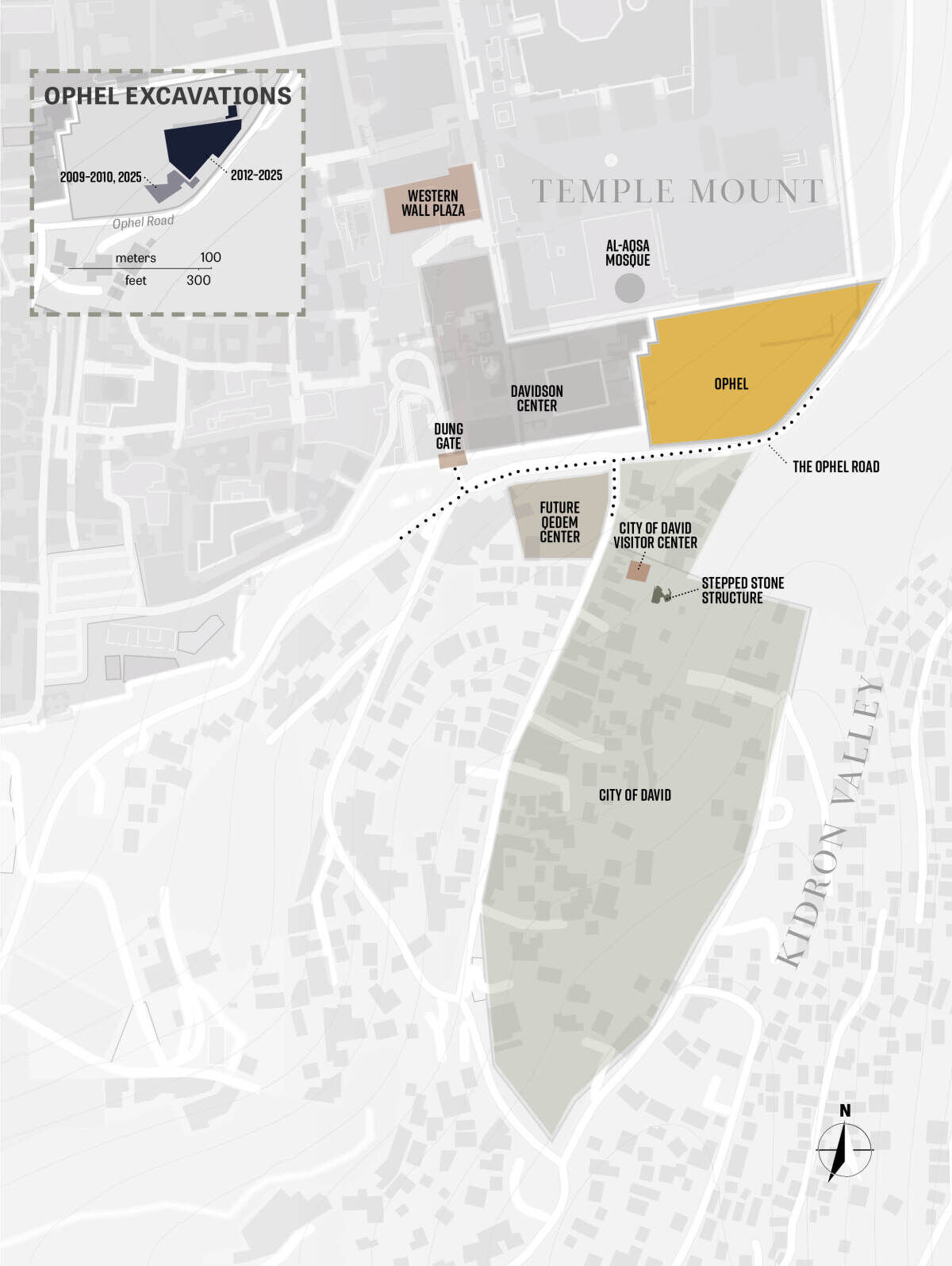
A visit to the City of David (the lower city conquered and ruled by David) is a dramatic and immersive experience. Tourists can experience the archaeology and history of Israel’s greatest king via a network of walking paths and signage, a beautiful visitor’s center and state-of-the-art technology. But what about Jerusalem after King David?
The Ophel today remains virtually untouched. Both archaeology and the Hebrew Bible show that King Solomon and subsequent kings massively expanded and fortified the City of David, transforming it into a bustling administrative center, a hub for regional trade, and one of the largest, most impressive cities in the region.
The city expanded north—onto the Ophel/Temple Mount. This expansion included the location of Solomon’s palace, the first (and second) temple, a massive armory and various administrative and residential buildings. Most of the biblical history of both Jews and Christians, even through to the time of Jesus, occurred on the Ophel. The City of David was the seat of Israel’s government for 30 years. The Ophel was the seat of the kingdom of Judah for 400 years!
Phase I: Restoring Iron Age Jerusalem
The Iron Age includes the time period from King David through to Jerusalem’s destruction in 586 b.c.e. This time period is also commonly referred to as the First Temple Period.
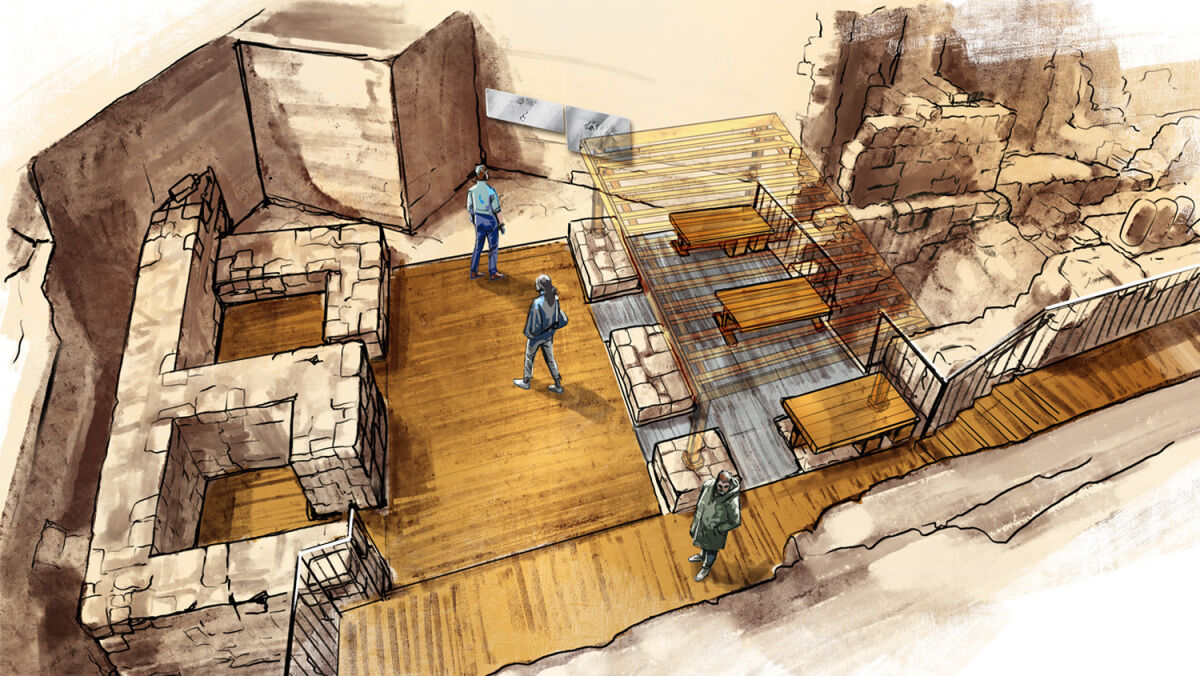
Of the approximately 8 acres that encompass the Ophel, less than 1 acre has been excavated down to Iron Age remains. These remains are situated in the southwest section of the Ophel, adjacent to the Ophel Road.
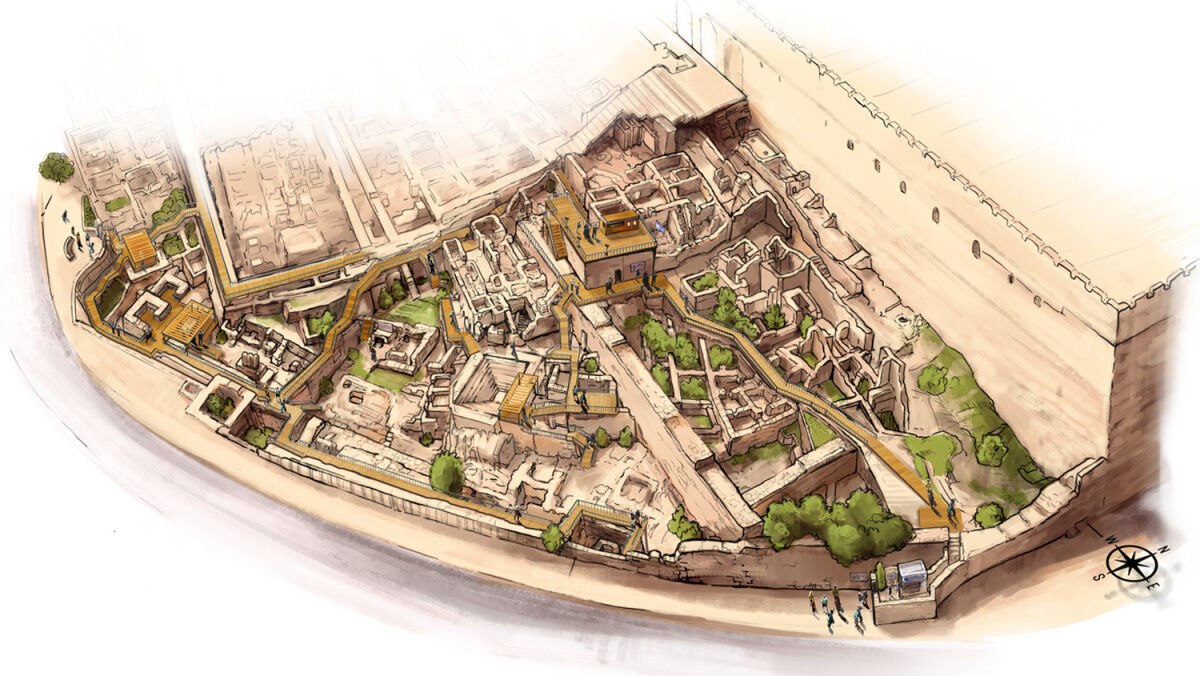
Phase i of “Revealing Royal Jerusalem” will restore the archaeological remains of this area, prepare the site for further excavation, and give visitors the opportunity to experience the world of King Solomon and successive kings, priests and prophets!
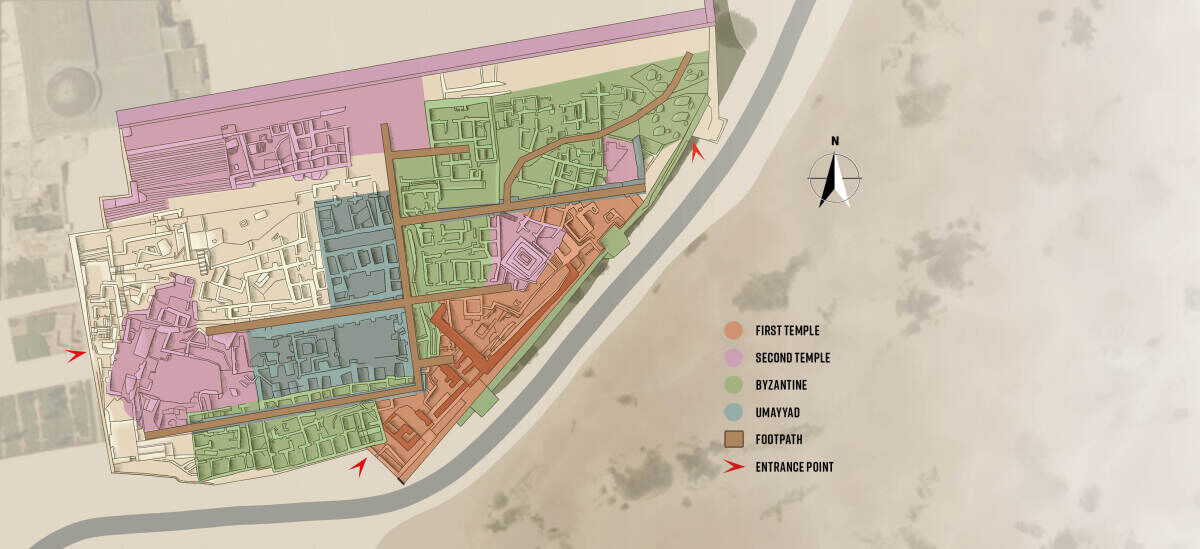
The Ophel Road Map
The Ophel can be divided into several areas according to archaeological time periods. Upon completion, the site will feature the history of four significant periods: the First Temple (1000–586 b.c.e.), the Second Temple (535 b.c.e.–70 c.e.), the Byzantine Period (300–650 c.e.) and the Umayyad Period (650–750 c.e.).
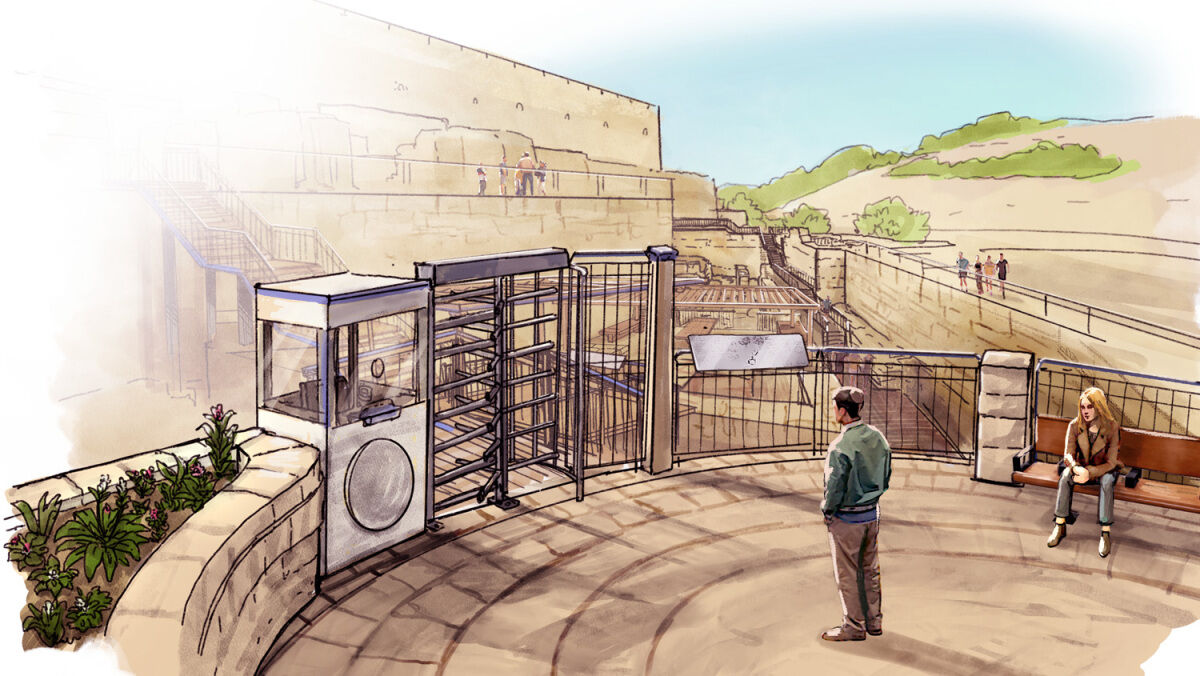
“Revealing Royal Jerusalem” will develop the site in several phases. Phase i, which includes the restoration and development of Iron Age Jerusalem, is now underway and is expected to open to the public in summer 2026.
Upon completion, visitors will be able to access the Ophel from multiple entrance points. A network of paths will allow visitors to explore the site. A visitor’s center will provide bathroom facilities, refreshments and a gift shop, and will be the staging point for guided tours.
Want to support “Revealing Royal Jerusalem”?
“Revealing Royal Jerusalem” is a collaborative project between several key organizations, including the Israel Antiquities Authority, Daniel Mintz and Meredith Berkman, the Armstrong Institute of Biblical Archaeology, the Hebrew University of Jerusalem, the East Jerusalem Development Ltd. and the Israel Nature and Parks Authority.
To learn more about the project, including how to donate, e-mail letters@ArmstrongInstitute.org.