
Ancient ‘City of Gold’ Uncovered in Egypt
In February, archaeologists from the Supreme Council of Antiquities (sca) of Egypt announced the completion of a two-year excavation of a 3,000-year-old gold processing complex at the Sukari gold mine. While details are scarce, the mine could potentially have played a role in Israel’s gold acquisition thousands of years ago.
The site lies about 15 kilometers west of the Red Sea and was excavated as part of the Revival of the Ancient City of Gold project, which endeavored to uncover and document the ancient gold mine.
“Excavations revealed a 3,000-year-old gold processing complex. The facility featured grinding and crushing stations, filtration and sedimentation basins, and ancient clay furnaces used for smelting the gold extracted from quartz veins,” sca Secretary-General Mohamed Ismail Khaled said. Uncovering the remains of this “city of gold” was an important endeavor “because it expands our understanding of ancient Egyptian mining techniques,” he said.
Mining at the site goes back to the Egyptian Third Intermediate Period, which covered the 21st to 25th dynasties (circa 1077 to 664 b.c.e.). According to the biblical chronology, this matches up with the reigns of David and Solomon. No comprehensive report has been released on the exact dating of the site.
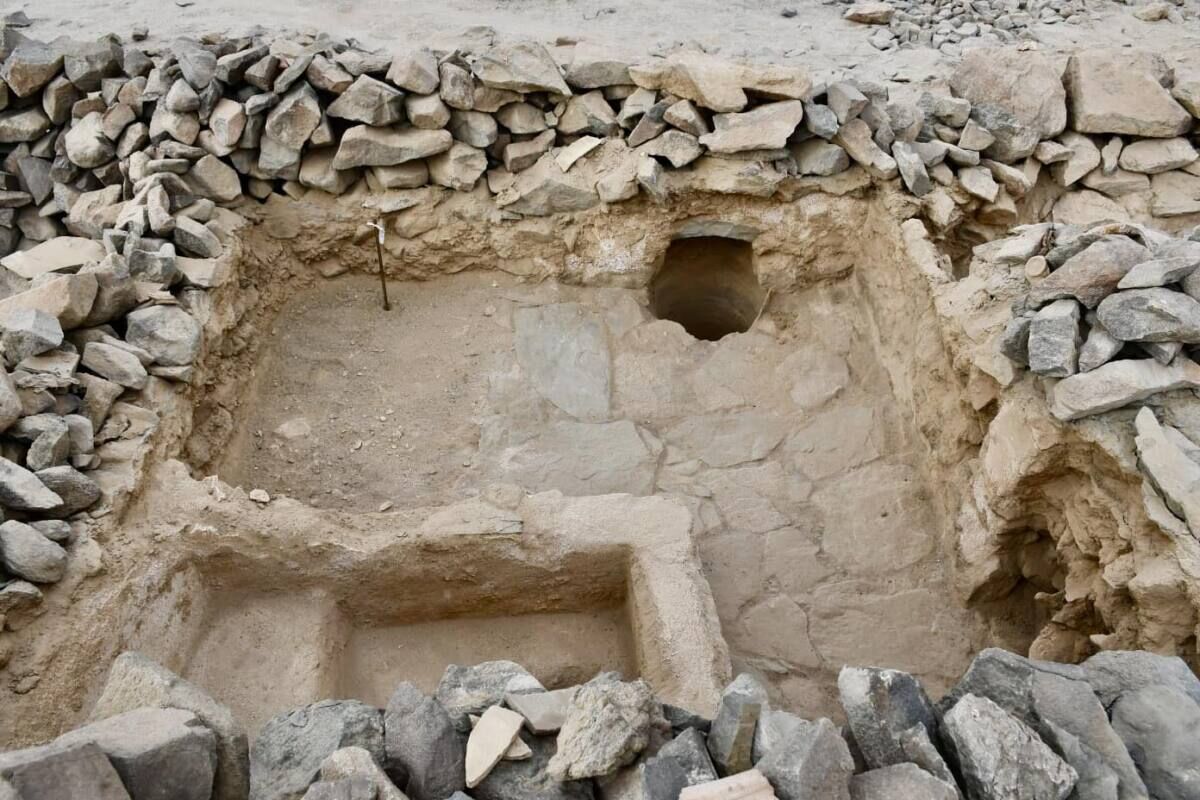
Processing of gold quartz at Sukari was quite advanced, with evidence of specialized factories having been set up alongside residential areas for the mine workers. The factories included facilities to process the gold quartz through crushing, purifying, smelting and extracting the gold.
Besides the structures, the excavation efforts uncovered 628 ostraca (pottery sherds) inscribed with different hieroglyphic, demotic and Greek scripts, as well as Ptolemaic bronze coins and offering tables, Greco-Roman figurines, and stone statues. Roman and Islamic period architectural remains indicate the site was occupied for over 1,000 years.
Most of the mined gold was used for the Egyptian economy and decorative construction. But could it have also been used elsewhere?
When David was preparing the materials for the temple, he needed a large amount of gold: “Now, behold, in my straits I have prepared for the house of the Lord a hundred thousand talents of gold, and a thousand thousand talents of silver; and of brass and iron without weight, for it is in abundance; timber also and stone have I prepared; and thou mayest add thereto” (1 Chronicles 22:14). With the weight of about 1 talent equaling 34 kilograms, 100,000 talents in today’s value is estimated to be worth over $400 billion of gold.
Where did this gold come from? The Bible mentions several places that supplied gold to the ancient world: Uphaz (Jeremiah 10:9), Havilah (Genesis 2:11-12), Tarshish (Isaaiah 60:9), Ophir (1 Kings 9:28), Parvaim (2 Chronicles 3:6), Sheba (1 Kings 10:10; Psalm 72:15) and Havilah (Genesis 2:11-12).
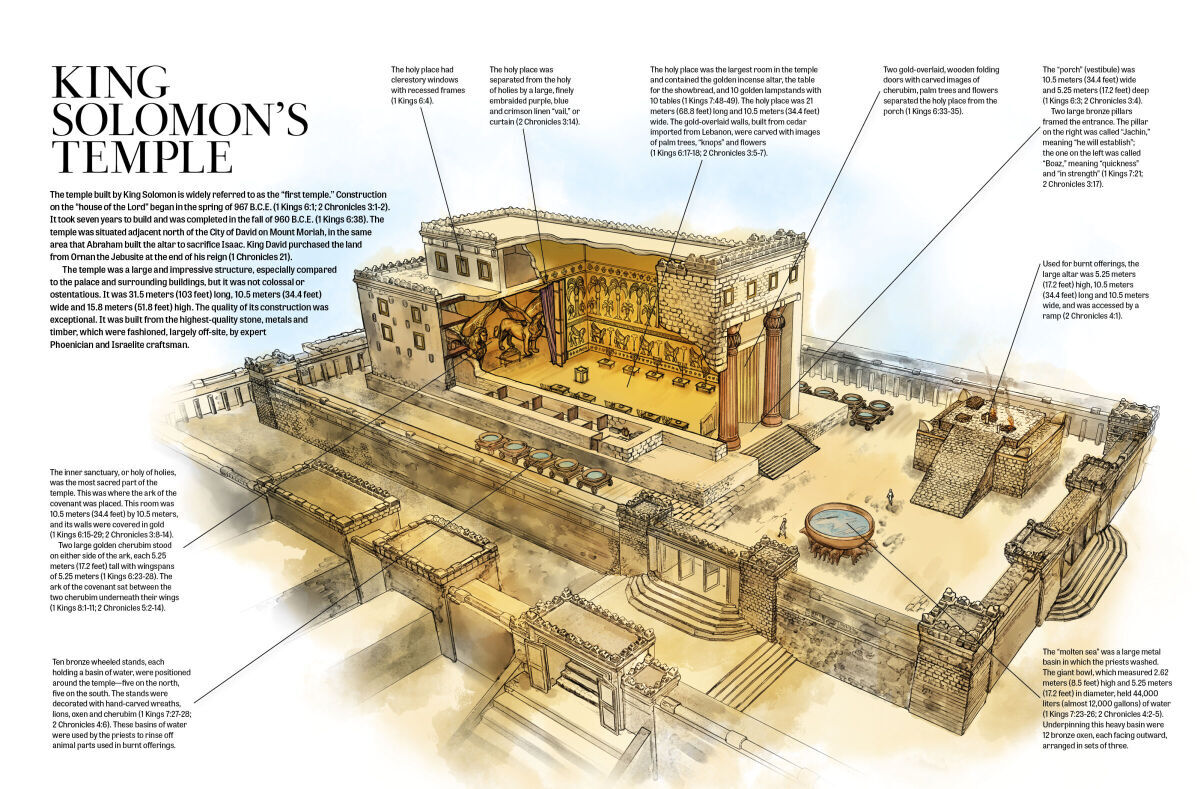
A gold mine in Saudi Arabia, Mahd al-Dhahab, was suggested to have been the site of Solomon’s gold mine at “Ophir,” though other places like Sri Lanka have also been suggested. Other gold sourcing sites, such as Tarshish and Sheba, were located in such places as Spain and Arabia.
Is it possible that David and Solomon also used the Egyptian mine at Sukari to acquire at least some of that vast supply of gold? While there is currently no evidence linking the Sukari mine to Israel or foreign nations, the proximity to Israel would certainly allow for this possibility. We know the Israelites acquired gold from places much farther away than Egypt.
Regardless, the mine at Sukari shows that they were able to mine large amounts of gold with sophisticated techniques 3,000 years ago, during David and Solomon’s kingdom.
To preserve this massive historic complex, the Egyptian Authorities moved the architectural remains 3 kilometers north of the original site, according to Egyptian Antiquities Sector head Mohamed Abdel-Badie. A full-scale replica of the site has been constructed, as well as a visitor center, explaining the history and displaying the finds.